Probiotics in
Aquaculture
SUBMITTED BY:
Avijit Pramanik
AAH-MA-09-02
M.F.Sc, ICAR -CIFE
INTRODUCTION:
• The term “Probiotic” is derived from the Greek words,
“Pro” (favour) and “Bios” (life).
• Probiotics 1st used to describe as a microbial feed/food
supplement was by Parker in 1974, i.e. Probiotics as
“organisms and substances that contribute to intestinal
microbial balance.”
• Probiotics- alternative of antibiotics.
HISTORY
Ø At the start of the 20th century, Elie Metchnikoff, was the first
conceptualize “probiotics”.
Ø Probiotic term coined in 1965 by Lilly and Stillwell.
Ø Use of bacteria as a food source & as a biological control of fish disease
was1st proposed by Yasuda &Taga(1980).
Ø The 1st application of probiotics occurred in 1986, to test their ability to
increase growth of hydrobionts.
Ø Goal: make aquaculture products more acceptable to consumers.
Characteristics of good probiotics:
n Non toxic
n Non pathogenic & Resistance to gastric juice.
n Capability to adhere to gut epithilium tissue and produce
antibacterial substance
n Anti-inflammatory, anti-mutagenic
n Able to influence metabolic activity
n Should enhance the digestive enzyme activity, growth rate, feed
conversion rate and assimilation efficiency
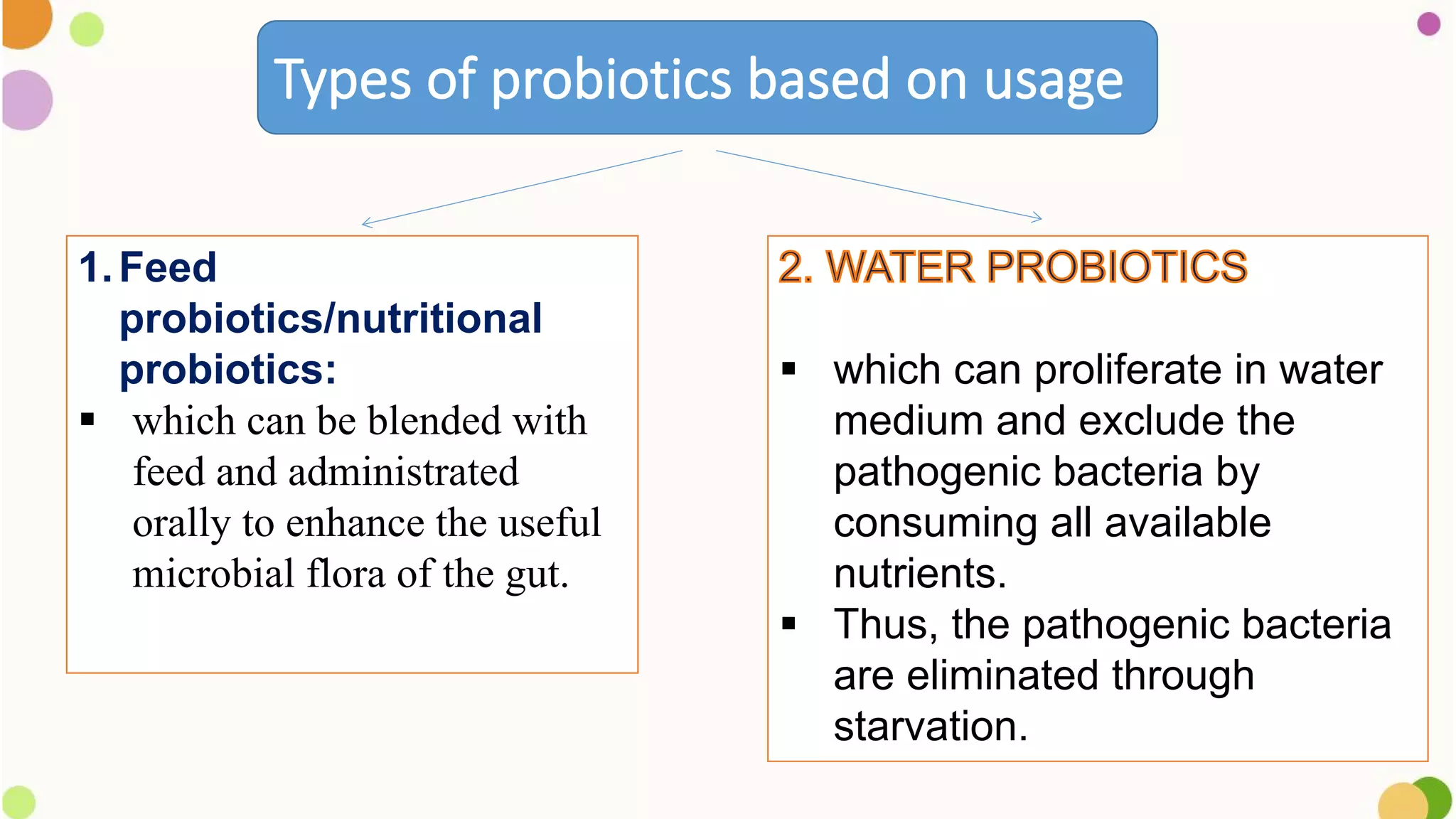
Types of probiotics based on usage
1.Feed
probiotics/nutritional
probiotics:
§ which can be blended with
feed and administrated
orally to enhance the useful
microbial flora of the gut.
§ which can proliferate in water
medium and exclude the
pathogenic bacteria by
consuming all available
nutrients.
§ Thus, the pathogenic bacteria
are eliminated through
starvation.
Probiotics should have the following attributes:
Ø GRAS (Generally Regarded As Safe) status.
Ø Maintain a healthy gut during stress period.
Ø Remaining stable at higher temperature and for longer duration.
Ø It should not undergo any genetic modification due to change in
the environmental parameters.
ü Its should have multifunction, i.e. improvement of nutritional
status, feed conversion efficiency, growth and encounter a large
number of pathogens.
ü It should be cheap, efficient and easily available.
METHODS OF APPLICATION OF
PROBIOTICS:
Probiotics are marketed in two forms:
vCome in packets can be given with
feed or applied to water and have to be
brewed at farm site before application.
vUsually, it is brewed at 27–32°C for 16
to 18 hours with continuous aeration.
vMaximum aeration is required in semi-
intensive culture ponds.
ØLive and ready to act
ØDirectly added to hatchery
tanks or blended with farm
feed.
ØLiquid forms give positive
results in lesser time when
compared to the dry form
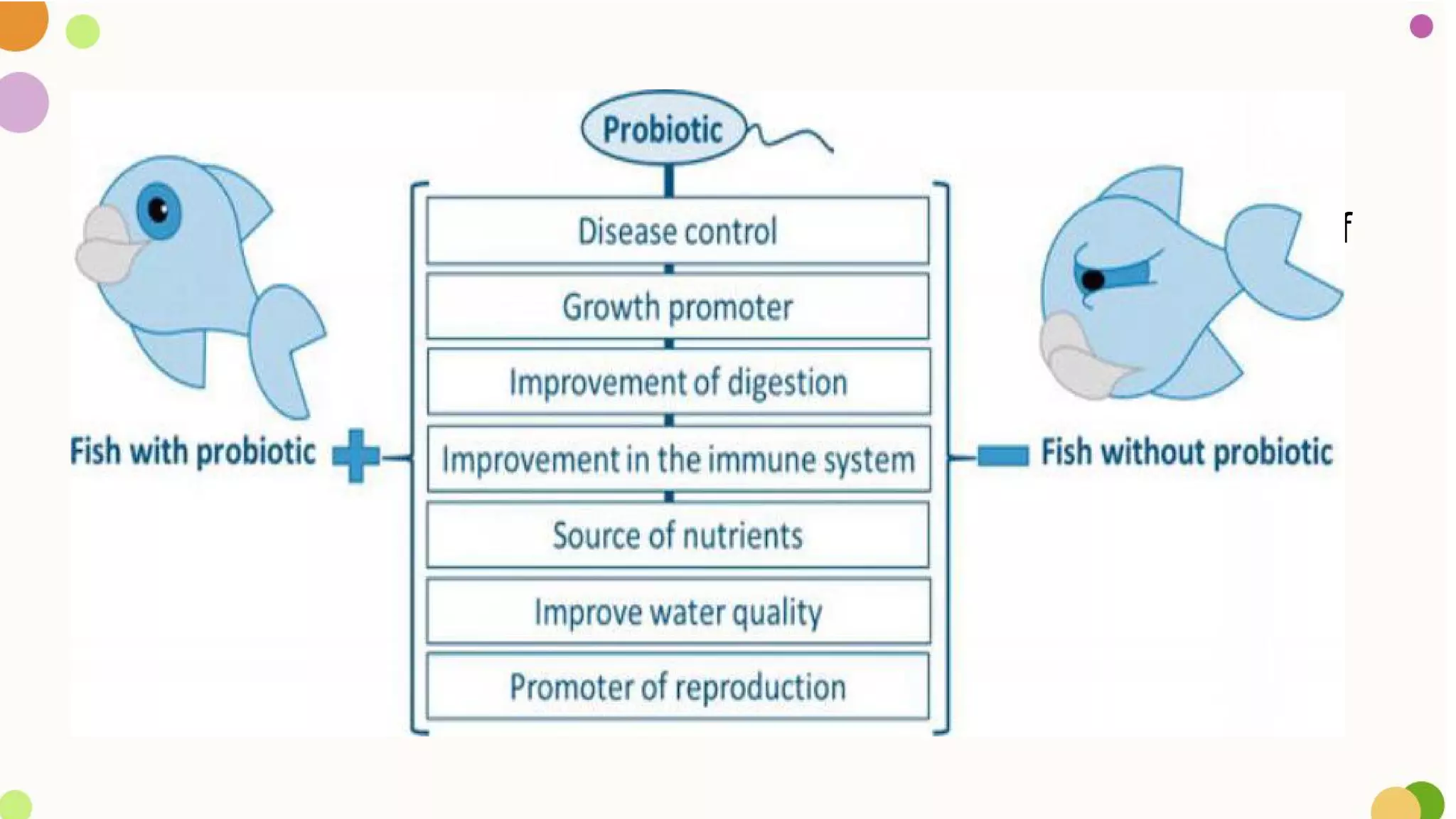
HOW DO PROBIOTICS WORK?
ØThe probiotics act in aquaculture systems in the following manner:
1. Competitive exclusion of pathogenic bacteria.
2. Enhancement of digestion through production of exoenzymes.
3. By moderating and promoting direct uptake of dissolved organic
materials.
4. By inhibiting growth of pathogenic bacteria through production of
antibiotics.
qOther possible mechanisms of action of probiotlcs are :
Ø Controlling phytoplankton and blue-green algal bloom.
Ø Preventing off-flavour.
Ø Reducing toxic metabolites like nitrate, nitrites and ammonia and
phosphates.
Ø Increasing dissolved oxygen concentration by efficient removal of
detritus and thereby heterotrophs.
Ø Maximising primary productivity.
Ø Maintaining diverse and stable pond community,
Ø Eliminating cost of cleaning ponds after harvest.
Ø Reducing cost of disease treatment and crop management.
(Joiy 1998, Morlarly 1996, Hong etal, 1998).
Gram-positive bacteria:
Microalgae:
Tetraselmis suecica
Micrococcus luteusBacillus spp
Entrecoccus faecium
Gram-negative bacteria:
Pseudomonas fluorescens Alteromonas
Vibrio alginolyticusAeromonas hydrophila Vibrio fluvialis
Yeasts:
Debaryomyces hansenii
Phaffia rhodozyma
Saccharomyces cerevisiae
Flow chart for selection of probiotics
Source
Isolation of Strain
In Vitro Assessment
In Vivo Assessment
Probiotic Commercialization
Government Agency Approval
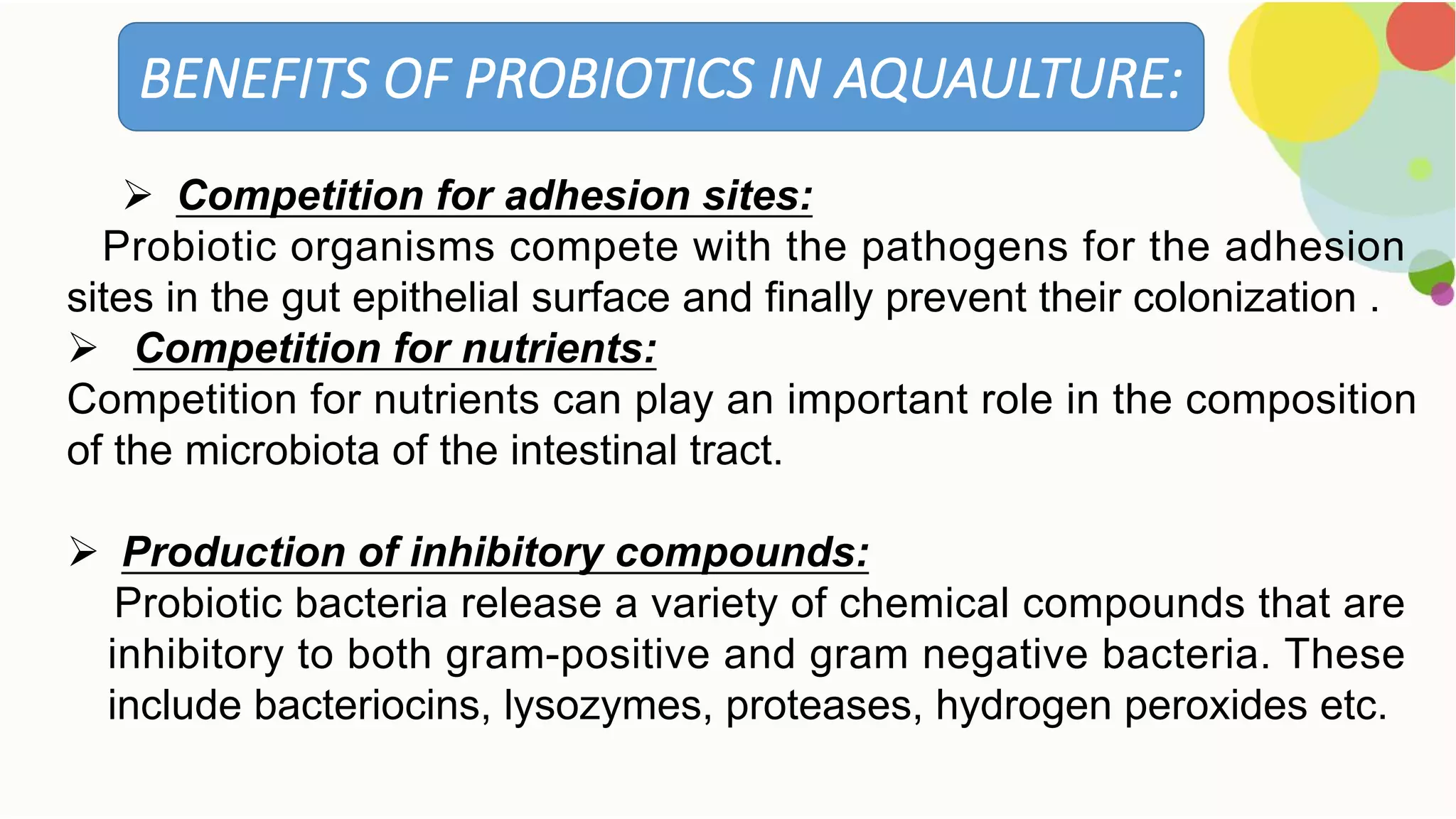
BENEFITS OF PROBIOTICS IN AQUAULTURE:
Ø Competition for adhesion sites:
Probiotic organisms compete with the pathogens for the adhesion
sites in the gut epithelial surface and finally prevent their colonization .
Ø Competition for nutrients:
Competition for nutrients can play an important role in the composition
of the microbiota of the intestinal tract.
Ø Production of inhibitory compounds:
Probiotic bacteria release a variety of chemical compounds that are
inhibitory to both gram-positive and gram negative bacteria. These
include bacteriocins, lysozymes, proteases, hydrogen peroxides etc.
DISADVANTAGES:
v Still now, no consensus on the most effective dose of a probiotic.
vNo other chemical or drug should be used for treating other diseases
like fungal and protozoan diseases caused by those other than bacteria.
v These probiotics can easily be destroyed by any other chemical or
drug which generally interferes with the establishment of useful microbes.
vIt is found that the BOD level may temporarily be increased on its
application; therefore it is advisable to provide subsurface aeration for
the establishment of probiotics organisms.
PROBIOTIC BENEFITS VS ANTIBIOTICS
ØProbiotics create no illegal residue.
ØProbiotics helps to digest pollutants.
ØProbiotics boosts immune system of shrimp.
ØCheaper to use probiotics than antibiotic.
ØAntibiotics lead to slow growth rate of larvae.
ØBacteria cannot develop resistance to probiotics but can to
antibiotics.
BENEFITS OF POND PROBIOTICS
Ø Better water quality
Ø Less toxic environment for culture
Ø Higher stocking density
Ø Reduce animal stress
Ø Better growth and survival rate
Ø Reduce water exchange
Ø Lower fertilizer cost in older pond
Ø Provide benificial microbial environment
Recent trends of probiotics research in aquaculture
with special reference to shrimp culture:
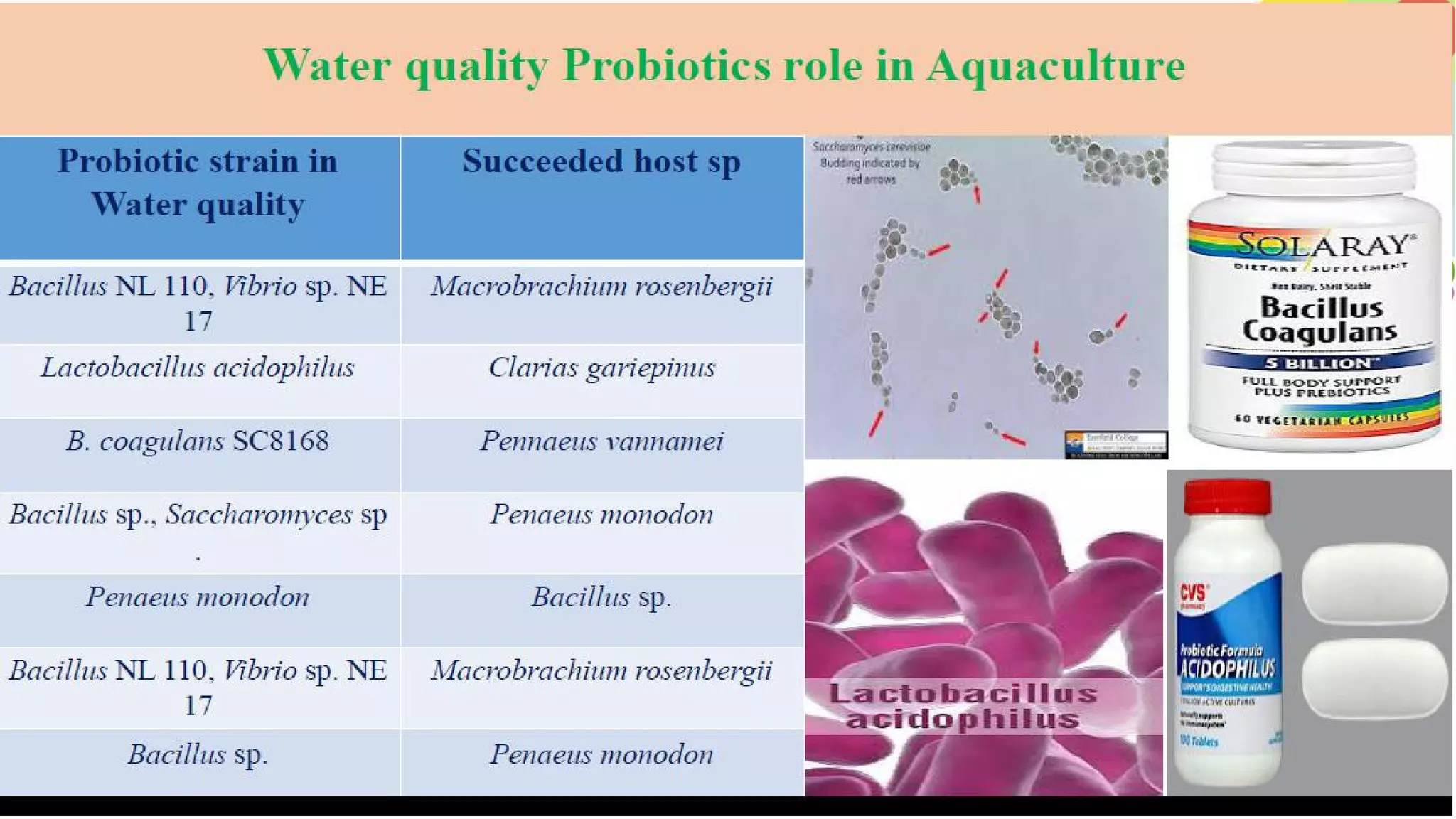
vA mixture of Lactobacillus spp. isolated from chicken
gastrointestinal tracts has improved the growth and survival rates of
the juvenile P.monodon when fed with these strains for 100 days
vRecently, the growth of pathogenic V. harveyi was controlled by the
probiotic effect of Bacillus subtilis BT23 under in vitro and in vivo
conditions.
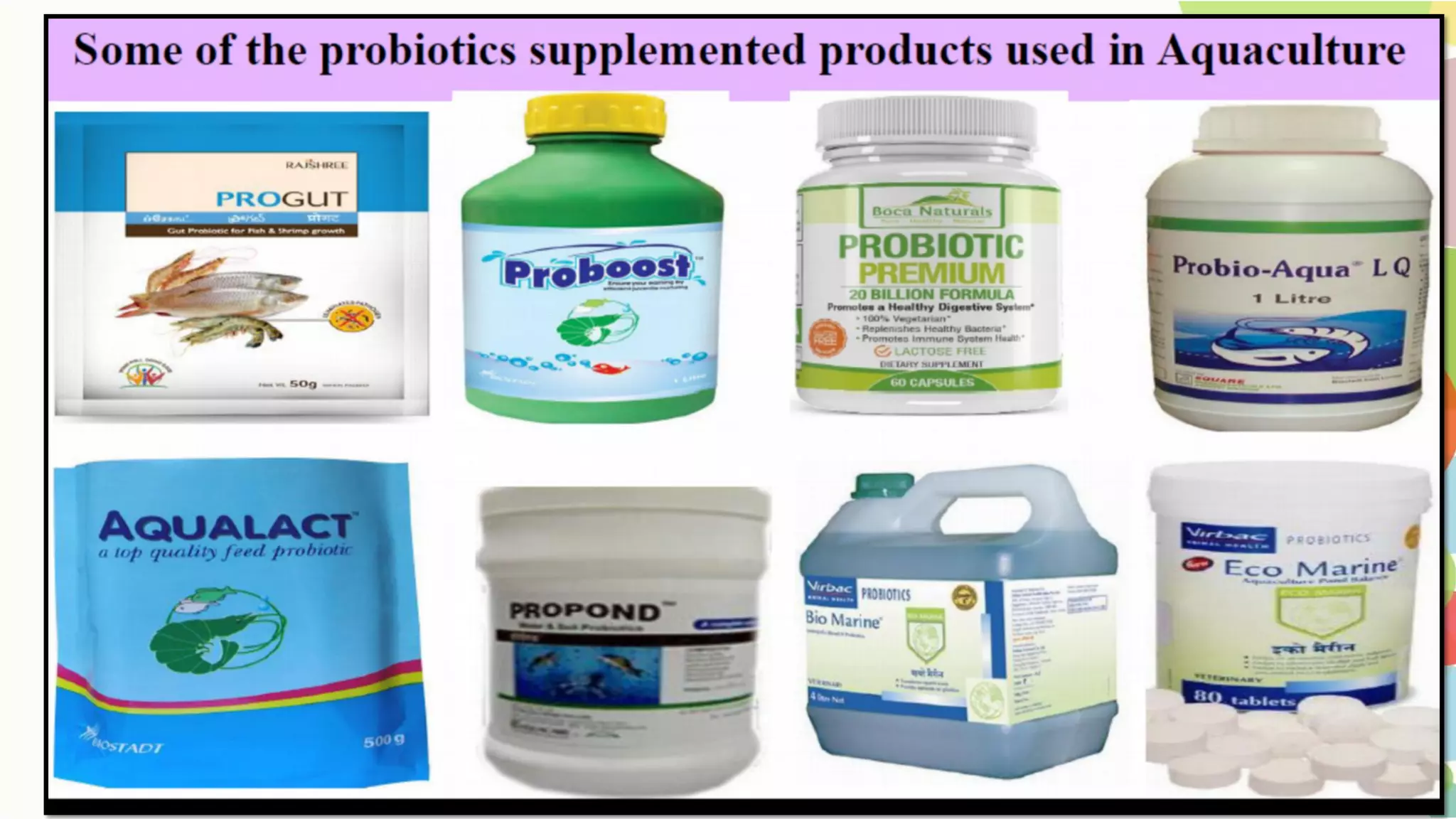
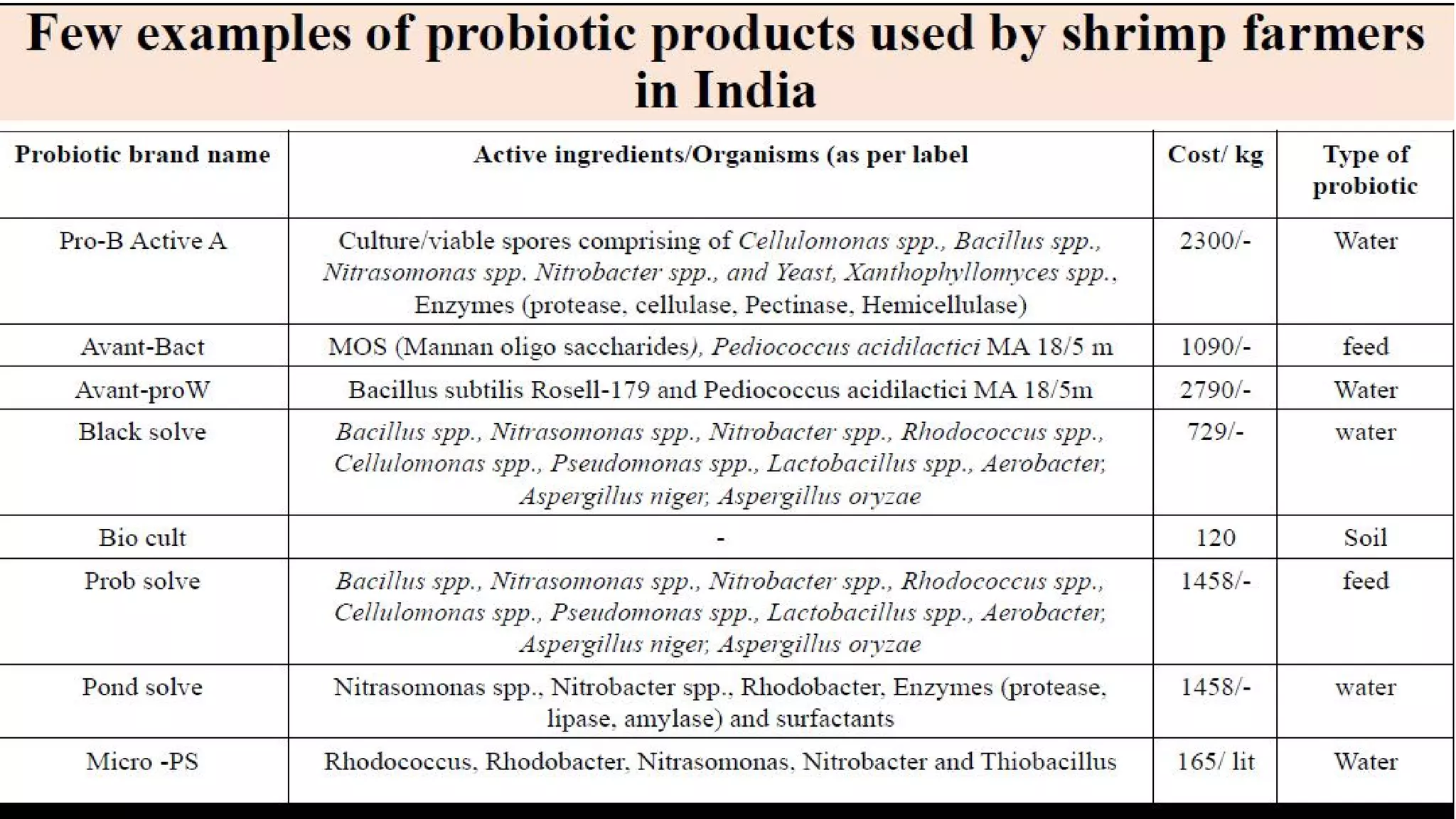
vFew multinational pharmceutical companies have introduced
commercial preparations into the market as probiotics feed/food
supplement in various commercial names as Aqualact, Spilac,
Protexin etc.
SOME RECENT FINDINGS : FINFISH AND
SHRIMP
Ø Nikoskelainen et al. (2003) showed immune enhancement in
rainbow-trout via Lactobacillus rhamnosus supplemented in feeds.
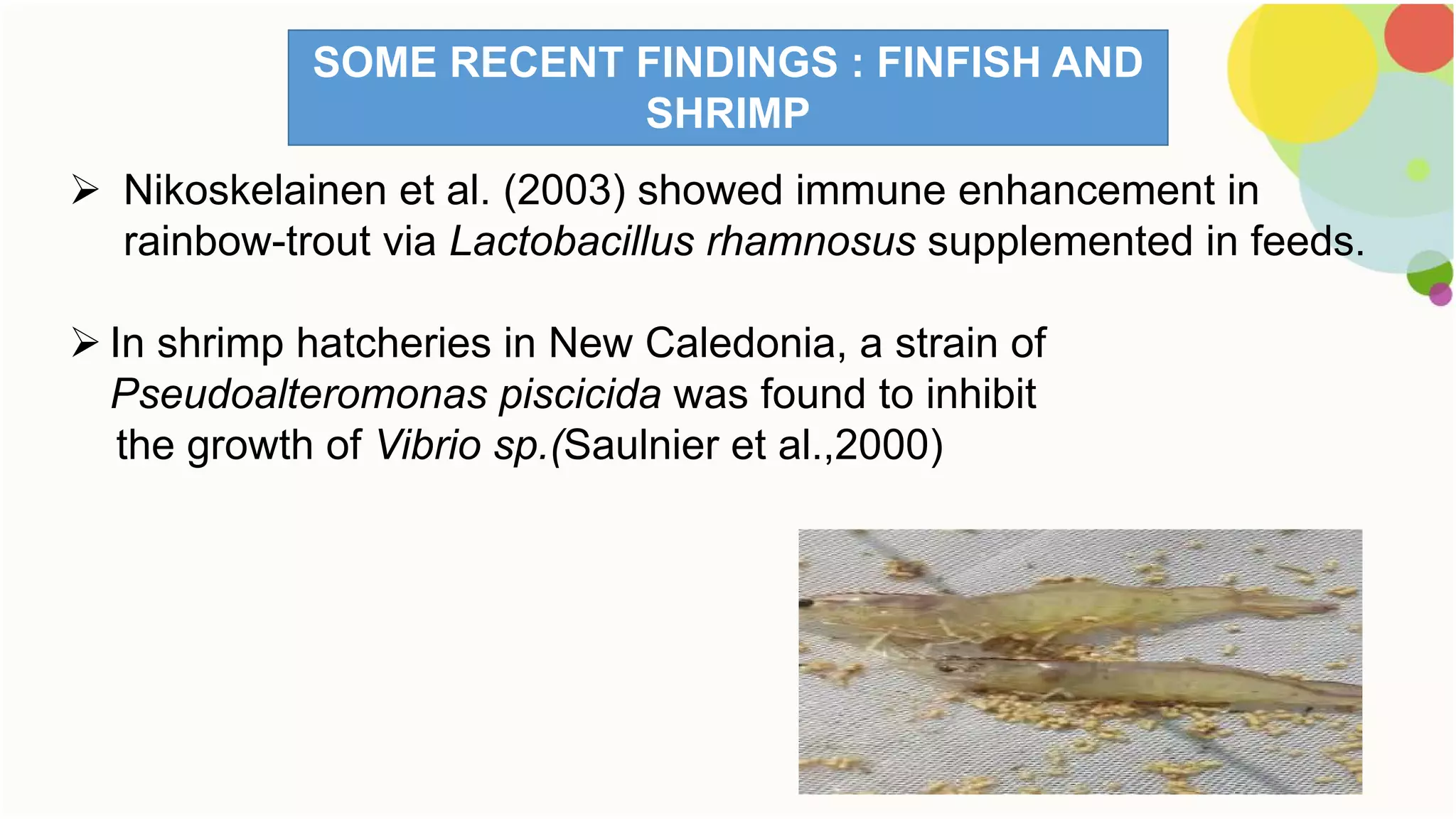
Ø In shrimp hatcheries in New Caledonia, a strain of
Pseudoalteromonas piscicida was found to inhibit
the growth of Vibrio sp.(Saulnier et al.,2000)
CONCLUSION:
Economic benefits of Probiotics are multidimensional.
India has a great potential in the use of probiotics in aquaculture so
the government and the related institutions should give greater
attention for the study and development of Probiotics in relation to its
use in aquaculture.
Should be focus on genetic engineering of probiotics to make them
more efficient.
REFERENCE:
Maloy Kumar Sahu , N. S. Swarnakumar , K. Sivakumar , T. Thangaradjou ,
L. KannanProbiotics in aquaculture: importance and future perspectives
Lewin CS (1992) Mechanisms of resistance development in aquatic microorganisms. In:
Chemotherapy in Aquaculture: from Theory to Reality (Michel C and Alderman DJ eds). Office
International des Epizooties, Paris, France, pp 288–301
Moriarty D (1997) The role of microorganisms in aquaculture ponds. Aquaculture 151:333–349
Abraham, T. J., Mondal, S., Babu, S. 2008. Effect of Commercial Aquaculture Probiotic and
Fish Gut Antagonistic Bacterial Flora on the Growth and Disease Resistance of Ornamental Fishes
Carassius auratus and Xiphophorus helleri. Journal of fisheries and aquatic sciences., 25(1): 27-
30.
Verschuere, L., Rombaut, G., Sorgeloos, P., Verstraete, W. 2000. Probiotic bacteria as biological
control agents in aquaculture. Microbiology and molecular biology reviews., 64: 655-671.
Gatesoupe, F. 2005. Probiotics and prebiotics for fish culture, at the parting of the ways.
Aquafeeds.,2(3): 3-5.
Robertson, P., Dowd, C., Burrels, C., Williams, P., Austin, B. 2000. Use of carnobacterium sp. as
aprobiotic for Atlantic salmon and Rainbow trout. Aquaculture., 185: 235-243.
THANK YOU

Probiotics used in aquaculture

  • 1.
    Probiotics in Aquaculture SUBMITTED BY: AvijitPramanik AAH-MA-09-02 M.F.Sc, ICAR -CIFE
  • 2.
    INTRODUCTION: • The term“Probiotic” is derived from the Greek words, “Pro” (favour) and “Bios” (life). • Probiotics 1st used to describe as a microbial feed/food supplement was by Parker in 1974, i.e. Probiotics as “organisms and substances that contribute to intestinal microbial balance.” • Probiotics- alternative of antibiotics.
  • 3.
    HISTORY Ø At thestart of the 20th century, Elie Metchnikoff, was the first conceptualize “probiotics”. Ø Probiotic term coined in 1965 by Lilly and Stillwell. Ø Use of bacteria as a food source & as a biological control of fish disease was1st proposed by Yasuda &Taga(1980). Ø The 1st application of probiotics occurred in 1986, to test their ability to increase growth of hydrobionts. Ø Goal: make aquaculture products more acceptable to consumers.
  • 4.
    Characteristics of goodprobiotics: n Non toxic n Non pathogenic & Resistance to gastric juice. n Capability to adhere to gut epithilium tissue and produce antibacterial substance n Anti-inflammatory, anti-mutagenic n Able to influence metabolic activity n Should enhance the digestive enzyme activity, growth rate, feed conversion rate and assimilation efficiency
  • 5.
    Types of probioticsbased on usage 1.Feed probiotics/nutritional probiotics: § which can be blended with feed and administrated orally to enhance the useful microbial flora of the gut. § which can proliferate in water medium and exclude the pathogenic bacteria by consuming all available nutrients. § Thus, the pathogenic bacteria are eliminated through starvation.
  • 6.
    Probiotics should havethe following attributes: Ø GRAS (Generally Regarded As Safe) status. Ø Maintain a healthy gut during stress period. Ø Remaining stable at higher temperature and for longer duration. Ø It should not undergo any genetic modification due to change in the environmental parameters. ü Its should have multifunction, i.e. improvement of nutritional status, feed conversion efficiency, growth and encounter a large number of pathogens. ü It should be cheap, efficient and easily available.
  • 7.
    METHODS OF APPLICATIONOF PROBIOTICS: Probiotics are marketed in two forms: vCome in packets can be given with feed or applied to water and have to be brewed at farm site before application. vUsually, it is brewed at 27–32°C for 16 to 18 hours with continuous aeration. vMaximum aeration is required in semi- intensive culture ponds. ØLive and ready to act ØDirectly added to hatchery tanks or blended with farm feed. ØLiquid forms give positive results in lesser time when compared to the dry form
  • 8.
    HOW DO PROBIOTICSWORK? ØThe probiotics act in aquaculture systems in the following manner: 1. Competitive exclusion of pathogenic bacteria. 2. Enhancement of digestion through production of exoenzymes. 3. By moderating and promoting direct uptake of dissolved organic materials. 4. By inhibiting growth of pathogenic bacteria through production of antibiotics. qOther possible mechanisms of action of probiotlcs are : Ø Controlling phytoplankton and blue-green algal bloom. Ø Preventing off-flavour.
  • 9.
    Ø Reducing toxicmetabolites like nitrate, nitrites and ammonia and phosphates. Ø Increasing dissolved oxygen concentration by efficient removal of detritus and thereby heterotrophs. Ø Maximising primary productivity. Ø Maintaining diverse and stable pond community, Ø Eliminating cost of cleaning ponds after harvest. Ø Reducing cost of disease treatment and crop management. (Joiy 1998, Morlarly 1996, Hong etal, 1998).
  • 11.
  • 12.
    Gram-negative bacteria: Pseudomonas fluorescensAlteromonas Vibrio alginolyticusAeromonas hydrophila Vibrio fluvialis
  • 13.
  • 14.
    Flow chart forselection of probiotics Source Isolation of Strain In Vitro Assessment In Vivo Assessment Probiotic Commercialization Government Agency Approval
  • 17.
    BENEFITS OF PROBIOTICSIN AQUAULTURE: Ø Competition for adhesion sites: Probiotic organisms compete with the pathogens for the adhesion sites in the gut epithelial surface and finally prevent their colonization . Ø Competition for nutrients: Competition for nutrients can play an important role in the composition of the microbiota of the intestinal tract. Ø Production of inhibitory compounds: Probiotic bacteria release a variety of chemical compounds that are inhibitory to both gram-positive and gram negative bacteria. These include bacteriocins, lysozymes, proteases, hydrogen peroxides etc.
  • 18.
    DISADVANTAGES: v Still now,no consensus on the most effective dose of a probiotic. vNo other chemical or drug should be used for treating other diseases like fungal and protozoan diseases caused by those other than bacteria. v These probiotics can easily be destroyed by any other chemical or drug which generally interferes with the establishment of useful microbes. vIt is found that the BOD level may temporarily be increased on its application; therefore it is advisable to provide subsurface aeration for the establishment of probiotics organisms.
  • 19.
    PROBIOTIC BENEFITS VSANTIBIOTICS ØProbiotics create no illegal residue. ØProbiotics helps to digest pollutants. ØProbiotics boosts immune system of shrimp. ØCheaper to use probiotics than antibiotic. ØAntibiotics lead to slow growth rate of larvae. ØBacteria cannot develop resistance to probiotics but can to antibiotics.
  • 20.
    BENEFITS OF PONDPROBIOTICS Ø Better water quality Ø Less toxic environment for culture Ø Higher stocking density Ø Reduce animal stress Ø Better growth and survival rate Ø Reduce water exchange Ø Lower fertilizer cost in older pond Ø Provide benificial microbial environment
  • 21.
    Recent trends ofprobiotics research in aquaculture with special reference to shrimp culture: vA mixture of Lactobacillus spp. isolated from chicken gastrointestinal tracts has improved the growth and survival rates of the juvenile P.monodon when fed with these strains for 100 days vRecently, the growth of pathogenic V. harveyi was controlled by the probiotic effect of Bacillus subtilis BT23 under in vitro and in vivo conditions. vFew multinational pharmceutical companies have introduced commercial preparations into the market as probiotics feed/food supplement in various commercial names as Aqualact, Spilac, Protexin etc.
  • 22.
    SOME RECENT FINDINGS: FINFISH AND SHRIMP Ø Nikoskelainen et al. (2003) showed immune enhancement in rainbow-trout via Lactobacillus rhamnosus supplemented in feeds. Ø In shrimp hatcheries in New Caledonia, a strain of Pseudoalteromonas piscicida was found to inhibit the growth of Vibrio sp.(Saulnier et al.,2000)
  • 23.
    CONCLUSION: Economic benefits ofProbiotics are multidimensional. India has a great potential in the use of probiotics in aquaculture so the government and the related institutions should give greater attention for the study and development of Probiotics in relation to its use in aquaculture. Should be focus on genetic engineering of probiotics to make them more efficient.
  • 24.
    REFERENCE: Maloy Kumar Sahu, N. S. Swarnakumar , K. Sivakumar , T. Thangaradjou , L. KannanProbiotics in aquaculture: importance and future perspectives Lewin CS (1992) Mechanisms of resistance development in aquatic microorganisms. In: Chemotherapy in Aquaculture: from Theory to Reality (Michel C and Alderman DJ eds). Office International des Epizooties, Paris, France, pp 288–301 Moriarty D (1997) The role of microorganisms in aquaculture ponds. Aquaculture 151:333–349 Abraham, T. J., Mondal, S., Babu, S. 2008. Effect of Commercial Aquaculture Probiotic and Fish Gut Antagonistic Bacterial Flora on the Growth and Disease Resistance of Ornamental Fishes Carassius auratus and Xiphophorus helleri. Journal of fisheries and aquatic sciences., 25(1): 27- 30. Verschuere, L., Rombaut, G., Sorgeloos, P., Verstraete, W. 2000. Probiotic bacteria as biological control agents in aquaculture. Microbiology and molecular biology reviews., 64: 655-671. Gatesoupe, F. 2005. Probiotics and prebiotics for fish culture, at the parting of the ways. Aquafeeds.,2(3): 3-5. Robertson, P., Dowd, C., Burrels, C., Williams, P., Austin, B. 2000. Use of carnobacterium sp. as aprobiotic for Atlantic salmon and Rainbow trout. Aquaculture., 185: 235-243.
  • 25.