EXAMPLE 6 : SAVITA AND HAMIDA ARE FRIENDS. WHAT
IS THE PROBABILITY THAT BOTH WILL HAVE
(I) DIFFERENT BIRTHDAYS? (II) THE SAME BIRTHDAY?
(NOT A LEAP YEAR).
Solution:
No. of days in a non leap year = 365 days
(i) If Hamida’s birthday is different from Savita’s
The number of favourable outcomes for her birthday
is 365 – 1 = 364
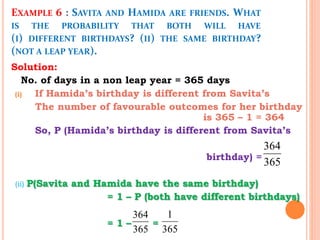
So, P (Hamida’s birthday is different from Savita’s
birthday) =
(ii) P(Savita and Hamida have the same birthday)
= 1 – P (both have different birthdays)
= 1 – =
364
365
364
365
1
365
EXAMPLE 7 : THERE ARE 40 STUDENTS IN CLASS X OF A SCHOOL OF
WHOM 25 ARE GIRLS AND 15 ARE BOYS. THE CLASS TEACHER HAS
TO SELECT ONE STUDENT AS A CLASS REPRESENTATIVE. SHE WRITES
THE NAME OF EACH STUDENT ON A SEPARATE CARD, THE CARDS
BEING IDENTICAL. THEN SHE PUTS CARDS IN A BAG AND STIRS THEM
THOROUGHLY. SHE THEN DRAWS ONE CARD FROM THE BAG. WHAT
IS THE PROBABILITY THAT THE NAME WRITTEN ON THE CARD IS THE
NAME OF (I) A GIRL? (II) A BOY?
Solution:
Total no. of students in a class = 40
No. of boys = 15
No. of girls = 25
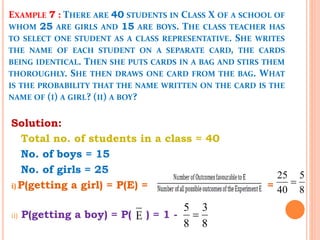
i) P(getting a girl) = P(E) = =
ii) P(getting a boy) = P( ) = 1 -
25 5
40 8

E
5 3
8 8

EXAMPLE 8 : A BOX CONTAINS 3 BLUE, 3 WHITE, AND 4
RED MARBLES. IF A MARBLE IS DRAWN AT RANDOM
FROM THE BOX, WHAT IS THE PROBABILITY THAT IT
WILL BE (I) WHITE? (II) BLUE? (III) RED?
Solution :
Total no. of marbles in the box = 10 Marbles
(3 Blue + 3 White + 4 Red)
i) P( getting a white marble) = =
ii) P( getting a blue marble) = =
iii) P(getting a red marble) =
=
3
10
3
10
4 2
10 5

Example 9 : Harpreet tosses two different coins
simultaneously (say, one is of Rs.1 and other of
Rs. 2). What is the probability that she gets at least one
head?
Solution :
Tossing two coins at a time is an experiment
Possible outcomes are : TT, TH, HT, HH
Now,
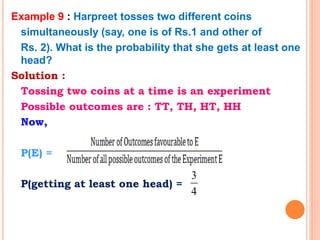
P(E) =
P(getting at least one head) =
3
4
Example 12 : A carton consists of 100 shirts of which 88
are good, 8 have minor defects and 4 have major
defects. Jimmy, a trader, will only accept the shirts
which are good, but Sujatha, another trader, will only
reject the shirts which have major defects. One shirt is
drawn at random from the carton.
What is the probability that
(i) it is acceptable to Jimmy?
(ii) it is acceptable to Sujatha?
Solution:
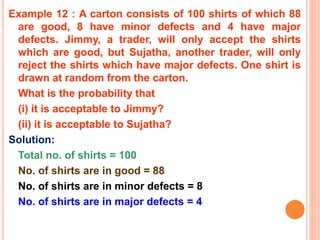
Total no. of shirts = 100
No. of shirts are in good = 88
No. of shirts are in minor defects = 8
No. of shirts are in major defects = 4
i) No. of favourable outcomes to Jimmy = 88
P(shirts accepted by Jimmy) =
ii) No. of favourable outcomes to Sujatha = 88 + 8 = 96
P(shirts accepted by Sujatha) =
96 24
100 25

88 22
100 25

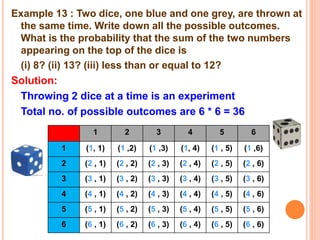
Example 13 : Two dice, one blue and one grey, are thrown at
the same time. Write down all the possible outcomes.
What is the probability that the sum of the two numbers
appearing on the top of the dice is
(i) 8? (ii) 13? (iii) less than or equal to 12?
Solution:
Throwing 2 dice at a time is an experiment
Total no. of possible outcomes are 6 * 6 = 36
1 2 3 4 5 6
1 (1, 1) (1 ,2) (1 ,3) (1, 4) (1 , 5) (1 ,6)
2 (2 , 1) (2 , 2) (2 , 3) (2 , 4) (2 , 5) (2 , 6)
3 (3 , 1) (3 , 2) (3 , 3) (3 , 4) (3 , 5) (3 , 6)
4 (4 , 1) (4 , 2) (4 , 3) (4 , 4) (4 , 5) (4 , 6)
5 (5 , 1) (5 , 2) (5 , 3) (5 , 4) (5 , 5) (5 , 6)
6 (6 , 1) (6 , 2) (6 , 3) (6 , 4) (6 , 5) (6 , 6)
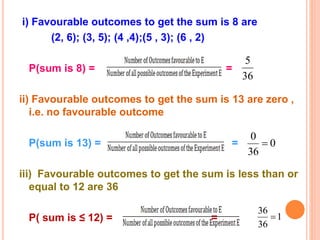
i) Favourable outcomes to get the sum is 8 are
(2, 6); (3, 5); (4 ,4);(5 , 3); (6 , 2)
P(sum is 8) = =
ii) Favourable outcomes to get the sum is 13 are zero ,
i.e. no favourable outcome
P(sum is 13) = =
iii) Favourable outcomes to get the sum is less than or
equal to 12 are 36
P( sum is ≤ 12) = =
5
36
0
0
36

36
1
36

HARI OM
THANK YOU

Probability part 2

  • 1.
    EXAMPLE 6 :SAVITA AND HAMIDA ARE FRIENDS. WHAT IS THE PROBABILITY THAT BOTH WILL HAVE (I) DIFFERENT BIRTHDAYS? (II) THE SAME BIRTHDAY? (NOT A LEAP YEAR). Solution: No. of days in a non leap year = 365 days (i) If Hamida’s birthday is different from Savita’s The number of favourable outcomes for her birthday is 365 – 1 = 364 So, P (Hamida’s birthday is different from Savita’s birthday) = (ii) P(Savita and Hamida have the same birthday) = 1 – P (both have different birthdays) = 1 – = 364 365 364 365 1 365
  • 2.
    EXAMPLE 7 :THERE ARE 40 STUDENTS IN CLASS X OF A SCHOOL OF WHOM 25 ARE GIRLS AND 15 ARE BOYS. THE CLASS TEACHER HAS TO SELECT ONE STUDENT AS A CLASS REPRESENTATIVE. SHE WRITES THE NAME OF EACH STUDENT ON A SEPARATE CARD, THE CARDS BEING IDENTICAL. THEN SHE PUTS CARDS IN A BAG AND STIRS THEM THOROUGHLY. SHE THEN DRAWS ONE CARD FROM THE BAG. WHAT IS THE PROBABILITY THAT THE NAME WRITTEN ON THE CARD IS THE NAME OF (I) A GIRL? (II) A BOY? Solution: Total no. of students in a class = 40 No. of boys = 15 No. of girls = 25 i) P(getting a girl) = P(E) = = ii) P(getting a boy) = P( ) = 1 - 25 5 40 8  E 5 3 8 8 
  • 3.
    EXAMPLE 8 :A BOX CONTAINS 3 BLUE, 3 WHITE, AND 4 RED MARBLES. IF A MARBLE IS DRAWN AT RANDOM FROM THE BOX, WHAT IS THE PROBABILITY THAT IT WILL BE (I) WHITE? (II) BLUE? (III) RED? Solution : Total no. of marbles in the box = 10 Marbles (3 Blue + 3 White + 4 Red) i) P( getting a white marble) = = ii) P( getting a blue marble) = = iii) P(getting a red marble) = = 3 10 3 10 4 2 10 5 
  • 4.
    Example 9 :Harpreet tosses two different coins simultaneously (say, one is of Rs.1 and other of Rs. 2). What is the probability that she gets at least one head? Solution : Tossing two coins at a time is an experiment Possible outcomes are : TT, TH, HT, HH Now, P(E) = P(getting at least one head) = 3 4
  • 5.
    Example 12 :A carton consists of 100 shirts of which 88 are good, 8 have minor defects and 4 have major defects. Jimmy, a trader, will only accept the shirts which are good, but Sujatha, another trader, will only reject the shirts which have major defects. One shirt is drawn at random from the carton. What is the probability that (i) it is acceptable to Jimmy? (ii) it is acceptable to Sujatha? Solution: Total no. of shirts = 100 No. of shirts are in good = 88 No. of shirts are in minor defects = 8 No. of shirts are in major defects = 4
  • 6.
    i) No. offavourable outcomes to Jimmy = 88 P(shirts accepted by Jimmy) = ii) No. of favourable outcomes to Sujatha = 88 + 8 = 96 P(shirts accepted by Sujatha) = 96 24 100 25  88 22 100 25 
  • 7.
    Example 13 :Two dice, one blue and one grey, are thrown at the same time. Write down all the possible outcomes. What is the probability that the sum of the two numbers appearing on the top of the dice is (i) 8? (ii) 13? (iii) less than or equal to 12? Solution: Throwing 2 dice at a time is an experiment Total no. of possible outcomes are 6 * 6 = 36 1 2 3 4 5 6 1 (1, 1) (1 ,2) (1 ,3) (1, 4) (1 , 5) (1 ,6) 2 (2 , 1) (2 , 2) (2 , 3) (2 , 4) (2 , 5) (2 , 6) 3 (3 , 1) (3 , 2) (3 , 3) (3 , 4) (3 , 5) (3 , 6) 4 (4 , 1) (4 , 2) (4 , 3) (4 , 4) (4 , 5) (4 , 6) 5 (5 , 1) (5 , 2) (5 , 3) (5 , 4) (5 , 5) (5 , 6) 6 (6 , 1) (6 , 2) (6 , 3) (6 , 4) (6 , 5) (6 , 6)
  • 8.
    i) Favourable outcomesto get the sum is 8 are (2, 6); (3, 5); (4 ,4);(5 , 3); (6 , 2) P(sum is 8) = = ii) Favourable outcomes to get the sum is 13 are zero , i.e. no favourable outcome P(sum is 13) = = iii) Favourable outcomes to get the sum is less than or equal to 12 are 36 P( sum is ≤ 12) = = 5 36 0 0 36  36 1 36 
  • 9.