PROBABILITY IN
DAILY LIFE
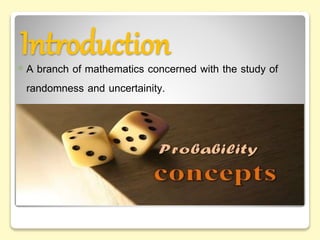
Introduction A branch of mathematics concerned with the study of
randomness and uncertainity.
 It is a measure of how often
a particular event will happen
if something is done
repeatedly.
 If an event is certain to
happen then its probability is
1.
 If an event is not certain to
happen then its probability is
0.
 Probability is always between
0 and 1.
 If you draw a card from a standard deck of cards, what is the
probability of not drawing a spade?
 In a certain population, 10% of the people are rich, 5% are
famous, and 3% are both rich and famous. A person is
randomly selected from this population. What is the chance
that the person is
› not rich?
› rich but not famous?
› either rich or famous?
RANDOM
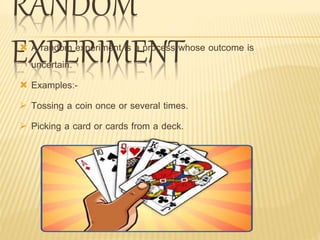
EXPERIMENT A random experiment is a process whose outcome is
uncertain.
 Examples:-
 Tossing a coin once or several times.
 Picking a card or cards from a deck.
Sample Space
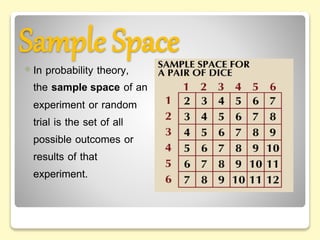
 In probability theory,
the sample space of an
experiment or random
trial is the set of all
possible outcomes or
results of that
experiment.
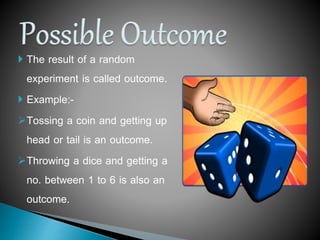
 The result of a random
experiment is called outcome.
 Example:-
Tossing a coin and getting up
head or tail is an outcome.
Throwing a dice and getting a
no. between 1 to 6 is also an
outcome.
 Any possible outcome of a
random experiment is called
an event.
 The probability of an event,
denoted P(E), is the likelihood
of that event occurring.
 Example:-
 Performing an experiment is
called trial and outcomes are
termed as event.
FAVORABLE EVENT
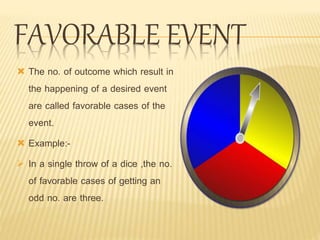
 The no. of outcome which result in
the happening of a desired event
are called favorable cases of the
event.
 Example:-
 In a single throw of a dice ,the no.
of favorable cases of getting an
odd no. are three.
Relative Frequency
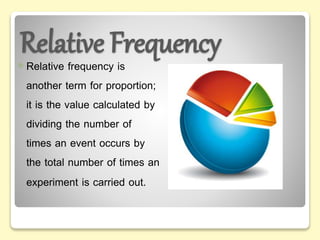
 Relative frequency is
another term for proportion;
it is the value calculated by
dividing the number of
times an event occurs by
the total number of times an
experiment is carried out.
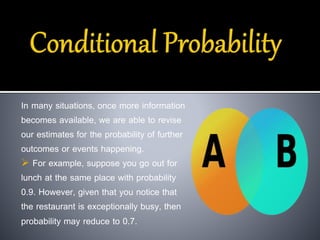
In many situations, once more information
becomes available, we are able to revise
our estimates for the probability of further
outcomes or events happening.
 For example, suppose you go out for
lunch at the same place with probability
0.9. However, given that you notice that
the restaurant is exceptionally busy, then
probability may reduce to 0.7.
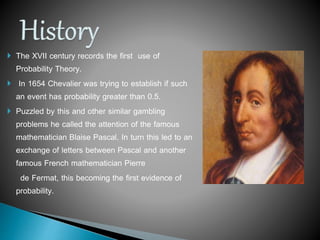
 The XVII century records the first use of
Probability Theory.
 In 1654 Chevalier was trying to establish if such
an event has probability greater than 0.5.
 Puzzled by this and other similar gambling
problems he called the attention of the famous
mathematician Blaise Pascal. In turn this led to an
exchange of letters between Pascal and another
famous French mathematician Pierre
de Fermat, this becoming the first evidence of
probability.
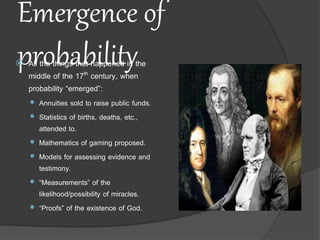
Emergence of
probability All the things that happened in the
middle of the 17th century, when
probability “emerged”:
 Annuities sold to raise public funds.
 Statistics of births, deaths, etc.,
attended to.
 Mathematics of gaming proposed.
 Models for assessing evidence and
testimony.
 “Measurements” of the
likelihood/possibility of miracles.
 “Proofs” of the existence of God.
THANK YOU
BY
ABDULLAH

Probability in daily life

  • 1.
  • 2.
    Introduction A branchof mathematics concerned with the study of randomness and uncertainity.
  • 3.
     It isa measure of how often a particular event will happen if something is done repeatedly.  If an event is certain to happen then its probability is 1.  If an event is not certain to happen then its probability is 0.  Probability is always between 0 and 1.
  • 4.
     If youdraw a card from a standard deck of cards, what is the probability of not drawing a spade?  In a certain population, 10% of the people are rich, 5% are famous, and 3% are both rich and famous. A person is randomly selected from this population. What is the chance that the person is › not rich? › rich but not famous? › either rich or famous?
  • 5.
    RANDOM EXPERIMENT A randomexperiment is a process whose outcome is uncertain.  Examples:-  Tossing a coin once or several times.  Picking a card or cards from a deck.
  • 6.
    Sample Space  Inprobability theory, the sample space of an experiment or random trial is the set of all possible outcomes or results of that experiment.
  • 7.
     The resultof a random experiment is called outcome.  Example:- Tossing a coin and getting up head or tail is an outcome. Throwing a dice and getting a no. between 1 to 6 is also an outcome.
  • 8.
     Any possibleoutcome of a random experiment is called an event.  The probability of an event, denoted P(E), is the likelihood of that event occurring.  Example:-  Performing an experiment is called trial and outcomes are termed as event.
  • 9.
    FAVORABLE EVENT  Theno. of outcome which result in the happening of a desired event are called favorable cases of the event.  Example:-  In a single throw of a dice ,the no. of favorable cases of getting an odd no. are three.
  • 10.
    Relative Frequency  Relativefrequency is another term for proportion; it is the value calculated by dividing the number of times an event occurs by the total number of times an experiment is carried out.
  • 11.
    In many situations,once more information becomes available, we are able to revise our estimates for the probability of further outcomes or events happening.  For example, suppose you go out for lunch at the same place with probability 0.9. However, given that you notice that the restaurant is exceptionally busy, then probability may reduce to 0.7.
  • 12.
     The XVIIcentury records the first use of Probability Theory.  In 1654 Chevalier was trying to establish if such an event has probability greater than 0.5.  Puzzled by this and other similar gambling problems he called the attention of the famous mathematician Blaise Pascal. In turn this led to an exchange of letters between Pascal and another famous French mathematician Pierre de Fermat, this becoming the first evidence of probability.
  • 13.
    Emergence of probability Allthe things that happened in the middle of the 17th century, when probability “emerged”:  Annuities sold to raise public funds.  Statistics of births, deaths, etc., attended to.  Mathematics of gaming proposed.  Models for assessing evidence and testimony.  “Measurements” of the likelihood/possibility of miracles.  “Proofs” of the existence of God.
  • 14.