Principles to Practice in Teaching Reading Jennifer Bixby Joe McVeigh CATESOL Santa Clara, CA April 24, 2010

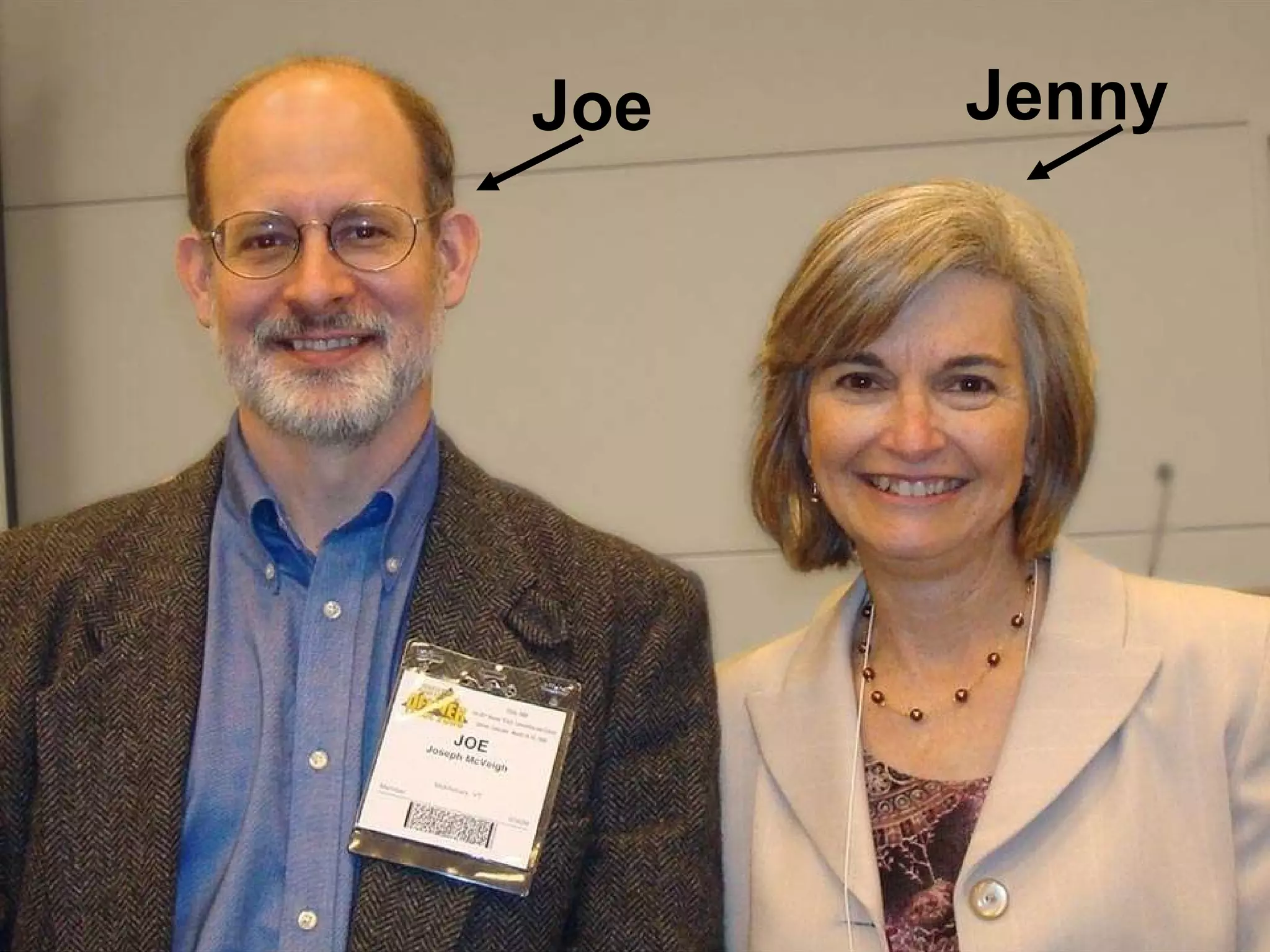
Joe Jenny
Who are you ?
Schema building
What are your top  3 principles  for teaching reading?
Principles of teaching reading: an  overview
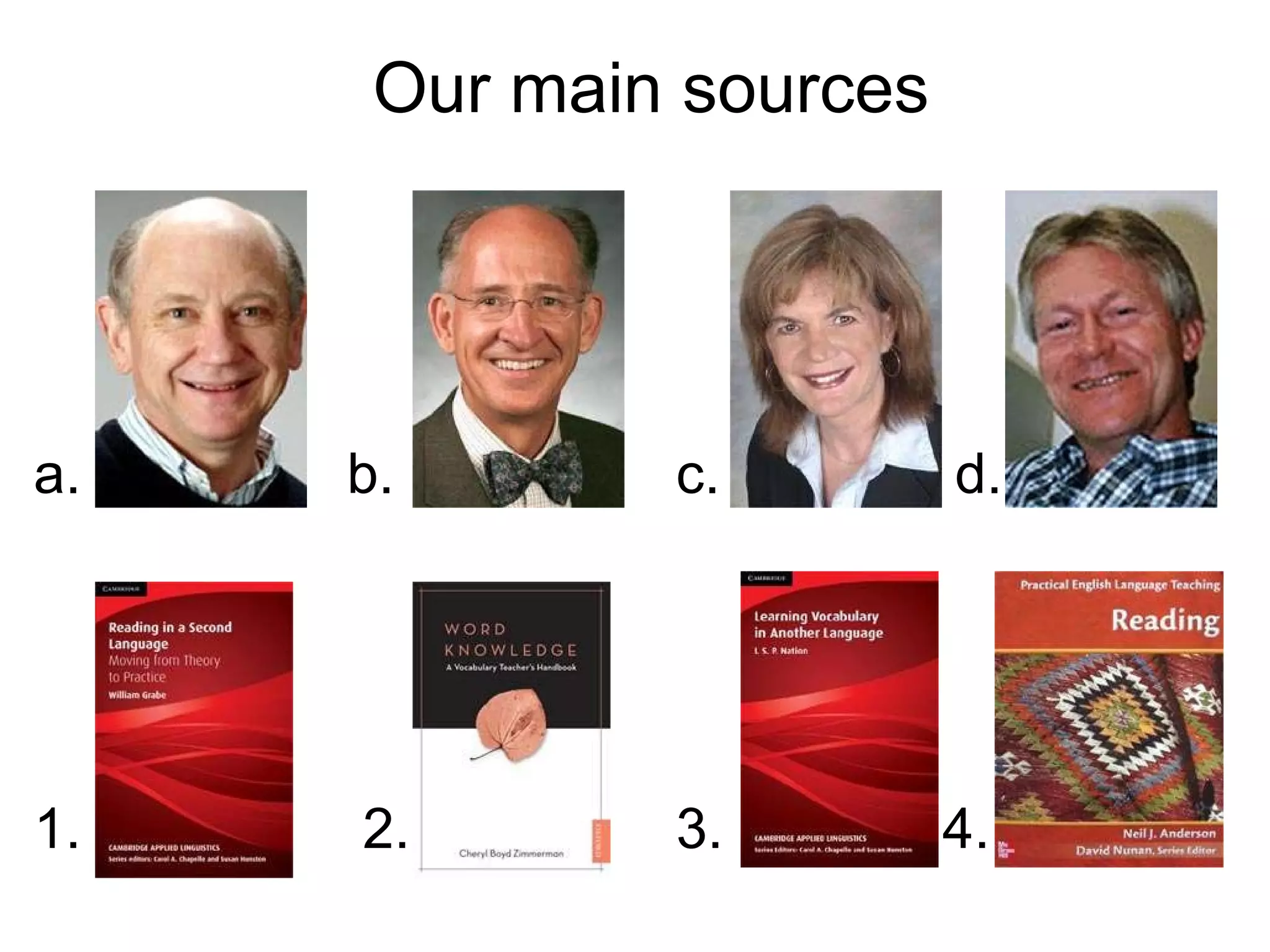
Our main sources a.  b.  c.  d.  1.  2.  3.  4.
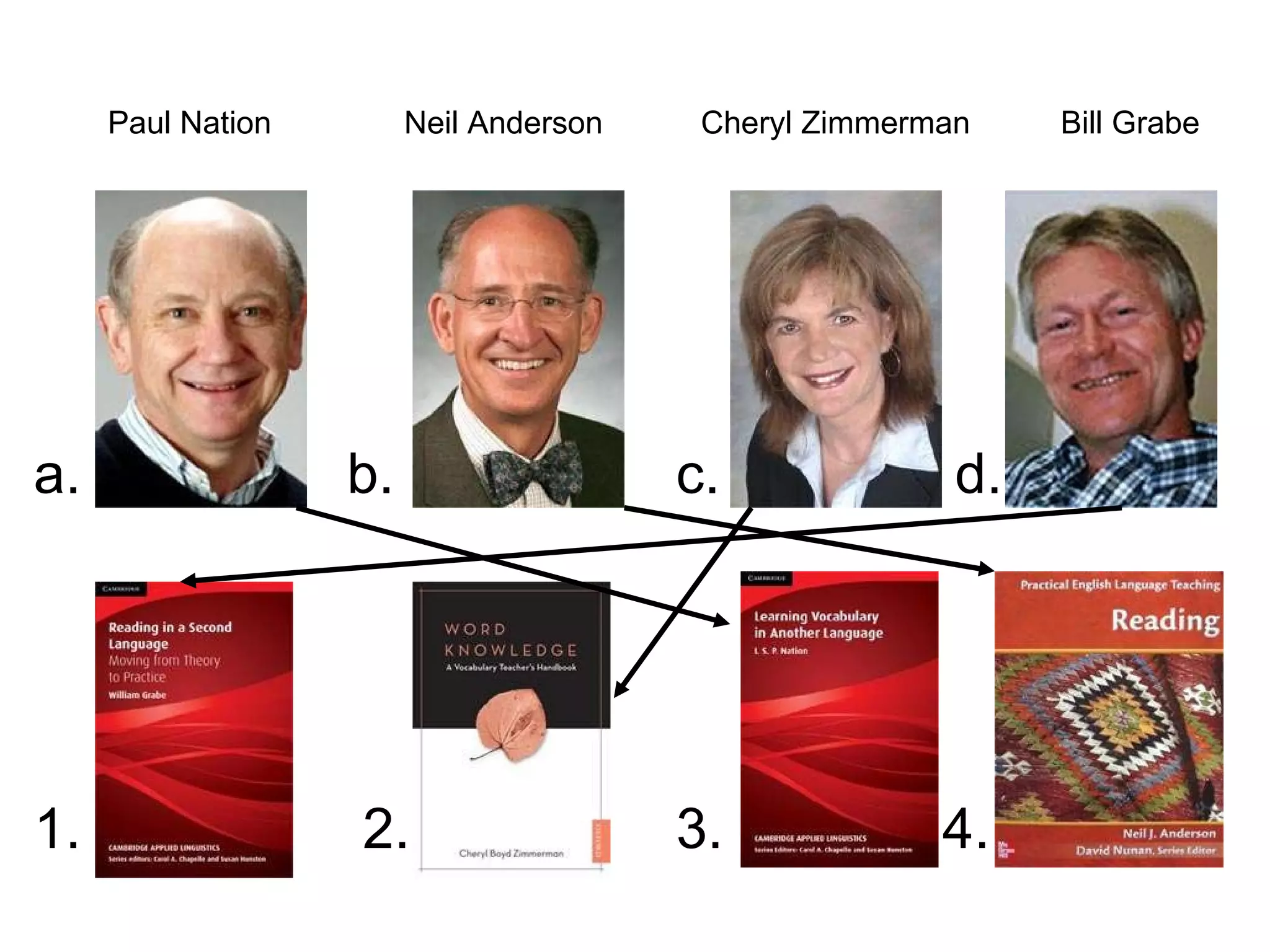
a.  b.  c.  d.  1.  2.  3.  4. Paul Nation Neil Anderson Bill Grabe Cheryl Zimmerman
1. Develop word recognition skills
2. Move from sentence-level to discourse-level processing
3. Develop lessons structured around  pre-  during-  and post-reading activities
4. Use both  intensive and extensive reading
Rate 5. Increase reading speed
6. Focus attention on vocabulary development skills
7. Explicitly teach strategies
8. Develop and maintain motivation
9. Move towards learner autonomy
Principles of teaching reading: an  overview
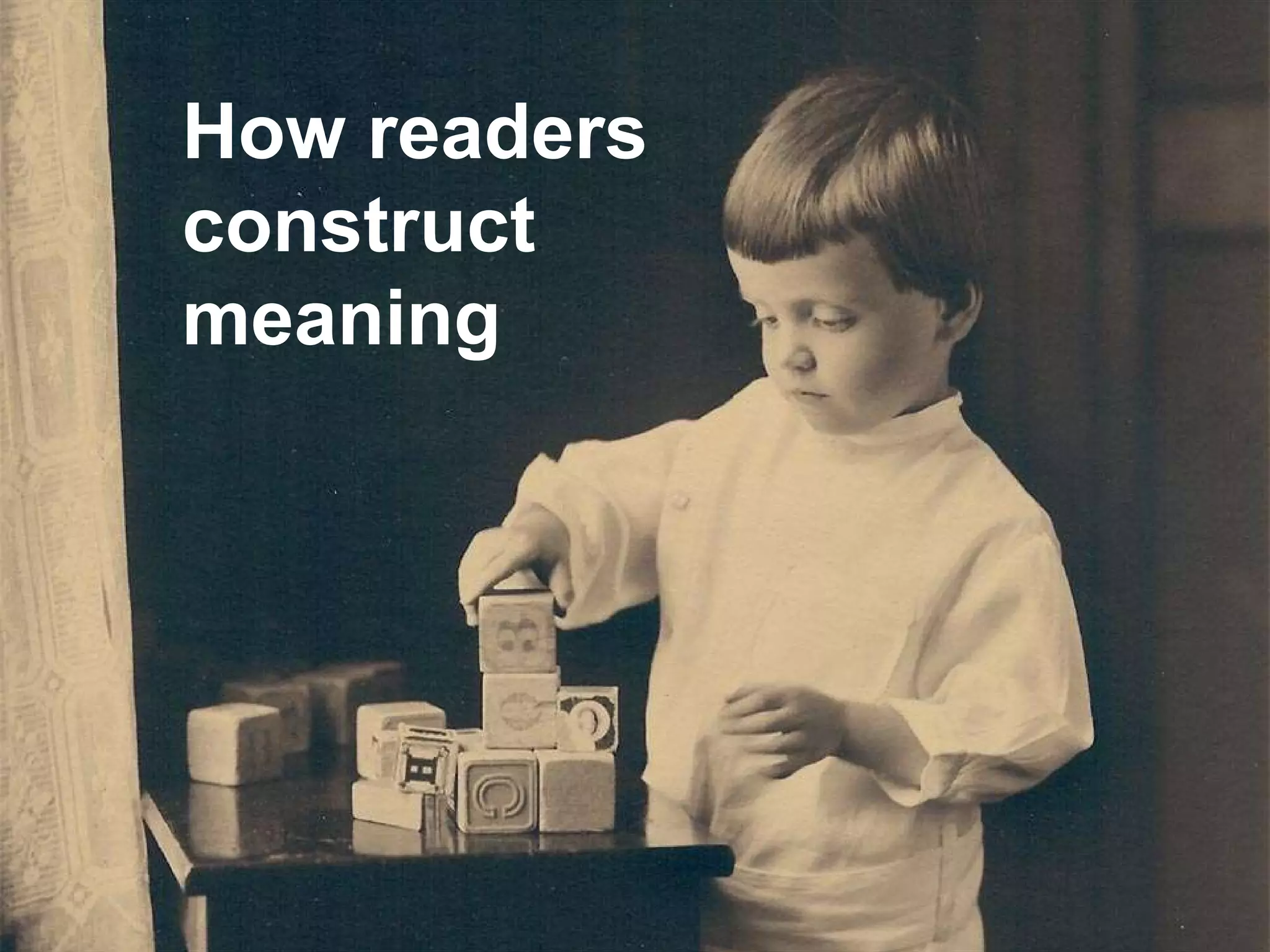
How readers construct meaning
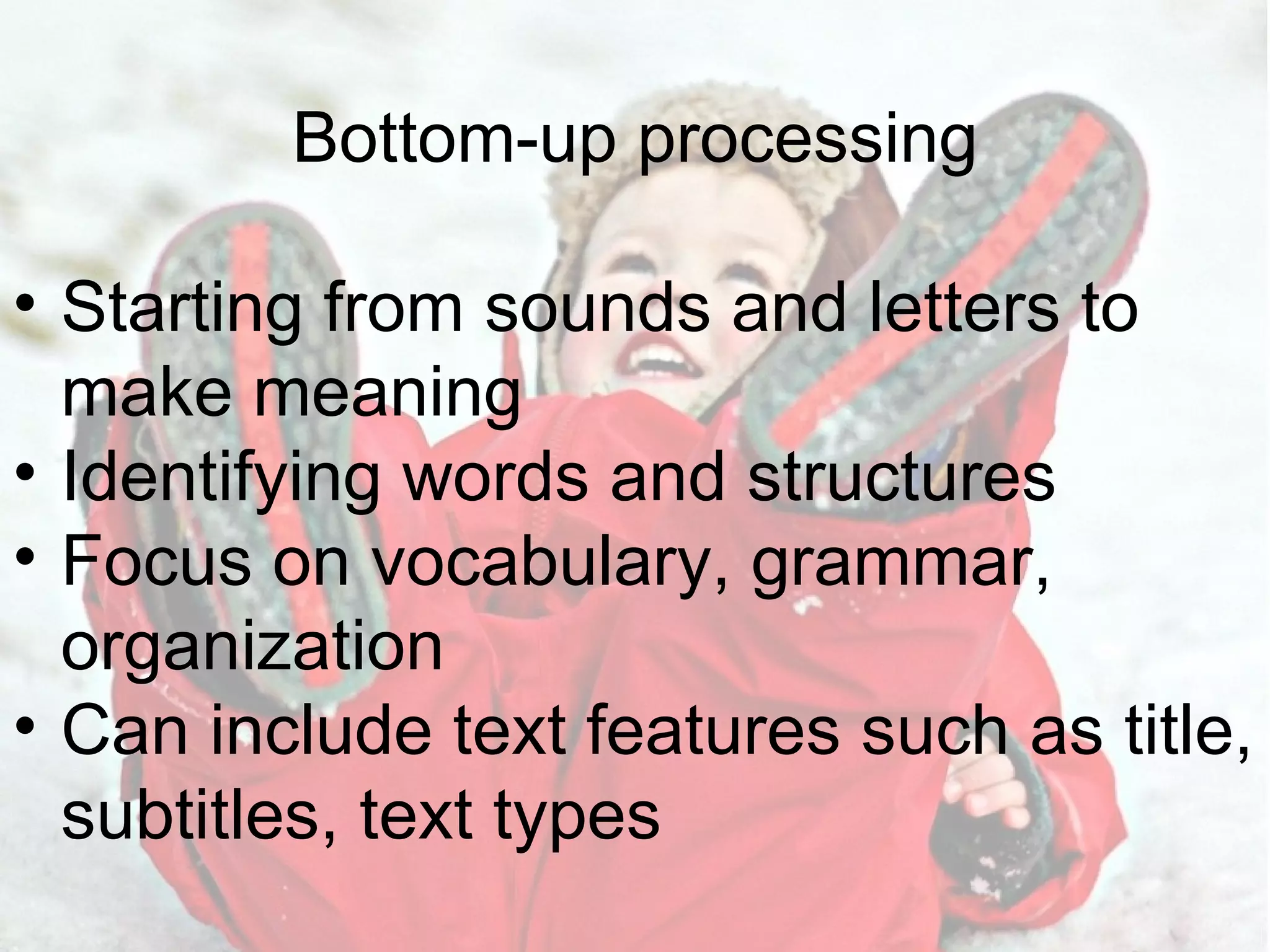
Bottom-up   processing
Bottom-up processing Starting from sounds and letters to make meaning Identifying words and structures Focus on vocabulary, grammar, organization Can include text features such as title, subtitles, text types
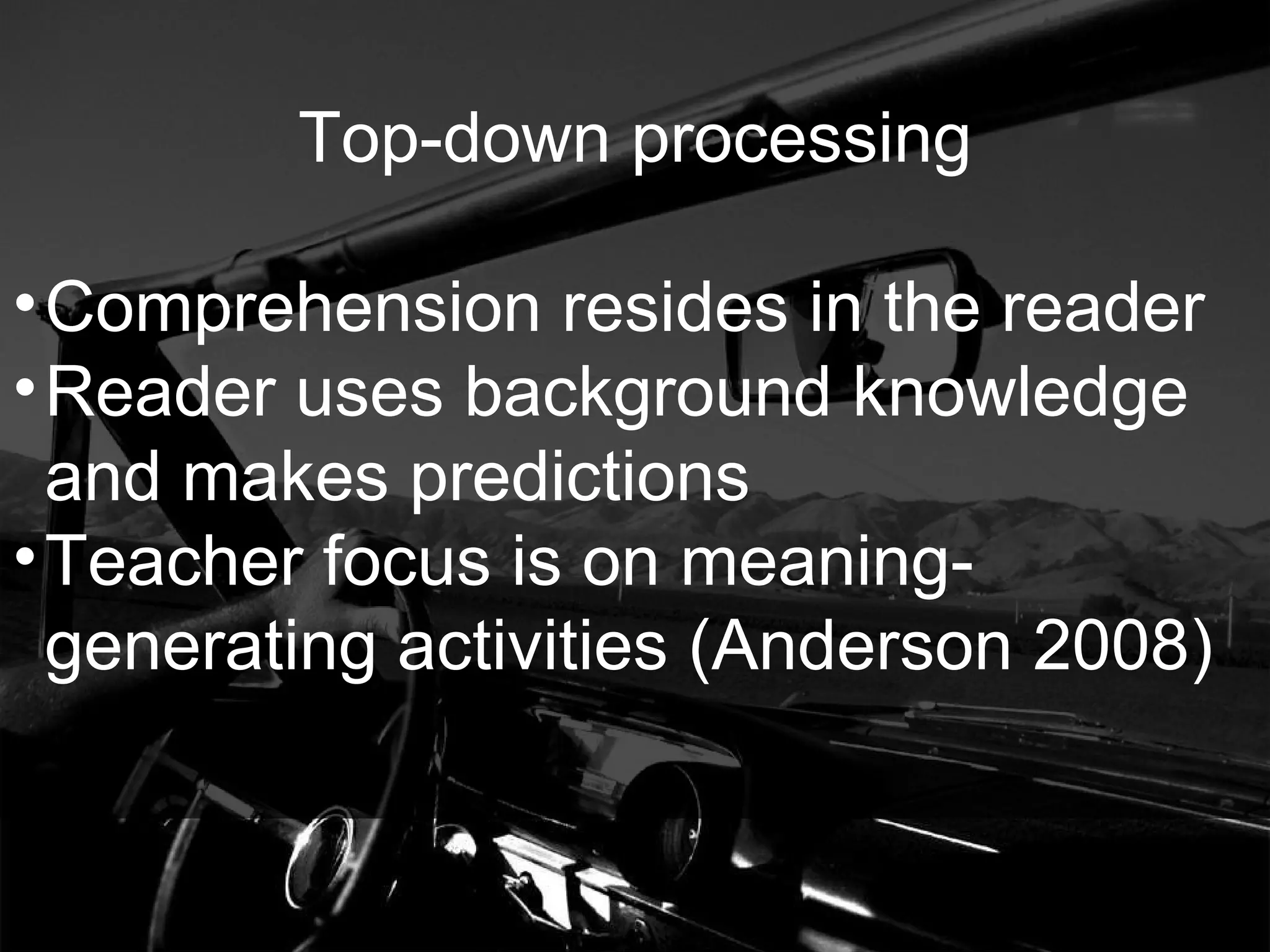
Top-down processing
Top-down processing Comprehension resides in the reader Reader uses background knowledge and makes predictions Teacher focus is on meaning-generating activities (Anderson 2008)
Interactive processing
Interactive processing Readers use bottom-up and top-down processes simultaneously Higher and lower-level processes influence each other (Hedgcock & Ferris, 2009)
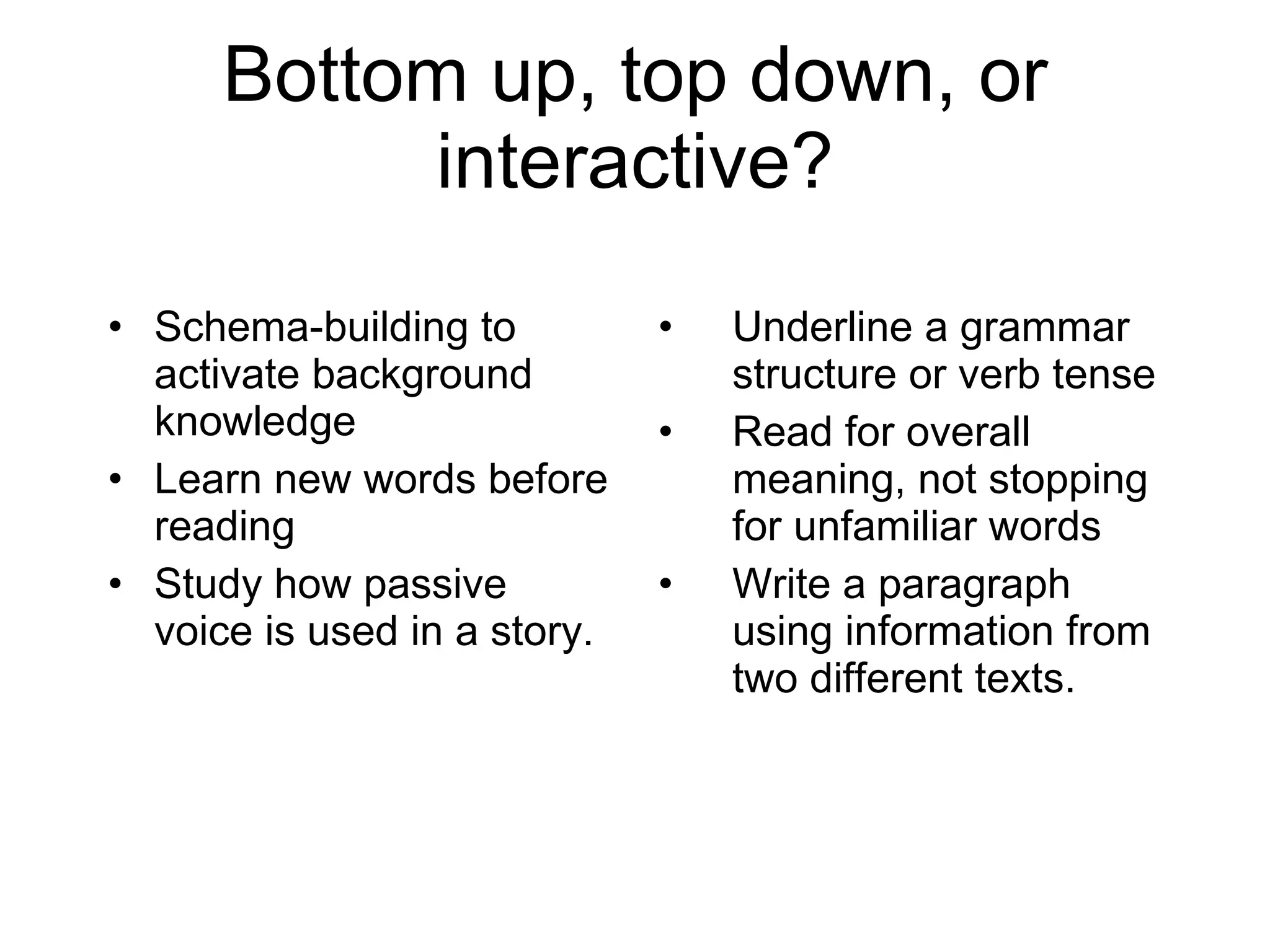
Bottom up, top down, or interactive? Schema-building to activate background knowledge Learn new words before reading Study how passive voice is used in a story. Underline a grammar structure or verb tense Read for overall meaning, not stopping for unfamiliar words Write a paragraph using information from two different texts.
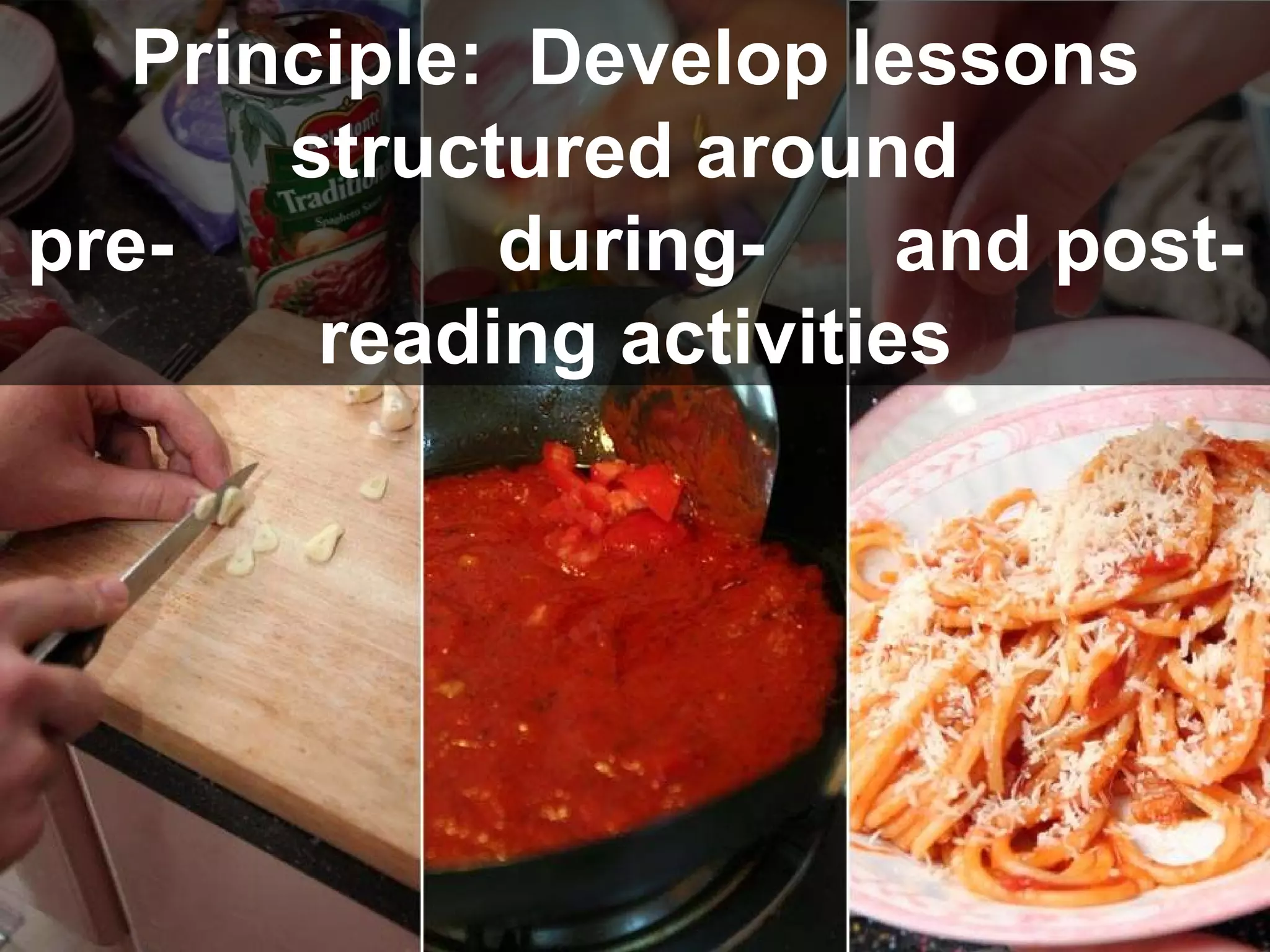
Principle:  Develop lessons structured around  pre-  during-  and post-reading activities
Pre-reading activity: Schema building
Pre-reading activity: Previewing the text
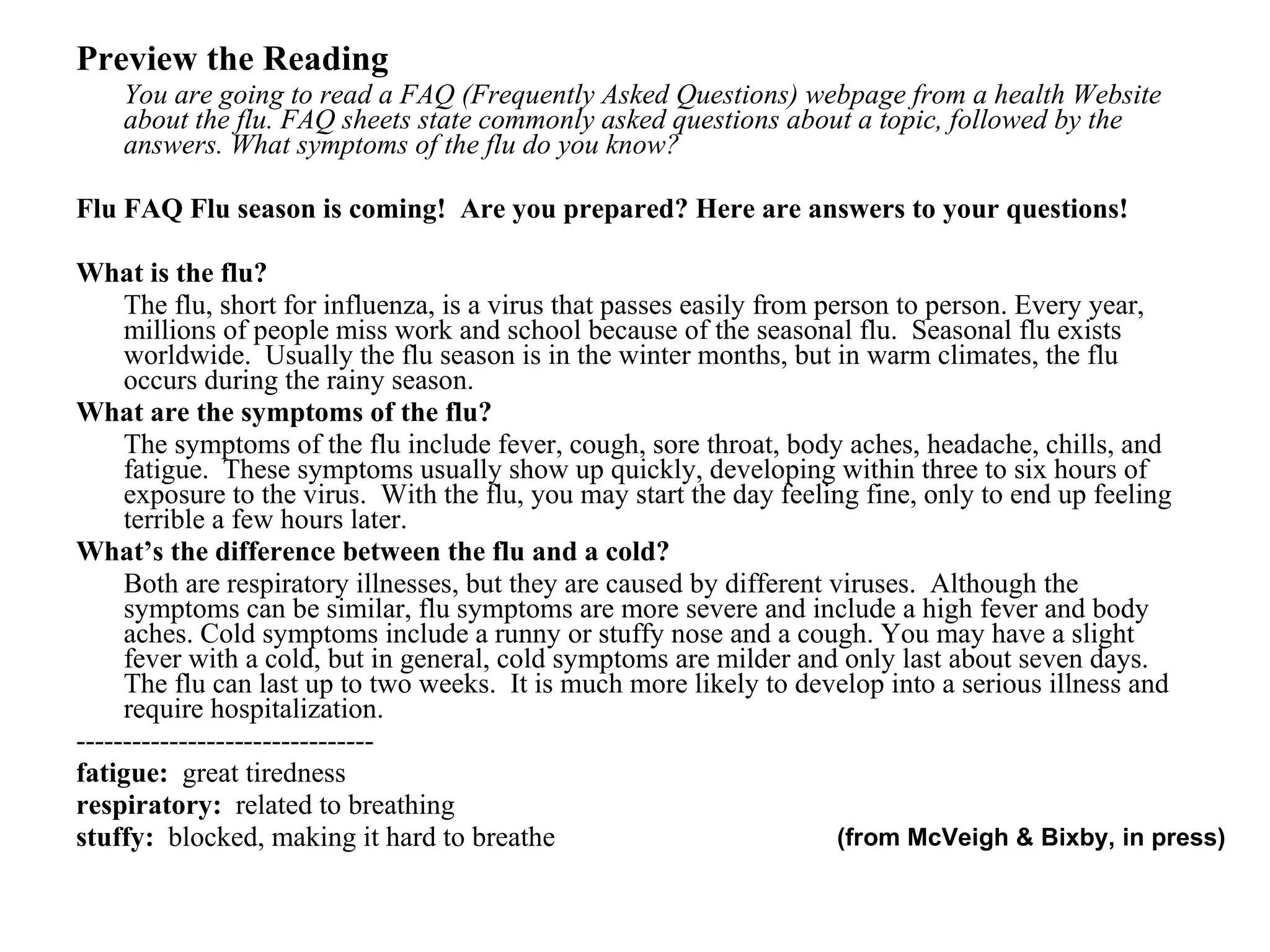
Preview the Reading You are going to read a FAQ (Frequently Asked Questions) webpage from a health Website about the flu. FAQ sheets state commonly asked questions about a topic, followed by the answers. What symptoms of the flu do you know? Flu FAQ Flu season is coming!  Are you prepared? Here are answers to your questions! What is the flu? The flu, short for influenza, is a virus that passes easily from person to person. Every year, millions of people miss work and school because of the seasonal flu.  Seasonal flu exists worldwide.  Usually the flu season is in the winter months, but in warm climates, the flu occurs during the rainy season.  What are the symptoms of the flu? The symptoms of the flu include fever, cough, sore throat, body aches, headache, chills, and fatigue.  These symptoms usually show up quickly, developing within three to six hours of exposure to the virus.  With the flu, you may start the day feeling fine, only to end up feeling terrible a few hours later. What’s the difference between the flu and a cold? Both are respiratory illnesses, but they are caused by different viruses.  Although the symptoms can be similar, flu symptoms are more severe and include a high fever and body aches. Cold symptoms include a runny or stuffy nose and a cough. You may have a slight fever with a cold, but in general, cold symptoms are milder and only last about seven days. The flu can last up to two weeks.  It is much more likely to develop into a serious illness and require hospitalization. --------------------------------  fatigue:  great tiredness respiratory:  related to breathing stuffy:  blocked, making it hard to breathe (from McVeigh & Bixby, in press)
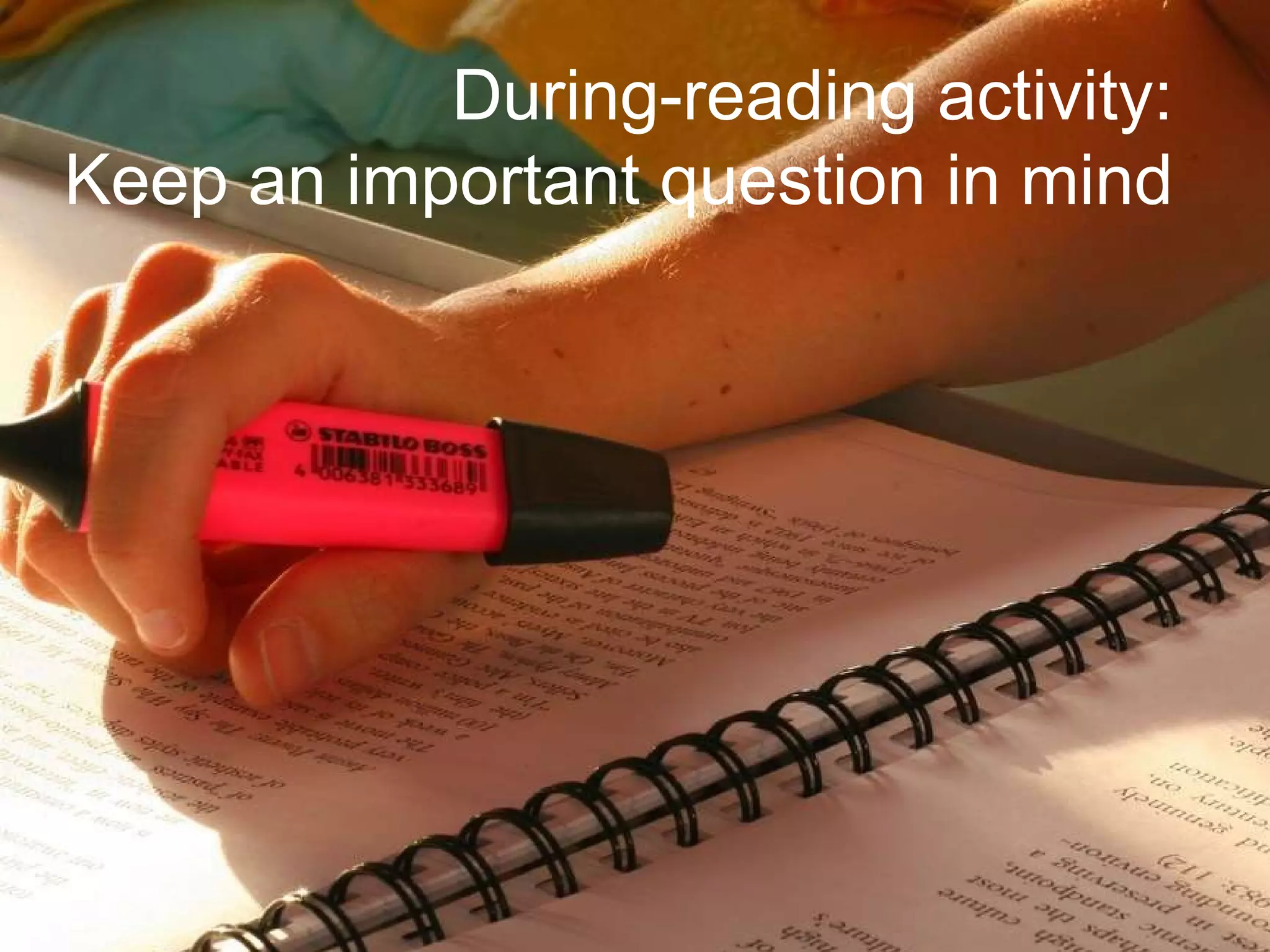
During-reading activity: Keep an important question in mind
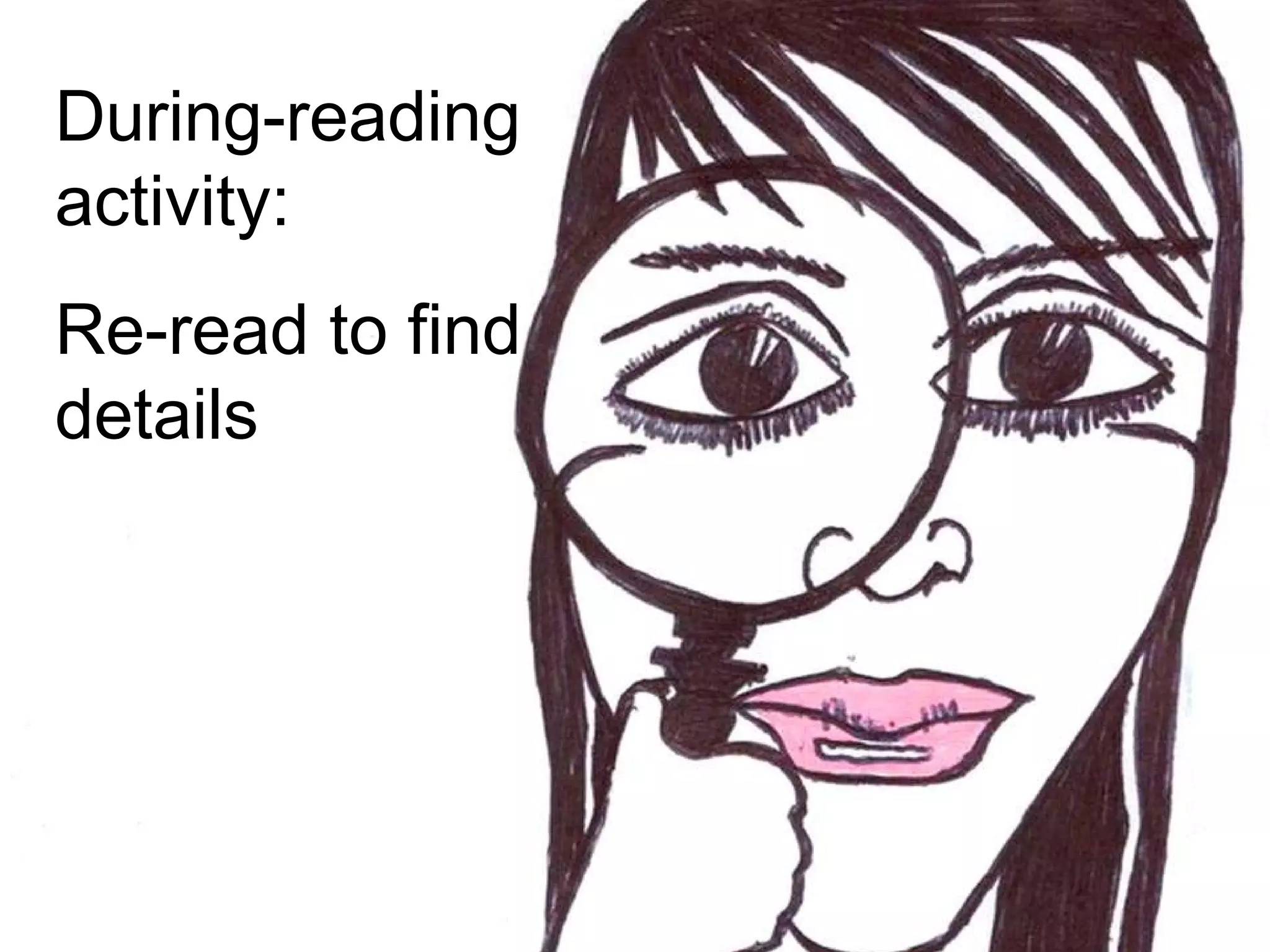
During-reading activity: Re-read to find details
Post-reading activity: Critical analysis and evaluation
Post-reading activity: Critical analysis and evaluation In which lines of the reading does the author give factual information? In which lines does the author give her opinion?  What clues tell you it is her opinion?
Post-reading activity: Reflection and integration
Post-reading activity: Reflection and integration Do you agree with the author that  technology is bad for human  relationships? Why or why not? Write a paragraph giving your own  opinion about the topic. Use quotations  from the text to support your ideas.
Principle:  Focus attention on vocabulary development skills
 
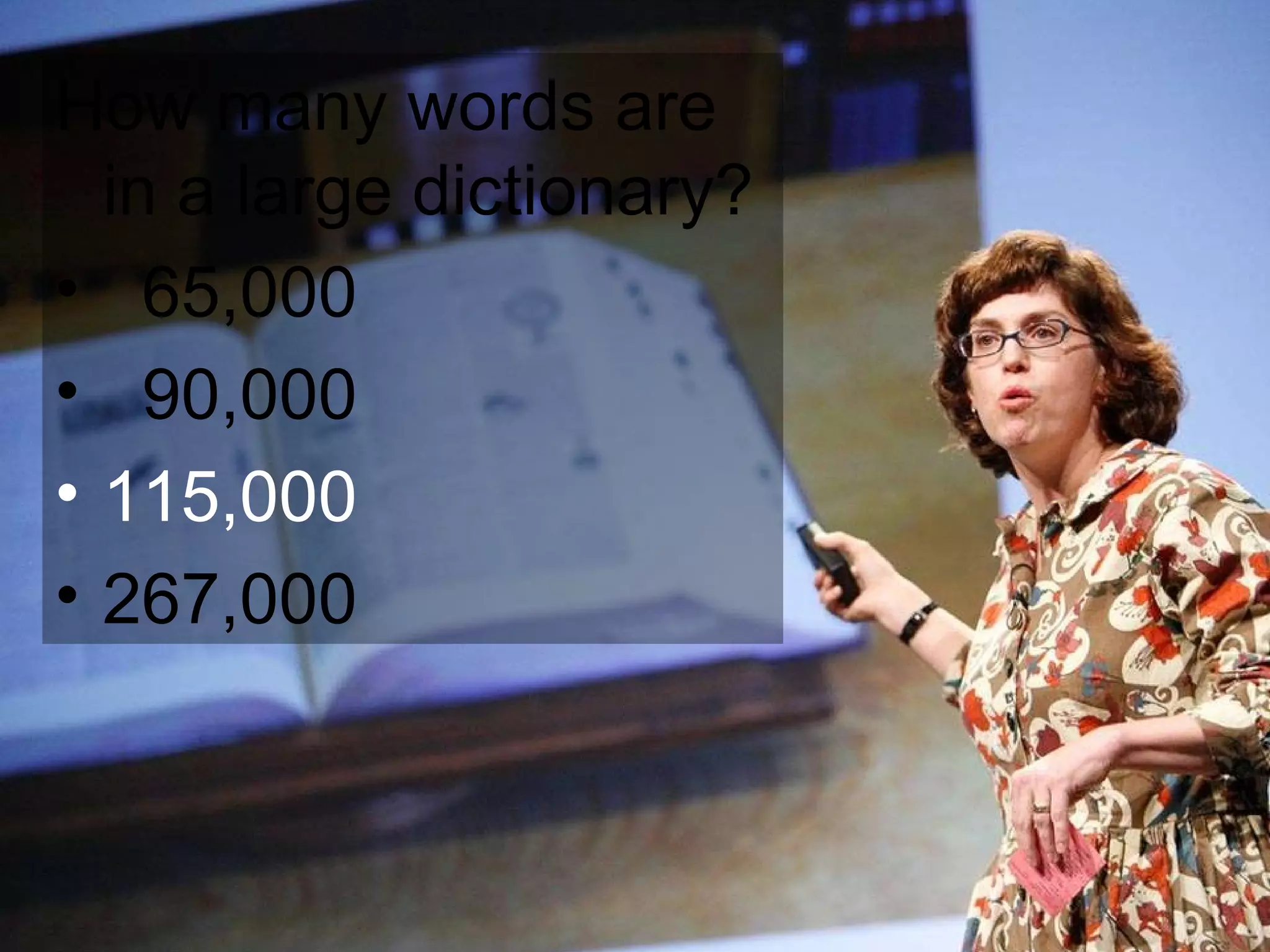
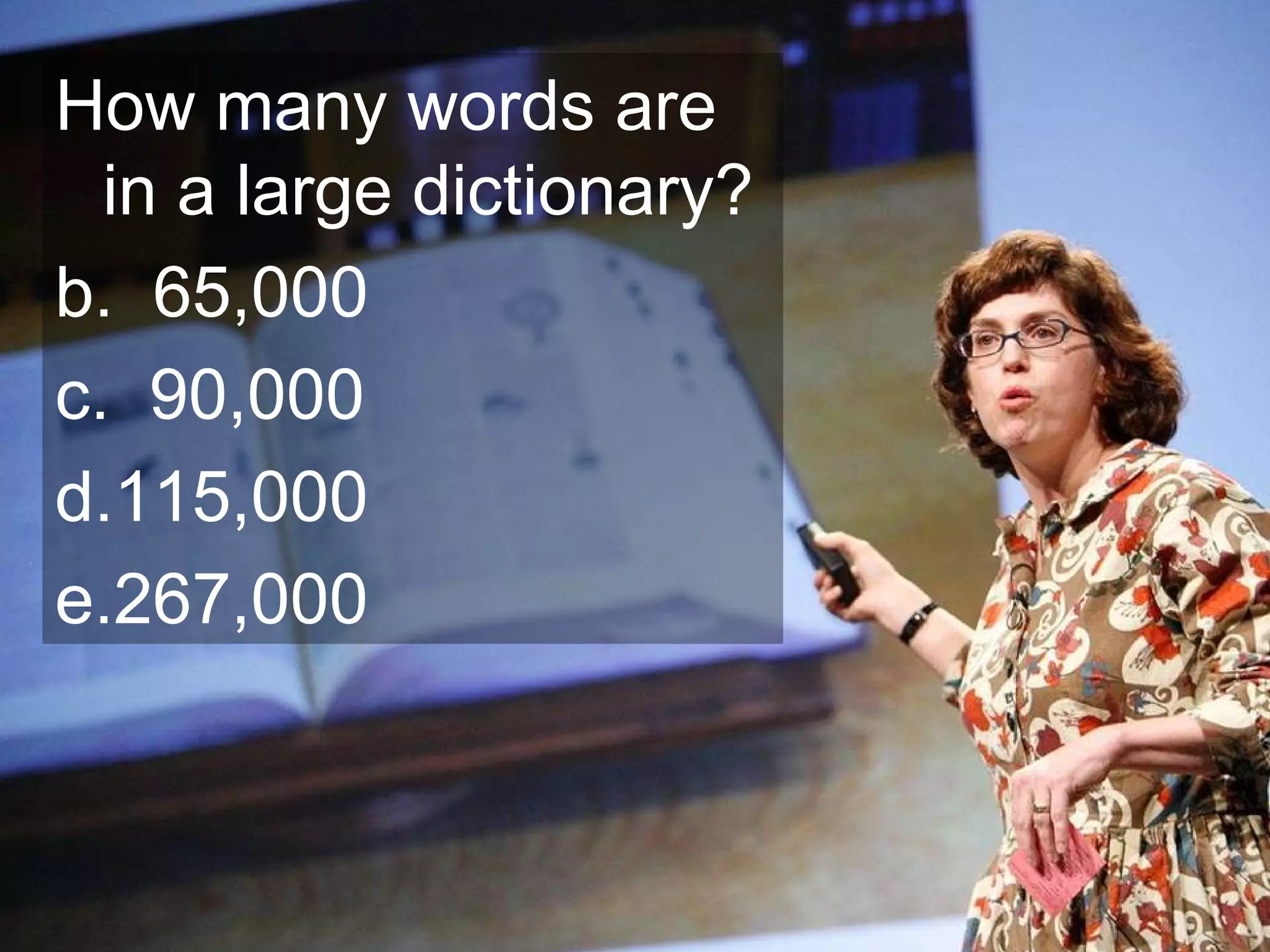
How many words are in a large dictionary? 65,000 90,000 115,000 267,000
How many words does a native speaker know? 5,000 10,000 20,000 40,000
How many words does a typical native speaker know? 5,000 10,000 20,000 40,000
How many words does a native speaker know? 5,000 10,000 20,000 40,000
How many words does a language learner need to  know?
How many words does a language learner need to  know? “ A very large number.”  (Nation 2001)
What level of reading vocabulary is fun, challenging, or frustrating for students?
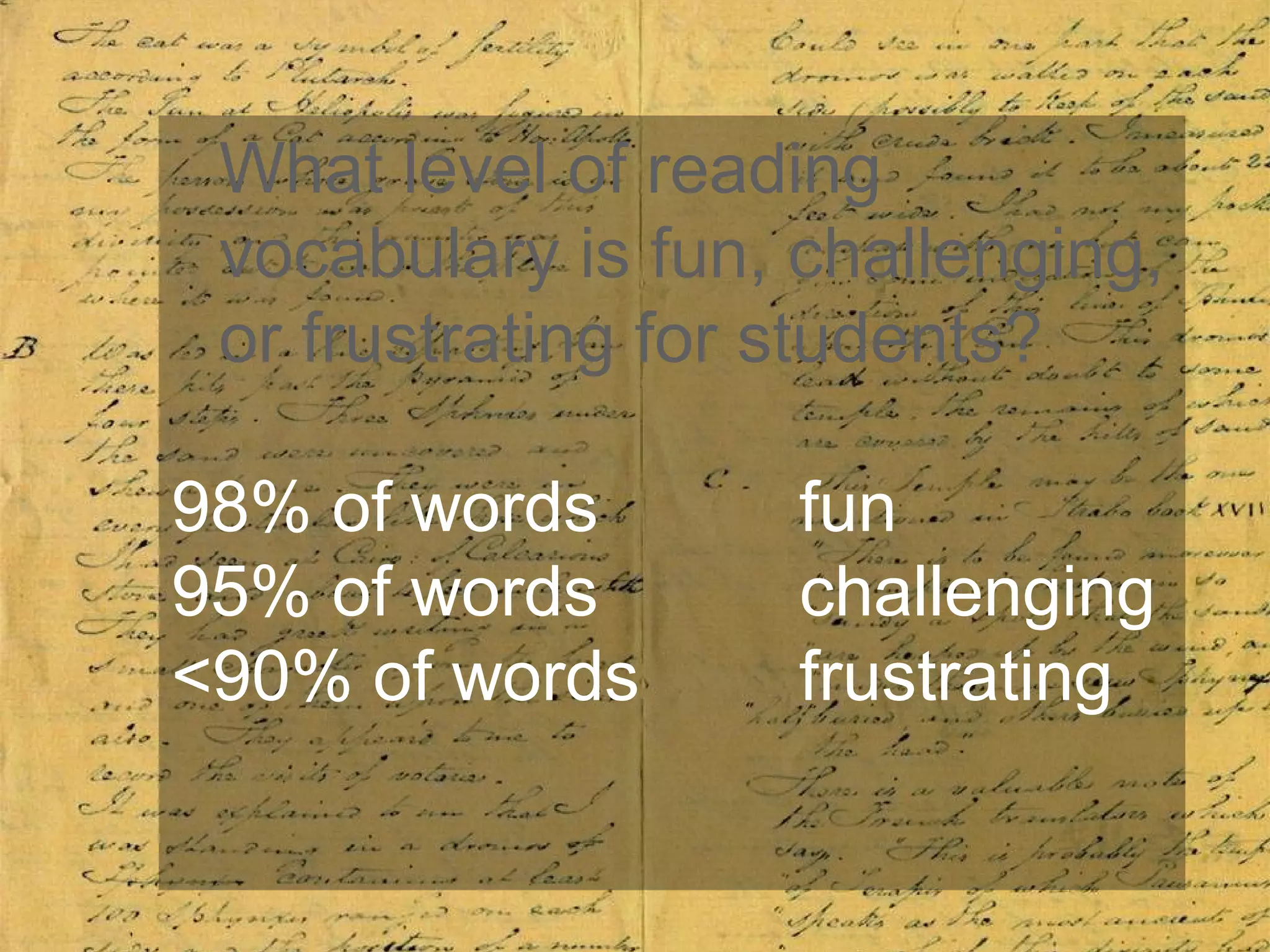
What level of reading vocabulary is fun, challenging, or frustrating for students? 98% of words fun 95% of words challenging <90% of words frustrating
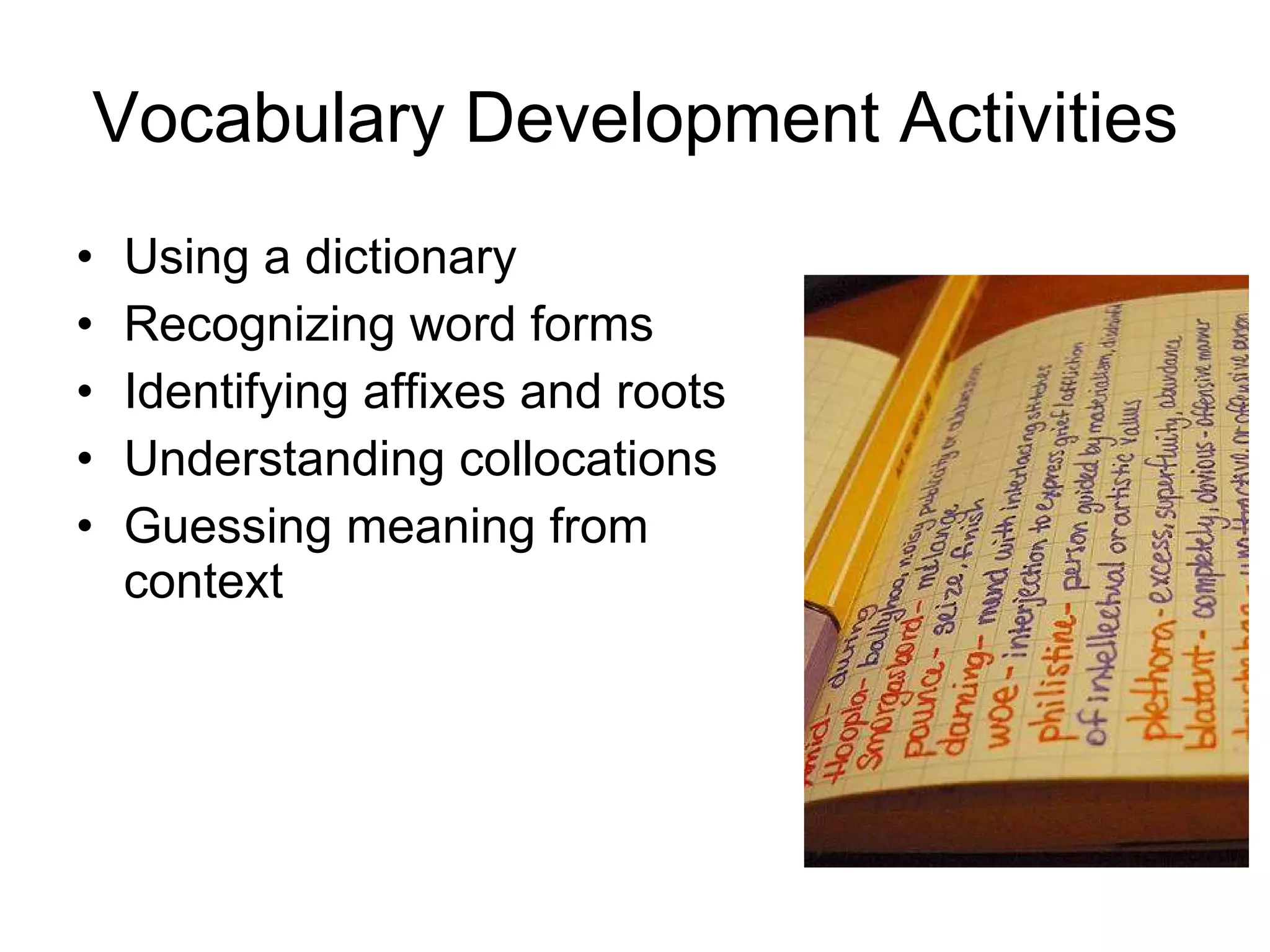
Vocabulary Development Activities Using a dictionary Recognizing word forms Identifying affixes and roots Understanding collocations Guessing meaning from context
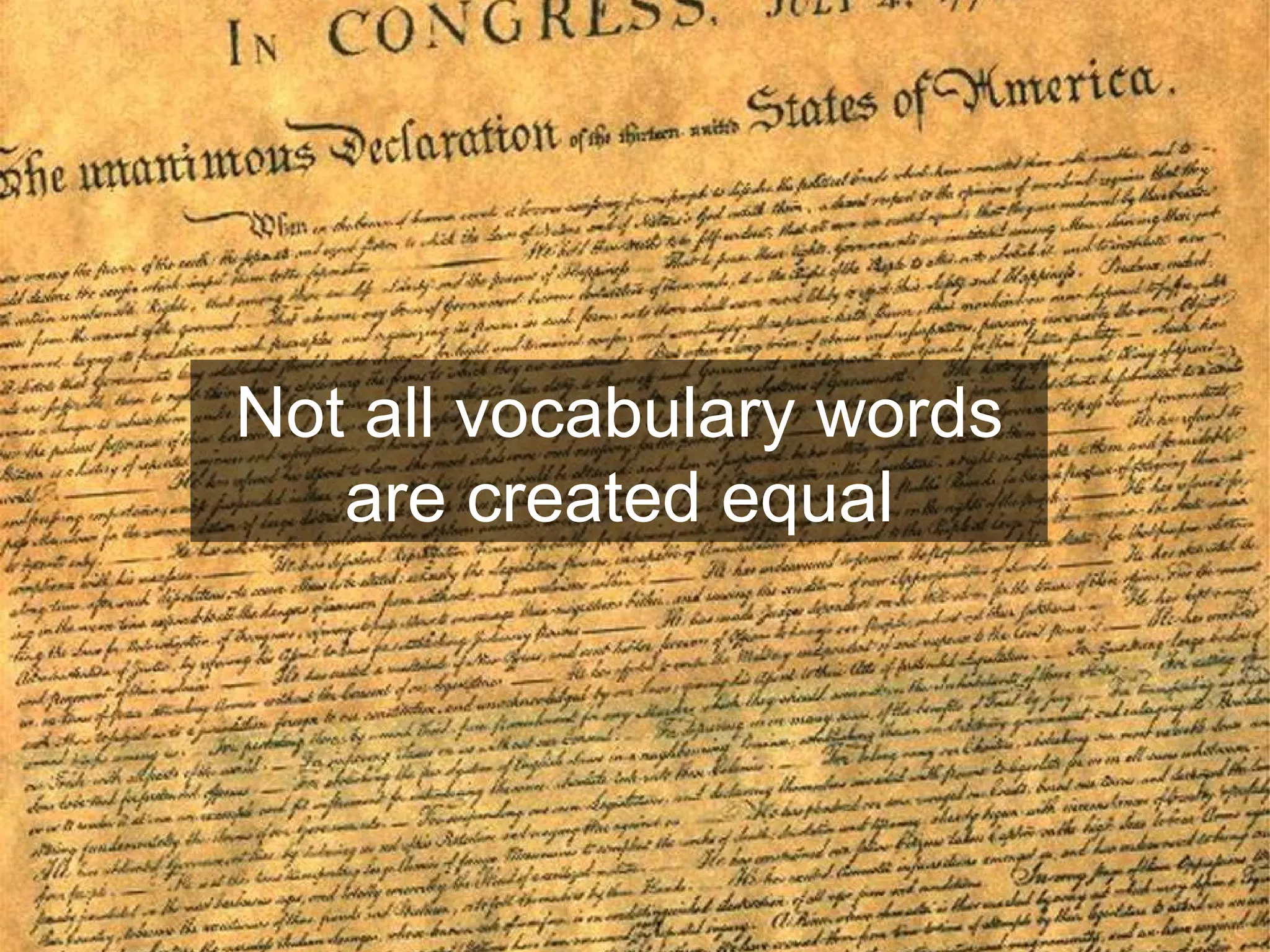
Not all vocabulary words are created equal
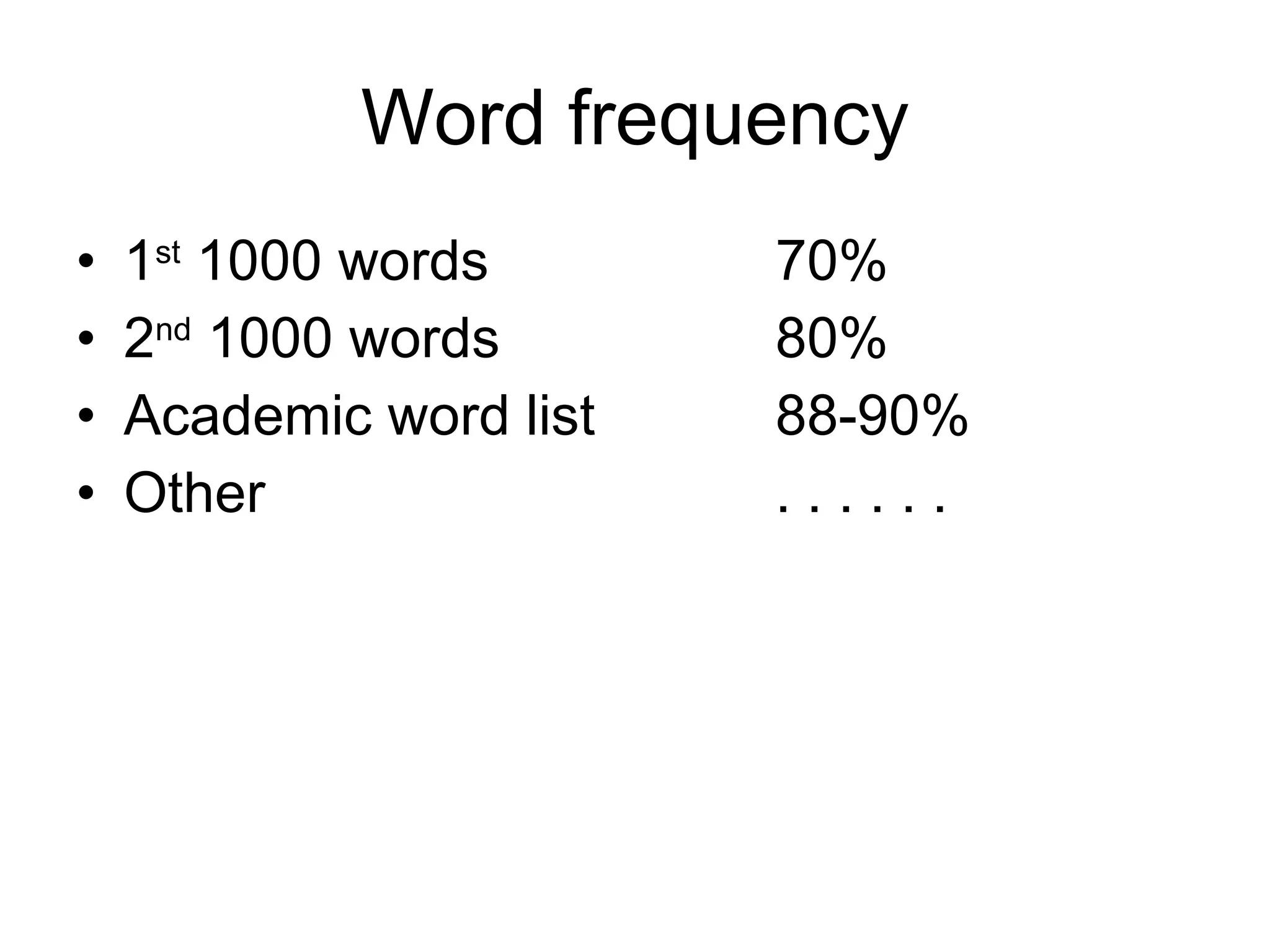
Word frequency 1 st  1000 words 70% 2 nd  1000 words 80% Academic word list 88-90% Other . . . . . .
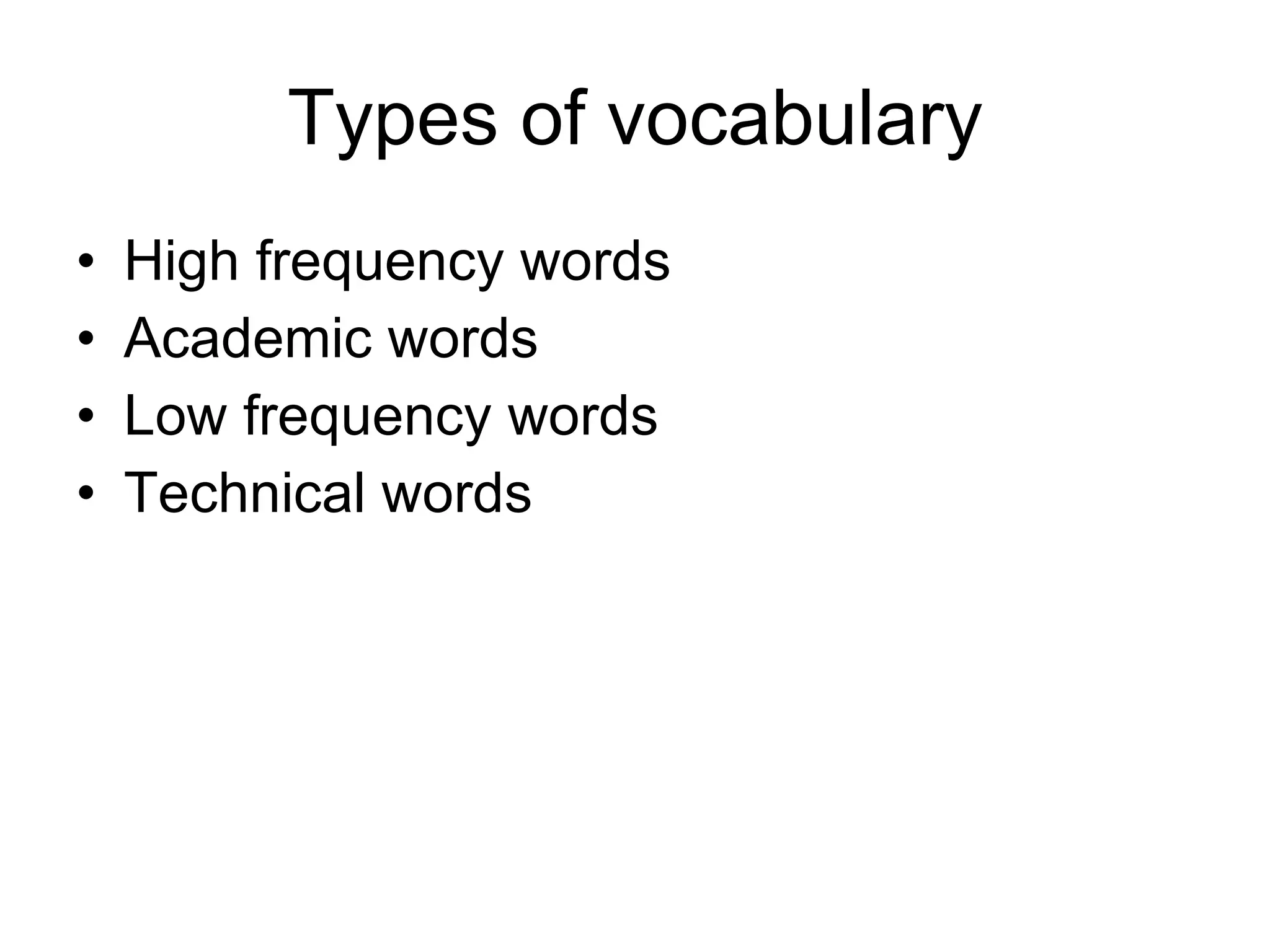
Types of vocabulary High frequency words Academic words Low frequency words Technical words
Checking on the vocabulary level Use a vocabulary profiler such as this one at the English Centre at the University of Hong Kong http://ec.hku.hk/vocabulary/profile.htm
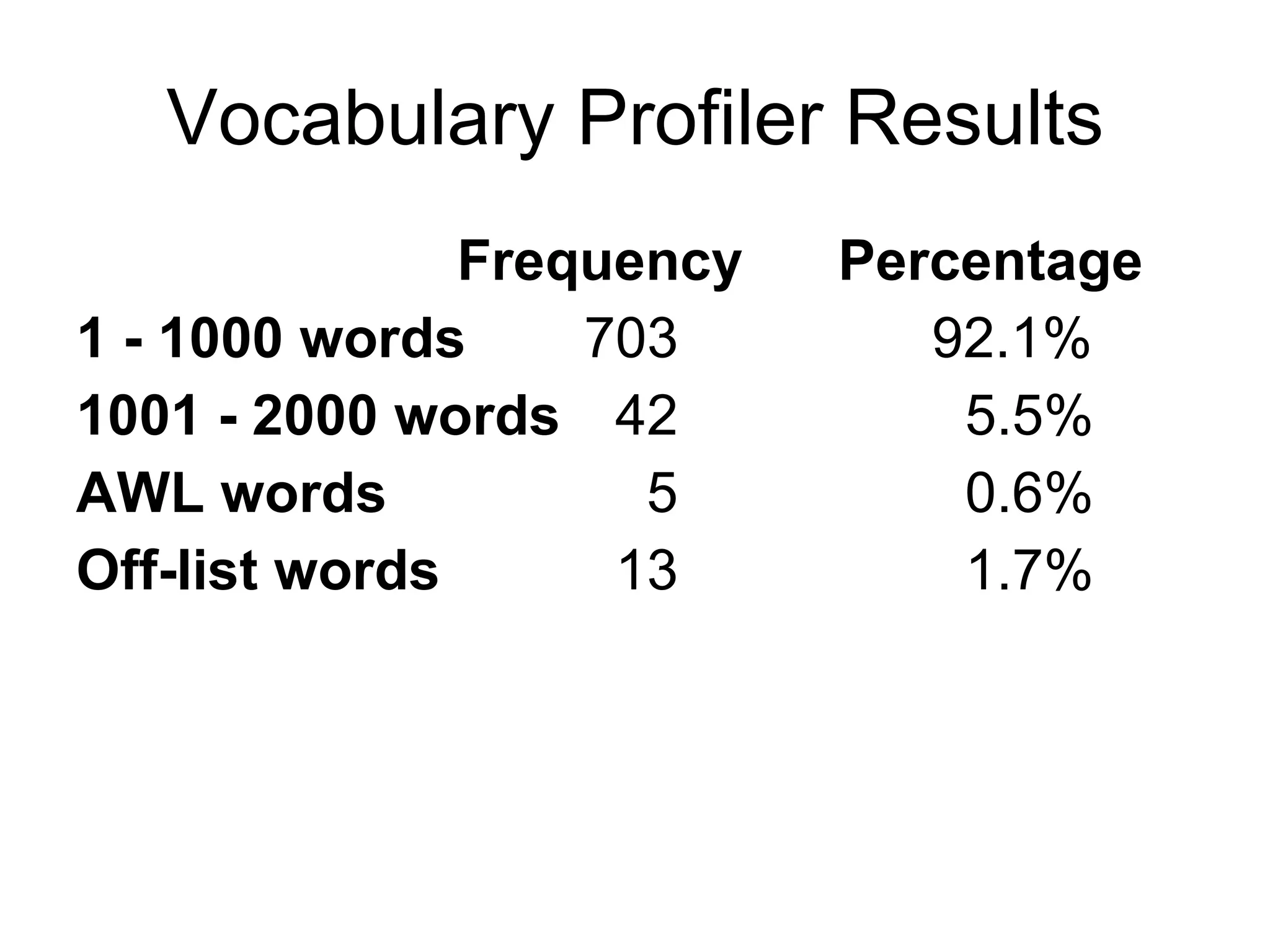
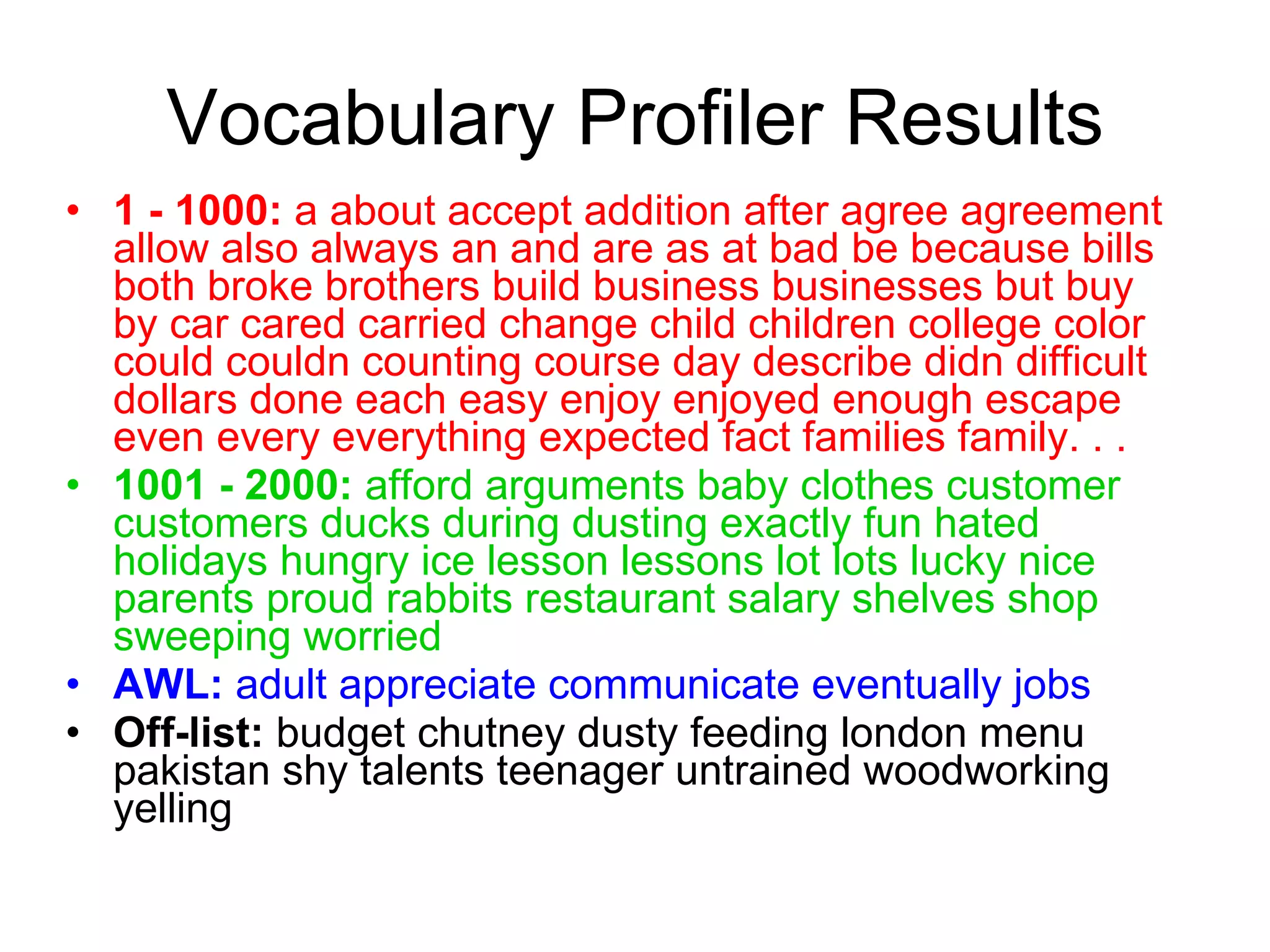
Vocabulary Profiler Results Frequency Percentage 1 - 1000 words  703   92.1% 1001 - 2000 words    42 5.5% AWL words    5 0.6% Off-list words    13 1.7%
Vocabulary Profiler Results 1 - 1000:  a about accept addition after agree agreement allow also always an and are as at bad be because bills both broke brothers build business businesses but buy by car cared carried change child children college color could couldn counting course day describe didn difficult dollars done each easy enjoy enjoyed enough escape even every everything expected fact families family. . . 1001 - 2000:  afford arguments baby clothes customer customers ducks during dusting exactly fun hated holidays hungry ice lesson lessons lot lots lucky nice parents proud rabbits restaurant salary shelves shop sweeping worried  AWL:  adult appreciate communicate eventually jobs  Off-list:  budget chutney dusty feeding london menu pakistan shy talents teenager untrained woodworking yelling
Principle: Explicitly teach strategies
Strategy: Monitor comprehension
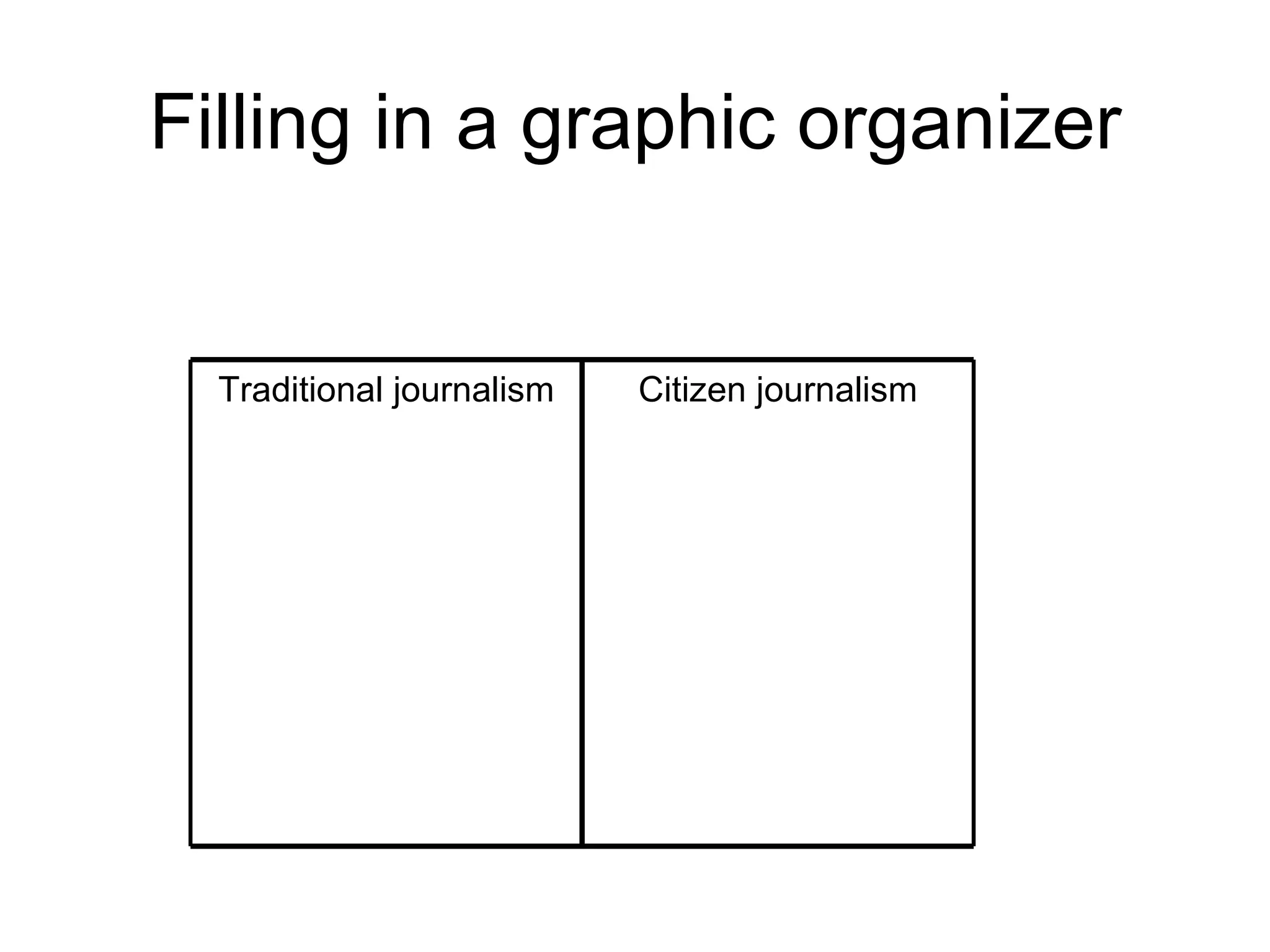
Filling in a graphic organizer Citizen journalism Traditional journalism
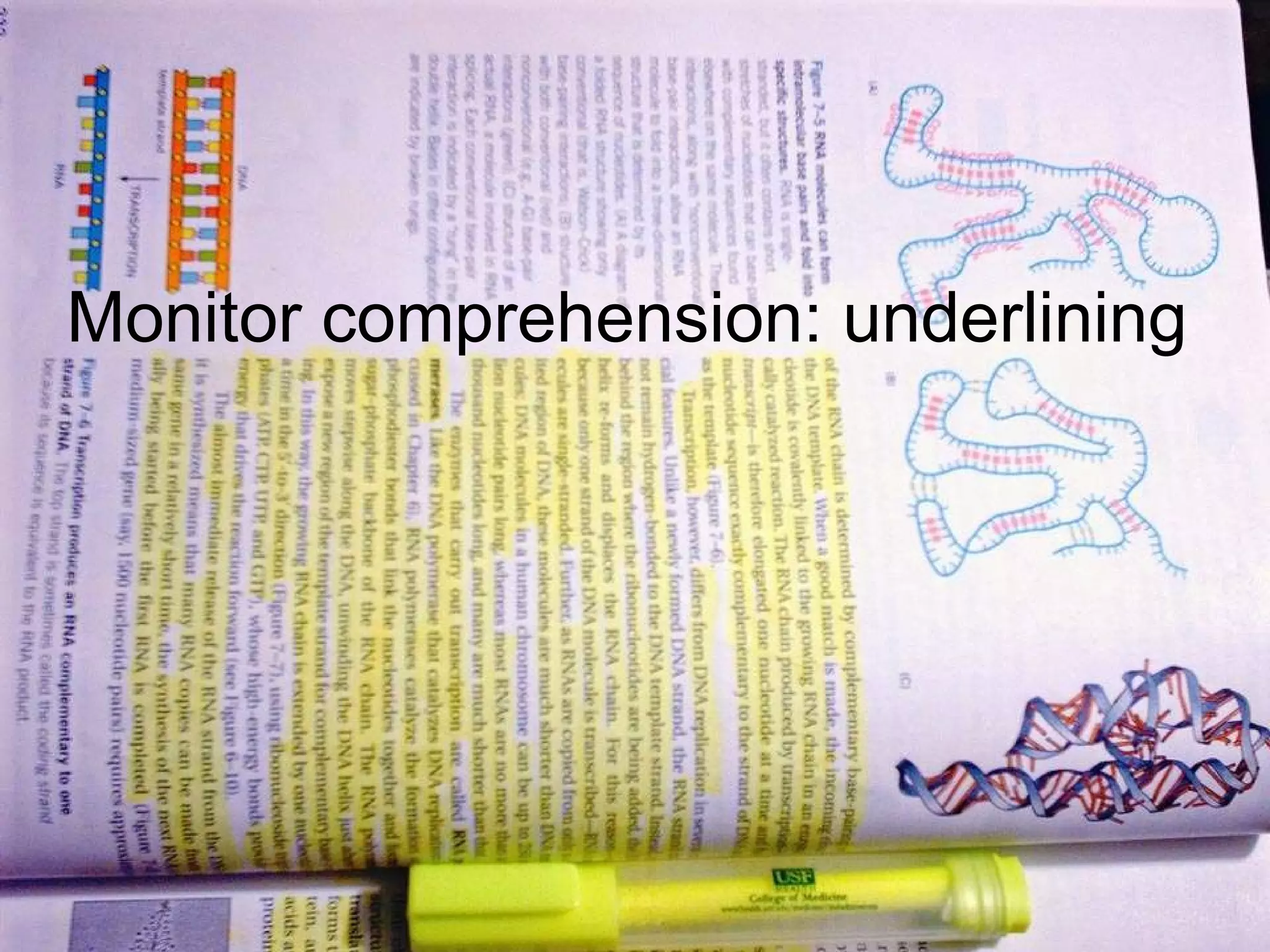
Monitor comprehension: underlining
Interactive processing
Questions
Q: Skills for Success Oxford University Press 2011
Thanks to the many photographers on Flickr who provided their photos under a Creative Commons license Woman reading by subway Simon Carrasco Pen and writing Nadia Badaoui Top down convertible “emdot” Strategies “noagh” Speed Dan DeChiaro Scaffolding Kevin Dooley Scaffolding Cezary Borysiuk Refrigerator words Joshua Barnett Question mark Ethan Lofton Q Thomas Bower Bottom up Judith Green Spaghetti recipe Jakob Montrasio Bearded man reading Ulisse Albiati Boy on bicycle “woodleywonderworks”
Thanks to the many photographers on Flickr who provided their photos under a Creative Commons license Processor Karl Ludwig Poggemann Principles “sarahg” Pink flowers Eduardo Deboni Woman w magnifying glass Mike Kline Written list sunshinecity Keyhole Sean McGrath Jumbled Type Pink Sherbet Photography/D Sharon Pruitt Highlighted book “rocknroll guitar” Handwritten script “pareeeica” Interactive Cameron Russell Divers Robert S. Digby
Download copies of handout and PowerPoint slides (minus copyrighted materials) at www.joemcveigh.org/resources Thank you !

Principles to practice in teaching reading

  • 1.
    Principles to Practicein Teaching Reading Jennifer Bixby Joe McVeigh CATESOL Santa Clara, CA April 24, 2010
  • 2.
  • 3.
  • 4.
  • 5.
    What are yourtop 3 principles for teaching reading?
  • 6.
    Principles of teachingreading: an overview
  • 7.
    Our main sourcesa. b. c. d. 1. 2. 3. 4.
  • 8.
    a. b. c. d. 1. 2. 3. 4. Paul Nation Neil Anderson Bill Grabe Cheryl Zimmerman
  • 9.
    1. Develop wordrecognition skills
  • 10.
    2. Move fromsentence-level to discourse-level processing
  • 11.
    3. Develop lessonsstructured around pre- during- and post-reading activities
  • 12.
    4. Use both intensive and extensive reading
  • 13.
    Rate 5. Increasereading speed
  • 14.
    6. Focus attentionon vocabulary development skills
  • 15.
  • 16.
    8. Develop andmaintain motivation
  • 17.
    9. Move towardslearner autonomy
  • 18.
    Principles of teachingreading: an overview
  • 19.
  • 20.
    Bottom-up processing
  • 21.
    Bottom-up processing Startingfrom sounds and letters to make meaning Identifying words and structures Focus on vocabulary, grammar, organization Can include text features such as title, subtitles, text types
  • 22.
  • 23.
    Top-down processing Comprehensionresides in the reader Reader uses background knowledge and makes predictions Teacher focus is on meaning-generating activities (Anderson 2008)
  • 24.
  • 25.
    Interactive processing Readersuse bottom-up and top-down processes simultaneously Higher and lower-level processes influence each other (Hedgcock & Ferris, 2009)
  • 26.
    Bottom up, topdown, or interactive? Schema-building to activate background knowledge Learn new words before reading Study how passive voice is used in a story. Underline a grammar structure or verb tense Read for overall meaning, not stopping for unfamiliar words Write a paragraph using information from two different texts.
  • 27.
    Principle: Developlessons structured around pre- during- and post-reading activities
  • 28.
  • 29.
  • 30.
    Preview the ReadingYou are going to read a FAQ (Frequently Asked Questions) webpage from a health Website about the flu. FAQ sheets state commonly asked questions about a topic, followed by the answers. What symptoms of the flu do you know? Flu FAQ Flu season is coming! Are you prepared? Here are answers to your questions! What is the flu? The flu, short for influenza, is a virus that passes easily from person to person. Every year, millions of people miss work and school because of the seasonal flu. Seasonal flu exists worldwide. Usually the flu season is in the winter months, but in warm climates, the flu occurs during the rainy season. What are the symptoms of the flu? The symptoms of the flu include fever, cough, sore throat, body aches, headache, chills, and fatigue. These symptoms usually show up quickly, developing within three to six hours of exposure to the virus. With the flu, you may start the day feeling fine, only to end up feeling terrible a few hours later. What’s the difference between the flu and a cold? Both are respiratory illnesses, but they are caused by different viruses. Although the symptoms can be similar, flu symptoms are more severe and include a high fever and body aches. Cold symptoms include a runny or stuffy nose and a cough. You may have a slight fever with a cold, but in general, cold symptoms are milder and only last about seven days. The flu can last up to two weeks. It is much more likely to develop into a serious illness and require hospitalization. -------------------------------- fatigue: great tiredness respiratory: related to breathing stuffy: blocked, making it hard to breathe (from McVeigh & Bixby, in press)
  • 31.
    During-reading activity: Keepan important question in mind
  • 32.
  • 33.
    Post-reading activity: Criticalanalysis and evaluation
  • 34.
    Post-reading activity: Criticalanalysis and evaluation In which lines of the reading does the author give factual information? In which lines does the author give her opinion? What clues tell you it is her opinion?
  • 35.
  • 36.
    Post-reading activity: Reflectionand integration Do you agree with the author that technology is bad for human relationships? Why or why not? Write a paragraph giving your own opinion about the topic. Use quotations from the text to support your ideas.
  • 37.
    Principle: Focusattention on vocabulary development skills
  • 38.
  • 39.
    How many wordsare in a large dictionary? 65,000 90,000 115,000 267,000
  • 40.
    How many wordsare in a large dictionary? 65,000 90,000 115,000 267,000
  • 41.
    How many wordsdoes a native speaker know? 5,000 10,000 20,000 40,000
  • 42.
    How many wordsdoes a typical native speaker know? 5,000 10,000 20,000 40,000
  • 43.
    How many wordsdoes a native speaker know? 5,000 10,000 20,000 40,000
  • 44.
    How many wordsdoes a language learner need to know?
  • 45.
    How many wordsdoes a language learner need to know? “ A very large number.” (Nation 2001)
  • 46.
    What level ofreading vocabulary is fun, challenging, or frustrating for students?
  • 47.
    What level ofreading vocabulary is fun, challenging, or frustrating for students? 98% of words fun 95% of words challenging <90% of words frustrating
  • 48.
    Vocabulary Development ActivitiesUsing a dictionary Recognizing word forms Identifying affixes and roots Understanding collocations Guessing meaning from context
  • 49.
    Not all vocabularywords are created equal
  • 50.
    Word frequency 1st 1000 words 70% 2 nd 1000 words 80% Academic word list 88-90% Other . . . . . .
  • 51.
    Types of vocabularyHigh frequency words Academic words Low frequency words Technical words
  • 52.
    Checking on thevocabulary level Use a vocabulary profiler such as this one at the English Centre at the University of Hong Kong http://ec.hku.hk/vocabulary/profile.htm
  • 53.
    Vocabulary Profiler ResultsFrequency Percentage 1 - 1000 words 703 92.1% 1001 - 2000 words 42 5.5% AWL words 5 0.6% Off-list words 13 1.7%
  • 54.
    Vocabulary Profiler Results1 - 1000: a about accept addition after agree agreement allow also always an and are as at bad be because bills both broke brothers build business businesses but buy by car cared carried change child children college color could couldn counting course day describe didn difficult dollars done each easy enjoy enjoyed enough escape even every everything expected fact families family. . . 1001 - 2000: afford arguments baby clothes customer customers ducks during dusting exactly fun hated holidays hungry ice lesson lessons lot lots lucky nice parents proud rabbits restaurant salary shelves shop sweeping worried AWL: adult appreciate communicate eventually jobs Off-list: budget chutney dusty feeding london menu pakistan shy talents teenager untrained woodworking yelling
  • 55.
  • 56.
  • 57.
    Filling in agraphic organizer Citizen journalism Traditional journalism
  • 58.
  • 59.
  • 60.
  • 61.
    Q: Skills forSuccess Oxford University Press 2011
  • 62.
    Thanks to themany photographers on Flickr who provided their photos under a Creative Commons license Woman reading by subway Simon Carrasco Pen and writing Nadia Badaoui Top down convertible “emdot” Strategies “noagh” Speed Dan DeChiaro Scaffolding Kevin Dooley Scaffolding Cezary Borysiuk Refrigerator words Joshua Barnett Question mark Ethan Lofton Q Thomas Bower Bottom up Judith Green Spaghetti recipe Jakob Montrasio Bearded man reading Ulisse Albiati Boy on bicycle “woodleywonderworks”
  • 63.
    Thanks to themany photographers on Flickr who provided their photos under a Creative Commons license Processor Karl Ludwig Poggemann Principles “sarahg” Pink flowers Eduardo Deboni Woman w magnifying glass Mike Kline Written list sunshinecity Keyhole Sean McGrath Jumbled Type Pink Sherbet Photography/D Sharon Pruitt Highlighted book “rocknroll guitar” Handwritten script “pareeeica” Interactive Cameron Russell Divers Robert S. Digby
  • 64.
    Download copies ofhandout and PowerPoint slides (minus copyrighted materials) at www.joemcveigh.org/resources Thank you !