What is the best way to TEACH reading?


  What kind of readers do we
    want our TEACHING to
           develop?
oPassionate
oInquisitive   Time
oStrategic
oConfident
               Text
oFlexible
oEfficient
               Talk
oEnduring      Task
oOpen Minded
oThoughtful    Teach
• Change Talk about/around text

• Expand definition of Comprehension

• Develop Novice toward Expertise
• Mini Lesson

• Reading Application

• Sharing
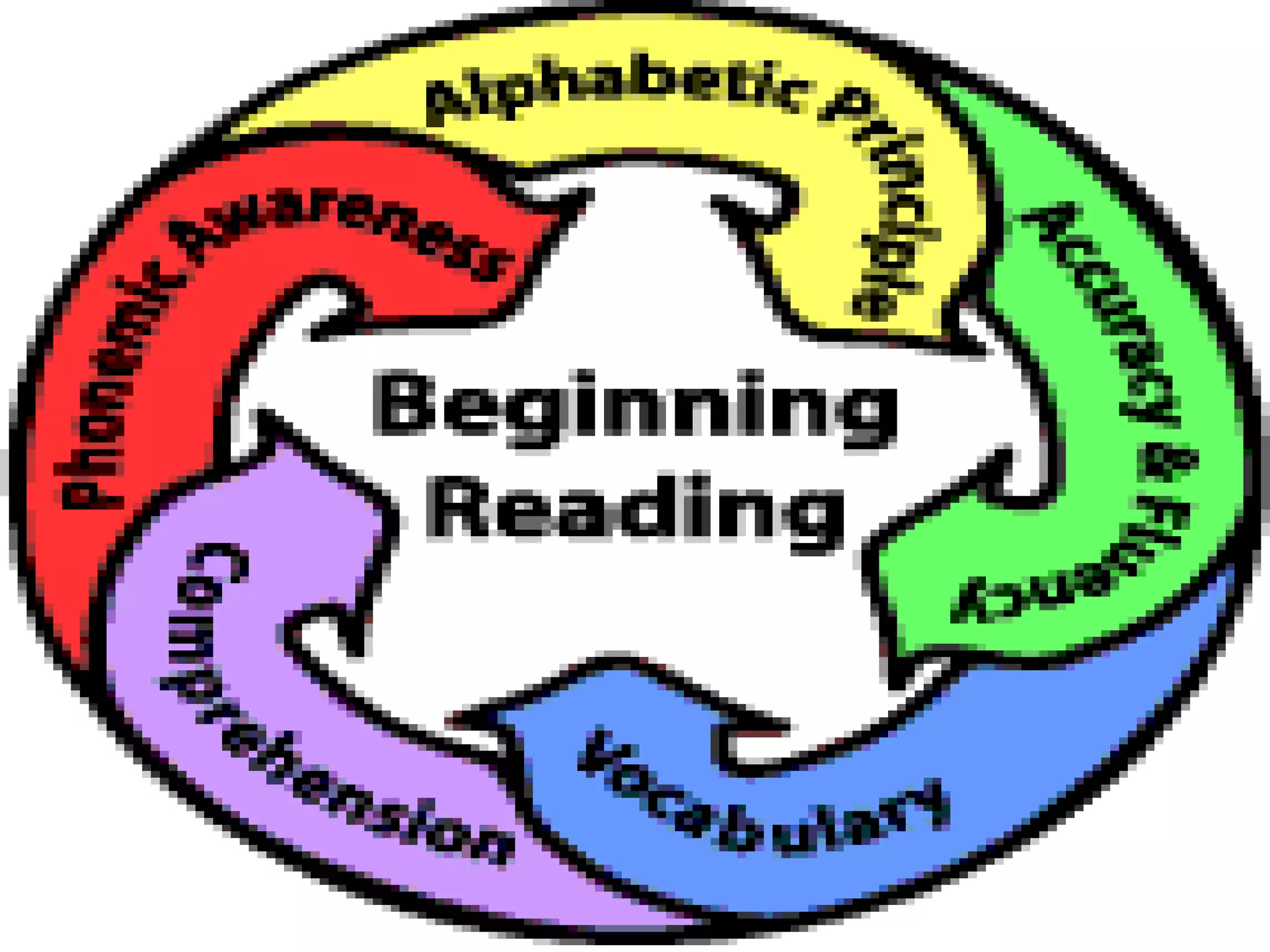
The Five Keys to Reading


                            Taught by methods
Phonemic Awareness              that are…
                              Identifying words
Phonics
                              accurately and
                              fluently.
Fluency
                              Constructing
Vocabulary                    meaning
                              once words
Comprehension strategies      are identified.

                           engaging & motivating
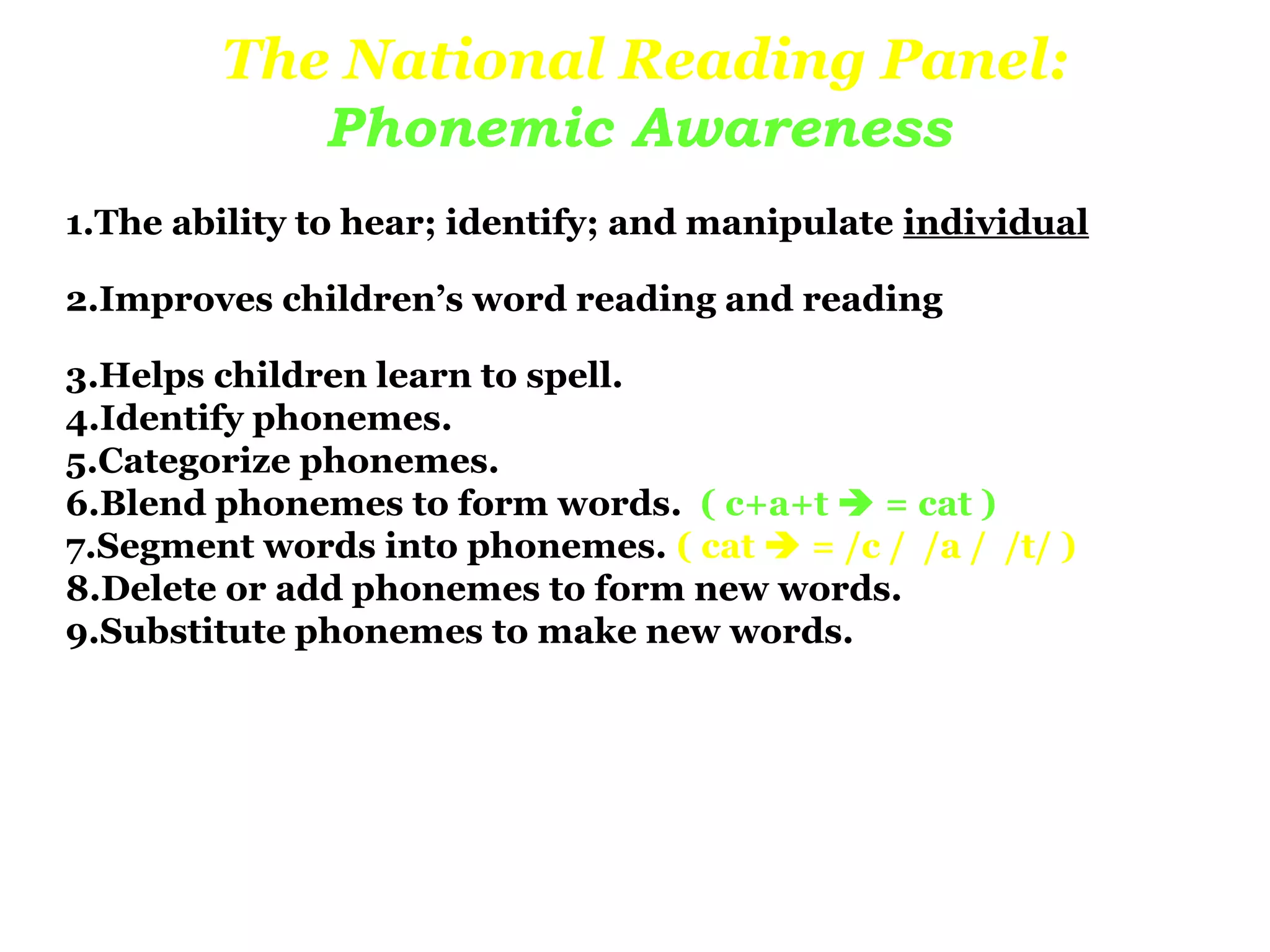
The National Reading Panel:
           Phonemic Awareness
1.The ability to hear; identify; and manipulate individual

2.Improves children’s word reading and reading

3.Helps children learn to spell.
4.Identify phonemes.
5.Categorize phonemes.
6.Blend phonemes to form words. ( c+a+t  = cat )
7.Segment words into phonemes. ( cat  = /c / /a / /t/ )
8.Delete or add phonemes to form new words.
9.Substitute phonemes to make new words.
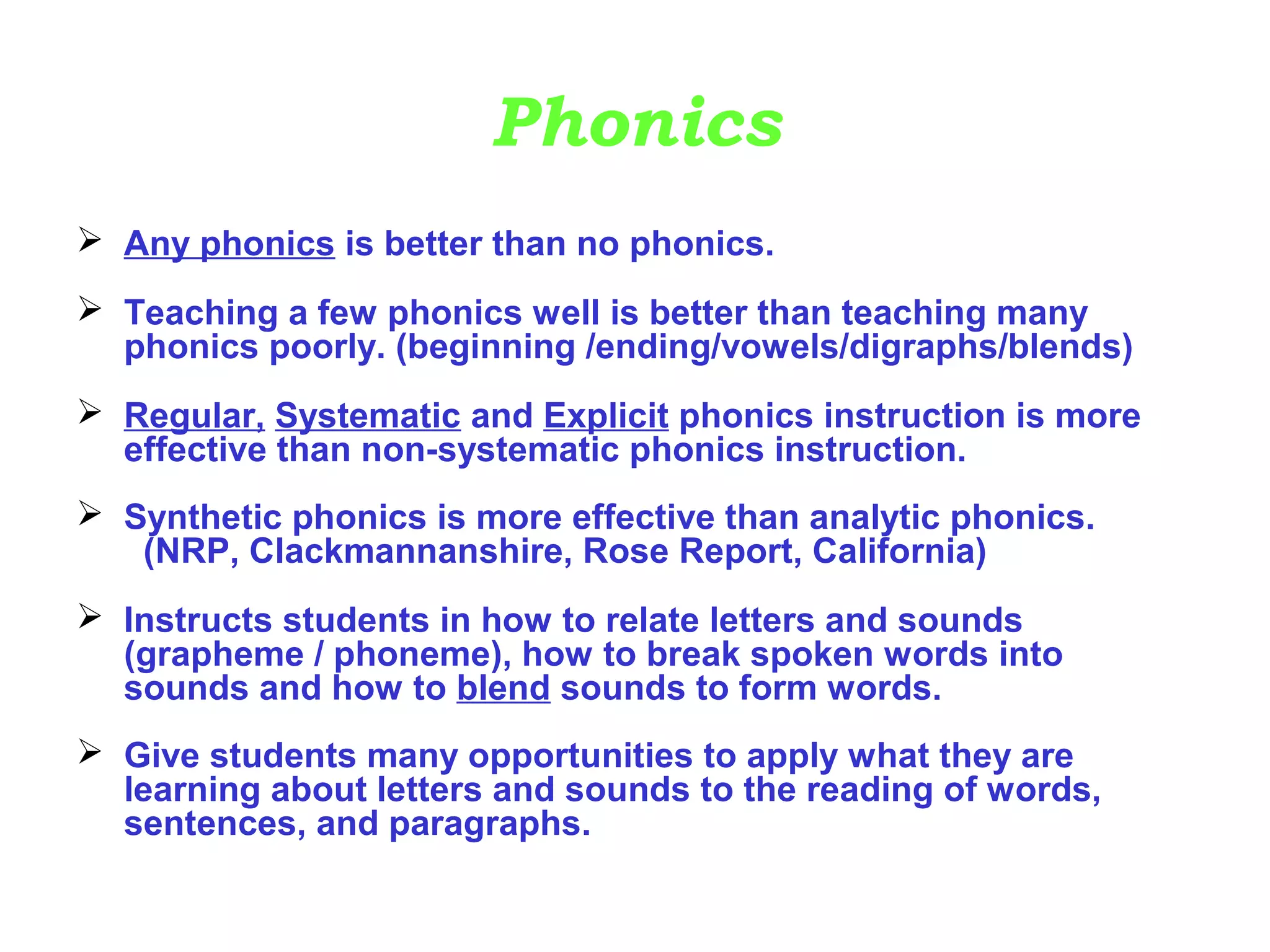
Phonics
 Any phonics is better than no phonics.
 Teaching a few phonics well is better than teaching many
  phonics poorly. (beginning /ending/vowels/digraphs/blends)
 Regular, Systematic and Explicit phonics instruction is more
  effective than non-systematic phonics instruction.
 Synthetic phonics is more effective than analytic phonics.
   (NRP, Clackmannanshire, Rose Report, California)
 Instructs students in how to relate letters and sounds
  (grapheme / phoneme), how to break spoken words into
  sounds and how to blend sounds to form words.
 Give students many opportunities to apply what they are
  learning about letters and sounds to the reading of words,
  sentences, and paragraphs.
• Mini Lesson( 10-15 min)


                            “Private Practice”
                              Conferencing
• Reading Application

                            “Small Group”
                               Guidance


• Sharing
FLUENCY: A Bridge
 to Understanding
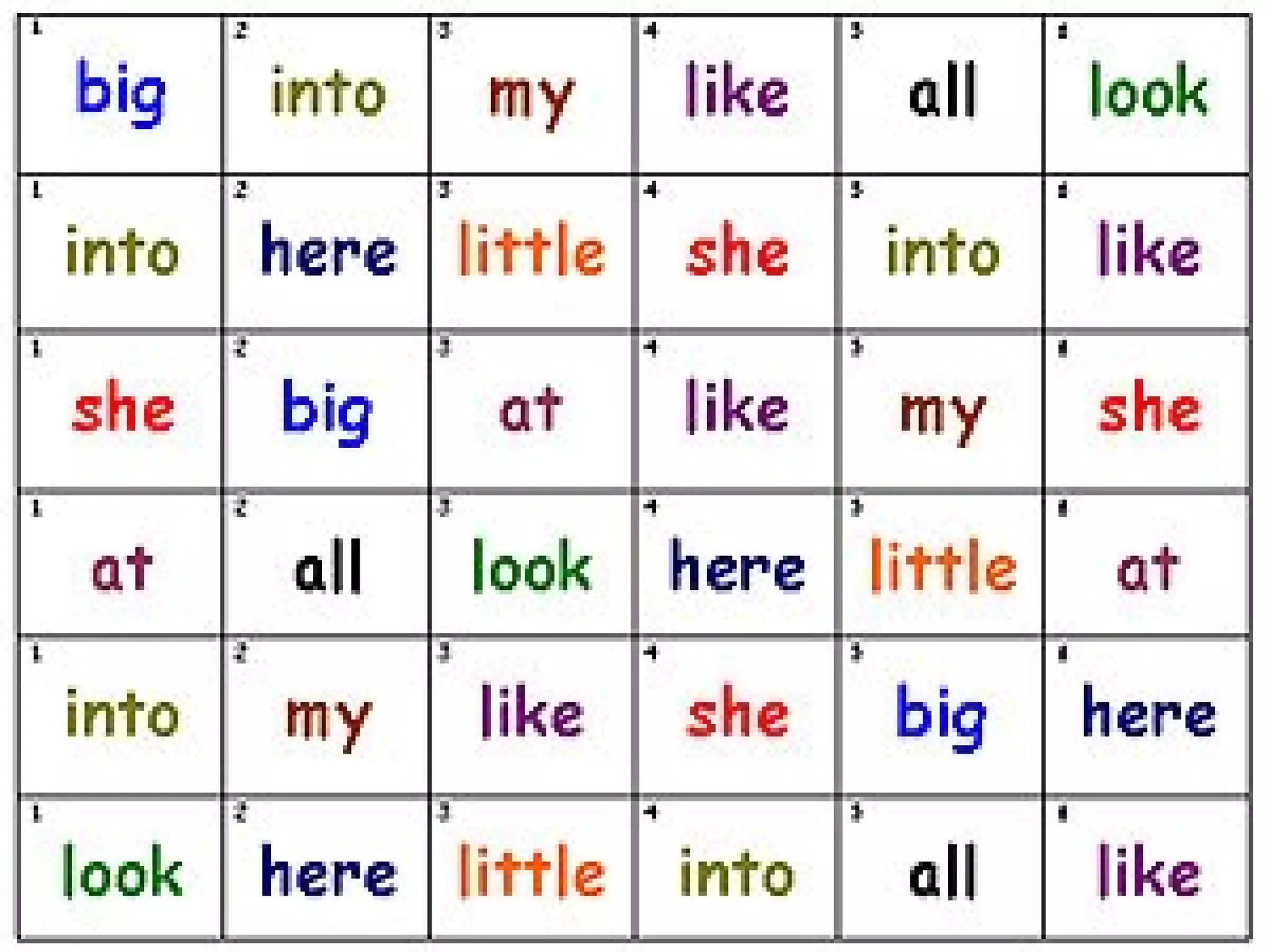
Fluency
1. The ability to read a text accurately and
   quickly.
2. The ability to recognize words
   automatically.
3. The ability to group words quickly to gain
   meaning from reading.
4. Allows readers to focus attention on
   what text means.
The Best Thing In The World
                   contains all of the 220 Dolch Basic Sight Words. It is a 675 word
                                                passage.
                      Retrieved from: http://teachers.net/lessons/posts/1224.html
Once upon a time, there were four brothers who lived in a far
      away land. Their father was an old king. One day he said, "I
                                                                             The   brother went on another seven
      will not live long now. Today you must start out into the world.            miles. He found a small brown bird. It had
      In a year, bring back the best thing you have found. The one                been hurt, so he put it in his coat where it
      who can pick the best thing shall be the new king.“                         could keep warm. As he went on, he saw a
The first brother said, "I will look in every city or town. I will buy the
      best thing I can for my father.“                                            little girl crying. He ran to meet her. "Why
The next two brothers said, "We will both go on fast ships over the               are you crying?" he asked.
      sea. We will find something better.“
The last brother said, "I am going to ask the people here in our
                                                                             "I want to get some water from the well," she
                                                                                  said. "We use so much. We drink cold
      own          land to tell me the best thing."                               water. We wash the clothes clean with hot
The other three brothers began to laugh."Then you will never be                   water. But I do not know how to pull it up.
       king!" They said.                                                          Please show me.“
The last brother started off. When he had gone about six miles, he
       met a man, "What do you carry in those big bags?" he asked.           The brother said, "Hold this bird and I will help
"The best thing in the world," said the man. "These are full of the               you. It does not fly around anymore
       good nuts which fall from my five nut trees.“                              because it got its wing hurt.!“
"I don't think that would work," said the brother to himself, "I must try
       again."                                                               "Thank you. What a pretty bird!" she said. "I wish
                                                                                  you would give it to me. If you will let me
                                                                                  keep it, I will always be very kind to it. I will
                                                                                  take care of it myself. I will make it grow well
                                                                                  again.“
                                                                             "Yes, you may have it," said the brother. So he
                                                                                  gave her the bird and went on.
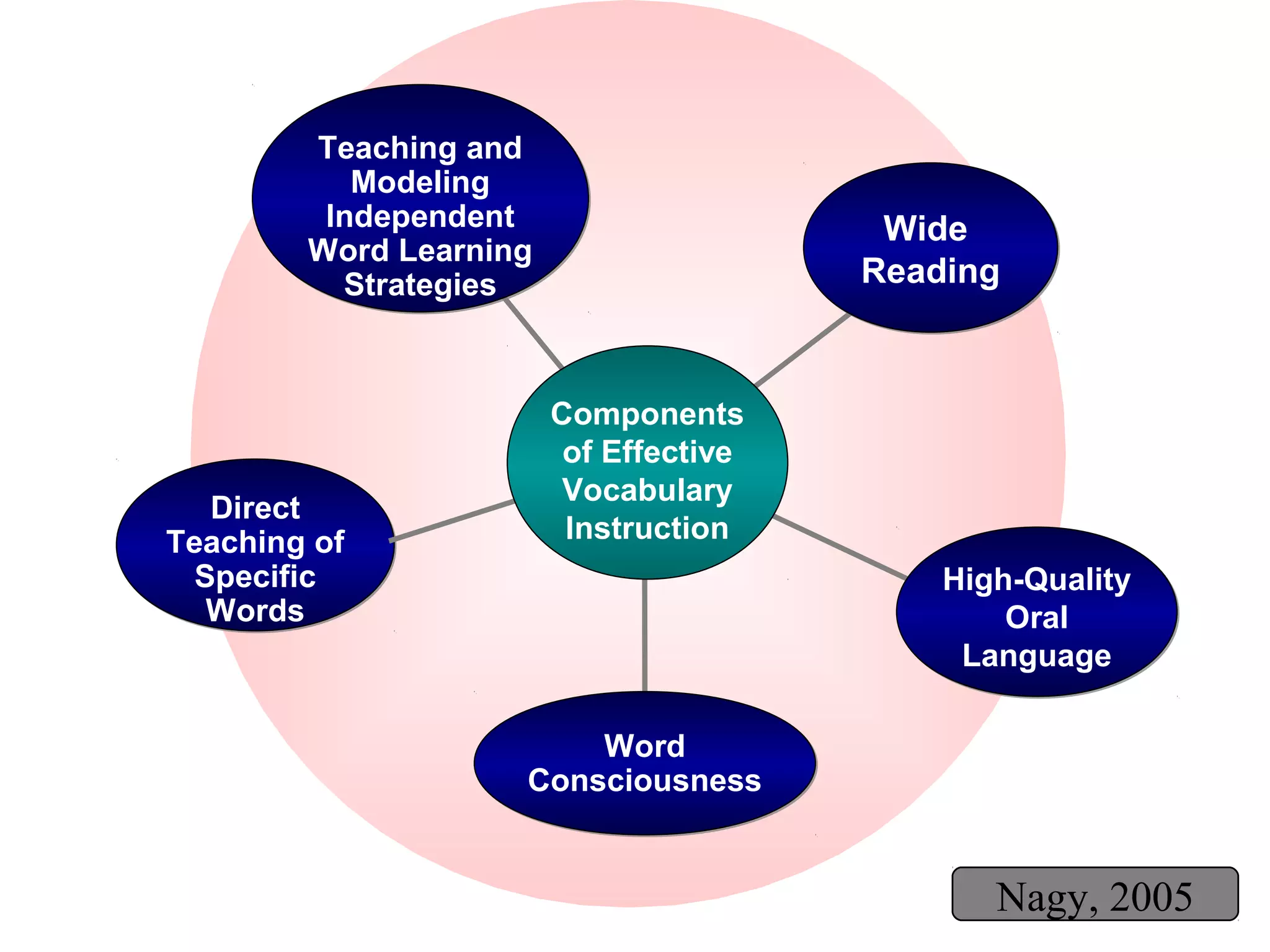
Teaching and
           Modeling
         Independent                     Wide
        Word Learning
          Strategies                    Reading


                        Components
                         of Effective
                         Vocabulary
   Direct
Teaching of              Instruction
  Specific                                  High-Quality
   Words                                        Oral
                                             Language

                        Word
                    Consciousness


                                               Nagy, 2005
What it means to “know” a word
•   To understand the word when it is written or spoken.
•   To recall it when you need it.
•   To know how to use it with the correct meaning.
•   To know how to use it in a grammatically correct way.
•   To know how to pronounce it correctly.
•   To know how to spell it correctly
•   To know how to use it in the right situation.
•   To know when (and when not) to use it.
•   To know if it has positive or negative connotations.
•   To know which other words you can and can not use with it.

•   http://exchanges.state.gov/forum/vols/vol42/no1/p02.pdf
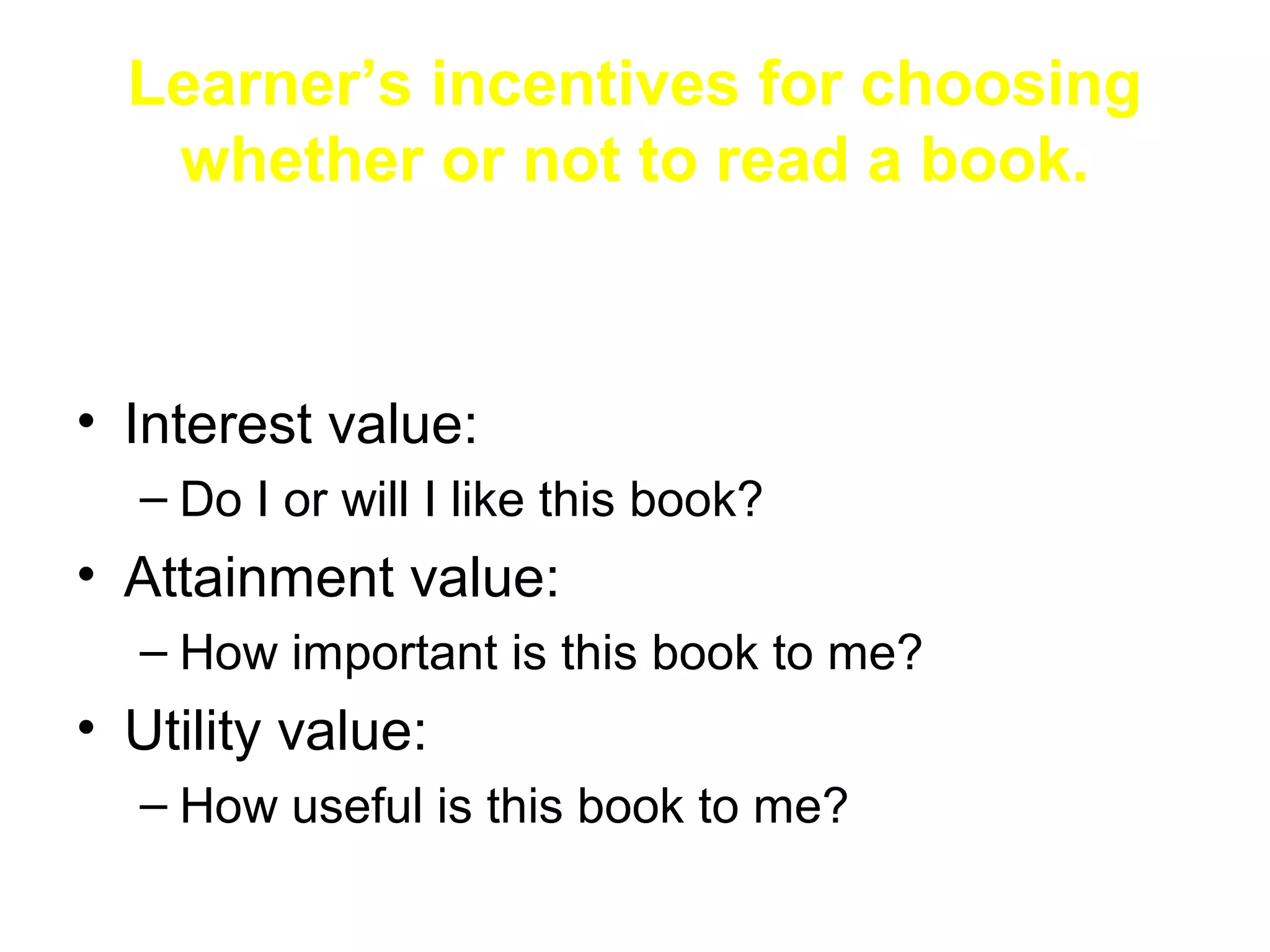
Learner’s incentives for choosing
   whether or not to read a book.


• Interest value:
  – Do I or will I like this book?
• Attainment value:
  – How important is this book to me?
• Utility value:
  – How useful is this book to me?
Extrinsic vs. Intrinsic
•
                Motivation
    Extrinsic Motivation
    – External reasons for reading
       • Told to read by the teacher
       • Get good grades

      *Less likely to continue activity outside of
       original context independently.
Extrinsic vs. Intrinsic Motivation
  • Intrinsic Motivation
    – Curiosity and desire to read for its own
      sake.
       • Genuine interest in reading.
       • Desire for mastery.
       • Enjoyment of challenge.

       *Continuing motivation outside of the
        original setting to read.
Motivation and Extensive Reading:
          What can teachers do?

• Allow for student input and choice.
• Gear instructional activities to student
  interest.
• Allow for interaction among students of
  varying levels.
• Help students set specific, attainable
  reading goals.
What can teachers do? (cont.)

• Give many opportunities to succeed at
  challenging reading tasks.
• Help match challenge level of task to
  student skill level.
• Plan higher level thinking (more complex)
  activities as opposed to “standard
  operations and procedures.”
Mini Lesson( 10-15 min)
• Skills and Strategies (competencies)

• Genre (extensive and intensive)

• Sustainable Habits and Behaviors
       (life long learning)
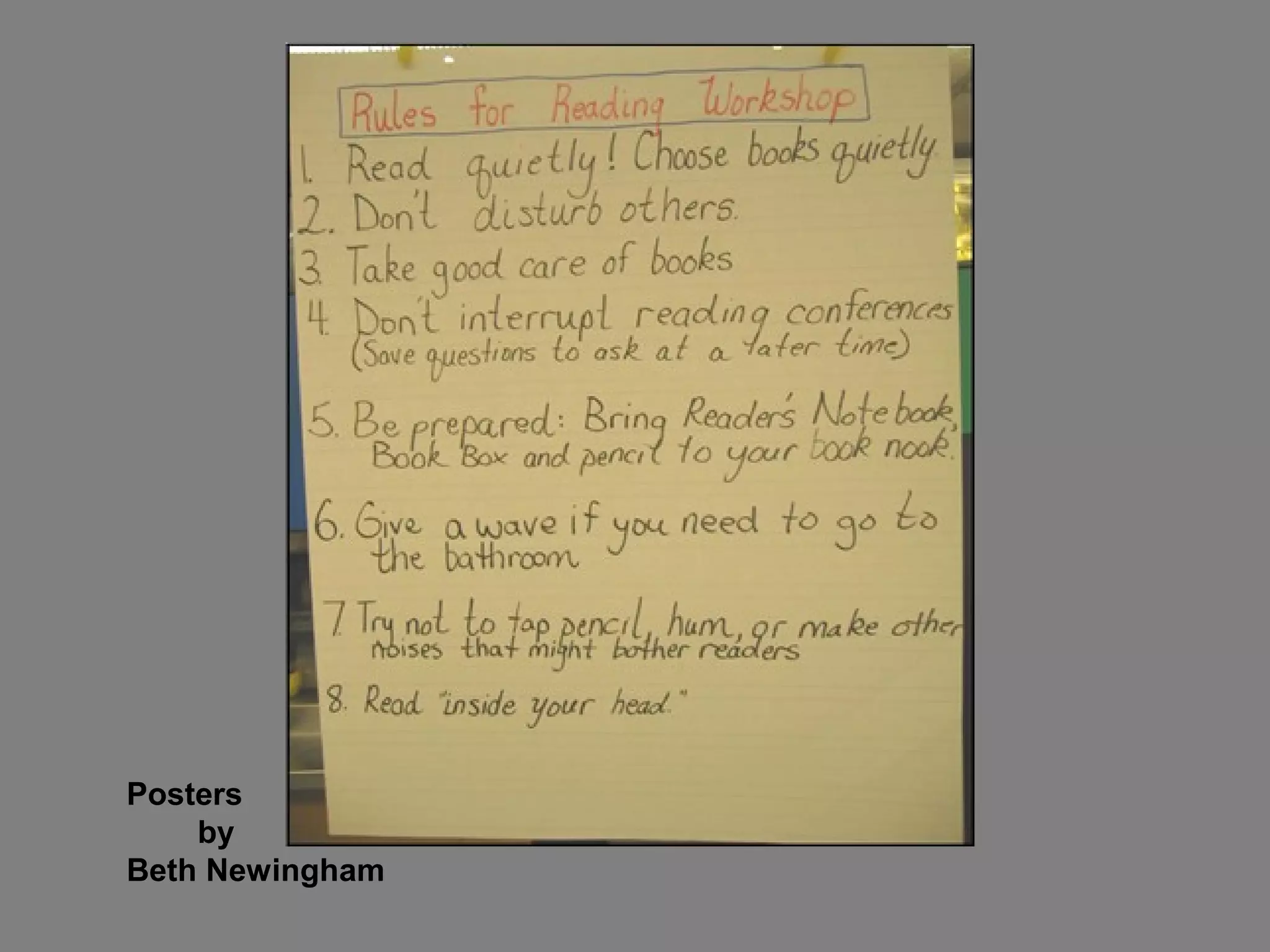
Establish Routines
•   where to sit during reading time
•   giving a book talk
•   how to be a good listener in a share session
•   what is an appropriate noise level during reading time
•   what to do when you finish a book
•   what kinds of questions to ask during a share session
•   running a small group share session
•   self-evaluation
•   getting ready for a conference
•   how to have a peer conference
•   where to sit during mini-lessons
•   taking care of books
•   keeping track of books read
•   rules of the workshop
Posters
    by
Beth Newingham
Posters
    by
Beth Newingham
Posters
    by
Beth Newingham
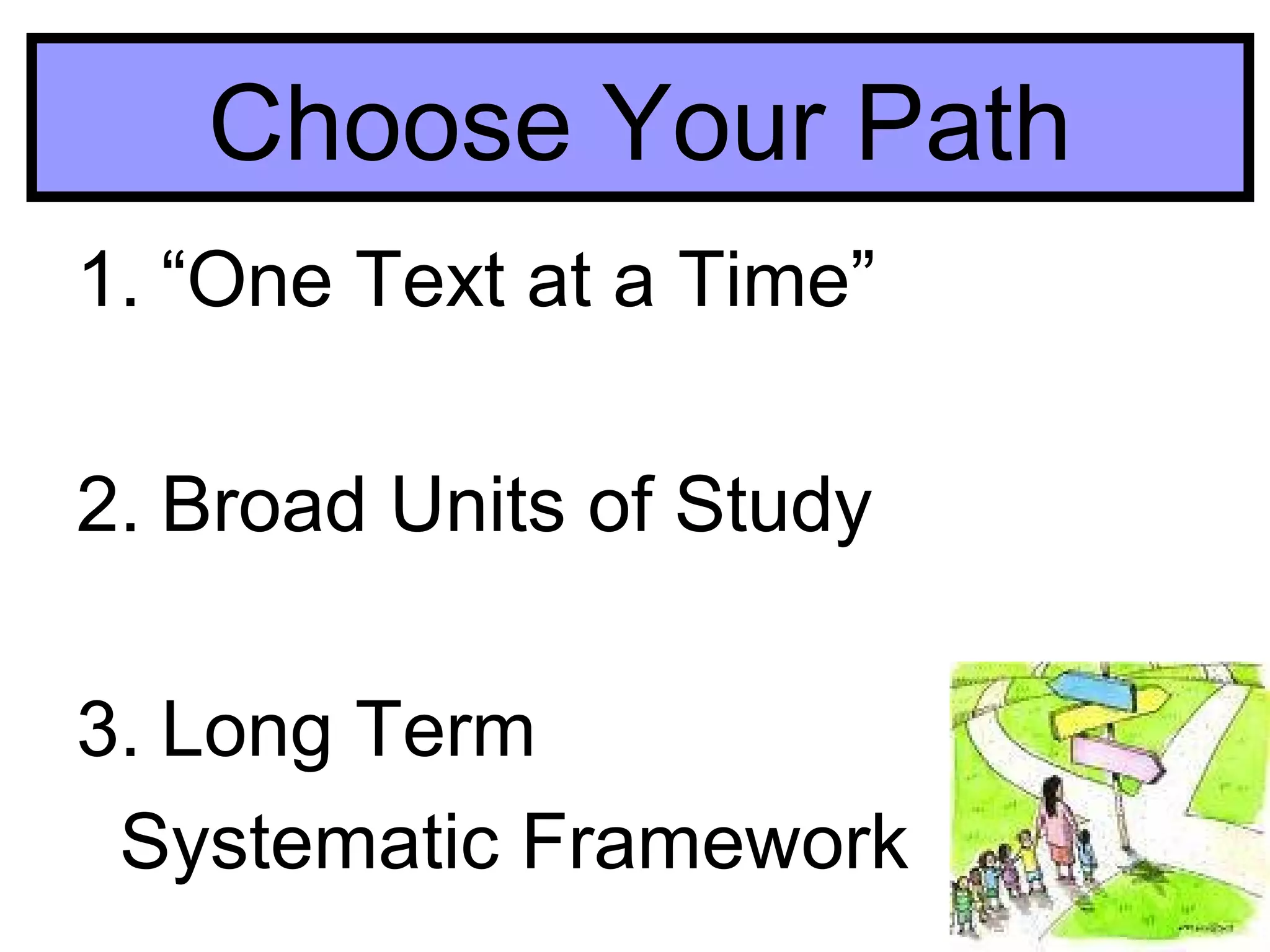
Choose Your Path
1. “One Text at a Time”

2. Broad Units of Study

3. Long Term
 Systematic Framework
“ONE TEXT AT A TIME”
   TEXT         Behaviors/Actions   Strategies/Tools   Attitude/Stance


Genre:
Format:


Task/Purpose:
Literature Example
                 Monday   Tuesday   Wednesday   Thursday   Friday   REFLECT


                                                                    Code
                                                                    Breaker

                                                                    Meani
                                                                    ng Maker

                                                                    Text
                                                                    User

                                                                    Text
                                                                    Critic


Q: What have I taught students today that will make
them a stronger, more competent R/W/T the next
time they pick up a text like this?
Posters
    by
Beth Newingham
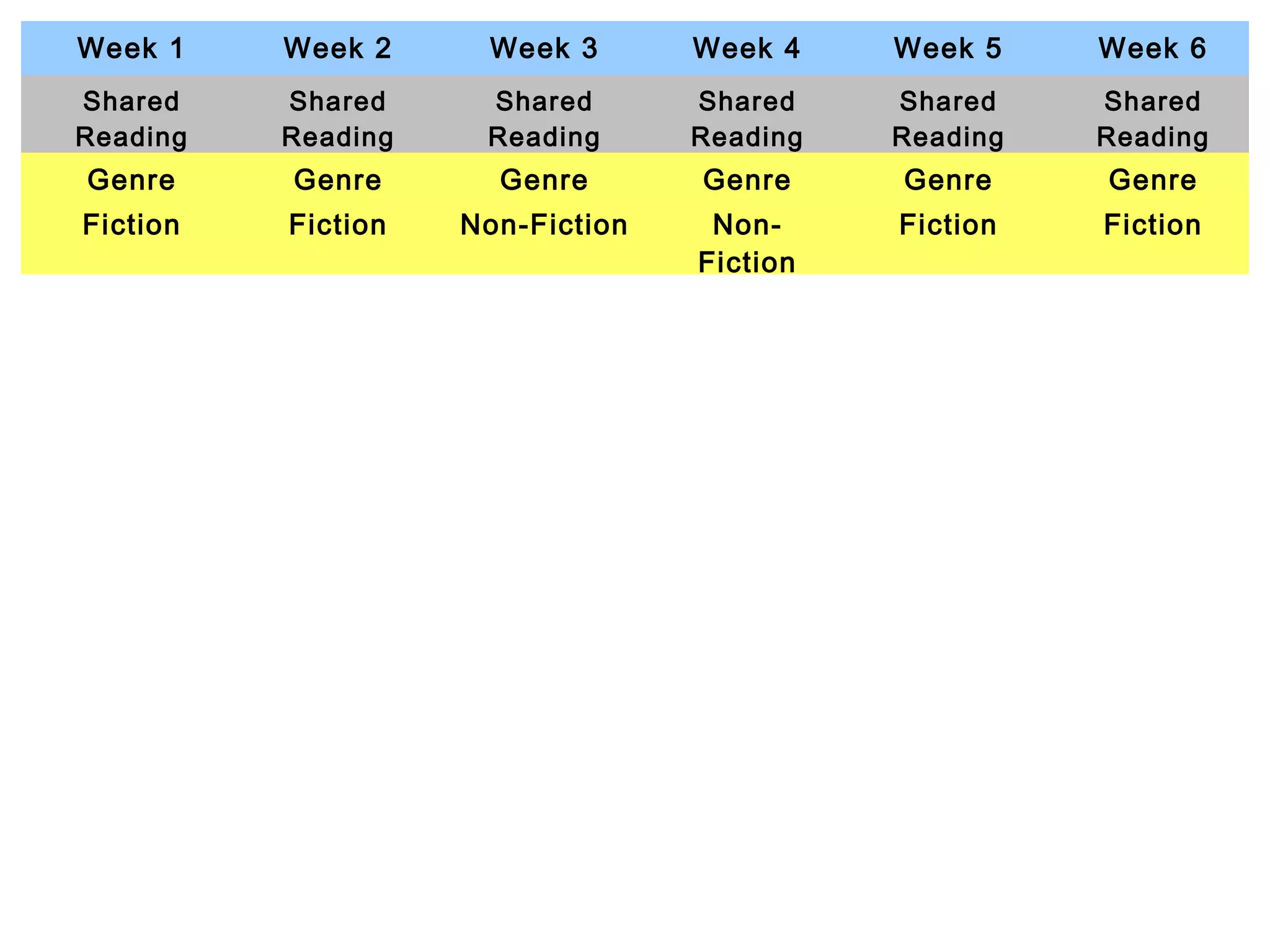
Week 1    Week 2     Week 3       Week 4    Week 5    Week 6
Shared    Shared     Shared       Shared    Shared    Shared
Reading   Reading    Reading      Reading   Reading   Reading
Genre     Genre       Genre       Genre     Genre     Genre
Fiction   Fiction   Non-Fiction    Non-     Fiction   Fiction
                                  Fiction
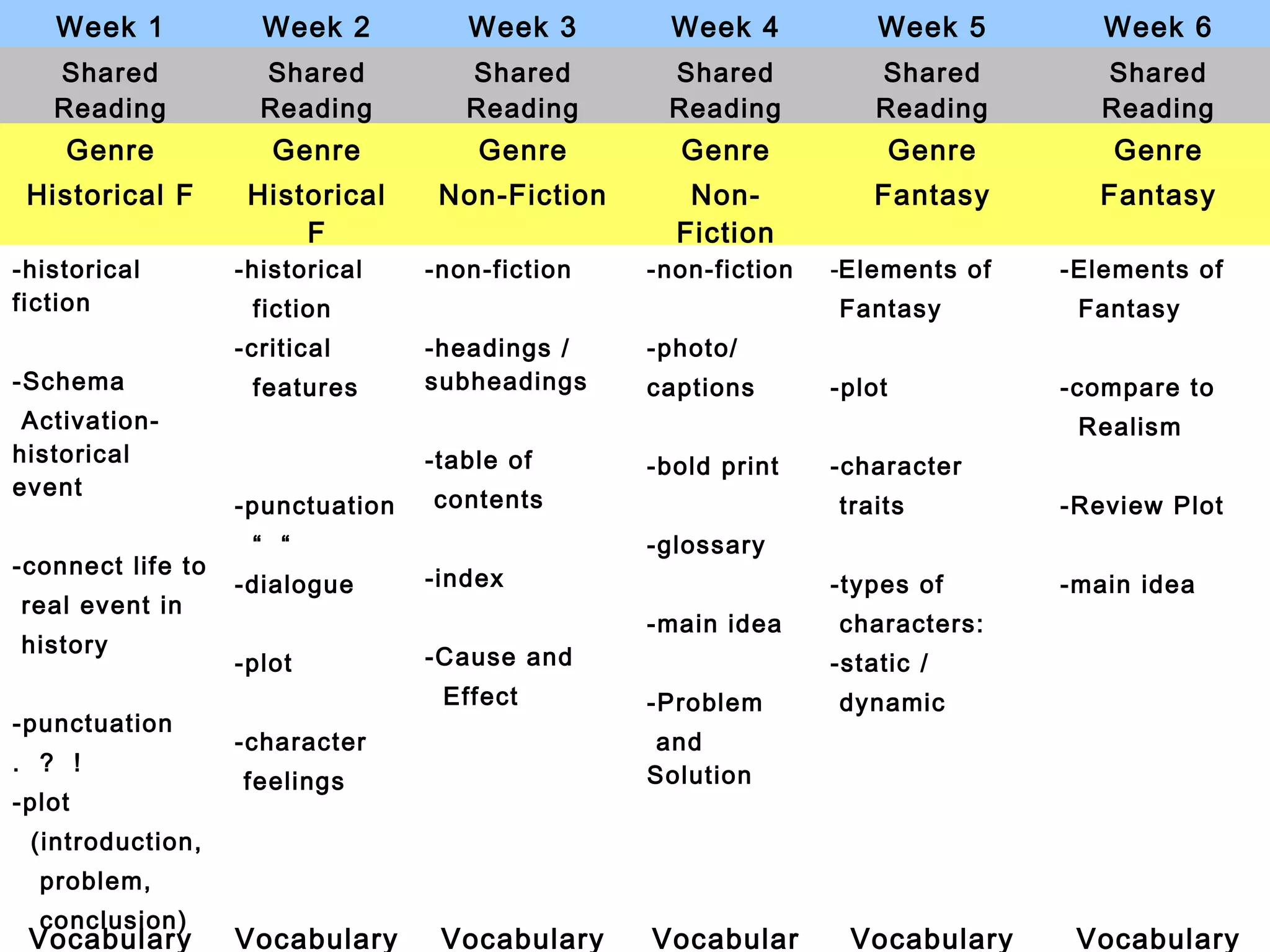
Week 1            Week 2          Week 3        Week 4           Week 5         Week 6
   Shared            Shared          Shared       Shared            Shared         Shared
   Reading           Reading         Reading      Reading           Reading        Reading
    Genre             Genre           Genre        Genre                Genre       Genre
 Historical F       Historical     Non-Fiction      Non-            Fantasy       Fantasy
                        F                          Fiction
-historical        -historical    -non-fiction   -non-fiction   -Elements of    -Elements of
fiction             fiction                                     Fantasy          Fantasy
                   -critical      -headings /    -photo/
-Schema             features      subheadings    captions       -plot           -compare to
 Activation-                                                                     Realism
historical                        -table of      -bold print    -character
event
                   -punctuation   contents                      traits          -Review Plot
                    “ “                          -glossary
-connect life to
                   -dialogue      -index                        -types of       -main idea
real event in
                                                 -main idea     characters:
history                           -Cause and
                   -plot                                        -static /
                                   Effect        -Problem       dynamic
-punctuation
                   -character                    and
. ? !
                   feelings                      Solution
-plot
 (introduction,
  problem,
  conclusion)
 Vocabulary        Vocabulary      Vocabulary    Vocabular       Vocabulary      Vocabulary
Planning for Daily Intentional Teaching
• What do my students need to know?

• What strategies/knowledge help them as readers?

• In what way does this “strategy” look different across genre?

• How will I make this strategy or understanding clear to them?

• What language will I use?

• What texts/materials will best support this instruction?

• How can/will I connect this work to writing?

• How will I collect evidence that can help me determine how
  well students have grasped this new understanding?
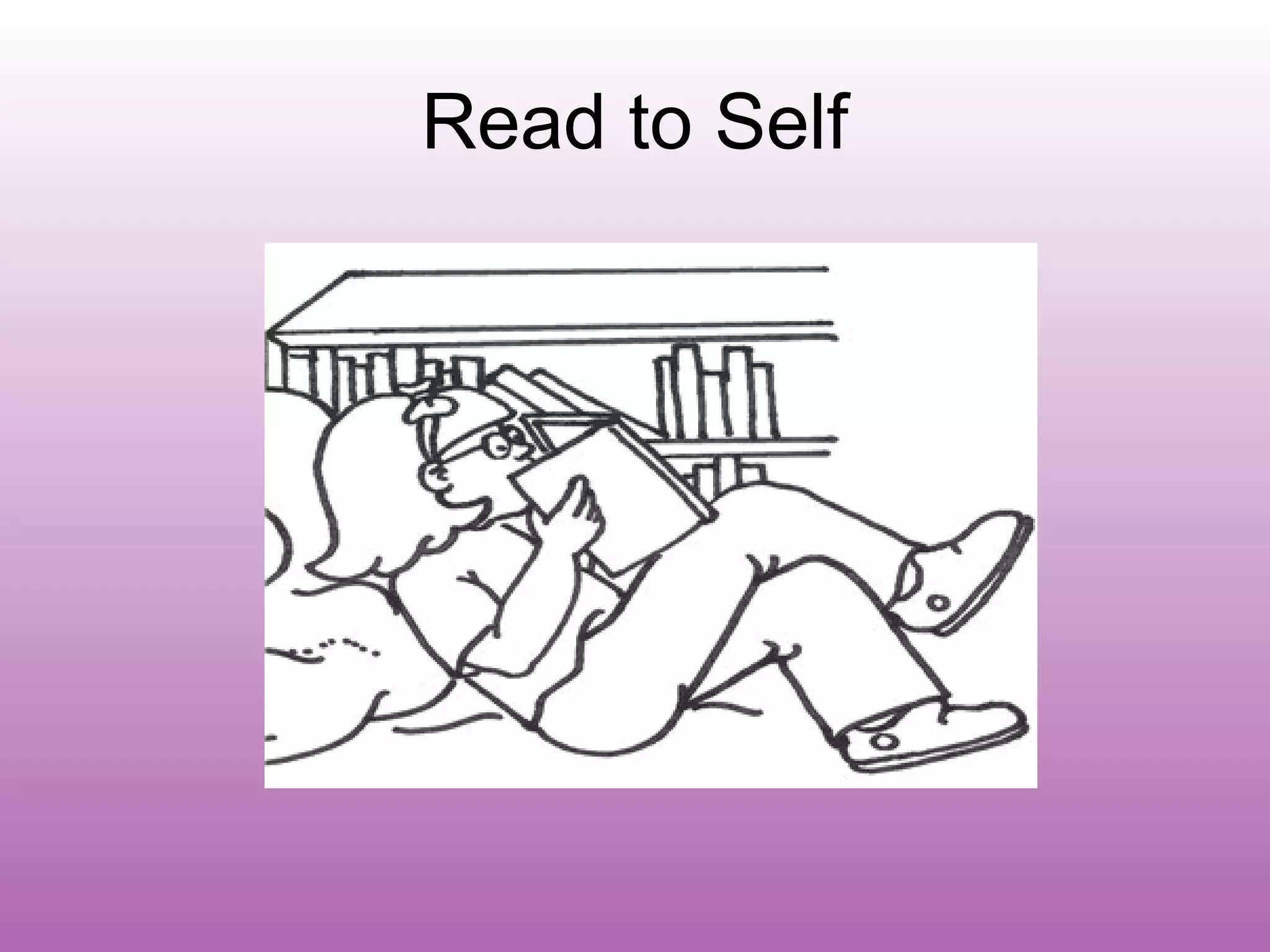
Read to Self
Read to Someone
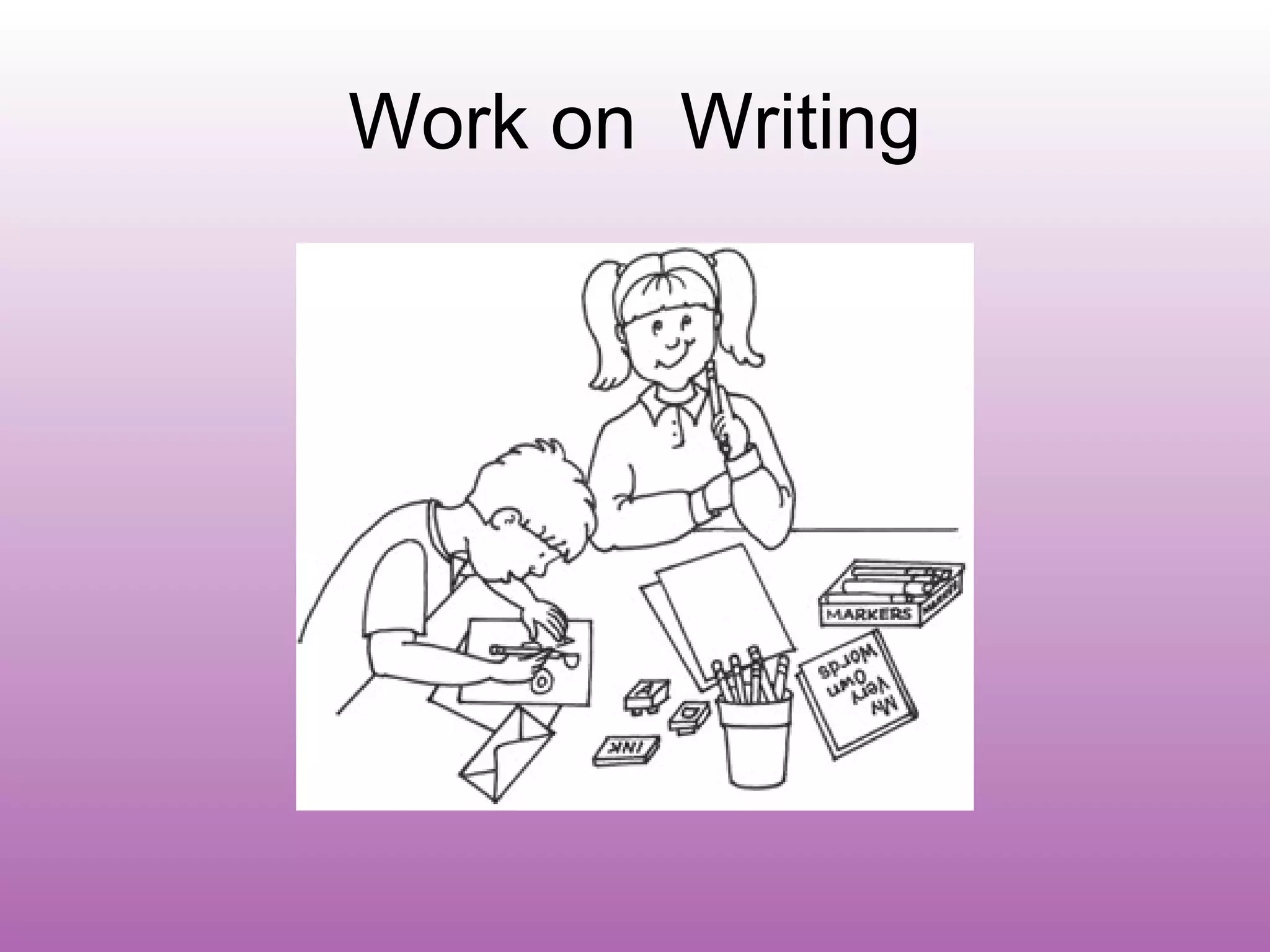
Work on Writing
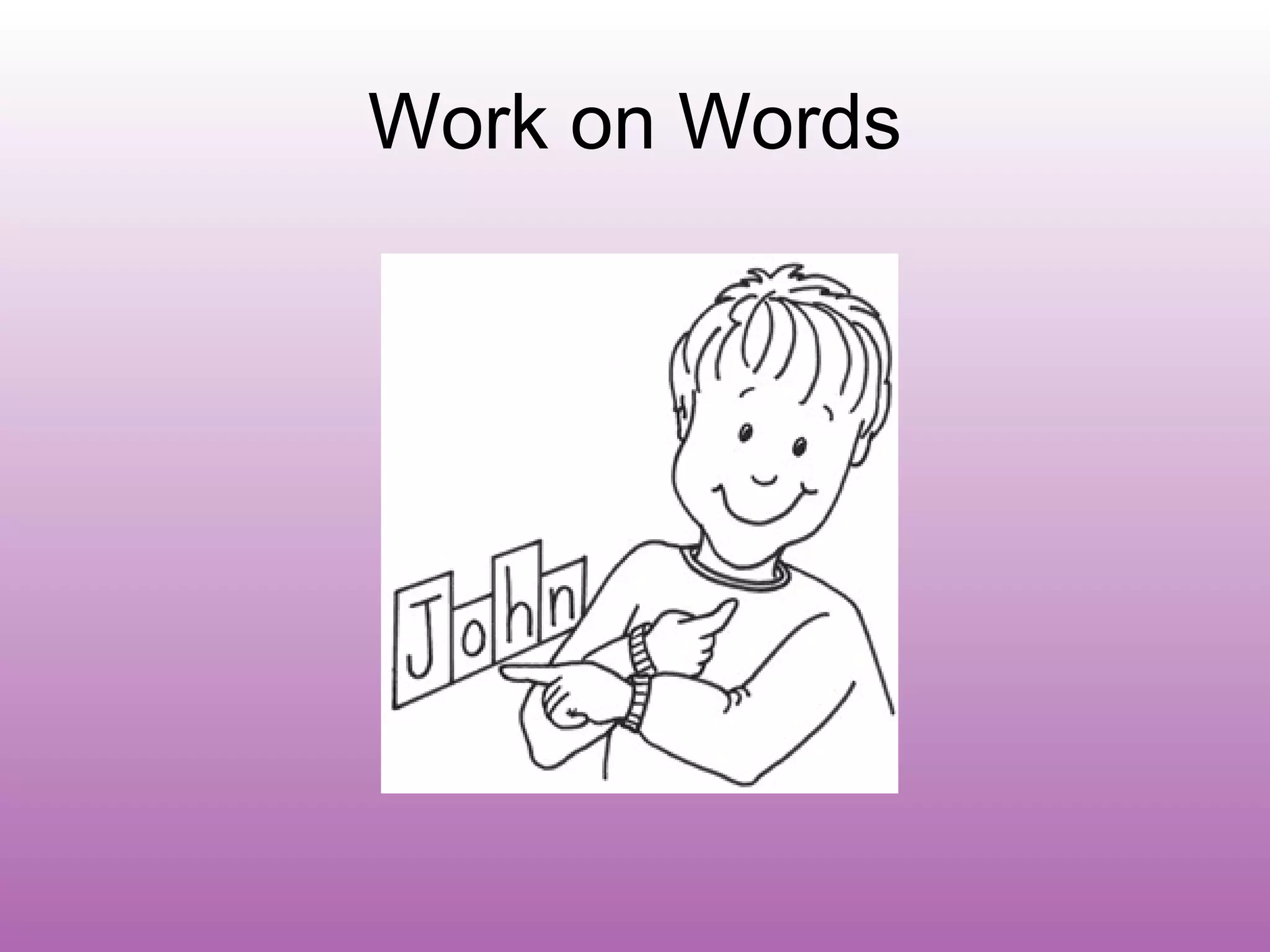
Work on Words
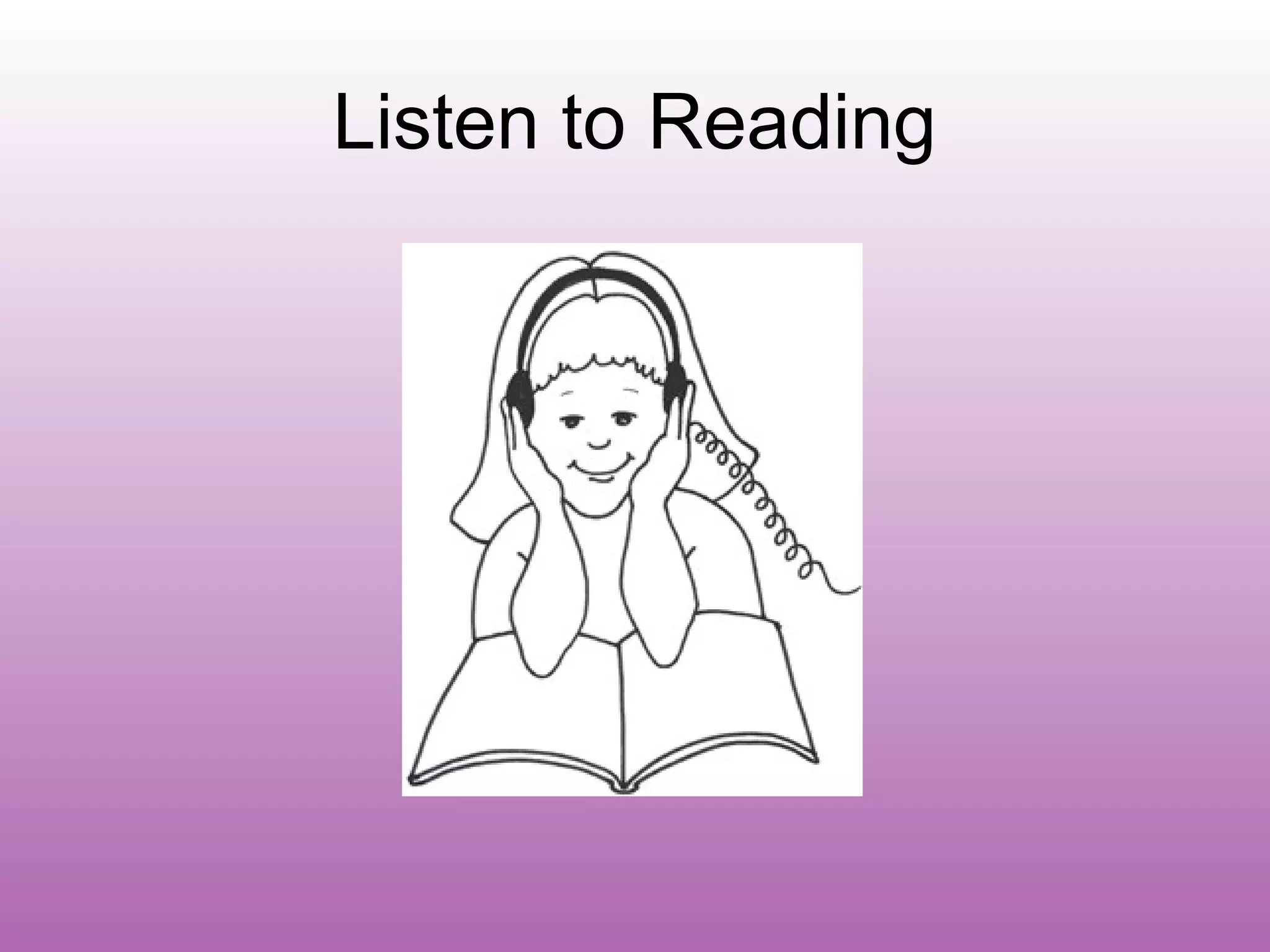
Listen to Reading
☺Full Disclosure: Clarify Expectations

☺Explicitness: Describe the Practice

☺Demonstrate: Make it Visible

☺Practice w/ Guidance: Scaffolding

☺Private Practice: Student Application

276day3

  • 2.
    What is thebest way to TEACH reading? What kind of readers do we want our TEACHING to develop?
  • 3.
    oPassionate oInquisitive Time oStrategic oConfident Text oFlexible oEfficient Talk oEnduring Task oOpen Minded oThoughtful Teach
  • 4.
    • Change Talkabout/around text • Expand definition of Comprehension • Develop Novice toward Expertise
  • 5.
    • Mini Lesson •Reading Application • Sharing
  • 6.
    The Five Keysto Reading Taught by methods Phonemic Awareness that are… Identifying words Phonics accurately and fluently. Fluency Constructing Vocabulary meaning once words Comprehension strategies are identified. engaging & motivating
  • 10.
    The National ReadingPanel: Phonemic Awareness 1.The ability to hear; identify; and manipulate individual 2.Improves children’s word reading and reading 3.Helps children learn to spell. 4.Identify phonemes. 5.Categorize phonemes. 6.Blend phonemes to form words. ( c+a+t  = cat ) 7.Segment words into phonemes. ( cat  = /c / /a / /t/ ) 8.Delete or add phonemes to form new words. 9.Substitute phonemes to make new words.
  • 15.
    Phonics  Any phonicsis better than no phonics.  Teaching a few phonics well is better than teaching many phonics poorly. (beginning /ending/vowels/digraphs/blends)  Regular, Systematic and Explicit phonics instruction is more effective than non-systematic phonics instruction.  Synthetic phonics is more effective than analytic phonics. (NRP, Clackmannanshire, Rose Report, California)  Instructs students in how to relate letters and sounds (grapheme / phoneme), how to break spoken words into sounds and how to blend sounds to form words.  Give students many opportunities to apply what they are learning about letters and sounds to the reading of words, sentences, and paragraphs.
  • 16.
    • Mini Lesson(10-15 min) “Private Practice” Conferencing • Reading Application “Small Group” Guidance • Sharing
  • 18.
    FLUENCY: A Bridge to Understanding
  • 19.
    Fluency 1. The abilityto read a text accurately and quickly. 2. The ability to recognize words automatically. 3. The ability to group words quickly to gain meaning from reading. 4. Allows readers to focus attention on what text means.
  • 22.
    The Best ThingIn The World contains all of the 220 Dolch Basic Sight Words. It is a 675 word passage. Retrieved from: http://teachers.net/lessons/posts/1224.html Once upon a time, there were four brothers who lived in a far away land. Their father was an old king. One day he said, "I The brother went on another seven will not live long now. Today you must start out into the world. miles. He found a small brown bird. It had In a year, bring back the best thing you have found. The one been hurt, so he put it in his coat where it who can pick the best thing shall be the new king.“ could keep warm. As he went on, he saw a The first brother said, "I will look in every city or town. I will buy the best thing I can for my father.“ little girl crying. He ran to meet her. "Why The next two brothers said, "We will both go on fast ships over the are you crying?" he asked. sea. We will find something better.“ The last brother said, "I am going to ask the people here in our "I want to get some water from the well," she said. "We use so much. We drink cold own land to tell me the best thing." water. We wash the clothes clean with hot The other three brothers began to laugh."Then you will never be water. But I do not know how to pull it up. king!" They said. Please show me.“ The last brother started off. When he had gone about six miles, he met a man, "What do you carry in those big bags?" he asked. The brother said, "Hold this bird and I will help "The best thing in the world," said the man. "These are full of the you. It does not fly around anymore good nuts which fall from my five nut trees.“ because it got its wing hurt.!“ "I don't think that would work," said the brother to himself, "I must try again." "Thank you. What a pretty bird!" she said. "I wish you would give it to me. If you will let me keep it, I will always be very kind to it. I will take care of it myself. I will make it grow well again.“ "Yes, you may have it," said the brother. So he gave her the bird and went on.
  • 23.
    Teaching and Modeling Independent Wide Word Learning Strategies Reading Components of Effective Vocabulary Direct Teaching of Instruction Specific High-Quality Words Oral Language Word Consciousness Nagy, 2005
  • 24.
    What it meansto “know” a word • To understand the word when it is written or spoken. • To recall it when you need it. • To know how to use it with the correct meaning. • To know how to use it in a grammatically correct way. • To know how to pronounce it correctly. • To know how to spell it correctly • To know how to use it in the right situation. • To know when (and when not) to use it. • To know if it has positive or negative connotations. • To know which other words you can and can not use with it. • http://exchanges.state.gov/forum/vols/vol42/no1/p02.pdf
  • 25.
    Learner’s incentives forchoosing whether or not to read a book. • Interest value: – Do I or will I like this book? • Attainment value: – How important is this book to me? • Utility value: – How useful is this book to me?
  • 27.
    Extrinsic vs. Intrinsic • Motivation Extrinsic Motivation – External reasons for reading • Told to read by the teacher • Get good grades *Less likely to continue activity outside of original context independently.
  • 28.
    Extrinsic vs. IntrinsicMotivation • Intrinsic Motivation – Curiosity and desire to read for its own sake. • Genuine interest in reading. • Desire for mastery. • Enjoyment of challenge. *Continuing motivation outside of the original setting to read.
  • 29.
    Motivation and ExtensiveReading: What can teachers do? • Allow for student input and choice. • Gear instructional activities to student interest. • Allow for interaction among students of varying levels. • Help students set specific, attainable reading goals.
  • 30.
    What can teachersdo? (cont.) • Give many opportunities to succeed at challenging reading tasks. • Help match challenge level of task to student skill level. • Plan higher level thinking (more complex) activities as opposed to “standard operations and procedures.”
  • 34.
    Mini Lesson( 10-15min) • Skills and Strategies (competencies) • Genre (extensive and intensive) • Sustainable Habits and Behaviors (life long learning)
  • 36.
    Establish Routines • where to sit during reading time • giving a book talk • how to be a good listener in a share session • what is an appropriate noise level during reading time • what to do when you finish a book • what kinds of questions to ask during a share session • running a small group share session • self-evaluation • getting ready for a conference • how to have a peer conference • where to sit during mini-lessons • taking care of books • keeping track of books read • rules of the workshop
  • 37.
    Posters by Beth Newingham
  • 38.
    Posters by Beth Newingham
  • 39.
    Posters by Beth Newingham
  • 42.
    Choose Your Path 1.“One Text at a Time” 2. Broad Units of Study 3. Long Term Systematic Framework
  • 43.
    “ONE TEXT ATA TIME” TEXT Behaviors/Actions Strategies/Tools Attitude/Stance Genre: Format: Task/Purpose:
  • 44.
    Literature Example Monday Tuesday Wednesday Thursday Friday REFLECT Code Breaker Meani ng Maker Text User Text Critic Q: What have I taught students today that will make them a stronger, more competent R/W/T the next time they pick up a text like this?
  • 46.
    Posters by Beth Newingham
  • 51.
    Week 1 Week 2 Week 3 Week 4 Week 5 Week 6 Shared Shared Shared Shared Shared Shared Reading Reading Reading Reading Reading Reading Genre Genre Genre Genre Genre Genre Fiction Fiction Non-Fiction Non- Fiction Fiction Fiction
  • 52.
    Week 1 Week 2 Week 3 Week 4 Week 5 Week 6 Shared Shared Shared Shared Shared Shared Reading Reading Reading Reading Reading Reading Genre Genre Genre Genre Genre Genre Historical F Historical Non-Fiction Non- Fantasy Fantasy F Fiction -historical -historical -non-fiction -non-fiction -Elements of -Elements of fiction fiction Fantasy Fantasy -critical -headings / -photo/ -Schema features subheadings captions -plot -compare to Activation- Realism historical -table of -bold print -character event -punctuation contents traits -Review Plot “ “ -glossary -connect life to -dialogue -index -types of -main idea real event in -main idea characters: history -Cause and -plot -static / Effect -Problem dynamic -punctuation -character and . ? ! feelings Solution -plot (introduction, problem, conclusion) Vocabulary Vocabulary Vocabulary Vocabular Vocabulary Vocabulary
  • 53.
    Planning for DailyIntentional Teaching • What do my students need to know? • What strategies/knowledge help them as readers? • In what way does this “strategy” look different across genre? • How will I make this strategy or understanding clear to them? • What language will I use? • What texts/materials will best support this instruction? • How can/will I connect this work to writing? • How will I collect evidence that can help me determine how well students have grasped this new understanding?
  • 55.
  • 56.
  • 57.
  • 58.
  • 59.
  • 60.
    ☺Full Disclosure: ClarifyExpectations ☺Explicitness: Describe the Practice ☺Demonstrate: Make it Visible ☺Practice w/ Guidance: Scaffolding ☺Private Practice: Student Application