Principles of Anti-microbial
Therapy
I- Antimicrobial Therapy
• Antimicrobial drugs are effective in the
treatment of infections because of their
selective toxicity; that is, they have the ability
to injure or kill an invading microorganism
without harming the cells of the host.
II- Selection of Antimicrobial Agents
• Selection of the most appropriate antimicrobial agent
requires knowledge of
• 1) the organism's identity
• 2) the organism's susceptibility to a particular agent
• 3) the site of the infection
• 4) patient factors
• 5) the safety of the agent
• 6) the cost of therapy
• However, some critically ill patients require empiric
therapy--- that is, immediate administration of drug(s) prior
to bacterial identification and susceptibility testing.
A. Identification of the infecting
organism
• Characterization of the organism is central to
selection of the proper drug.
• It is essential to obtain a sample culture of the
organism prior to initiating treatment.
Identification of the infecting
organism
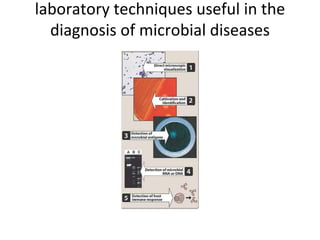
• Definitive identification of the infecting
organism may require other laboratory
techniques, such as detection of
microbial antigens, microbial DNA or RNA, or
detection of an inflammatory or host immune
response to the microorganism.
laboratory techniques useful in the
diagnosis of microbial diseases
B. Empiric therapy prior to
identification of the organism
• Ideally, the antimicrobial agent used to treat
an infection is selected after the organism has
been identified and its drug susceptibility
established.
• However, in the critically ill patient, such a
delay could prove fatal, and immediate
empiric therapy is indicated.
C. Determination of antimicrobial
susceptibility of infective organisms
• After a pathogen is cultured, its susceptibility
to specific antibiotics serves as a guide in
choosing antimicrobial therapy.
Determination of antimicrobial
susceptibility of infective organisms
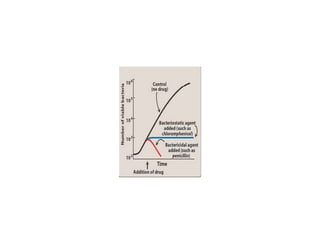
• Bacteriostatic vs. bactericidal drugs:
Antimicrobial drugs are classified as either
bacteriostatic or bactericidal.
• Bacteriostatic drugs arrest the growth and
replication of bacteria at serum levels achievable
in the patient.
• Bactericidal drugs kill bacteria at drug serum
levels achievable in the patient. Because of their
more aggressive antimicrobial action, these
agents are often the drugs of choice in seriously ill
patients.
Determination of antimicrobial
susceptibility of infective organisms
• there is not always a precise distinction
between bacteriostatic and bactericides; high
concentrations of some bacteriostatic agents
are also bactericidal, whereas low
concentrations of some bacteriocidal agents
are bacteriostatic.
Bacteriostatic
• Bacteriostatic group includes
• tetracyclines
• sulphonamides
• spectinomycin
• trimethoprim
• chloramphenicol
• macrolides
• lincosamides
Bactericidal antibiotics
• the Beta-lactam antibiotics (penicillin derivatives
(penams), cephalosporins (cephems),
monobactams, and carbapenems) and
vancomycin.
• Also bactericidal are daptomycin,
fluoroquinolones, metronidazole, nitrofurantoin,
co-trimoxazole.
• Aminoglycosidic antibiotics are usually considered
bactericidal, although they may be bacteriostatic
with some organisms
D. Effect of the site of infection on
therapy
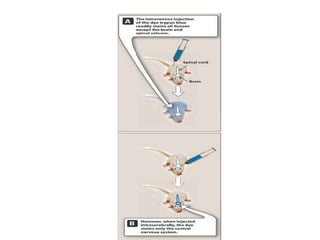
• Adequate levels of an antibiotic must reach
the site of infection for the invading
microorganisms to be effectively eradicated.
• Capillaries with varying degrees of
permeability carry drugs to the body tissues.
E. Patient factors
• In selecting an antibiotic, attention must be
paid to the condition of the patient. For
example,
• the status of the patient's immune system,
kidneys, liver, circulation, and age must be
considered. In women, pregnancy or
breastfeeding also affects selection of the
antimicrobial agent.
F. Safety of the agent
• Many of the antibiotics, such as the
penicillins, are among the least toxic of all
drugs. Other antimicrobial agents (for
example, chloramphenicol) are less
microorganism specific and are reserved for
life-threatening infections because of the
drug's potential for serious toxicity to the
patient.
G. Cost of therapy
• Often, several drugs may show similar efficacy
in treating an infection but vary widely in cost.
III. Route of Administration
• The oral route of administration is chosen for
infections that are mild and can be treated on
an outpatient basis.
However, some antibiotics, such as
vancomycin, the aminoglycosides, and
amphotericin B, are so poorly
absorbed from the gastrointestinal tract that
adequate serum levels cannot be obtained by
oral administration.
Route of Administration
• Parenteral administration is used for drugs
that are poorly absorbed from the
gastrointestinal tract
IV. Determinants of Rational Dosing
• Rational dosing of antimicrobial agents is
based on their pharmacodynamics (the
relationship of drug concentrations to
antimicrobial effects) as well as their
pharmacokinetic properties (the absorption,
distribution, and elimination of the drug by
the body).
Determinants of Rational Dosing
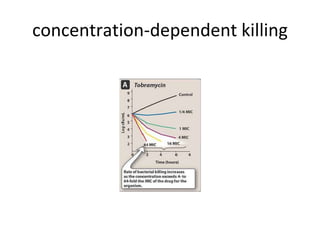
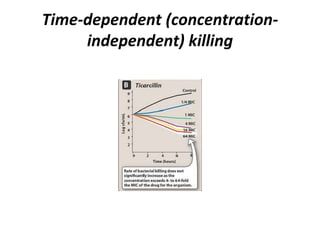
• Three important properties that have a significant
influence on the frequency of dosing are
concentration-dependent killing, time-dependent
killing, and postantibiotic effect.
• Utilizing these properties to optimize antibiotic
dosing regimens will improve clinical outcomes
and possibly decrease the development of
resistance.
concentration-dependent killing
Time-dependent (concentration-
independent) killing
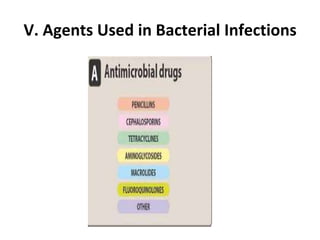
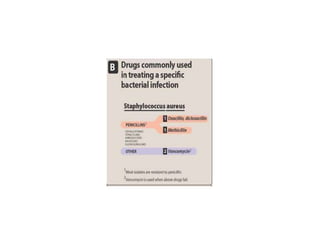
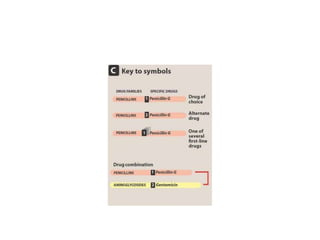
V. Agents Used in Bacterial Infections
VI. Chemotherapeutic Spectra
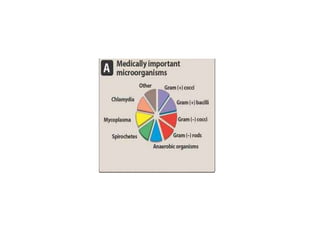
• The clinically important bacteria have been
organized into eight groups based on Gram
stain,morphology, and biochemical or other
characteristics
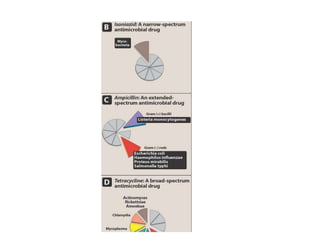
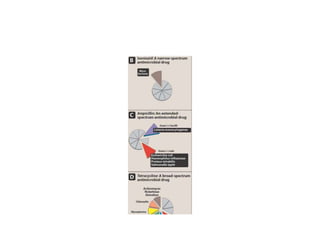
A. Narrow-spectrum antibiotics
• Chemotherapeutic agents acting only on a
single or a limited group of microorganisms
are said to have a narrow spectrum. For
example, isoniazid is active only against
mycobacteria .
B. Extended-spectrum antibiotics
• Extended spectrum is the term applied to
antibiotics that are effective against gram-
positive organisms and also against a
significant number of gram-negative bacteria.
• For example, ampicillin is considered to have
an extended spectrum, because it acts against
gram-positive and some gram-negative
bacteria .
C. Broad-spectrum antibiotics
• Drugs such as tetracycline and
chloramphenicol affect a wide variety of
microbial species and are referred to as broad-
spectrum antibiotics
VII. Combinations of Antimicrobial
Drugs
• It is therapeutically advisable to treat patients
with the single agent that is most specific for the
infecting organism.
• This strategy reduces the possibility of
superinfection, decreases the emergence of
resistant organisms ,and minimizes toxicity.
• However, situations in which combinations of
drugs are employed do exist. For example, the
treatment of tuberculosis benefits from drug
combinations.
A. Advantages of drug combinations
1-Certain combinations of antibiotics, such as beta-
lactams and aminoglycosides, show synergism;
that is, the combination is more effective than
either of the drugs used separately.
• Because such synergism among antimicrobial
agents is rare, multiple drugs used in combination
are only indicated in special situations,for
example, when an infection is of unknown origin.
Advantages of drug combinations
2-Treatment of mixed infections
• Intraabdominal infections,brain
abscesses,genitourinary infections.
• Two or more antimicrobial can be used
depending on the culture and sensitivity
report.
Advantages of drug combinations
3-Initial treatment of severe infections
Drugs covering both Gram-positive and Gram-
negative pathogens may be used initially till
the culture report is available.
4- To reduce the adverse effects
The doses needed may be lower when
combination is used. This may reduce the
incidence and severity of adverse effects.
B. Disadvantages of drug
combinations
1-A number of antibiotics act only when
organisms are multiplying. Thus,
coadministration of an agent that causes
bacteriostasis plus a second agent that is
bactericidal may result in the first drug
interfering with the action of the second. For
example, bacteriostatic tetracycline drugs
may interfere with the bactericidal effect of
penicillins and cephalosporins.
Disadvantages of drug combinations
2-Increased cost of therapy
3-Risk of toxicity from each agent-especially if
toxicity is overlaping –may get added up e.g.
many antitubercular drugs are hepatototxic
e.g Vancomycin + Aminoglycosides produce
more severe renal toxicty
4-Emergence of organisms resistant to multiple
drugs
VIII. Drug Resistance
• Bacteria are said to be resistant to an antibiotic if
the maximal level of that antibiotic that can be
tolerated by the host does not halt their growth.
• Some organisms are inherently resistant to an
antibiotic. For example, gram-negative organisms
are inherently resistant to vancomycin. But this
type of resistance is clinically not a problem as
alternative drugs are available.
Drug Resistance
• However, microbial species that are normally
responsive to a particular drug may develop
more virulent, resistant strains through
spontaneous mutation or
• acquired resistance and selection.
• Some of these strains may even become
resistant to more than one antibiotic.
Drug Resistance
• A. Genetic alterations leading to drug
resistance
• B. Altered expression of proteins in drug-
resistant organisms
Drug Resistance
A. Genetic alterations leading to drug
resistance
• Acquired antibiotic resistance requires the
temporary or permanent gain or alteration of
bacterial genetic information. Resistance
develops due to the ability of DNA to undergo
spontaneous mutation or to move from one
organism to another.
Genetic alterations leading to drug
resistance
1-Spontaneous mutations of DNA:
Chromosomal alteration may occur by
insertion, deletion, or substitution of one or
more nucleotides within the genome. The
resulting mutation may persist, be corrected
by the organism, or be lethal to the cell.
If the cell survives, it can replicate and
transmit its mutated properties to progeny
cells.
Spontaneous mutations of DNA
• Some spontaneous mutations have little or no
effect on the susceptibility of the organism to
antimicrobial agents.
• An example is the emergence of rifampin-
resistant Mycobacterium tuberculosis when
rifampin is used as a single antibiotic.
Genetic alterations leading to drug
resistance
• 2- DNA transfer of drug resistance: Of
particular clinical concern is resistance
acquired due to DNA transfer from one
bacterium to another.
• Resistance properties are usually encoded in
extrachromosomal R factors (resistance
plasmids).
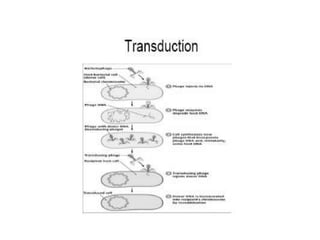
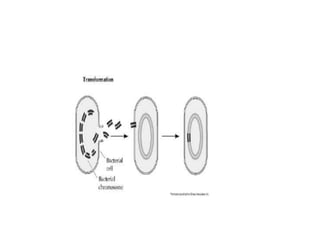
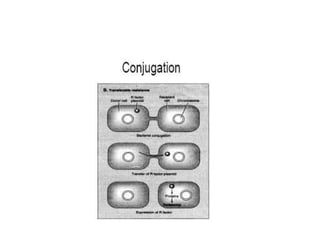
DNA transfer of drug resistance
• In fact, most resistance genes are plasmid
mediated, although plasmid-mediated traits
can become incorporated into host bacterial
DNA. Plasmids may enter cells by processes
such as
• transduction (phage mediated),
transformation, or
• bacterial conjugation
B. Altered expression of proteins in
drug-resistant organisms
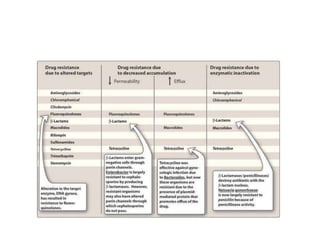
• Drug resistance may be mediated by a variety
of mechanisms, such as
• a lack of or an alteration in an antibiotic target
site,
• lowered penetrability of the drug due to
decreased permeability, increased efflux of
the drug, or
• presence of antibiotic-inactivating enzymes.
Altered expression of proteins in drug-
resistant organisms
• Modification of target sites: Alteration of an
antibiotic's target site through mutation can
confer organismal resistance to one or more
related antibiotics. For example,
Streptococcus pneumoniae resistance to beta-
lactam antibiotics involves alterations in one
or more of the major bacterial penicillin-
binding proteins, resulting in decreased
binding of the antibiotic to its target.
Altered expression of proteins in drug-
resistant organisms
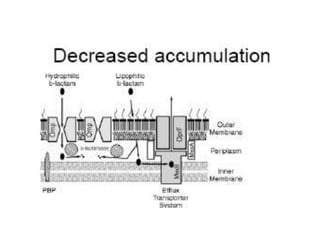
• Decreased accumulation: Decreased uptake or increased
efflux of an antibiotic can confer resistance, because
the drug is unable to attain access to the site of its action in
sufficient concentrations to injure or kill the organism.
For example, gram-negative organisms can limit the
penetration of certain agents, including beta-lactam
antibiotics, tetracyclines, and chloramphenicol, as a result
of an alteration in the number and structure of porins
(channels) in the outer membrane.
• Also, the presence of an efflux pump can limit levels of a
drug in an organism.
Altered expression of proteins in drug-
resistant organisms
• Enzymic inactivation: The ability to destroy or
inactivate the antimicrobial agent can also
confer resistance on microorganisms.
• Examples of antibiotic-inactivating enzymes
include
• 1) beta-lactamases that hydrolytically
inactivate the beta-lactam ring of penicillins,
cephalosporins, and related drugs;
Altered expression of proteins in drug-
resistant organisms
• 2)acetyltransferases that transfer an acetyl
group to the antibiotic, inactivating
chloramphenicol or aminoglycosides; and
• 3) esterases that hydrolyze the lactone ring of
macrolides.
Steps to prevent antibiotic resistance
a- early involvement of infectious disease
experts
b- choosing antibiotic therapy based on local
patterns of susceptibilities of organisms
c- appropriate use of prophylactic antibiotics
in surgical procedures
Steps to prevent antibiotic resistance
d-correct dose and duration of treatment
e-infection control procedures to isolate the
pathogen
f- develop the new and effective antibiotics
IX. Prophylactic Antibiotics
• Certain clinical situations require the use of
antibiotics for the prevention rather than the
treatment of infections. Because the
indiscriminate use of antimicrobial agents can
result in bacterial resistance and
superinfection, prophylactic use is restricted
to clinical situations in which the benefits
outweigh the potential risks.
Prophylactic Antibiotics
• In general, if a single, effective, nontoxic drug is
used to prevent infection by a specific
microorganism or to eradicate an early infection,
then chemoprophylaxis frequently is successful.
On the other hand, if the aim of prophylaxis is to
prevent colonization or infection by any or all
microorganisms present in the environment of a
patient, then prophylaxis often fails.
Prophylactic Antibiotics
• Prophylaxis may be used to protect healthy
persons from acquisition of or invasion by
specific microorganisms to which they are
exposed.
Prophylactic Antibiotics
• Antimicrobial prophylaxis, often with an oral
fluoroquinolone, is used to prevent a variety
of infections in patients undergoing organ
transplantation or receiving cancer
chemotherapy.
Prophylactic Antibiotics
• The most extensive and probably best-studied
use of chemoprophylaxis is to prevent wound
infections after various surgical procedures .
Wound infection results when a critical
number of bacteria are present in the wound
at the time of closure.
X. Complications of Antibiotic Therapy
• Because the mechanism of action of a
particular antibiotic is selectively toxic to an
invading organism does not insure the host
against adverse effects.
• For example, the drug may produce an allergic
response or be toxic in ways unrelated to the
drug's antimicrobial activity.
Complications of Antibiotic Therapy
A. Hypersensitivity
• Hypersensitivity reactions to antimicrobial
drugs or their metabolic products frequently
occur.
• For example, the penicillins, despite their
almost absolute selective microbial toxicity,
can cause serious hypersensitivity problems,
ranging from urticaria (hives) to anaphylactic
shock.
Complications of Antibiotic Therapy
B. Direct toxicity
• High serum levels of certain antibiotics may
cause toxicity by directly affecting cellular
processes in the host.
• For example, aminoglycosides can cause
ototoxicity by interfering with membrane
function in the hair cells of the organ
of Corti.
Complications of Antibiotic Therapy
C. Superinfections
• Drug therapy, particularly with broad-spectrum
antimicrobials or combinations of agents, can lead
to alterations of the normal microbial flora of the
upper respiratory, intestinal, and genitourinary
tracts, permitting the overgrowth
of opportunistic organisms, especially fungi or
resistant bacteria. These infections are often
difficult to treat.
Complications of Antibiotic Therapy
Superinfections
• Superinfection is due to removal of the
inhibitory influence of the normal flora, which
produce antibacterial substances and also
presumably compete for essential nutrients.
Complications of Antibiotic Therapy
Superinfections
• The broader the antibacterial spectrum and the
longer the period of antibiotic treatment, the
greater is the alteration in the normal microflora,
and the greater is the possibility that a single,
typically drug-resistant microorganism will
become predominant, invade the host, and
produce infection. The most specific and
narrowest spectrum antimicrobial agent should be
chosen to treat infections whenever feasible.
XI- Misuses of Antibiotics
• Antibiotics are one of the most overused or
misused drugs.
• Treatment of Nonresponsive Infections. A
common misuse of these agents is in
infections that have been proved by
experimental and clinical observation to be
nonresponsive to treatment with
antimicrobial agents.
Misuses of Antibiotics
• Most of the diseases caused by viruses are
self-limited and do not respond to any of the
currently available anti-infective compounds.
Thus, antimicrobial therapy of measles,
mumps, and at least 90% of infections of the
upper respiratory tract and many GI infections
is ineffective and, therefore, useless.
Misuses of Antibiotics
• Therapy of Fever of Unknown Origin. Fever of
undetermined cause may persist for only a few
days to a week or for a longer period. Both of
these are treated frequently and inappropriately
with empirical antimicrobial agents.
• Antimicrobial therapy is unnecessary, and
resolution of fever occurs spontaneously within a
week or less. Fever persisting for 2 or more
weeks, commonly referred to as fever of unknown
origin, has a variety of causes, of which only about
one-quarter are infections.
Misuses of Antibiotics
• Improper Dosage. Dosing errors, which can be
the wrong frequency of administration or the
use of either an excessive or a subtherapeutic
dose, are common.
Misuses of Antibiotics
• Inappropriate Reliance on Chemotherapy
Alone. Infections complicated by abscess
formation, the presence of necrotic tissue, or
the presence of a foreign body often cannot
be cured by antimicrobial therapy alone.
Drainage, debridement, and removal of the
foreign body are at least as important as the
choice of antimicrobial agent.
Misuses of Antibiotics
• Lack of Adequate Bacteriological
Information. Antimicrobial therapy
administered to hospitalized patients too
often is given in the absence of supporting
microbiological data.
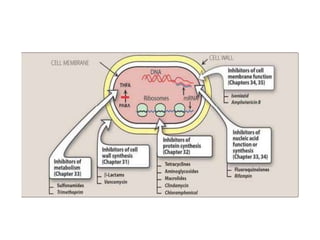
XII. Sites of Antimicrobial Actions
Antimicrobial drugs can be classified in a
number of ways. These include
• 1) by their chemical structure (for example,
beta-lactams or aminoglycosides)
• 2) by their mechanism of action (for example,
cell wall synthesis inhibitors), or
• 3) by their activity against particular types of
organisms (for example, bacteria, fungi, or
viruses).
Principles of antimicrobial (1)

Principles of antimicrobial (1)

  • 1.
  • 2.
    I- Antimicrobial Therapy •Antimicrobial drugs are effective in the treatment of infections because of their selective toxicity; that is, they have the ability to injure or kill an invading microorganism without harming the cells of the host.
  • 3.
    II- Selection ofAntimicrobial Agents • Selection of the most appropriate antimicrobial agent requires knowledge of • 1) the organism's identity • 2) the organism's susceptibility to a particular agent • 3) the site of the infection • 4) patient factors • 5) the safety of the agent • 6) the cost of therapy • However, some critically ill patients require empiric therapy--- that is, immediate administration of drug(s) prior to bacterial identification and susceptibility testing.
  • 4.
    A. Identification ofthe infecting organism • Characterization of the organism is central to selection of the proper drug. • It is essential to obtain a sample culture of the organism prior to initiating treatment.
  • 5.
    Identification of theinfecting organism • Definitive identification of the infecting organism may require other laboratory techniques, such as detection of microbial antigens, microbial DNA or RNA, or detection of an inflammatory or host immune response to the microorganism.
  • 6.
    laboratory techniques usefulin the diagnosis of microbial diseases
  • 7.
    B. Empiric therapyprior to identification of the organism • Ideally, the antimicrobial agent used to treat an infection is selected after the organism has been identified and its drug susceptibility established. • However, in the critically ill patient, such a delay could prove fatal, and immediate empiric therapy is indicated.
  • 8.
    C. Determination ofantimicrobial susceptibility of infective organisms • After a pathogen is cultured, its susceptibility to specific antibiotics serves as a guide in choosing antimicrobial therapy.
  • 9.
    Determination of antimicrobial susceptibilityof infective organisms • Bacteriostatic vs. bactericidal drugs: Antimicrobial drugs are classified as either bacteriostatic or bactericidal. • Bacteriostatic drugs arrest the growth and replication of bacteria at serum levels achievable in the patient. • Bactericidal drugs kill bacteria at drug serum levels achievable in the patient. Because of their more aggressive antimicrobial action, these agents are often the drugs of choice in seriously ill patients.
  • 10.
    Determination of antimicrobial susceptibilityof infective organisms • there is not always a precise distinction between bacteriostatic and bactericides; high concentrations of some bacteriostatic agents are also bactericidal, whereas low concentrations of some bacteriocidal agents are bacteriostatic.
  • 12.
    Bacteriostatic • Bacteriostatic groupincludes • tetracyclines • sulphonamides • spectinomycin • trimethoprim • chloramphenicol • macrolides • lincosamides
  • 13.
    Bactericidal antibiotics • theBeta-lactam antibiotics (penicillin derivatives (penams), cephalosporins (cephems), monobactams, and carbapenems) and vancomycin. • Also bactericidal are daptomycin, fluoroquinolones, metronidazole, nitrofurantoin, co-trimoxazole. • Aminoglycosidic antibiotics are usually considered bactericidal, although they may be bacteriostatic with some organisms
  • 14.
    D. Effect ofthe site of infection on therapy • Adequate levels of an antibiotic must reach the site of infection for the invading microorganisms to be effectively eradicated. • Capillaries with varying degrees of permeability carry drugs to the body tissues.
  • 16.
    E. Patient factors •In selecting an antibiotic, attention must be paid to the condition of the patient. For example, • the status of the patient's immune system, kidneys, liver, circulation, and age must be considered. In women, pregnancy or breastfeeding also affects selection of the antimicrobial agent.
  • 17.
    F. Safety ofthe agent • Many of the antibiotics, such as the penicillins, are among the least toxic of all drugs. Other antimicrobial agents (for example, chloramphenicol) are less microorganism specific and are reserved for life-threatening infections because of the drug's potential for serious toxicity to the patient.
  • 18.
    G. Cost oftherapy • Often, several drugs may show similar efficacy in treating an infection but vary widely in cost.
  • 19.
    III. Route ofAdministration • The oral route of administration is chosen for infections that are mild and can be treated on an outpatient basis. However, some antibiotics, such as vancomycin, the aminoglycosides, and amphotericin B, are so poorly absorbed from the gastrointestinal tract that adequate serum levels cannot be obtained by oral administration.
  • 20.
    Route of Administration •Parenteral administration is used for drugs that are poorly absorbed from the gastrointestinal tract
  • 21.
    IV. Determinants ofRational Dosing • Rational dosing of antimicrobial agents is based on their pharmacodynamics (the relationship of drug concentrations to antimicrobial effects) as well as their pharmacokinetic properties (the absorption, distribution, and elimination of the drug by the body).
  • 22.
    Determinants of RationalDosing • Three important properties that have a significant influence on the frequency of dosing are concentration-dependent killing, time-dependent killing, and postantibiotic effect. • Utilizing these properties to optimize antibiotic dosing regimens will improve clinical outcomes and possibly decrease the development of resistance.
  • 23.
  • 24.
  • 25.
    V. Agents Usedin Bacterial Infections
  • 28.
    VI. Chemotherapeutic Spectra •The clinically important bacteria have been organized into eight groups based on Gram stain,morphology, and biochemical or other characteristics
  • 30.
    A. Narrow-spectrum antibiotics •Chemotherapeutic agents acting only on a single or a limited group of microorganisms are said to have a narrow spectrum. For example, isoniazid is active only against mycobacteria .
  • 32.
    B. Extended-spectrum antibiotics •Extended spectrum is the term applied to antibiotics that are effective against gram- positive organisms and also against a significant number of gram-negative bacteria. • For example, ampicillin is considered to have an extended spectrum, because it acts against gram-positive and some gram-negative bacteria .
  • 34.
    C. Broad-spectrum antibiotics •Drugs such as tetracycline and chloramphenicol affect a wide variety of microbial species and are referred to as broad- spectrum antibiotics
  • 35.
    VII. Combinations ofAntimicrobial Drugs • It is therapeutically advisable to treat patients with the single agent that is most specific for the infecting organism. • This strategy reduces the possibility of superinfection, decreases the emergence of resistant organisms ,and minimizes toxicity. • However, situations in which combinations of drugs are employed do exist. For example, the treatment of tuberculosis benefits from drug combinations.
  • 36.
    A. Advantages ofdrug combinations 1-Certain combinations of antibiotics, such as beta- lactams and aminoglycosides, show synergism; that is, the combination is more effective than either of the drugs used separately. • Because such synergism among antimicrobial agents is rare, multiple drugs used in combination are only indicated in special situations,for example, when an infection is of unknown origin.
  • 37.
    Advantages of drugcombinations 2-Treatment of mixed infections • Intraabdominal infections,brain abscesses,genitourinary infections. • Two or more antimicrobial can be used depending on the culture and sensitivity report.
  • 38.
    Advantages of drugcombinations 3-Initial treatment of severe infections Drugs covering both Gram-positive and Gram- negative pathogens may be used initially till the culture report is available. 4- To reduce the adverse effects The doses needed may be lower when combination is used. This may reduce the incidence and severity of adverse effects.
  • 39.
    B. Disadvantages ofdrug combinations 1-A number of antibiotics act only when organisms are multiplying. Thus, coadministration of an agent that causes bacteriostasis plus a second agent that is bactericidal may result in the first drug interfering with the action of the second. For example, bacteriostatic tetracycline drugs may interfere with the bactericidal effect of penicillins and cephalosporins.
  • 40.
    Disadvantages of drugcombinations 2-Increased cost of therapy 3-Risk of toxicity from each agent-especially if toxicity is overlaping –may get added up e.g. many antitubercular drugs are hepatototxic e.g Vancomycin + Aminoglycosides produce more severe renal toxicty 4-Emergence of organisms resistant to multiple drugs
  • 41.
    VIII. Drug Resistance •Bacteria are said to be resistant to an antibiotic if the maximal level of that antibiotic that can be tolerated by the host does not halt their growth. • Some organisms are inherently resistant to an antibiotic. For example, gram-negative organisms are inherently resistant to vancomycin. But this type of resistance is clinically not a problem as alternative drugs are available.
  • 42.
    Drug Resistance • However,microbial species that are normally responsive to a particular drug may develop more virulent, resistant strains through spontaneous mutation or • acquired resistance and selection. • Some of these strains may even become resistant to more than one antibiotic.
  • 43.
    Drug Resistance • A.Genetic alterations leading to drug resistance • B. Altered expression of proteins in drug- resistant organisms
  • 44.
    Drug Resistance A. Geneticalterations leading to drug resistance • Acquired antibiotic resistance requires the temporary or permanent gain or alteration of bacterial genetic information. Resistance develops due to the ability of DNA to undergo spontaneous mutation or to move from one organism to another.
  • 45.
    Genetic alterations leadingto drug resistance 1-Spontaneous mutations of DNA: Chromosomal alteration may occur by insertion, deletion, or substitution of one or more nucleotides within the genome. The resulting mutation may persist, be corrected by the organism, or be lethal to the cell. If the cell survives, it can replicate and transmit its mutated properties to progeny cells.
  • 46.
    Spontaneous mutations ofDNA • Some spontaneous mutations have little or no effect on the susceptibility of the organism to antimicrobial agents. • An example is the emergence of rifampin- resistant Mycobacterium tuberculosis when rifampin is used as a single antibiotic.
  • 47.
    Genetic alterations leadingto drug resistance • 2- DNA transfer of drug resistance: Of particular clinical concern is resistance acquired due to DNA transfer from one bacterium to another. • Resistance properties are usually encoded in extrachromosomal R factors (resistance plasmids).
  • 48.
    DNA transfer ofdrug resistance • In fact, most resistance genes are plasmid mediated, although plasmid-mediated traits can become incorporated into host bacterial DNA. Plasmids may enter cells by processes such as • transduction (phage mediated), transformation, or • bacterial conjugation
  • 52.
    B. Altered expressionof proteins in drug-resistant organisms • Drug resistance may be mediated by a variety of mechanisms, such as • a lack of or an alteration in an antibiotic target site, • lowered penetrability of the drug due to decreased permeability, increased efflux of the drug, or • presence of antibiotic-inactivating enzymes.
  • 54.
    Altered expression ofproteins in drug- resistant organisms • Modification of target sites: Alteration of an antibiotic's target site through mutation can confer organismal resistance to one or more related antibiotics. For example, Streptococcus pneumoniae resistance to beta- lactam antibiotics involves alterations in one or more of the major bacterial penicillin- binding proteins, resulting in decreased binding of the antibiotic to its target.
  • 55.
    Altered expression ofproteins in drug- resistant organisms • Decreased accumulation: Decreased uptake or increased efflux of an antibiotic can confer resistance, because the drug is unable to attain access to the site of its action in sufficient concentrations to injure or kill the organism. For example, gram-negative organisms can limit the penetration of certain agents, including beta-lactam antibiotics, tetracyclines, and chloramphenicol, as a result of an alteration in the number and structure of porins (channels) in the outer membrane. • Also, the presence of an efflux pump can limit levels of a drug in an organism.
  • 57.
    Altered expression ofproteins in drug- resistant organisms • Enzymic inactivation: The ability to destroy or inactivate the antimicrobial agent can also confer resistance on microorganisms. • Examples of antibiotic-inactivating enzymes include • 1) beta-lactamases that hydrolytically inactivate the beta-lactam ring of penicillins, cephalosporins, and related drugs;
  • 58.
    Altered expression ofproteins in drug- resistant organisms • 2)acetyltransferases that transfer an acetyl group to the antibiotic, inactivating chloramphenicol or aminoglycosides; and • 3) esterases that hydrolyze the lactone ring of macrolides.
  • 59.
    Steps to preventantibiotic resistance a- early involvement of infectious disease experts b- choosing antibiotic therapy based on local patterns of susceptibilities of organisms c- appropriate use of prophylactic antibiotics in surgical procedures
  • 60.
    Steps to preventantibiotic resistance d-correct dose and duration of treatment e-infection control procedures to isolate the pathogen f- develop the new and effective antibiotics
  • 61.
    IX. Prophylactic Antibiotics •Certain clinical situations require the use of antibiotics for the prevention rather than the treatment of infections. Because the indiscriminate use of antimicrobial agents can result in bacterial resistance and superinfection, prophylactic use is restricted to clinical situations in which the benefits outweigh the potential risks.
  • 62.
    Prophylactic Antibiotics • Ingeneral, if a single, effective, nontoxic drug is used to prevent infection by a specific microorganism or to eradicate an early infection, then chemoprophylaxis frequently is successful. On the other hand, if the aim of prophylaxis is to prevent colonization or infection by any or all microorganisms present in the environment of a patient, then prophylaxis often fails.
  • 63.
    Prophylactic Antibiotics • Prophylaxismay be used to protect healthy persons from acquisition of or invasion by specific microorganisms to which they are exposed.
  • 64.
    Prophylactic Antibiotics • Antimicrobialprophylaxis, often with an oral fluoroquinolone, is used to prevent a variety of infections in patients undergoing organ transplantation or receiving cancer chemotherapy.
  • 65.
    Prophylactic Antibiotics • Themost extensive and probably best-studied use of chemoprophylaxis is to prevent wound infections after various surgical procedures . Wound infection results when a critical number of bacteria are present in the wound at the time of closure.
  • 66.
    X. Complications ofAntibiotic Therapy • Because the mechanism of action of a particular antibiotic is selectively toxic to an invading organism does not insure the host against adverse effects. • For example, the drug may produce an allergic response or be toxic in ways unrelated to the drug's antimicrobial activity.
  • 67.
    Complications of AntibioticTherapy A. Hypersensitivity • Hypersensitivity reactions to antimicrobial drugs or their metabolic products frequently occur. • For example, the penicillins, despite their almost absolute selective microbial toxicity, can cause serious hypersensitivity problems, ranging from urticaria (hives) to anaphylactic shock.
  • 68.
    Complications of AntibioticTherapy B. Direct toxicity • High serum levels of certain antibiotics may cause toxicity by directly affecting cellular processes in the host. • For example, aminoglycosides can cause ototoxicity by interfering with membrane function in the hair cells of the organ of Corti.
  • 69.
    Complications of AntibioticTherapy C. Superinfections • Drug therapy, particularly with broad-spectrum antimicrobials or combinations of agents, can lead to alterations of the normal microbial flora of the upper respiratory, intestinal, and genitourinary tracts, permitting the overgrowth of opportunistic organisms, especially fungi or resistant bacteria. These infections are often difficult to treat.
  • 70.
    Complications of AntibioticTherapy Superinfections • Superinfection is due to removal of the inhibitory influence of the normal flora, which produce antibacterial substances and also presumably compete for essential nutrients.
  • 71.
    Complications of AntibioticTherapy Superinfections • The broader the antibacterial spectrum and the longer the period of antibiotic treatment, the greater is the alteration in the normal microflora, and the greater is the possibility that a single, typically drug-resistant microorganism will become predominant, invade the host, and produce infection. The most specific and narrowest spectrum antimicrobial agent should be chosen to treat infections whenever feasible.
  • 72.
    XI- Misuses ofAntibiotics • Antibiotics are one of the most overused or misused drugs. • Treatment of Nonresponsive Infections. A common misuse of these agents is in infections that have been proved by experimental and clinical observation to be nonresponsive to treatment with antimicrobial agents.
  • 73.
    Misuses of Antibiotics •Most of the diseases caused by viruses are self-limited and do not respond to any of the currently available anti-infective compounds. Thus, antimicrobial therapy of measles, mumps, and at least 90% of infections of the upper respiratory tract and many GI infections is ineffective and, therefore, useless.
  • 74.
    Misuses of Antibiotics •Therapy of Fever of Unknown Origin. Fever of undetermined cause may persist for only a few days to a week or for a longer period. Both of these are treated frequently and inappropriately with empirical antimicrobial agents. • Antimicrobial therapy is unnecessary, and resolution of fever occurs spontaneously within a week or less. Fever persisting for 2 or more weeks, commonly referred to as fever of unknown origin, has a variety of causes, of which only about one-quarter are infections.
  • 75.
    Misuses of Antibiotics •Improper Dosage. Dosing errors, which can be the wrong frequency of administration or the use of either an excessive or a subtherapeutic dose, are common.
  • 76.
    Misuses of Antibiotics •Inappropriate Reliance on Chemotherapy Alone. Infections complicated by abscess formation, the presence of necrotic tissue, or the presence of a foreign body often cannot be cured by antimicrobial therapy alone. Drainage, debridement, and removal of the foreign body are at least as important as the choice of antimicrobial agent.
  • 77.
    Misuses of Antibiotics •Lack of Adequate Bacteriological Information. Antimicrobial therapy administered to hospitalized patients too often is given in the absence of supporting microbiological data.
  • 78.
    XII. Sites ofAntimicrobial Actions Antimicrobial drugs can be classified in a number of ways. These include • 1) by their chemical structure (for example, beta-lactams or aminoglycosides) • 2) by their mechanism of action (for example, cell wall synthesis inhibitors), or • 3) by their activity against particular types of organisms (for example, bacteria, fungi, or viruses).