Principle 3
Academic standards
Glenn Martin
March 2017
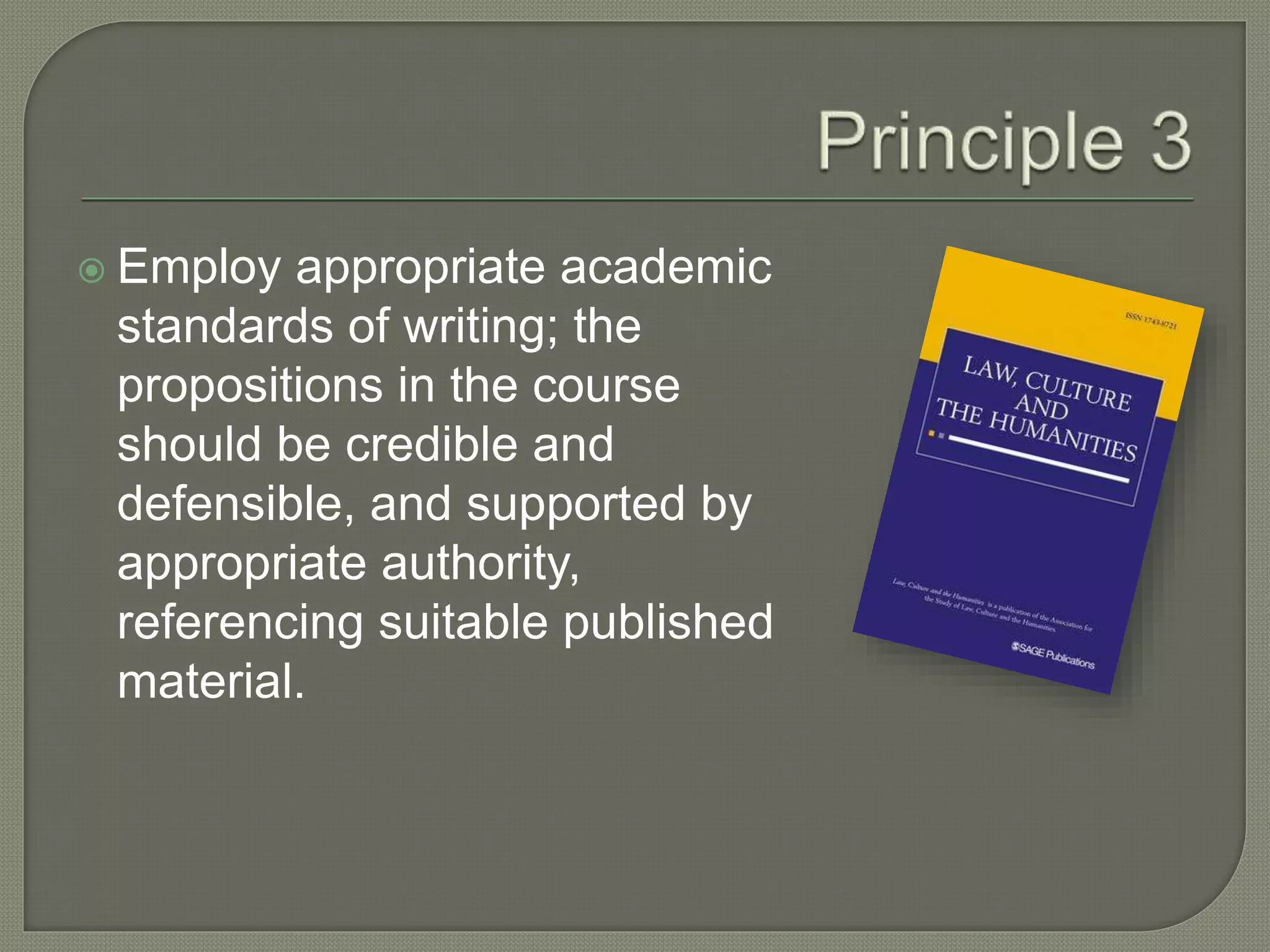
 Employ appropriate academic
standards of writing; the
propositions in the course
should be credible and
defensible, and supported by
appropriate authority,
referencing suitable published
material.
 The content of the course should be constructed
as a set of propositions connected by soundly
reasoned arguments.
 The propositions in the course must be clearly
true or constructed in a way that establishes their
credibility in the context.
 Overall, the writing should demonstrate that the
propositions and the arguments are coherent,
soundly based, relevant and useful.
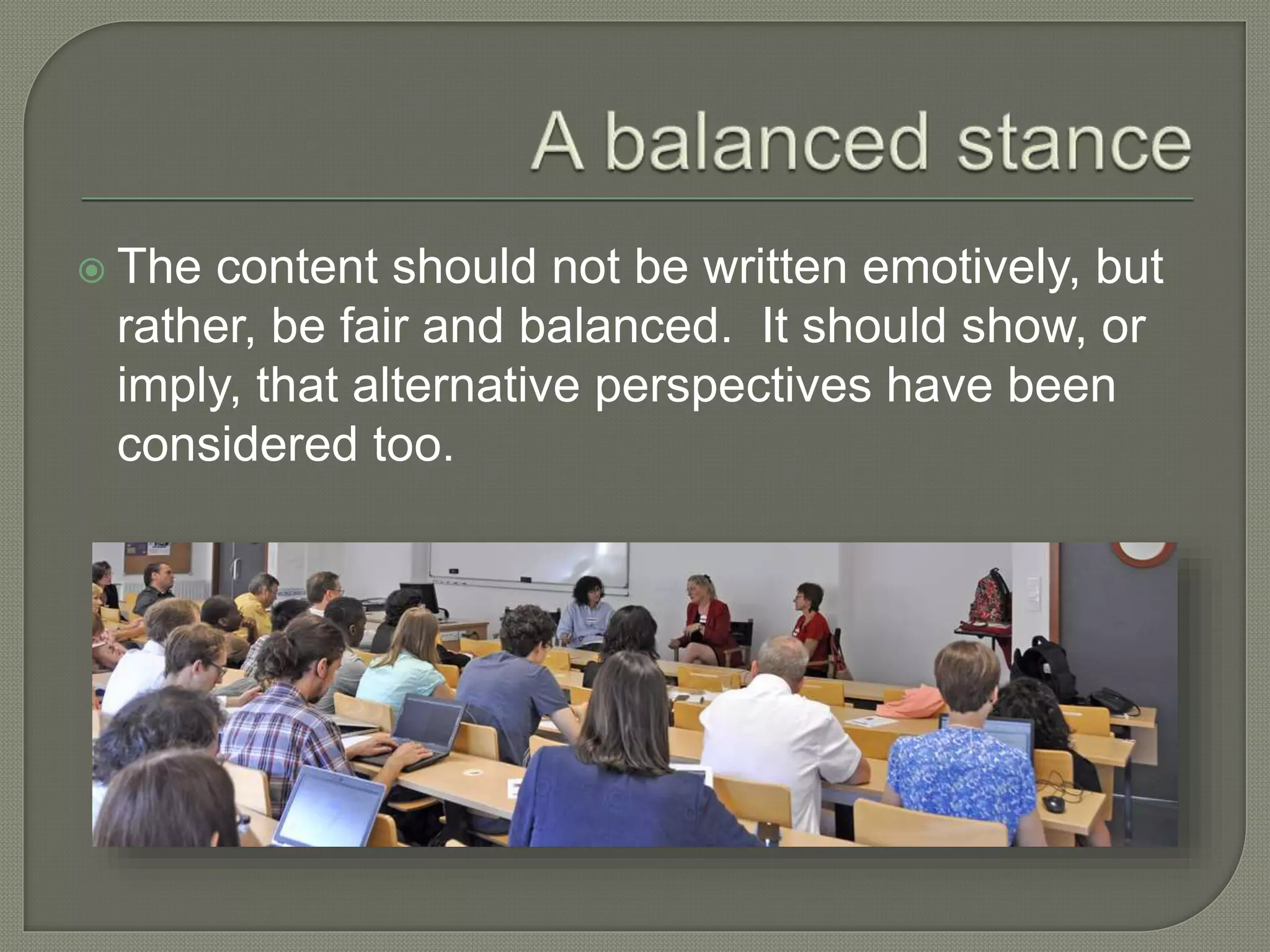
 The content should not be written emotively, but
rather, be fair and balanced. It should show, or
imply, that alternative perspectives have been
considered too.
 The material should cite appropriate sources, for
example, relevant experts and authorities,
respected publications, and perhaps original
sources.
 Include a bibliography appropriate to the field,
discipline, or profession that is suitable to
students’ level of knowledge.
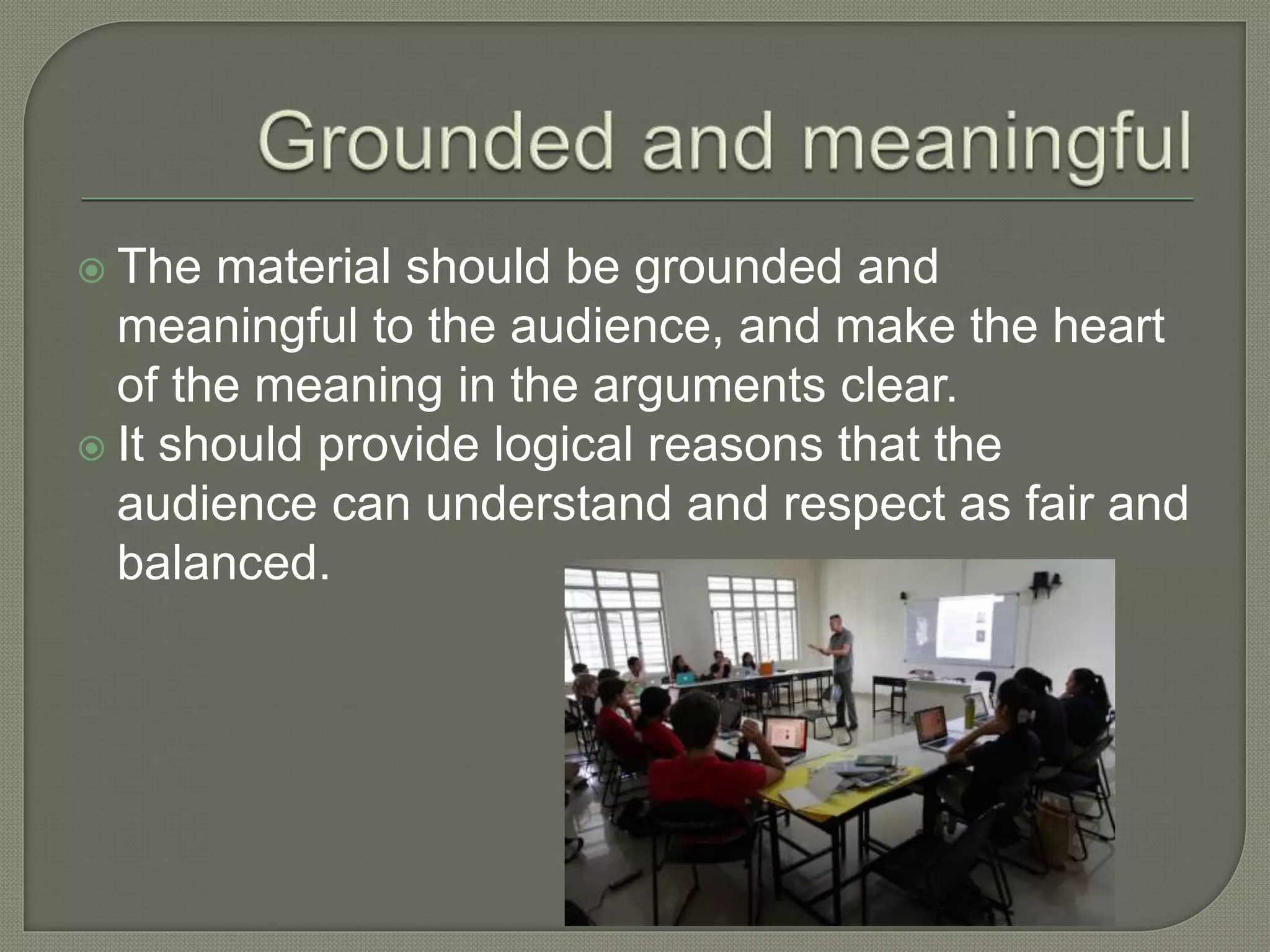
 The material should be grounded and
meaningful to the audience, and make the heart
of the meaning in the arguments clear.
 It should provide logical reasons that the
audience can understand and respect as fair and
balanced.
 An educational course introduces students to the
knowledge base of a field, discipline or
profession, including its commonly accepted
models, frameworks, theories and perspectives,
its accepted repertoire of facts and propositions,
and perhaps its contested areas.
 The material needs to carry out this introduction
in a way that is accessible to students and
enables them to establish their own foundation of
understanding.
 Care needs to be taken to distinguish clearly in
the material between what are considered to be
facts and what are opinions, perspectives,
assertions and claims. Establishing the context is
an important aspect of this endeavour.
 An integral purpose of an educational course is
to introduce students to the conversation (or
discourse) of a particular field or discipline. The
propositions and the arguments in a course
serve to contribute to this purpose.
 Accordingly, the writing should lead students
naturally into discussion and further reading.

Principle 3 academic standards

  • 1.
  • 2.
     Employ appropriateacademic standards of writing; the propositions in the course should be credible and defensible, and supported by appropriate authority, referencing suitable published material.
  • 3.
     The contentof the course should be constructed as a set of propositions connected by soundly reasoned arguments.  The propositions in the course must be clearly true or constructed in a way that establishes their credibility in the context.  Overall, the writing should demonstrate that the propositions and the arguments are coherent, soundly based, relevant and useful.
  • 4.
     The contentshould not be written emotively, but rather, be fair and balanced. It should show, or imply, that alternative perspectives have been considered too.
  • 5.
     The materialshould cite appropriate sources, for example, relevant experts and authorities, respected publications, and perhaps original sources.  Include a bibliography appropriate to the field, discipline, or profession that is suitable to students’ level of knowledge.
  • 6.
     The materialshould be grounded and meaningful to the audience, and make the heart of the meaning in the arguments clear.  It should provide logical reasons that the audience can understand and respect as fair and balanced.
  • 7.
     An educationalcourse introduces students to the knowledge base of a field, discipline or profession, including its commonly accepted models, frameworks, theories and perspectives, its accepted repertoire of facts and propositions, and perhaps its contested areas.  The material needs to carry out this introduction in a way that is accessible to students and enables them to establish their own foundation of understanding.
  • 8.
     Care needsto be taken to distinguish clearly in the material between what are considered to be facts and what are opinions, perspectives, assertions and claims. Establishing the context is an important aspect of this endeavour.
  • 9.
     An integralpurpose of an educational course is to introduce students to the conversation (or discourse) of a particular field or discipline. The propositions and the arguments in a course serve to contribute to this purpose.  Accordingly, the writing should lead students naturally into discussion and further reading.