Stages of Development in the
Teaching/Learning Role
GLENN MARTIN
JUNE 2018
Introduction
It can be useful to look at the development of
teaching capability in terms of stages. A model
consisting of five stages is presented here.
The model provides a map for one’s personal
growth as a teacher. The proposition it
incorporates is that, with experience, reflection
and continued work on our improvement in the
teaching/learning role, over time we will
generally develop from Stage 1 towards Stage 5.
Overview
Note, we refer to “the teaching/learning role” rather than simply saying “the
teacher”.
This change in terminology recognises that teaching (principally, delivering
content) remains a valid and necessary role, but incorporated within the role is
an emphasis on the importance of enabling and facilitating student learning.
The term “teaching/learning role” looks to the body of research on learning, and
how it can inform teaching practice. It causes us to address the question:
“What do we know about how people learn?”
Overview
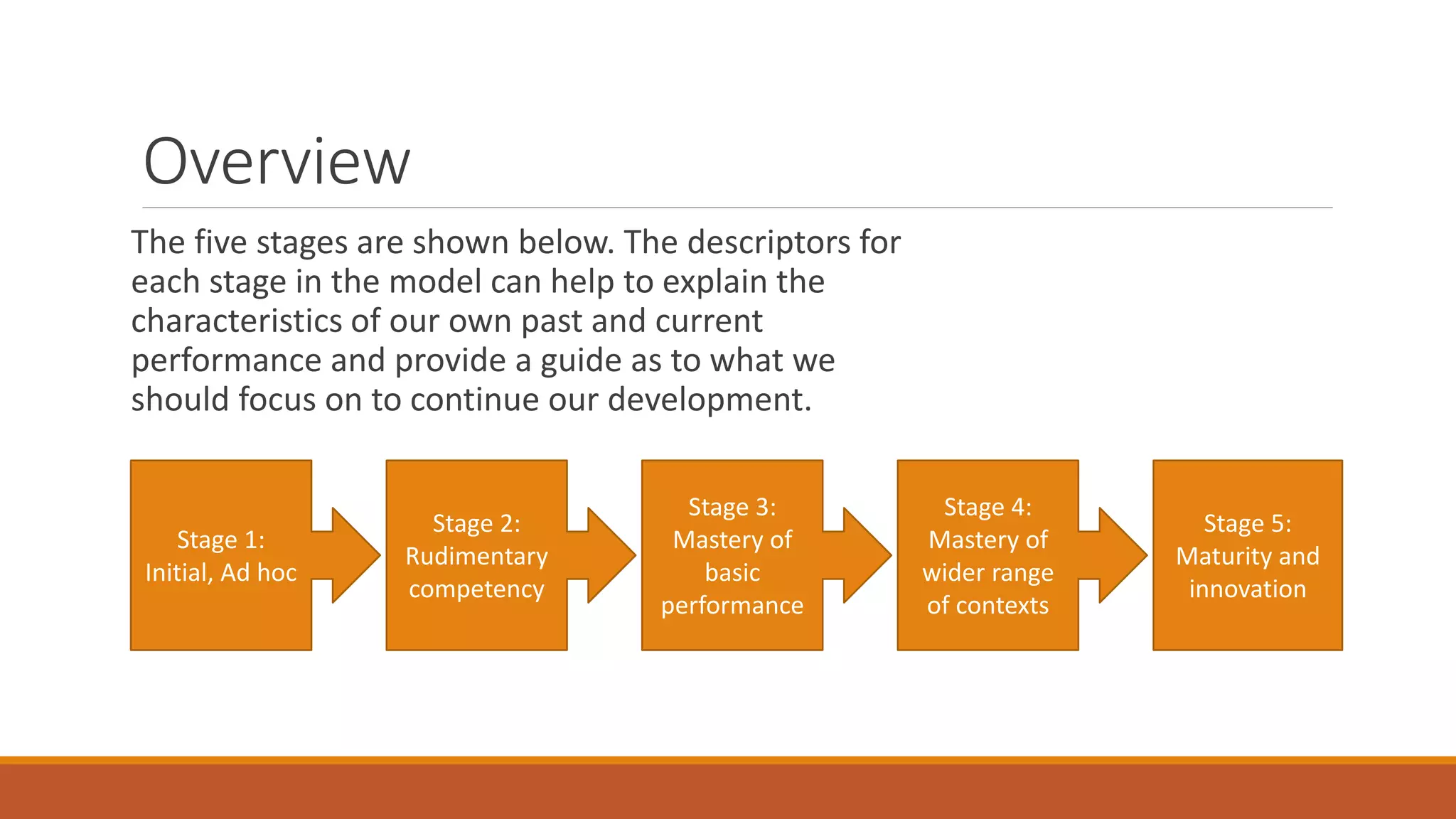
The five stages are shown below. The descriptors for
each stage in the model can help to explain the
characteristics of our own past and current
performance and provide a guide as to what we
should focus on to continue our development.
Stage 1:
Initial, Ad hoc
Stage 2:
Rudimentary
competency
Stage 3:
Mastery of
basic
performance
Stage 4:
Mastery of
wider range
of contexts
Stage 5:
Maturity and
innovation
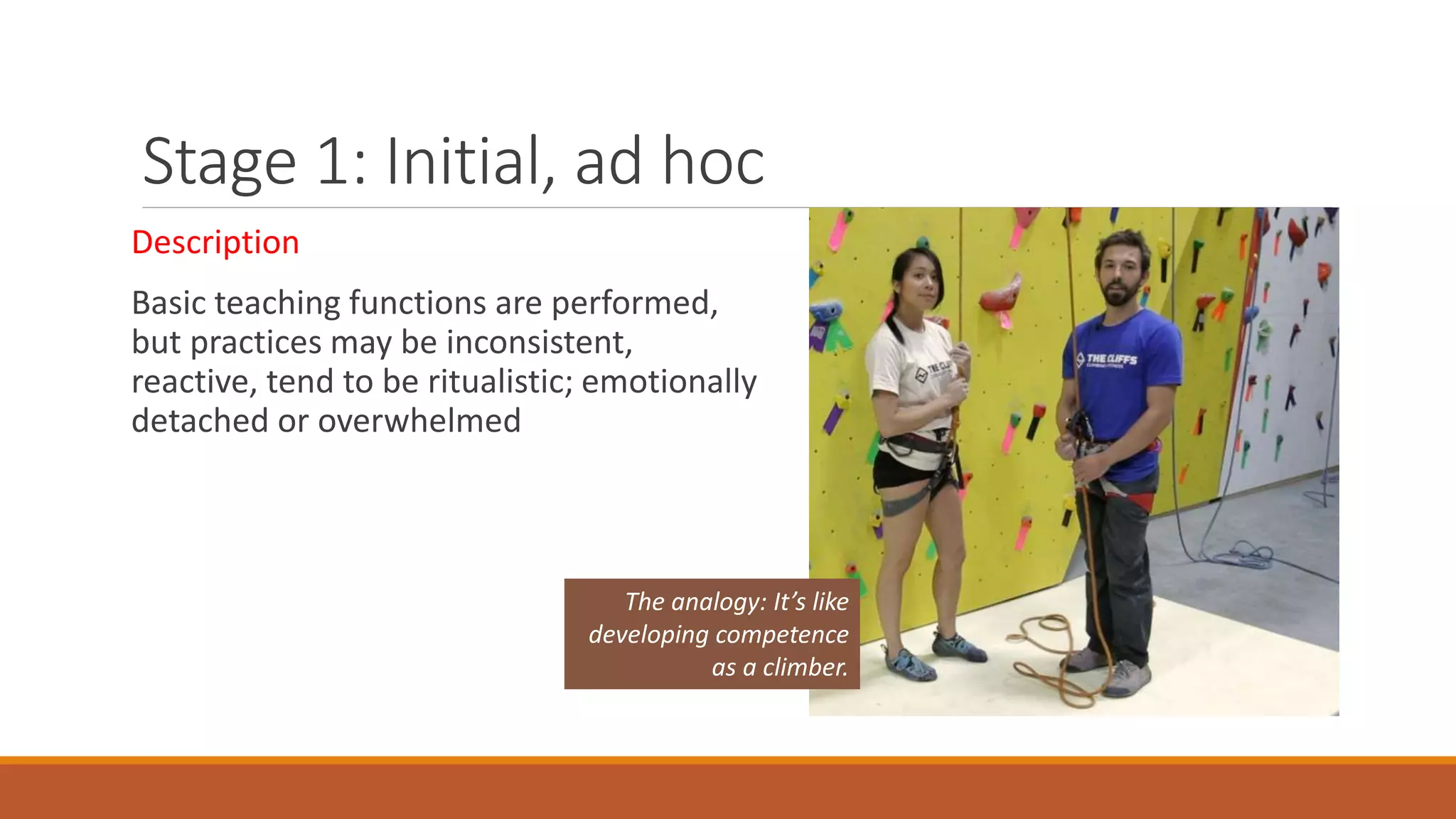
Stage 1: Initial, ad hoc
Description
Basic teaching functions are performed,
but practices may be inconsistent,
reactive, tend to be ritualistic; emotionally
detached or overwhelmed
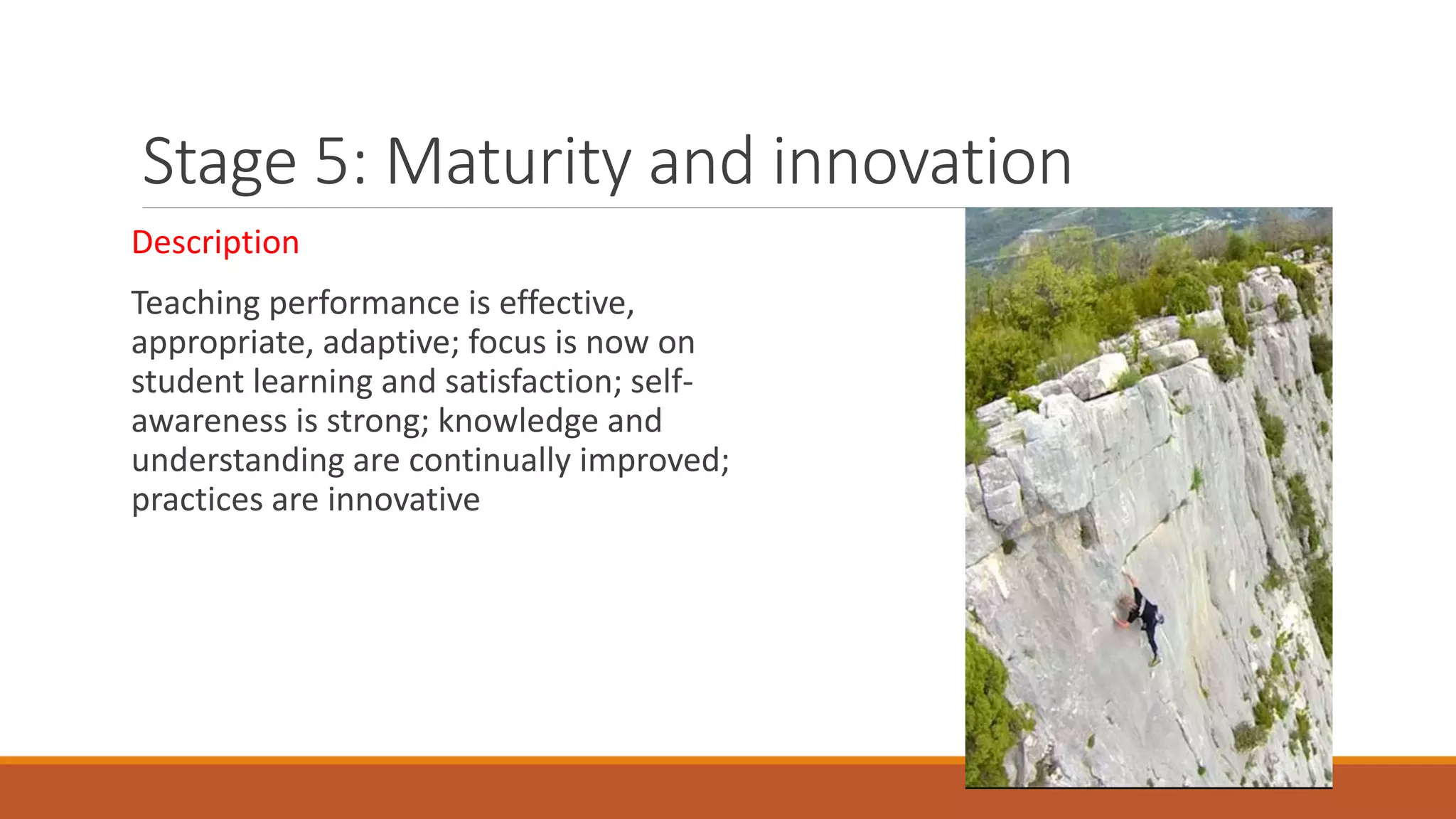
The analogy: It’s like
developing competence
as a climber.
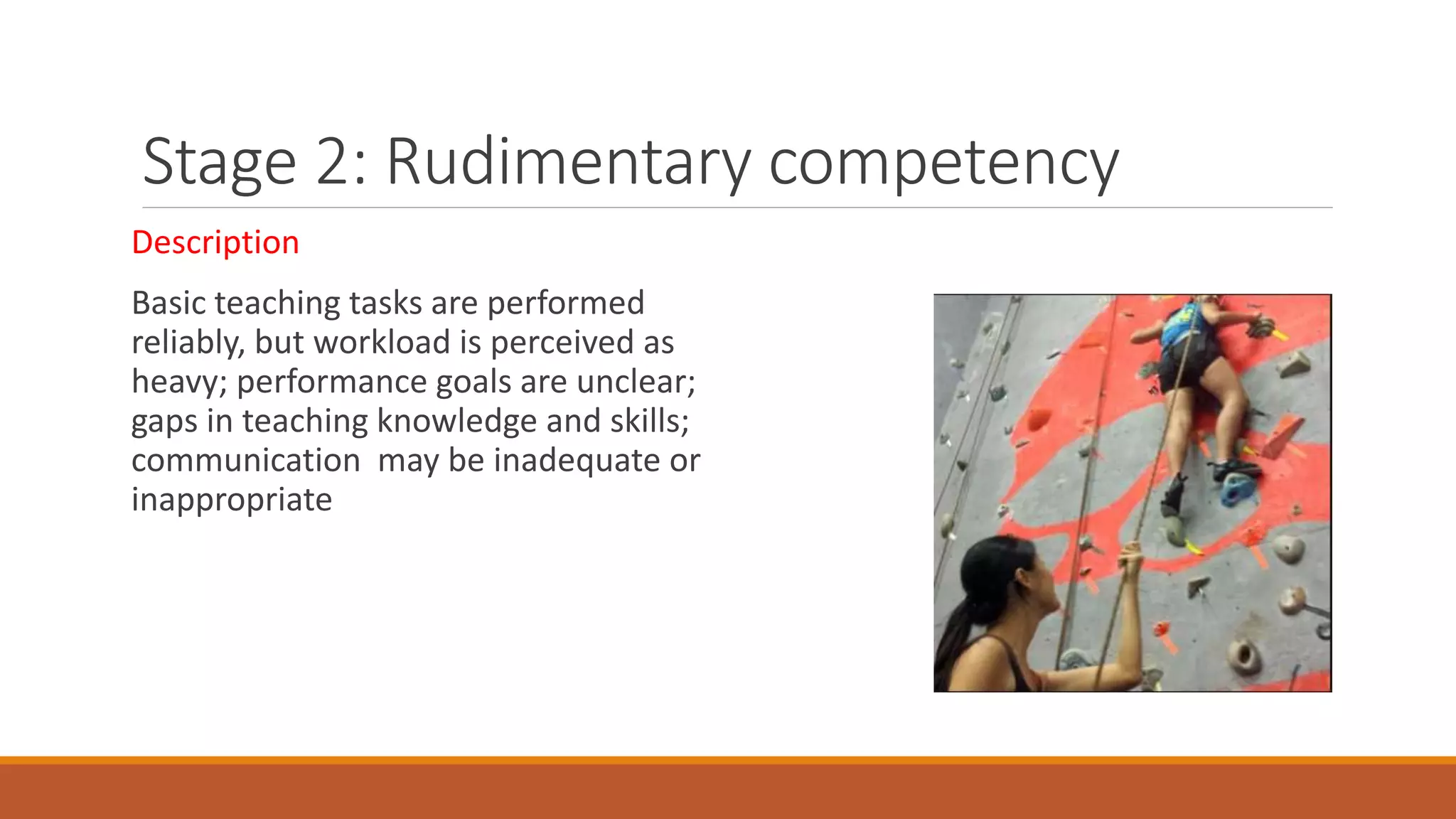
Stage 2: Rudimentary competency
Description
Basic teaching tasks are performed
reliably, but workload is perceived as
heavy; performance goals are unclear;
gaps in teaching knowledge and skills;
communication may be inadequate or
inappropriate
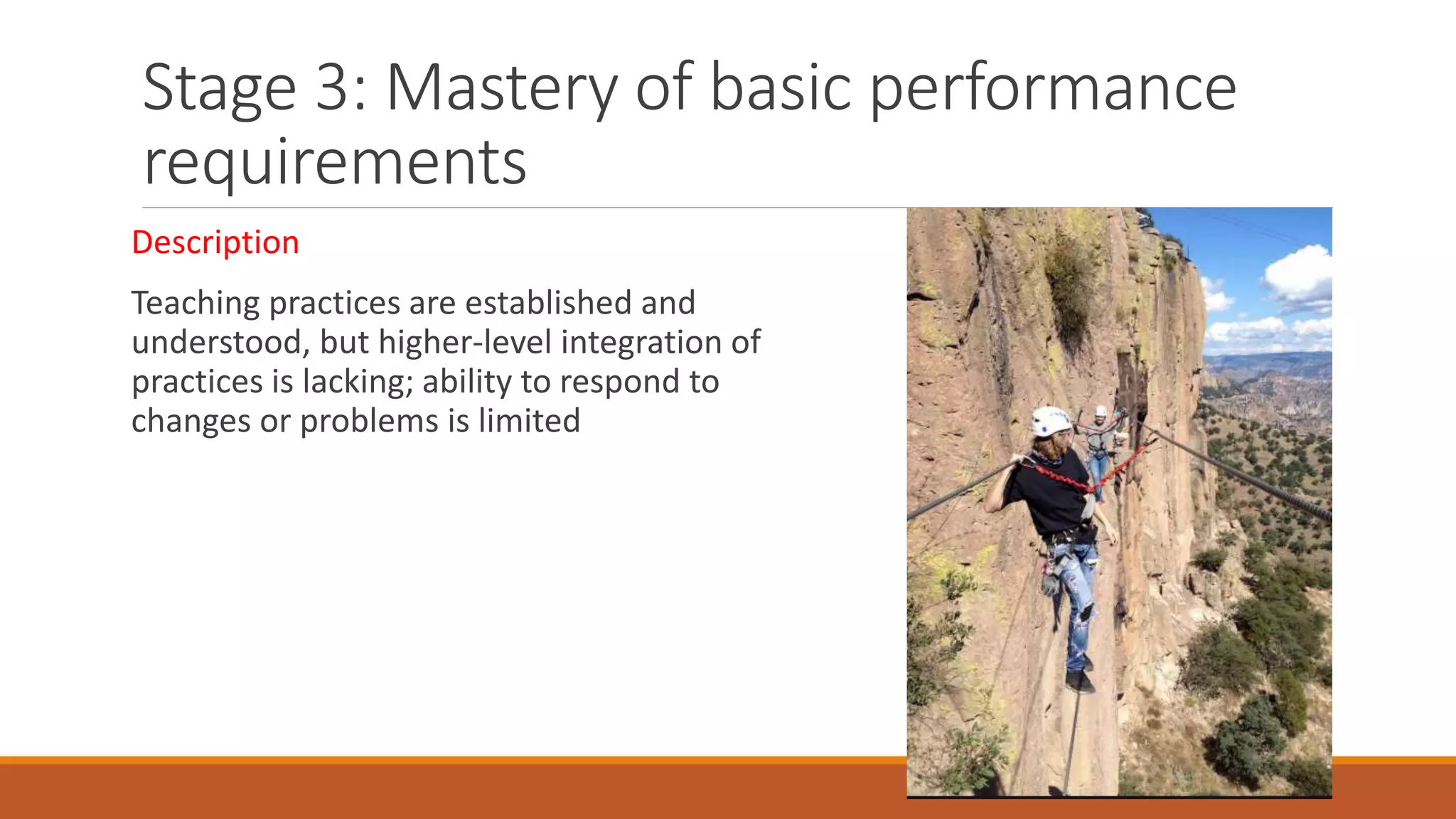
Stage 3: Mastery of basic performance
requirements
Description
Teaching practices are established and
understood, but higher-level integration of
practices is lacking; ability to respond to
changes or problems is limited
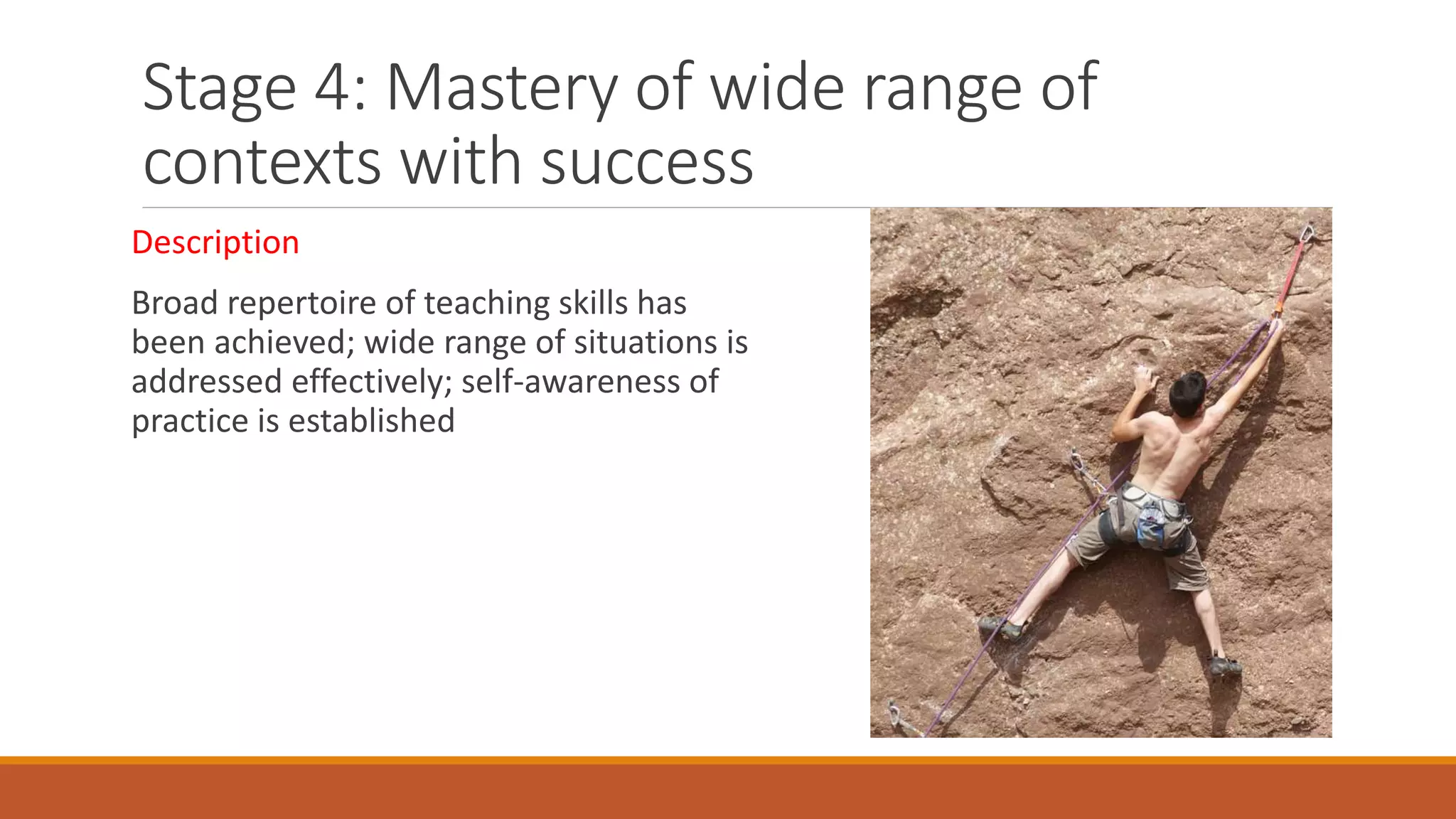
Stage 4: Mastery of wide range of
contexts with success
Description
Broad repertoire of teaching skills has
been achieved; wide range of situations is
addressed effectively; self-awareness of
practice is established
Stage 5: Maturity and innovation
Description
Teaching performance is effective,
appropriate, adaptive; focus is now on
student learning and satisfaction; self-
awareness is strong; knowledge and
understanding are continually improved;
practices are innovative
Comments
This “stages” model was devised using many different models
of stages, including models in the areas of career
development, professional development, project
management, and capability maturity models.
The model fits into a broader framework that describes the
purposes, capabilities and tasks of the teaching/learning role.
For other slide sets on teaching and learning topics, search
“Glenn Martin” on Slideshare.
Contact: glenn@glennmartin.com.au

Developmental stages of the teaching role

  • 1.
    Stages of Developmentin the Teaching/Learning Role GLENN MARTIN JUNE 2018
  • 2.
    Introduction It can beuseful to look at the development of teaching capability in terms of stages. A model consisting of five stages is presented here. The model provides a map for one’s personal growth as a teacher. The proposition it incorporates is that, with experience, reflection and continued work on our improvement in the teaching/learning role, over time we will generally develop from Stage 1 towards Stage 5.
  • 3.
    Overview Note, we referto “the teaching/learning role” rather than simply saying “the teacher”. This change in terminology recognises that teaching (principally, delivering content) remains a valid and necessary role, but incorporated within the role is an emphasis on the importance of enabling and facilitating student learning. The term “teaching/learning role” looks to the body of research on learning, and how it can inform teaching practice. It causes us to address the question: “What do we know about how people learn?”
  • 4.
    Overview The five stagesare shown below. The descriptors for each stage in the model can help to explain the characteristics of our own past and current performance and provide a guide as to what we should focus on to continue our development. Stage 1: Initial, Ad hoc Stage 2: Rudimentary competency Stage 3: Mastery of basic performance Stage 4: Mastery of wider range of contexts Stage 5: Maturity and innovation
  • 5.
    Stage 1: Initial,ad hoc Description Basic teaching functions are performed, but practices may be inconsistent, reactive, tend to be ritualistic; emotionally detached or overwhelmed The analogy: It’s like developing competence as a climber.
  • 6.
    Stage 2: Rudimentarycompetency Description Basic teaching tasks are performed reliably, but workload is perceived as heavy; performance goals are unclear; gaps in teaching knowledge and skills; communication may be inadequate or inappropriate
  • 7.
    Stage 3: Masteryof basic performance requirements Description Teaching practices are established and understood, but higher-level integration of practices is lacking; ability to respond to changes or problems is limited
  • 8.
    Stage 4: Masteryof wide range of contexts with success Description Broad repertoire of teaching skills has been achieved; wide range of situations is addressed effectively; self-awareness of practice is established
  • 9.
    Stage 5: Maturityand innovation Description Teaching performance is effective, appropriate, adaptive; focus is now on student learning and satisfaction; self- awareness is strong; knowledge and understanding are continually improved; practices are innovative
  • 10.
    Comments This “stages” modelwas devised using many different models of stages, including models in the areas of career development, professional development, project management, and capability maturity models. The model fits into a broader framework that describes the purposes, capabilities and tasks of the teaching/learning role. For other slide sets on teaching and learning topics, search “Glenn Martin” on Slideshare. Contact: glenn@glennmartin.com.au