


In the name of LORD
Shams ud din pandrani
shams kalati@yahoo.com
Roll no BD 761897 M.PHIL STE
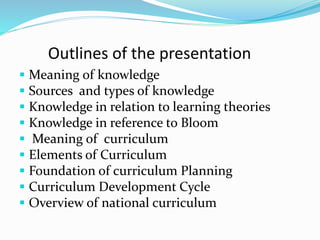
Outlines of the presentation
 Meaning of knowledge
 Sources and types of knowledge
 Knowledge in relation to learning theories
 Knowledge in reference to Bloom
 Meaning of curriculum
 Elements of Curriculum
 Foundation of curriculum Planning
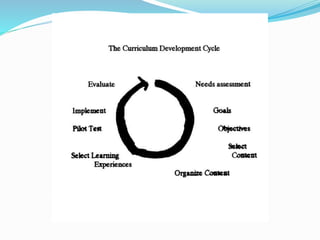
 Curriculum Development Cycle
 Overview of national curriculum
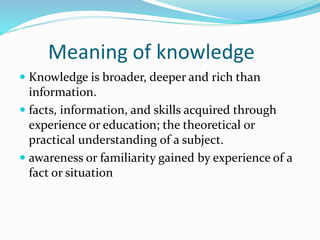
Meaning of knowledge
 Knowledge is broader, deeper and rich than
information.
 facts, information, and skills acquired through
experience or education; the theoretical or
practical understanding of a subject.
 awareness or familiarity gained by experience of a
fact or situation
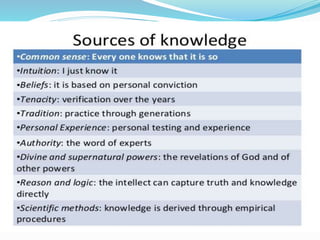
Sources of Knowledge
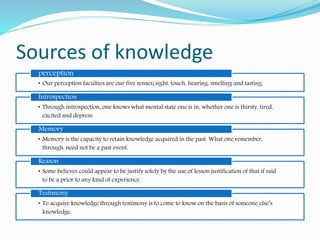
Sources of knowledge
• Our perception faculties are our five senses; sight, touch, hearing, smelling and tasting.
perception
• Through introspection, one knows what mental state one is in, whether one is thirsty, tired,
excited and depress.
Introspection
• Memory is the capacity to retain knowledge acquired in the past. What one remember,
through, need not be a past event.
Memory
• Some believes could appear to be justify solely by the use of lesson justification of that if said
to be a prior to any kind of experience.
Reason
• To acquire knowledge through testimony is to come to know on the basis of someone else’s
knowledge.
Testimony
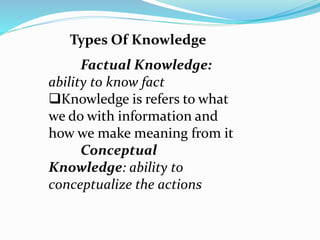
Factual Knowledge:
ability to know fact
Knowledge is refers to what
we do with information and
how we make meaning from it
Conceptual
Knowledge: ability to
conceptualize the actions
Types Of Knowledge
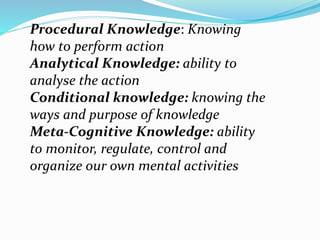
Procedural Knowledge: Knowing
how to perform action
Analytical Knowledge: ability to
analyse the action
Conditional knowledge: knowing the
ways and purpose of knowledge
Meta-Cognitive Knowledge: ability
to monitor, regulate, control and
organize our own mental activities
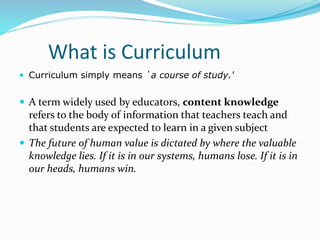
What is Curriculum
 Curriculum simply means `a course of study.'
 A term widely used by educators, content knowledge
refers to the body of information that teachers teach and
that students are expected to learn in a given subject
 The future of human value is dictated by where the valuable
knowledge lies. If it is in our systems, humans lose. If it is in
our heads, humans win.
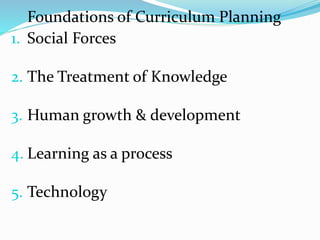
1. Social Forces
2. The Treatment of Knowledge
3. Human growth & development
4. Learning as a process
5. Technology
Foundations of Curriculum Planning
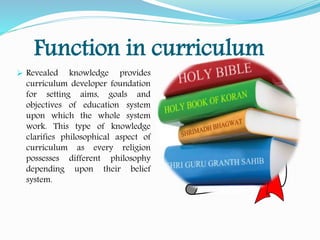
Function in curriculum
 Revealed knowledge provides
curriculum developer foundation
for setting aims, goals and
objectives of education system
upon which the whole system
work. This type of knowledge
clarifies philosophical aspect of
curriculum as every religion
possesses different philosophy
depending upon their belief
system.
Knowledge in reference to Bloom
 Objectives are more
detailed and SMART
 Audience, behavior,
conditions, degree
 In cognitive, affective,
and psychomotor
domains
 Assessments should be
written from objectives
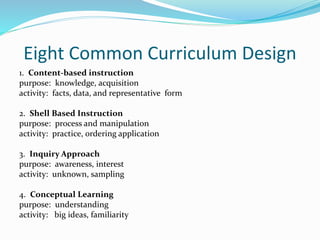
Eight Common Curriculum Design
1. Content-based instruction
purpose: knowledge, acquisition
activity: facts, data, and representative form
2. Shell Based Instruction
purpose: process and manipulation
activity: practice, ordering application
3. Inquiry Approach
purpose: awareness, interest
activity: unknown, sampling
4. Conceptual Learning
purpose: understanding
activity: big ideas, familiarity
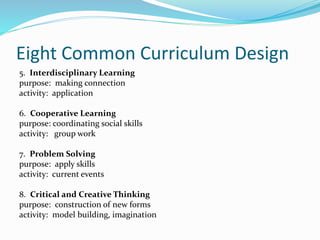
Eight Common Curriculum Design
5. Interdisciplinary Learning
purpose: making connection
activity: application
6. Cooperative Learning
purpose: coordinating social skills
activity: group work
7. Problem Solving
purpose: apply skills
activity: current events
8. Critical and Creative Thinking
purpose: construction of new forms
activity: model building, imagination
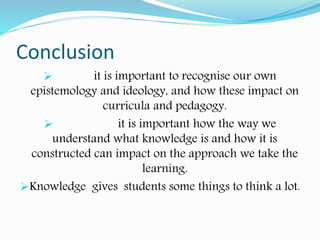
Conclusion
teacher it is important to recognise our own
epistemology and ideology, and how these impact on
curricula and pedagogy.
As a student it is important how the way we
understand what knowledge is and how it is
constructed can impact on the approach we take the
learning.
Knowledge gives students some things to think a lot.
References
 Bilbao, P. P., Lucido, P. I., Iringan, T. C., and R. B. Javier (2008). Curriculum development. Philippines:
Lorimar Publishing, Inc
 Grundy, S. (1987) Curriculum: Product or Praxis, Lewes: Falmer. 209 + ix pages. Good discussion of the
nature of curriculum theory.
 https://en.wikipedia.org/wiki/Curriculum
 https://books.google.com/books?id=qILGb7xcXFIC&pg=PA13
 http//:www.pholosophy basics .com. Retrieved on 25 March, 2016.
 http//:www.wikibooks .org.com. Retrieved on 25 March, 2016.
 http//:www.blog udemy /types of knowledge. Com. Retrieved on 26 March, 2016.
 http//:www. Theory of knowledge.info.com. Retrieved on 26 March, 2016.
 Anderson, C. (2007) The End of Theory: The Data Deluge Makes the Scientific Method Obsolete
Wired Magazine, 16:07
 Castells, M. (2000) The Rise of the Network Society Oxford: Blackwell
 Davidson, H.A. (1992) Al-Farabi, Avicenna and Averroes on Intellect, London: Oxford University Press
 Davidson, H.A. (1992) Al-Farabi, Avicenna and Averroes on Intellect, London: Oxford University Pres
Funcation of knowledge in curriculum

Funcation of knowledge in curriculum

  • 1.
    In the nameof LORD
  • 2.
    Shams ud dinpandrani shams kalati@yahoo.com Roll no BD 761897 M.PHIL STE
  • 3.
    Outlines of thepresentation  Meaning of knowledge  Sources and types of knowledge  Knowledge in relation to learning theories  Knowledge in reference to Bloom  Meaning of curriculum  Elements of Curriculum  Foundation of curriculum Planning  Curriculum Development Cycle  Overview of national curriculum
  • 4.
    Meaning of knowledge Knowledge is broader, deeper and rich than information.  facts, information, and skills acquired through experience or education; the theoretical or practical understanding of a subject.  awareness or familiarity gained by experience of a fact or situation
  • 5.
  • 6.
    Sources of knowledge •Our perception faculties are our five senses; sight, touch, hearing, smelling and tasting. perception • Through introspection, one knows what mental state one is in, whether one is thirsty, tired, excited and depress. Introspection • Memory is the capacity to retain knowledge acquired in the past. What one remember, through, need not be a past event. Memory • Some believes could appear to be justify solely by the use of lesson justification of that if said to be a prior to any kind of experience. Reason • To acquire knowledge through testimony is to come to know on the basis of someone else’s knowledge. Testimony
  • 7.
    Factual Knowledge: ability toknow fact Knowledge is refers to what we do with information and how we make meaning from it Conceptual Knowledge: ability to conceptualize the actions Types Of Knowledge
  • 8.
    Procedural Knowledge: Knowing howto perform action Analytical Knowledge: ability to analyse the action Conditional knowledge: knowing the ways and purpose of knowledge Meta-Cognitive Knowledge: ability to monitor, regulate, control and organize our own mental activities
  • 9.
    What is Curriculum Curriculum simply means `a course of study.'  A term widely used by educators, content knowledge refers to the body of information that teachers teach and that students are expected to learn in a given subject  The future of human value is dictated by where the valuable knowledge lies. If it is in our systems, humans lose. If it is in our heads, humans win.
  • 11.
    1. Social Forces 2.The Treatment of Knowledge 3. Human growth & development 4. Learning as a process 5. Technology Foundations of Curriculum Planning
  • 12.
    Function in curriculum Revealed knowledge provides curriculum developer foundation for setting aims, goals and objectives of education system upon which the whole system work. This type of knowledge clarifies philosophical aspect of curriculum as every religion possesses different philosophy depending upon their belief system.
  • 13.
    Knowledge in referenceto Bloom  Objectives are more detailed and SMART  Audience, behavior, conditions, degree  In cognitive, affective, and psychomotor domains  Assessments should be written from objectives
  • 14.
    Eight Common CurriculumDesign 1. Content-based instruction purpose: knowledge, acquisition activity: facts, data, and representative form 2. Shell Based Instruction purpose: process and manipulation activity: practice, ordering application 3. Inquiry Approach purpose: awareness, interest activity: unknown, sampling 4. Conceptual Learning purpose: understanding activity: big ideas, familiarity
  • 15.
    Eight Common CurriculumDesign 5. Interdisciplinary Learning purpose: making connection activity: application 6. Cooperative Learning purpose: coordinating social skills activity: group work 7. Problem Solving purpose: apply skills activity: current events 8. Critical and Creative Thinking purpose: construction of new forms activity: model building, imagination
  • 16.
    Conclusion teacher it isimportant to recognise our own epistemology and ideology, and how these impact on curricula and pedagogy. As a student it is important how the way we understand what knowledge is and how it is constructed can impact on the approach we take the learning. Knowledge gives students some things to think a lot.
  • 17.
    References  Bilbao, P.P., Lucido, P. I., Iringan, T. C., and R. B. Javier (2008). Curriculum development. Philippines: Lorimar Publishing, Inc  Grundy, S. (1987) Curriculum: Product or Praxis, Lewes: Falmer. 209 + ix pages. Good discussion of the nature of curriculum theory.  https://en.wikipedia.org/wiki/Curriculum  https://books.google.com/books?id=qILGb7xcXFIC&pg=PA13  http//:www.pholosophy basics .com. Retrieved on 25 March, 2016.  http//:www.wikibooks .org.com. Retrieved on 25 March, 2016.  http//:www.blog udemy /types of knowledge. Com. Retrieved on 26 March, 2016.  http//:www. Theory of knowledge.info.com. Retrieved on 26 March, 2016.  Anderson, C. (2007) The End of Theory: The Data Deluge Makes the Scientific Method Obsolete Wired Magazine, 16:07  Castells, M. (2000) The Rise of the Network Society Oxford: Blackwell  Davidson, H.A. (1992) Al-Farabi, Avicenna and Averroes on Intellect, London: Oxford University Press  Davidson, H.A. (1992) Al-Farabi, Avicenna and Averroes on Intellect, London: Oxford University Pres