Dr PradipMate 
(Masters In Pharmaceutical Medicine)
Introduction 
 Headache disorders are among the most common disorders of the nervous system. 
 It has been estimated that 47% of the adult population have headache at least once 
within last year in general. 
 Headache disorders are associated with 
 Personal and societal burdens of pain, 
 Disability, 
 Damaged quality of life and financial cost. 
Headache disorders Fact sheet N°277. WHO. 
October 2012. http://www.who.int/mediacentre/factsheets/fs277/en/index.html .
Epidemiology 
 As many as 90 % of all benign headaches fall under a few categories, 
including 
 Migraine, 
 Tension-type, 
 Cluster headache. 
 A population-based study found that the one-year prevalence of episodic 
tension-type headache was 38 %, 
 Most of these people do not present to physicians for care.
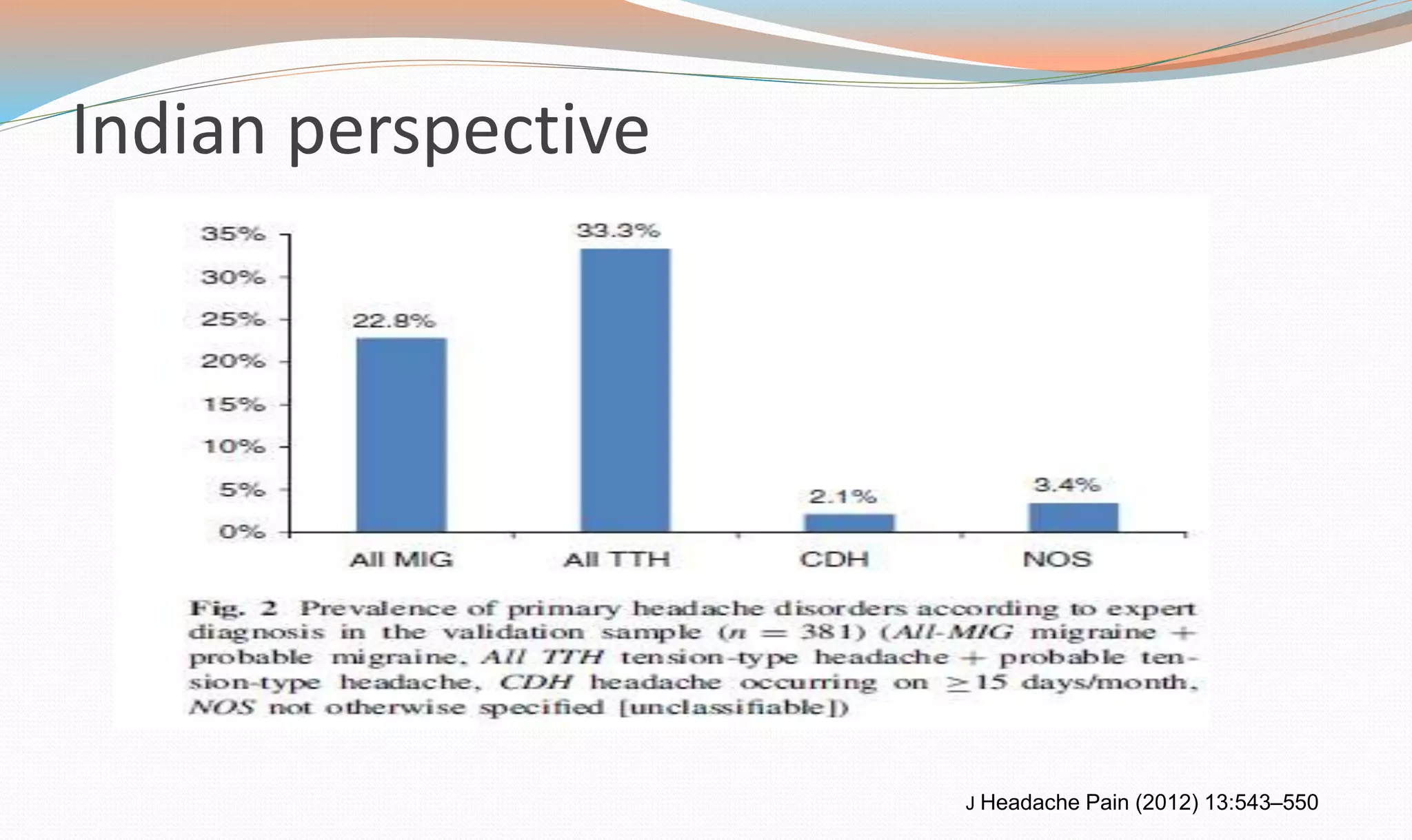
Indian perspective 
J Headache Pain (2012) 13:543–550
Classification : The International Classification of Headache 
Disorders, 3rd edition (beta version) 
Part 1: The primary headaches 
• 1. Migraine 
• 2. Tension-type headache 
• 3. Trigeminal autonomic cephalalgias 
• 4. Other primary headache disorders
Classification 
Part 2: The secondary headaches 
• 5. Headache attributed to trauma or injury to the head 
and/or neck 
• 6. Headache attributed to cranial or cervical vascular disorder 
• 7. Headache attributed to non-vascular intracranial disorder 
• 8. Headache attributed to a substance or its withdrawal 
• 9. Headache attributed to infection 
• 10. Headache attributed to disorder of homoeostasis
Classification 
Part 2: The secondary headaches 
• 11. Headache or facial pain attributed to disorder of the 
cranium, neck, eyes, ears, nose, sinuses, teeth, mouth or 
other facial or cervical structure 
• 12. Headache attributed to psychiatric disorder
Classification 
Part 3: Painful cranial neuropathies, other facial 
pains and other headaches 
• 13. Painful cranial neuropathies and other facial pains 
• 14. Other headache disorders
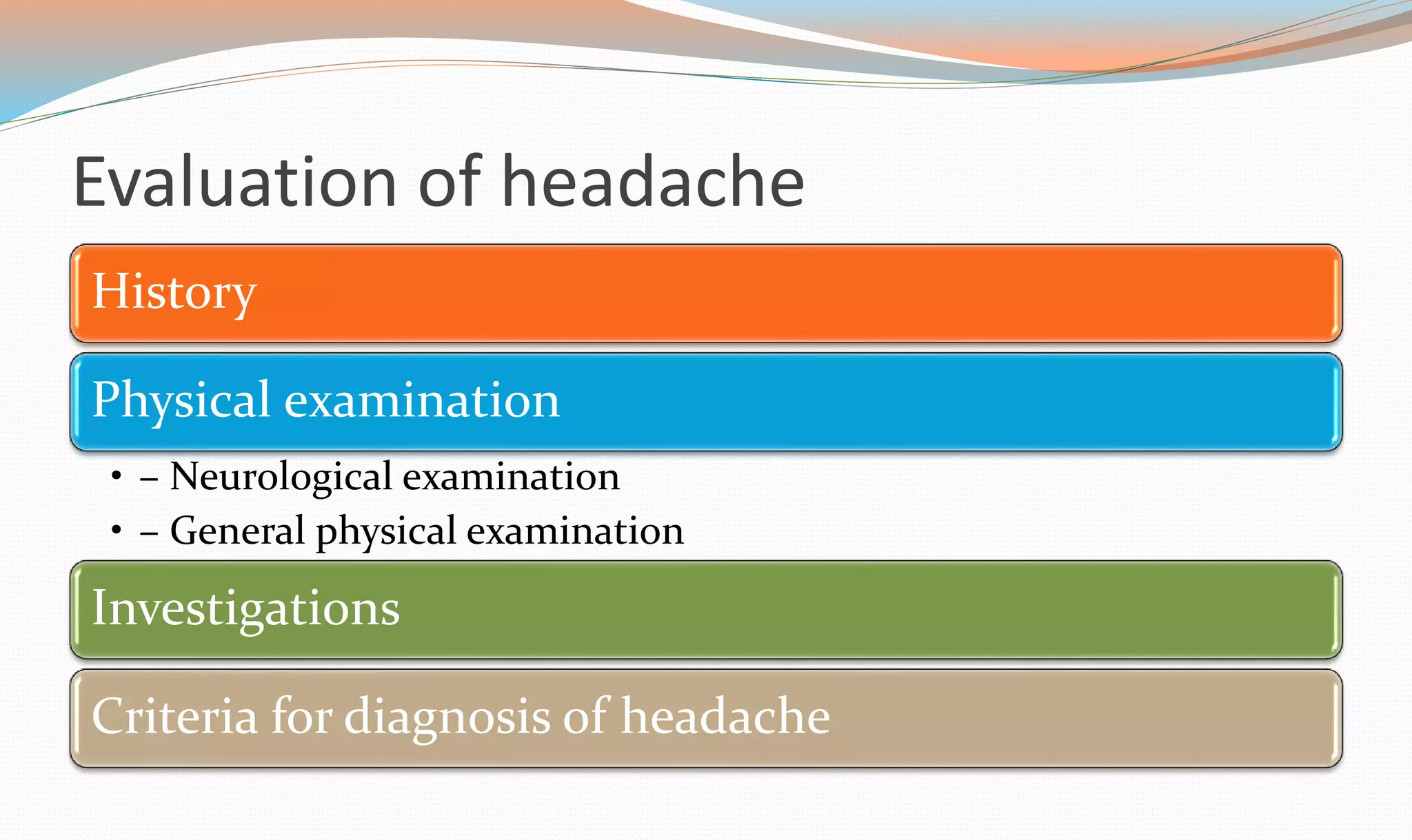
Evaluation of headache 
History 
Physical examination 
• – Neurological examination 
• – General physical examination 
Investigations 
Criteria for diagnosis of headache
History 
Location of pain 
Diffuse 
focal 
Constant 
Spreading 
Natural history of pain wave 
Fluctuation, constant peak 
Symptom free period 
Time of day 
Associated symptoms 
Radiation of pain 
Migration 
Shifting 
Secondary pain
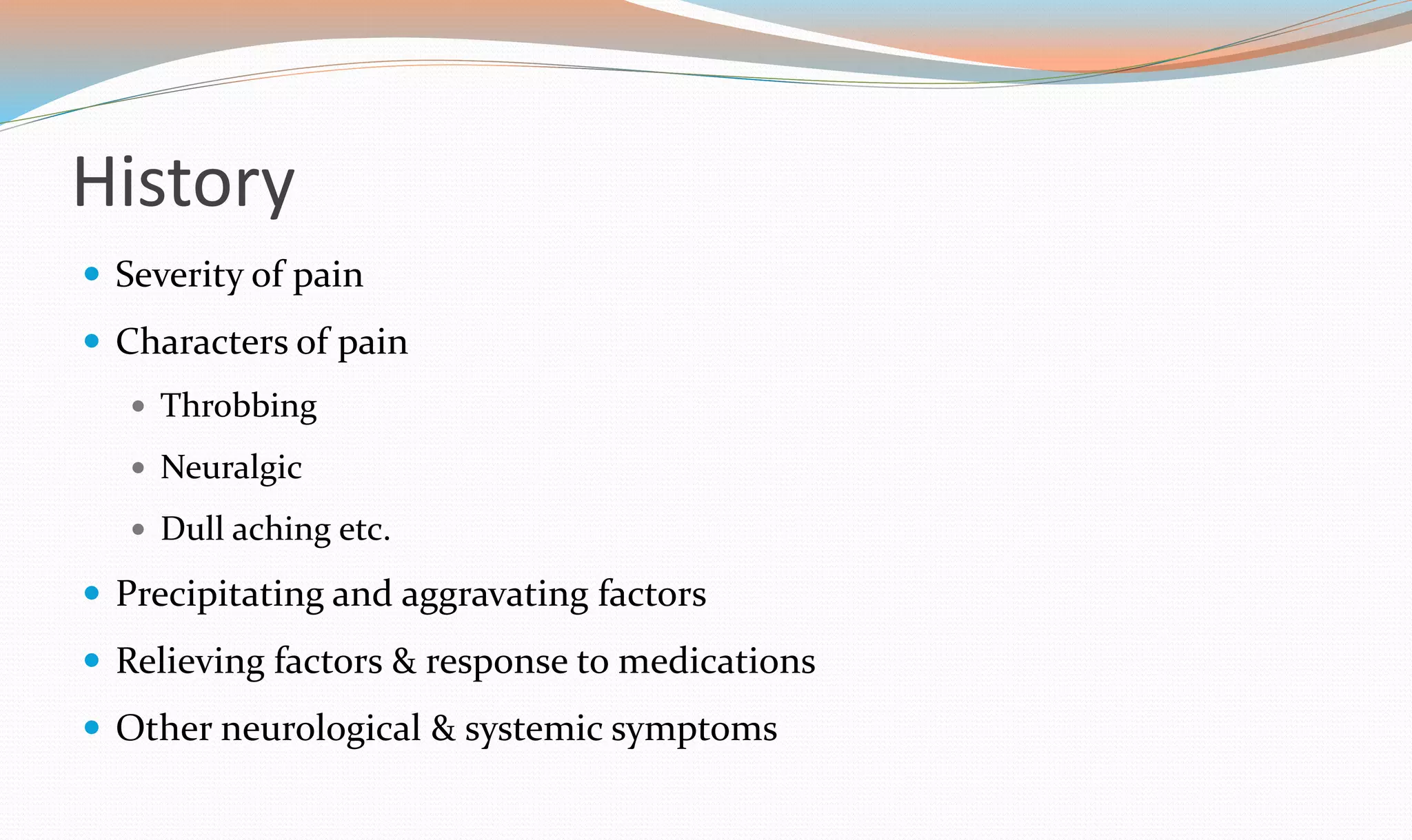
History 
 Severity of pain 
 Characters of pain 
 Throbbing 
 Neuralgic 
 Dull aching etc. 
 Precipitating and aggravating factors 
 Relieving factors & response to medications 
 Other neurological & systemic symptoms
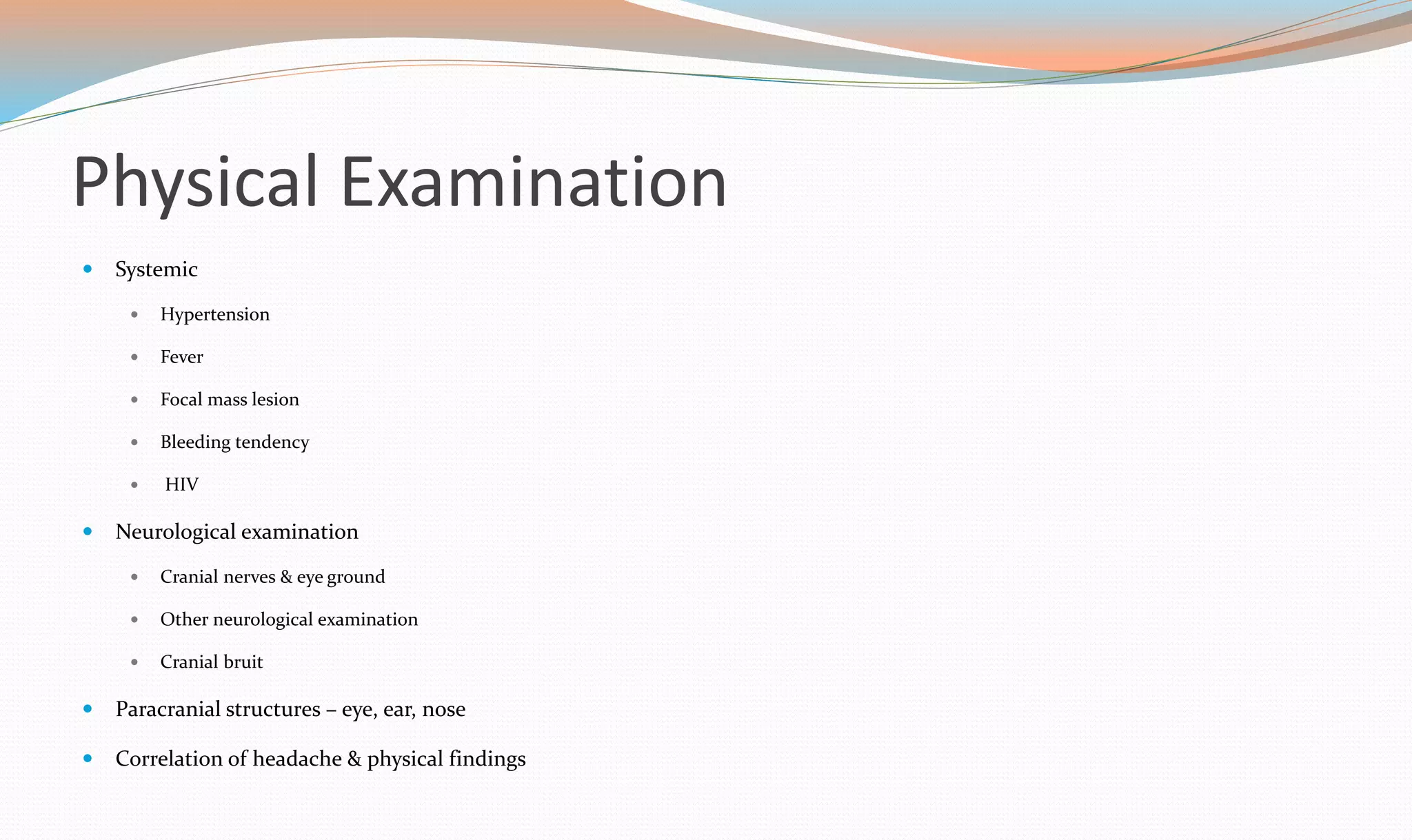
Physical Examination 
 Systemic 
 Hypertension 
 Fever 
 Focal mass lesion 
 Bleeding tendency 
 HIV 
 Neurological examination 
 Cranial nerves & eye ground 
 Other neurological examination 
 Cranial bruit 
 Paracranial structures – eye, ear, nose 
 Correlation of headache & physical findings
Characteristics of migraine, tension-type, and cluster headache 
Symptom Migraine Tension-type Cluster 
Location 
Unilateral in 60 to 70%; 
bifrontal or global in 30% 
Bilateral 
Always unilateral, usually 
begins around the eye or 
temple 
Characteristics 
Gradual in onset, crescendo 
pattern; pulsating; moderate or 
severe intensity; aggravated by 
routine physical activity 
Pressure or tightness which 
waxes and wanes 
Pain begins quickly, reaches a 
crescendo within minutes; pain 
is deep, continuous, 
excruciating, and explosive in 
quality 
Patient appearance 
Patient prefers to rest in a dark, 
quiet room 
Patient may remain active or 
may need to rest 
Patient remains active 
Duration 4 to 72 hours Variable 30 minutes to 3 hours 
Associated symptoms 
Nausea, vomiting, 
photophobia, phonophobia; 
may have aura (usually visual, 
but can involve other senses or 
cause speech or motor deficits) 
None Ipsilateral lacrimation and 
redness of the eye; stuffy nose; 
rhinorrhea; pallor; sweating; 
Horner's syndrome; focal 
neurologic symptoms rare; 
sensitivity to alcohol 
syndromes
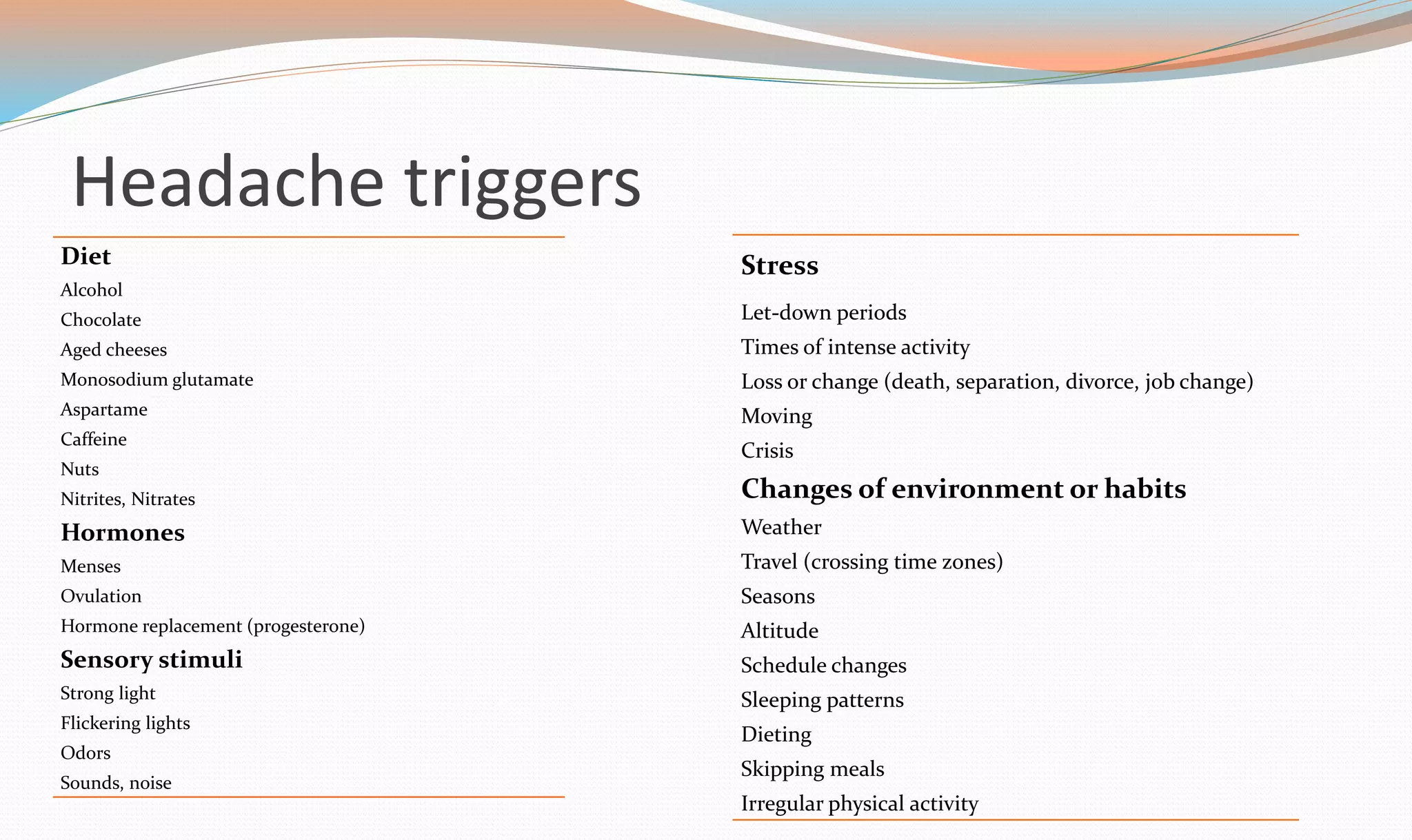
Headache triggers 
Diet 
Alcohol 
Chocolate 
Aged cheeses 
Monosodium glutamate 
Aspartame 
Caffeine 
Nuts 
Nitrites, Nitrates 
Hormones 
Menses 
Ovulation 
Hormone replacement (progesterone) 
Sensory stimuli 
Strong light 
Flickering lights 
Odors 
Sounds, noise 
Stress 
Let-down periods 
Times of intense activity 
Loss or change (death, separation, divorce, job change) 
Moving 
Crisis 
Changes of environment or habits 
Weather 
Travel (crossing time zones) 
Seasons 
Altitude 
Schedule changes 
Sleeping patterns 
Dieting 
Skipping meals 
Irregular physical activity
Principles of the headache evaluation 
 History — 
 A systematic case history is the single most important factor in establishing a headache diagnosis and determining the 
future work-up and treatment plan. 
 A thorough history also helps focus the physical examination and prevent unnecessary investigation and imaging 
studies 
 A systematic case history should include the following: 
 Age at onset 
 Presence or absence of aura and prodrome 
 Frequency, intensity and duration of attack 
 Number of headache days per month 
 Time and mode of onset 
 Quality, site, and radiation of pain Zahid H Bajw. Evaluation of headache in adults. Up to Date. 
Available from URL: http://www.uptodate.com/contents/evaluation-of-headache-in-adults
A systematic case history should include 
 Associated symptoms and 
abnormalities 
 Family history of migraine 
 Precipitating and relieving 
factors 
 Effect of activity on pain 
 Relationship with food/alcohol 
 Response to any previous 
treatment 
 Any recent change in vision 
 Association with recent trauma 
 Any recent changes in sleep, 
exercise, weight, or diet 
 State of general health 
 Change in work or lifestyle 
(disability) 
 Change in method of birth 
control (women) 
 Possible association with 
environmental factors 
 Effects of menstrual cycle and 
exogenous hormones (women)
A systematic case history should include 
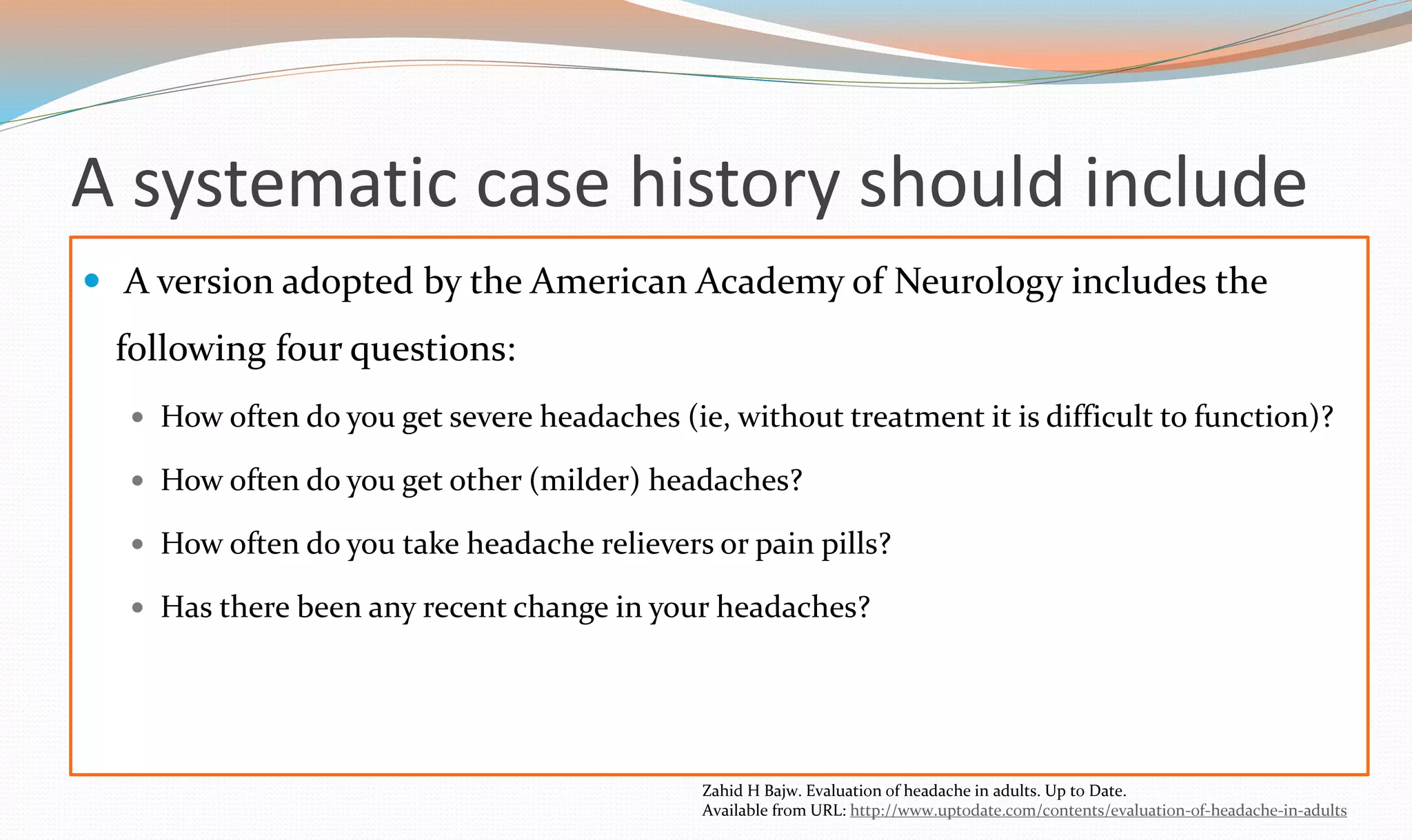
 A version adopted by the American Academy of Neurology includes the 
following four questions: 
 How often do you get severe headaches (ie, without treatment it is difficult to function)? 
 How often do you get other (milder) headaches? 
 How often do you take headache relievers or pain pills? 
 Has there been any recent change in your headaches? 
Zahid H Bajw. Evaluation of headache in adults. Up to Date. 
Available from URL: http://www.uptodate.com/contents/evaluation-of-headache-in-adults
Danger signs on history 
 Paying attention to danger signs is important since headaches may be 
the presenting symptom of 
 A space-occupying mass or vascular lesion 
 Infection 
 Metabolic disturbance 
 A systemic problem. 
Zahid H Bajw. Evaluation of headache in adults. Up to Date. 
Available from URL: http://www.uptodate.com/contents/evaluation-of-headache-in-adults
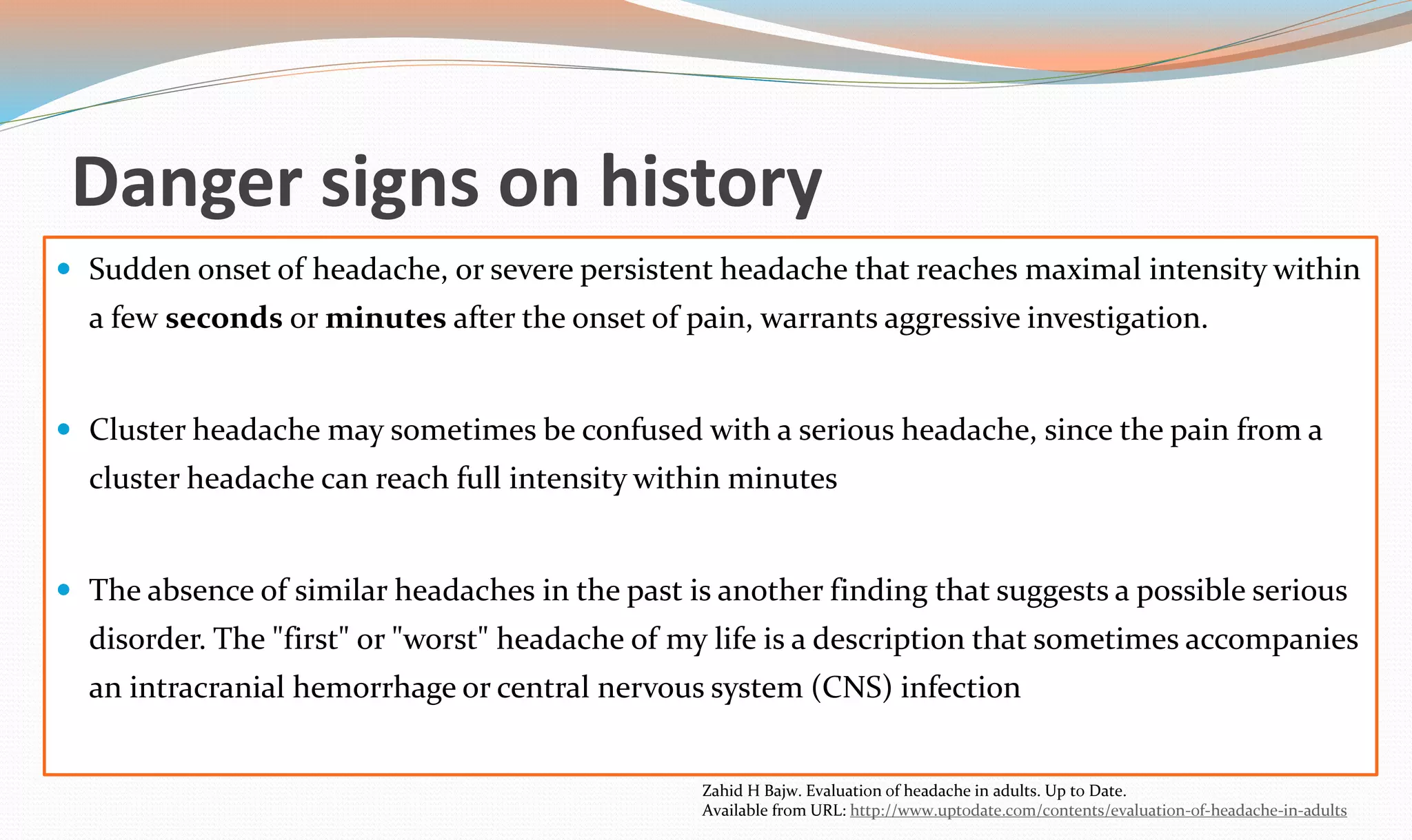
Danger signs on history 
 Sudden onset of headache, or severe persistent headache that reaches maximal intensity within 
a few seconds or minutes after the onset of pain, warrants aggressive investigation. 
 Cluster headache may sometimes be confused with a serious headache, since the pain from a 
cluster headache can reach full intensity within minutes 
 The absence of similar headaches in the past is another finding that suggests a possible serious 
disorder. The "first" or "worst" headache of my life is a description that sometimes accompanies 
an intracranial hemorrhage or central nervous system (CNS) infection 
Zahid H Bajw. Evaluation of headache in adults. Up to Date. 
Available from URL: http://www.uptodate.com/contents/evaluation-of-headache-in-adults
Danger signs on history 
 A worsening pattern of headache suggests a mass lesion, subdural hematoma, or 
medication overuse headache 
 Fever associated with headache may be caused by intracranial, systemic, or local 
infection, as well as other etiologies 
 Any change in mental status, personality, or fluctuation in the level of consciousness 
suggests a potentially serious abnormality. 
 The rapid onset of headache with strenuous exercise, especially when minor trauma 
has occurred, raises the possibility of carotid artery dissection or intracranial 
hemorrhage. 
Zahid H Bajw. Evaluation of headache in adults. Up to Date. 
Available from URL: http://www.uptodate.com/contents/evaluation-of-headache-in-adults
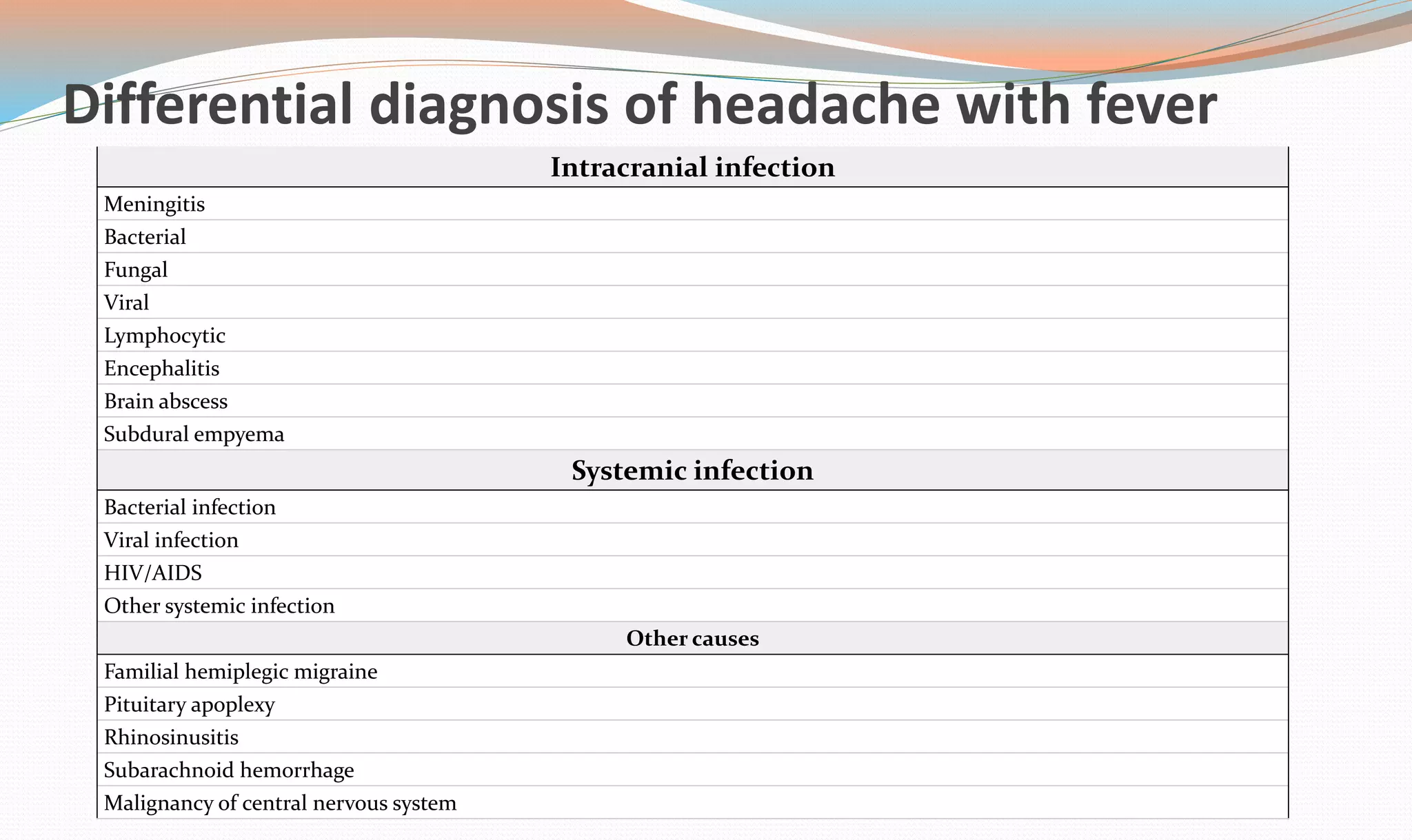
Differential diagnosis of headache with fever 
Intracranial infection 
Meningitis 
Bacterial 
Fungal 
Viral 
Lymphocytic 
Encephalitis 
Brain abscess 
Subdural empyema 
Systemic infection 
Bacterial infection 
Viral infection 
HIV/AIDS 
Other systemic infection 
Other causes 
Familial hemiplegic migraine 
Pituitary apoplexy 
Rhinosinusitis 
Subarachnoid hemorrhage 
Malignancy of central nervous system
Danger signs on history 
 Head pain that spreads into the lower neck and between the shoulders may indicate meningeal 
irritation due to either infection or subarachnoid blood; it is not typical of a benign process. 
 New headache in patients under the age of 5 or over the age of 50 may suggest underlying pathology. 
 New headache type in a patient with cancer suggests metastasis. 
 New headache type in a patient with Lyme disease suggests meningoencephalitis. 
 New headache type in a patient with HIV suggests an opportunistic infection or tumor. 
 Headache during pregnancy or postpartum suggests possible cortical vein or venous sinus 
thrombosis, carotid dissection, and pituitary apoplexy 
Zahid H Bajw. Evaluation of headache in adults. Up to Date. 
Available from URL: http://www.uptodate.com/contents/evaluation-of-headache-in-adults
Physical examination 
 If a complete and careful history does not point to an organic etiology, 
further examination is warranted in the following areas: 
 Obtain blood pressure and pulse 
 Listen for bruit at neck, eyes, and head for clinical signs of arteriovenous 
malformation 
 Palpate the head, neck, and shoulder regions 
 Check temporal and neck arteries 
 Examine the spine and neck muscles 
Zahid H Bajw. Evaluation of headache in adults. Up to Date. 
Available from URL: http://www.uptodate.com/contents/evaluation-of-headache-in-adults
Physical examination 
A functional neurologic examination including 
• Getting up from a seated position without any support, 
• Walking on tiptoes and heels, 
• Cranial nerve examination 
• Funduscopy and otoscopy 
• Tandem gait and romberg test 
• Symmetry on motor, sensory, reflex and cerebellar 
(coordination) tests 
Zahid H Bajw. Evaluation of headache in adults. Up to Date. 
Available from URL: http://www.uptodate.com/contents/evaluation-of-headache-in-adults
Danger signs on examination 
 Neck stiffness and especially meningismus suggests meningitis. 
 Papilledema suggests the presence of an intracranial mass lesion, 
benign intracranial hypertension (pseudotumor cerebri), encephalitis, 
or meningitis. 
 Focal neurologic signs suggest an intracranial mass lesion, 
arteriovenous malformation, or collagen vascular disease 
Zahid H Bajw. Evaluation of headache in adults. Up to Date. 
Available from URL: http://www.uptodate.com/contents/evaluation-of-headache-in-adults
Indications for imaging studies 
 Neuroimaging should be considered in patients with nonacute 
headache and an unexplained abnormal finding on neurologic 
examination. 
 Evidence is insufficient to make specific recommendations in the 
presence or absence of neurologic symptoms (eg, headache worsened 
by Valsalva, causing awakening from sleep, new headache in older 
population, or progressively worsening headache). 
Zahid H Bajw. Evaluation of headache in adults. Up to Date. 
Available from URL: http://www.uptodate.com/contents/evaluation-of-headache-in-adults
Indications for imaging studies 
 Neuroimaging is usually not warranted for patients with migraine and a 
normal neurologic examination, 
 Data were insufficient to make a specific recommendation for patients 
with tension-type headache. 
 Data were insufficient to make a specific recommendation regarding the 
relative sensitivity of MRI compared with CT in patients who have an 
imaging study performed.
Indications for imaging studies 
 Given the lack of definitive data, one approach is to consider 
neuroimaging in the following situations : 
 Recent significant change in the pattern, frequency or severity of 
headaches 
 Progressive worsening of headache despite appropriate therapy 
 Focal neurologic signs or symptoms 
 Onset of headache with exertion, cough, or sexual activity 
 Orbital bruit 
 Onset of headache after age 40 years 
Zahid H Bajw. Evaluation of headache in adults. Up to Date. 
Available from URL: http://www.uptodate.com/contents/evaluation-of-headache-in-adults
Indications for lumbar puncture 
 Urgently indicated in patients with headache when there is clinical 
suspicion of subarachnoid hemorrhage in the setting of a negative or 
normal head CT scan. 
 In addition, LP is indicated when there is clinical suspicion of an 
infectious or inflammatory etiology of headache. 
Zahid H Bajw. Evaluation of headache in adults. Up to Date. 
Available from URL: http://www.uptodate.com/contents/evaluation-of-headache-in-adults
Etiologic classification of headache in children 
Acute 
Localized 
Associated with URI (sinusitis, otitis media) or viral infection (influenza) 
Post-traumatic 
Related to oral cavity (dental abscess, TMJ dysfunction) 
Brain abscess 
First migraine 
Generalized 
Fever 
Systemic infection (influenza) 
Central nervous system infection (meningitis, viral encephalitis) 
Hypertension, hypertensive encephalopathy 
Intracranial hemorrhage 
Exertional 
First migraine headache 
Trauma 
Toxins (eg, carbon monoxide), medications (eg, amphetamines, oral 
contraceptives), or illicit substances 
Acute and recurrent 
Migraine headache 
Cluster headache 
Chronic and non-progressive 
Tension-type headache 
Psychiatric (depression, school phobia) 
Post-traumatic, postconcussive 
Medication overuse 
Chronic and progressive 
Idiopathic intracranial hypertension 
Space-occupying lesion (tumor, abscess, hemorrhage, 
hydrocephalus, vascular malformation) 
Post-traumatic, postconcussive
Important aspects of the examination of a child 
with headache 
Examination feature Possible significance 
General appearance 
Altered mental status may indicate meningitis, encephalitis, intracranial hemorrhage, elevated 
intracranial pressure, hypertensive encephalopathy. 
Vital signs 
• Hypertension may cause headache or be a response to increased intracranial pressure 
• Fever suggests infection (most commonly upper respiratory infection) but may occur with 
intracranial hemorrhage or central nervous system malignancy 
Head circumference Macrocephaly may indicate slowly progressive increases in intracranial pressure. 
Height and weight trajectories Abnormal or altered trajectories may indicate intracranial pathology. 
Auscultation of the neck, eyes, and head 
Bruit may indicate arteriovenous malformation. 
for bruit 
Palpation of the head and neck 
• Localized scalp tenderness may occur in migraine and tension-type headaches 
• Scalp swelling may indicate head trauma 
• Sinus tenderness may indicate sinusitis 
• Temporomandibular joint (TMJ) and/or masseter tenderness suggests TMJ dysfunction 
• Nuchal rigidity may indicate meningitis 
• Posterior neck pain may indicate an anatomic abnormality (eg, Chiari malformation) 
• Thyromegaly may indicate thyroid dysfunction
Important aspects of the examination of a child 
with headache 
Visual fields 
Visual field abnormalities may indicate increased intracranial pressure and/or a space-occupying 
lesion. 
Funduscopy 
• Papilledema may indicate increased intracranial pressure 
• Retinal hemorrhages may indicate increased intracranial pressure or head trauma 
Otoscopy May demonstrate otitis media; hemotympanum may indicate trauma. 
Oropharynx Signs of pharyngitis? Dental decay or abscess? 
Neurologic examination (see text for 
details) 
Abnormal neurologic examination (particularly mental status, eye movements, papilledema, 
asymmetry, coordination disturbance, abnormal deep tendon reflexes) may indicate intracranial 
pathology but also may occur with migraine headache. 
Skin examination 
Signs of neurocutaneous disorders (eg, neurofibromatosis, tuberous sclerosis complex, which are 
associated with intracranial neoplasms) or trauma (bruises, abrasions, etc). 
Spine 
Signs of occult spinal dysraphism (eg, midline vascular of pigment changes), which may be 
associated with structural abnormalities (eg, Chiari malformation).
Clinical features that may indicate intracranial 
pathology in children with headache 
Headache characteristics 
Headache awakens the child or occurs upon waking 
Sudden severe headache ("thunderclap" headache, "worst headache of my life") 
Associated neurologic signs and symptoms (eg, persistent nausea/vomiting, altered mental status, ataxia, etc) 
Headache worsened in recumbent position or by cough, micturition, or defecation 
Absence of aura 
Chronic progressive headache pattern 
Change in quality, severity, frequency, or pattern of headache 
Occipital headache 
Recurrent localized headache 
Lack of response to medical therapy 
Headache duration of less than six months
Clinical features that may indicate intracranial 
pathology in children with headache 
Examination findings 
Abnormal neurologic examination (eg, ataxia, weakness, diplopia, abnormal eye movements) 
Papilledema or retinal hemorrhages 
Growth abnormalities (increased head circumference, short stature or deceleration of linear growth, abnormal pubertal progression, obesity) 
Nuchal rigidity 
Signs of trauma 
Cranial bruits 
Skin lesions that suggest a neurocutaneous syndrome (neurofibromatosis, tuberous sclerosis complex) 
Patient history 
Risk factor for intracranial pathology (eg, sickle cell disease, immune deficiency, malignancy or history of malignancy, coagulopathy, cardiac disease with 
right-to-left intracardiac shunt, head trauma, neurofibromatosis type 1, tuberous sclerosis complex) 
Age <3 years 
Family history 
Absence of family history of migraine
Important components of the headache history for 
children and adolescents 
Historical feature Possible significance 
Headache history 
Age at onset 
•Migraine headaches frequently begin in the first decade of life. 
•Chronic nonprogressive headaches begin in adolescence. 
Mode of onset 
Abrupt onset of severe headache ("thunderclap headache" or "worst headache of my life") may 
indicate intracranial hemorrhage. 
What is the headache pattern: acute, acute recurrent, 
chronic progressive, nonprogressive daily, or mixed? 
Helps to determine the cause (see table "Etiology of headache"). 
How often does the headache occur? 
•Migraines typically occur 2 to 4 times per month; almost never daily. 
•Chronic nonprogressive headaches may occur 5 to 7 days per week. 
•Cluster headaches typically occur 2 to 3 times per day for several months. 
How long does the headache last? 
•Migraines typically last 1 to 3 hours in young children and may last longer (48 to 72 hours) in 
adolescents. 
•The duration of tension headaches is variable; they may last all day. 
•Cluster headaches usually last 5 to 15 minutes but may last for 60 minutes. 
Is there an aura or prodrome? 
Aura or prodrome is suggestive of migraine headaches; if the warning symptoms are focal and 
repeatedly located to the same side of the body, a seizure or vascular or structural cause should 
be suspected.
Is there an aura or prodrome? 
Aura or prodrome is suggestive of migraine headaches; if the warning symptoms are focal and repeatedly 
located to the same side of the body, a seizure or vascular or structural cause should be suspected. 
When do the headaches occur? 
•Headaches that wake the child from sleep or occur on waking may indicate increased intracranial 
pressure/space-occupying lesion. 
•Tension-type headaches typically occur late in the day. 
What is the headache quality (throbbing/pulsating, dull aching, squeezing, etc)? 
•Migraine headaches have a throbbing/pulsating quality. 
•Chronic nonprogressive headaches have a squeezing pressure or tightness that waxes and wanes. 
•Cluster headaches have a deep continuous pain. 
Where is the pain? 
•Occipital location may indicate posterior fossa neoplasms but also may occur in basilar migraine. 
•Cluster headaches are usually temporal or retro-orbital. 
•Localized pain may suggest a specific secondary etiology (eg, sinusitis, otitis, dental abscess). 
What brings the headache on or makes it worse? 
•Headache in the recumbent position or with straining/valsalva may indicate an intracranial process. 
•Migraines may be triggered by certain foods, odors, bright lights, noise, lack of sleep, menses (in girls), and 
strenuous activity. 
•Tension-type headaches may worsen with stress, bright lights, noise, strenuous activity. 
•Cluster headaches may be worsen with lying down or resting. 
What makes the headache go away? 
•Migraines typically respond to analgesic medications, dark, quiet room, cool compress, or sleep. 
•Chronic tension-type headaches may respond to sleep (but not to analgesic medications). 
Are there associated symptoms? 
•Neurologic deficits (eg, ataxia, altered mental status, binocular horizontal diplopia) may indicate increased 
intracranial pressure and/or a space-occupying lesion. 
•Fever may indicate infection, or rarely intracranial hemorrhage. 
•Stiff neck may indicate meningitis, complicated pharyngitis, or intracranial hemorrhage. 
•Localized pain may indicate localized infection (eg, otitis media, pharyngitis, sinusitis, dental abscess). 
•Autonomic symptoms (eg, nausea, vomiting, pallor, chills, flushing, fever, dizziness, syncope, etc) may 
indicate migraine or cluster headache. 
•Dizziness, numbness, and/or weakness may occur with idiopathic intracranial hypertension. 
Do symptoms continue between headaches? 
•Persistence of symptoms (neurologic symptoms or nausea/vomiting) between headache episodes is suggestive 
of increased intracranial pressure and/or mass lesions. 
•Resolution of symptoms between episodes is characteristic of migraine headaches. 
Daniel J Bonthius. Approach to the child with headache. Up To Date. 
Available from URL: www.uptodate.com.
Additional information 
Past medical history 
Certain underlying conditions increase the likelihood of intracranial pathology 
(eg, sickle cell disease, immune deficiency, malignancy or history of malignancy, 
coagulopathy, cardiac disease with right-to-left intracardiac shunt, head trauma, 
neurofibromatosis type 1, tuberous sclerosis complex). 
Medications and vitamins 
Medications that may cause headache include oral contraceptives, 
glucocorticoids, selective serotonin reuptake inhibitors, and serotonin-norepinephrine 
reuptake inhibitors, among others. Medications associated with 
idiopathic intracranial hypertension include growth hormone, tetracyclines, 
vitamin A (in excessive doses), and withdrawal of glucocorticoids. 
Recent change in weight or vision 
May be associated with intracranial process (eg, pituitary tumor, 
craniopharyngioma, idiopathic intracranial hypertension). 
Recent changes in sleep, exercise, or diet May precipitate headaches; may be associated with mood disorder. 
Change in school or home environment May be a source of psychosocial stress. 
Family history of headache or neurologic disorder Migraine headaches and some tumors and vascular malformations are heritable. 
What do child and parents think is causing the pain? Indicates their levels of anxiety about the headache. 
Mental health history/symptoms, psychosocial stressors 
Chronic nonprogressive headaches may be associated with depression or 
anxiety. 
Daniel J Bonthius. Approach to the child with headache. Up To Date. 
Available from URL: www.uptodate.com.
Neuroimaging 
 Neuroimaging studies (eg, computed tomography [CT] or magnetic resonance 
imaging [MRI]) may detect a variety of disorders that cause secondary 
headache, including: 
 Congenital malformations 
 Hydrocephalus 
 Cranial infections and their sequelae 
 Trauma and its sequelae 
 Neoplasms 
 Vascular disorders (such as arteriovenous malformations) 
Daniel J Bonthius. Approach to the child with headache. Up To Date. 
Available from URL: www.uptodate.com.
Neuroimaging indication in children's 
 Indications for neuroimaging in children (3 to 18 years) with recurrent headaches that are not 
associated with acute trauma, fever, or other obvious provocative cause may include (but are not 
limited to) : 
 Abnormal neurologic examination and/or seizures 
 Recent onset of severe headache 
 Change in type or character of headache (for children with recurrent or chronic headaches) 
 Suspicion of meningitis, encephalitis, or sinusitis with intracranial extension 
 Severe headache in a child with underlying disease process that predisposes to intracranial pathology 
(eg, immune deficiency, sickle cell disease, neurofibromatosis, history of neoplasm, coagulopathy, 
hypertension) Daniel J Bonthius. Approach to the child with headache. Up To Date. 
Available from URL: www.uptodate.com.
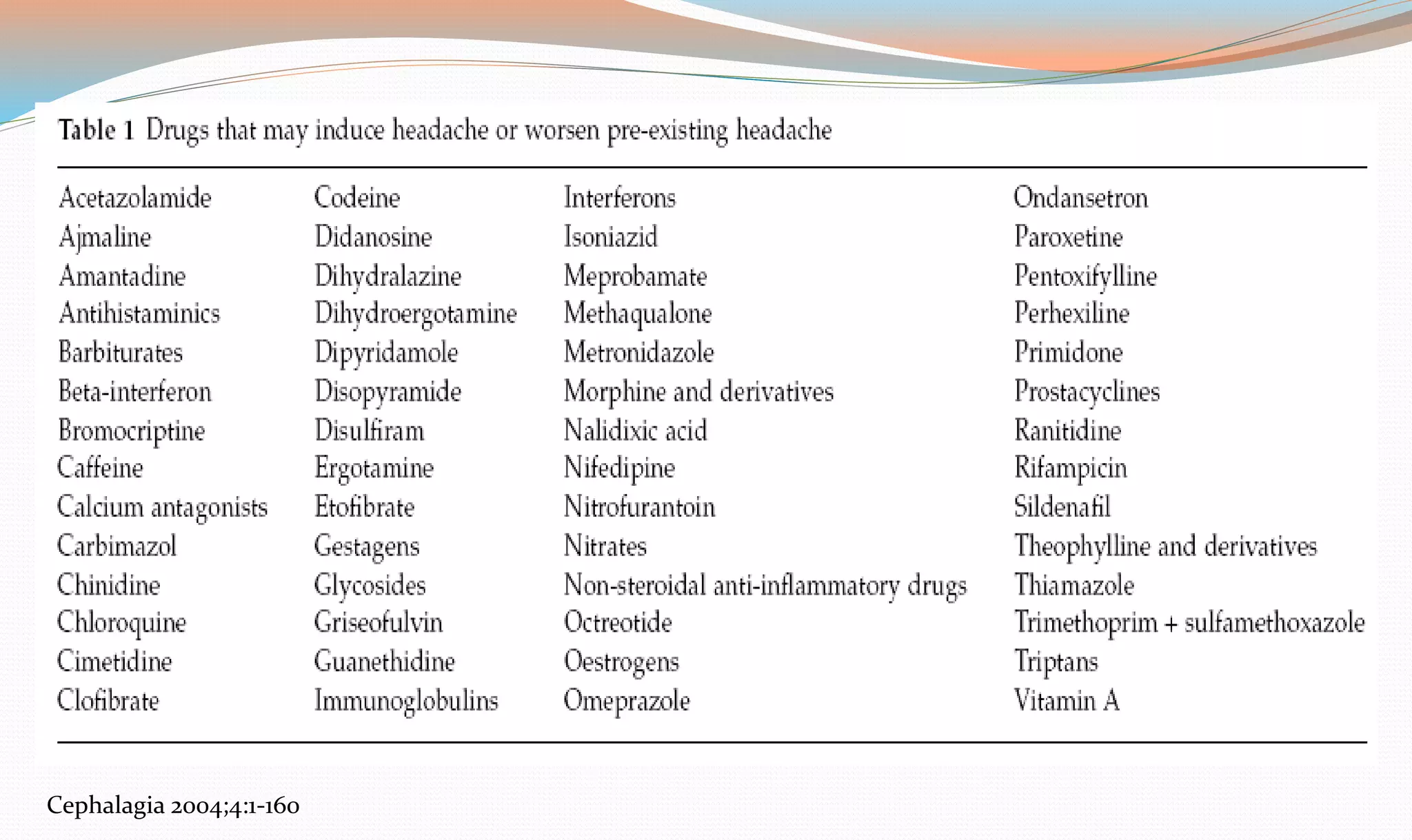
Cephalagia 2004;4:1-160
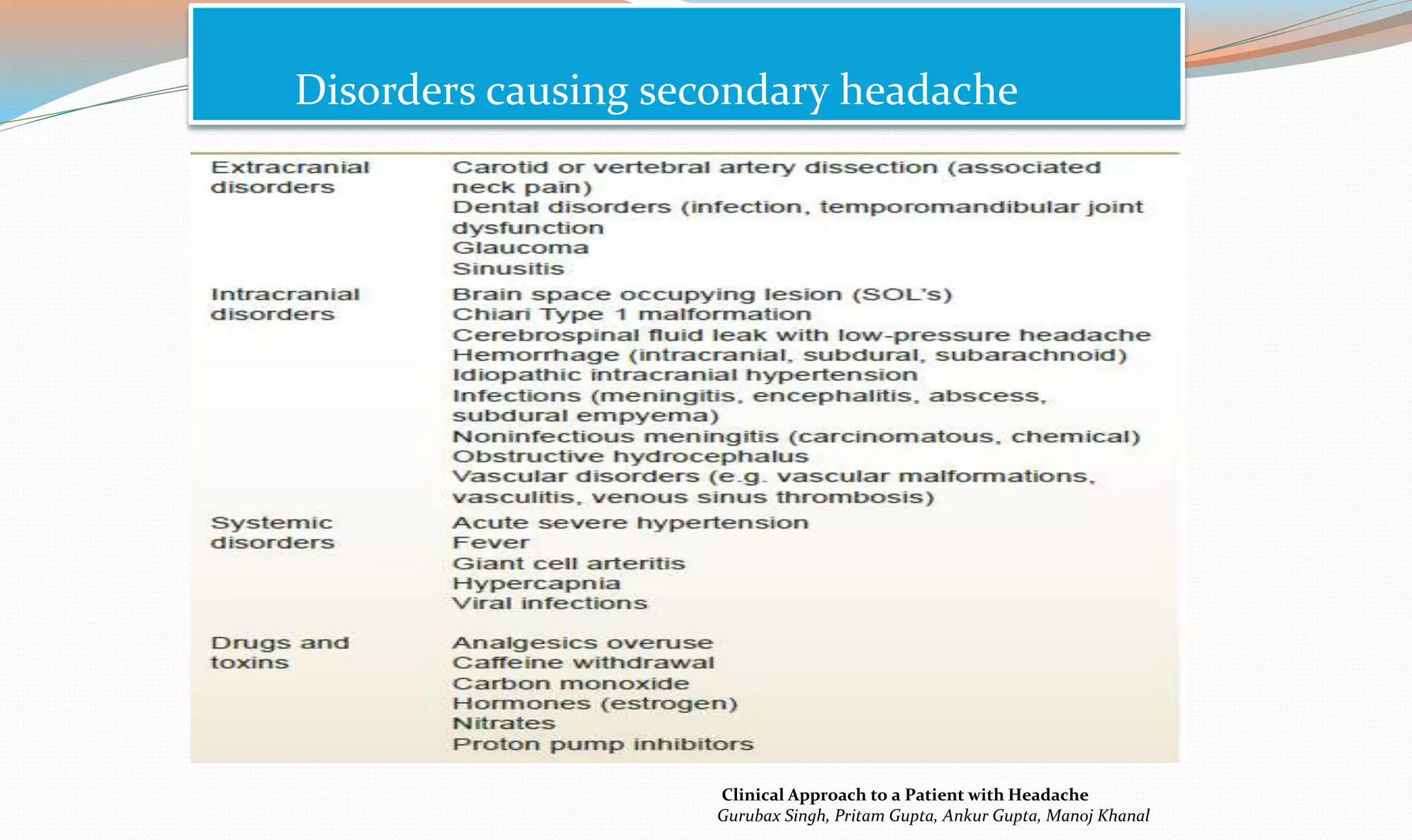
Disorders causing secondary headache 
Clinical Approach to a Patient with Headache 
Gurubax Singh, Pritam Gupta, Ankur Gupta, Manoj Khanal
Areas of Apparent Agreement on Evidence Quality for Drugs 
Rated by at Least 2 of 3 Migraine Prevention Guidelines 
Headache 2012;52:930-945
Areas of Apparent Divergence About Evidence Quality for 
Drugs Rated by at Least 2 Guidelines for Migraine Prevention 
Headache 2012;52:930-945

Headache

  • 1.
    Dr PradipMate (MastersIn Pharmaceutical Medicine)
  • 2.
    Introduction  Headachedisorders are among the most common disorders of the nervous system.  It has been estimated that 47% of the adult population have headache at least once within last year in general.  Headache disorders are associated with  Personal and societal burdens of pain,  Disability,  Damaged quality of life and financial cost. Headache disorders Fact sheet N°277. WHO. October 2012. http://www.who.int/mediacentre/factsheets/fs277/en/index.html .
  • 3.
    Epidemiology  Asmany as 90 % of all benign headaches fall under a few categories, including  Migraine,  Tension-type,  Cluster headache.  A population-based study found that the one-year prevalence of episodic tension-type headache was 38 %,  Most of these people do not present to physicians for care.
  • 4.
    Indian perspective JHeadache Pain (2012) 13:543–550
  • 5.
    Classification : TheInternational Classification of Headache Disorders, 3rd edition (beta version) Part 1: The primary headaches • 1. Migraine • 2. Tension-type headache • 3. Trigeminal autonomic cephalalgias • 4. Other primary headache disorders
  • 6.
    Classification Part 2:The secondary headaches • 5. Headache attributed to trauma or injury to the head and/or neck • 6. Headache attributed to cranial or cervical vascular disorder • 7. Headache attributed to non-vascular intracranial disorder • 8. Headache attributed to a substance or its withdrawal • 9. Headache attributed to infection • 10. Headache attributed to disorder of homoeostasis
  • 7.
    Classification Part 2:The secondary headaches • 11. Headache or facial pain attributed to disorder of the cranium, neck, eyes, ears, nose, sinuses, teeth, mouth or other facial or cervical structure • 12. Headache attributed to psychiatric disorder
  • 8.
    Classification Part 3:Painful cranial neuropathies, other facial pains and other headaches • 13. Painful cranial neuropathies and other facial pains • 14. Other headache disorders
  • 9.
    Evaluation of headache History Physical examination • – Neurological examination • – General physical examination Investigations Criteria for diagnosis of headache
  • 10.
    History Location ofpain Diffuse focal Constant Spreading Natural history of pain wave Fluctuation, constant peak Symptom free period Time of day Associated symptoms Radiation of pain Migration Shifting Secondary pain
  • 11.
    History  Severityof pain  Characters of pain  Throbbing  Neuralgic  Dull aching etc.  Precipitating and aggravating factors  Relieving factors & response to medications  Other neurological & systemic symptoms
  • 12.
    Physical Examination Systemic  Hypertension  Fever  Focal mass lesion  Bleeding tendency  HIV  Neurological examination  Cranial nerves & eye ground  Other neurological examination  Cranial bruit  Paracranial structures – eye, ear, nose  Correlation of headache & physical findings
  • 13.
    Characteristics of migraine,tension-type, and cluster headache Symptom Migraine Tension-type Cluster Location Unilateral in 60 to 70%; bifrontal or global in 30% Bilateral Always unilateral, usually begins around the eye or temple Characteristics Gradual in onset, crescendo pattern; pulsating; moderate or severe intensity; aggravated by routine physical activity Pressure or tightness which waxes and wanes Pain begins quickly, reaches a crescendo within minutes; pain is deep, continuous, excruciating, and explosive in quality Patient appearance Patient prefers to rest in a dark, quiet room Patient may remain active or may need to rest Patient remains active Duration 4 to 72 hours Variable 30 minutes to 3 hours Associated symptoms Nausea, vomiting, photophobia, phonophobia; may have aura (usually visual, but can involve other senses or cause speech or motor deficits) None Ipsilateral lacrimation and redness of the eye; stuffy nose; rhinorrhea; pallor; sweating; Horner's syndrome; focal neurologic symptoms rare; sensitivity to alcohol syndromes
  • 14.
    Headache triggers Diet Alcohol Chocolate Aged cheeses Monosodium glutamate Aspartame Caffeine Nuts Nitrites, Nitrates Hormones Menses Ovulation Hormone replacement (progesterone) Sensory stimuli Strong light Flickering lights Odors Sounds, noise Stress Let-down periods Times of intense activity Loss or change (death, separation, divorce, job change) Moving Crisis Changes of environment or habits Weather Travel (crossing time zones) Seasons Altitude Schedule changes Sleeping patterns Dieting Skipping meals Irregular physical activity
  • 15.
    Principles of theheadache evaluation  History —  A systematic case history is the single most important factor in establishing a headache diagnosis and determining the future work-up and treatment plan.  A thorough history also helps focus the physical examination and prevent unnecessary investigation and imaging studies  A systematic case history should include the following:  Age at onset  Presence or absence of aura and prodrome  Frequency, intensity and duration of attack  Number of headache days per month  Time and mode of onset  Quality, site, and radiation of pain Zahid H Bajw. Evaluation of headache in adults. Up to Date. Available from URL: http://www.uptodate.com/contents/evaluation-of-headache-in-adults
  • 16.
    A systematic casehistory should include  Associated symptoms and abnormalities  Family history of migraine  Precipitating and relieving factors  Effect of activity on pain  Relationship with food/alcohol  Response to any previous treatment  Any recent change in vision  Association with recent trauma  Any recent changes in sleep, exercise, weight, or diet  State of general health  Change in work or lifestyle (disability)  Change in method of birth control (women)  Possible association with environmental factors  Effects of menstrual cycle and exogenous hormones (women)
  • 17.
    A systematic casehistory should include  A version adopted by the American Academy of Neurology includes the following four questions:  How often do you get severe headaches (ie, without treatment it is difficult to function)?  How often do you get other (milder) headaches?  How often do you take headache relievers or pain pills?  Has there been any recent change in your headaches? Zahid H Bajw. Evaluation of headache in adults. Up to Date. Available from URL: http://www.uptodate.com/contents/evaluation-of-headache-in-adults
  • 18.
    Danger signs onhistory  Paying attention to danger signs is important since headaches may be the presenting symptom of  A space-occupying mass or vascular lesion  Infection  Metabolic disturbance  A systemic problem. Zahid H Bajw. Evaluation of headache in adults. Up to Date. Available from URL: http://www.uptodate.com/contents/evaluation-of-headache-in-adults
  • 19.
    Danger signs onhistory  Sudden onset of headache, or severe persistent headache that reaches maximal intensity within a few seconds or minutes after the onset of pain, warrants aggressive investigation.  Cluster headache may sometimes be confused with a serious headache, since the pain from a cluster headache can reach full intensity within minutes  The absence of similar headaches in the past is another finding that suggests a possible serious disorder. The "first" or "worst" headache of my life is a description that sometimes accompanies an intracranial hemorrhage or central nervous system (CNS) infection Zahid H Bajw. Evaluation of headache in adults. Up to Date. Available from URL: http://www.uptodate.com/contents/evaluation-of-headache-in-adults
  • 20.
    Danger signs onhistory  A worsening pattern of headache suggests a mass lesion, subdural hematoma, or medication overuse headache  Fever associated with headache may be caused by intracranial, systemic, or local infection, as well as other etiologies  Any change in mental status, personality, or fluctuation in the level of consciousness suggests a potentially serious abnormality.  The rapid onset of headache with strenuous exercise, especially when minor trauma has occurred, raises the possibility of carotid artery dissection or intracranial hemorrhage. Zahid H Bajw. Evaluation of headache in adults. Up to Date. Available from URL: http://www.uptodate.com/contents/evaluation-of-headache-in-adults
  • 21.
    Differential diagnosis ofheadache with fever Intracranial infection Meningitis Bacterial Fungal Viral Lymphocytic Encephalitis Brain abscess Subdural empyema Systemic infection Bacterial infection Viral infection HIV/AIDS Other systemic infection Other causes Familial hemiplegic migraine Pituitary apoplexy Rhinosinusitis Subarachnoid hemorrhage Malignancy of central nervous system
  • 22.
    Danger signs onhistory  Head pain that spreads into the lower neck and between the shoulders may indicate meningeal irritation due to either infection or subarachnoid blood; it is not typical of a benign process.  New headache in patients under the age of 5 or over the age of 50 may suggest underlying pathology.  New headache type in a patient with cancer suggests metastasis.  New headache type in a patient with Lyme disease suggests meningoencephalitis.  New headache type in a patient with HIV suggests an opportunistic infection or tumor.  Headache during pregnancy or postpartum suggests possible cortical vein or venous sinus thrombosis, carotid dissection, and pituitary apoplexy Zahid H Bajw. Evaluation of headache in adults. Up to Date. Available from URL: http://www.uptodate.com/contents/evaluation-of-headache-in-adults
  • 23.
    Physical examination If a complete and careful history does not point to an organic etiology, further examination is warranted in the following areas:  Obtain blood pressure and pulse  Listen for bruit at neck, eyes, and head for clinical signs of arteriovenous malformation  Palpate the head, neck, and shoulder regions  Check temporal and neck arteries  Examine the spine and neck muscles Zahid H Bajw. Evaluation of headache in adults. Up to Date. Available from URL: http://www.uptodate.com/contents/evaluation-of-headache-in-adults
  • 24.
    Physical examination Afunctional neurologic examination including • Getting up from a seated position without any support, • Walking on tiptoes and heels, • Cranial nerve examination • Funduscopy and otoscopy • Tandem gait and romberg test • Symmetry on motor, sensory, reflex and cerebellar (coordination) tests Zahid H Bajw. Evaluation of headache in adults. Up to Date. Available from URL: http://www.uptodate.com/contents/evaluation-of-headache-in-adults
  • 25.
    Danger signs onexamination  Neck stiffness and especially meningismus suggests meningitis.  Papilledema suggests the presence of an intracranial mass lesion, benign intracranial hypertension (pseudotumor cerebri), encephalitis, or meningitis.  Focal neurologic signs suggest an intracranial mass lesion, arteriovenous malformation, or collagen vascular disease Zahid H Bajw. Evaluation of headache in adults. Up to Date. Available from URL: http://www.uptodate.com/contents/evaluation-of-headache-in-adults
  • 26.
    Indications for imagingstudies  Neuroimaging should be considered in patients with nonacute headache and an unexplained abnormal finding on neurologic examination.  Evidence is insufficient to make specific recommendations in the presence or absence of neurologic symptoms (eg, headache worsened by Valsalva, causing awakening from sleep, new headache in older population, or progressively worsening headache). Zahid H Bajw. Evaluation of headache in adults. Up to Date. Available from URL: http://www.uptodate.com/contents/evaluation-of-headache-in-adults
  • 27.
    Indications for imagingstudies  Neuroimaging is usually not warranted for patients with migraine and a normal neurologic examination,  Data were insufficient to make a specific recommendation for patients with tension-type headache.  Data were insufficient to make a specific recommendation regarding the relative sensitivity of MRI compared with CT in patients who have an imaging study performed.
  • 28.
    Indications for imagingstudies  Given the lack of definitive data, one approach is to consider neuroimaging in the following situations :  Recent significant change in the pattern, frequency or severity of headaches  Progressive worsening of headache despite appropriate therapy  Focal neurologic signs or symptoms  Onset of headache with exertion, cough, or sexual activity  Orbital bruit  Onset of headache after age 40 years Zahid H Bajw. Evaluation of headache in adults. Up to Date. Available from URL: http://www.uptodate.com/contents/evaluation-of-headache-in-adults
  • 29.
    Indications for lumbarpuncture  Urgently indicated in patients with headache when there is clinical suspicion of subarachnoid hemorrhage in the setting of a negative or normal head CT scan.  In addition, LP is indicated when there is clinical suspicion of an infectious or inflammatory etiology of headache. Zahid H Bajw. Evaluation of headache in adults. Up to Date. Available from URL: http://www.uptodate.com/contents/evaluation-of-headache-in-adults
  • 31.
    Etiologic classification ofheadache in children Acute Localized Associated with URI (sinusitis, otitis media) or viral infection (influenza) Post-traumatic Related to oral cavity (dental abscess, TMJ dysfunction) Brain abscess First migraine Generalized Fever Systemic infection (influenza) Central nervous system infection (meningitis, viral encephalitis) Hypertension, hypertensive encephalopathy Intracranial hemorrhage Exertional First migraine headache Trauma Toxins (eg, carbon monoxide), medications (eg, amphetamines, oral contraceptives), or illicit substances Acute and recurrent Migraine headache Cluster headache Chronic and non-progressive Tension-type headache Psychiatric (depression, school phobia) Post-traumatic, postconcussive Medication overuse Chronic and progressive Idiopathic intracranial hypertension Space-occupying lesion (tumor, abscess, hemorrhage, hydrocephalus, vascular malformation) Post-traumatic, postconcussive
  • 32.
    Important aspects ofthe examination of a child with headache Examination feature Possible significance General appearance Altered mental status may indicate meningitis, encephalitis, intracranial hemorrhage, elevated intracranial pressure, hypertensive encephalopathy. Vital signs • Hypertension may cause headache or be a response to increased intracranial pressure • Fever suggests infection (most commonly upper respiratory infection) but may occur with intracranial hemorrhage or central nervous system malignancy Head circumference Macrocephaly may indicate slowly progressive increases in intracranial pressure. Height and weight trajectories Abnormal or altered trajectories may indicate intracranial pathology. Auscultation of the neck, eyes, and head Bruit may indicate arteriovenous malformation. for bruit Palpation of the head and neck • Localized scalp tenderness may occur in migraine and tension-type headaches • Scalp swelling may indicate head trauma • Sinus tenderness may indicate sinusitis • Temporomandibular joint (TMJ) and/or masseter tenderness suggests TMJ dysfunction • Nuchal rigidity may indicate meningitis • Posterior neck pain may indicate an anatomic abnormality (eg, Chiari malformation) • Thyromegaly may indicate thyroid dysfunction
  • 33.
    Important aspects ofthe examination of a child with headache Visual fields Visual field abnormalities may indicate increased intracranial pressure and/or a space-occupying lesion. Funduscopy • Papilledema may indicate increased intracranial pressure • Retinal hemorrhages may indicate increased intracranial pressure or head trauma Otoscopy May demonstrate otitis media; hemotympanum may indicate trauma. Oropharynx Signs of pharyngitis? Dental decay or abscess? Neurologic examination (see text for details) Abnormal neurologic examination (particularly mental status, eye movements, papilledema, asymmetry, coordination disturbance, abnormal deep tendon reflexes) may indicate intracranial pathology but also may occur with migraine headache. Skin examination Signs of neurocutaneous disorders (eg, neurofibromatosis, tuberous sclerosis complex, which are associated with intracranial neoplasms) or trauma (bruises, abrasions, etc). Spine Signs of occult spinal dysraphism (eg, midline vascular of pigment changes), which may be associated with structural abnormalities (eg, Chiari malformation).
  • 34.
    Clinical features thatmay indicate intracranial pathology in children with headache Headache characteristics Headache awakens the child or occurs upon waking Sudden severe headache ("thunderclap" headache, "worst headache of my life") Associated neurologic signs and symptoms (eg, persistent nausea/vomiting, altered mental status, ataxia, etc) Headache worsened in recumbent position or by cough, micturition, or defecation Absence of aura Chronic progressive headache pattern Change in quality, severity, frequency, or pattern of headache Occipital headache Recurrent localized headache Lack of response to medical therapy Headache duration of less than six months
  • 35.
    Clinical features thatmay indicate intracranial pathology in children with headache Examination findings Abnormal neurologic examination (eg, ataxia, weakness, diplopia, abnormal eye movements) Papilledema or retinal hemorrhages Growth abnormalities (increased head circumference, short stature or deceleration of linear growth, abnormal pubertal progression, obesity) Nuchal rigidity Signs of trauma Cranial bruits Skin lesions that suggest a neurocutaneous syndrome (neurofibromatosis, tuberous sclerosis complex) Patient history Risk factor for intracranial pathology (eg, sickle cell disease, immune deficiency, malignancy or history of malignancy, coagulopathy, cardiac disease with right-to-left intracardiac shunt, head trauma, neurofibromatosis type 1, tuberous sclerosis complex) Age <3 years Family history Absence of family history of migraine
  • 36.
    Important components ofthe headache history for children and adolescents Historical feature Possible significance Headache history Age at onset •Migraine headaches frequently begin in the first decade of life. •Chronic nonprogressive headaches begin in adolescence. Mode of onset Abrupt onset of severe headache ("thunderclap headache" or "worst headache of my life") may indicate intracranial hemorrhage. What is the headache pattern: acute, acute recurrent, chronic progressive, nonprogressive daily, or mixed? Helps to determine the cause (see table "Etiology of headache"). How often does the headache occur? •Migraines typically occur 2 to 4 times per month; almost never daily. •Chronic nonprogressive headaches may occur 5 to 7 days per week. •Cluster headaches typically occur 2 to 3 times per day for several months. How long does the headache last? •Migraines typically last 1 to 3 hours in young children and may last longer (48 to 72 hours) in adolescents. •The duration of tension headaches is variable; they may last all day. •Cluster headaches usually last 5 to 15 minutes but may last for 60 minutes. Is there an aura or prodrome? Aura or prodrome is suggestive of migraine headaches; if the warning symptoms are focal and repeatedly located to the same side of the body, a seizure or vascular or structural cause should be suspected.
  • 37.
    Is there anaura or prodrome? Aura or prodrome is suggestive of migraine headaches; if the warning symptoms are focal and repeatedly located to the same side of the body, a seizure or vascular or structural cause should be suspected. When do the headaches occur? •Headaches that wake the child from sleep or occur on waking may indicate increased intracranial pressure/space-occupying lesion. •Tension-type headaches typically occur late in the day. What is the headache quality (throbbing/pulsating, dull aching, squeezing, etc)? •Migraine headaches have a throbbing/pulsating quality. •Chronic nonprogressive headaches have a squeezing pressure or tightness that waxes and wanes. •Cluster headaches have a deep continuous pain. Where is the pain? •Occipital location may indicate posterior fossa neoplasms but also may occur in basilar migraine. •Cluster headaches are usually temporal or retro-orbital. •Localized pain may suggest a specific secondary etiology (eg, sinusitis, otitis, dental abscess). What brings the headache on or makes it worse? •Headache in the recumbent position or with straining/valsalva may indicate an intracranial process. •Migraines may be triggered by certain foods, odors, bright lights, noise, lack of sleep, menses (in girls), and strenuous activity. •Tension-type headaches may worsen with stress, bright lights, noise, strenuous activity. •Cluster headaches may be worsen with lying down or resting. What makes the headache go away? •Migraines typically respond to analgesic medications, dark, quiet room, cool compress, or sleep. •Chronic tension-type headaches may respond to sleep (but not to analgesic medications). Are there associated symptoms? •Neurologic deficits (eg, ataxia, altered mental status, binocular horizontal diplopia) may indicate increased intracranial pressure and/or a space-occupying lesion. •Fever may indicate infection, or rarely intracranial hemorrhage. •Stiff neck may indicate meningitis, complicated pharyngitis, or intracranial hemorrhage. •Localized pain may indicate localized infection (eg, otitis media, pharyngitis, sinusitis, dental abscess). •Autonomic symptoms (eg, nausea, vomiting, pallor, chills, flushing, fever, dizziness, syncope, etc) may indicate migraine or cluster headache. •Dizziness, numbness, and/or weakness may occur with idiopathic intracranial hypertension. Do symptoms continue between headaches? •Persistence of symptoms (neurologic symptoms or nausea/vomiting) between headache episodes is suggestive of increased intracranial pressure and/or mass lesions. •Resolution of symptoms between episodes is characteristic of migraine headaches. Daniel J Bonthius. Approach to the child with headache. Up To Date. Available from URL: www.uptodate.com.
  • 38.
    Additional information Pastmedical history Certain underlying conditions increase the likelihood of intracranial pathology (eg, sickle cell disease, immune deficiency, malignancy or history of malignancy, coagulopathy, cardiac disease with right-to-left intracardiac shunt, head trauma, neurofibromatosis type 1, tuberous sclerosis complex). Medications and vitamins Medications that may cause headache include oral contraceptives, glucocorticoids, selective serotonin reuptake inhibitors, and serotonin-norepinephrine reuptake inhibitors, among others. Medications associated with idiopathic intracranial hypertension include growth hormone, tetracyclines, vitamin A (in excessive doses), and withdrawal of glucocorticoids. Recent change in weight or vision May be associated with intracranial process (eg, pituitary tumor, craniopharyngioma, idiopathic intracranial hypertension). Recent changes in sleep, exercise, or diet May precipitate headaches; may be associated with mood disorder. Change in school or home environment May be a source of psychosocial stress. Family history of headache or neurologic disorder Migraine headaches and some tumors and vascular malformations are heritable. What do child and parents think is causing the pain? Indicates their levels of anxiety about the headache. Mental health history/symptoms, psychosocial stressors Chronic nonprogressive headaches may be associated with depression or anxiety. Daniel J Bonthius. Approach to the child with headache. Up To Date. Available from URL: www.uptodate.com.
  • 39.
    Neuroimaging  Neuroimagingstudies (eg, computed tomography [CT] or magnetic resonance imaging [MRI]) may detect a variety of disorders that cause secondary headache, including:  Congenital malformations  Hydrocephalus  Cranial infections and their sequelae  Trauma and its sequelae  Neoplasms  Vascular disorders (such as arteriovenous malformations) Daniel J Bonthius. Approach to the child with headache. Up To Date. Available from URL: www.uptodate.com.
  • 40.
    Neuroimaging indication inchildren's  Indications for neuroimaging in children (3 to 18 years) with recurrent headaches that are not associated with acute trauma, fever, or other obvious provocative cause may include (but are not limited to) :  Abnormal neurologic examination and/or seizures  Recent onset of severe headache  Change in type or character of headache (for children with recurrent or chronic headaches)  Suspicion of meningitis, encephalitis, or sinusitis with intracranial extension  Severe headache in a child with underlying disease process that predisposes to intracranial pathology (eg, immune deficiency, sickle cell disease, neurofibromatosis, history of neoplasm, coagulopathy, hypertension) Daniel J Bonthius. Approach to the child with headache. Up To Date. Available from URL: www.uptodate.com.
  • 41.
  • 42.
    Disorders causing secondaryheadache Clinical Approach to a Patient with Headache Gurubax Singh, Pritam Gupta, Ankur Gupta, Manoj Khanal
  • 43.
    Areas of ApparentAgreement on Evidence Quality for Drugs Rated by at Least 2 of 3 Migraine Prevention Guidelines Headache 2012;52:930-945
  • 44.
    Areas of ApparentDivergence About Evidence Quality for Drugs Rated by at Least 2 Guidelines for Migraine Prevention Headache 2012;52:930-945