Prickly heat
By Tushar Chavan
M Pharmacy 2018-2019
K.Y.D.S.C.T.College of Pharmacy, Sakegaon
NMU, Jalgaon
Updated April 22, 2019
1. Symptoms
2. Causes and triggers
3. Treatment
4. In children and babies
5. Prevention
6. When to see a doctor
Miliaria rubra, commonly called prickly heat or heat rash, is a rash that
causes the skin to turn red, along with a warm, stinging, or prickly
sensation. The feeling is usually accompanied by small red dots in the
affected area. The rash may also have small, raised bumps and blisters.
Prickly heat is often caused by exposure to warm temperatures and will
normally clear up on its own after a few days. There are a few simple
treatments to help reduce symptoms, but a visit to the doctor may be
necessary in some situations.
The face, neck, shoulders, and chest are the most common places for
prickly heat to occur, although it may show up anywhere. It can affect
anyone, but children are more likely to have it than adults.
1 Symptoms
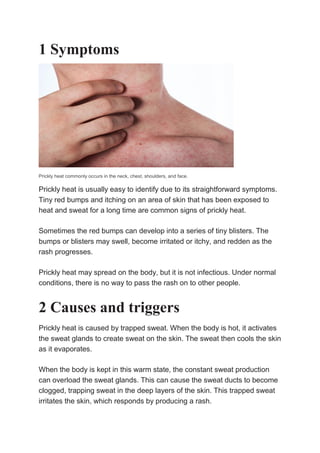
Prickly heat commonly occurs in the neck, chest, shoulders, and face.
Prickly heat is usually easy to identify due to its straightforward symptoms.
Tiny red bumps and itching on an area of skin that has been exposed to
heat and sweat for a long time are common signs of prickly heat.
Sometimes the red bumps can develop into a series of tiny blisters. The
bumps or blisters may swell, become irritated or itchy, and redden as the
rash progresses.
Prickly heat may spread on the body, but it is not infectious. Under normal
conditions, there is no way to pass the rash on to other people.
2 Causes and triggers
Prickly heat is caused by trapped sweat. When the body is hot, it activates
the sweat glands to create sweat on the skin. The sweat then cools the skin
as it evaporates.
When the body is kept in this warm state, the constant sweat production
can overload the sweat glands. This can cause the sweat ducts to become
clogged, trapping sweat in the deep layers of the skin. This trapped sweat
irritates the skin, which responds by producing a rash.
The most common trigger for prickly heat is exposure to heat for a long
time. This may be especially true in very humid areas where the sweat has
a harder time evaporating off the skin.
Prickly heat is common in people from cooler climates who travel to warmer
climates. But it may also happen to a person in their usual climate when
they experience more heat and sweat than normal.
Certain medications can also trigger prickly heat. Any drugs that raise the
body temperature or alter the function of the sweat glands can increase the
risk of prickly heat.
Some medications for Parkinson's disease block the sweat, and
tranquilizers and diuretics can change the fluid balance in the body, which
can trigger symptoms of prickly heat as well.
A study in JAMA Dermatology noted that prickly heat developed where the
bacteria Staphylococcus were found. These bacteria are normal, but the
biofilm they produce can block sweat ducts and contribute to skin
conditions. This would suggest that people with Staphylococcuson their
skin may be more prone to prickly heat than others.
What is heat exhaustion?
Heat exhaustion occurs when the body becomes dehydrated and is unable to
regulate its internal body temperature. Learn more about treatment and prevention.
READ NOW
3 Treatment
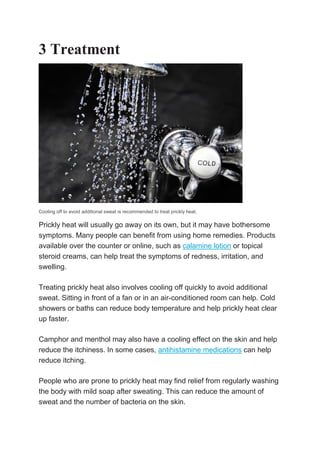
Cooling off to avoid additional sweat is recommended to treat prickly heat.
Prickly heat will usually go away on its own, but it may have bothersome
symptoms. Many people can benefit from using home remedies. Products
available over the counter or online, such as calamine lotion or topical
steroid creams, can help treat the symptoms of redness, irritation, and
swelling.
Treating prickly heat also involves cooling off quickly to avoid additional
sweat. Sitting in front of a fan or in an air-conditioned room can help. Cold
showers or baths can reduce body temperature and help prickly heat clear
up faster.
Camphor and menthol may also have a cooling effect on the skin and help
reduce the itchiness. In some cases, antihistamine medications can help
reduce itching.
People who are prone to prickly heat may find relief from regularly washing
the body with mild soap after sweating. This can reduce the amount of
sweat and the number of bacteria on the skin.
4 In children and babies
Prickly heat can occur in people of all ages, is more common in children
and infants. The developing sweat glands in a small child are less resilient
and may be more likely to become clogged. Also, a child's body is not used
to adjusting to rapidly changing temperatures.
Children and infants are likely to experience prickly heat on their groin,
neck, and face. The rash may be irritating and uncomfortable, but it will
usually go away on its own. A cool bath can provide a child or baby with
some relief from symptoms.
Parents and caregivers should avoid using oil-based skin products on
children and infants to reduce the risk of clogging their sweat glands.
5 Prevention
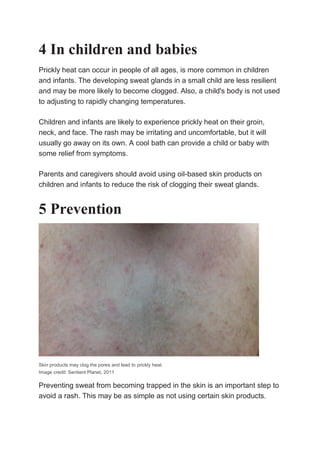
Skin products may clog the pores and lead to prickly heat.
Image credit: Sentient Planet, 2011
Preventing sweat from becoming trapped in the skin is an important step to
avoid a rash. This may be as simple as not using certain skin products.
Skin products that contain heavy oils or petroleum jelly may clog the pores
and sweat glands, which could contribute to prickly heat.
Loose fitting clothing made of natural fibers, such as linen, cotton, and
hemp, may reduce the amount of sweat that gets trapped on the skin.
Removing sweaty clothes after a long day of warm weather can prevent the
sweat from getting trapped in the skin. Taking a shower to wash off the
sweat and changing into clean clothes can prevent many cases of heat
rash.
Avoiding a long time in hot and humid environments may help prevent
symptoms, as well as using fans and air conditioners when possible.
Regular cool showers or baths can reduce the body's temperature and
prevent excessive sweating.
Prickly heat powder can reduce symptoms. It is available from
drugstores or to purchase online.
6 When to see a doctor
Prickly heat is a common condition that will usually resolve without medical
treatment. Taking steps to prevent heat rash is the best way to avoid this
annoyance.
If prickly heat starts to show, it may help to take a few quick steps to lower
the body's temperature and prevent additional sweating. Watching for any
additional signs of heat stroke or exhaustion can help prevent a more
serious issue.
If the symptoms of prickly heat persist or the rash seems to become
infected, a person should seek medical attention. They may be referred to
a dermatologist if there are signs of an underlying condition.

prickly heat

  • 1.
    Prickly heat By TusharChavan M Pharmacy 2018-2019 K.Y.D.S.C.T.College of Pharmacy, Sakegaon NMU, Jalgaon Updated April 22, 2019 1. Symptoms 2. Causes and triggers 3. Treatment 4. In children and babies 5. Prevention 6. When to see a doctor Miliaria rubra, commonly called prickly heat or heat rash, is a rash that causes the skin to turn red, along with a warm, stinging, or prickly sensation. The feeling is usually accompanied by small red dots in the affected area. The rash may also have small, raised bumps and blisters. Prickly heat is often caused by exposure to warm temperatures and will normally clear up on its own after a few days. There are a few simple treatments to help reduce symptoms, but a visit to the doctor may be necessary in some situations. The face, neck, shoulders, and chest are the most common places for prickly heat to occur, although it may show up anywhere. It can affect anyone, but children are more likely to have it than adults.
  • 2.
    1 Symptoms Prickly heatcommonly occurs in the neck, chest, shoulders, and face. Prickly heat is usually easy to identify due to its straightforward symptoms. Tiny red bumps and itching on an area of skin that has been exposed to heat and sweat for a long time are common signs of prickly heat. Sometimes the red bumps can develop into a series of tiny blisters. The bumps or blisters may swell, become irritated or itchy, and redden as the rash progresses. Prickly heat may spread on the body, but it is not infectious. Under normal conditions, there is no way to pass the rash on to other people. 2 Causes and triggers Prickly heat is caused by trapped sweat. When the body is hot, it activates the sweat glands to create sweat on the skin. The sweat then cools the skin as it evaporates. When the body is kept in this warm state, the constant sweat production can overload the sweat glands. This can cause the sweat ducts to become clogged, trapping sweat in the deep layers of the skin. This trapped sweat irritates the skin, which responds by producing a rash.
  • 3.
    The most commontrigger for prickly heat is exposure to heat for a long time. This may be especially true in very humid areas where the sweat has a harder time evaporating off the skin. Prickly heat is common in people from cooler climates who travel to warmer climates. But it may also happen to a person in their usual climate when they experience more heat and sweat than normal. Certain medications can also trigger prickly heat. Any drugs that raise the body temperature or alter the function of the sweat glands can increase the risk of prickly heat. Some medications for Parkinson's disease block the sweat, and tranquilizers and diuretics can change the fluid balance in the body, which can trigger symptoms of prickly heat as well. A study in JAMA Dermatology noted that prickly heat developed where the bacteria Staphylococcus were found. These bacteria are normal, but the biofilm they produce can block sweat ducts and contribute to skin conditions. This would suggest that people with Staphylococcuson their skin may be more prone to prickly heat than others. What is heat exhaustion? Heat exhaustion occurs when the body becomes dehydrated and is unable to regulate its internal body temperature. Learn more about treatment and prevention. READ NOW
  • 4.
    3 Treatment Cooling offto avoid additional sweat is recommended to treat prickly heat. Prickly heat will usually go away on its own, but it may have bothersome symptoms. Many people can benefit from using home remedies. Products available over the counter or online, such as calamine lotion or topical steroid creams, can help treat the symptoms of redness, irritation, and swelling. Treating prickly heat also involves cooling off quickly to avoid additional sweat. Sitting in front of a fan or in an air-conditioned room can help. Cold showers or baths can reduce body temperature and help prickly heat clear up faster. Camphor and menthol may also have a cooling effect on the skin and help reduce the itchiness. In some cases, antihistamine medications can help reduce itching. People who are prone to prickly heat may find relief from regularly washing the body with mild soap after sweating. This can reduce the amount of sweat and the number of bacteria on the skin.
  • 5.
    4 In childrenand babies Prickly heat can occur in people of all ages, is more common in children and infants. The developing sweat glands in a small child are less resilient and may be more likely to become clogged. Also, a child's body is not used to adjusting to rapidly changing temperatures. Children and infants are likely to experience prickly heat on their groin, neck, and face. The rash may be irritating and uncomfortable, but it will usually go away on its own. A cool bath can provide a child or baby with some relief from symptoms. Parents and caregivers should avoid using oil-based skin products on children and infants to reduce the risk of clogging their sweat glands. 5 Prevention Skin products may clog the pores and lead to prickly heat. Image credit: Sentient Planet, 2011 Preventing sweat from becoming trapped in the skin is an important step to avoid a rash. This may be as simple as not using certain skin products.
  • 6.
    Skin products thatcontain heavy oils or petroleum jelly may clog the pores and sweat glands, which could contribute to prickly heat. Loose fitting clothing made of natural fibers, such as linen, cotton, and hemp, may reduce the amount of sweat that gets trapped on the skin. Removing sweaty clothes after a long day of warm weather can prevent the sweat from getting trapped in the skin. Taking a shower to wash off the sweat and changing into clean clothes can prevent many cases of heat rash. Avoiding a long time in hot and humid environments may help prevent symptoms, as well as using fans and air conditioners when possible. Regular cool showers or baths can reduce the body's temperature and prevent excessive sweating. Prickly heat powder can reduce symptoms. It is available from drugstores or to purchase online. 6 When to see a doctor Prickly heat is a common condition that will usually resolve without medical treatment. Taking steps to prevent heat rash is the best way to avoid this annoyance. If prickly heat starts to show, it may help to take a few quick steps to lower the body's temperature and prevent additional sweating. Watching for any additional signs of heat stroke or exhaustion can help prevent a more serious issue. If the symptoms of prickly heat persist or the rash seems to become infected, a person should seek medical attention. They may be referred to a dermatologist if there are signs of an underlying condition.