Mohammed Asif
MBA –TH : SEM-1 , 2015-17,
NITHM
Subject:
Managerial Economics and
Marketing in Tourism & Hospitality
• PRODUCT LINE:
A group of products that are clearly related because they function in a similar manner are
sold to the same customer groups, are marketed through the same type of outlets or fall
within given price ranges
• PRODUCT MIX:
A Product Mix is the set of all products and items or
the total range of products offered by a company.
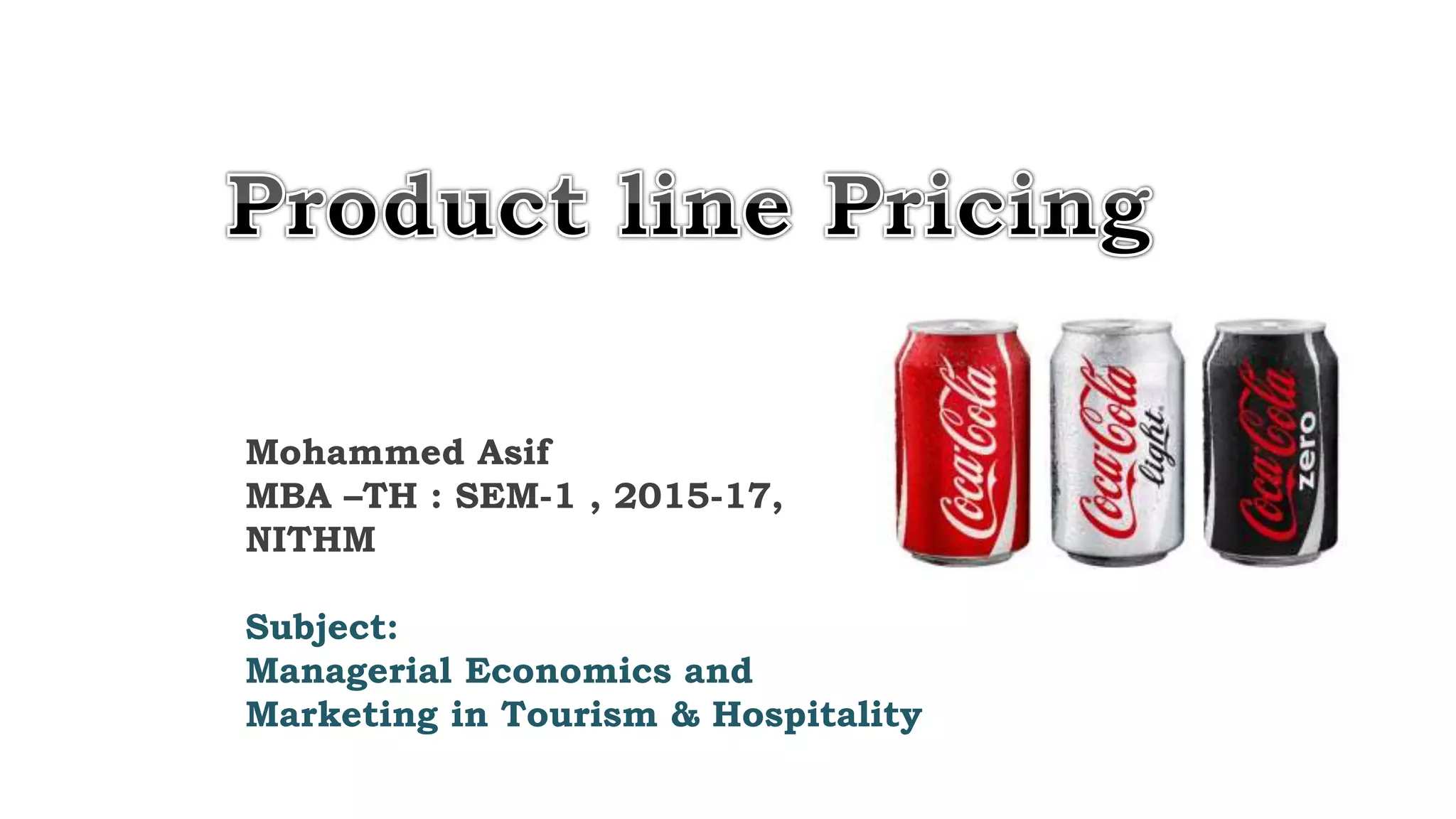
• PRODUCT LINE PRICING:
Product line pricing refers to the practice of reviewing and setting prices for multiple
products in coordination with one another.)
Milk and Nutrition products
Infant Products
Beverages
Product line pricing
• It is the process that retailers use to separate
goods into various cost categories creating
different quality levels in the minds of their
customers.
• Product line pricing is more effective when there
are ample price gaps between each category so
that the consumer is well informed of the quality
differentials.
Product line pricing
• Pricing different products within the same
product range at different price points.
• The greater the features and the benefit
obtained the greater the consumer will
pay. This form of price discrimination
assists the company in maximizing
turnover and profits.
Ex: Samsung offering different smart phones with
different features at different prices.
Product line pricing
In Tourism hospitality Industry
Example:
The same category of rooms having different rates
because of Amenities and facilities.
Example:
The same sightseeing place experienced by
different package rates because of optional
services or luxuries.
Product line pricing
• This strategy is used for setting the price for entire product line.
• In many companies now days develop product line instead of a single
product so product line pricing is setting the price on the basis of cost
difference between different products in a product line.
• Marketer also keeps in mind the customer evolution of different features
and also competitive prices.
Product line - pricing Strategies
There are five common product line pricing strategies
• Captive pricing
• Leader pricing,
• Bait pricing,
• Price lining, and
• Price bundling.
Captive Pricing
• The idea behind captive pricing is that a company
will have a basic product that they sell at a low price
or given away for free.
• However, in order to receive the full benefit of the
item they received, they have to buy additional
products. The company might lose money on the
base product, but they make a fairly good profit on
the additional products.
• Ex: Gillette victor Handle, Cartridge
Leader Pricing
• The idea behind leader pricing is to
generate store traffic.
• The items used to get customers into
the store are known as Loss leaders.
• When customers come into the store to
purchase the loss leaders, they usually
end up purchasing extra items at full
retail price.
• The retailer makes their profit off of the
unplanned purchases bought with the
loss leaders.
Bait Pricing
• This type of strategy is usually viewed as unethical and sometimes
illegal, but retailers will still use it.
• The customer will then come into the store to purchase the
advertised item then find the exact item is out of stock. They will
then be encouraged to purchase a similar, higher-priced item that is
available in store
Price Lining
• Price lining is a strategy retailers use when pricing different
items at one specific price point.
• The items are usually at a different level of quality or have
different features. This strategy usually makes it easier for a
retailer to buy specific products, predict what their profits
will be, and market to a certain consumer.
• EX: A good example of this would be Apple’s iPads. The basic iPad
with wifi and limited storage costs $500. The next iPad is one with
4G and the same limited storage, but it costs somewhere around
$650.
Bundled Pricing
• Products that have several different options or accessories available
are sold using bundled pricing.
• Instead of a consumer having to purchase each item separately, the
items are packaged together and priced as one item.
• This is usually at a discount than what it would have been priced at
when purchasing each item separately.
• Ex: Cars/ Bikes: When you are purchasing a new car/bike, you can get extra features
by bundling them with the car when you purchase it instead of purchasing them later
Product line pricing

Product line pricing

  • 1.
    Mohammed Asif MBA –TH: SEM-1 , 2015-17, NITHM Subject: Managerial Economics and Marketing in Tourism & Hospitality
  • 2.
    • PRODUCT LINE: Agroup of products that are clearly related because they function in a similar manner are sold to the same customer groups, are marketed through the same type of outlets or fall within given price ranges • PRODUCT MIX: A Product Mix is the set of all products and items or the total range of products offered by a company. • PRODUCT LINE PRICING: Product line pricing refers to the practice of reviewing and setting prices for multiple products in coordination with one another.)
  • 4.
  • 5.
  • 6.
  • 7.
    Product line pricing •It is the process that retailers use to separate goods into various cost categories creating different quality levels in the minds of their customers. • Product line pricing is more effective when there are ample price gaps between each category so that the consumer is well informed of the quality differentials.
  • 8.
    Product line pricing •Pricing different products within the same product range at different price points. • The greater the features and the benefit obtained the greater the consumer will pay. This form of price discrimination assists the company in maximizing turnover and profits. Ex: Samsung offering different smart phones with different features at different prices.
  • 9.
    Product line pricing InTourism hospitality Industry Example: The same category of rooms having different rates because of Amenities and facilities. Example: The same sightseeing place experienced by different package rates because of optional services or luxuries.
  • 10.
    Product line pricing •This strategy is used for setting the price for entire product line. • In many companies now days develop product line instead of a single product so product line pricing is setting the price on the basis of cost difference between different products in a product line. • Marketer also keeps in mind the customer evolution of different features and also competitive prices.
  • 11.
    Product line -pricing Strategies There are five common product line pricing strategies • Captive pricing • Leader pricing, • Bait pricing, • Price lining, and • Price bundling.
  • 12.
    Captive Pricing • Theidea behind captive pricing is that a company will have a basic product that they sell at a low price or given away for free. • However, in order to receive the full benefit of the item they received, they have to buy additional products. The company might lose money on the base product, but they make a fairly good profit on the additional products. • Ex: Gillette victor Handle, Cartridge
  • 13.
    Leader Pricing • Theidea behind leader pricing is to generate store traffic. • The items used to get customers into the store are known as Loss leaders. • When customers come into the store to purchase the loss leaders, they usually end up purchasing extra items at full retail price. • The retailer makes their profit off of the unplanned purchases bought with the loss leaders.
  • 14.
    Bait Pricing • Thistype of strategy is usually viewed as unethical and sometimes illegal, but retailers will still use it. • The customer will then come into the store to purchase the advertised item then find the exact item is out of stock. They will then be encouraged to purchase a similar, higher-priced item that is available in store
  • 15.
    Price Lining • Pricelining is a strategy retailers use when pricing different items at one specific price point. • The items are usually at a different level of quality or have different features. This strategy usually makes it easier for a retailer to buy specific products, predict what their profits will be, and market to a certain consumer. • EX: A good example of this would be Apple’s iPads. The basic iPad with wifi and limited storage costs $500. The next iPad is one with 4G and the same limited storage, but it costs somewhere around $650.
  • 16.
    Bundled Pricing • Productsthat have several different options or accessories available are sold using bundled pricing. • Instead of a consumer having to purchase each item separately, the items are packaged together and priced as one item. • This is usually at a discount than what it would have been priced at when purchasing each item separately. • Ex: Cars/ Bikes: When you are purchasing a new car/bike, you can get extra features by bundling them with the car when you purchase it instead of purchasing them later