CME ON
PRETERM LABOR
DR. LIPIKA RANI BISWAS
ASSISTANT REGISTRAR
GYNAE UNIT 1
FARIDPUR MEDICAL COLLEGE HOSPITAL
DR. FAISAL ABDULLAH
INTERN DOCTOR
1 Late Preterm
34 to 36 weeks 3 Extreme
Preterm< 28 weeks
2 Very Preterm
28 to 33 weeks
When labor starts after the age of
viability but before 37 completed weeks.
WHAT IS
PRETERM LABOR?
INCIDENC
E
Worldwide
Incidence rate
10-15%
About 75%
delivered within
34 to 36 weeks
Major cause of
neonatal death
worldwide.
ETIOLOGY
History Complication
s in Present
Pregnancy
Iatrogenic Idiopathic
High Risk Factors
HISTORY
Etiology
• Induced or Spontaneous Abortion or
Preterm Delivery
• ART
• Recurrent urinary tract infection
• Smoking
• Low socioeconomic and nutritional status
• Stress
Maternal
• Pregnancy Complications
• Uterine anomalies
• Medical and surgical
illness
• Genital tract infection
Fetal
• Multiple pregnancy
• Congenital
malformations
• Intrauterine death
Placental
• Infarction
• Thrombosis
• Placenta previa
• Abruptio Placenta
COMPLICATIONS IN
PRESENT
PREGNANCY
IATROGENIC
Indicated medical
preterm delivery
IDIOPATHIC
• Premature effacement
of the cervix
• Early engagement
PATHOGENESIS
Activation
of
myometrium
Premature
Rupture of
Membrane
Premature
Ripening of
Cervix
Iatrogenic
Preterm
Labor
ETIOPATHOGENESIS
Symptoms
• Pain
• Pelvic pressure
• Menstrual like cramps
• Watery vaginal discharge
• Low back pain.
Signs
• Uterine contraction: 1 in 10
minutes.
• Cervical length : ≤ 2.5 cM
• Cervical dilatation : ≥ 2 cm
• Cervical effacement: 80% or more
DIAGNOSIS OF
PRETERM
LABOR
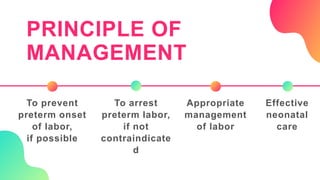
PRINCIPLE OF
MANAGEMENT
To arrest
preterm labor,
if not
contraindicate
d
Appropriate
management
of labor
To prevent
preterm onset
of labor,
if possible
Effective
neonatal
care
Clinical
Predictors
• History of prior PTL
• Multiple Pregnancy
• Recurrent UTI and GT
Infection
Biophysical
Predictors
• Uterine contraction ≥4 /hr
• Cervical Length and
dilatation ≤ 2.5 cm
• Bishop’s score ≥4
Biochemical
Predictors
• Fetal Fibronectin
• IL -6
• IL-8
• TNF-α
PREDICTION &
PREVENTION
MEASURES TO
ARREST
PRETERM LABORWhen both maternal and fetal condition is
good and membrane is intact:
• Bed rest
• Adequate hydration
• Prophylactic antibiotic
• Glucocorticoid
• Tocolytic agent
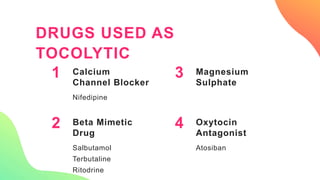
DRUGS USED AS
TOCOLYTIC
1 Calcium
Channel Blocker
Nifedipine
3 Magnesium
Sulphate
2 Beta Mimetic
Drug
Salbutamol
Terbutaline
Ritodrine
4 Oxytocin
Antagonist
Atosiban
PROGESTERONE
TO PREVENT ONSET OF PTL
• Natural Progesterone:
200 mg twice daily from 18 weeks to delivery till 37 weeks
• Micronized Progesterone:
200 mg daily from 20 weeks till 37 weeks
• 17 Hydroxy Progesterone:
Synthetic progesterone 250 mg IM weekly from 16-20 weeks to 37 weeks
• Cervical Cerclage:
Given between 14-16 weeks of gestation
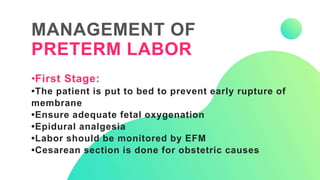
MANAGEMENT OF
PRETERM LABOR
•First Stage:
•The patient is put to bed to prevent early rupture of
membrane
•Ensure adequate fetal oxygenation
•Epidural analgesia
•Labor should be monitored by EFM
•Cesarean section is done for obstetric causes
Second Stage:
•The birth should be gentle and slow to avoid rapid
compression & decompression of the head
•Episiotomy to minimize head compression
•Tendency to delay curtailed by forceps
•The cord is clamped immediately after birth to prevent
hypervolemia
•Shift the baby to NICU
CONCLUSIO
N
Preterm labor is one of the most important causes of
perinatal morbidity and mortality globally. It is also
related to maternal morbidity .Intelligent anticipation,
timely interference, careful labor monitoring and
NICU support can reduce this mortality and morbidity
to a great extent.
Preterm Labor

Preterm Labor

  • 1.
    CME ON PRETERM LABOR DR.LIPIKA RANI BISWAS ASSISTANT REGISTRAR GYNAE UNIT 1 FARIDPUR MEDICAL COLLEGE HOSPITAL DR. FAISAL ABDULLAH INTERN DOCTOR
  • 2.
    1 Late Preterm 34to 36 weeks 3 Extreme Preterm< 28 weeks 2 Very Preterm 28 to 33 weeks When labor starts after the age of viability but before 37 completed weeks. WHAT IS PRETERM LABOR?
  • 3.
    INCIDENC E Worldwide Incidence rate 10-15% About 75% deliveredwithin 34 to 36 weeks Major cause of neonatal death worldwide.
  • 4.
    ETIOLOGY History Complication s inPresent Pregnancy Iatrogenic Idiopathic High Risk Factors
  • 5.
    HISTORY Etiology • Induced orSpontaneous Abortion or Preterm Delivery • ART • Recurrent urinary tract infection • Smoking • Low socioeconomic and nutritional status • Stress
  • 6.
    Maternal • Pregnancy Complications •Uterine anomalies • Medical and surgical illness • Genital tract infection Fetal • Multiple pregnancy • Congenital malformations • Intrauterine death Placental • Infarction • Thrombosis • Placenta previa • Abruptio Placenta COMPLICATIONS IN PRESENT PREGNANCY
  • 7.
    IATROGENIC Indicated medical preterm delivery IDIOPATHIC •Premature effacement of the cervix • Early engagement
  • 8.
  • 9.
  • 10.
    Symptoms • Pain • Pelvicpressure • Menstrual like cramps • Watery vaginal discharge • Low back pain. Signs • Uterine contraction: 1 in 10 minutes. • Cervical length : ≤ 2.5 cM • Cervical dilatation : ≥ 2 cm • Cervical effacement: 80% or more DIAGNOSIS OF PRETERM LABOR
  • 11.
    PRINCIPLE OF MANAGEMENT To arrest pretermlabor, if not contraindicate d Appropriate management of labor To prevent preterm onset of labor, if possible Effective neonatal care
  • 12.
    Clinical Predictors • History ofprior PTL • Multiple Pregnancy • Recurrent UTI and GT Infection Biophysical Predictors • Uterine contraction ≥4 /hr • Cervical Length and dilatation ≤ 2.5 cm • Bishop’s score ≥4 Biochemical Predictors • Fetal Fibronectin • IL -6 • IL-8 • TNF-α PREDICTION & PREVENTION
  • 13.
    MEASURES TO ARREST PRETERM LABORWhenboth maternal and fetal condition is good and membrane is intact: • Bed rest • Adequate hydration • Prophylactic antibiotic • Glucocorticoid • Tocolytic agent
  • 14.
    DRUGS USED AS TOCOLYTIC 1Calcium Channel Blocker Nifedipine 3 Magnesium Sulphate 2 Beta Mimetic Drug Salbutamol Terbutaline Ritodrine 4 Oxytocin Antagonist Atosiban
  • 15.
    PROGESTERONE TO PREVENT ONSETOF PTL • Natural Progesterone: 200 mg twice daily from 18 weeks to delivery till 37 weeks • Micronized Progesterone: 200 mg daily from 20 weeks till 37 weeks • 17 Hydroxy Progesterone: Synthetic progesterone 250 mg IM weekly from 16-20 weeks to 37 weeks • Cervical Cerclage: Given between 14-16 weeks of gestation
  • 16.
    MANAGEMENT OF PRETERM LABOR •FirstStage: •The patient is put to bed to prevent early rupture of membrane •Ensure adequate fetal oxygenation •Epidural analgesia •Labor should be monitored by EFM •Cesarean section is done for obstetric causes
  • 17.
    Second Stage: •The birthshould be gentle and slow to avoid rapid compression & decompression of the head •Episiotomy to minimize head compression •Tendency to delay curtailed by forceps •The cord is clamped immediately after birth to prevent hypervolemia •Shift the baby to NICU
  • 18.
    CONCLUSIO N Preterm labor isone of the most important causes of perinatal morbidity and mortality globally. It is also related to maternal morbidity .Intelligent anticipation, timely interference, careful labor monitoring and NICU support can reduce this mortality and morbidity to a great extent.