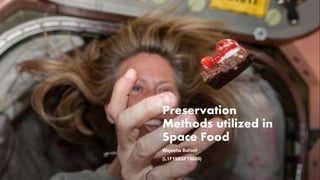
Preservation
Methods utilized in
Space Food
Wajeeha Batool
(L1F19BSFT0089)
Introduction:
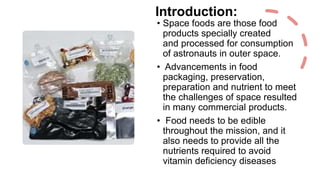
• Space foods are those food
products specially created
and processed for consumption
of astronauts in outer space.
• Advancements in food
packaging, preservation,
preparation and nutrient to meet
the challenges of space resulted
in many commercial products.
• Food needs to be edible
throughout the mission, and it
also needs to provide all the
nutrients required to avoid
vitamin deficiency diseases
What is
Space Food?
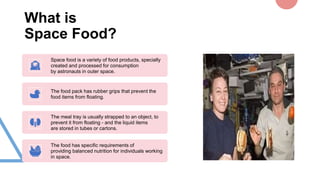
Space food is a variety of food products, specially
created and processed for consumption
by astronauts in outer space.
The food pack has rubber grips that prevent the
food items from floating.
The meal tray is usually strapped to an object, to
prevent it from floating - and the liquid items
are stored in tubes or cartons.
The food has specific requirements of
providing balanced nutrition for individuals working
in space.
History:
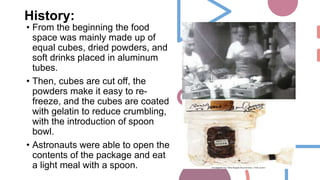
• From the beginning the food
space was mainly made up of
equal cubes, dried powders, and
soft drinks placed in aluminum
tubes.
• Then, cubes are cut off, the
powders make it easy to re-
freeze, and the cubes are coated
with gelatin to reduce crumbling,
with the introduction of spoon
bowl.
• Astronauts were able to open the
contents of the package and eat
a light meal with a spoon.
Missions:
• PROJECT MERCURY( 1959-
1963)
• GEMINI( 1965-1966)
• APOLLO( 1968-1975)
• SKYLAB(1973-1974)
• Interkosmos (1978–1988)
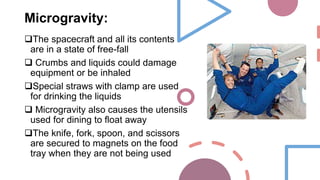
Microgravity:
The spacecraft and all its contents
are in a state of free-fall
 Crumbs and liquids could damage
equipment or be inhaled
Special straws with clamp are used
for drinking the liquids
 Microgravity also causes the utensils
used for dining to float away
The knife, fork, spoon, and scissors
are secured to magnets on the food
tray when they are not being used
Types:
Fresh foods
Rehydratable
Natural form
Intermediate moisture
Thermo-stabilized foods
Irradiated food
Frozen & Refrigerated
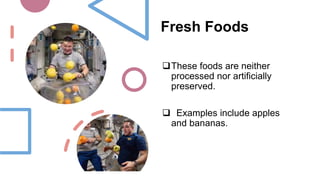
Fresh Foods
These foods are neither
processed nor artificially
preserved.
 Examples include apples
and bananas.
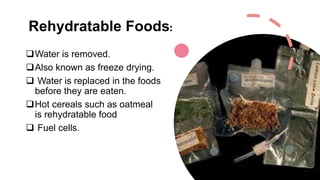
Rehydratable Foods:
Water is removed.
Also known as freeze drying.
 Water is replaced in the foods
before they are eaten.
Hot cereals such as oatmeal
is rehydratable food
 Fuel cells.
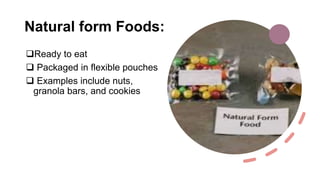
Natural form Foods:
Ready to eat
 Packaged in flexible pouches
 Examples include nuts,
granola bars, and cookies
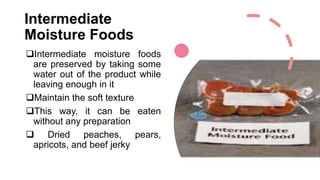
Intermediate
Moisture Foods
Intermediate moisture foods
are preserved by taking some
water out of the product while
leaving enough in it
Maintain the soft texture
This way, it can be eaten
without any preparation
 Dried peaches, pears,
apricots, and beef jerky
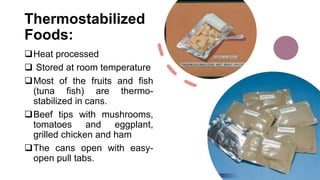
Thermostabilized
Foods:
Heat processed
 Stored at room temperature
Most of the fruits and fish
(tuna fish) are thermo-
stabilized in cans.
Beef tips with mushrooms,
tomatoes and eggplant,
grilled chicken and ham
The cans open with easy-
open pull tabs.
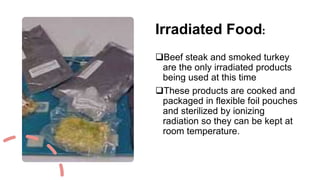
Irradiated Food:
Beef steak and smoked turkey
are the only irradiated products
being used at this time
These products are cooked and
packaged in flexible foil pouches
and sterilized by ionizing
radiation so they can be kept at
room temperature.
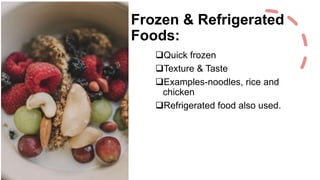
Frozen & Refrigerated
Foods:
Quick frozen
Texture & Taste
Examples-noodles, rice and
chicken
Refrigerated food also used.
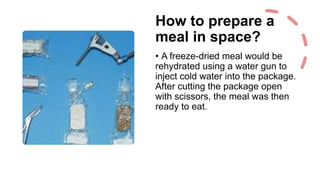
How to prepare a
meal in space?
• A freeze-dried meal would be
rehydrated using a water gun to
inject cold water into the package.
After cutting the package open
with scissors, the meal was then
ready to eat.
Packaging:
1)Bite-sized foods :
• Modified Atmosphere
Techniques.
• Each package is flushed with
nitrogen three times before
the final seal apply vacuum
• The amount of vacuum used
varies depending upon the
food product
Packaging:
2) Rehydratable packages :
• Packed in the shape of a
cup and a lid
• They are made of a
flexible material to aid in
trash compression.
• The septa is made
from silicon rubber
• Water injected in food
Future
Scope:
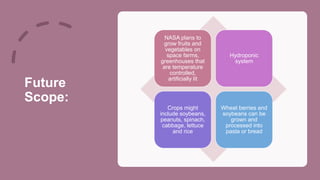
NASA plans to
grow fruits and
vegetables on
space farms,
greenhouses that
are temperature
controlled,
artificially lit
Hydroponic
system
Crops might
include soybeans,
peanuts, spinach,
cabbage, lettuce
and rice
Wheat berries and
soybeans can be
grown and
processed into
pasta or bread
Conclusion:
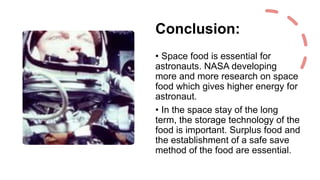
• Space food is essential for
astronauts. NASA developing
more and more research on space
food which gives higher energy for
astronaut.
• In the space stay of the long
term, the storage technology of the
food is important. Surplus food and
the establishment of a safe save
method of the food are essential.
preservation in space food

preservation in space food

  • 2.
    Preservation Methods utilized in SpaceFood Wajeeha Batool (L1F19BSFT0089)
  • 3.
    Introduction: • Space foodsare those food products specially created and processed for consumption of astronauts in outer space. • Advancements in food packaging, preservation, preparation and nutrient to meet the challenges of space resulted in many commercial products. • Food needs to be edible throughout the mission, and it also needs to provide all the nutrients required to avoid vitamin deficiency diseases
  • 4.
    What is Space Food? Spacefood is a variety of food products, specially created and processed for consumption by astronauts in outer space. The food pack has rubber grips that prevent the food items from floating. The meal tray is usually strapped to an object, to prevent it from floating - and the liquid items are stored in tubes or cartons. The food has specific requirements of providing balanced nutrition for individuals working in space.
  • 5.
    History: • From thebeginning the food space was mainly made up of equal cubes, dried powders, and soft drinks placed in aluminum tubes. • Then, cubes are cut off, the powders make it easy to re- freeze, and the cubes are coated with gelatin to reduce crumbling, with the introduction of spoon bowl. • Astronauts were able to open the contents of the package and eat a light meal with a spoon.
  • 6.
    Missions: • PROJECT MERCURY(1959- 1963) • GEMINI( 1965-1966) • APOLLO( 1968-1975) • SKYLAB(1973-1974) • Interkosmos (1978–1988)
  • 7.
    Microgravity: The spacecraft andall its contents are in a state of free-fall  Crumbs and liquids could damage equipment or be inhaled Special straws with clamp are used for drinking the liquids  Microgravity also causes the utensils used for dining to float away The knife, fork, spoon, and scissors are secured to magnets on the food tray when they are not being used
  • 8.
    Types: Fresh foods Rehydratable Natural form Intermediatemoisture Thermo-stabilized foods Irradiated food Frozen & Refrigerated
  • 9.
    Fresh Foods These foodsare neither processed nor artificially preserved.  Examples include apples and bananas.
  • 10.
    Rehydratable Foods: Water isremoved. Also known as freeze drying.  Water is replaced in the foods before they are eaten. Hot cereals such as oatmeal is rehydratable food  Fuel cells.
  • 11.
    Natural form Foods: Readyto eat  Packaged in flexible pouches  Examples include nuts, granola bars, and cookies
  • 12.
    Intermediate Moisture Foods Intermediate moisturefoods are preserved by taking some water out of the product while leaving enough in it Maintain the soft texture This way, it can be eaten without any preparation  Dried peaches, pears, apricots, and beef jerky
  • 13.
    Thermostabilized Foods: Heat processed  Storedat room temperature Most of the fruits and fish (tuna fish) are thermo- stabilized in cans. Beef tips with mushrooms, tomatoes and eggplant, grilled chicken and ham The cans open with easy- open pull tabs.
  • 14.
    Irradiated Food: Beef steakand smoked turkey are the only irradiated products being used at this time These products are cooked and packaged in flexible foil pouches and sterilized by ionizing radiation so they can be kept at room temperature.
  • 15.
    Frozen & Refrigerated Foods: Quickfrozen Texture & Taste Examples-noodles, rice and chicken Refrigerated food also used.
  • 16.
    How to preparea meal in space? • A freeze-dried meal would be rehydrated using a water gun to inject cold water into the package. After cutting the package open with scissors, the meal was then ready to eat.
  • 17.
    Packaging: 1)Bite-sized foods : •Modified Atmosphere Techniques. • Each package is flushed with nitrogen three times before the final seal apply vacuum • The amount of vacuum used varies depending upon the food product
  • 18.
    Packaging: 2) Rehydratable packages: • Packed in the shape of a cup and a lid • They are made of a flexible material to aid in trash compression. • The septa is made from silicon rubber • Water injected in food
  • 19.
    Future Scope: NASA plans to growfruits and vegetables on space farms, greenhouses that are temperature controlled, artificially lit Hydroponic system Crops might include soybeans, peanuts, spinach, cabbage, lettuce and rice Wheat berries and soybeans can be grown and processed into pasta or bread
  • 20.
    Conclusion: • Space foodis essential for astronauts. NASA developing more and more research on space food which gives higher energy for astronaut. • In the space stay of the long term, the storage technology of the food is important. Surplus food and the establishment of a safe save method of the food are essential.