EDIBLE FILMS AND
COATINGS
INTRODUCTION
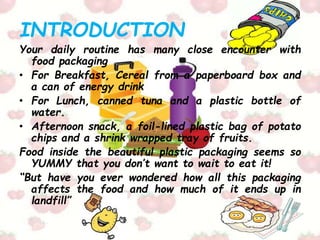
Your daily routine has many close encounter with
food packaging
• For Breakfast, Cereal from a paperboard box and
a can of energy drink
• For Lunch, canned tuna and a plastic bottle of
water.
• Afternoon snack, a foil-lined plastic bag of potato
chips and a shrink wrapped tray of fruits.
Food inside the beautiful plastic packaging seems so
YUMMY that you don’t want to wait to eat it!
“But have you ever wondered how all this packaging
affects the food and how much of it ends up in
landfill”
FOOD PACKAGING
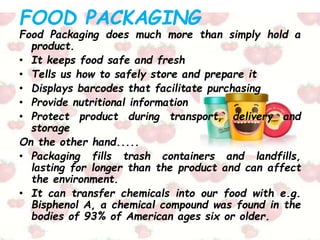
Food Packaging does much more than simply hold a
product.
• It keeps food safe and fresh
• Tells us how to safely store and prepare it
• Displays barcodes that facilitate purchasing
• Provide nutritional information
• Protect product during transport, delivery and
storage
On the other hand.....
• Packaging fills trash containers and landfills,
lasting for longer than the product and can affect
the environment.
• It can transfer chemicals into our food with e.g.
Bisphenol A, a chemical compound was found in the
bodies of 93% of American ages six or older.
• U.S Environment Protection Agency says that
every year 1.6 million metric tons of packaging
waste is dumped into landfills in U.S.
• Packaging waste is 30% of municipal waste by
weight, 13% is due to plastic material which is not
biodegradable.
• Plastic reduces moisture and oxygen transfer rate
of soil and deteriorates the quality of land.
Food Industries and scientist have been working
together to find a solution to reduce food
packaging waste.
How about food packaging that one could actually
consume?
A group of scientist have developed “EDIBLE
PACKAGING”
EDIBLE PACKAGING
What is an Edible Packaging?
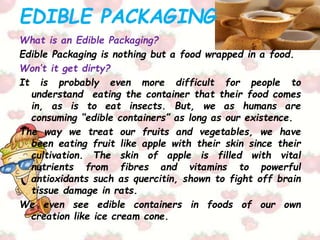
Edible Packaging is nothing but a food wrapped in a food.
Won’t it get dirty?
It is probably even more difficult for people to
understand eating the container that their food comes
in, as is to eat insects. But, we as humans are
consuming “edible containers” as long as our existence.
The way we treat our fruits and vegetables, we have
been eating fruit like apple with their skin since their
cultivation. The skin of apple is filled with vital
nutrients from fibres and vitamins to powerful
antioxidants such as quercitin, shown to fight off brain
tissue damage in rats.
We even see edible containers in foods of our own
creation like ice cream cone.
HISTORY
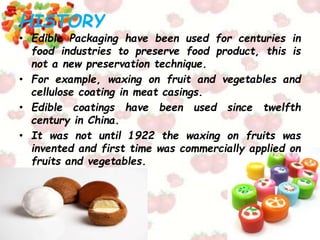
• Edible Packaging have been used for centuries in
food industries to preserve food product, this is
not a new preservation technique.
• For example, waxing on fruit and vegetables and
cellulose coating in meat casings.
• Edible coatings have been used since twelfth
century in China.
• It was not until 1922 the waxing on fruits was
invented and first time was commercially applied on
fruits and vegetables.
TYPES OF EDIBLE PACKAGING
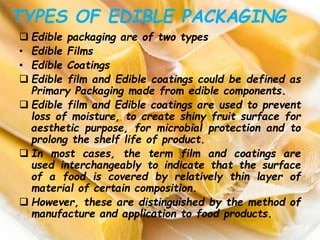
 Edible packaging are of two types
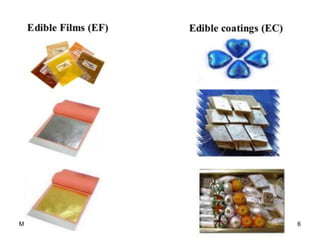
• Edible Films
• Edible Coatings
 Edible film and Edible coatings could be defined as
Primary Packaging made from edible components.
 Edible film and Edible coatings are used to prevent
loss of moisture, to create shiny fruit surface for
aesthetic purpose, for microbial protection and to
prolong the shelf life of product.
 In most cases, the term film and coatings are
used interchangeably to indicate that the surface
of a food is covered by relatively thin layer of
material of certain composition.
 However, these are distinguished by the method of
manufacture and application to food products.
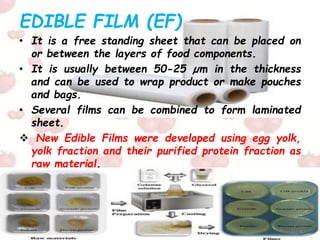
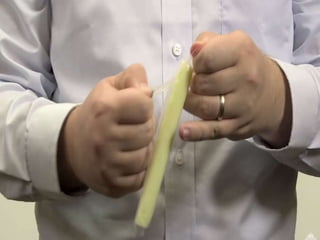
EDIBLE FILM (EF)
• It is a free standing sheet that can be placed on
or between the layers of food components.
• It is usually between 50-25 µm in the thickness
and can be used to wrap product or make pouches
and bags.
• Several films can be combined to form laminated
sheet.
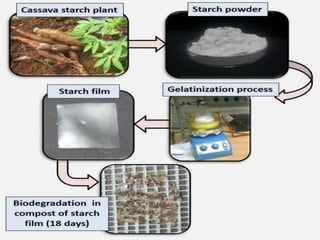
 New Edible Films were developed using egg yolk,
yolk fraction and their purified protein fraction as
raw material.
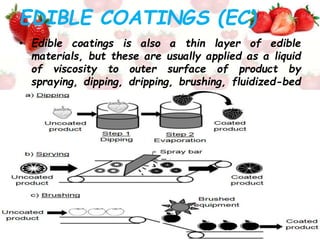
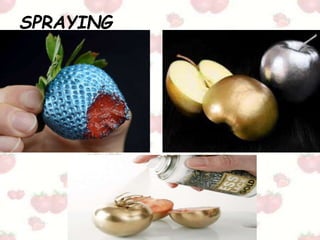
EDIBLE COATINGS (EC)
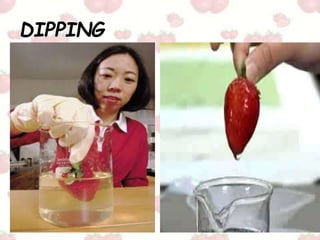
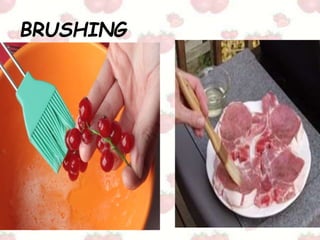
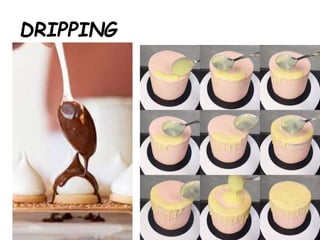
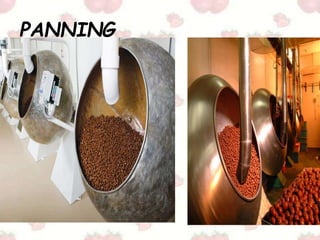
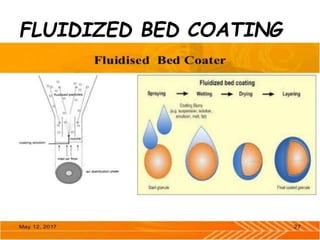
• Edible coatings is also a thin layer of edible
materials, but these are usually applied as a liquid
of viscosity to outer surface of product by
spraying, dipping, dripping, brushing, fluidized-bed
coating etc.
SPRAYING
DIPPING
BRUSHING
DRIPPING
PANNING
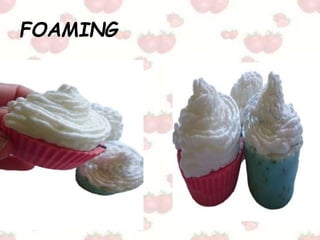
FOAMING
FLUIDIZED BED COATING
SOURCES
• Edible coatings and films are usually classified to
their structural material.
• Main molecule groups as sources for Edible film
and Edible coatings are: Polysaccharides, Proteins,
and Lipids, shows possible sources for Edible Film
and Edible Coatings.
• Biopolymers have multiple film-forming
mechanisms, including intermolecular forces such
as covalent bonds (e.g. Di-sulfide bonds and
cross linking) and electrostatic, hydrophobic, or
ionic interactions.
BIOPOLYMERS
Biopolymers are of two types
• Non-Edible biopolymer like Polyanhydrides,
Polyvinyl alcohol and Poly-lactic acid
• Edible Biopolymers are further of three types
 Polysaccharide ( starch and modified starch, chitin
and chitosan, pectin, kefiran etc.)
 Proteins (Soy, Pea, Sunflower, Casein, Corn Zein
etc)
 Lipids (Oils, Free fatty acid, Bees Wax etc.)
PROPERTIES OF EDIBLE
BIOPOLYMER
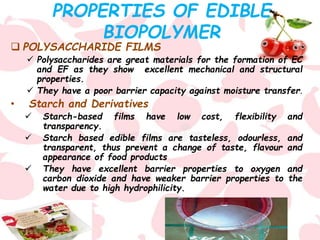
 POLYSACCHARIDE FILMS
 Polysaccharides are great materials for the formation of EC
and EF as they show excellent mechanical and structural
properties.
 They have a poor barrier capacity against moisture transfer.
• Starch and Derivatives
 Starch-based films have low cost, flexibility and
transparency.
 Starch based edible films are tasteless, odourless, and
transparent, thus prevent a change of taste, flavour and
appearance of food products
 They have excellent barrier properties to oxygen and
carbon dioxide and have weaker barrier properties to the
water due to high hydrophilicity.
Contd.....
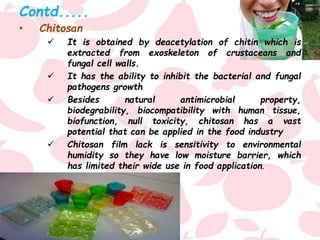
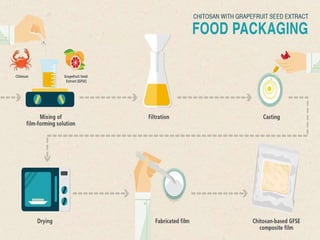
• Chitosan
 It is obtained by deacetylation of chitin which is
extracted from exoskeleton of crustaceans and
fungal cell walls.
 It has the ability to inhibit the bacterial and fungal
pathogens growth
 Besides natural antimicrobial property,
biodegrability, biocompatibility with human tissue,
biofunction, null toxicity, chitosan has a vast
potential that can be applied in the food industry
 Chitosan film lack is sensitivity to environmental
humidity so they have low moisture barrier, which
has limited their wide use in food application.
• Pectin
 Pectin are complex group of polysaccharides in which
D-galacturonic acid is a principal constituent.
 They are present in plant cell wall and it forms gels.
 This property has made pectin a very important
additives in jellies, jams, and confectionaries as well
as edible coatings and films.
• Cellulose and its derivatives
Cellulose is major component in plant cell wall.
Beside plant source cellulose, bacterial cellulose was
utilized to develop EF and EC.
Coatings and films based on cellulose are generally
transparent, flexible, odour-free, tasteless, water
soluble, and resistant to oxygen and carbon dioxide.
It is widely utilized to reduce oil absorption during
the frying of various foods, such as meat, poultry,
starchy foods, dough etc.
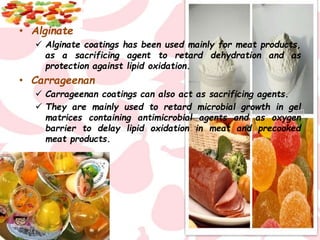
• Alginate
 Alginate coatings has been used mainly for meat products,
as a sacrificing agent to retard dehydration and as
protection against lipid oxidation.
• Carrageenan
 Carrageenan coatings can also act as sacrificing agents.
 They are mainly used to retard microbial growth in gel
matrices containing antimicrobial agents and as oxygen
barrier to delay lipid oxidation in meat and precooked
meat products.
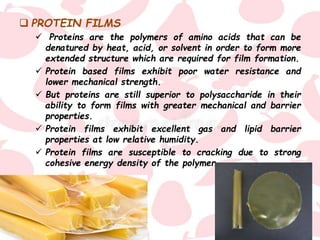
 PROTEIN FILMS
 Proteins are the polymers of amino acids that can be
denatured by heat, acid, or solvent in order to form more
extended structure which are required for film formation.
 Protein based films exhibit poor water resistance and
lower mechanical strength.
 But proteins are still superior to polysaccharide in their
ability to form films with greater mechanical and barrier
properties.
 Protein films exhibit excellent gas and lipid barrier
properties at low relative humidity.
 Protein films are susceptible to cracking due to strong
cohesive energy density of the polymer.
• Collagen
 Collagen is the most commercially successful edible protein
film.
 Films based on high concentration of hydrolyzed collagen
produce films with more homogenous surface.
• Gelatin
 Gelatin is produced by partial acid or alkali hydrolysis of
collagen at high temperature in presence of water.
 Gelatin possess antioxidant activity.
 Recent studies have also revealed antimicrobial activity
associated with gelatin.
 Natural antioxidant and antimicrobial substances were
able to extend functional properties of these
biodegradable films and create an active packaging bio-
material.
 Gelatin films also have poor water vapour barrier
properties.
 Casein
 Casein molecules easily form transparent, flexible,
tasteless films from aqueous solutions without further
treatment.
 Main disadvantage of casein is its relatively high price.
 Gluten
 Wheat gluten films are homogenous, transparent, strong,
and good water barriers.
 The rheological properties of gluten films can be altered
from smooth to rubber like by high pressure treatments.
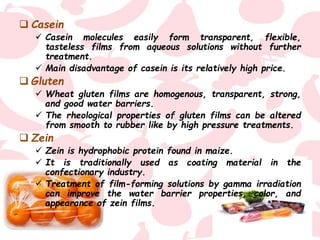
 Zein
 Zein is hydrophobic protein found in maize.
 It is traditionally used as coating material in the
confectionary industry.
 Treatment of film-forming solutions by gamma irradiation
can improve the water barrier properties, color, and
appearance of zein films.
 LIPID FILMS
 Efficiency of lipid materials in edible films and coatings
depends on the nature of the lipid used, and in particular
on its structure, chemical arrangement, hydrophobicity,
physical state and lipid interaction with the other
components of the film.
 Lipids are usually combined with the other film forming
materials, such as protein and polysaccharides, as
emulsion particles or multilayer coatings in order to
increase the resistance to water penetration.
 Hydrophobic substances potentially used for the lipid-
based edible films and coatings include natural waxes
(carnauba, rice bran, and bee wax); petroleum based
waxes (paraffin and polyethylene wax); petroleum based,
minerals, and vegetable oils; acetoglycerides and fatty
acids; and resins, such as shellac and wood resin.
Contd....
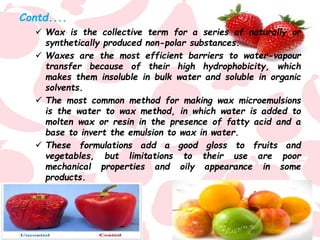
 Wax is the collective term for a series of naturally or
synthetically produced non-polar substances.
 Waxes are the most efficient barriers to water-vapour
transfer because of their high hydrophobicity, which
makes them insoluble in bulk water and soluble in organic
solvents.
 The most common method for making wax microemulsions
is the water to wax method, in which water is added to
molten wax or resin in the presence of fatty acid and a
base to invert the emulsion to wax in water.
 These formulations add a good gloss to fruits and
vegetables, but limitations to their use are poor
mechanical properties and oily appearance in some
products.
APPLICATIONS
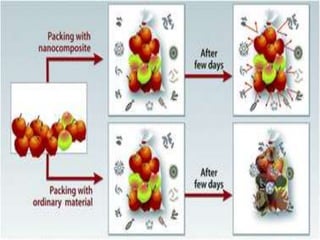
 Fresh and minimally processed fruits and vegetables
 In case of fruits and vegetables, coatings are used to
prevent weight loss, inhibit microorganisms, slow down
aerobic respiration, and improve appearance by providing
gloss.
 Edible coatings for fresh fruits are useful for controlling
ripeness by reducing oxygen penetration into fruit, thus
reducing metabolic activity and softening changes.
 Edible coatings are also used in fresh cut fruits and
vegetables as these coatings can also act as carriers of
food grade antioxidants and antimicrobials that help
reduce enzymatic browning and microbial growth.
 Meat, poultry and fish products
 Natural collagen casings from animal intestine represent
one of the earliest uses of edible protein packaging
materials.
 Collagen edible films have the potential to reduce moisture
loss, minimize lipid oxidation, prevent discoloration and
reduce dripping of muscle foods.
 Edible coatings can be applied to meat and fish by dipping,
spraying, casting, brushing.
 Edible coatings can also be used to reduce fat uptake during
deep frying of meat and drip loss during thawing of salmon.
 Cereals, bakery and dairy coatings
 Edible coatings are used in cereal products to prevent
hydration and improve quality.
 Rice fortified with vitamins and minerals hasbeen coate with
zein-wood rosin mixtures to prevent vitamin and mineral
losses during washing in cold water.
 Oil-fried products
 Deep fat fried products are very appealing to consumers due
to soft, moist interior covered with crispy crust, but can
contain upto 50% fat.
 Edible coatings particularly those based on hydrophilic
polymers are a good barrier to fats and oils.
SAFETY AND HEALTH ISSUES
• An edible film to be used in food should be
generally recognised as safe (GRAS) by the FDA.
• If the material cannot be demonstrated to be
GRAS, then manufacturer must submit a food
additive petition to the FDA.
• There should be a declaration about the type of
edible materials some individual are allergic to
certain polymers.
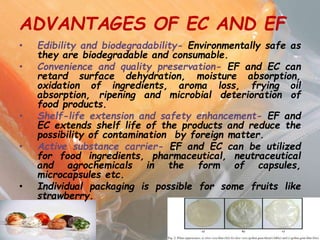
ADVANTAGES OF EC AND EF
• Edibility and biodegradability- Environmentally safe as
they are biodegradable and consumable.
• Convenience and quality preservation- EF and EC can
retard surface dehydration, moisture absorption,
oxidation of ingredients, aroma loss, frying oil
absorption, ripening and microbial deterioration of
food products.
• Shelf-life extension and safety enhancement- EF and
EC extends shelf life of the products and reduce the
possibility of contamination by foreign matter.
• Active substance carrier- EF and EC can be utilized
for food ingredients, pharmaceutical, neutraceutical
and agrochemicals in the form of capsules,
microcapsules etc.
• Individual packaging is possible for some fruits like
strawberry.
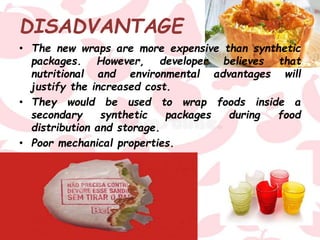
DISADVANTAGE
• The new wraps are more expensive than synthetic
packages. However, developer believes that
nutritional and environmental advantages will
justify the increased cost.
• They would be used to wrap foods inside a
secondary synthetic packages during food
distribution and storage.
• Poor mechanical properties.
CONCLUSION
• The use of edible films and coatings as suitable
packaging for the food industry.
• These coatings and films exhibit various functions
when used, such as inhibition of the migration of
moisture, oxygen, carbon dioxide, aromas, lipids.
• It has the ability to carry food ingredients, and
the ability to improve the mechanical properties of
the food.
• Biodegradable or edible films have the potential to
reduce some traditional polymeric packaging
materials for specific application.
REFRENCES
Aider M., (2010), Chitosan application for active bio-based
films production and potential in the food industry, LWT-
Food Science and technology, 43(6),837-842.
Embuscado M.E., Huber K.C., (2009), Edible films and coatings
for food applications, Springer,1-367.
Wittaya T., (2012), Protein –based Edible Films:
Characteristics and improvement of Properties, Intech, 44-
64.
Ramos. M, Valdes A., (2016), Gelatin-Based films and coatings
for food packaging applications, Academic Editor, 1-20.
Pascall M.A., Lin S.J., (2013), The application od edible
polymeric films and coatings in the Food Industry, Food
Processing ad technology, 1-2.
Niehs.nihs.gov/health/topics/agents/sya-bpa/index.cfm
Edible films and  coatings

Edible films and coatings

  • 1.
  • 2.
    INTRODUCTION Your daily routinehas many close encounter with food packaging • For Breakfast, Cereal from a paperboard box and a can of energy drink • For Lunch, canned tuna and a plastic bottle of water. • Afternoon snack, a foil-lined plastic bag of potato chips and a shrink wrapped tray of fruits. Food inside the beautiful plastic packaging seems so YUMMY that you don’t want to wait to eat it! “But have you ever wondered how all this packaging affects the food and how much of it ends up in landfill”
  • 3.
    FOOD PACKAGING Food Packagingdoes much more than simply hold a product. • It keeps food safe and fresh • Tells us how to safely store and prepare it • Displays barcodes that facilitate purchasing • Provide nutritional information • Protect product during transport, delivery and storage On the other hand..... • Packaging fills trash containers and landfills, lasting for longer than the product and can affect the environment. • It can transfer chemicals into our food with e.g. Bisphenol A, a chemical compound was found in the bodies of 93% of American ages six or older.
  • 4.
    • U.S EnvironmentProtection Agency says that every year 1.6 million metric tons of packaging waste is dumped into landfills in U.S. • Packaging waste is 30% of municipal waste by weight, 13% is due to plastic material which is not biodegradable. • Plastic reduces moisture and oxygen transfer rate of soil and deteriorates the quality of land. Food Industries and scientist have been working together to find a solution to reduce food packaging waste. How about food packaging that one could actually consume? A group of scientist have developed “EDIBLE PACKAGING”
  • 5.
    EDIBLE PACKAGING What isan Edible Packaging? Edible Packaging is nothing but a food wrapped in a food. Won’t it get dirty? It is probably even more difficult for people to understand eating the container that their food comes in, as is to eat insects. But, we as humans are consuming “edible containers” as long as our existence. The way we treat our fruits and vegetables, we have been eating fruit like apple with their skin since their cultivation. The skin of apple is filled with vital nutrients from fibres and vitamins to powerful antioxidants such as quercitin, shown to fight off brain tissue damage in rats. We even see edible containers in foods of our own creation like ice cream cone.
  • 6.
    HISTORY • Edible Packaginghave been used for centuries in food industries to preserve food product, this is not a new preservation technique. • For example, waxing on fruit and vegetables and cellulose coating in meat casings. • Edible coatings have been used since twelfth century in China. • It was not until 1922 the waxing on fruits was invented and first time was commercially applied on fruits and vegetables.
  • 7.
    TYPES OF EDIBLEPACKAGING  Edible packaging are of two types • Edible Films • Edible Coatings  Edible film and Edible coatings could be defined as Primary Packaging made from edible components.  Edible film and Edible coatings are used to prevent loss of moisture, to create shiny fruit surface for aesthetic purpose, for microbial protection and to prolong the shelf life of product.  In most cases, the term film and coatings are used interchangeably to indicate that the surface of a food is covered by relatively thin layer of material of certain composition.  However, these are distinguished by the method of manufacture and application to food products.
  • 9.
    EDIBLE FILM (EF) •It is a free standing sheet that can be placed on or between the layers of food components. • It is usually between 50-25 µm in the thickness and can be used to wrap product or make pouches and bags. • Several films can be combined to form laminated sheet.  New Edible Films were developed using egg yolk, yolk fraction and their purified protein fraction as raw material.
  • 11.
    EDIBLE COATINGS (EC) •Edible coatings is also a thin layer of edible materials, but these are usually applied as a liquid of viscosity to outer surface of product by spraying, dipping, dripping, brushing, fluidized-bed coating etc.
  • 12.
  • 13.
  • 14.
  • 15.
  • 16.
  • 17.
  • 18.
  • 20.
    SOURCES • Edible coatingsand films are usually classified to their structural material. • Main molecule groups as sources for Edible film and Edible coatings are: Polysaccharides, Proteins, and Lipids, shows possible sources for Edible Film and Edible Coatings. • Biopolymers have multiple film-forming mechanisms, including intermolecular forces such as covalent bonds (e.g. Di-sulfide bonds and cross linking) and electrostatic, hydrophobic, or ionic interactions.
  • 21.
    BIOPOLYMERS Biopolymers are oftwo types • Non-Edible biopolymer like Polyanhydrides, Polyvinyl alcohol and Poly-lactic acid • Edible Biopolymers are further of three types  Polysaccharide ( starch and modified starch, chitin and chitosan, pectin, kefiran etc.)  Proteins (Soy, Pea, Sunflower, Casein, Corn Zein etc)  Lipids (Oils, Free fatty acid, Bees Wax etc.)
  • 22.
    PROPERTIES OF EDIBLE BIOPOLYMER POLYSACCHARIDE FILMS  Polysaccharides are great materials for the formation of EC and EF as they show excellent mechanical and structural properties.  They have a poor barrier capacity against moisture transfer. • Starch and Derivatives  Starch-based films have low cost, flexibility and transparency.  Starch based edible films are tasteless, odourless, and transparent, thus prevent a change of taste, flavour and appearance of food products  They have excellent barrier properties to oxygen and carbon dioxide and have weaker barrier properties to the water due to high hydrophilicity.
  • 24.
    Contd..... • Chitosan  Itis obtained by deacetylation of chitin which is extracted from exoskeleton of crustaceans and fungal cell walls.  It has the ability to inhibit the bacterial and fungal pathogens growth  Besides natural antimicrobial property, biodegrability, biocompatibility with human tissue, biofunction, null toxicity, chitosan has a vast potential that can be applied in the food industry  Chitosan film lack is sensitivity to environmental humidity so they have low moisture barrier, which has limited their wide use in food application.
  • 26.
    • Pectin  Pectinare complex group of polysaccharides in which D-galacturonic acid is a principal constituent.  They are present in plant cell wall and it forms gels.  This property has made pectin a very important additives in jellies, jams, and confectionaries as well as edible coatings and films. • Cellulose and its derivatives Cellulose is major component in plant cell wall. Beside plant source cellulose, bacterial cellulose was utilized to develop EF and EC. Coatings and films based on cellulose are generally transparent, flexible, odour-free, tasteless, water soluble, and resistant to oxygen and carbon dioxide. It is widely utilized to reduce oil absorption during the frying of various foods, such as meat, poultry, starchy foods, dough etc.
  • 28.
    • Alginate  Alginatecoatings has been used mainly for meat products, as a sacrificing agent to retard dehydration and as protection against lipid oxidation. • Carrageenan  Carrageenan coatings can also act as sacrificing agents.  They are mainly used to retard microbial growth in gel matrices containing antimicrobial agents and as oxygen barrier to delay lipid oxidation in meat and precooked meat products.
  • 29.
     PROTEIN FILMS Proteins are the polymers of amino acids that can be denatured by heat, acid, or solvent in order to form more extended structure which are required for film formation.  Protein based films exhibit poor water resistance and lower mechanical strength.  But proteins are still superior to polysaccharide in their ability to form films with greater mechanical and barrier properties.  Protein films exhibit excellent gas and lipid barrier properties at low relative humidity.  Protein films are susceptible to cracking due to strong cohesive energy density of the polymer.
  • 30.
    • Collagen  Collagenis the most commercially successful edible protein film.  Films based on high concentration of hydrolyzed collagen produce films with more homogenous surface. • Gelatin  Gelatin is produced by partial acid or alkali hydrolysis of collagen at high temperature in presence of water.  Gelatin possess antioxidant activity.  Recent studies have also revealed antimicrobial activity associated with gelatin.  Natural antioxidant and antimicrobial substances were able to extend functional properties of these biodegradable films and create an active packaging bio- material.  Gelatin films also have poor water vapour barrier properties.
  • 31.
     Casein  Caseinmolecules easily form transparent, flexible, tasteless films from aqueous solutions without further treatment.  Main disadvantage of casein is its relatively high price.  Gluten  Wheat gluten films are homogenous, transparent, strong, and good water barriers.  The rheological properties of gluten films can be altered from smooth to rubber like by high pressure treatments.  Zein  Zein is hydrophobic protein found in maize.  It is traditionally used as coating material in the confectionary industry.  Treatment of film-forming solutions by gamma irradiation can improve the water barrier properties, color, and appearance of zein films.
  • 32.
     LIPID FILMS Efficiency of lipid materials in edible films and coatings depends on the nature of the lipid used, and in particular on its structure, chemical arrangement, hydrophobicity, physical state and lipid interaction with the other components of the film.  Lipids are usually combined with the other film forming materials, such as protein and polysaccharides, as emulsion particles or multilayer coatings in order to increase the resistance to water penetration.  Hydrophobic substances potentially used for the lipid- based edible films and coatings include natural waxes (carnauba, rice bran, and bee wax); petroleum based waxes (paraffin and polyethylene wax); petroleum based, minerals, and vegetable oils; acetoglycerides and fatty acids; and resins, such as shellac and wood resin.
  • 33.
    Contd....  Wax isthe collective term for a series of naturally or synthetically produced non-polar substances.  Waxes are the most efficient barriers to water-vapour transfer because of their high hydrophobicity, which makes them insoluble in bulk water and soluble in organic solvents.  The most common method for making wax microemulsions is the water to wax method, in which water is added to molten wax or resin in the presence of fatty acid and a base to invert the emulsion to wax in water.  These formulations add a good gloss to fruits and vegetables, but limitations to their use are poor mechanical properties and oily appearance in some products.
  • 34.
    APPLICATIONS  Fresh andminimally processed fruits and vegetables  In case of fruits and vegetables, coatings are used to prevent weight loss, inhibit microorganisms, slow down aerobic respiration, and improve appearance by providing gloss.  Edible coatings for fresh fruits are useful for controlling ripeness by reducing oxygen penetration into fruit, thus reducing metabolic activity and softening changes.  Edible coatings are also used in fresh cut fruits and vegetables as these coatings can also act as carriers of food grade antioxidants and antimicrobials that help reduce enzymatic browning and microbial growth.  Meat, poultry and fish products  Natural collagen casings from animal intestine represent one of the earliest uses of edible protein packaging materials.
  • 35.
     Collagen ediblefilms have the potential to reduce moisture loss, minimize lipid oxidation, prevent discoloration and reduce dripping of muscle foods.  Edible coatings can be applied to meat and fish by dipping, spraying, casting, brushing.  Edible coatings can also be used to reduce fat uptake during deep frying of meat and drip loss during thawing of salmon.  Cereals, bakery and dairy coatings  Edible coatings are used in cereal products to prevent hydration and improve quality.  Rice fortified with vitamins and minerals hasbeen coate with zein-wood rosin mixtures to prevent vitamin and mineral losses during washing in cold water.  Oil-fried products  Deep fat fried products are very appealing to consumers due to soft, moist interior covered with crispy crust, but can contain upto 50% fat.  Edible coatings particularly those based on hydrophilic polymers are a good barrier to fats and oils.
  • 36.
    SAFETY AND HEALTHISSUES • An edible film to be used in food should be generally recognised as safe (GRAS) by the FDA. • If the material cannot be demonstrated to be GRAS, then manufacturer must submit a food additive petition to the FDA. • There should be a declaration about the type of edible materials some individual are allergic to certain polymers.
  • 37.
    ADVANTAGES OF ECAND EF • Edibility and biodegradability- Environmentally safe as they are biodegradable and consumable. • Convenience and quality preservation- EF and EC can retard surface dehydration, moisture absorption, oxidation of ingredients, aroma loss, frying oil absorption, ripening and microbial deterioration of food products. • Shelf-life extension and safety enhancement- EF and EC extends shelf life of the products and reduce the possibility of contamination by foreign matter. • Active substance carrier- EF and EC can be utilized for food ingredients, pharmaceutical, neutraceutical and agrochemicals in the form of capsules, microcapsules etc. • Individual packaging is possible for some fruits like strawberry.
  • 38.
    DISADVANTAGE • The newwraps are more expensive than synthetic packages. However, developer believes that nutritional and environmental advantages will justify the increased cost. • They would be used to wrap foods inside a secondary synthetic packages during food distribution and storage. • Poor mechanical properties.
  • 39.
    CONCLUSION • The useof edible films and coatings as suitable packaging for the food industry. • These coatings and films exhibit various functions when used, such as inhibition of the migration of moisture, oxygen, carbon dioxide, aromas, lipids. • It has the ability to carry food ingredients, and the ability to improve the mechanical properties of the food. • Biodegradable or edible films have the potential to reduce some traditional polymeric packaging materials for specific application.
  • 40.
    REFRENCES Aider M., (2010),Chitosan application for active bio-based films production and potential in the food industry, LWT- Food Science and technology, 43(6),837-842. Embuscado M.E., Huber K.C., (2009), Edible films and coatings for food applications, Springer,1-367. Wittaya T., (2012), Protein –based Edible Films: Characteristics and improvement of Properties, Intech, 44- 64. Ramos. M, Valdes A., (2016), Gelatin-Based films and coatings for food packaging applications, Academic Editor, 1-20. Pascall M.A., Lin S.J., (2013), The application od edible polymeric films and coatings in the Food Industry, Food Processing ad technology, 1-2. Niehs.nihs.gov/health/topics/agents/sya-bpa/index.cfm