GOVT. HOLKAR SCIENCE COLLEGE
INDORE
TOPIC :- ASCOMYCOTINA
AND PEZIZA
SUBMITTED BY SUBMITTED TO
RISHITA KAHIR PROF. SARIKA MAM
WHAT ARE FUNGI
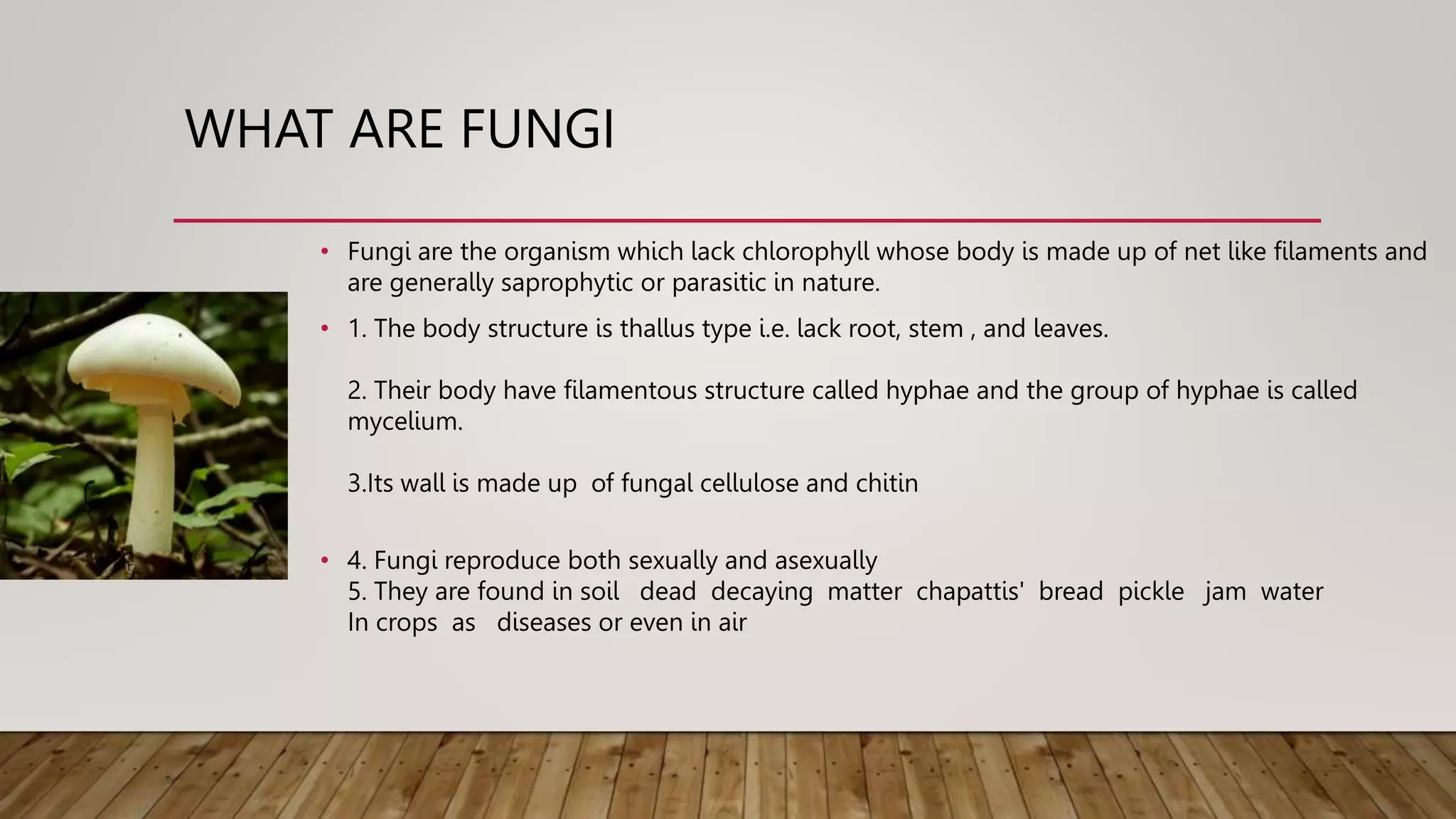
• Fungi are the organism which lack chlorophyll whose body is made up of net like filaments and
are generally saprophytic or parasitic in nature.
• 1. The body structure is thallus type i.e. lack root, stem , and leaves.
2. Their body have filamentous structure called hyphae and the group of hyphae is called
mycelium.
3.Its wall is made up of fungal cellulose and chitin
• 4. Fungi reproduce both sexually and asexually
5. They are found in soil dead decaying matter chapattis' bread pickle jam water
In crops as diseases or even in air
SIGNIFICANCE OF FUNGI
• SIGNIFICANCE OF FUNGI
HARMFUL ACTIVITIES -
1. Human and animal diseases like blastomycosis and histoplasmosis
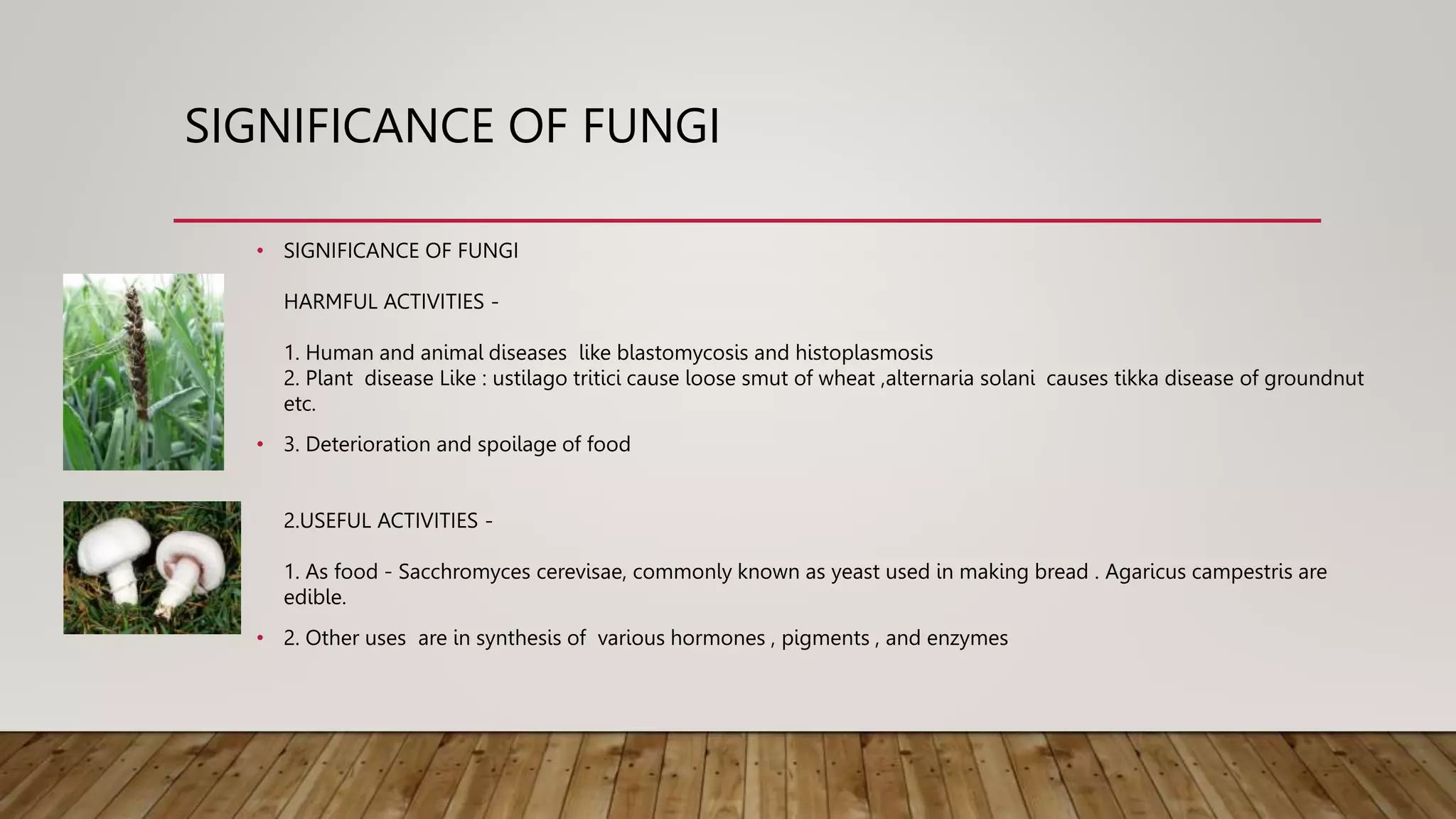
2. Plant disease Like : ustilago tritici cause loose smut of wheat ,alternaria solani causes tikka disease of groundnut
etc.
• 3. Deterioration and spoilage of food
2.USEFUL ACTIVITIES -
1. As food - Sacchromyces cerevisae, commonly known as yeast used in making bread . Agaricus campestris are
edible.
• 2. Other uses are in synthesis of various hormones , pigments , and enzymes
ASCOMYCOTINA
• Ascomycota is a phylum of the kingdom Fungi that, together with the Basidiomycota, forms the
subkingdom Dikarya. Its members are commonly known as the sac fungi or ascomycetes. It is the largest phylum
of Fungi, with over 64,000 species.[2. It is also known as sac fungi because it contains hollow sac like structure
GENERAL CHARACTERISTICS OF ASCOMYCOTINA
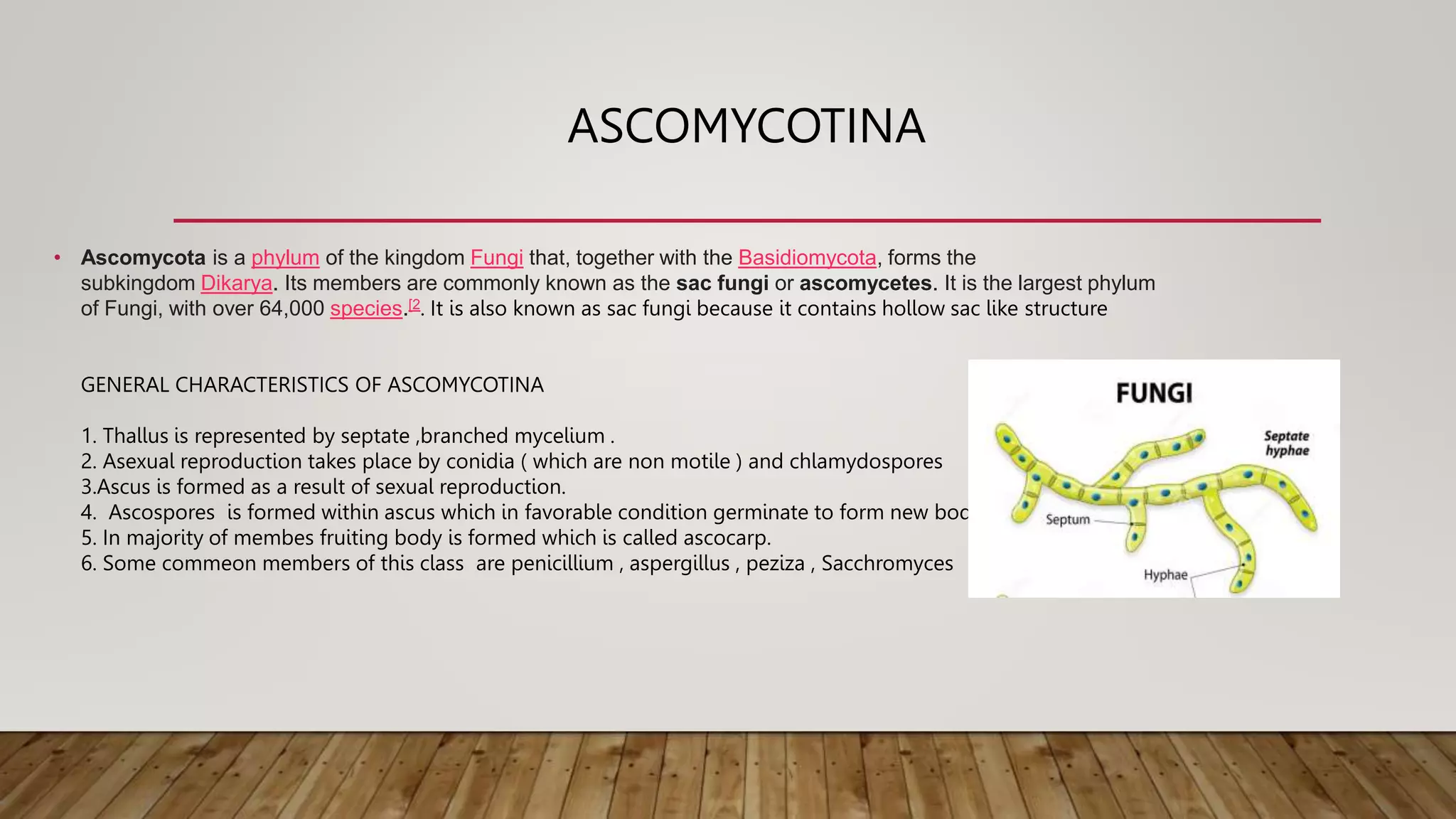
1. Thallus is represented by septate ,branched mycelium .
2. Asexual reproduction takes place by conidia ( which are non motile ) and chlamydospores
3.Ascus is formed as a result of sexual reproduction.
4. Ascospores is formed within ascus which in favorable condition germinate to form new body.
5. In majority of membes fruiting body is formed which is called ascocarp.
6. Some commeon members of this class are penicillium , aspergillus , peziza , Sacchromyces
SIGNIFICANCE OF ASCOMYCOTINA
• The yeasts are used to produce alcoholic beverages and breads. The
mold Penicillium is used to produce the antibiotic penicillin
• . 98% of lichens have an Ascomycota as the fungal part of the lichen.
• Some of the plant pathogenic ascomycetes are apple scab, rice blast, the ergot
fungi, black knot, and the powdery mildews.
• Others, such as morels (a highly prized edible fungi), form
important mycorrhizal relationships with plants, thereby providing enhanced water
and nutrient uptake and, in some cases, protection from insects.
PEZIZA
• Systematic position :
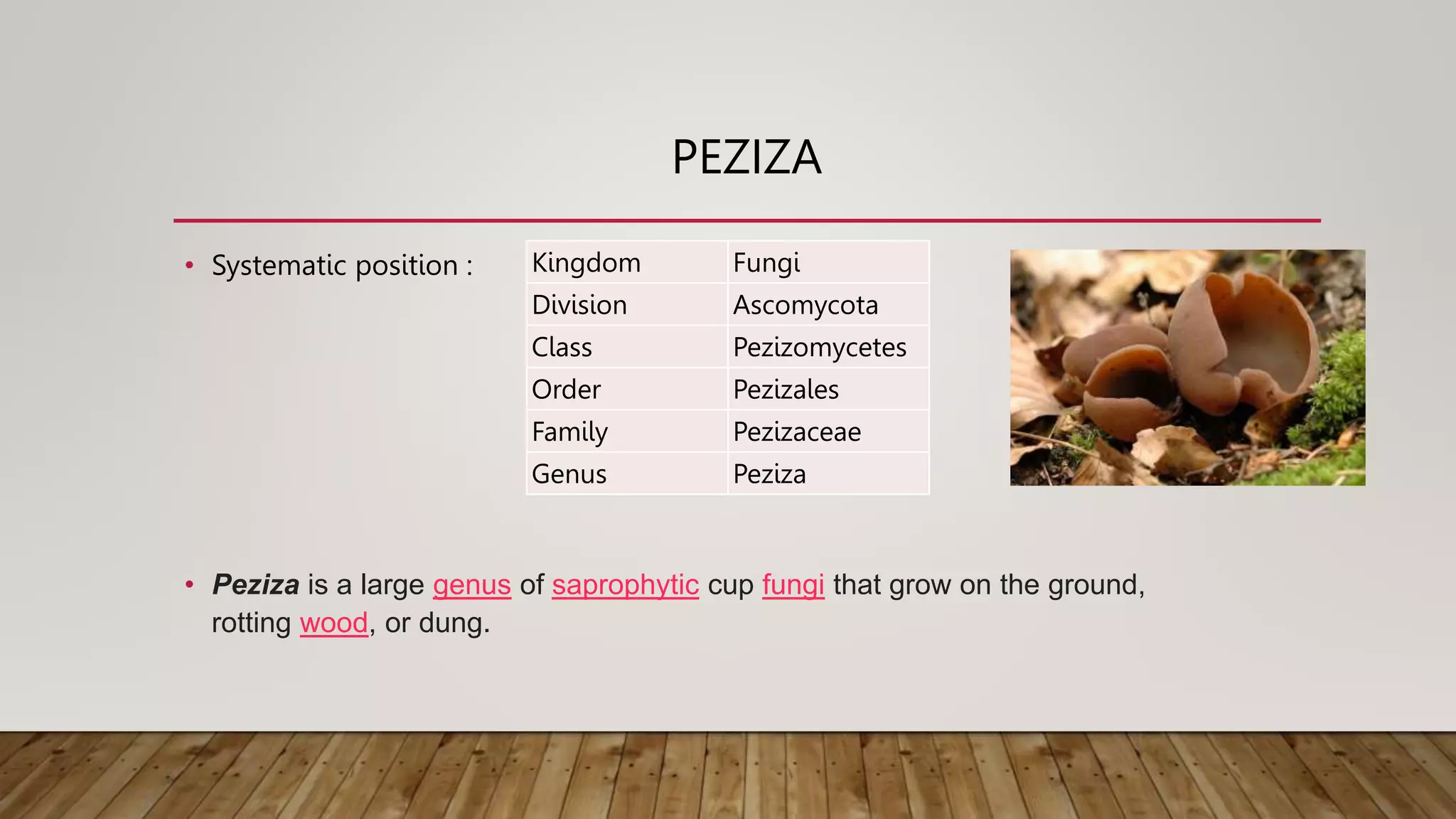
• Peziza is a large genus of saprophytic cup fungi that grow on the ground,
rotting wood, or dung.
Kingdom Fungi
Division Ascomycota
Class Pezizomycetes
Order Pezizales
Family Pezizaceae
Genus Peziza
GENERAL CHARACTERISTICS OF PEZIZA
• It is a coprophilous fungi that is found growing on dung, rotting woods and forest soil rich in humus while some
species also grow on charred and burnt woods.
• The species Peziza vesiculosa is considered poisonous. It has noticeably larger cups.
• The fruiting body of Peziza is known as ascocarp. It is a cup-shaped structure and hence the name cup fungi.
• The mycelium is well developed, and is made up of a thick network of hyphae.
• They are mostly perennial in nature.
• The hyphae is septate and branched and the cells are uninucleate.
• The hyphae are not visible, they usually remain hidden as they form dense and complex networks within the
substratum (dung, wood, humus rich soil) they grow upon.
ASEXUAL REPRODUCTION IN PEZIZA
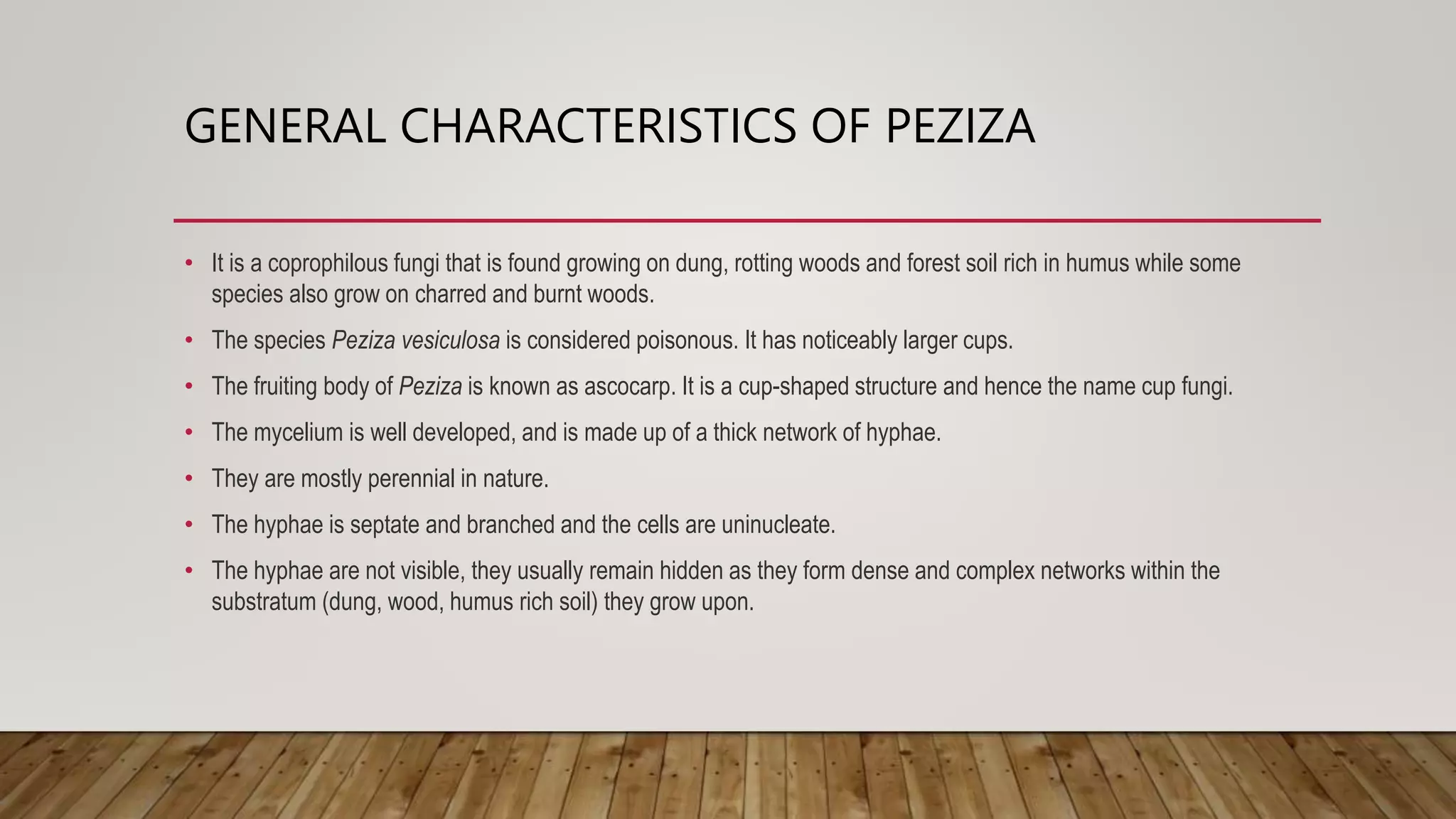
• Asexual reproduction in Peziza takes place by the means of conidia and chlamydospores. The
conidial spores are formed exogenously on the tips of conidiophores. Each spore then germinates
to give rise to a new mycelium.
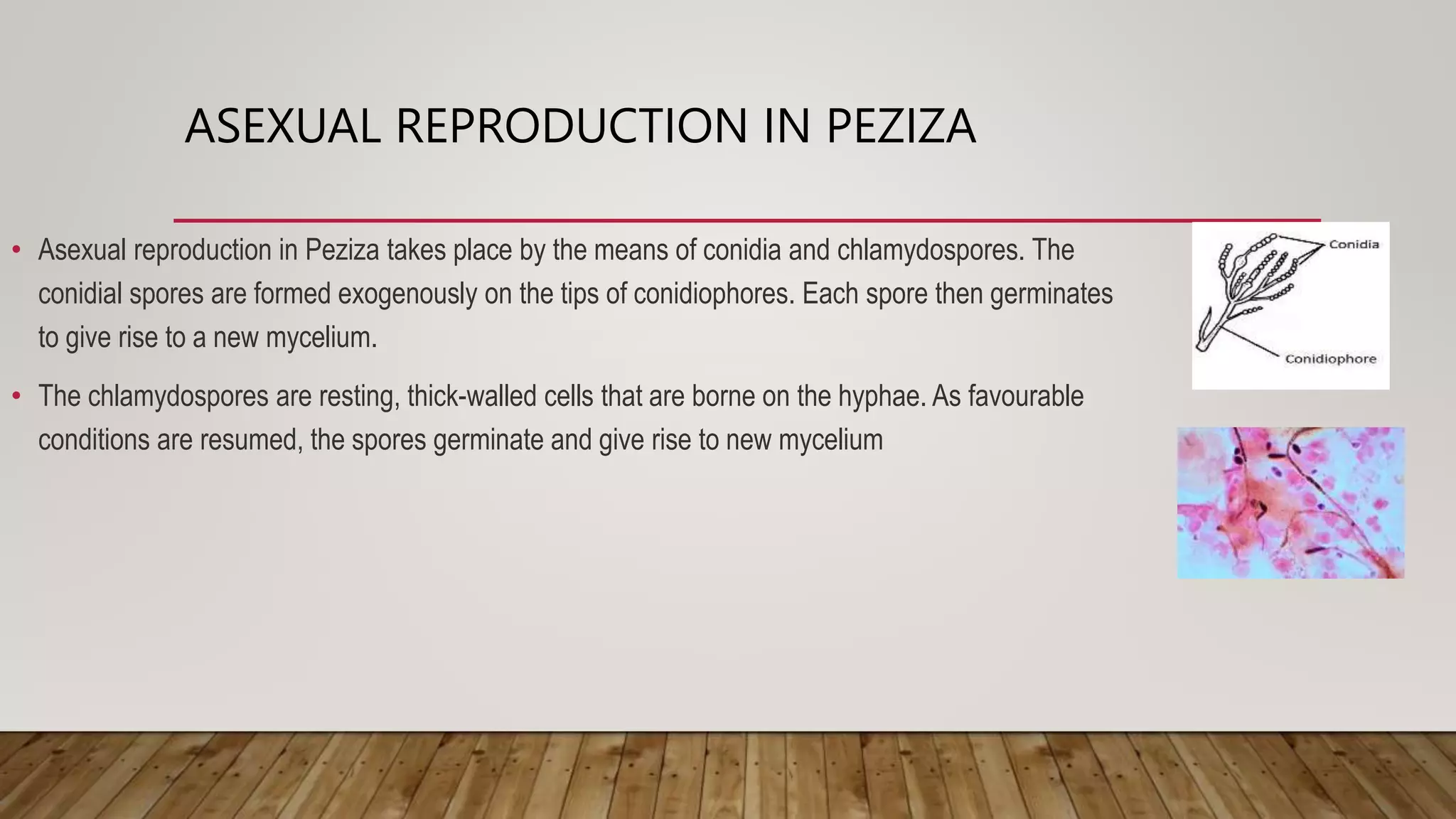
• The chlamydospores are resting, thick-walled cells that are borne on the hyphae. As favourable
conditions are resumed, the spores germinate and give rise to new mycelium
SEXUAL REPRODUCTION IN PEZIZA
• Two vegetative cells Dikaryon (somatogamy) Ascogenous hyphae
• Ascus mother cell two nuclei fuse Synkaryon Ascospores in in ascus.
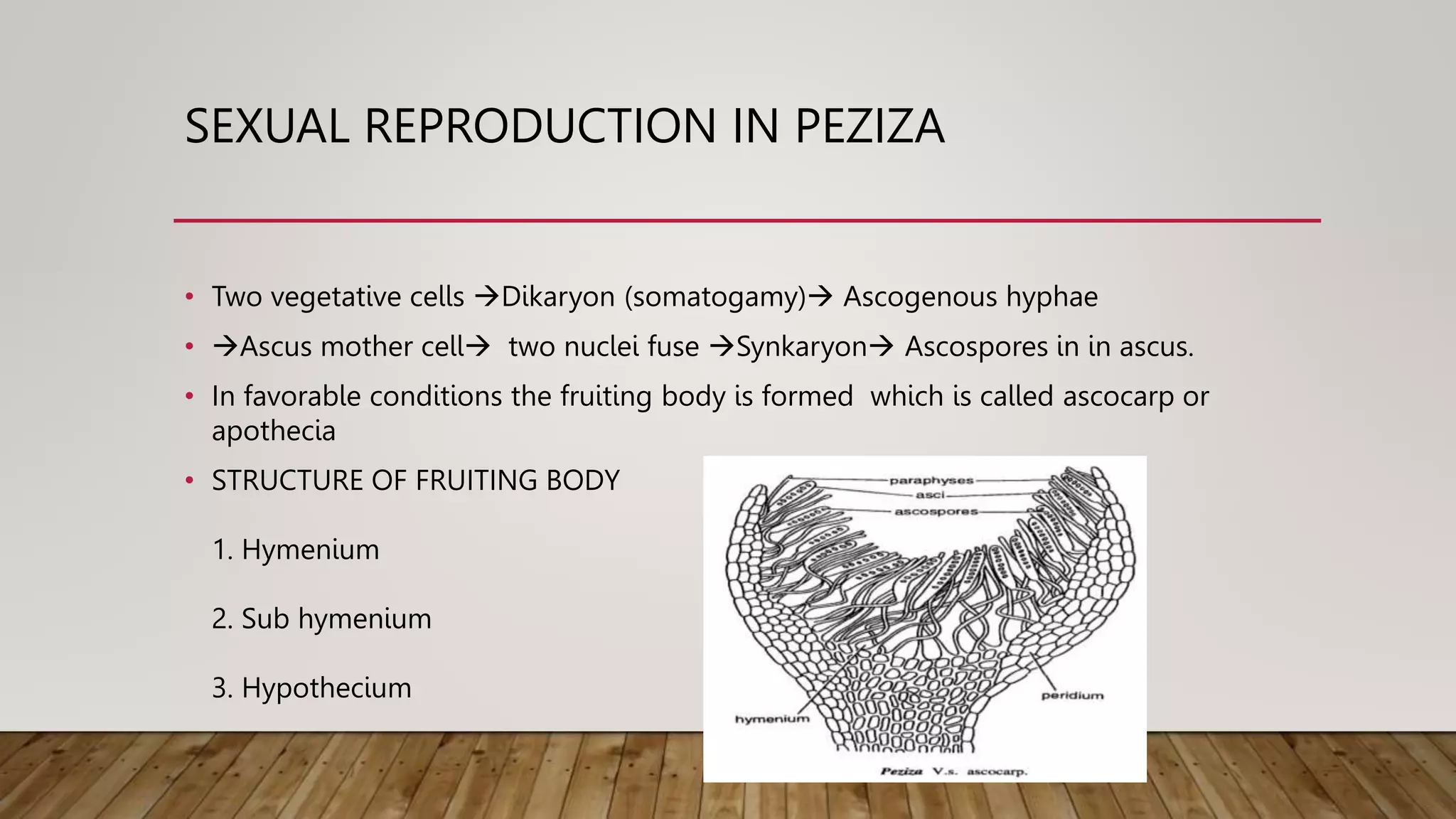
• In favorable conditions the fruiting body is formed which is called ascocarp or
apothecia
• STRUCTURE OF FRUITING BODY
1. Hymenium
2. Sub hymenium
3. Hypothecium
THANK YOU

Presentation.pptx

  • 1.
    GOVT. HOLKAR SCIENCECOLLEGE INDORE TOPIC :- ASCOMYCOTINA AND PEZIZA SUBMITTED BY SUBMITTED TO RISHITA KAHIR PROF. SARIKA MAM
  • 2.
    WHAT ARE FUNGI •Fungi are the organism which lack chlorophyll whose body is made up of net like filaments and are generally saprophytic or parasitic in nature. • 1. The body structure is thallus type i.e. lack root, stem , and leaves. 2. Their body have filamentous structure called hyphae and the group of hyphae is called mycelium. 3.Its wall is made up of fungal cellulose and chitin • 4. Fungi reproduce both sexually and asexually 5. They are found in soil dead decaying matter chapattis' bread pickle jam water In crops as diseases or even in air
  • 3.
    SIGNIFICANCE OF FUNGI •SIGNIFICANCE OF FUNGI HARMFUL ACTIVITIES - 1. Human and animal diseases like blastomycosis and histoplasmosis 2. Plant disease Like : ustilago tritici cause loose smut of wheat ,alternaria solani causes tikka disease of groundnut etc. • 3. Deterioration and spoilage of food 2.USEFUL ACTIVITIES - 1. As food - Sacchromyces cerevisae, commonly known as yeast used in making bread . Agaricus campestris are edible. • 2. Other uses are in synthesis of various hormones , pigments , and enzymes
  • 4.
    ASCOMYCOTINA • Ascomycota isa phylum of the kingdom Fungi that, together with the Basidiomycota, forms the subkingdom Dikarya. Its members are commonly known as the sac fungi or ascomycetes. It is the largest phylum of Fungi, with over 64,000 species.[2. It is also known as sac fungi because it contains hollow sac like structure GENERAL CHARACTERISTICS OF ASCOMYCOTINA 1. Thallus is represented by septate ,branched mycelium . 2. Asexual reproduction takes place by conidia ( which are non motile ) and chlamydospores 3.Ascus is formed as a result of sexual reproduction. 4. Ascospores is formed within ascus which in favorable condition germinate to form new body. 5. In majority of membes fruiting body is formed which is called ascocarp. 6. Some commeon members of this class are penicillium , aspergillus , peziza , Sacchromyces
  • 5.
    SIGNIFICANCE OF ASCOMYCOTINA •The yeasts are used to produce alcoholic beverages and breads. The mold Penicillium is used to produce the antibiotic penicillin • . 98% of lichens have an Ascomycota as the fungal part of the lichen. • Some of the plant pathogenic ascomycetes are apple scab, rice blast, the ergot fungi, black knot, and the powdery mildews. • Others, such as morels (a highly prized edible fungi), form important mycorrhizal relationships with plants, thereby providing enhanced water and nutrient uptake and, in some cases, protection from insects.
  • 6.
    PEZIZA • Systematic position: • Peziza is a large genus of saprophytic cup fungi that grow on the ground, rotting wood, or dung. Kingdom Fungi Division Ascomycota Class Pezizomycetes Order Pezizales Family Pezizaceae Genus Peziza
  • 7.
    GENERAL CHARACTERISTICS OFPEZIZA • It is a coprophilous fungi that is found growing on dung, rotting woods and forest soil rich in humus while some species also grow on charred and burnt woods. • The species Peziza vesiculosa is considered poisonous. It has noticeably larger cups. • The fruiting body of Peziza is known as ascocarp. It is a cup-shaped structure and hence the name cup fungi. • The mycelium is well developed, and is made up of a thick network of hyphae. • They are mostly perennial in nature. • The hyphae is septate and branched and the cells are uninucleate. • The hyphae are not visible, they usually remain hidden as they form dense and complex networks within the substratum (dung, wood, humus rich soil) they grow upon.
  • 8.
    ASEXUAL REPRODUCTION INPEZIZA • Asexual reproduction in Peziza takes place by the means of conidia and chlamydospores. The conidial spores are formed exogenously on the tips of conidiophores. Each spore then germinates to give rise to a new mycelium. • The chlamydospores are resting, thick-walled cells that are borne on the hyphae. As favourable conditions are resumed, the spores germinate and give rise to new mycelium
  • 9.
    SEXUAL REPRODUCTION INPEZIZA • Two vegetative cells Dikaryon (somatogamy) Ascogenous hyphae • Ascus mother cell two nuclei fuse Synkaryon Ascospores in in ascus. • In favorable conditions the fruiting body is formed which is called ascocarp or apothecia • STRUCTURE OF FRUITING BODY 1. Hymenium 2. Sub hymenium 3. Hypothecium
  • 10.