Colony Management
Beginning Beekeeping
January 15, 2015
Instructor: Rick Bledsoe
Management of Newly Established
Colonies in Spring
- New colonies from packages, nucs, splits or swarms
- Feed: 1:1 syrup
-they don't have stores
-stimulates comb building and
brood rearing
When feeding:
- restrict entrance
- good idea whenever feeding
- small colony less able to defend against robbers
- make sure they have space to expand--add hive
bodies/supers
Swarming
- Natural impulse to propagate species
- triggered by "feeling" hive can go on with
half the bees
- plenty of honey stores
- queen runs out of space to lay
- decreased laying-->decreased queen
pheromone--bees sense this, build
“swarm cells”
Swarm Management
Swarming
- bees fill up on honey
- old queen and half of bees leave, settle
nearby, send out scouts
- usually mid to late morning (can be
early afternoon)
- may stay 30 minutes to 3 days
* Swarms are bad: drop in population,
honey production, after-swarms
Bees make queen cups/cells:
Swarm Management
Important to differentiate between
swarm cells and supercedure cells
May see increase in drones/drone cells
Swarm Management
May see increase in drones/drone cells
Swarm Management
Swarm Prevention
Checkerboarding:
Swarm Prevention
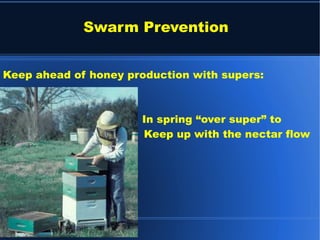
Keep ahead of honey production with supers:
In spring “over super” to
Keep up with the nectar flow
Swarm Prevention
Artificial swarm-split :
1- Move queen, one frame
each of sealed brood and
honey to nuc.
Swarm Prevention
Artificial swarm-split :
1- Move queen, one frame 2- Move nuc
each of sealed brood and (ideally over 2 miles)
honey to nuc.
3- Remove all swarm cells from original hive and
install new queen OR leave frame with swarm cell or
eggs for bees to make new queen
Swarm Prevention
Artificial swarm-split :
-- Original hive thinks a swarm occured
-- You get a new hive without setting back original
hive
-- Note: you must remove extra queen cells from
original hive—destroy or use to make
additional nucs/hives
Swarm Prevention
1) Exchanging their positions with strong colonies in
the same yard:
Strengthen weak colonies by:
2) adding sealed brood from strong disease-free
colonies
Late Spring & Summer
Management
- continue to check for queen cells
- check for failing queen
Late Spring and Summer Management
Give plenty of room by adding supers
- when super 1/2 - 2/3 full, add another
- nectar high % water, need more space to dry it
- open comb stimulates nectar gathering
Late Spring and Summer Management
Fall
Management
Goal: prepare bees to get through winter (bees
are always preparing for winter)
- "under super" -- consolidate hive, brood in bottom
- treat for mites if needed
- remove queen excluders
Fall Management
Why requeen?
-- first year queen is less likely to swarm
-- improve genetics for desired traits
(VSH, improved honey production, better
wintering or just mean bees)
-- replace failing queen
-- break in brood cycle
- brood disease
- decrease varroa
Requeening
Spring vs fall
- Spring
- first year queen less likely to swarm
- easier to find queen due to lower population
- nectar flow leads to better acceptance of
new queen
- may only be able to get "southern" queens
Requeening
- Fall
- better choice of queen sources
- if you requeen late in year, may not get a second
chance
- may be fewer drones available
- may not have good nectar flow, more problems
with acceptance
- late queens less likely to swarm next spring
Requeening
How to requeen
- find old queen and remove (be sure you have
replacement available)
- insert queen cage with candy plug--recheck in a
week
Requeening
- more likely during dearth
- small and weak colonies more susceptible
Robbing
Prevention is important
- do not open hives during dearth
- entrance reducers when feeding (screen works
better)
- do not open-feed close to hives
Robbing
Robber screens/entrance reducers
Robbing
- water
- pollen
- Proteins, vitamins,
minerals, and fats
- nectar/honey
Feeding
Supplemental feeding
- spring: 1:1 syrup
- fall:
- 2:1 syrup
(must be above 50F)
- solid sugar
- fondant/sugar cakes
- mountain camp/or pour on inner cover
Feeding
“Mountain Camp”
Method
Newspaper placed
directly on top bars
with sugar on top
Sugar Cakes
2 cups sugar
¼ cup water
1. Pour sugar in
container
2. Add water—just
enough to make it lumpy;
too much and it won't set
up
3. Microwave 1 minute—
Caution: HOT
4. Allow to cool and pop
out of mold
Supplemental feeding (continued)
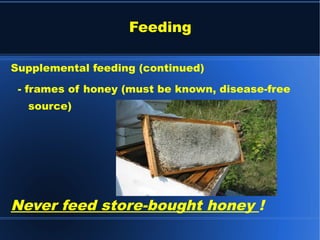
- frames of honey (must be known, disease-free
source)
Never feed store-bought honey !
Feeding
Early Spring Management of
Overwintered Colonies
- check periodically over winter for hive weight
- most hives starve in February, March
- do not open hive below 40F
- be ready for emergency feeding
- consider feeding pollen patties
- clean up and seal any deadouts;
try to determine why died
Early Spring Management of
Overwintered Colonies
Temperature for checking hive
Early Spring Management of
Overwintered Colonies
"Spring cleaning"
- bottom board
- damaged frames,
old comb (4 years)
Early Spring Management of
Overwintered Colonies
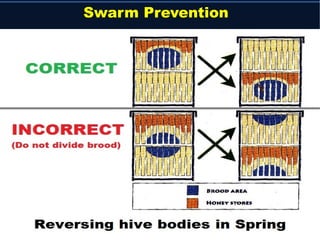
Reverse hive bodies
- wait until warm
- keep brood in cluster formation
Be mindful of pests & disease, particularly nosema
and varroa
Early Spring Management of
Overwintered Colonies
- even split (aka side-by-side split): take hive
and divide up equally. In a week switch them.
Making Splits or Increases
Walk away split:
- take 1 frame of eggs
- 2 frames of emerging brood
- 2 frames of pollen and honey
- put in a 5 frame nuc
- shake in some extra nurse bees (be sure not to
get the queen)
- put the cover on and walk away
- check in 4 weeks to see if the queen is laying
Making Splits or Increases
Things to remember about splits:
- both hives must have a queen or resources to make
one
- both need adequate supply of honey and pollen to
feed the brood and themselves
- make sure both hives have adequate number of
bees
- keep brood frames together
- “you can raise bees or make honey, but not both”
Making Splits or Increases
Summary
- Bees always preparing for winter
- Bees will swarm—manage them to your gain
- Take your losses in the fall
- From time to time you will have to make splits and
combine hives
- Drawn comb is valuable—protect it
Colony management pdf

Colony management pdf

  • 1.
    Colony Management Beginning Beekeeping January15, 2015 Instructor: Rick Bledsoe
  • 2.
    Management of NewlyEstablished Colonies in Spring - New colonies from packages, nucs, splits or swarms - Feed: 1:1 syrup -they don't have stores -stimulates comb building and brood rearing
  • 6.
    When feeding: - restrictentrance - good idea whenever feeding - small colony less able to defend against robbers - make sure they have space to expand--add hive bodies/supers
  • 7.
  • 8.
    - Natural impulseto propagate species - triggered by "feeling" hive can go on with half the bees - plenty of honey stores - queen runs out of space to lay - decreased laying-->decreased queen pheromone--bees sense this, build “swarm cells” Swarm Management
  • 9.
    Swarming - bees fillup on honey - old queen and half of bees leave, settle nearby, send out scouts - usually mid to late morning (can be early afternoon) - may stay 30 minutes to 3 days * Swarms are bad: drop in population, honey production, after-swarms
  • 11.
    Bees make queencups/cells: Swarm Management
  • 12.
    Important to differentiatebetween swarm cells and supercedure cells
  • 16.
    May see increasein drones/drone cells Swarm Management
  • 17.
    May see increasein drones/drone cells Swarm Management
  • 18.
  • 19.
  • 20.
    Keep ahead ofhoney production with supers: In spring “over super” to Keep up with the nectar flow Swarm Prevention
  • 21.
    Artificial swarm-split : 1-Move queen, one frame each of sealed brood and honey to nuc. Swarm Prevention
  • 22.
    Artificial swarm-split : 1-Move queen, one frame 2- Move nuc each of sealed brood and (ideally over 2 miles) honey to nuc. 3- Remove all swarm cells from original hive and install new queen OR leave frame with swarm cell or eggs for bees to make new queen Swarm Prevention
  • 23.
    Artificial swarm-split : --Original hive thinks a swarm occured -- You get a new hive without setting back original hive -- Note: you must remove extra queen cells from original hive—destroy or use to make additional nucs/hives Swarm Prevention
  • 24.
    1) Exchanging theirpositions with strong colonies in the same yard: Strengthen weak colonies by:
  • 25.
    Strengthen weak coloniesby: 2) adding sealed brood from strong disease-free colonies
  • 27.
    Late Spring &Summer Management
  • 28.
    - continue tocheck for queen cells - check for failing queen Late Spring and Summer Management
  • 31.
    Give plenty ofroom by adding supers - when super 1/2 - 2/3 full, add another - nectar high % water, need more space to dry it - open comb stimulates nectar gathering Late Spring and Summer Management
  • 32.
  • 33.
    Goal: prepare beesto get through winter (bees are always preparing for winter) - "under super" -- consolidate hive, brood in bottom - treat for mites if needed - remove queen excluders Fall Management
  • 34.
    Why requeen? -- firstyear queen is less likely to swarm -- improve genetics for desired traits (VSH, improved honey production, better wintering or just mean bees) -- replace failing queen -- break in brood cycle - brood disease - decrease varroa Requeening
  • 35.
    Spring vs fall -Spring - first year queen less likely to swarm - easier to find queen due to lower population - nectar flow leads to better acceptance of new queen - may only be able to get "southern" queens Requeening
  • 36.
    - Fall - betterchoice of queen sources - if you requeen late in year, may not get a second chance - may be fewer drones available - may not have good nectar flow, more problems with acceptance - late queens less likely to swarm next spring Requeening
  • 37.
    How to requeen -find old queen and remove (be sure you have replacement available) - insert queen cage with candy plug--recheck in a week Requeening
  • 38.
    - more likelyduring dearth - small and weak colonies more susceptible Robbing
  • 40.
    Prevention is important -do not open hives during dearth - entrance reducers when feeding (screen works better) - do not open-feed close to hives Robbing
  • 41.
  • 42.
    - water - pollen -Proteins, vitamins, minerals, and fats - nectar/honey Feeding
  • 43.
    Supplemental feeding - spring:1:1 syrup - fall: - 2:1 syrup (must be above 50F) - solid sugar - fondant/sugar cakes - mountain camp/or pour on inner cover Feeding
  • 44.
  • 45.
    Sugar Cakes 2 cupssugar ¼ cup water 1. Pour sugar in container 2. Add water—just enough to make it lumpy; too much and it won't set up 3. Microwave 1 minute— Caution: HOT 4. Allow to cool and pop out of mold
  • 46.
    Supplemental feeding (continued) -frames of honey (must be known, disease-free source) Never feed store-bought honey ! Feeding
  • 47.
    Early Spring Managementof Overwintered Colonies
  • 48.
    - check periodicallyover winter for hive weight - most hives starve in February, March - do not open hive below 40F - be ready for emergency feeding - consider feeding pollen patties - clean up and seal any deadouts; try to determine why died Early Spring Management of Overwintered Colonies
  • 49.
    Temperature for checkinghive Early Spring Management of Overwintered Colonies
  • 50.
    "Spring cleaning" - bottomboard - damaged frames, old comb (4 years) Early Spring Management of Overwintered Colonies
  • 51.
    Reverse hive bodies -wait until warm - keep brood in cluster formation Be mindful of pests & disease, particularly nosema and varroa Early Spring Management of Overwintered Colonies
  • 53.
    - even split(aka side-by-side split): take hive and divide up equally. In a week switch them. Making Splits or Increases
  • 54.
    Walk away split: -take 1 frame of eggs - 2 frames of emerging brood - 2 frames of pollen and honey - put in a 5 frame nuc - shake in some extra nurse bees (be sure not to get the queen) - put the cover on and walk away - check in 4 weeks to see if the queen is laying Making Splits or Increases
  • 55.
    Things to rememberabout splits: - both hives must have a queen or resources to make one - both need adequate supply of honey and pollen to feed the brood and themselves - make sure both hives have adequate number of bees - keep brood frames together - “you can raise bees or make honey, but not both” Making Splits or Increases
  • 56.
    Summary - Bees alwayspreparing for winter - Bees will swarm—manage them to your gain - Take your losses in the fall - From time to time you will have to make splits and combine hives - Drawn comb is valuable—protect it