Opioids
By Muneeb Khan
Lecturer at Institute of Health Care Management and Development Peshawar.
Overview
 Management of pain is one of clinical medicines greatest challenges
 Pain is defined as an unpleasant sensation that can either be acute or chronic and is a
consequence of complex neuromuscular process in the peripheral and central nervous system.
 It is subjective and the clinician must rely on the patient’s perception and description of pain.
 Alleviation of pain depends on the type of pain nociceptive or neuropathic pain for example,
with mild to moderate arthritic pain (nociceptive) non steroidal anti-inflammatory (NSAIDs)
agents are mostly effective.
 Neuropathic pain can be treated with opioids some situation require higher doses Some time
better response to anticonvulsant, tricyclic anti depressant or serotonin/norepinephrine
reuptake inhibitors.
 However, for severe or chronic malignant or nonmalignant pain, opioid are considered part of
the treatment plan in select patient.
Opioids
 Opioids include opiates, an older term that refers to such drugs derived from opium, including
morphine itself.
 The terms opiate and narcotic are sometimes encountered as synonyms for opioid Opiate is
properly limited to the natural alkaloids found in the resin of the opium poppy although some
include semi-synthetic derivatives.
 These agents are divided into chemical classes based on their chemical structure. Clinically this is
helpful in identifying opioid that have a greater chance of cross-sensitivity in a patient with an
allergic to particular opioid.
 All opioids act by binding to specific opioid receptor in the CNS to produce effect that mimic the
action of endogenous peptide neurotransmitter for example, Endorphins Enkephalins, and
dynorphins.
 Although the opioids have a broad range of effects their primary use is to relieve intense pain
whether that pain result from surgery, injury or chronic disease.
 Unfortunately, widespread availability of opioids has led to abuse of those agents with euphoric
properties.
 Antagonist that reverse the actions of opioid are also clinically important for use in the care of
overdose.
Opioid receptor
 Opioid receptors are a group of inhibitory G protein-coupled receptors with opioids as ligands.
 The endogenous opioids are dynorphins, Enkephalins, endorphins, endomorphins and
nociception. The opioid receptors are ~ 40% identical to somatostatin receptors (SSTRs). Opioid
receptors are distributed widely in the brain, in the spinal cord, on peripheral neurons, and
digestive tract.
 The major effect of the opioids are mediated by three receptor families, Which are commonly
designated as µ (mu), κ (Kappa), and δ delta.
 Each family exhibit a different specificity for the drugs it binds.
 The analgesic properties of the opioids are primarily mediated by the µ receptor that modulate
responses to thermal, mechanical, and chemical nociception
 The k receptors in the dorsal horn also contribute to analgesia by modulating the responses to
chemical and thermal nociception.
 The encephalin interact more selectively with δ Delta receptor in the periphery.
Opioid Receptors..
 All three opioid receptor are member of the G protein-coupled receptor family and inhibit
adenylyl cyclase. They are all associated with ion channels increase postsynaptic K+ efflux
(hyperpolarization) or reducing presynaptic Ca+ influx thus impeding neuronal firing and
transmitter release.
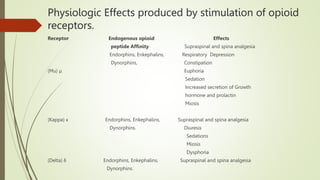
Physiologic Effects produced by stimulation of opioid
receptors.
Receptor Endogenous opioid Effects
peptide Affinity Supraspinal and spina analgesia
Endorphins, Enkephalins, Respiratory Depression
Dynorphins, Constipation
(Mu) µ Euphoria
Sedation
Increased secretion of Growth
hormone and prolactin
Miosis
(Kappa) κ Endorphins, Enkephalins, Supraspinal and spina analgesia
Dynorphins. Diuresis
Sedations
Miosis
Dysphoria
(Delta) δ Endorphins, Enkephalins, Supraspinal and spina analgesia
Dynorphins.
Opioid Classification
Origin of Opioids
 Natural
Morphine
Codeine
 Semisynthetic
Hydromorphone
Hydrocodone
Oxycodone
Oxymorphone
 Synthetic
Fentanyl
Meperidine
Methadone
Tapentadol
Tramadol
Chemical classes of Opioids
 Phenanthrenes Action on Opioid Receptors
Morphine Agonist
Codeine Agonist
Oxycodone Agonist
Oxymorphone Agonist
Hydromorphone Agonist
Hydracodone Agonist
Buphrenorphine Partial Agonist
Nalbuphine Mixed Agonist / Antagonist
Butorphanol Mixed Agonist / Antagonist
 Benzmorphan
Pentazocine Mixed Agonist / Antagonist
Chemical classes of Opioids…
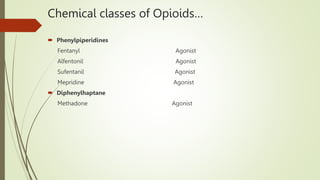
 Phenylpiperidines
Fentanyl Agonist
Alfentonil Agonist
Sufentanil Agonist
Mepridine Agonist
 Diphenylhaptane
Methadone Agonist
Opioid Agonists
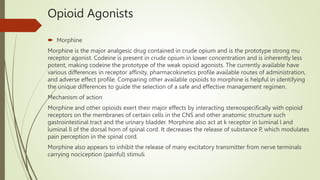
 Morphine
Morphine is the major analgesic drug contained in crude opium and is the prototype strong mu
receptor agonist. Codeine is present in crude opium in lower concentration and is inherently less
potent, making codeine the prototype of the weak opioid agonists. The currently available have
various differences in receptor affinity, pharmacokinetics profile available routes of administration,
and adverse effect profile. Comparing other available opioids to morphine is helpful in identifying
the unique differences to guide the selection of a safe and effective management regimen.
Mechanism of action
Morphine and other opioids exert their major effects by interacting stereospecifically with opioid
receptors on the membranes of certain cells in the CNS and other anatomic structure such
gastrointestinal tract and the urinary bladder. Morphine also act at k receptor in luminal l and
luminal ll of the dorsal horn of spinal cord. It decreases the release of substance P, which modulates
pain perception in the spinal cord.
Morphine also appears to inhibit the release of many excitatory transmitter from nerve terminals
carrying nociception (painful) stimuli
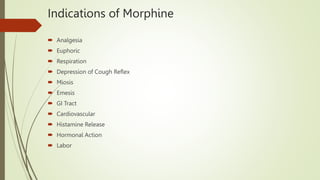
Indications of Morphine
 Analgesia
 Euphoric
 Respiration
 Depression of Cough Reflex
 Miosis
 Emesis
 GI Tract
 Cardiovascular
 Histamine Release
 Hormonal Action
 Labor
Actions of Morphine
 Analgesia
Morphine and other opioids cause analgesia ( relief of pain without the loss of consciousness) and
relive pain both by raising the pain threshold at the spinal cord level and altering the brain
perception of pain.
 Euphoria
Morphine produce a powerful sense of contentment and well-being.
Euphoria may be caused by disinhibition of the dopamine-containing neurons of the ventral
tegmental area
 Respiration
Morphine causes respiration depression by reduction of the sensitivity of respiratory center neurons
to carbon dioxide. This can occur with ordinary doses of morphine in patients who are opioid naïve
and can be accentuated as the dose is increased until ultimately respiration ceases. Respiratory
depression is the most common cause of death in acute opioid overdose.
 Depression of Cough reflex
Both morphine and codeine have antitussive properties. In general does not closely correlate with
the analgesic and respiratory depressant properties of the opioid drugs. The receptors involved in
the antitussive action appear to be different from those involved in analgesia.
 Miosis
The pinpoint pupil characteristic of morphine use result from stimulation of mu and kappa
receptors.
All morphine abuse demonstrate pinpoint pupils.
 Emesis
Morphine directly stimulates the chemoreceptor trigger zone in the area postrema that cause
vomiting.
 Gastrointestinal tract , Diarrhea reliever
Morphine relieve diarrhea by decreasing the motility and increasing the tone of the intestinal
circular smooth muscle.
Morphine also Increases the tone of the anal sphincter.
Overall morphine and other opioid produce constipation.
A nonprescription laxative combination of the stool softener docusate with the stimulant laxative
Senna is useful to treat opioid induced constipation.
 Cardiovascular
Morphine has no major effects on the blood pressure or heart rate at lower dosages with larger
doses hypotension and bradycardia may occur.
Because of respiratory depression and carbon dioxide retention cerebral vessels dilate and increase
cerebrospinal fluid pressure. Therefore morphine is usually contraindicated in individual with head
trauma or severe brain injury.
 Histamine release
Morphine release histamine from mast cells causing urticaria, sweating, and vasodilation.
Morphine should be used with caution in patient with asthma because it can cause
bronchoconstriction.
 Hormonal actions
Morphine increase growth hormone release and enhance prolactin secretion. It increases antidiuretic
hormone and leads to urinary retention.
 Labor
Morphine may prolong the second stage of labor by transiently decreasing the strength duration
and frequency of uterine contractions.
Codeine
 Codeine
Codeine is a naturally occurring opioid that Is a weak analgesic compared to morphine.
It should be used for mild to moderate pain. The analgesic action of codeine are derived from its
conversion to morphine by the CYP450 2D6 enzyme system.
Drugs interaction associated with the CYP50 2D6 enzyme system may alter the efficiency of
codeine
Codeine is commonly used in combination with acetaminophen for management of pain.
Codeine exhibits good antitussive activity at doses that do not cause analgesia.
In most nonprescription cough preparation codeine has been replaced by drugs such as
dextromethorphan a synthetic cough depressant that has relatively no analgesic action and a
relatively low potential for abuse in usual antitussive doses.
Oxycodone and Oxymorphone
 Oxycodone
It is a semisynthetic derivative of morphine.it is orally active and is sometime formulated with aspirin or
acetaminophen.
Its oral analgesic effect is approximately twice that of morphine.
It is metabolized via the CYP450 2D6 and 3A4 enzyme systems and excreted via kidney
Abused of the sustained release preparation ingestion of crushed tablet has been implicated many deaths
 Oxymorphone
It is semisynthetic opioid analgesic when given parentally it is approximately ten times more potent than
morphine.
The oral formulation has relative lower potency and is about three times more potent than morphine
Oxymorphone is available in both immediate acting and extended release oral formulation.
This agent has no clinically relevant drugs-drugs interaction associated with CYP450 enzyme system,
Pain relief after injection begins after about 5–10 minutes, after oral administration it begins after about
30 minutes, and lasts about 3–4 hours for immediate-release tablets and 12 hours for extended-release
tablets.
Hydromorphone and Hydrocodone
 Hydromorphone
Hydromorphone, also known as dihydromorphinone, and sold under the brand name Dilaudid
among others, is an opioid used to treat moderate to severe pain. Hydromorphone and
Hydrocodone are orally active, semisynthetic analogs of morphine and codeine respectively oral
hydromorphone is approximately 8 to 10 times more potent than morphine. It is preferred over
morphine in patients with renal dysfunction due to less accumulation of active metabolites. It may
be used by mouth or by injection into a vein, muscle, or under the skin.[4] Effects generally begin
within half an hour and last for up to five hours.
 Hydrocodone
Hydrocodone is methyl ether of hydromorphone but is a weaker analgesic than hydromorphone
with an oral analgesic efficiency comparable to that of morphine.
This agent is often combined with acetaminophen or ibuprofen to treat moderate to severe pain. It
is also used as an antitussive
Hydrocodone is metabolized in the liver via the action of CYP450 2D6 metabolism to hydrocodone
can be affected by drug-drug interaction.
Fentanyl, Sufentanil, and Remifentanil,
 Fentanyl
Fentanyl a synthetic opioid chemically related to meperidine, has 100 fold the analgesic potency of
morphine and is used for anesthesia. Fentanyl is combined with local anesthetics to provide
epidural analgesia for labor and postoperative pain. Fentanyl is used I/V in anesthesia for its
analgesic for its analgesic and sedative effects.
The oral transmucosal preparation is used in the treatment of cancer patients with breakthrough
pain who are tolerated to opioids.
 Sufentanil, Alfentanil , and Remifentanil
Sufentanil Alfentanil and remifentnil are three Synthetic opioid agonist related to fentanyl.
They differ in potency and metabolic deposition. Sufentanil is more potent than fentanyl whereas
the other two are less potent and short acting these agent are mainly used for their analgesic and
sedative properties during surgical procedures requiring anesthesia.
Methadone, Meperidine
 Methadone
Methadone is a synthetic, Orally effective opioid that has variable equianalgesic potency compared to that
of morphine, methadone induces less euphoria and has a longer duration of action
The action of methadone are mediated by mu receptor. In addition methadone is an antagonist of the N-
methyl-D-aspartate (NMDA) receptor and a norepinephrine and serotonin reuptake inhibitor. Thus it has
efficiency in the treatment of both nociception and neuropathic pain.
Methadone is used in the controlled withdrawal of dependent opioid and heroin abuser.
Methadone is readily absorbed following oral administration, is biotransformed In the liver and is excreted
almost exclusively in feces.
 Mepridine
Mepridine is a lower-potency synthetic opioid structurally unrelated to morphine.
It is used for acute pain and acts primarily as k agonist with some μ agonist activity
The duration of action is slightly shorter than that of the morphine and other opioids.
Due to shorter duration of action and the potential for toxicity Mepridine should only be used for shorter
duration less than 48 hrs.
Partial Agonists and Mixed Agonist-Antagonist
 Buprenorphine
 Pentazocine
 Butorphanol
 Nalbuphine
Buprenorphine, Pentazocine
 Buprenorphine
Buprenorphine is classified as a partial agonist, acting at the μ receptor
It acts like morphine in Naïve patients but it can also precipitate withdrawal in user of morphine or other
full opioid agonists. A major use is in opioid detoxification, because it has shorter and less severe
withdrawal symptoms compared to methadone.
It cause little sedation, respiratory depression or hypotension, even at high doses.
In contrast to methadone which is available only at specialized clinics when used for detoxification or
maintenance.
Buprenorphine is administered sublingually, parentally or transdermally and has a longer duration of
action because of its tightly binding to μ receptor.
Buprenorphine tablets are indicated for the treatment of opioid dependence and are also available in a
combination with naloxone
Naloxone was added to prevent the abuse of buprenorphine via IV administration
The injectable form and once weekly transdermal patch are indicated for the relief of moderate to severe
pain
Buprenorphine is metabolized by the liver and excreted in bile and urine.
Adverse effects include respiratory depression or rarely increased blood pressure nausea and dizziness.
 Pentazocine
Pentazocine acts as an agonist on k receptors and is a weak antagonist μ and δ receptors.
Pentazocine promotes analgesia by activating receptors in the spinal cord and it is used to relieve
moderate pain.
Administered orally or parentally.
Less euphoric compared to morphine
High dose causes respiratory depression and decrease GI motility increase blood pressure can cause
hallucination, nightmare, dysphoria, tachycardia and dizziness.
Pentazocine should be used with caution in patients with angina or coronary artery disease, since it
can increase systemic and pulmonary arterial pressure and thus increase the work of the heart
Nalbuphine, Butorphanol
 Nalbuphine
Nalbuphine is an opioid agonist-antagonist used to treat pain, for pre and postoperative analgesia, and
for analgesia in labor and delivery.
A narcotic used as a pain medication. It appears to be an agonist at kappa opioid receptors and an
antagonist or partial agonist at mu opioid receptors. Nalbuphine is the only opioid analgesic that is not a
controlled substance in the United State
Nalbuphine is indicated for the relief of moderate to severe pain. It can also be used as a supplement to
balanced anesthesia, for preoperative and postoperative analgesia, and for obstetrical analgesia during
labor and delivery. However, a 2014 Cochrane Systematic Review concluded that from the included
studies, there was limited evidence to demonstrate that "0.1 to 0.3mg/kg Nalbuphine compared to
placebo might be an effective postoperative analgesic" for pain treatment in children.
Although Nalbuphine possesses opioid antagonist activity, there is evidence that in nondependent
patients it will not antagonize an opioid analgesic administered just before, concurrently, or just after an
injection. Therefore, patients receiving an opioid analgesic, general anesthetics, phenothiazine's, or other
tranquilizers, sedatives, hypnotics, or other CNS depressants (including alcohol) concomitantly with
Nalbuphine may exhibit an additive effect. When such combined therapy is contemplated, the dose of
one or both agents should be reduced.
Butorphanol
 Butorphanol
Butorphanol is a morphine-type synthetic agonist–antagonist opioid analgesic developed by
Bristol-Myers.
Butorphanol is most closely structurally related to levorphanol. Butorphanol is available as the
tartrate salt in injectable, tablet, and intranasal spray formulations.
The most common indication for butorphanol is management of migraine using the intranasal spray
formulation. It may also be used parenterally for management of moderate-to-severe pain, as a
supplement for balanced general anesthesia, and management of pain during labor. Butorphanol is
also quite effective at reducing post-operative shivering (owing to its Kappa agonist activity).
Butorphanol is more effective in reducing pain in women than in men.
Tapentadol, Tramadol
 Tapentadol
Tapentadol is centrally acting analgesic, is an agonist at the μ opioid receptor and an inhibitor of
norepinephrine reuptake. It has used to manage moderate to severe pain. Both chronic and acute.
Tapentadol is mainly metabolized to inactive metabolites via glucuronidation, and it does not inhibit
or induce the CYP450 enzyme system. Because Tapentadol does not produce active metabolites
dosing adjustment is not necessary in mild to moderate renal impairment
 Tramadol
Tramadol is a centrally acting analgesic that bind to the opioid μ receptor. The drug undergoes
extensively metabolism via CYP450 2D6 leading to an active metabolite with much higher affinity
for the μ opioid receptor than the parent compound. In addition it weakly inhibit reuptake of
norepinephrine and serotonin. It is used to manage moderate to severe pain. Its respiratory
depressant activity is less than that of morphine. Naloxone can only partially reverse the analgesia
produced by tramadol or its active metabolite. Anaphylactic reaction have been reported. Overdose
and tricyclic antidepressants can lead to toxicity manifested by CNS excitation and Seizures. As with
other agents that binds the μ opioid receptor, tramadol has been associated with misuse and abuse.
Side effects of Opioids
 Hypotension
 Dysphoria (anxiety depression or unease)
 Sedation
 Constipation
 Urinary retention
 Nausea
 Potential for addiction
 Respiratory depression
Effects of Opioids
 Hypotension
due to
Peripheral arterial and venous dilation.
Depression of vasomotor center.
Release of histamine.
 Bradycardia
Meperidine is an exception (can result in tachycardia)
 Analgesia
Pain consists of both sensory and affective (emotional) components.
Opioid analgesics reduce both aspects of the pain experience, especially the affective aspect.
In contrast, nonsteroidal anti-inflammatory analgesic drugs have no significant effect on the
emotional aspects of pain.
Effects of Opioids
 Euphoria
intravenous drug users experience a pleasant floating sensation with lessened anxiety and distress
(DA release in nucleus accumbency).
However, dysphoria, an unpleasant state characterized by restlessness and malaise, may sometimes
occur.
 Sedation
Drowsiness
clouding of mentation
little or no amnesia
No motor incoordination
Sleep is induced in the elderly (can be easily aroused from this sleep)
Effects of Opioids
 Respiratory Depression
By inhibiting brainstem respiratory mechanisms.
Alveolar PCO2 may increase, but the most reliable indicator of this depression is a depressed
response to a carbon dioxide challenge.
In individuals with increased intracranial pressure, asthma, chronic obstructive pulmonary disease,
or cor pulmonale, this decrease in respiratory function may not be tolerated.
 Cough Suppression
Opiates The most effective antitussive agents are opioids such as morphine, diamorphine, and
codeine which, in all probability, act both centrally on brainstem opioid receptors and on receptors
located peripherally on sensory nerve endings in the airways.
However, cough suppression by opioids may allow accumulation of secretions and thus lead to
airway obstruction and atelectasis.
Effects of Opioids
 Miosis
Constriction of the pupils
By stimulating Edinger Westphal nucleus of III nerve
Miosis is a pharmacologic action to which little or no tolerance develops
valuable in the diagnosis of opioid overdose.
 Truncal Rigidity
Truncal rigidity reduces thoracic compliance and thus interferes with ventilation.
Truncal rigidity may be overcome by administration of an opioid antagonist, which of course will
also antagonize the analgesic action of the opioid.
Preventing truncal rigidity while preserving analgesia requires the concomitant use of
neuromuscular blocking agents.
Effects Opioids
 Constipation
Opioid receptors exist in high density in the gastrointestinal tract.
constipating effects of the opioids are mediated through an action on the enteric nervous system as
well as the CNS
Gastric secretion of hydrochloric acid is decreased
propulsive peristaltic waves are diminished tone is increased
this delays passage of the fecal mass and allows increased absorption of water, which leads to
constipation
So used in the management of diarrhea
Effects Opioids
 Biliary Tract
sphincter of Oddi may constrict
contract biliary smooth muscle
result in biliary colic
 Renal
Renal function is depressed by opioids
decreased renal plasma flow
enhanced renal tubular sodium reabsorption
Ureteral and bladder tone are increased
Increased sphincter tone may precipitate urinary retention
ureteral colic caused by a renal calculus is made worse by opioid-induced increase in ureteral tone
Effects Opioids
 Uterus
may prolong labor
both peripheral and central actions of the opioids can reduce uterine tone
 Neuroendocrine
stimulate the release of ADH, prolactin, and somatotropin
inhibit the release of luteinizing hormone
 Pruritus
CNS effects and peripheral histamine release may be responsible for these reactions
pruritus and occasionally urticaria (when administered parenterally)
Effects of Opioids
 Miscellaneous
The opioids modulate the immune system by
lymphocyte proliferation
antibody production
chemotaxis
Tolerance and Dependence
 Maintenance of normal sensitivity of receptors requires reactivation by endocytosis and
recycling.
 activation of receptors by endogenous ligands results in endocytosis followed by resensitization
and recycling of the receptor to the plasma membrane.
 But morphine fails to induce endocytosis of the -opioid receptor - tolerance and dependence.
 In contrast, methadone, used for the treatment of opioid tolerance and dependence, does
induce receptor endocytosis
 NMDA receptor ion channel complex play a critical role in tolerance development and
maintenance
 NMDA-receptor antagonists such as ketamine can block tolerance development
Opioid Withdrawal
 Users of hydromorphone may experience painful symptoms if the drug is suspended.[23] Some
people cannot tolerate the symptoms, which results in continuous drug use.[23] Symptoms of
opioid withdrawal are not easy to decipher, as there are differences between drug-seeking
behaviors and true withdrawal effects. Symptoms associated with hydromorphone withdrawal
include:
 Abdominal pain
 Anxiety or panic attacks
 Depression
 Goose bump skin
 Inability to enjoy daily activities
 Muscle and joint pain
 Nausea
 Runny nose and excessive secretion of tears
 Sweating
 Vomiting
Opioid Withdrawal…
 In the clinical setting, excessive secretion of tears, yawning, and dilation of pupils are helpful
presentations in diagnosing opioid withdrawal. Hydromorphone is a rapid acting pain killer;
however, some formulations may last up to several hours. Patients who stop taking this drug
abruptly may experience withdrawal symptoms, which may start within hours of taking the last
dose of hydromorphone, and last up to several weeks. Withdrawal symptoms in people who
stopped taking the opioid may be managed by using opioids or non-opioid adjuncts.
Methadone is an opioid commonly used for this kind of therapy. However, the selection of
therapy should be tailored to each specific person. Methadone also is used for detoxification in
people who have opiate addiction, such as heroin or drugs similar to morphine. It may be given
orally or intramuscularly. There is controversy regarding the use of opioids for people
experiencing withdrawal symptoms, since these agents also may cause relapse on patients when
they suspend therapy. Clonidine is a non-opioid adjunct, which may be used in situations where
opioid use is not desired, such as in patients with high blood pressure
Contraindications and Cautions in Therapy
 Use of Pure Agonists with Weak Partial Agonists
morphine with Pentazocine - risk of diminishing analgesia or even inducing a state of withdrawal
 Use in Patients with Head Injuries
Carbon dioxide retention caused by respiratory depression results in cerebral vasodilation. In patients with
elevated intracranial pressure, this may lead to lethal alterations in brain function. Marked respiratory
depression
Vomiting, Miosis, altered mentation by morphine interferes with assessment of patient condition
 Use during Pregnancy
In pregnant women who are chronically using opioids, the fetus may become physically dependent in
utero and manifest withdrawal symptoms in the early postpartum period. A daily dose as small as 6 mg of
heroin (or equivalent) taken by the mother can result in a mild withdrawal syndrome in the infant, and
twice that much may result in severe signs and symptoms, including irritability, shrill crying, diarrhea, or
even seizures.
When withdrawal symptoms are mild - diazepam
with more severe withdrawal - methadone
 Use in Patients with Impaired Pulmonary Function
opioid analgesics may lead to acute respiratory failure.
 Use in Patients with Impaired Hepatic or Renal Function
morphine and its congeners are metabolized primarily in the liver
Half-life is prolonged in patients with impaired renal function
 Use in Patients with Endocrine Disease
adrenal insufficiency (Addison's disease) and hypothyroidism (myxedema) –
prolonged and exaggerated responses to opioids.
Bibliography
 Essentials of Medical Pharmacology -7th edition by KD Tripathi
 Goodman & Gilman's the Pharmacological Basis of Therapeutics 12th edition by Laurence
Brunton (Editor)
 Lippincott's Illustrated Reviews: Pharmacology - 6th edition by Richard A. Harvey
 Basic and Clinical pharmacology 11th edition by Bertram G Katzung
 Rang & Dale's Pharmacology -7th edition
by Humphrey P. Rang
 Clinical Pharmacology 11th edition By Bennett and Brown, Churchill Livingstone
 Principles of Pharmacology 2nd edition by HL Sharma and KK Sharma
 Review of Pharmacology by Gobind Sparsh
Opioids.pptx

Opioids.pptx

  • 1.
    Opioids By Muneeb Khan Lecturerat Institute of Health Care Management and Development Peshawar.
  • 2.
    Overview  Management ofpain is one of clinical medicines greatest challenges  Pain is defined as an unpleasant sensation that can either be acute or chronic and is a consequence of complex neuromuscular process in the peripheral and central nervous system.  It is subjective and the clinician must rely on the patient’s perception and description of pain.  Alleviation of pain depends on the type of pain nociceptive or neuropathic pain for example, with mild to moderate arthritic pain (nociceptive) non steroidal anti-inflammatory (NSAIDs) agents are mostly effective.  Neuropathic pain can be treated with opioids some situation require higher doses Some time better response to anticonvulsant, tricyclic anti depressant or serotonin/norepinephrine reuptake inhibitors.  However, for severe or chronic malignant or nonmalignant pain, opioid are considered part of the treatment plan in select patient.
  • 3.
    Opioids  Opioids includeopiates, an older term that refers to such drugs derived from opium, including morphine itself.  The terms opiate and narcotic are sometimes encountered as synonyms for opioid Opiate is properly limited to the natural alkaloids found in the resin of the opium poppy although some include semi-synthetic derivatives.  These agents are divided into chemical classes based on their chemical structure. Clinically this is helpful in identifying opioid that have a greater chance of cross-sensitivity in a patient with an allergic to particular opioid.  All opioids act by binding to specific opioid receptor in the CNS to produce effect that mimic the action of endogenous peptide neurotransmitter for example, Endorphins Enkephalins, and dynorphins.  Although the opioids have a broad range of effects their primary use is to relieve intense pain whether that pain result from surgery, injury or chronic disease.  Unfortunately, widespread availability of opioids has led to abuse of those agents with euphoric properties.  Antagonist that reverse the actions of opioid are also clinically important for use in the care of overdose.
  • 4.
    Opioid receptor  Opioidreceptors are a group of inhibitory G protein-coupled receptors with opioids as ligands.  The endogenous opioids are dynorphins, Enkephalins, endorphins, endomorphins and nociception. The opioid receptors are ~ 40% identical to somatostatin receptors (SSTRs). Opioid receptors are distributed widely in the brain, in the spinal cord, on peripheral neurons, and digestive tract.  The major effect of the opioids are mediated by three receptor families, Which are commonly designated as µ (mu), κ (Kappa), and δ delta.  Each family exhibit a different specificity for the drugs it binds.  The analgesic properties of the opioids are primarily mediated by the µ receptor that modulate responses to thermal, mechanical, and chemical nociception  The k receptors in the dorsal horn also contribute to analgesia by modulating the responses to chemical and thermal nociception.  The encephalin interact more selectively with δ Delta receptor in the periphery.
  • 5.
    Opioid Receptors..  Allthree opioid receptor are member of the G protein-coupled receptor family and inhibit adenylyl cyclase. They are all associated with ion channels increase postsynaptic K+ efflux (hyperpolarization) or reducing presynaptic Ca+ influx thus impeding neuronal firing and transmitter release.
  • 6.
    Physiologic Effects producedby stimulation of opioid receptors. Receptor Endogenous opioid Effects peptide Affinity Supraspinal and spina analgesia Endorphins, Enkephalins, Respiratory Depression Dynorphins, Constipation (Mu) µ Euphoria Sedation Increased secretion of Growth hormone and prolactin Miosis (Kappa) κ Endorphins, Enkephalins, Supraspinal and spina analgesia Dynorphins. Diuresis Sedations Miosis Dysphoria (Delta) δ Endorphins, Enkephalins, Supraspinal and spina analgesia Dynorphins.
  • 7.
    Opioid Classification Origin ofOpioids  Natural Morphine Codeine  Semisynthetic Hydromorphone Hydrocodone Oxycodone Oxymorphone  Synthetic Fentanyl Meperidine Methadone Tapentadol Tramadol
  • 8.
    Chemical classes ofOpioids  Phenanthrenes Action on Opioid Receptors Morphine Agonist Codeine Agonist Oxycodone Agonist Oxymorphone Agonist Hydromorphone Agonist Hydracodone Agonist Buphrenorphine Partial Agonist Nalbuphine Mixed Agonist / Antagonist Butorphanol Mixed Agonist / Antagonist  Benzmorphan Pentazocine Mixed Agonist / Antagonist
  • 9.
    Chemical classes ofOpioids…  Phenylpiperidines Fentanyl Agonist Alfentonil Agonist Sufentanil Agonist Mepridine Agonist  Diphenylhaptane Methadone Agonist
  • 10.
    Opioid Agonists  Morphine Morphineis the major analgesic drug contained in crude opium and is the prototype strong mu receptor agonist. Codeine is present in crude opium in lower concentration and is inherently less potent, making codeine the prototype of the weak opioid agonists. The currently available have various differences in receptor affinity, pharmacokinetics profile available routes of administration, and adverse effect profile. Comparing other available opioids to morphine is helpful in identifying the unique differences to guide the selection of a safe and effective management regimen. Mechanism of action Morphine and other opioids exert their major effects by interacting stereospecifically with opioid receptors on the membranes of certain cells in the CNS and other anatomic structure such gastrointestinal tract and the urinary bladder. Morphine also act at k receptor in luminal l and luminal ll of the dorsal horn of spinal cord. It decreases the release of substance P, which modulates pain perception in the spinal cord. Morphine also appears to inhibit the release of many excitatory transmitter from nerve terminals carrying nociception (painful) stimuli
  • 11.
    Indications of Morphine Analgesia  Euphoric  Respiration  Depression of Cough Reflex  Miosis  Emesis  GI Tract  Cardiovascular  Histamine Release  Hormonal Action  Labor
  • 12.
    Actions of Morphine Analgesia Morphine and other opioids cause analgesia ( relief of pain without the loss of consciousness) and relive pain both by raising the pain threshold at the spinal cord level and altering the brain perception of pain.  Euphoria Morphine produce a powerful sense of contentment and well-being. Euphoria may be caused by disinhibition of the dopamine-containing neurons of the ventral tegmental area  Respiration Morphine causes respiration depression by reduction of the sensitivity of respiratory center neurons to carbon dioxide. This can occur with ordinary doses of morphine in patients who are opioid naïve and can be accentuated as the dose is increased until ultimately respiration ceases. Respiratory depression is the most common cause of death in acute opioid overdose.
  • 13.
     Depression ofCough reflex Both morphine and codeine have antitussive properties. In general does not closely correlate with the analgesic and respiratory depressant properties of the opioid drugs. The receptors involved in the antitussive action appear to be different from those involved in analgesia.  Miosis The pinpoint pupil characteristic of morphine use result from stimulation of mu and kappa receptors. All morphine abuse demonstrate pinpoint pupils.  Emesis Morphine directly stimulates the chemoreceptor trigger zone in the area postrema that cause vomiting.  Gastrointestinal tract , Diarrhea reliever Morphine relieve diarrhea by decreasing the motility and increasing the tone of the intestinal circular smooth muscle. Morphine also Increases the tone of the anal sphincter. Overall morphine and other opioid produce constipation. A nonprescription laxative combination of the stool softener docusate with the stimulant laxative Senna is useful to treat opioid induced constipation.
  • 14.
     Cardiovascular Morphine hasno major effects on the blood pressure or heart rate at lower dosages with larger doses hypotension and bradycardia may occur. Because of respiratory depression and carbon dioxide retention cerebral vessels dilate and increase cerebrospinal fluid pressure. Therefore morphine is usually contraindicated in individual with head trauma or severe brain injury.  Histamine release Morphine release histamine from mast cells causing urticaria, sweating, and vasodilation. Morphine should be used with caution in patient with asthma because it can cause bronchoconstriction.  Hormonal actions Morphine increase growth hormone release and enhance prolactin secretion. It increases antidiuretic hormone and leads to urinary retention.  Labor Morphine may prolong the second stage of labor by transiently decreasing the strength duration and frequency of uterine contractions.
  • 15.
    Codeine  Codeine Codeine isa naturally occurring opioid that Is a weak analgesic compared to morphine. It should be used for mild to moderate pain. The analgesic action of codeine are derived from its conversion to morphine by the CYP450 2D6 enzyme system. Drugs interaction associated with the CYP50 2D6 enzyme system may alter the efficiency of codeine Codeine is commonly used in combination with acetaminophen for management of pain. Codeine exhibits good antitussive activity at doses that do not cause analgesia. In most nonprescription cough preparation codeine has been replaced by drugs such as dextromethorphan a synthetic cough depressant that has relatively no analgesic action and a relatively low potential for abuse in usual antitussive doses.
  • 16.
    Oxycodone and Oxymorphone Oxycodone It is a semisynthetic derivative of morphine.it is orally active and is sometime formulated with aspirin or acetaminophen. Its oral analgesic effect is approximately twice that of morphine. It is metabolized via the CYP450 2D6 and 3A4 enzyme systems and excreted via kidney Abused of the sustained release preparation ingestion of crushed tablet has been implicated many deaths  Oxymorphone It is semisynthetic opioid analgesic when given parentally it is approximately ten times more potent than morphine. The oral formulation has relative lower potency and is about three times more potent than morphine Oxymorphone is available in both immediate acting and extended release oral formulation. This agent has no clinically relevant drugs-drugs interaction associated with CYP450 enzyme system, Pain relief after injection begins after about 5–10 minutes, after oral administration it begins after about 30 minutes, and lasts about 3–4 hours for immediate-release tablets and 12 hours for extended-release tablets.
  • 17.
    Hydromorphone and Hydrocodone Hydromorphone Hydromorphone, also known as dihydromorphinone, and sold under the brand name Dilaudid among others, is an opioid used to treat moderate to severe pain. Hydromorphone and Hydrocodone are orally active, semisynthetic analogs of morphine and codeine respectively oral hydromorphone is approximately 8 to 10 times more potent than morphine. It is preferred over morphine in patients with renal dysfunction due to less accumulation of active metabolites. It may be used by mouth or by injection into a vein, muscle, or under the skin.[4] Effects generally begin within half an hour and last for up to five hours.  Hydrocodone Hydrocodone is methyl ether of hydromorphone but is a weaker analgesic than hydromorphone with an oral analgesic efficiency comparable to that of morphine. This agent is often combined with acetaminophen or ibuprofen to treat moderate to severe pain. It is also used as an antitussive Hydrocodone is metabolized in the liver via the action of CYP450 2D6 metabolism to hydrocodone can be affected by drug-drug interaction.
  • 18.
    Fentanyl, Sufentanil, andRemifentanil,  Fentanyl Fentanyl a synthetic opioid chemically related to meperidine, has 100 fold the analgesic potency of morphine and is used for anesthesia. Fentanyl is combined with local anesthetics to provide epidural analgesia for labor and postoperative pain. Fentanyl is used I/V in anesthesia for its analgesic for its analgesic and sedative effects. The oral transmucosal preparation is used in the treatment of cancer patients with breakthrough pain who are tolerated to opioids.  Sufentanil, Alfentanil , and Remifentanil Sufentanil Alfentanil and remifentnil are three Synthetic opioid agonist related to fentanyl. They differ in potency and metabolic deposition. Sufentanil is more potent than fentanyl whereas the other two are less potent and short acting these agent are mainly used for their analgesic and sedative properties during surgical procedures requiring anesthesia.
  • 19.
    Methadone, Meperidine  Methadone Methadoneis a synthetic, Orally effective opioid that has variable equianalgesic potency compared to that of morphine, methadone induces less euphoria and has a longer duration of action The action of methadone are mediated by mu receptor. In addition methadone is an antagonist of the N- methyl-D-aspartate (NMDA) receptor and a norepinephrine and serotonin reuptake inhibitor. Thus it has efficiency in the treatment of both nociception and neuropathic pain. Methadone is used in the controlled withdrawal of dependent opioid and heroin abuser. Methadone is readily absorbed following oral administration, is biotransformed In the liver and is excreted almost exclusively in feces.  Mepridine Mepridine is a lower-potency synthetic opioid structurally unrelated to morphine. It is used for acute pain and acts primarily as k agonist with some μ agonist activity The duration of action is slightly shorter than that of the morphine and other opioids. Due to shorter duration of action and the potential for toxicity Mepridine should only be used for shorter duration less than 48 hrs.
  • 20.
    Partial Agonists andMixed Agonist-Antagonist  Buprenorphine  Pentazocine  Butorphanol  Nalbuphine
  • 21.
    Buprenorphine, Pentazocine  Buprenorphine Buprenorphineis classified as a partial agonist, acting at the μ receptor It acts like morphine in Naïve patients but it can also precipitate withdrawal in user of morphine or other full opioid agonists. A major use is in opioid detoxification, because it has shorter and less severe withdrawal symptoms compared to methadone. It cause little sedation, respiratory depression or hypotension, even at high doses. In contrast to methadone which is available only at specialized clinics when used for detoxification or maintenance. Buprenorphine is administered sublingually, parentally or transdermally and has a longer duration of action because of its tightly binding to μ receptor. Buprenorphine tablets are indicated for the treatment of opioid dependence and are also available in a combination with naloxone Naloxone was added to prevent the abuse of buprenorphine via IV administration The injectable form and once weekly transdermal patch are indicated for the relief of moderate to severe pain Buprenorphine is metabolized by the liver and excreted in bile and urine. Adverse effects include respiratory depression or rarely increased blood pressure nausea and dizziness.
  • 22.
     Pentazocine Pentazocine actsas an agonist on k receptors and is a weak antagonist μ and δ receptors. Pentazocine promotes analgesia by activating receptors in the spinal cord and it is used to relieve moderate pain. Administered orally or parentally. Less euphoric compared to morphine High dose causes respiratory depression and decrease GI motility increase blood pressure can cause hallucination, nightmare, dysphoria, tachycardia and dizziness. Pentazocine should be used with caution in patients with angina or coronary artery disease, since it can increase systemic and pulmonary arterial pressure and thus increase the work of the heart
  • 23.
    Nalbuphine, Butorphanol  Nalbuphine Nalbuphineis an opioid agonist-antagonist used to treat pain, for pre and postoperative analgesia, and for analgesia in labor and delivery. A narcotic used as a pain medication. It appears to be an agonist at kappa opioid receptors and an antagonist or partial agonist at mu opioid receptors. Nalbuphine is the only opioid analgesic that is not a controlled substance in the United State Nalbuphine is indicated for the relief of moderate to severe pain. It can also be used as a supplement to balanced anesthesia, for preoperative and postoperative analgesia, and for obstetrical analgesia during labor and delivery. However, a 2014 Cochrane Systematic Review concluded that from the included studies, there was limited evidence to demonstrate that "0.1 to 0.3mg/kg Nalbuphine compared to placebo might be an effective postoperative analgesic" for pain treatment in children. Although Nalbuphine possesses opioid antagonist activity, there is evidence that in nondependent patients it will not antagonize an opioid analgesic administered just before, concurrently, or just after an injection. Therefore, patients receiving an opioid analgesic, general anesthetics, phenothiazine's, or other tranquilizers, sedatives, hypnotics, or other CNS depressants (including alcohol) concomitantly with Nalbuphine may exhibit an additive effect. When such combined therapy is contemplated, the dose of one or both agents should be reduced.
  • 24.
    Butorphanol  Butorphanol Butorphanol isa morphine-type synthetic agonist–antagonist opioid analgesic developed by Bristol-Myers. Butorphanol is most closely structurally related to levorphanol. Butorphanol is available as the tartrate salt in injectable, tablet, and intranasal spray formulations. The most common indication for butorphanol is management of migraine using the intranasal spray formulation. It may also be used parenterally for management of moderate-to-severe pain, as a supplement for balanced general anesthesia, and management of pain during labor. Butorphanol is also quite effective at reducing post-operative shivering (owing to its Kappa agonist activity). Butorphanol is more effective in reducing pain in women than in men.
  • 25.
    Tapentadol, Tramadol  Tapentadol Tapentadolis centrally acting analgesic, is an agonist at the μ opioid receptor and an inhibitor of norepinephrine reuptake. It has used to manage moderate to severe pain. Both chronic and acute. Tapentadol is mainly metabolized to inactive metabolites via glucuronidation, and it does not inhibit or induce the CYP450 enzyme system. Because Tapentadol does not produce active metabolites dosing adjustment is not necessary in mild to moderate renal impairment  Tramadol Tramadol is a centrally acting analgesic that bind to the opioid μ receptor. The drug undergoes extensively metabolism via CYP450 2D6 leading to an active metabolite with much higher affinity for the μ opioid receptor than the parent compound. In addition it weakly inhibit reuptake of norepinephrine and serotonin. It is used to manage moderate to severe pain. Its respiratory depressant activity is less than that of morphine. Naloxone can only partially reverse the analgesia produced by tramadol or its active metabolite. Anaphylactic reaction have been reported. Overdose and tricyclic antidepressants can lead to toxicity manifested by CNS excitation and Seizures. As with other agents that binds the μ opioid receptor, tramadol has been associated with misuse and abuse.
  • 26.
    Side effects ofOpioids  Hypotension  Dysphoria (anxiety depression or unease)  Sedation  Constipation  Urinary retention  Nausea  Potential for addiction  Respiratory depression
  • 27.
    Effects of Opioids Hypotension due to Peripheral arterial and venous dilation. Depression of vasomotor center. Release of histamine.  Bradycardia Meperidine is an exception (can result in tachycardia)  Analgesia Pain consists of both sensory and affective (emotional) components. Opioid analgesics reduce both aspects of the pain experience, especially the affective aspect. In contrast, nonsteroidal anti-inflammatory analgesic drugs have no significant effect on the emotional aspects of pain.
  • 28.
    Effects of Opioids Euphoria intravenous drug users experience a pleasant floating sensation with lessened anxiety and distress (DA release in nucleus accumbency). However, dysphoria, an unpleasant state characterized by restlessness and malaise, may sometimes occur.  Sedation Drowsiness clouding of mentation little or no amnesia No motor incoordination Sleep is induced in the elderly (can be easily aroused from this sleep)
  • 29.
    Effects of Opioids Respiratory Depression By inhibiting brainstem respiratory mechanisms. Alveolar PCO2 may increase, but the most reliable indicator of this depression is a depressed response to a carbon dioxide challenge. In individuals with increased intracranial pressure, asthma, chronic obstructive pulmonary disease, or cor pulmonale, this decrease in respiratory function may not be tolerated.  Cough Suppression Opiates The most effective antitussive agents are opioids such as morphine, diamorphine, and codeine which, in all probability, act both centrally on brainstem opioid receptors and on receptors located peripherally on sensory nerve endings in the airways. However, cough suppression by opioids may allow accumulation of secretions and thus lead to airway obstruction and atelectasis.
  • 30.
    Effects of Opioids Miosis Constriction of the pupils By stimulating Edinger Westphal nucleus of III nerve Miosis is a pharmacologic action to which little or no tolerance develops valuable in the diagnosis of opioid overdose.  Truncal Rigidity Truncal rigidity reduces thoracic compliance and thus interferes with ventilation. Truncal rigidity may be overcome by administration of an opioid antagonist, which of course will also antagonize the analgesic action of the opioid. Preventing truncal rigidity while preserving analgesia requires the concomitant use of neuromuscular blocking agents.
  • 31.
    Effects Opioids  Constipation Opioidreceptors exist in high density in the gastrointestinal tract. constipating effects of the opioids are mediated through an action on the enteric nervous system as well as the CNS Gastric secretion of hydrochloric acid is decreased propulsive peristaltic waves are diminished tone is increased this delays passage of the fecal mass and allows increased absorption of water, which leads to constipation So used in the management of diarrhea
  • 32.
    Effects Opioids  BiliaryTract sphincter of Oddi may constrict contract biliary smooth muscle result in biliary colic  Renal Renal function is depressed by opioids decreased renal plasma flow enhanced renal tubular sodium reabsorption Ureteral and bladder tone are increased Increased sphincter tone may precipitate urinary retention ureteral colic caused by a renal calculus is made worse by opioid-induced increase in ureteral tone
  • 33.
    Effects Opioids  Uterus mayprolong labor both peripheral and central actions of the opioids can reduce uterine tone  Neuroendocrine stimulate the release of ADH, prolactin, and somatotropin inhibit the release of luteinizing hormone  Pruritus CNS effects and peripheral histamine release may be responsible for these reactions pruritus and occasionally urticaria (when administered parenterally)
  • 34.
    Effects of Opioids Miscellaneous The opioids modulate the immune system by lymphocyte proliferation antibody production chemotaxis
  • 35.
    Tolerance and Dependence Maintenance of normal sensitivity of receptors requires reactivation by endocytosis and recycling.  activation of receptors by endogenous ligands results in endocytosis followed by resensitization and recycling of the receptor to the plasma membrane.  But morphine fails to induce endocytosis of the -opioid receptor - tolerance and dependence.  In contrast, methadone, used for the treatment of opioid tolerance and dependence, does induce receptor endocytosis  NMDA receptor ion channel complex play a critical role in tolerance development and maintenance  NMDA-receptor antagonists such as ketamine can block tolerance development
  • 36.
    Opioid Withdrawal  Usersof hydromorphone may experience painful symptoms if the drug is suspended.[23] Some people cannot tolerate the symptoms, which results in continuous drug use.[23] Symptoms of opioid withdrawal are not easy to decipher, as there are differences between drug-seeking behaviors and true withdrawal effects. Symptoms associated with hydromorphone withdrawal include:  Abdominal pain  Anxiety or panic attacks  Depression  Goose bump skin  Inability to enjoy daily activities  Muscle and joint pain  Nausea  Runny nose and excessive secretion of tears  Sweating  Vomiting
  • 37.
    Opioid Withdrawal…  Inthe clinical setting, excessive secretion of tears, yawning, and dilation of pupils are helpful presentations in diagnosing opioid withdrawal. Hydromorphone is a rapid acting pain killer; however, some formulations may last up to several hours. Patients who stop taking this drug abruptly may experience withdrawal symptoms, which may start within hours of taking the last dose of hydromorphone, and last up to several weeks. Withdrawal symptoms in people who stopped taking the opioid may be managed by using opioids or non-opioid adjuncts. Methadone is an opioid commonly used for this kind of therapy. However, the selection of therapy should be tailored to each specific person. Methadone also is used for detoxification in people who have opiate addiction, such as heroin or drugs similar to morphine. It may be given orally or intramuscularly. There is controversy regarding the use of opioids for people experiencing withdrawal symptoms, since these agents also may cause relapse on patients when they suspend therapy. Clonidine is a non-opioid adjunct, which may be used in situations where opioid use is not desired, such as in patients with high blood pressure
  • 38.
    Contraindications and Cautionsin Therapy  Use of Pure Agonists with Weak Partial Agonists morphine with Pentazocine - risk of diminishing analgesia or even inducing a state of withdrawal  Use in Patients with Head Injuries Carbon dioxide retention caused by respiratory depression results in cerebral vasodilation. In patients with elevated intracranial pressure, this may lead to lethal alterations in brain function. Marked respiratory depression Vomiting, Miosis, altered mentation by morphine interferes with assessment of patient condition  Use during Pregnancy In pregnant women who are chronically using opioids, the fetus may become physically dependent in utero and manifest withdrawal symptoms in the early postpartum period. A daily dose as small as 6 mg of heroin (or equivalent) taken by the mother can result in a mild withdrawal syndrome in the infant, and twice that much may result in severe signs and symptoms, including irritability, shrill crying, diarrhea, or even seizures. When withdrawal symptoms are mild - diazepam with more severe withdrawal - methadone
  • 39.
     Use inPatients with Impaired Pulmonary Function opioid analgesics may lead to acute respiratory failure.  Use in Patients with Impaired Hepatic or Renal Function morphine and its congeners are metabolized primarily in the liver Half-life is prolonged in patients with impaired renal function  Use in Patients with Endocrine Disease adrenal insufficiency (Addison's disease) and hypothyroidism (myxedema) – prolonged and exaggerated responses to opioids.
  • 40.
    Bibliography  Essentials ofMedical Pharmacology -7th edition by KD Tripathi  Goodman & Gilman's the Pharmacological Basis of Therapeutics 12th edition by Laurence Brunton (Editor)  Lippincott's Illustrated Reviews: Pharmacology - 6th edition by Richard A. Harvey  Basic and Clinical pharmacology 11th edition by Bertram G Katzung  Rang & Dale's Pharmacology -7th edition by Humphrey P. Rang  Clinical Pharmacology 11th edition By Bennett and Brown, Churchill Livingstone  Principles of Pharmacology 2nd edition by HL Sharma and KK Sharma  Review of Pharmacology by Gobind Sparsh