Presented By
Jannat Ara Anny
 Sharmin Shaty
Nahin Mahfuz Seam
Under the supervision of Dr. salma sultan
MOUNTAIN
ECOSYSTEMS
Content
 What is the ecosystem
Basic information about mountains
Importance of mountains
Threats for mountains ecosystems
Recommendations for saving mountains ecosystems
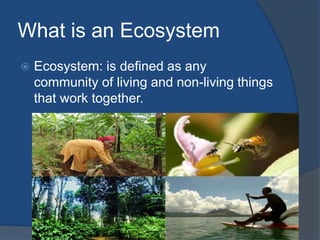
What is an Ecosystem
 Ecosystem: is defined as any
community of living and non-living things
that work together.
Biotic factors are all of the living organisms within an
ecosystem.
For example :
1. plants
2. Animals
3. Fungi and
Other living things
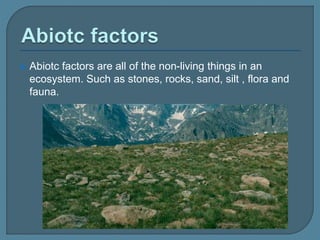
 Abiotc factors are all of the non-living things in an
ecosystem. Such as stones, rocks, sand, silt , flora and
fauna.
Why mountain ecosystem is
Important?
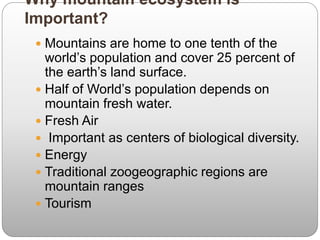
 Mountains are home to one tenth of the
world’s population and cover 25 percent of
the earth’s land surface.
 Half of World’s population depends on
mountain fresh water.
 Fresh Air
 Important as centers of biological diversity.
 Energy
 Traditional zoogeographic regions are
mountain ranges
 Tourism
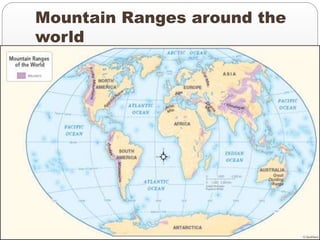
Mountain Ranges around the
world
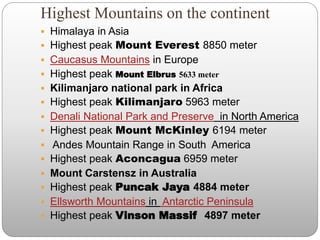
Highest Mountains on the continent
 Himalaya in Asia
 Highest peak Mount Everest 8850 meter
 Caucasus Mountains in Europe
 Highest peak Mount Elbrus 5633 meter
 Kilimanjaro national park in Africa
 Highest peak Kilimanjaro 5963 meter
 Denali National Park and Preserve in North America
 Highest peak Mount McKinley 6194 meter
 Andes Mountain Range in South America
 Highest peak Aconcagua 6959 meter
 Mount Carstensz in Australia
 Highest peak Puncak Jaya 4884 meter
 Ellsworth Mountains in Antarctic Peninsula
 Highest peak Vinson Massif 4897 meter
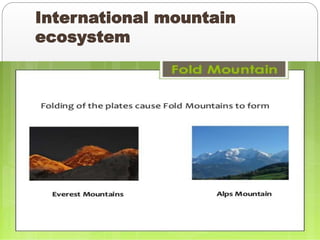
International mountain
ecosystem
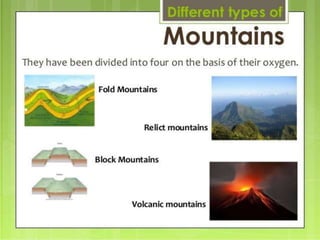
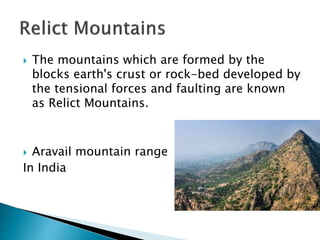
 The mountains which are formed by the
blocks earth's crust or rock-bed developed by
the tensional forces and faulting are known
as Relict Mountains.
 Aravail mountain range
In India
Local Mountain Ecosystem
(Bangladesh)
 In Bangladesh all hills are fold mountains
 Chittagong Hill Tracks(CHT)-They are divided
into three districts: Khagrachari District, Rangamati
Hill District, and Bandarban District. It covers
13,295 sq.km area of southeastern part of
Bangladesh. Highest hill tajingdong 1310 meter.
 Sylhet –low lying hill in the north western part of
Bangladesh. Mainly used for tea garden.
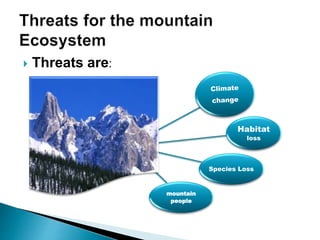
 Threats are:
Habitat
loss
Species Loss
mountain
people
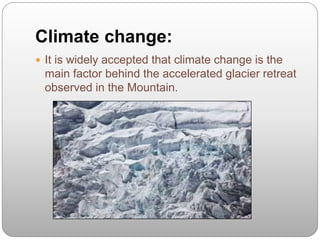
Climate change:
 It is widely accepted that climate change is the
main factor behind the accelerated glacier retreat
observed in the Mountain.
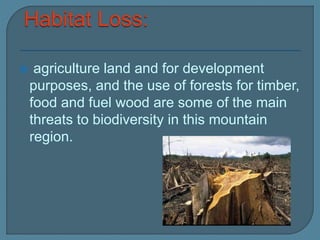
 agriculture land and for development
purposes, and the use of forests for timber,
food and fuel wood are some of the main
threats to biodiversity in this mountain
region.
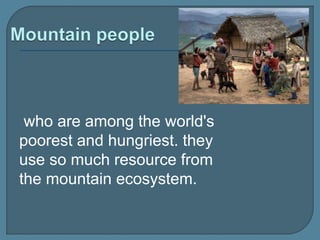
who are among the world's
poorest and hungriest. they
use so much resource from
the mountain ecosystem.
Major causes degradation of
mountain ecosystem
 Deforestation and habitat alteration
 Downside tourism
 The human activities
 Agriculture
 Infrastructures development
.
The UN General Assembly nominated 11
December,” from 2003 onwards, as
“International Mountain Day”.
 Chapter 13 of Agenda 21 on Sustainable
Mountain Development recognized that
mountain ecosystems are rapidly changing
and that the proper management of
mountain resources and socio-economic
development of the people affected deserved
immediate action.
 The United Nations General Assembly
proclaimed 2002 as the InternationalYear of
Mountains with the main objective to increase
awareness of the importance of sustainable
mountain development
Presently government of
Bangladesh are trying to protect
mountain ecosystem:
Deploying environment police
Planting more tree
Create awareness
Stop cutting hill
 Establishment of Bangladesh environment
protection Act, 1995
Recommendations for saving
mountain Ecosystem
 Change people’s minds
 Creating “Environmental Tax System”
 Pro-environmental propaganda
 Research and Monitoring
 Establishment of special
Environmentally-friendly class at schools
Reference
 http://news.nationalgeographic.com/news/2002/02/0201_
020201_wiremountain_2.html
 Data from UN Environmental Program
 http://news.worldlifefoundation.com/ecosystem/mountains
.html
 http://news.sustainablemountain.com/mountainecosystem
.html
 Tottho batayon/ Chittagong hill tracts
 http://fao.org/docrep/w9300e/w9300e03.html
 http://planningcommission.nic.in/aboutus/committee/wrkgr
p11/tf11_ecosys.pdf
 https://en.wikipedia.org/wiki
 http://www.icimod.org/?q=16902
Thank you

Presentation on mountain ecosystem

  • 1.
    Presented By Jannat AraAnny  Sharmin Shaty Nahin Mahfuz Seam Under the supervision of Dr. salma sultan MOUNTAIN ECOSYSTEMS
  • 2.
    Content  What isthe ecosystem Basic information about mountains Importance of mountains Threats for mountains ecosystems Recommendations for saving mountains ecosystems
  • 3.
    What is anEcosystem  Ecosystem: is defined as any community of living and non-living things that work together.
  • 4.
    Biotic factors areall of the living organisms within an ecosystem. For example : 1. plants 2. Animals 3. Fungi and Other living things
  • 5.
     Abiotc factorsare all of the non-living things in an ecosystem. Such as stones, rocks, sand, silt , flora and fauna.
  • 8.
    Why mountain ecosystemis Important?  Mountains are home to one tenth of the world’s population and cover 25 percent of the earth’s land surface.  Half of World’s population depends on mountain fresh water.  Fresh Air  Important as centers of biological diversity.  Energy  Traditional zoogeographic regions are mountain ranges  Tourism
  • 10.
  • 11.
    Highest Mountains onthe continent  Himalaya in Asia  Highest peak Mount Everest 8850 meter  Caucasus Mountains in Europe  Highest peak Mount Elbrus 5633 meter  Kilimanjaro national park in Africa  Highest peak Kilimanjaro 5963 meter  Denali National Park and Preserve in North America  Highest peak Mount McKinley 6194 meter  Andes Mountain Range in South America  Highest peak Aconcagua 6959 meter  Mount Carstensz in Australia  Highest peak Puncak Jaya 4884 meter  Ellsworth Mountains in Antarctic Peninsula  Highest peak Vinson Massif 4897 meter
  • 13.
  • 15.
     The mountainswhich are formed by the blocks earth's crust or rock-bed developed by the tensional forces and faulting are known as Relict Mountains.  Aravail mountain range In India
  • 17.
    Local Mountain Ecosystem (Bangladesh) In Bangladesh all hills are fold mountains  Chittagong Hill Tracks(CHT)-They are divided into three districts: Khagrachari District, Rangamati Hill District, and Bandarban District. It covers 13,295 sq.km area of southeastern part of Bangladesh. Highest hill tajingdong 1310 meter.  Sylhet –low lying hill in the north western part of Bangladesh. Mainly used for tea garden.
  • 18.
  • 19.
    Climate change:  Itis widely accepted that climate change is the main factor behind the accelerated glacier retreat observed in the Mountain.
  • 20.
     agriculture landand for development purposes, and the use of forests for timber, food and fuel wood are some of the main threats to biodiversity in this mountain region.
  • 21.
    who are amongthe world's poorest and hungriest. they use so much resource from the mountain ecosystem.
  • 22.
    Major causes degradationof mountain ecosystem  Deforestation and habitat alteration  Downside tourism  The human activities  Agriculture  Infrastructures development
  • 23.
  • 24.
    The UN GeneralAssembly nominated 11 December,” from 2003 onwards, as “International Mountain Day”.
  • 26.
     Chapter 13of Agenda 21 on Sustainable Mountain Development recognized that mountain ecosystems are rapidly changing and that the proper management of mountain resources and socio-economic development of the people affected deserved immediate action.
  • 27.
     The UnitedNations General Assembly proclaimed 2002 as the InternationalYear of Mountains with the main objective to increase awareness of the importance of sustainable mountain development
  • 28.
    Presently government of Bangladeshare trying to protect mountain ecosystem: Deploying environment police Planting more tree Create awareness Stop cutting hill  Establishment of Bangladesh environment protection Act, 1995
  • 29.
    Recommendations for saving mountainEcosystem  Change people’s minds  Creating “Environmental Tax System”  Pro-environmental propaganda  Research and Monitoring  Establishment of special Environmentally-friendly class at schools
  • 30.
    Reference  http://news.nationalgeographic.com/news/2002/02/0201_ 020201_wiremountain_2.html  Datafrom UN Environmental Program  http://news.worldlifefoundation.com/ecosystem/mountains .html  http://news.sustainablemountain.com/mountainecosystem .html  Tottho batayon/ Chittagong hill tracts  http://fao.org/docrep/w9300e/w9300e03.html  http://planningcommission.nic.in/aboutus/committee/wrkgr p11/tf11_ecosys.pdf  https://en.wikipedia.org/wiki  http://www.icimod.org/?q=16902
  • 31.