GROUP MEMBERS
Maheen Raza
Qurat-ul-Ain Ali
Nida Najabat
CONTENTS
•INTRODUCTION
•CAUSES OF FORMATION OF OCEAN CURRENTS
•TYPES OF OCEAN CURRENTS
•STRENGTH OF OCEAN CURRENTS
•TYPES OF DANGEROUS CURRENTS
•IMPORTANCE OF OCEAN CURRENT
INTRODUCTION
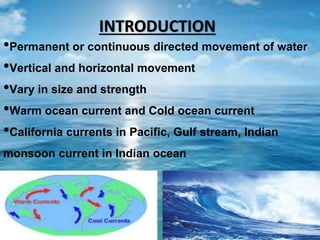
•Permanent or continuous directed movement of water
•Vertical and horizontal movement
•Vary in size and strength
•Warm ocean current and Cold ocean current
•California currents in Pacific, Gulf stream, Indian
monsoon current in Indian ocean
CAUSES OF FORMATION OF OCEAN
CURRENTS
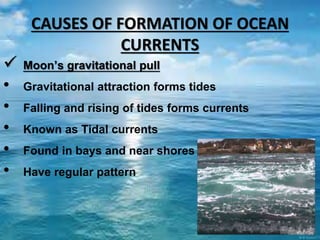
 Moon’s gravitational pull
• Gravitational attraction forms tides
• Falling and rising of tides forms currents
• Known as Tidal currents
• Found in bays and near shores
• Have regular pattern
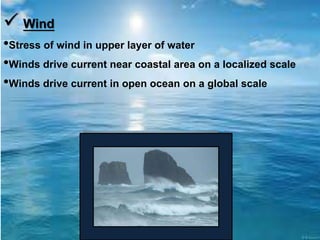
 Wind
•Stress of wind in upper layer of water
•Winds drive current near coastal area on a localized scale
•Winds drive current in open ocean on a global scale
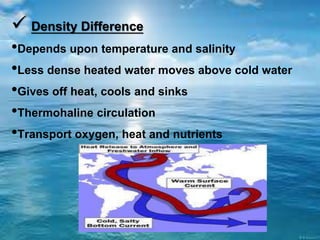
 Density Difference
•Depends upon temperature and salinity
•Less dense heated water moves above cold water
•Gives off heat, cools and sinks
•Thermohaline circulation
•Transport oxygen, heat and nutrients
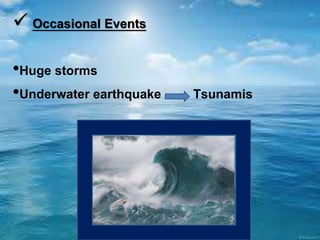
 Occasional Events
•Huge storms
•Underwater earthquake Tsunamis
TYPES OF OCEAN CURRENTS
1) Surface current (Surface circulation)
•Make about 10% of all ocean water
•Upper 400m of ocean
•Solar heating, winds and gravity
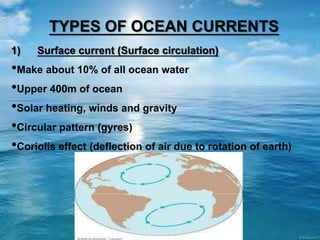
•Circular pattern (gyres)
•Coriolis effect (deflection of air due to rotation of earth)
•Clockwise spirals in northern hemisphere
•Anticlockwise spirals in southern hemisphere
•Deep and narrow or shallow and wide
•Carry heat so affect regional climates
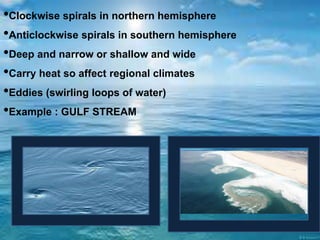
•Eddies (swirling loops of water)
•Example : GULF STREAM
2) DEEP OCEAN CURRENTS
•Make 90% of worlds ocean
•Formed due to temperature, salinity and density difference
•Global convey best (constantly moving system of deep ocean
driven by temperature and salinity difference )
•Submarine river (flow under surface of oceans)
•Very slow and hidden from immediate detection
•1000 years to complete one full circuit of globe
STRENGTH
•Wind speed
•Precipitation
•Shape of ocean floor
•Evaporation
•Inflow from river and adjacent seas
TYPES OF DANGEROUS CURRENTS
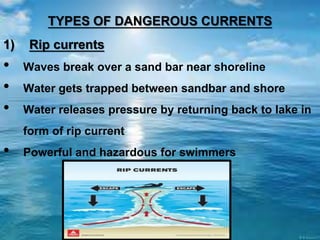
1) Rip currents
• Waves break over a sand bar near shoreline
• Water gets trapped between sandbar and shore
• Water releases pressure by returning back to lake in
form of rip current
• Powerful and hazardous for swimmers
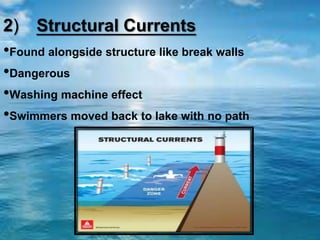
2) Structural Currents
•Found alongside structure like break walls
•Dangerous
•Washing machine effect
•Swimmers moved back to lake with no path
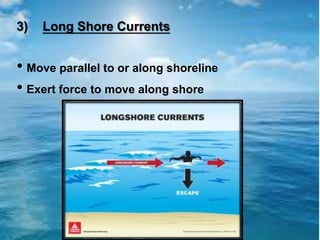
3) Long Shore Currents
• Move parallel to or along shoreline
• Exert force to move along shore
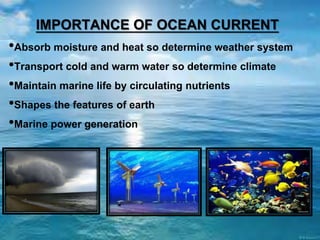
IMPORTANCE OF OCEAN CURRENT
•Absorb moisture and heat so determine weather system
•Transport cold and warm water so determine climate
•Maintain marine life by circulating nutrients
•Shapes the features of earth
•Marine power generation
Presentation oceanography

Presentation oceanography

  • 2.
  • 3.
    CONTENTS •INTRODUCTION •CAUSES OF FORMATIONOF OCEAN CURRENTS •TYPES OF OCEAN CURRENTS •STRENGTH OF OCEAN CURRENTS •TYPES OF DANGEROUS CURRENTS •IMPORTANCE OF OCEAN CURRENT
  • 4.
    INTRODUCTION •Permanent or continuousdirected movement of water •Vertical and horizontal movement •Vary in size and strength •Warm ocean current and Cold ocean current •California currents in Pacific, Gulf stream, Indian monsoon current in Indian ocean
  • 5.
    CAUSES OF FORMATIONOF OCEAN CURRENTS  Moon’s gravitational pull • Gravitational attraction forms tides • Falling and rising of tides forms currents • Known as Tidal currents • Found in bays and near shores • Have regular pattern
  • 6.
     Wind •Stress ofwind in upper layer of water •Winds drive current near coastal area on a localized scale •Winds drive current in open ocean on a global scale
  • 7.
     Density Difference •Dependsupon temperature and salinity •Less dense heated water moves above cold water •Gives off heat, cools and sinks •Thermohaline circulation •Transport oxygen, heat and nutrients
  • 8.
     Occasional Events •Hugestorms •Underwater earthquake Tsunamis
  • 9.
    TYPES OF OCEANCURRENTS 1) Surface current (Surface circulation) •Make about 10% of all ocean water •Upper 400m of ocean •Solar heating, winds and gravity •Circular pattern (gyres) •Coriolis effect (deflection of air due to rotation of earth)
  • 10.
    •Clockwise spirals innorthern hemisphere •Anticlockwise spirals in southern hemisphere •Deep and narrow or shallow and wide •Carry heat so affect regional climates •Eddies (swirling loops of water) •Example : GULF STREAM
  • 11.
    2) DEEP OCEANCURRENTS •Make 90% of worlds ocean •Formed due to temperature, salinity and density difference •Global convey best (constantly moving system of deep ocean driven by temperature and salinity difference ) •Submarine river (flow under surface of oceans) •Very slow and hidden from immediate detection •1000 years to complete one full circuit of globe
  • 12.
    STRENGTH •Wind speed •Precipitation •Shape ofocean floor •Evaporation •Inflow from river and adjacent seas
  • 13.
    TYPES OF DANGEROUSCURRENTS 1) Rip currents • Waves break over a sand bar near shoreline • Water gets trapped between sandbar and shore • Water releases pressure by returning back to lake in form of rip current • Powerful and hazardous for swimmers
  • 14.
    2) Structural Currents •Foundalongside structure like break walls •Dangerous •Washing machine effect •Swimmers moved back to lake with no path
  • 15.
    3) Long ShoreCurrents • Move parallel to or along shoreline • Exert force to move along shore
  • 16.
    IMPORTANCE OF OCEANCURRENT •Absorb moisture and heat so determine weather system •Transport cold and warm water so determine climate •Maintain marine life by circulating nutrients •Shapes the features of earth •Marine power generation