
Supply Chain Insights
Delivering Actionable Advice to the Supply Chain
                Leadership Team


                                                   Supply Chain Insights, LLC © 2012
BRICKS                               Book
                                  Publishes


 Matter
                                  in August
                                     2012


 The Role of Supply Chains
      in Building Market-Driven
         Differentiation


     LORA M. CECERE
           CHARLES W. CHASE JR.
What’s in
     a name?
 A rose by any other
name would smell as
       sweet.
       William Shapespeare
                                                    3
                             Supply Chain Insights, LLC © 2012
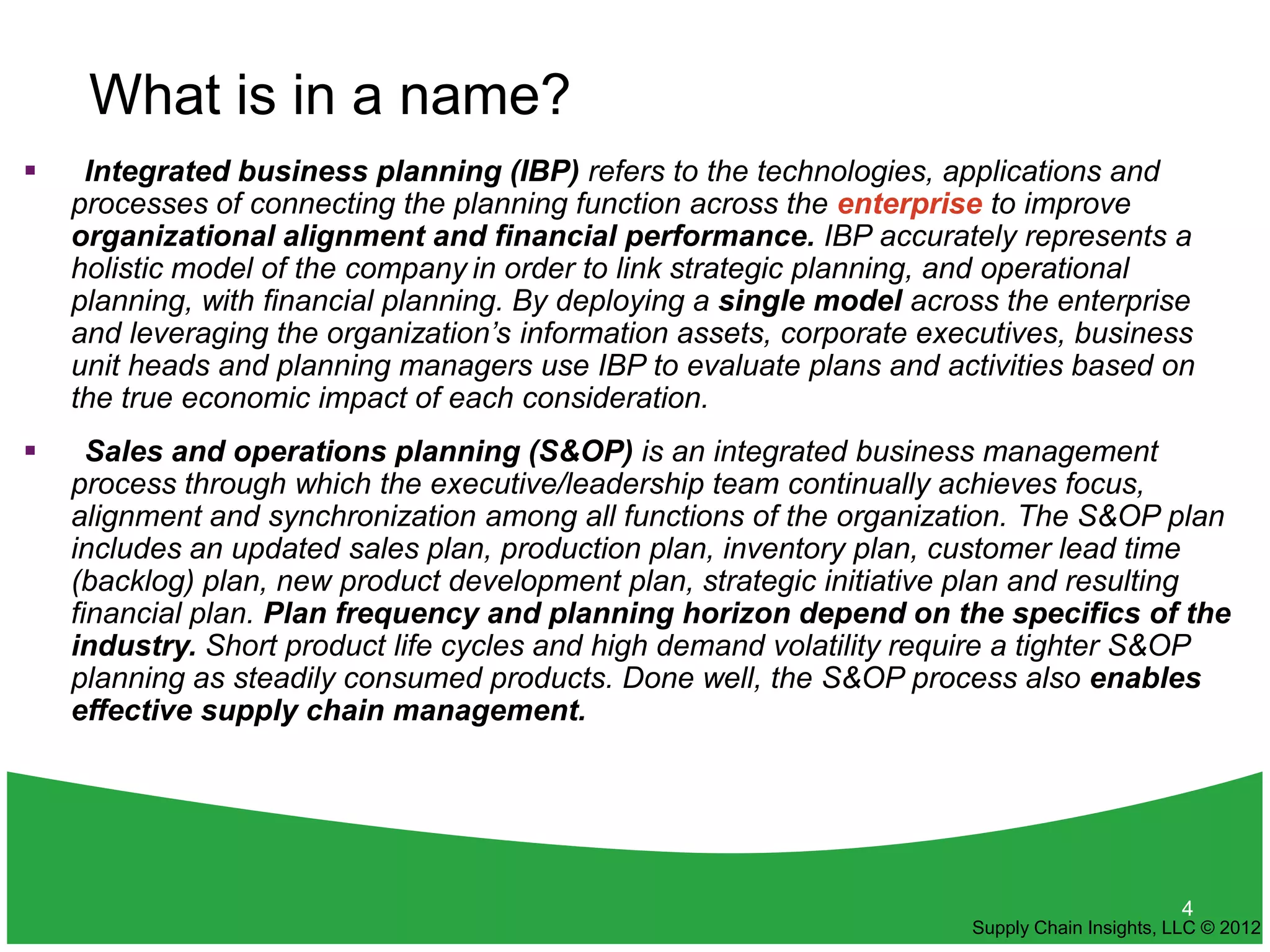
What is in a name?
    Integrated business planning (IBP) refers to the technologies, applications and
    processes of connecting the planning function across the enterprise to improve
    organizational alignment and financial performance. IBP accurately represents a
    holistic model of the company in order to link strategic planning, and operational
    planning, with financial planning. By deploying a single model across the enterprise
    and leveraging the organization’s information assets, corporate executives, business
    unit heads and planning managers use IBP to evaluate plans and activities based on
    the true economic impact of each consideration.
     Sales and operations planning (S&OP) is an integrated business management
    process through which the executive/leadership team continually achieves focus,
    alignment and synchronization among all functions of the organization. The S&OP plan
    includes an updated sales plan, production plan, inventory plan, customer lead time
    (backlog) plan, new product development plan, strategic initiative plan and resulting
    financial plan. Plan frequency and planning horizon depend on the specifics of the
    industry. Short product life cycles and high demand volatility require a tighter S&OP
    planning as steadily consumed products. Done well, the S&OP process also enables
    effective supply chain management.


                                                                                              4
                                                                       Supply Chain Insights, LLC © 2012
5
Supply Chain Insights, LLC © 2012
6

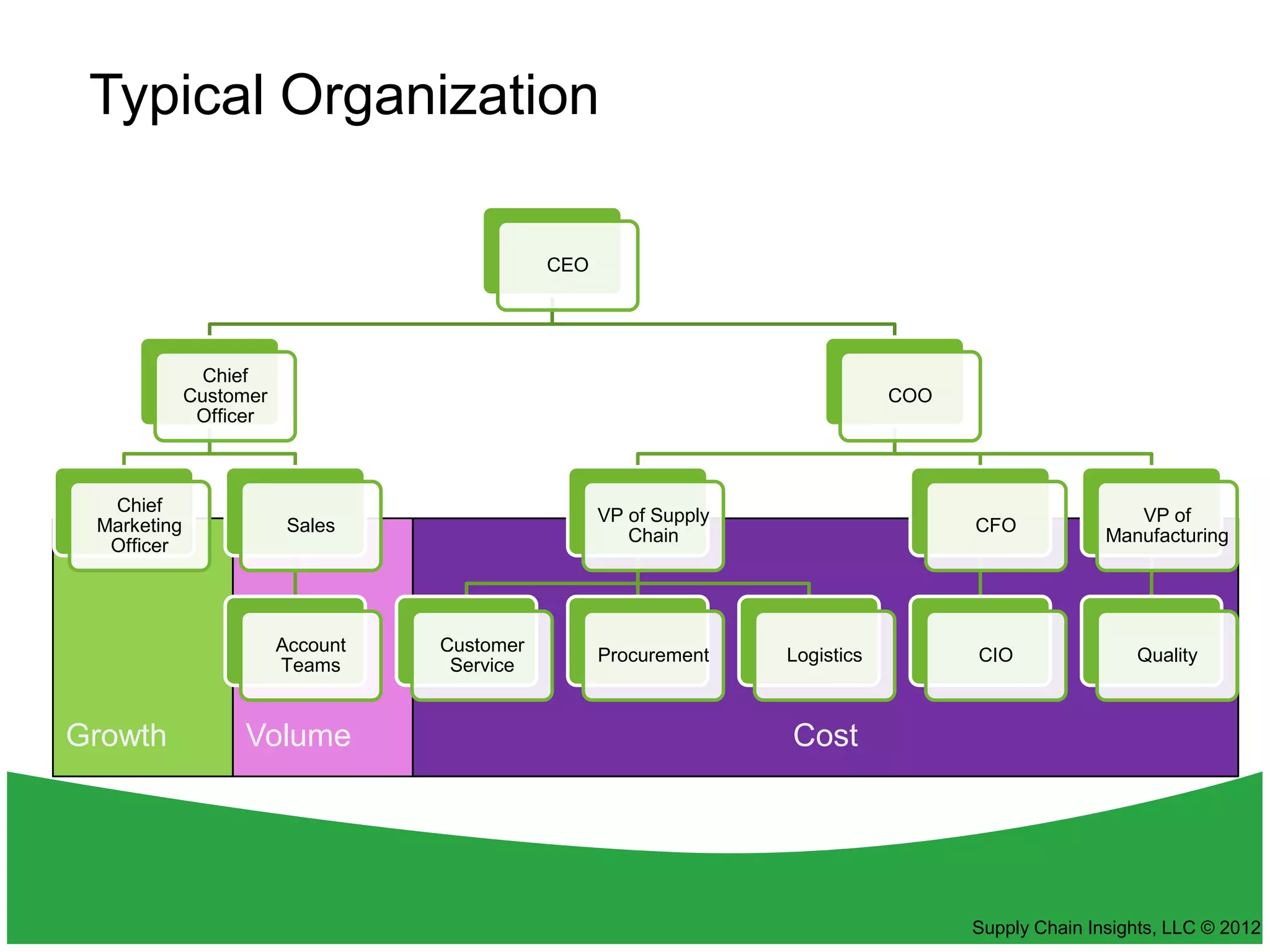
 Typical Organization

                                             CEO


               Chief
             Customer                                                         COO
              Officer


  Chief
                                                   VP of Supply                                       VP of
 Marketing               Sales                                                      CFO
                                                      Chain                                        Manufacturing
  Officer


                        Account   Customer
                                                   Procurement    Logistics         CIO               Quality
                        Teams      Service


Growth            Volume                                          Cost


                                                                                    Supply Chain Insights, LLC © 2012
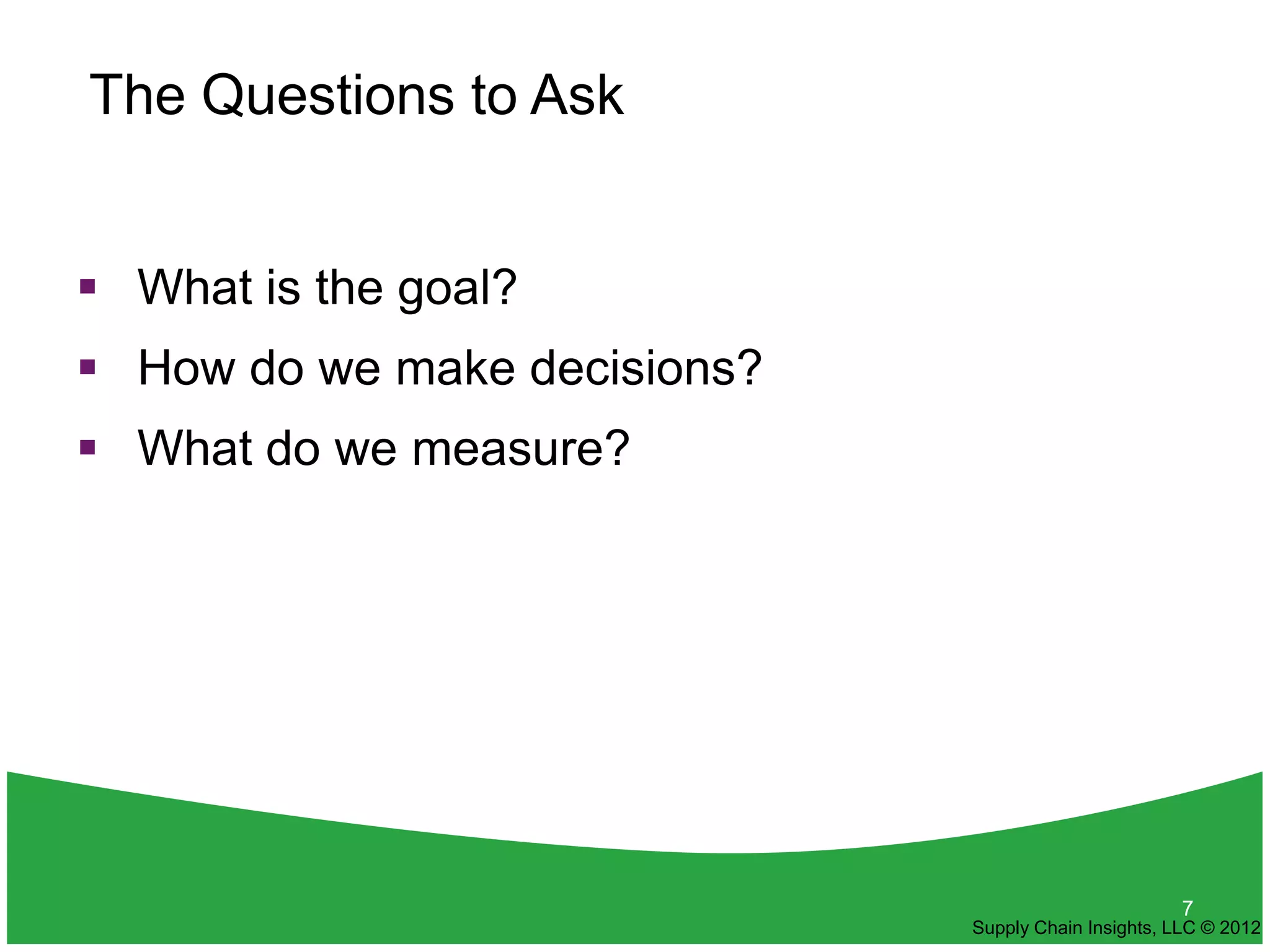
The Questions to Ask


 What is the goal?
 How do we make decisions?
 What do we measure?


                                                     7
                              Supply Chain Insights, LLC © 2012
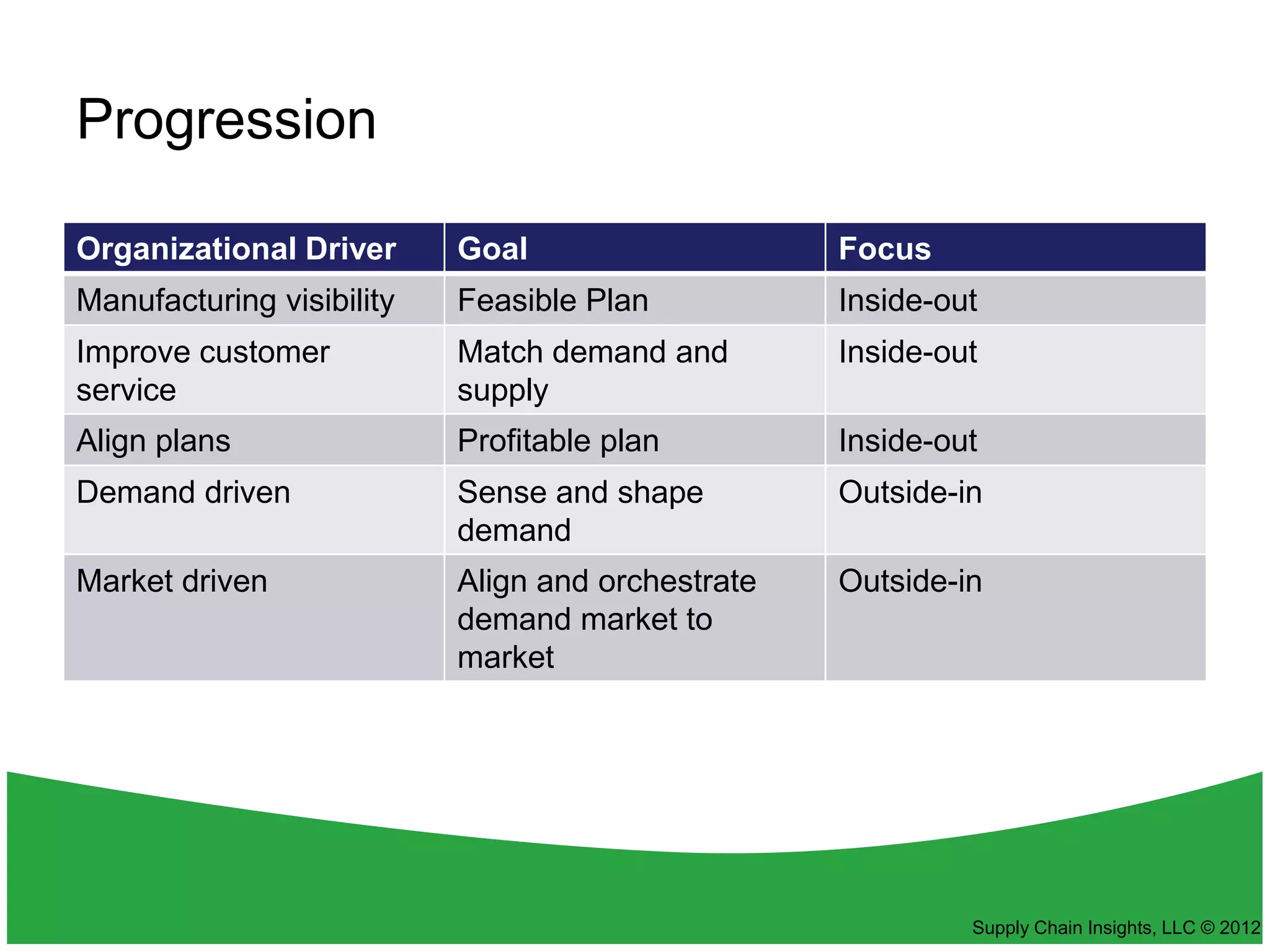
Progression

Organizational Driver      Goal                    Focus
Manufacturing visibility   Feasible Plan           Inside-out
Improve customer           Match demand and        Inside-out
service                    supply
Align plans                Profitable plan         Inside-out
Demand driven              Sense and shape         Outside-in
                           demand
Market driven              Align and orchestrate   Outside-in
                           demand market to
                           market


                                                            Supply Chain Insights, LLC © 2012
A Supply Chain is a Complex System with Complex
Processes with Increasing Complexity


                                    Supply Chain Insights, LLC © 2012
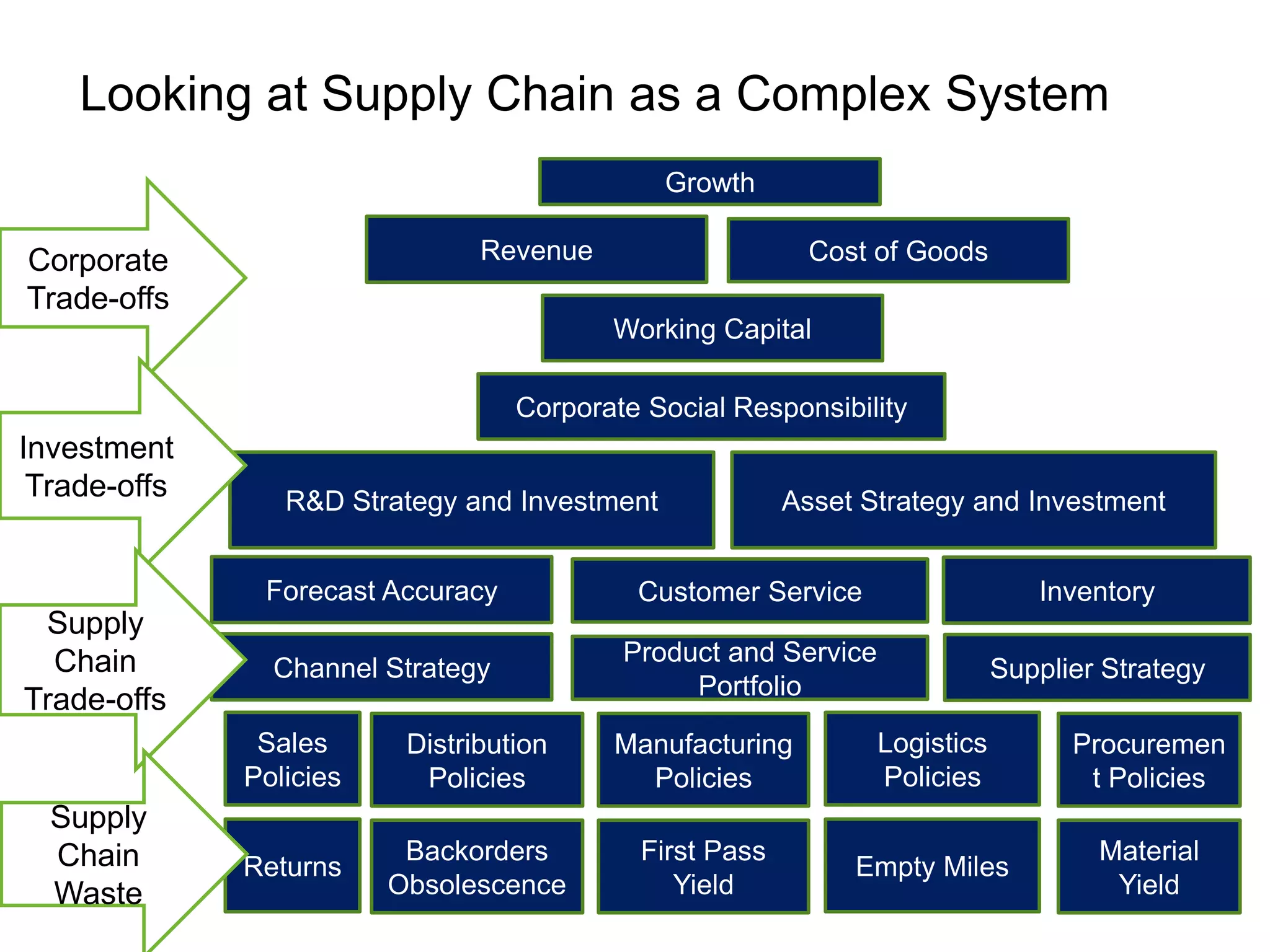
Looking at Supply Chain as a Complex System
                                               Growth

Corporate                       Revenue                    Cost of Goods
Trade-offs
                                          Working Capital

                                   Corporate Social Responsibility
Investment
 Trade-offs      R&D Strategy and Investment             Asset Strategy and Investment


               Forecast Accuracy            Customer Service                    Inventory
 Supply
  Chain                                    Product and Service
                Channel Strategy                                             Supplier Strategy
                                                Portfolio
Trade-offs
               Sales      Distribution    Manufacturing          Logistics         Procuremen
              Policies     Policies         Policies             Policies           t Policies
  Supply
  Chain                   Backorders        First Pass                               Material
              Returns                                         Empty Miles
  Waste                  Obsolescence          Yield                                  Yield
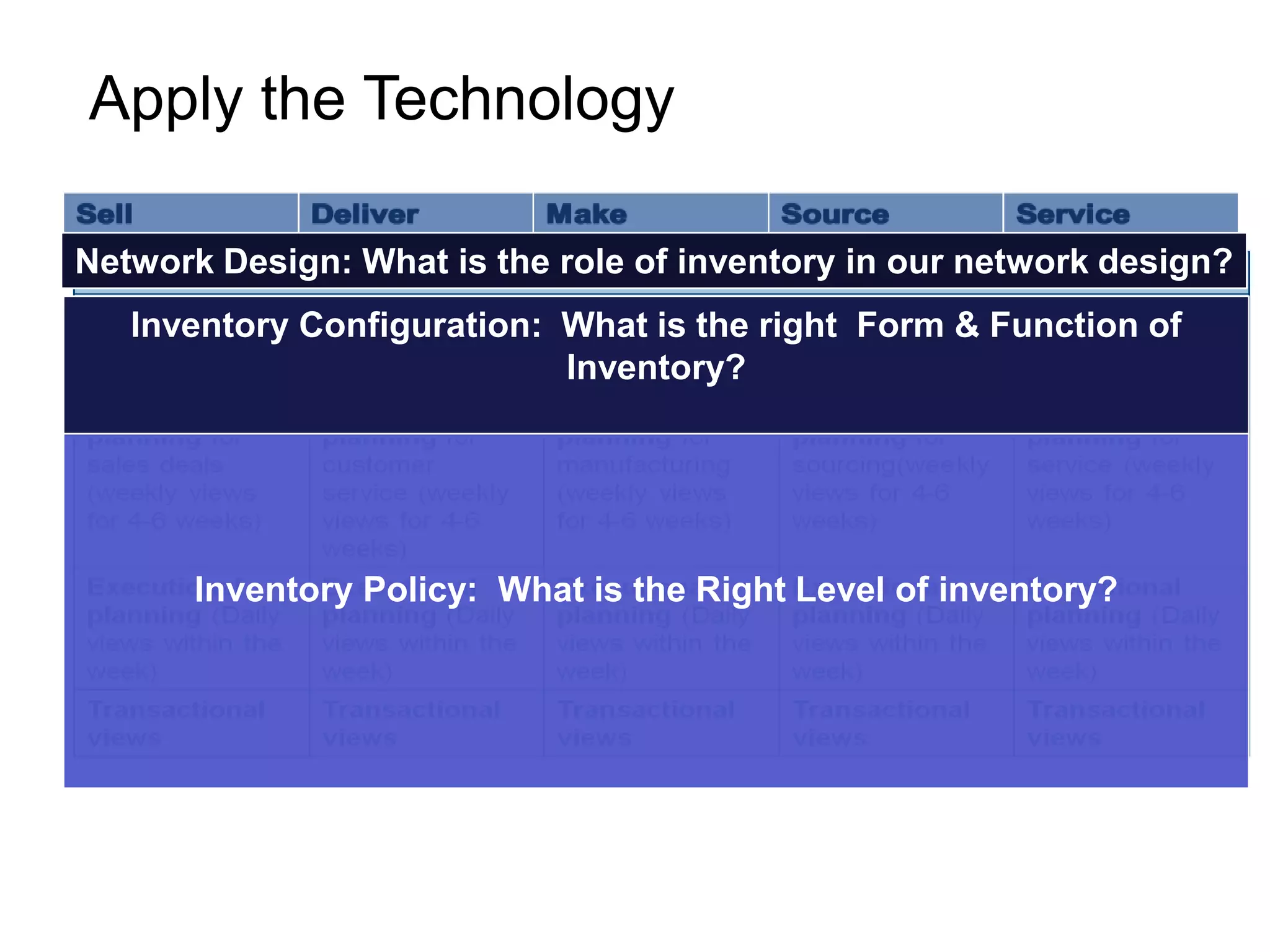
Apply the Technology

Network Design: What is the role of inventory in our network design?
   Inventory Configuration: What is the right Form & Function of
                            Inventory?


       Inventory Policy: What is the Right Level of inventory?


                                                                 11
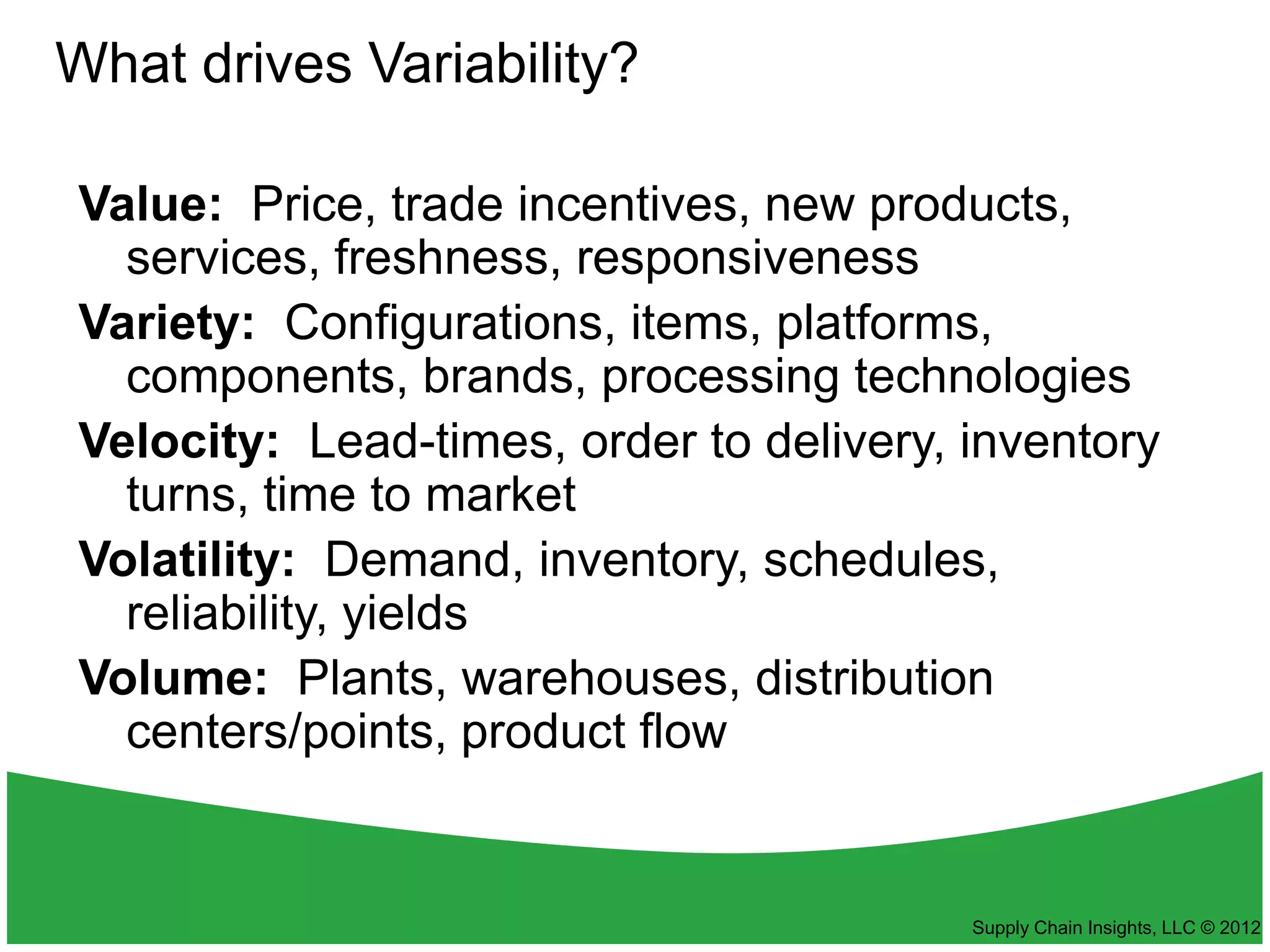
What drives Variability?

Value: Price, trade incentives, new products,
  services, freshness, responsiveness
Variety: Configurations, items, platforms,
  components, brands, processing technologies
Velocity: Lead-times, order to delivery, inventory
  turns, time to market
Volatility: Demand, inventory, schedules,
  reliability, yields
Volume: Plants, warehouses, distribution
  centers/points, product flow


                                         Supply Chain Insights, LLC © 2012
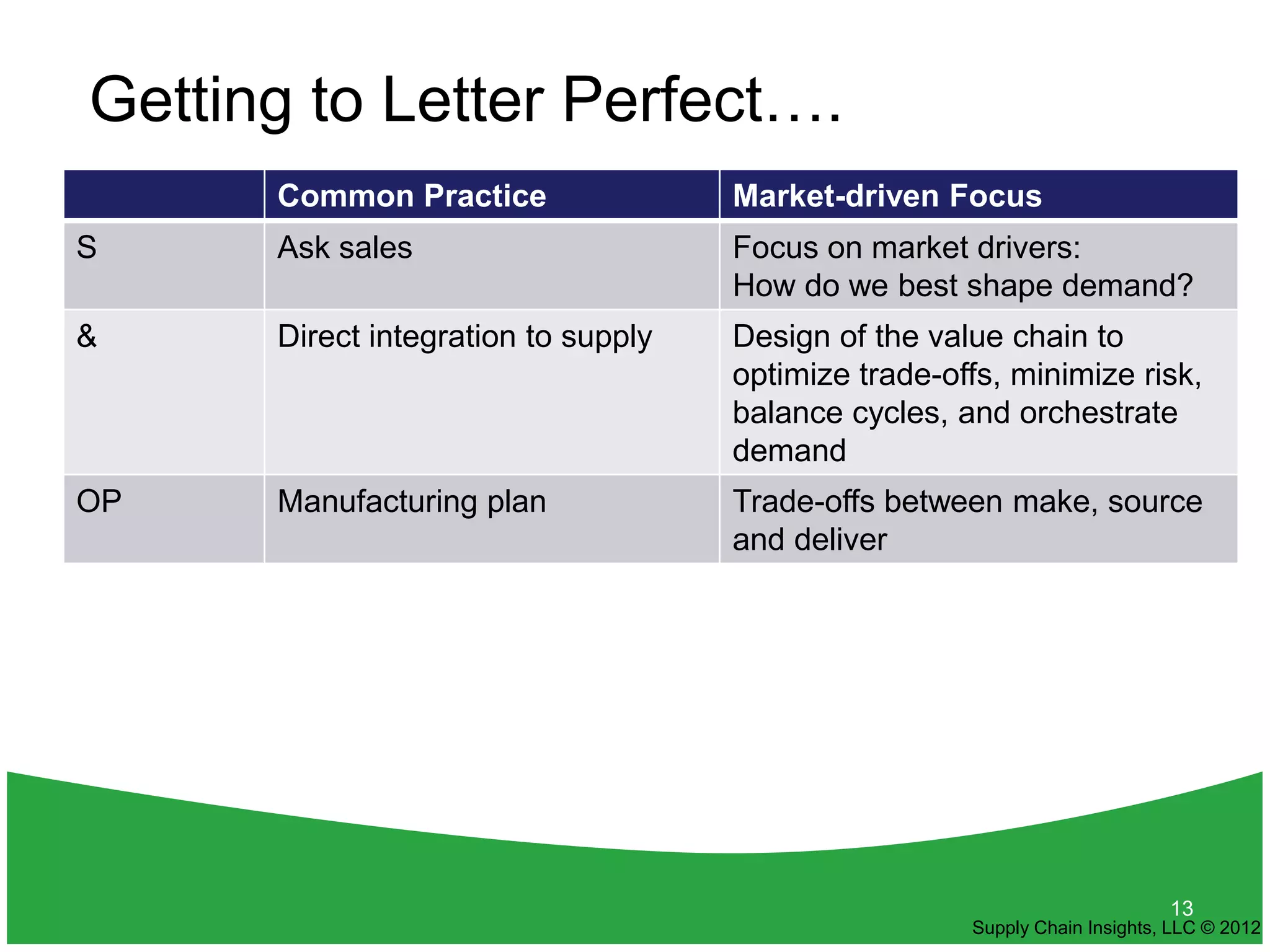
Getting to Letter Perfect….
      Common Practice                Market-driven Focus
S     Ask sales                      Focus on market drivers:
                                     How do we best shape demand?
&     Direct integration to supply   Design of the value chain to
                                     optimize trade-offs, minimize risk,
                                     balance cycles, and orchestrate
                                     demand
OP    Manufacturing plan             Trade-offs between make, source
                                     and deliver


                                                                            13
                                                      Supply Chain Insights, LLC © 2012
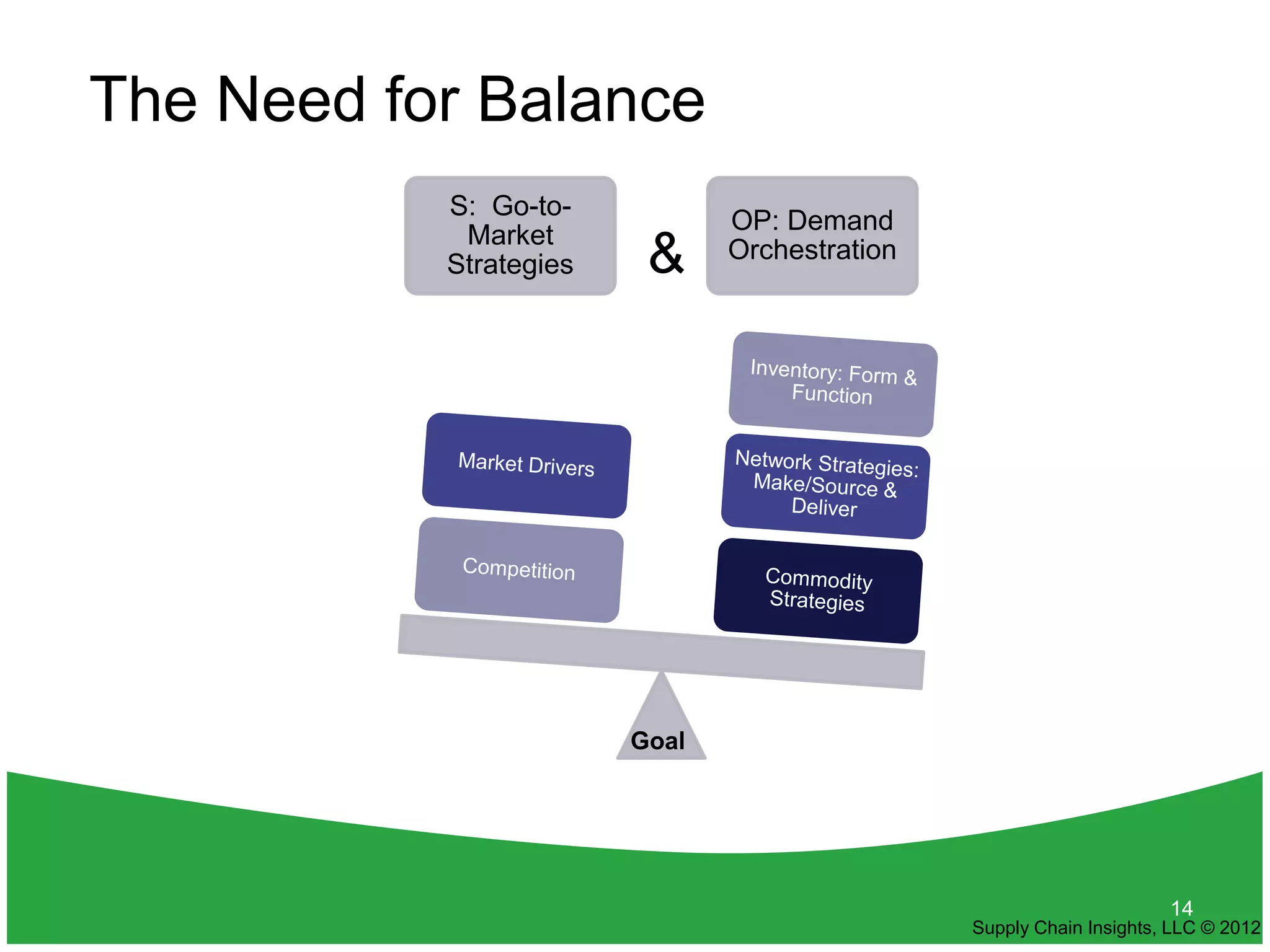
The Need for Balance
           S: Go-to-
                               OP: Demand
            Market
           Strategies    &     Orchestration


                        Goal


                                                                     14
                                               Supply Chain Insights, LLC © 2012
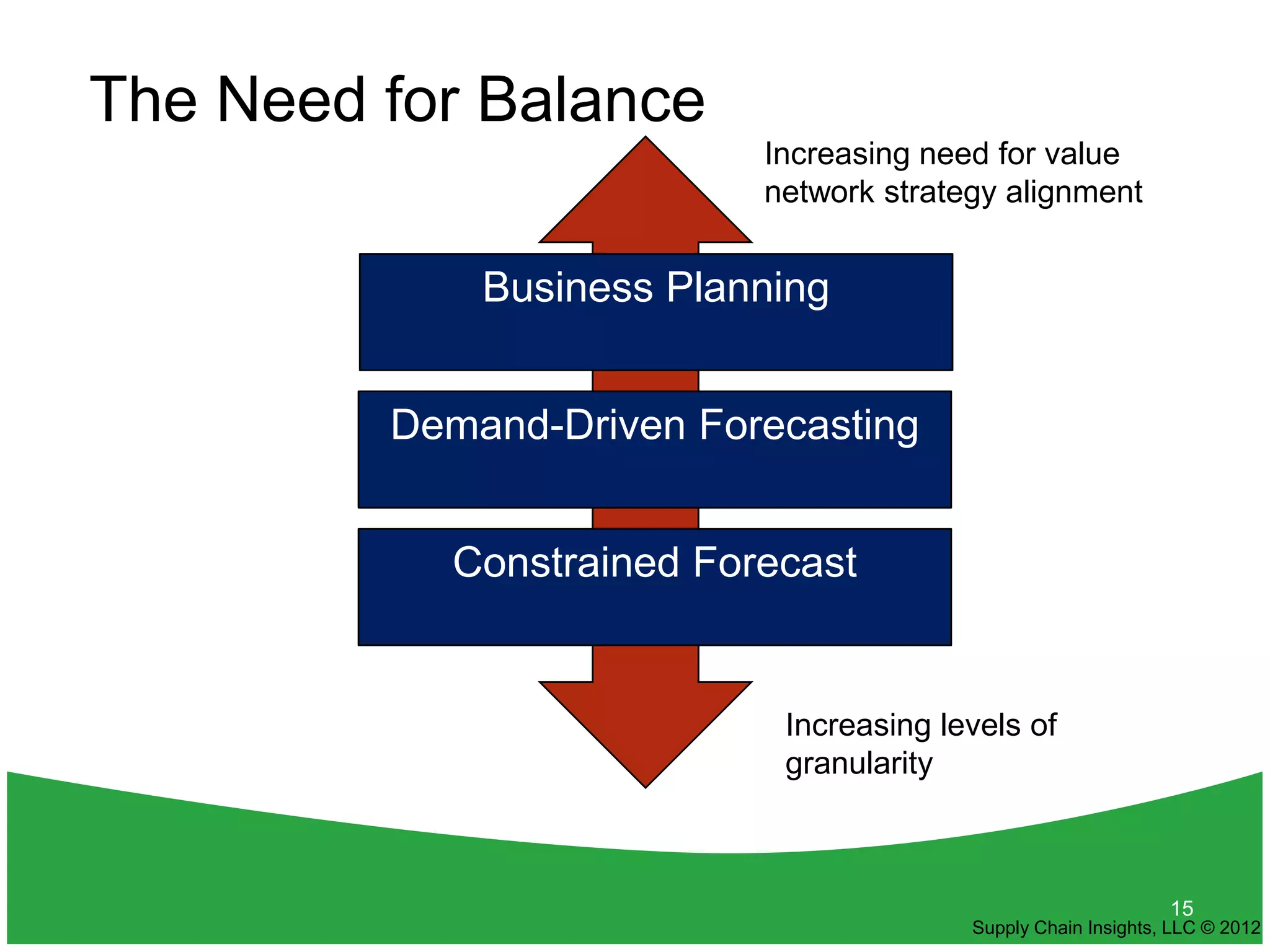
The Need for Balance
                          Increasing need for value
                          network strategy alignment


             Business Planning


         Demand-Driven Forecasting


           Constrained Forecast


                           Increasing levels of
                           granularity


                                                              15
                                        Supply Chain Insights, LLC © 2012
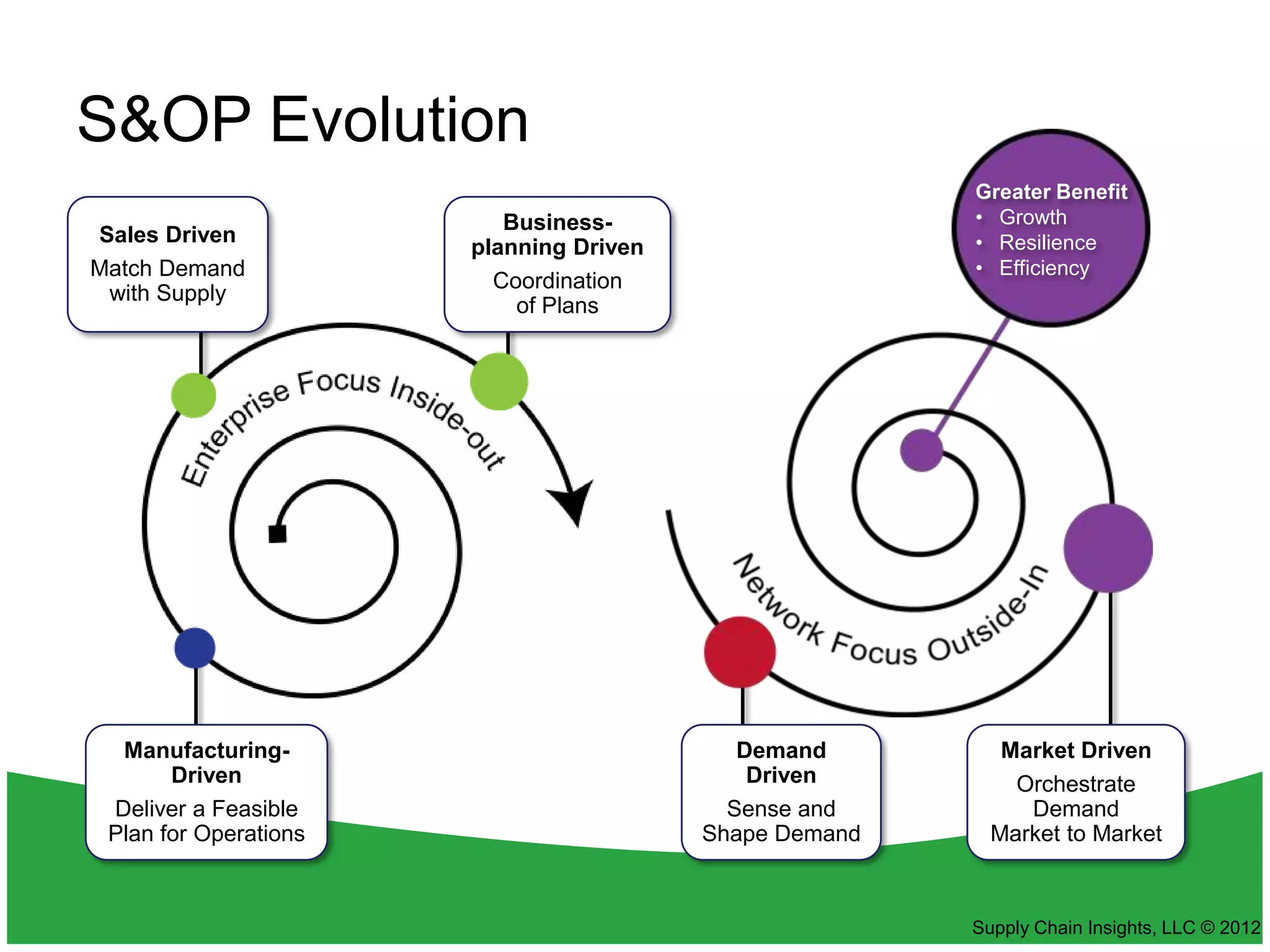
S&OP Evolution
                                                        Greater Benefit
                          Business-                     • Growth
Sales Driven                                            • Resilience
                       planning Driven
Match Demand                                            • Efficiency
                         Coordination
 with Supply
                           of Plans


  Manufacturing-                            Demand         Market Driven
       Driven                                Driven         Orchestrate
 Deliver a Feasible                        Sense and         Demand
 Plan for Operations                     Shape Demand     Market to Market


                                                        Supply Chain Insights, LLC © 2012
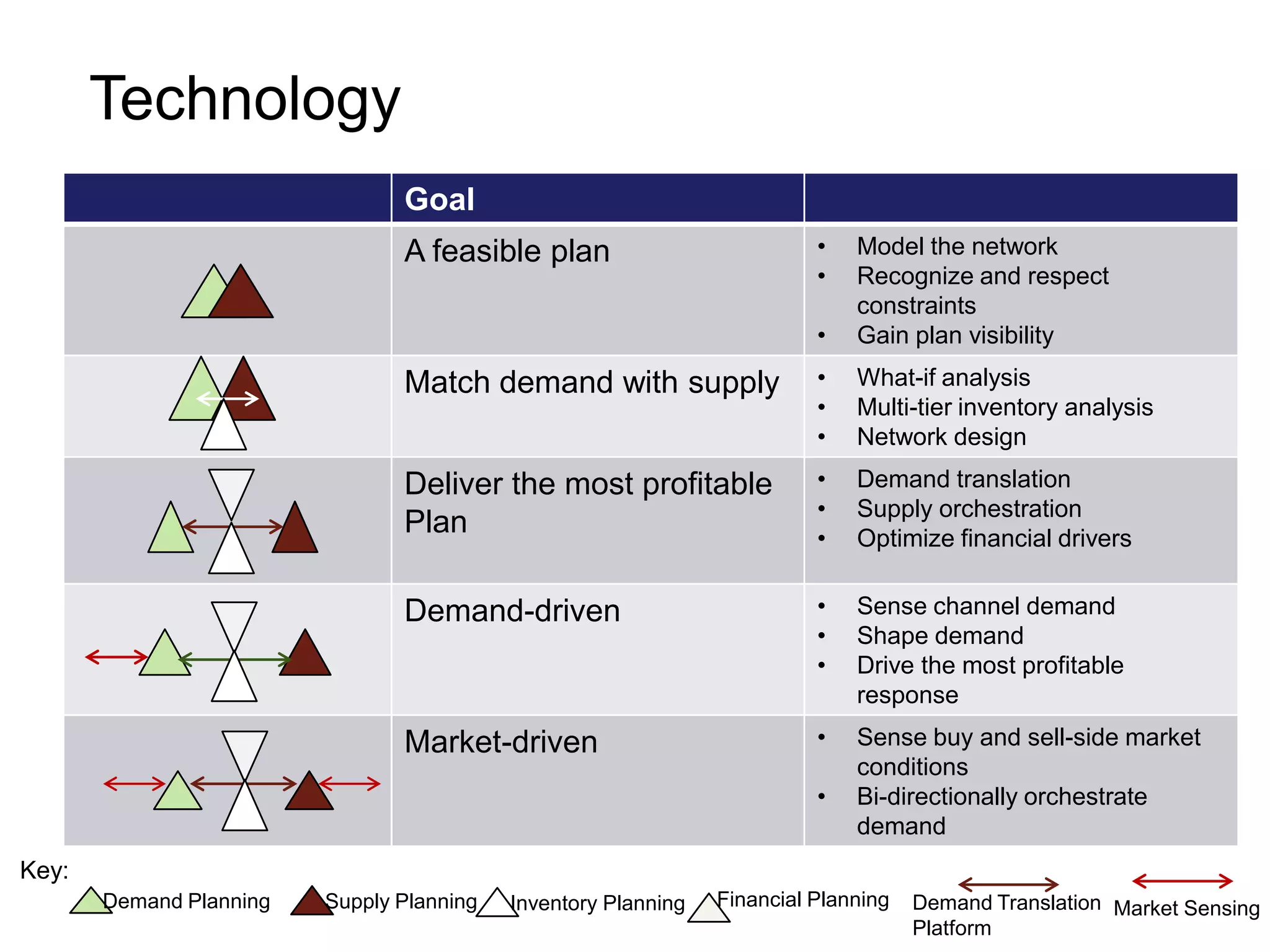
Technology
                                Goal
                                A feasible plan                           •   Model the network
                                                                          •   Recognize and respect
                                                                              constraints
                                                                          •   Gain plan visibility
                                Match demand with supply                  •   What-if analysis
                                                                          •   Multi-tier inventory analysis
                                                                          •   Network design
                                Deliver the most profitable               •   Demand translation
                                                                          •   Supply orchestration
                                Plan                                      •   Optimize financial drivers


                                Demand-driven                             •   Sense channel demand
                                                                          •   Shape demand
                                                                          •   Drive the most profitable
                                                                              response
                                Market-driven                             •   Sense buy and sell-side market
                                                                              conditions
                                                                          •   Bi-directionally orchestrate
                                                                              demand
Key:
       Demand Planning   Supply Planning   Inventory Planning   Financial Planning   Demand Translation Market Sensing
                                                                                                             17
                                                                                     Platform
Historically, we have:
  • Tried to get precise on inaccurate data.
  • Believed that the most efficient supply chain is the most
    effective supply chain.
  • Built efficient chains, but not effective networks.
  • Focused inside-out, not outside-in.
  • Rewarded the urgent, not the important.


                                                                       18
                                                 Supply Chain Insights, LLC © 2012
Ask the Right Questions


 What is the goal?
 How do we make decisions?
 What do we measure?


                                                    19
                              Supply Chain Insights, LLC © 2012
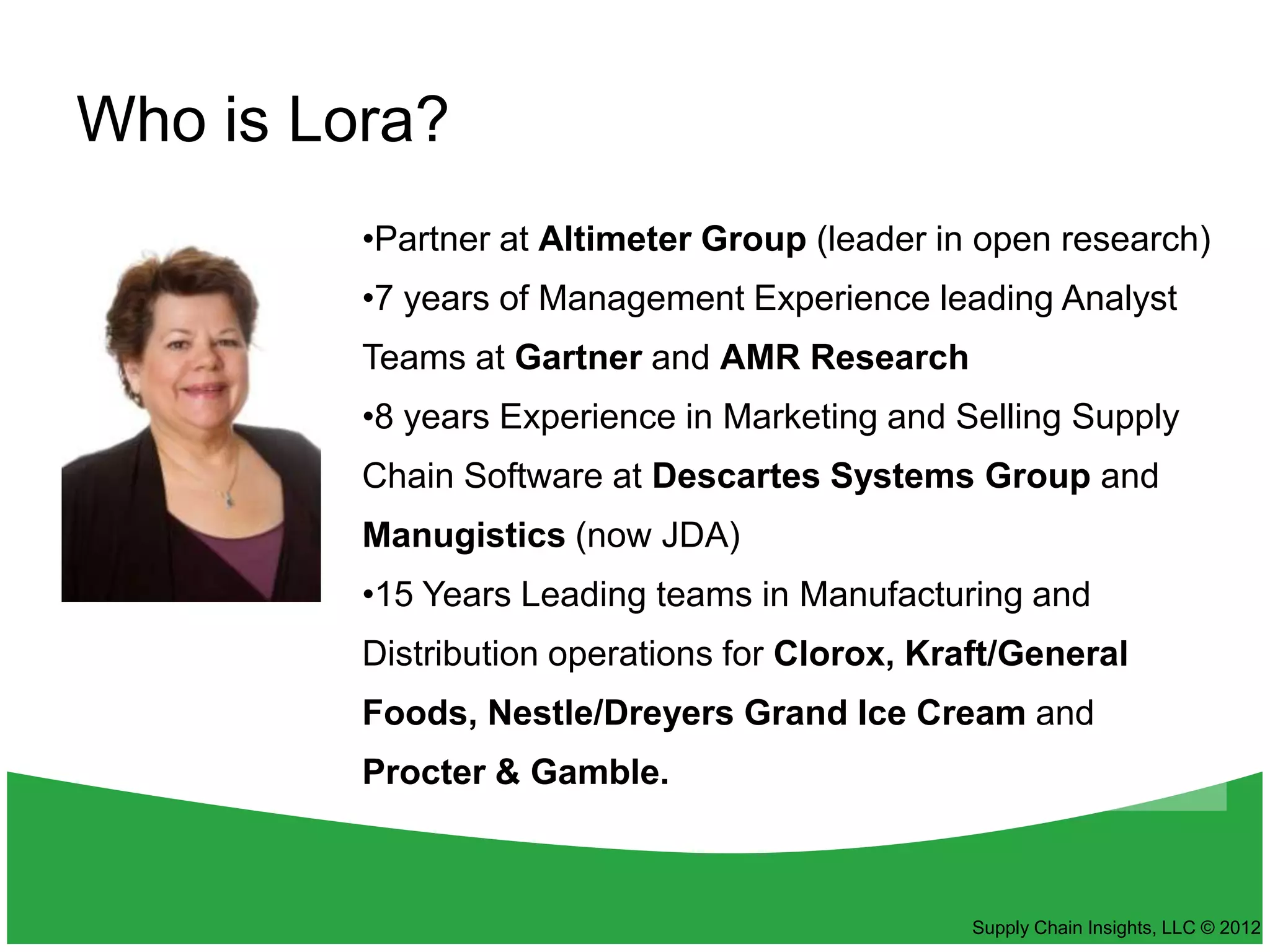
Who is Lora?
         •Partner at Altimeter Group (leader in open research)
         •7 years of Management Experience leading Analyst
         Teams at Gartner and AMR Research
         •8 years Experience in Marketing and Selling Supply
         Chain Software at Descartes Systems Group and
         Manugistics (now JDA)
         •15 Years Leading teams in Manufacturing and
         Distribution operations for Clorox, Kraft/General
         Foods, Nestle/Dreyers Grand Ice Cream and
         Procter & Gamble.


                                                Supply Chain Insights, LLC © 2012
Where do you find Lora?

         Contact Information: loracecere@gmail.com
         Blog: www.supplychainshaman.com (3500
         pageviews/month)
         Twitter: lcecere 2900 followers. Rated as the
         top rated supply chain social network user.
         Linkedin: linkedin.com/pub/lora-
         cecere/0/196/573 (2300 in the network)


                                            Supply Chain Insights, LLC © 2012

Presentation given at ibp presentation miami march29

  • 1.
    Supply Chain Insights DeliveringActionable Advice to the Supply Chain Leadership Team Supply Chain Insights, LLC © 2012
  • 2.
    BRICKS Book Publishes Matter in August 2012 The Role of Supply Chains in Building Market-Driven Differentiation LORA M. CECERE CHARLES W. CHASE JR.
  • 3.
    What’s in a name? A rose by any other name would smell as sweet. William Shapespeare 3 Supply Chain Insights, LLC © 2012
  • 4.
    What is ina name?  Integrated business planning (IBP) refers to the technologies, applications and processes of connecting the planning function across the enterprise to improve organizational alignment and financial performance. IBP accurately represents a holistic model of the company in order to link strategic planning, and operational planning, with financial planning. By deploying a single model across the enterprise and leveraging the organization’s information assets, corporate executives, business unit heads and planning managers use IBP to evaluate plans and activities based on the true economic impact of each consideration.  Sales and operations planning (S&OP) is an integrated business management process through which the executive/leadership team continually achieves focus, alignment and synchronization among all functions of the organization. The S&OP plan includes an updated sales plan, production plan, inventory plan, customer lead time (backlog) plan, new product development plan, strategic initiative plan and resulting financial plan. Plan frequency and planning horizon depend on the specifics of the industry. Short product life cycles and high demand volatility require a tighter S&OP planning as steadily consumed products. Done well, the S&OP process also enables effective supply chain management. 4 Supply Chain Insights, LLC © 2012
  • 5.
  • 6.
    6 Typical Organization CEO Chief Customer COO Officer Chief VP of Supply VP of Marketing Sales CFO Chain Manufacturing Officer Account Customer Procurement Logistics CIO Quality Teams Service Growth Volume Cost Supply Chain Insights, LLC © 2012
  • 7.
    The Questions toAsk  What is the goal?  How do we make decisions?  What do we measure? 7 Supply Chain Insights, LLC © 2012
  • 8.
    Progression Organizational Driver Goal Focus Manufacturing visibility Feasible Plan Inside-out Improve customer Match demand and Inside-out service supply Align plans Profitable plan Inside-out Demand driven Sense and shape Outside-in demand Market driven Align and orchestrate Outside-in demand market to market Supply Chain Insights, LLC © 2012
  • 9.
    A Supply Chainis a Complex System with Complex Processes with Increasing Complexity Supply Chain Insights, LLC © 2012
  • 10.
    Looking at SupplyChain as a Complex System Growth Corporate Revenue Cost of Goods Trade-offs Working Capital Corporate Social Responsibility Investment Trade-offs R&D Strategy and Investment Asset Strategy and Investment Forecast Accuracy Customer Service Inventory Supply Chain Product and Service Channel Strategy Supplier Strategy Portfolio Trade-offs Sales Distribution Manufacturing Logistics Procuremen Policies Policies Policies Policies t Policies Supply Chain Backorders First Pass Material Returns Empty Miles Waste Obsolescence Yield Yield
  • 11.
    Apply the Technology NetworkDesign: What is the role of inventory in our network design? Inventory Configuration: What is the right Form & Function of Inventory? Inventory Policy: What is the Right Level of inventory? 11
  • 12.
    What drives Variability? Value:Price, trade incentives, new products, services, freshness, responsiveness Variety: Configurations, items, platforms, components, brands, processing technologies Velocity: Lead-times, order to delivery, inventory turns, time to market Volatility: Demand, inventory, schedules, reliability, yields Volume: Plants, warehouses, distribution centers/points, product flow Supply Chain Insights, LLC © 2012
  • 13.
    Getting to LetterPerfect…. Common Practice Market-driven Focus S Ask sales Focus on market drivers: How do we best shape demand? & Direct integration to supply Design of the value chain to optimize trade-offs, minimize risk, balance cycles, and orchestrate demand OP Manufacturing plan Trade-offs between make, source and deliver 13 Supply Chain Insights, LLC © 2012
  • 14.
    The Need forBalance S: Go-to- OP: Demand Market Strategies & Orchestration Goal 14 Supply Chain Insights, LLC © 2012
  • 15.
    The Need forBalance Increasing need for value network strategy alignment Business Planning Demand-Driven Forecasting Constrained Forecast Increasing levels of granularity 15 Supply Chain Insights, LLC © 2012
  • 16.
    S&OP Evolution Greater Benefit Business- • Growth Sales Driven • Resilience planning Driven Match Demand • Efficiency Coordination with Supply of Plans Manufacturing- Demand Market Driven Driven Driven Orchestrate Deliver a Feasible Sense and Demand Plan for Operations Shape Demand Market to Market Supply Chain Insights, LLC © 2012
  • 17.
    Technology Goal A feasible plan • Model the network • Recognize and respect constraints • Gain plan visibility Match demand with supply • What-if analysis • Multi-tier inventory analysis • Network design Deliver the most profitable • Demand translation • Supply orchestration Plan • Optimize financial drivers Demand-driven • Sense channel demand • Shape demand • Drive the most profitable response Market-driven • Sense buy and sell-side market conditions • Bi-directionally orchestrate demand Key: Demand Planning Supply Planning Inventory Planning Financial Planning Demand Translation Market Sensing 17 Platform
  • 18.
    Historically, we have: • Tried to get precise on inaccurate data. • Believed that the most efficient supply chain is the most effective supply chain. • Built efficient chains, but not effective networks. • Focused inside-out, not outside-in. • Rewarded the urgent, not the important. 18 Supply Chain Insights, LLC © 2012
  • 19.
    Ask the RightQuestions  What is the goal?  How do we make decisions?  What do we measure? 19 Supply Chain Insights, LLC © 2012
  • 20.
    Who is Lora? •Partner at Altimeter Group (leader in open research) •7 years of Management Experience leading Analyst Teams at Gartner and AMR Research •8 years Experience in Marketing and Selling Supply Chain Software at Descartes Systems Group and Manugistics (now JDA) •15 Years Leading teams in Manufacturing and Distribution operations for Clorox, Kraft/General Foods, Nestle/Dreyers Grand Ice Cream and Procter & Gamble. Supply Chain Insights, LLC © 2012
  • 21.
    Where do youfind Lora? Contact Information: loracecere@gmail.com Blog: www.supplychainshaman.com (3500 pageviews/month) Twitter: lcecere 2900 followers. Rated as the top rated supply chain social network user. Linkedin: linkedin.com/pub/lora- cecere/0/196/573 (2300 in the network) Supply Chain Insights, LLC © 2012