
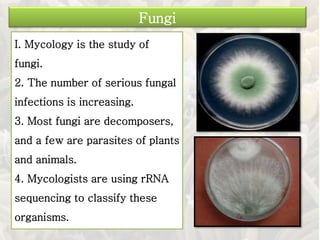
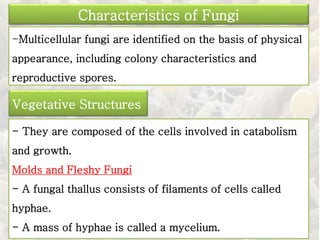
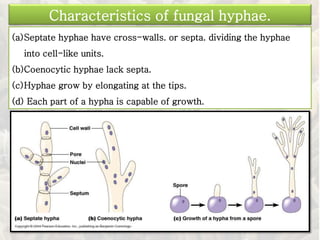

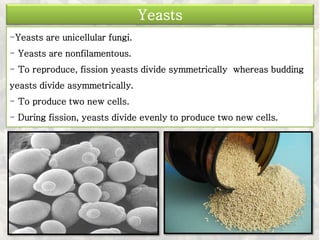
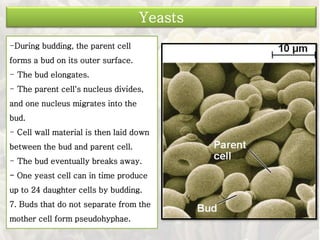
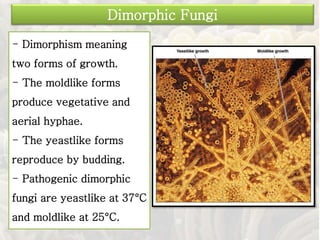
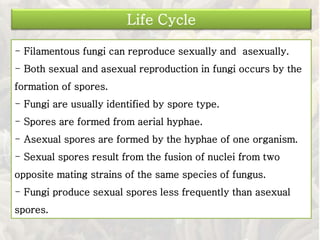
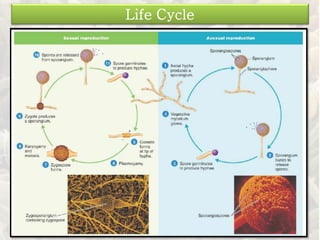
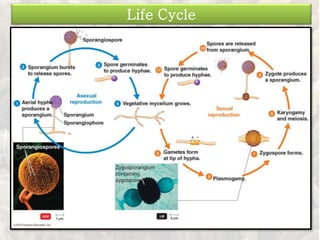
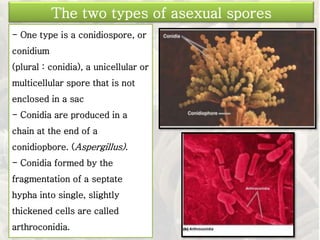
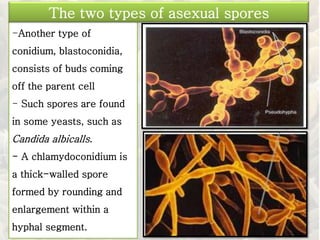
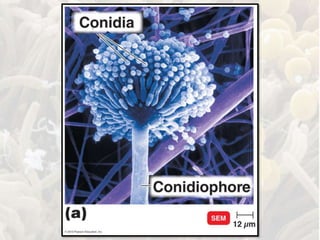
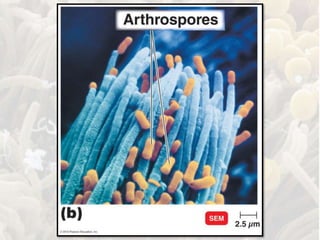
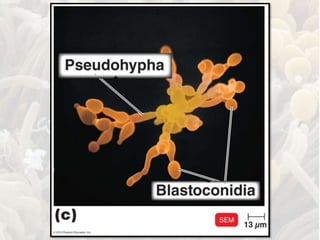
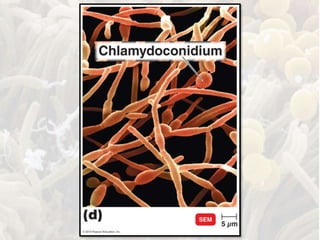
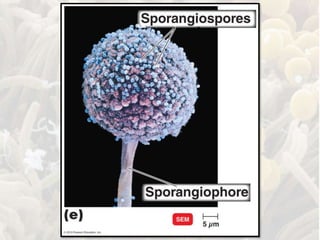
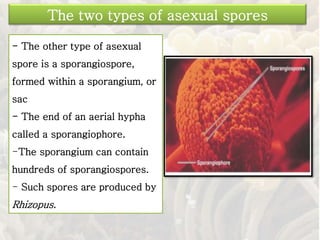
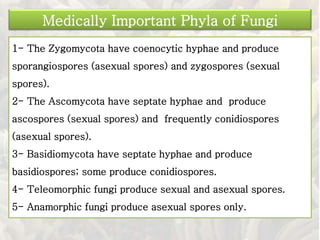
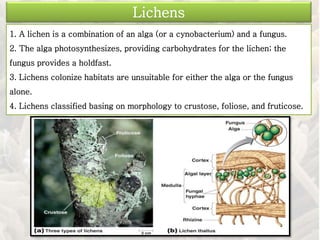
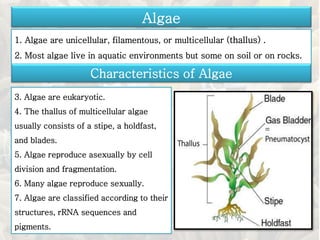
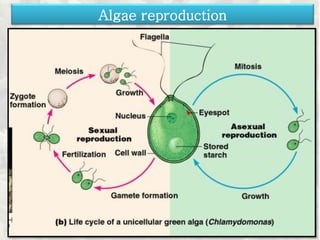
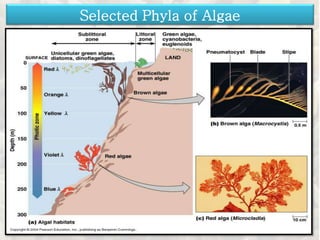
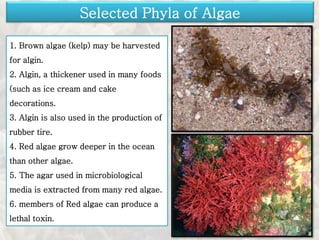
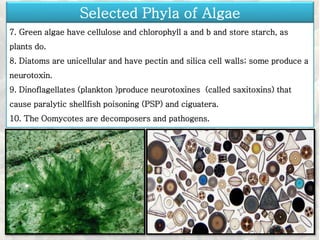
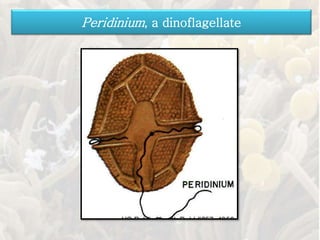
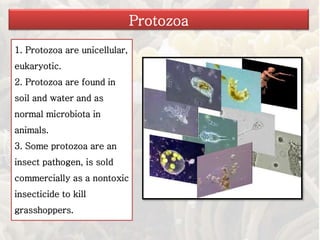
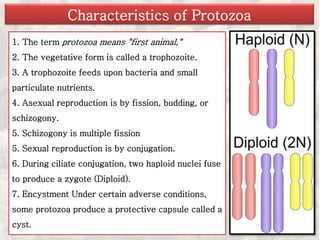
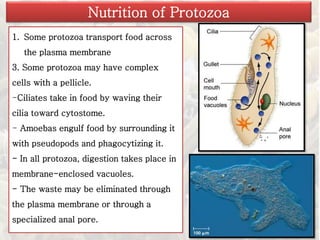
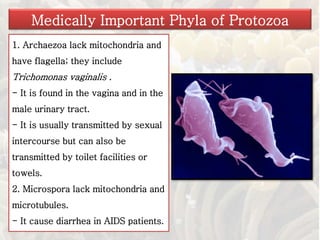
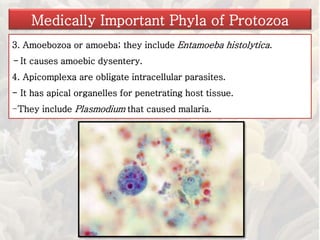
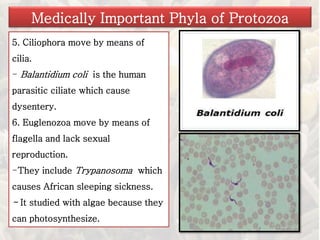

1. The document discusses microbiology topics including fungi, yeasts, algae, lichens, and protozoa. It describes their structures, life cycles, and importance. 2. Key details include that fungi reproduce sexually through spores formed from the fusion of nuclei from two strains, and asexually through spores like conidiospores. Algae range from unicellular to multicellular and include economically important types. Protozoa are unicellular eukaryotes found in various habitats, some of which can cause diseases in humans. 3. The document provides information to help understand these microorganisms, including characteristics, life cycles, importance, and examples of medically relevant types


