Intervention and
Common Formative
Assessment
Troy Mooney
Life School
August 8, 2012
The Big 4 Questions
 What   do we want our students to know?
    TEKS
    Assessed curriculum
    Scope and Sequence
 How   will we know if they know it?
    Observation
    Assessments and Common Formative
     Assessments
    STAAR/EOC
The Big 4 Questions
 Whatwill we do for those who don’t know
 what we want them to know?
    Move on
    Reteach
 Whatwill we do for those who master
 what we want them to know?
    Make them wait on the rest
    Make them do the intervention anyway
    Enrichment
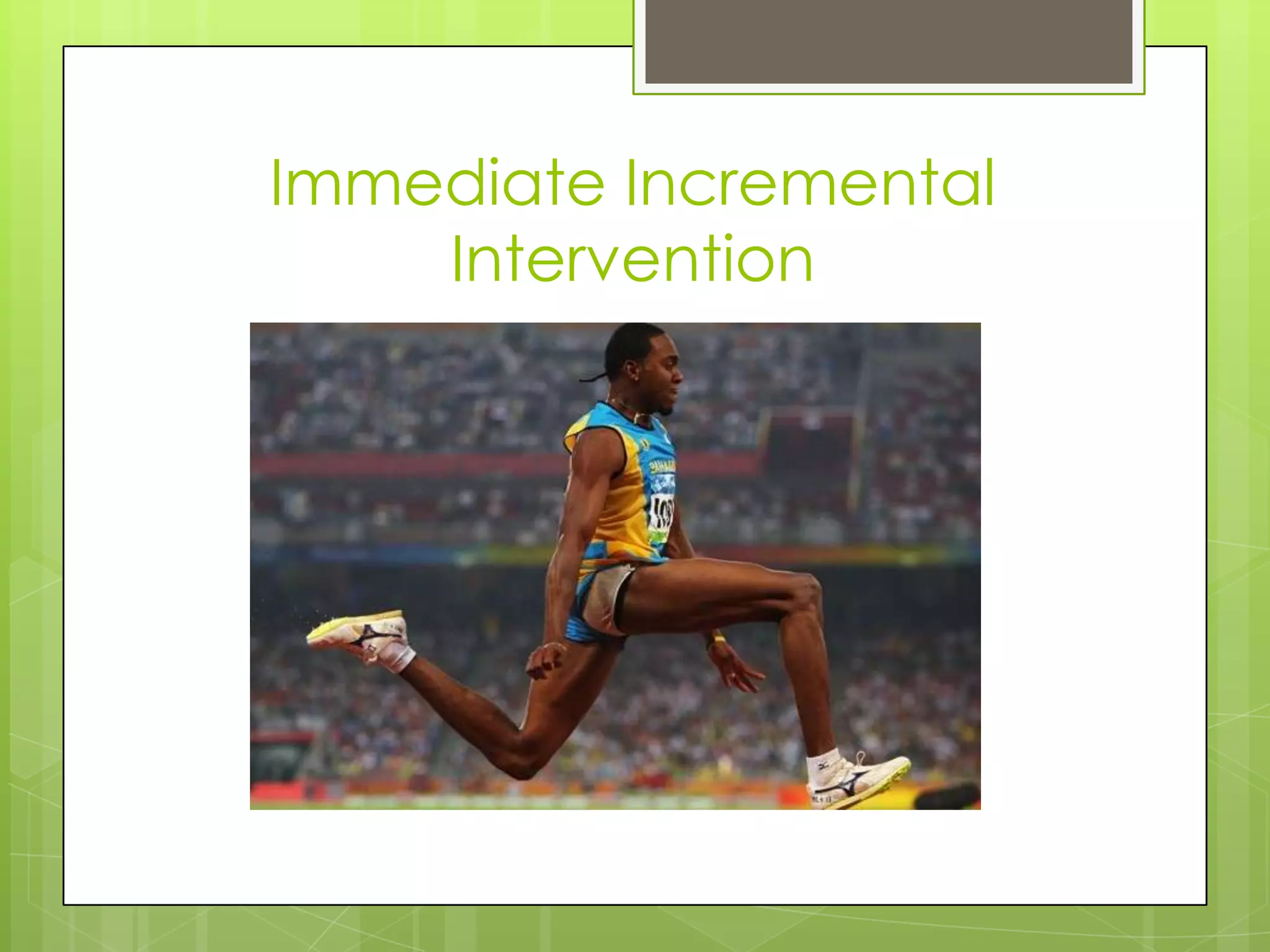
Immediate Incremental
          Intervention
 What   is it?
    Intervention
    Incremental
    Immediate


 Where
      in schools do we already see
 Immediate Incremental Intervention?
Immediate Incremental
    Intervention
Immediate Incremental
         Intervention
 Provide  immediate feedback all
  throughout practice(formative
  assessment)
 Use intervention to work on skills that the
  student has not mastered
 Use assessment results to plan and adjust
  instruction and intervention
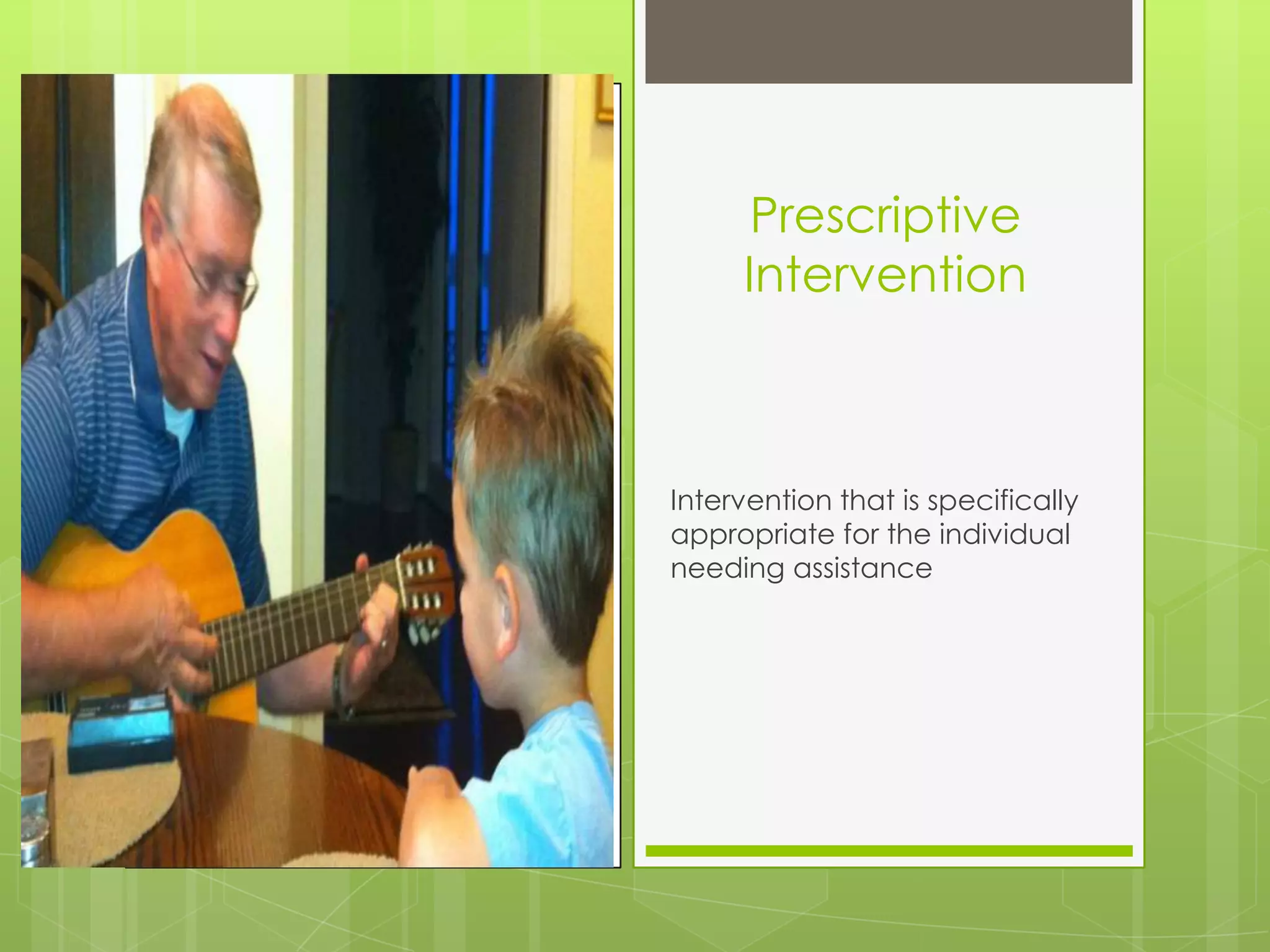
Prescriptive
     Intervention


Intervention that is specifically
appropriate for the individual
needing assistance
What is not Prescriptive
          Intervention?
   Grouping students together with others who
    made approximately the same score on a
    recent test or benchmark

   Placing every student of the same grade level
    into the same intervention regardless of need

   Failing to regularly adjust interventions and
    regroup students based on assessment results
The Evolution of Intervention
            Plans
During the School Day
          Intervention
 Problems   with afterschool only solutions

 Problems   with in-class only solutions

 Duringthe School Day Intervention is the
 foundation, the other solutions build from
 there but cannot be the foundation
Evolution of Intervention:
            Choice 1
 Put
    all of the struggling students in the
 same class, but give them the best
 teacher
Evolution of Intervention:
            Choice 2
 Assignall students extra classes for
 subjects in which the campus has
 deficiencies

 An upgrade to choice 2 would be to only
 assign those students with deficiencies an
 extra class
Evolution of Intervention:
            Choice 3
 Pullstudents from Electives and Specials
  to work on deficiencies

 An upgrade to choice 3 would be to pull
  students in groups with those who have
  similar deficiencies
Evolution of Intervention:
            Choice 4
 Create an intervention period during the
 day for immediate, incremental,
 intervention that is prescriptive for each
 individual student’s needs

 Allowthose students who do not need
 intervention to attend enrichment classes,
 other electives, clubs, or other innovative
 options
An example of Choice 4
 http://www.youtube.com/watch?v=J8DQ
 ugVxHv0&feature=player_embedded
Some other tips for Choice 4
 Place  students in intervention groups
  before school starts
 Do not preclude students from specials
  and electives
 All available staff assist during intervention
  period
 Teachers or grade level teams conduct
  weekly reviews of intervention groups,
  activities, and assessment results
Discussion
 Howdo you and your campus currently
 handle intervention efforts?
Common Formative
  Assessments
What is Formative Assessment?
A   physical exam rather than an autopsy
What is Formative Assessment?
 Test, Teach, and Now what vs. Test, Teach
  and Move on
 An assessment that will be used for
  instruction rather than only for a grade
  (which usually signifies the end of
  instruction to the student)
What is Formative Assessment?
 Includesdescriptive feedback rather than
 only a grade

 Guides   reteach and intervention

 Providesstudent with understanding of
 their mastery level
Common Formative
          Assessments
   Developed by the staff

   Based on the scope and sequence,
    administered on a schedule (window)

   Reviewed and checked by the staff and
    curriculum department

   Administered at regular intervals
Common Formative
          Assessments
   Used to measure student mastery not staff
    performance

   Results are shared to all

   Interventions and groups are planned
    based on results

   Spiraled content from previous assessments
CFAs and Curriculum
              Alignment
 CFAsare a good check for curriculum
 alignment
    Poorly delivered instruction that is aligned is
     superior to well delivered instruction that is
     not aligned to assessment or curriculum
Other Benefits of CFAs
   CFAs tell us how all of our students (especially
    struggling) are doing

   CFAs tell us about the success of our
    instruction

   CFAs are formative and not summative, they
    are for adjusting instruction and selecting and
    planning for intervention, not for teacher
    evaluation
Some Thoughts on Assessment
 Weneed assessment because students
 don’t learn all that we teach. If they did
 we would not need grade books.
Some Thoughts on Assessment
 Weneed assessment because we can’t
 predict what students will learn no matter
 how we design the lesson
Some Thoughts on Assessment
 Too   many tests!
    Do all assessments have to be tests?
    CFAs may replace some of your existing
     tests
Rick Wormeli on Formative
         Assessment
 http://www.youtube.com/watch?v=rJxFXj
 fB_B4

Prescriptive intervention and common assessment shared

  • 1.
    Intervention and Common Formative Assessment TroyMooney Life School August 8, 2012
  • 2.
    The Big 4Questions  What do we want our students to know?  TEKS  Assessed curriculum  Scope and Sequence  How will we know if they know it?  Observation  Assessments and Common Formative Assessments  STAAR/EOC
  • 3.
    The Big 4Questions  Whatwill we do for those who don’t know what we want them to know?  Move on  Reteach  Whatwill we do for those who master what we want them to know?  Make them wait on the rest  Make them do the intervention anyway  Enrichment
  • 4.
    Immediate Incremental Intervention  What is it?  Intervention  Incremental  Immediate  Where in schools do we already see Immediate Incremental Intervention?
  • 5.
  • 6.
    Immediate Incremental Intervention  Provide immediate feedback all throughout practice(formative assessment)  Use intervention to work on skills that the student has not mastered  Use assessment results to plan and adjust instruction and intervention
  • 7.
    Prescriptive Intervention Intervention that is specifically appropriate for the individual needing assistance
  • 8.
    What is notPrescriptive Intervention?  Grouping students together with others who made approximately the same score on a recent test or benchmark  Placing every student of the same grade level into the same intervention regardless of need  Failing to regularly adjust interventions and regroup students based on assessment results
  • 9.
    The Evolution ofIntervention Plans
  • 10.
    During the SchoolDay Intervention  Problems with afterschool only solutions  Problems with in-class only solutions  Duringthe School Day Intervention is the foundation, the other solutions build from there but cannot be the foundation
  • 11.
    Evolution of Intervention: Choice 1  Put all of the struggling students in the same class, but give them the best teacher
  • 12.
    Evolution of Intervention: Choice 2  Assignall students extra classes for subjects in which the campus has deficiencies  An upgrade to choice 2 would be to only assign those students with deficiencies an extra class
  • 13.
    Evolution of Intervention: Choice 3  Pullstudents from Electives and Specials to work on deficiencies  An upgrade to choice 3 would be to pull students in groups with those who have similar deficiencies
  • 14.
    Evolution of Intervention: Choice 4  Create an intervention period during the day for immediate, incremental, intervention that is prescriptive for each individual student’s needs  Allowthose students who do not need intervention to attend enrichment classes, other electives, clubs, or other innovative options
  • 15.
    An example ofChoice 4  http://www.youtube.com/watch?v=J8DQ ugVxHv0&feature=player_embedded
  • 16.
    Some other tipsfor Choice 4  Place students in intervention groups before school starts  Do not preclude students from specials and electives  All available staff assist during intervention period  Teachers or grade level teams conduct weekly reviews of intervention groups, activities, and assessment results
  • 17.
    Discussion  Howdo youand your campus currently handle intervention efforts?
  • 18.
    Common Formative Assessments
  • 19.
    What is FormativeAssessment? A physical exam rather than an autopsy
  • 20.
    What is FormativeAssessment?  Test, Teach, and Now what vs. Test, Teach and Move on  An assessment that will be used for instruction rather than only for a grade (which usually signifies the end of instruction to the student)
  • 21.
    What is FormativeAssessment?  Includesdescriptive feedback rather than only a grade  Guides reteach and intervention  Providesstudent with understanding of their mastery level
  • 22.
    Common Formative Assessments  Developed by the staff  Based on the scope and sequence, administered on a schedule (window)  Reviewed and checked by the staff and curriculum department  Administered at regular intervals
  • 23.
    Common Formative Assessments  Used to measure student mastery not staff performance  Results are shared to all  Interventions and groups are planned based on results  Spiraled content from previous assessments
  • 24.
    CFAs and Curriculum Alignment  CFAsare a good check for curriculum alignment  Poorly delivered instruction that is aligned is superior to well delivered instruction that is not aligned to assessment or curriculum
  • 25.
    Other Benefits ofCFAs  CFAs tell us how all of our students (especially struggling) are doing  CFAs tell us about the success of our instruction  CFAs are formative and not summative, they are for adjusting instruction and selecting and planning for intervention, not for teacher evaluation
  • 26.
    Some Thoughts onAssessment  Weneed assessment because students don’t learn all that we teach. If they did we would not need grade books.
  • 27.
    Some Thoughts onAssessment  Weneed assessment because we can’t predict what students will learn no matter how we design the lesson
  • 28.
    Some Thoughts onAssessment  Too many tests!  Do all assessments have to be tests?  CFAs may replace some of your existing tests
  • 29.
    Rick Wormeli onFormative Assessment  http://www.youtube.com/watch?v=rJxFXj fB_B4