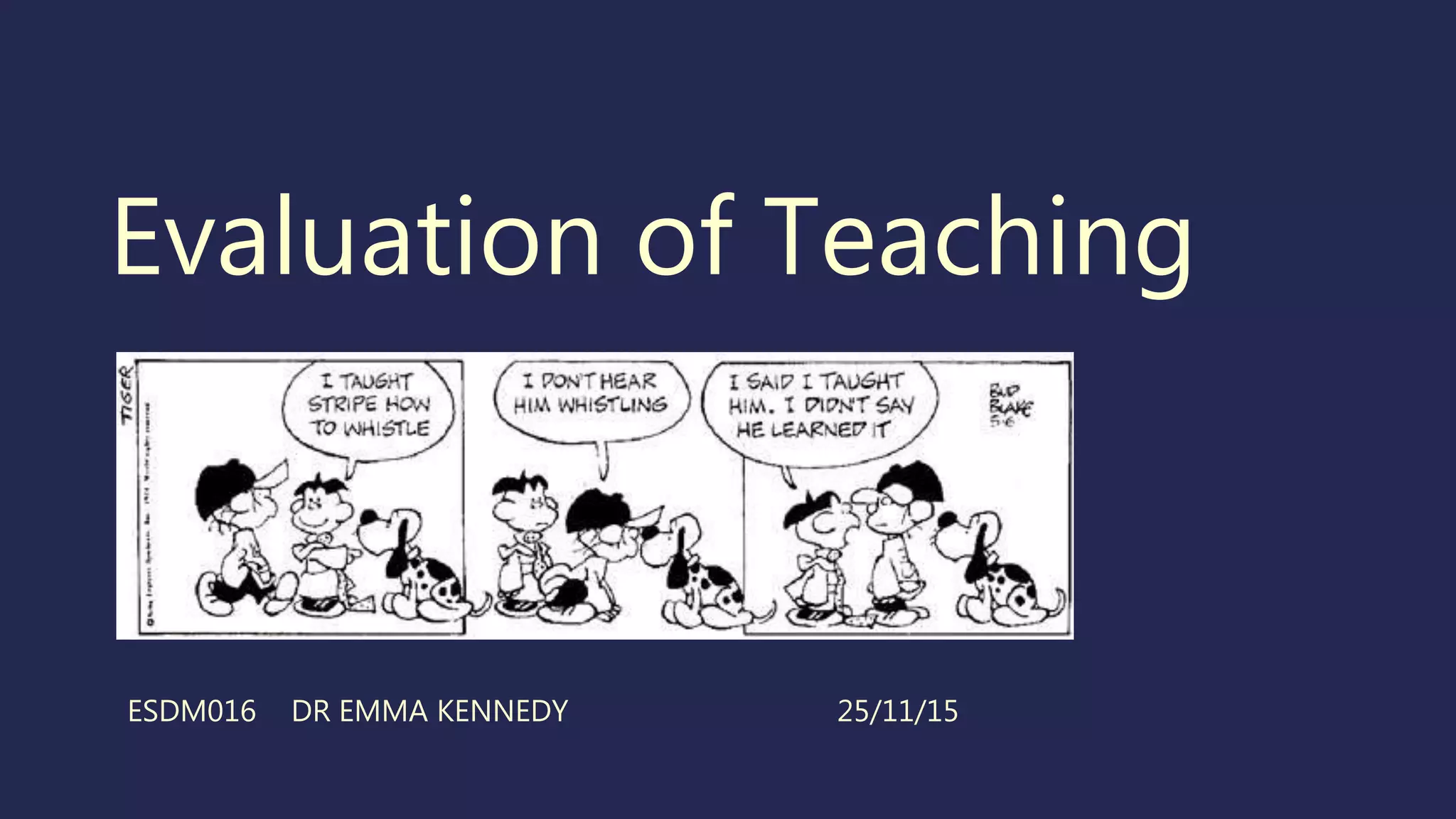
Evaluation of Teaching
ESDM016 DR EMMA KENNEDY 25/11/15
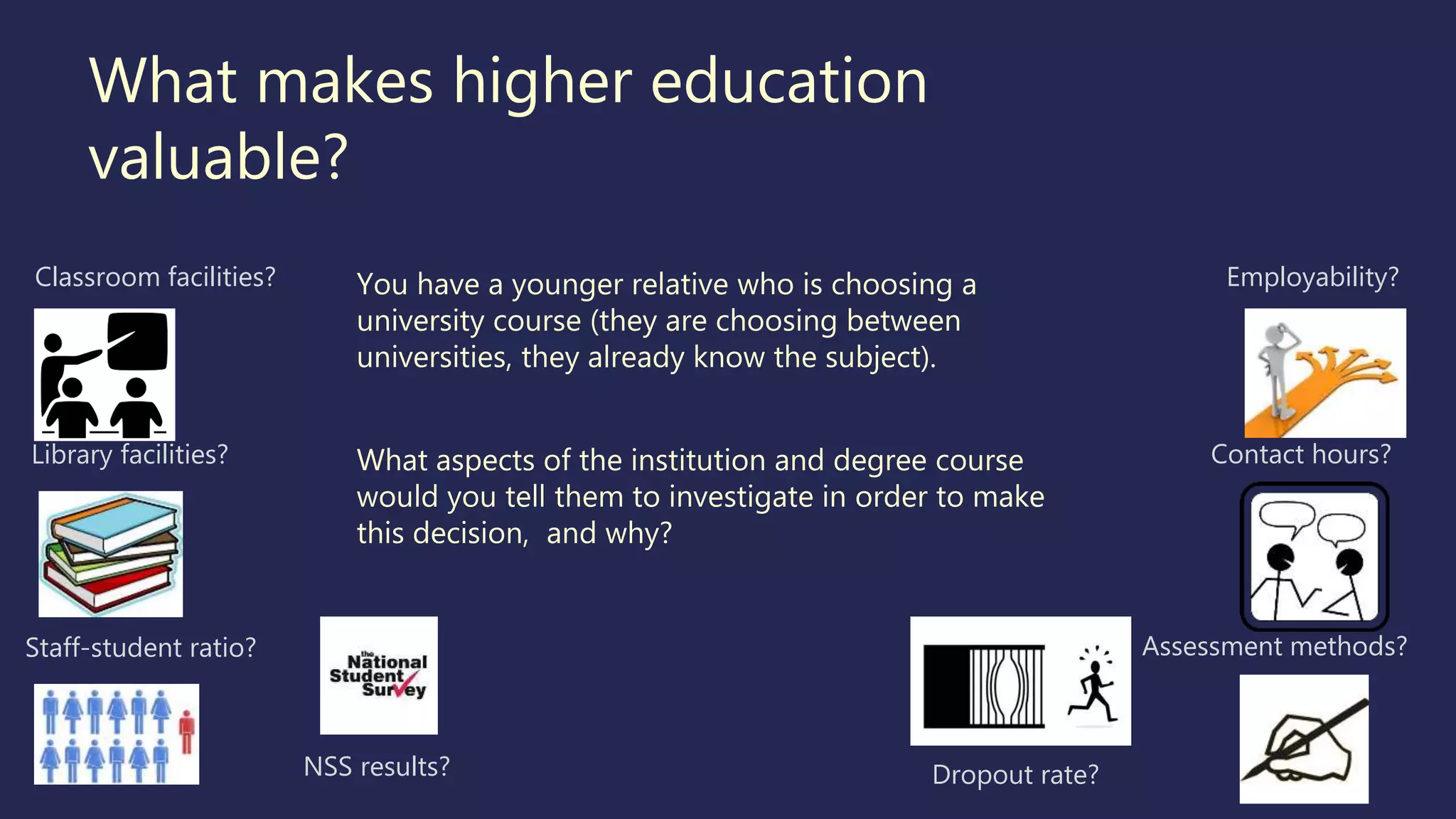
What makes higher education
valuable?
You have a younger relative who is choosing a
university course (they are choosing between
universities, they already know the subject).
What aspects of the institution and degree course
would you tell them to investigate in order to make
this decision, and why?
Classroom facilities?
Staff-student ratio?
Library facilities?
Employability?
Contact hours?
Assessment methods?
NSS results? Dropout rate?
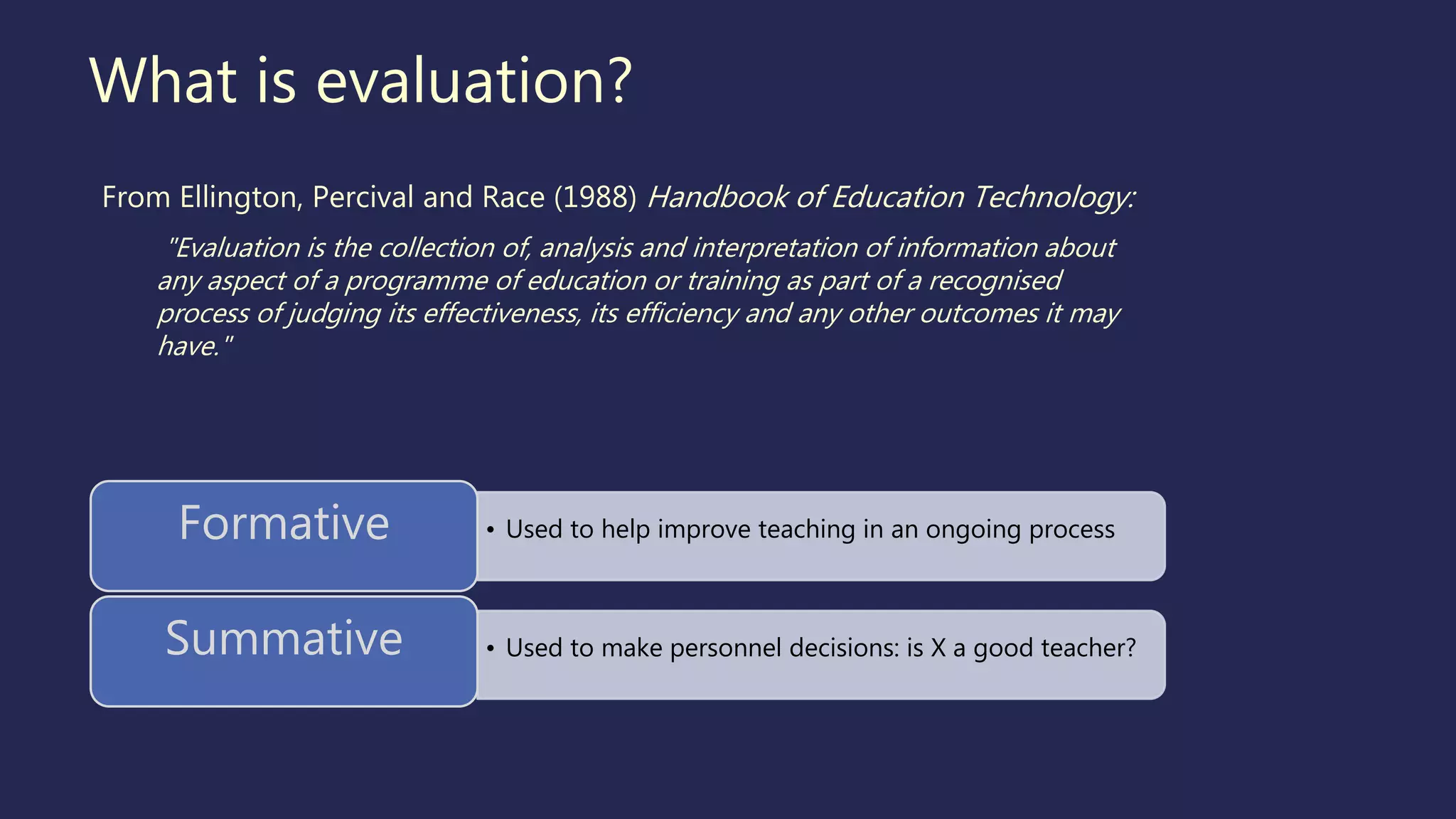
What is evaluation?
From Ellington, Percival and Race (1988) Handbook of Education Technology:
"Evaluation is the collection of, analysis and interpretation of information about
any aspect of a programme of education or training as part of a recognised
process of judging its effectiveness, its efficiency and any other outcomes it may
have."
• Used to help improve teaching in an ongoing processFormative
• Used to make personnel decisions: is X a good teacher?Summative
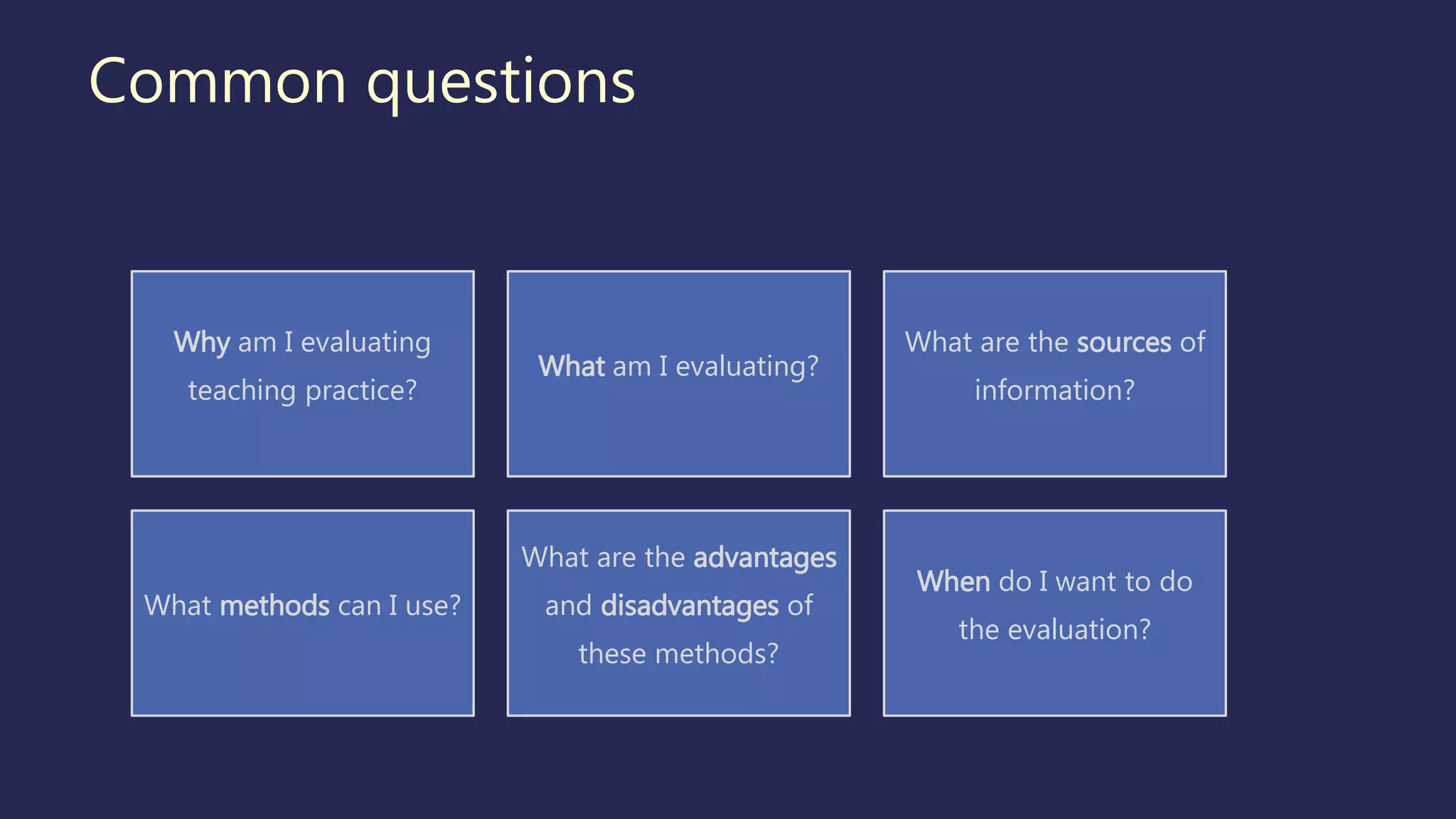
Common questions
Why am I evaluating
teaching practice?
What am I evaluating?
What are the sources of
information?
What methods can I use?
What are the advantages
and disadvantages of
these methods?
When do I want to do
the evaluation?
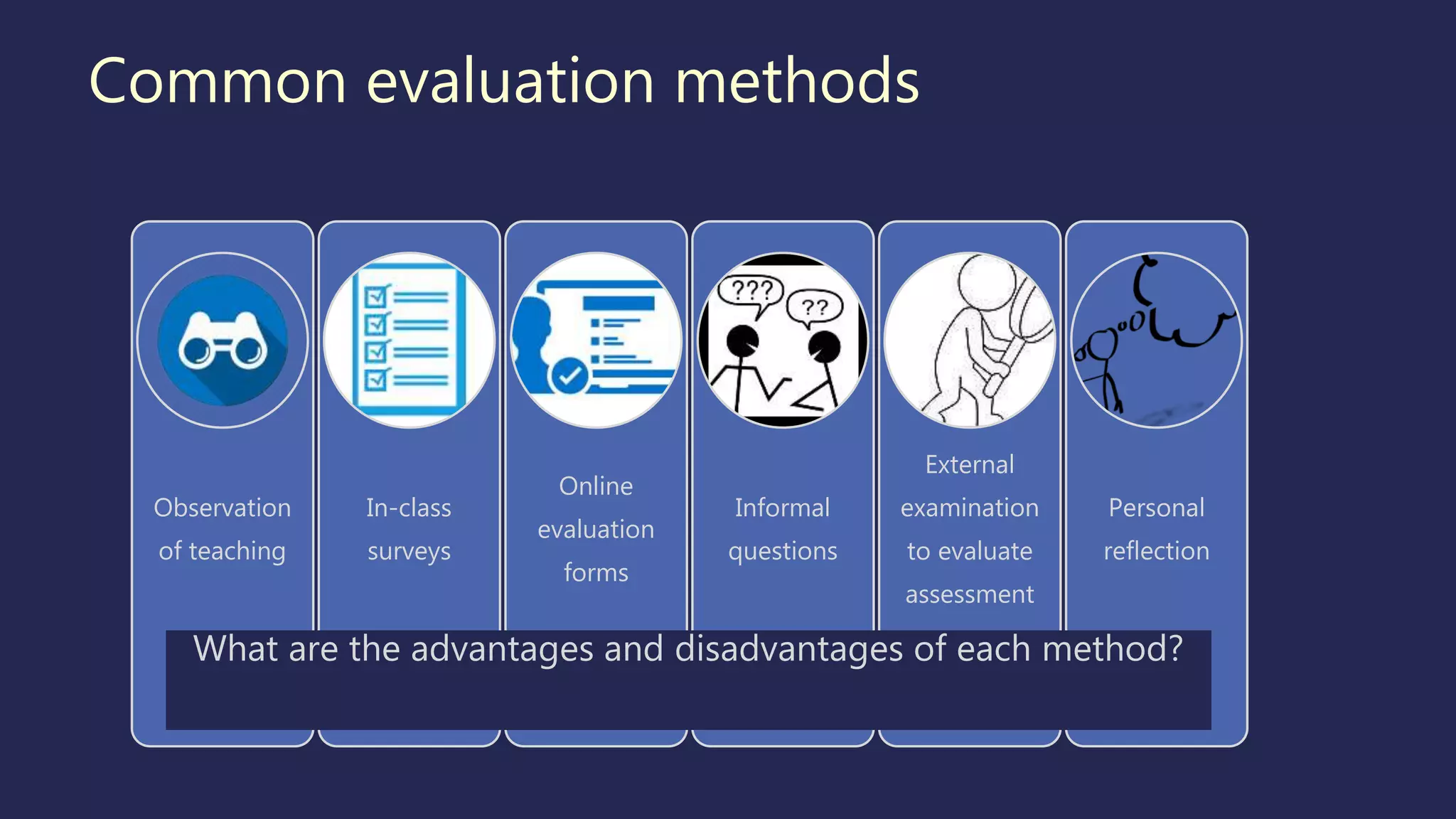
Common evaluation methods
Observation
of teaching
In-class
surveys
Online
evaluation
forms
Informal
questions
External
examination
to evaluate
assessment
Personal
reflection
What are the advantages and disadvantages of each method?
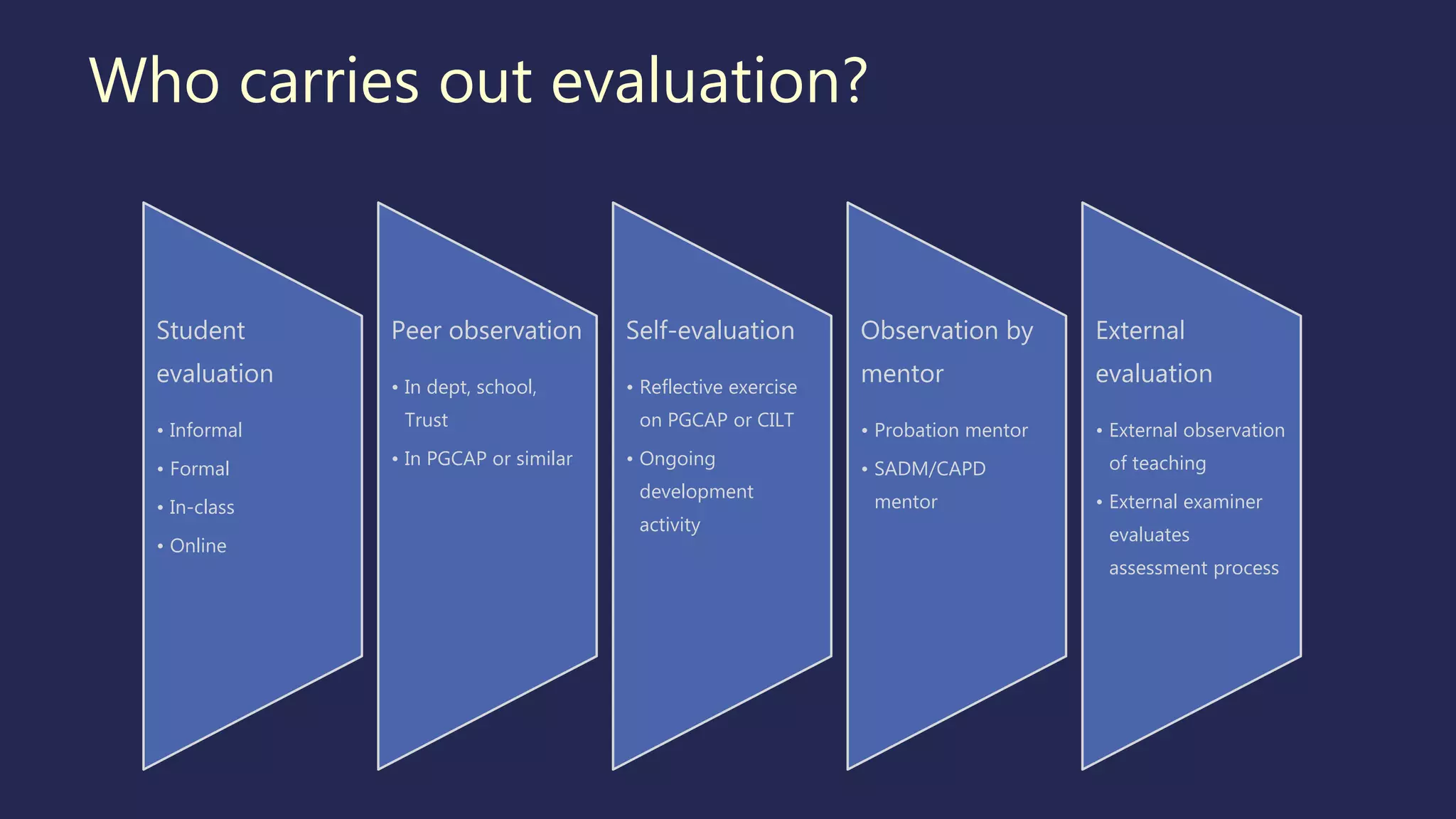
Who carries out evaluation?
Student
evaluation
• Informal
• Formal
• In-class
• Online
Peer observation
• In dept, school,
Trust
• In PGCAP or similar
Self-evaluation
• Reflective exercise
on PGCAP or CILT
• Ongoing
development
activity
Observation by
mentor
• Probation mentor
• SADM/CAPD
mentor
External
evaluation
• External observation
of teaching
• External examiner
evaluates
assessment process
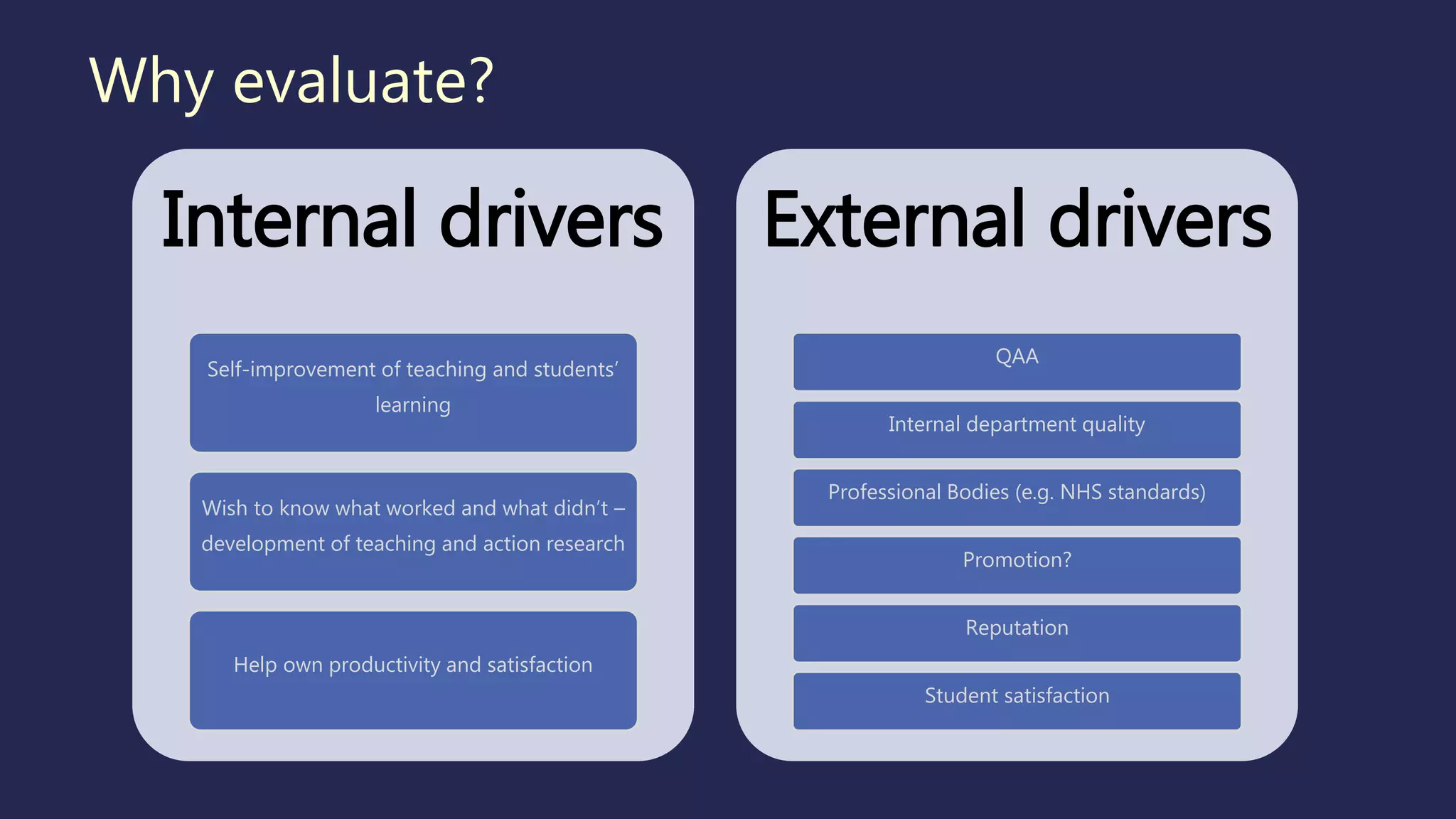
Why evaluate?
Internal drivers
Self-improvement of teaching and students’
learning
Wish to know what worked and what didn’t –
development of teaching and action research
Help own productivity and satisfaction
External drivers
QAA
Internal department quality
Professional Bodies (e.g. NHS standards)
Promotion?
Reputation
Student satisfaction
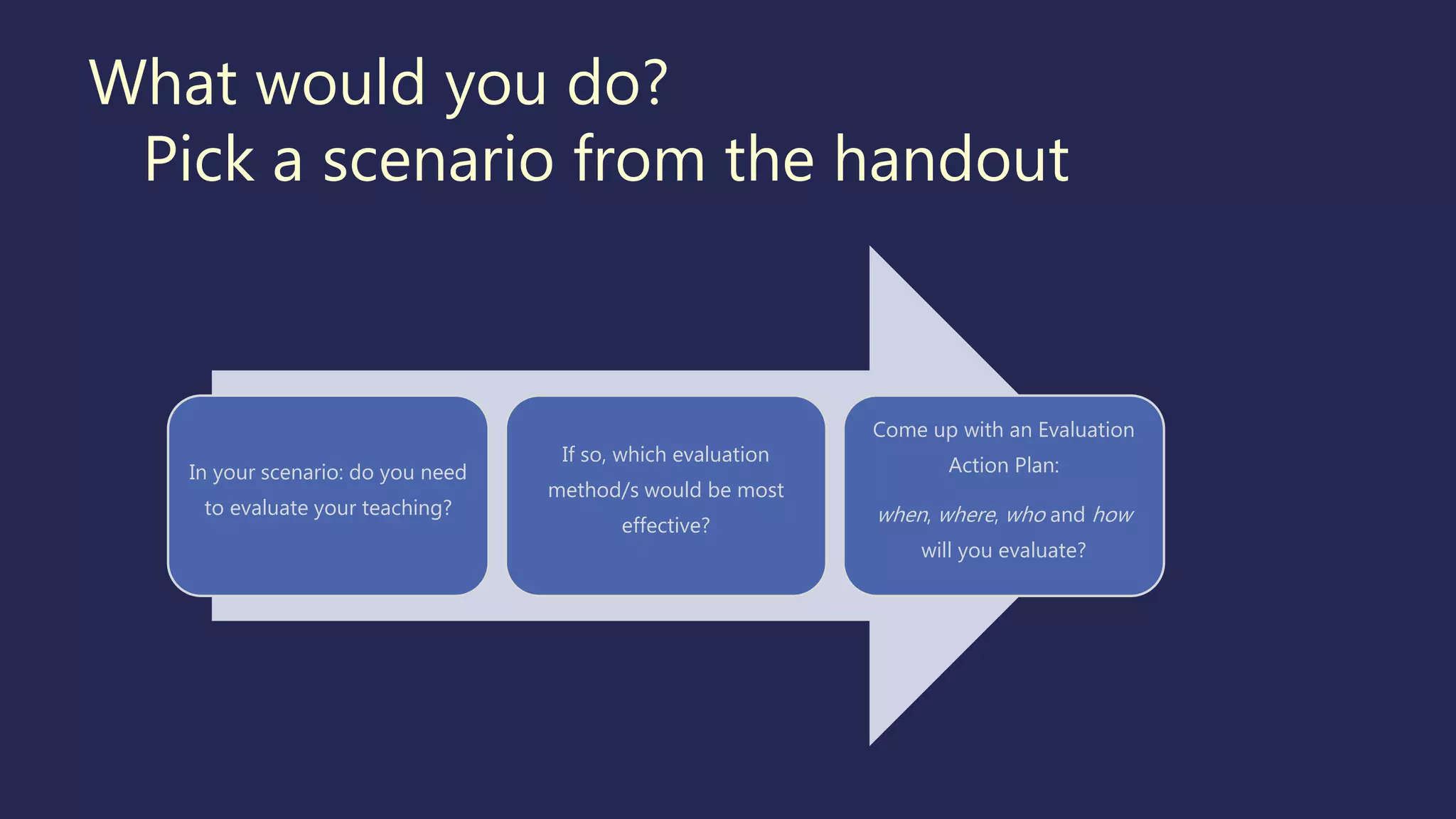
What would you do?
Pick a scenario from the handout
In your scenario: do you need
to evaluate your teaching?
If so, which evaluation
method/s would be most
effective?
Come up with an Evaluation
Action Plan:
when, where, who and how
will you evaluate?
Issues with evaluation
Student evaluations mirror performance (& teacher effectiveness?)
 Clayson (2009), ‘Student Evaluations of Teaching: Are they related to what students
learn?’ Journal of Marketing Education 31:1, 16-30. This meta-analysis discovers a
small relationship between positive evaluation and effective learning but that it
differs between disciplines and teaching contexts.
Gender bias in student evaluations
 Driscoll and Hunt (2014), ‘What’s in a Name: Exposing Gender Bias in Student
Ratings of Teaching’ Innovative Higher Education 40, 291-303. This study examines
student ratings of teachers of online courses – students rated the same teacher
lower when they thought it was a woman than when they thought it was a man.
 Interesting tool on gender bias in SET (using ratemyprofessor.com:
http://benschmidt.org/profGender/
Statistical problems with Student Evaluation of Teaching (SET)
 Stark and Freishtat (2014) find that SET overall throws up lots of statistical
problems and caution against measuring performance by SET alone.
Do these
issues mean
that we
shouldn’t
evaluate?

Evaluating Teaching in Higher Education

  • 1.
    Evaluation of Teaching ESDM016DR EMMA KENNEDY 25/11/15
  • 2.
    What makes highereducation valuable? You have a younger relative who is choosing a university course (they are choosing between universities, they already know the subject). What aspects of the institution and degree course would you tell them to investigate in order to make this decision, and why? Classroom facilities? Staff-student ratio? Library facilities? Employability? Contact hours? Assessment methods? NSS results? Dropout rate?
  • 3.
    What is evaluation? FromEllington, Percival and Race (1988) Handbook of Education Technology: "Evaluation is the collection of, analysis and interpretation of information about any aspect of a programme of education or training as part of a recognised process of judging its effectiveness, its efficiency and any other outcomes it may have." • Used to help improve teaching in an ongoing processFormative • Used to make personnel decisions: is X a good teacher?Summative
  • 4.
    Common questions Why amI evaluating teaching practice? What am I evaluating? What are the sources of information? What methods can I use? What are the advantages and disadvantages of these methods? When do I want to do the evaluation?
  • 5.
    Common evaluation methods Observation ofteaching In-class surveys Online evaluation forms Informal questions External examination to evaluate assessment Personal reflection What are the advantages and disadvantages of each method?
  • 6.
    Who carries outevaluation? Student evaluation • Informal • Formal • In-class • Online Peer observation • In dept, school, Trust • In PGCAP or similar Self-evaluation • Reflective exercise on PGCAP or CILT • Ongoing development activity Observation by mentor • Probation mentor • SADM/CAPD mentor External evaluation • External observation of teaching • External examiner evaluates assessment process
  • 7.
    Why evaluate? Internal drivers Self-improvementof teaching and students’ learning Wish to know what worked and what didn’t – development of teaching and action research Help own productivity and satisfaction External drivers QAA Internal department quality Professional Bodies (e.g. NHS standards) Promotion? Reputation Student satisfaction
  • 8.
    What would youdo? Pick a scenario from the handout In your scenario: do you need to evaluate your teaching? If so, which evaluation method/s would be most effective? Come up with an Evaluation Action Plan: when, where, who and how will you evaluate?
  • 9.
    Issues with evaluation Studentevaluations mirror performance (& teacher effectiveness?)  Clayson (2009), ‘Student Evaluations of Teaching: Are they related to what students learn?’ Journal of Marketing Education 31:1, 16-30. This meta-analysis discovers a small relationship between positive evaluation and effective learning but that it differs between disciplines and teaching contexts. Gender bias in student evaluations  Driscoll and Hunt (2014), ‘What’s in a Name: Exposing Gender Bias in Student Ratings of Teaching’ Innovative Higher Education 40, 291-303. This study examines student ratings of teachers of online courses – students rated the same teacher lower when they thought it was a woman than when they thought it was a man.  Interesting tool on gender bias in SET (using ratemyprofessor.com: http://benschmidt.org/profGender/ Statistical problems with Student Evaluation of Teaching (SET)  Stark and Freishtat (2014) find that SET overall throws up lots of statistical problems and caution against measuring performance by SET alone. Do these issues mean that we shouldn’t evaluate?