Module #8
What is Assessment?
 Assessment is the shared process of gathering
purposeful and systematic measurement for
documentation, reflection, and improvement of
both student learning and institutional practices
Why is Assessment Important?
 Assessment helps students learn, teachers improve
instruction, administrators decide how to allocate
resources, and policymakers evaluate the efficacy of
education programs
Assessment is Not Evaluation!
 Evaluation analyzes and uses data to make judgments
about student performance
 Assessment analyzes and uses data to make decisions
about improvements in teaching strategies and
student learning
Types of Assessment
 Formative
 Interim/benchmarked
 Summative
Other types…
 Diagnostic
 Performance
 Individual or group projects
 Portfolios
 Student logs
 Journals
Formative Assessment
 Definition
 Process of gathering evidence of student learning
 Providing feedback
 Adjusting instruction strategies to enhance achievement
 Learners can change behaviors
 E.g., discussion, quiz, etc.
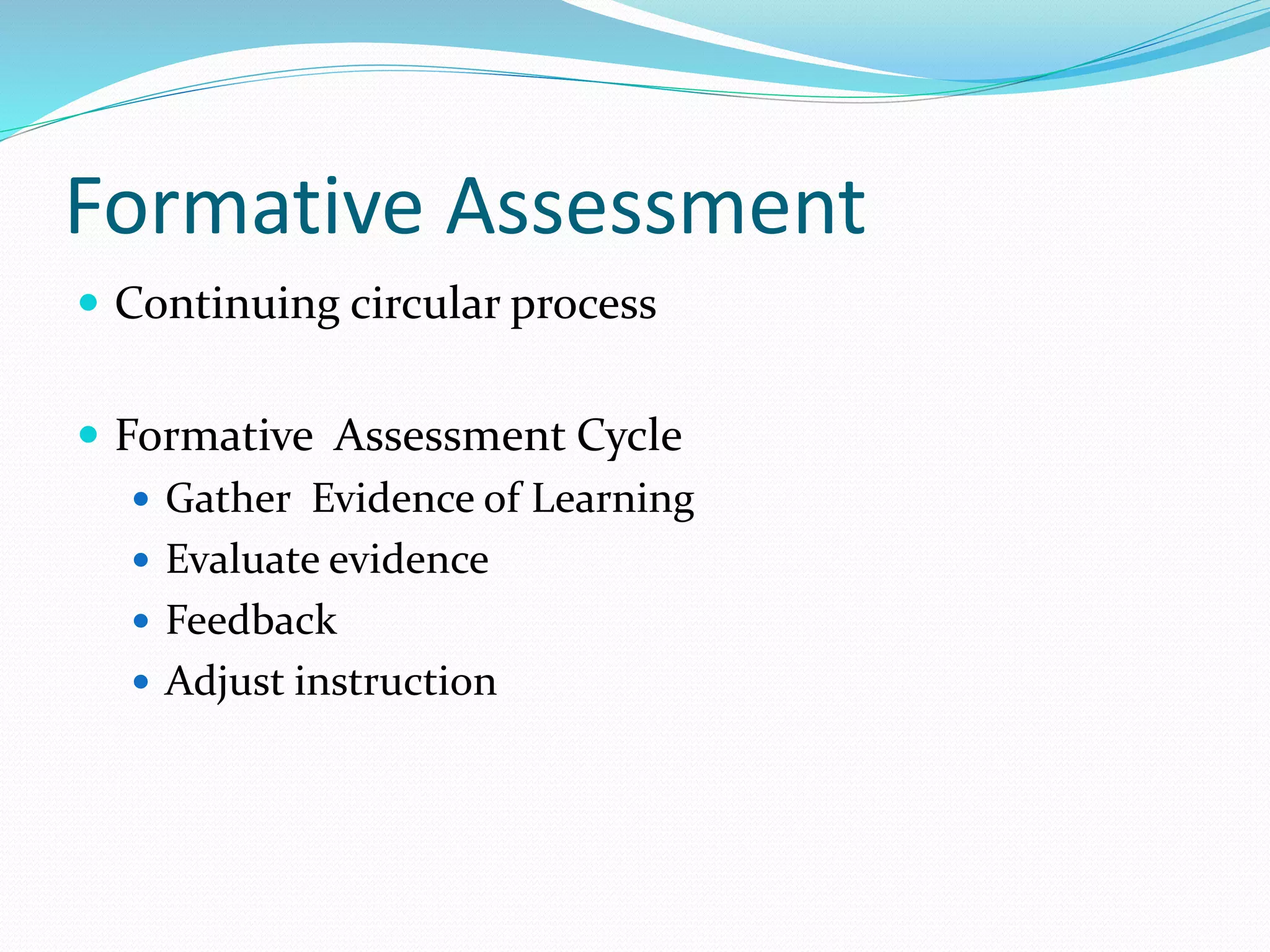
Formative Assessment
 Continuing circular process
 Formative Assessment Cycle
 Gather Evidence of Learning
 Evaluate evidence
 Feedback
 Adjust instruction
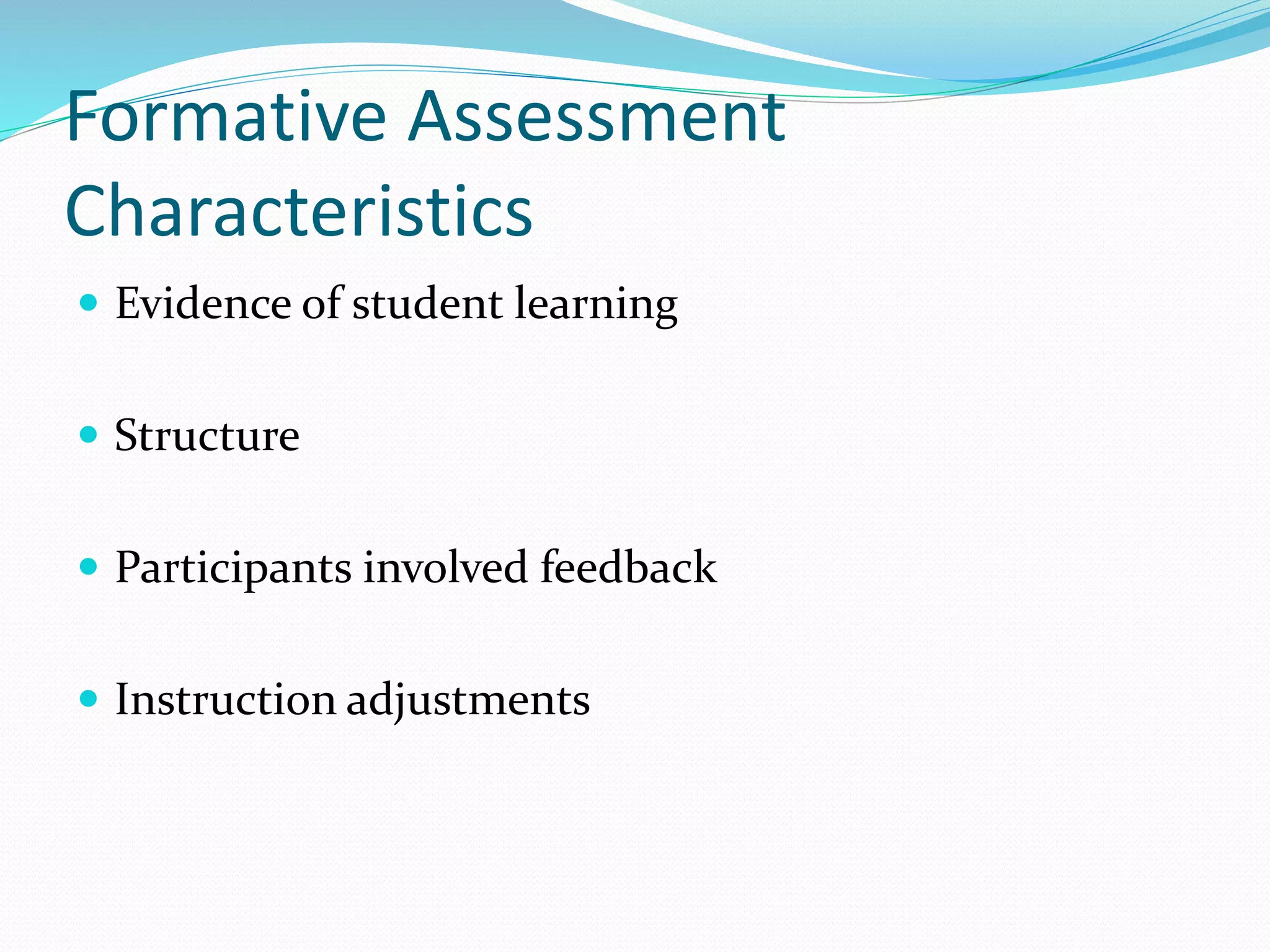
Formative Assessment
Characteristics
 Evidence of student learning
 Structure
 Participants involved feedback
 Instruction adjustments
Formative Assessment
Characteristics
 Teacher-student interaction
 Student self assessment
 Attributions for success
Formative Assessment
 Informal Formative Assessment
 Observation
 Formal Formative Assessment
 Quizzes
Informal Formative Assessment
 Informal observations
 Questioning
 Spontaneous
 Immediate Feedback and instructional adjustments
Formal Formative Assessment
 Planned activity – individual or groups
 Specific sequence of activities
 Pre-assessments
Formal Formative Assessment
 6 Types of formal formative assessment
 Structured exercises
 Pretests
 Homework
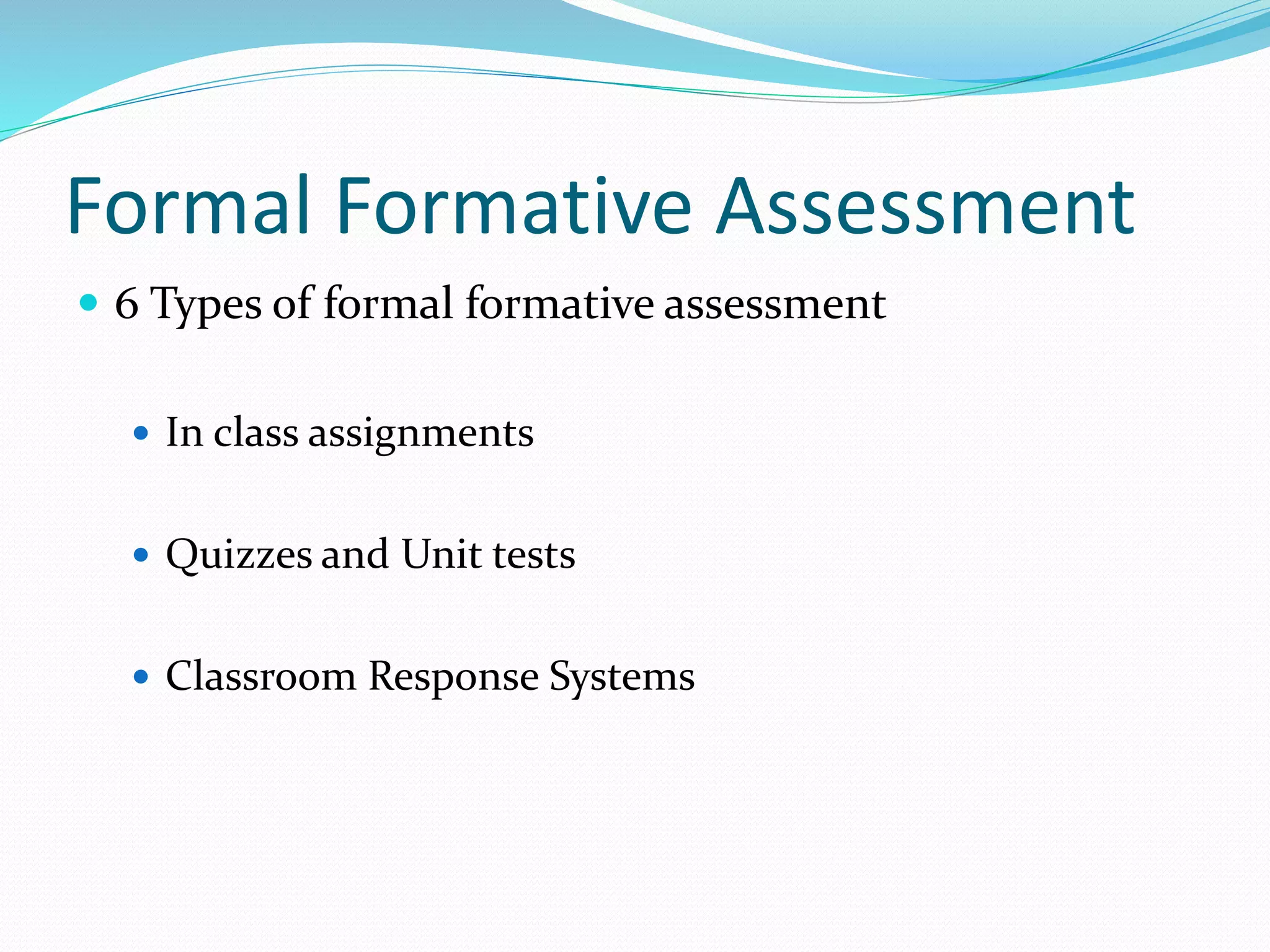
Formal Formative Assessment
 6 Types of formal formative assessment
 In class assignments
 Quizzes and Unit tests
 Classroom Response Systems
Formative Assessment
 Interim Assessments (Benchmark)
 Periodic testing throughout the school year
 E.g., every six weeks or chapter test
 Low-level/ little or no student feedback
 More formal style using projects, written assignments,
and tests
Formative Assessment
 Effective Feedback
 Engage students
 Differentiate
 Feedback about student work, not the student
Formative Assessment
 Types of Feedback
 Goal-directed
 Scaffolded
 Self-Referenced
 Standards-Referenced
 Norm-referenced
Formative Assessment
 The nature of the feedback
 Amount
 Timing
 Mode
 Audience
 Type of task
Formative Assessment
 Differentiated Formative Feedback
 Learner Level of Ability
 Grade Level
 Subject
Formative Assessment
 Effective Feedback
 Relates performance to standards
 Relates performance to strategies
 Indicates progress
 Indicates corrective action
 Specific
 Focuses on errors
 Focuses on effort attributions
Formative Assessment – Mastery
Learning
 Instructional Adjustments
 Further reading
 Individual tutoring
 Group work (small group / whole class)
Formative Assessment– Mastery
Learning
 Instructional Adjustments
 Questioning
 Work sheets
 Peer tutoring
 Clarifying criteria
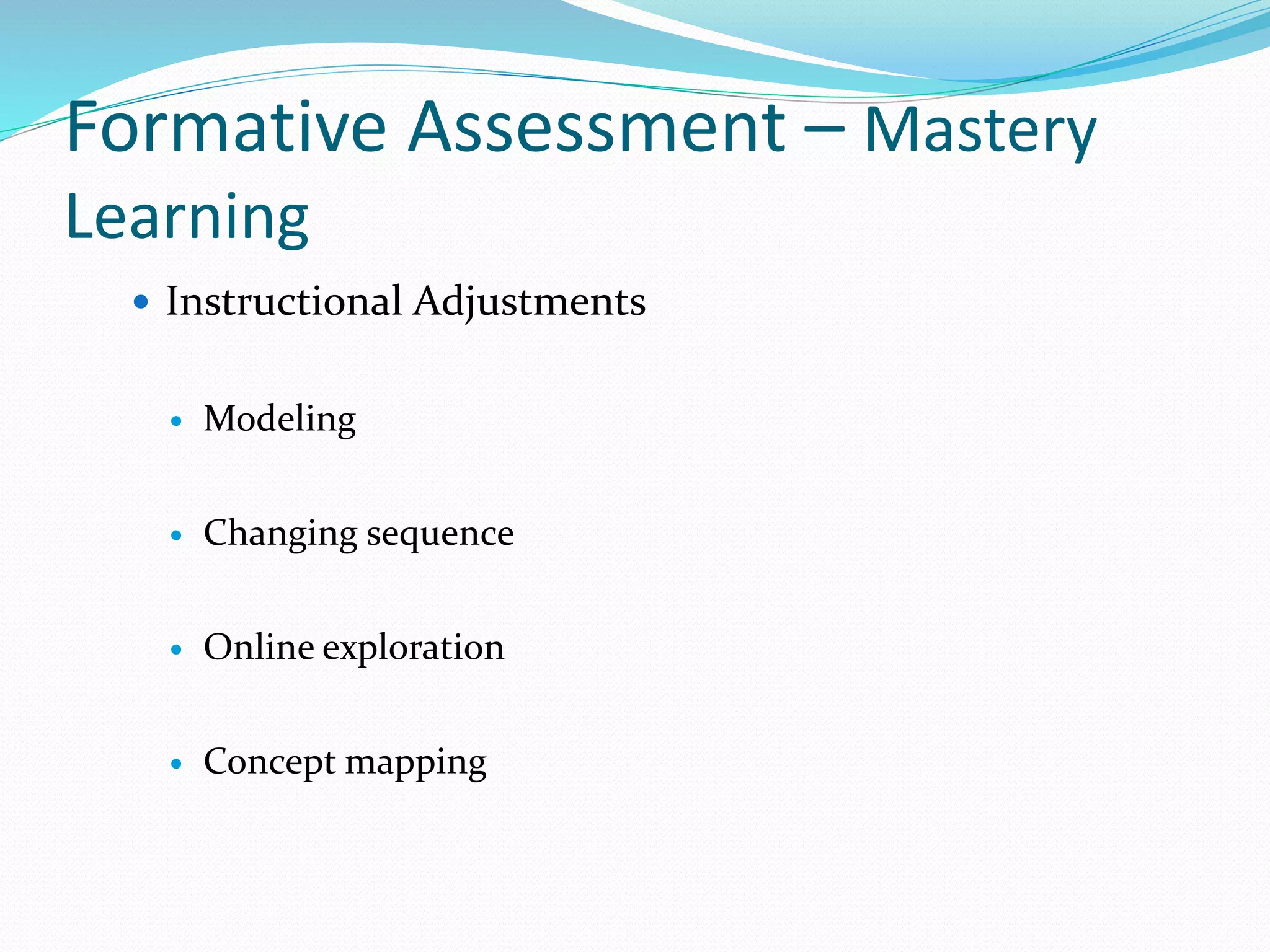
Formative Assessment – Mastery
Learning
 Instructional Adjustments
 Modeling
 Changing sequence
 Online exploration
 Concept mapping
Formative Assessment
 Differentiated Instruction
 Response to Intervention
 Learning progressions
Summative Assessment
 Planning Summative Assessment
 End of a large chunk of learning
 Review what you want to do
 Criteria for ensuring high-quality assessment
 Representative sampling
 E.g., standardized testing, final exams, major cumulative
projects, research projects, etc.
Summative Assessment
 Preparing students – Assessment – Taking skills
 Teach assessment taking skills
 Test length, format, types of questions, etc.
 Review
Summative Assessment
 Preparing students
 Item type and format
 Assessment anxiety
Summative Assessment
 Conducting Summative Assessments
 When should they be scheduled
 When should they be created
Summative Assessment
 Creating Summative Assessments
 Assessment Directions
 Arrange Items
 Physical Layout
Assessment Types Comparison Table
Category Formative Interim Summative
Timeline and
frequency
Often and during
the course of
instruction
Pre-determine
points of time
End of unit and/or
end of year
Grading Optional Necessary Necessary
Opportunity to
improve student
learning
High Med or high
(depending on
implementation)
Low
Purpose • Adjust
instruction
• Provide
feedback to
student
• Adjust
instruction
• Report cards
• District reports
• Report cards
• District and
state reports
Assessment Question Types
 Multiple choice
 Matching, sequencing
 True-false, yes-no
 Factual short answer, fill-ins
 Higher-order shot answer
 Short or long essay
 Reliability and Validity
Delivery Types
 Paper and pencil
 Online
 Computer adaptive testing
Scoring Types
 Human scoring
 Distributed scoring
 Automated scoring
 Rubric
 Checklists

EDIT3318

  • 1.
  • 2.
    What is Assessment? Assessment is the shared process of gathering purposeful and systematic measurement for documentation, reflection, and improvement of both student learning and institutional practices
  • 3.
    Why is AssessmentImportant?  Assessment helps students learn, teachers improve instruction, administrators decide how to allocate resources, and policymakers evaluate the efficacy of education programs
  • 4.
    Assessment is NotEvaluation!  Evaluation analyzes and uses data to make judgments about student performance  Assessment analyzes and uses data to make decisions about improvements in teaching strategies and student learning
  • 5.
    Types of Assessment Formative  Interim/benchmarked  Summative Other types…  Diagnostic  Performance  Individual or group projects  Portfolios  Student logs  Journals
  • 6.
    Formative Assessment  Definition Process of gathering evidence of student learning  Providing feedback  Adjusting instruction strategies to enhance achievement  Learners can change behaviors  E.g., discussion, quiz, etc.
  • 7.
    Formative Assessment  Continuingcircular process  Formative Assessment Cycle  Gather Evidence of Learning  Evaluate evidence  Feedback  Adjust instruction
  • 8.
    Formative Assessment Characteristics  Evidenceof student learning  Structure  Participants involved feedback  Instruction adjustments
  • 9.
    Formative Assessment Characteristics  Teacher-studentinteraction  Student self assessment  Attributions for success
  • 10.
    Formative Assessment  InformalFormative Assessment  Observation  Formal Formative Assessment  Quizzes
  • 11.
    Informal Formative Assessment Informal observations  Questioning  Spontaneous  Immediate Feedback and instructional adjustments
  • 12.
    Formal Formative Assessment Planned activity – individual or groups  Specific sequence of activities  Pre-assessments
  • 13.
    Formal Formative Assessment 6 Types of formal formative assessment  Structured exercises  Pretests  Homework
  • 14.
    Formal Formative Assessment 6 Types of formal formative assessment  In class assignments  Quizzes and Unit tests  Classroom Response Systems
  • 15.
    Formative Assessment  InterimAssessments (Benchmark)  Periodic testing throughout the school year  E.g., every six weeks or chapter test  Low-level/ little or no student feedback  More formal style using projects, written assignments, and tests
  • 16.
    Formative Assessment  EffectiveFeedback  Engage students  Differentiate  Feedback about student work, not the student
  • 17.
    Formative Assessment  Typesof Feedback  Goal-directed  Scaffolded  Self-Referenced  Standards-Referenced  Norm-referenced
  • 18.
    Formative Assessment  Thenature of the feedback  Amount  Timing  Mode  Audience  Type of task
  • 19.
    Formative Assessment  DifferentiatedFormative Feedback  Learner Level of Ability  Grade Level  Subject
  • 20.
    Formative Assessment  EffectiveFeedback  Relates performance to standards  Relates performance to strategies  Indicates progress  Indicates corrective action  Specific  Focuses on errors  Focuses on effort attributions
  • 21.
    Formative Assessment –Mastery Learning  Instructional Adjustments  Further reading  Individual tutoring  Group work (small group / whole class)
  • 22.
    Formative Assessment– Mastery Learning Instructional Adjustments  Questioning  Work sheets  Peer tutoring  Clarifying criteria
  • 23.
    Formative Assessment –Mastery Learning  Instructional Adjustments  Modeling  Changing sequence  Online exploration  Concept mapping
  • 24.
    Formative Assessment  DifferentiatedInstruction  Response to Intervention  Learning progressions
  • 25.
    Summative Assessment  PlanningSummative Assessment  End of a large chunk of learning  Review what you want to do  Criteria for ensuring high-quality assessment  Representative sampling  E.g., standardized testing, final exams, major cumulative projects, research projects, etc.
  • 26.
    Summative Assessment  Preparingstudents – Assessment – Taking skills  Teach assessment taking skills  Test length, format, types of questions, etc.  Review
  • 27.
    Summative Assessment  Preparingstudents  Item type and format  Assessment anxiety
  • 28.
    Summative Assessment  ConductingSummative Assessments  When should they be scheduled  When should they be created
  • 29.
    Summative Assessment  CreatingSummative Assessments  Assessment Directions  Arrange Items  Physical Layout
  • 30.
    Assessment Types ComparisonTable Category Formative Interim Summative Timeline and frequency Often and during the course of instruction Pre-determine points of time End of unit and/or end of year Grading Optional Necessary Necessary Opportunity to improve student learning High Med or high (depending on implementation) Low Purpose • Adjust instruction • Provide feedback to student • Adjust instruction • Report cards • District reports • Report cards • District and state reports
  • 31.
    Assessment Question Types Multiple choice  Matching, sequencing  True-false, yes-no  Factual short answer, fill-ins  Higher-order shot answer  Short or long essay  Reliability and Validity
  • 32.
    Delivery Types  Paperand pencil  Online  Computer adaptive testing
  • 33.
    Scoring Types  Humanscoring  Distributed scoring  Automated scoring  Rubric  Checklists

Editor's Notes

  • #3 Shared between instructor and students Purposeful – careful planning Systematic – continuous and organized effort Measurement – quantifying meaningful data Documentation – evidence Reflection – about learning Improvement – quality of education
  • #4 Shared between instructor and students Purposeful – careful planning Systematic – continuous and organized effort Measurement – quantifying meaningful data Documentation – evidence Reflection – about learning Improvement – quality of education
  • #6 assesses a student’s strengths, weaknesses, knowledge, and skills prior to instruction E.g. prior knowledge, levels, interest, motivation, etc. for preparation of class, analyzing students’ characteristics
  • #7 Short-term Help integrate Immediate feedback
  • #18 Specific learning goal, motivation Support to enhance learning by breaking a task down into smaller parts Vygotsky’s zone of proximal development Compare student work with previous performance Where the standards define the expected learning (kind of goal-directed) Compare a student’s performance to what other studnets have achieved.
  • #19 Oral, written, and demonstration of correct procedures Ability, grade level, subjects, etc.
  • #26 Feedback is limited Compare to standard or groups
  • #33 Computer adaptive testing (CAT): Algorithms assess a student’s performance based on a sequence of right or wrong answers or previous responses
  • #34 Computer adaptive testing (CAT): Algorithms assess a student’s performance based on a sequence of right or wrong answers or previous responses