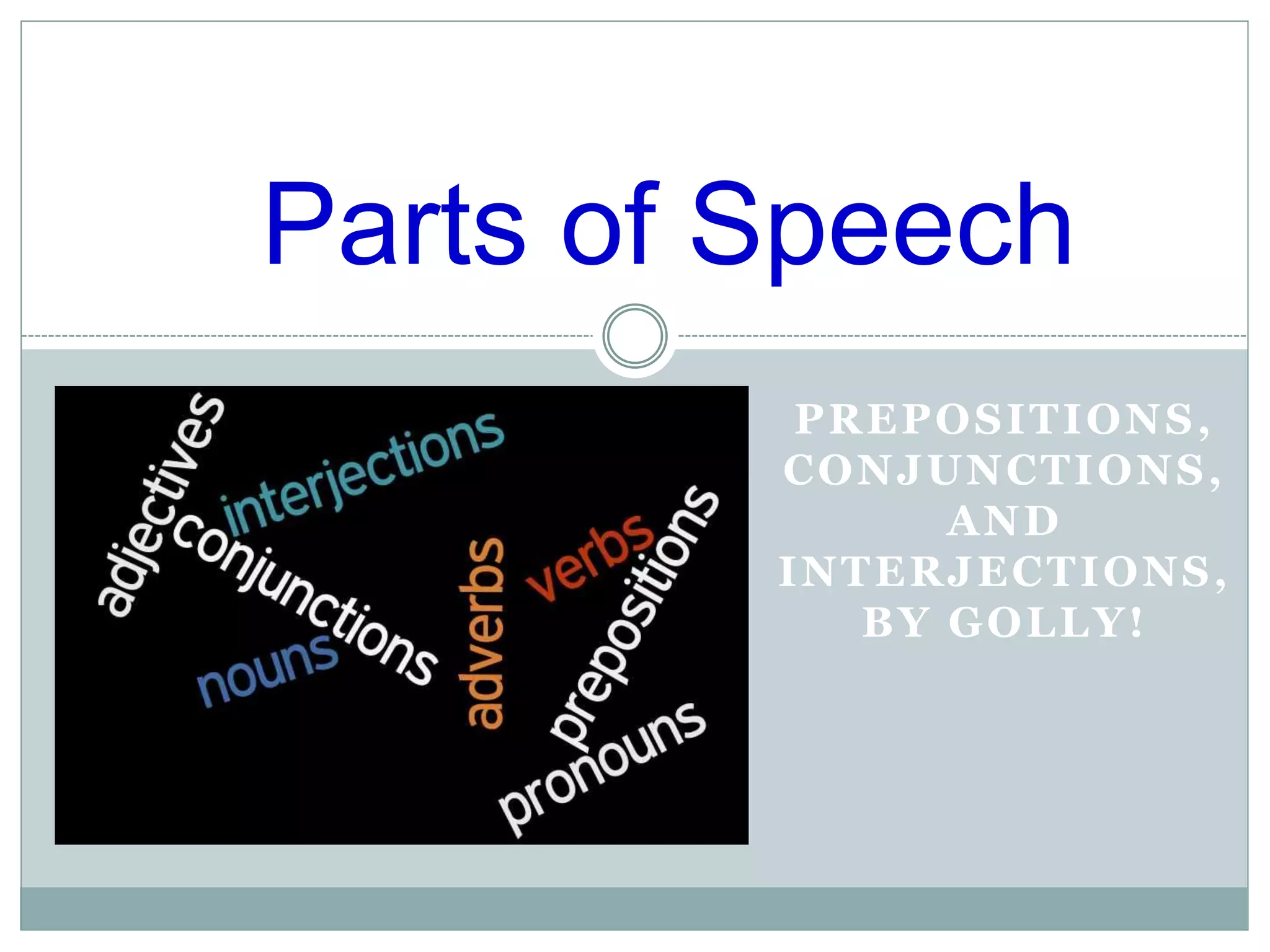
PREPOSITIONS,
CONJUNCTIONS,
AND
INTERJECTIONS,
BY GOLLY!
Parts of Speech
Prepositions
 A preposition is a word, which introduces a phrase.
 An object follows it.
 The object is always a noun or a pronoun.
 Sometimes there may be adjectives describing the
noun.
Examples
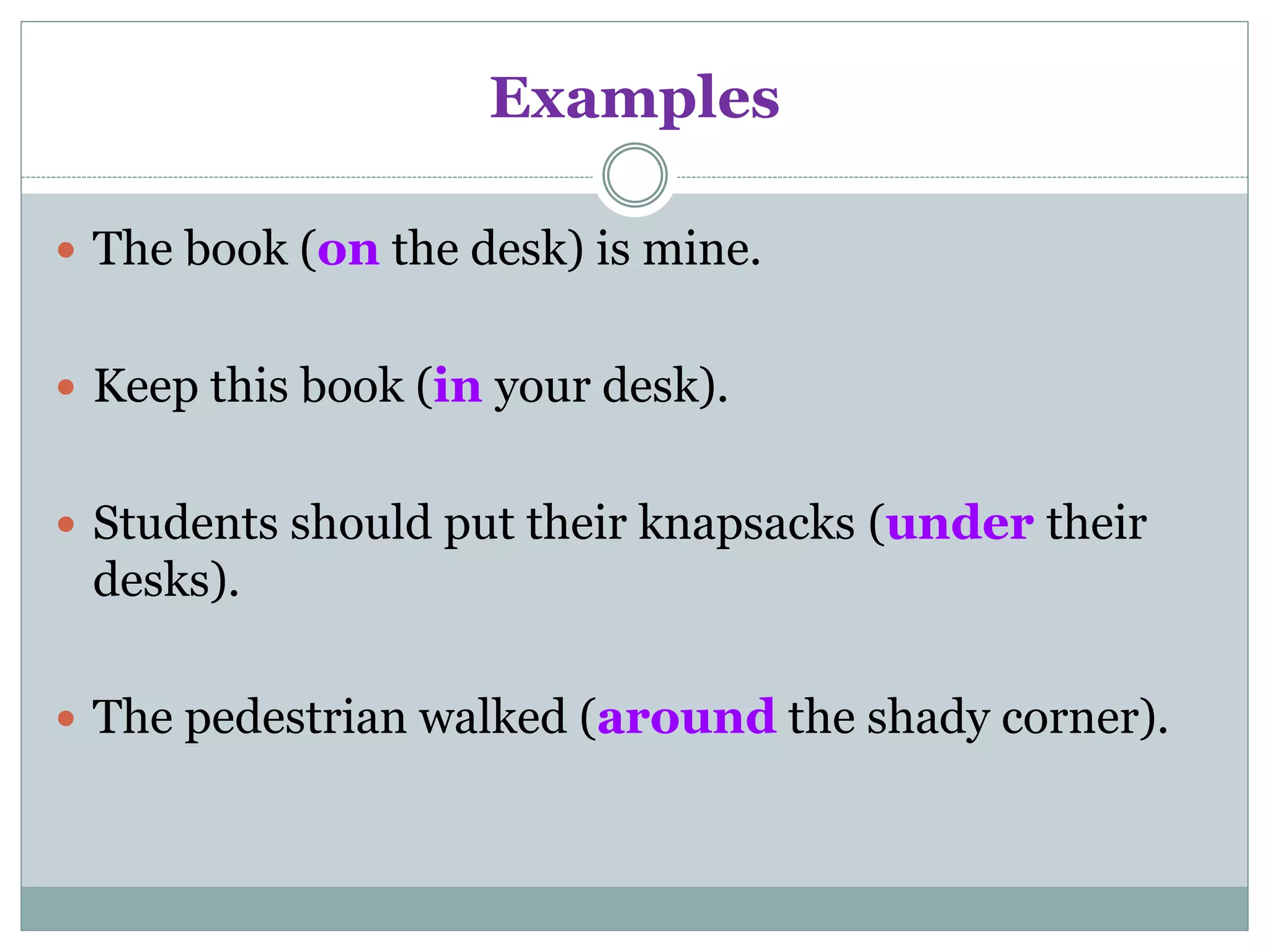
 The book (on the desk) is mine.
 Keep this book (in your desk).
 Students should put their knapsacks (under their
desks).
 The pedestrian walked (around the shady corner).
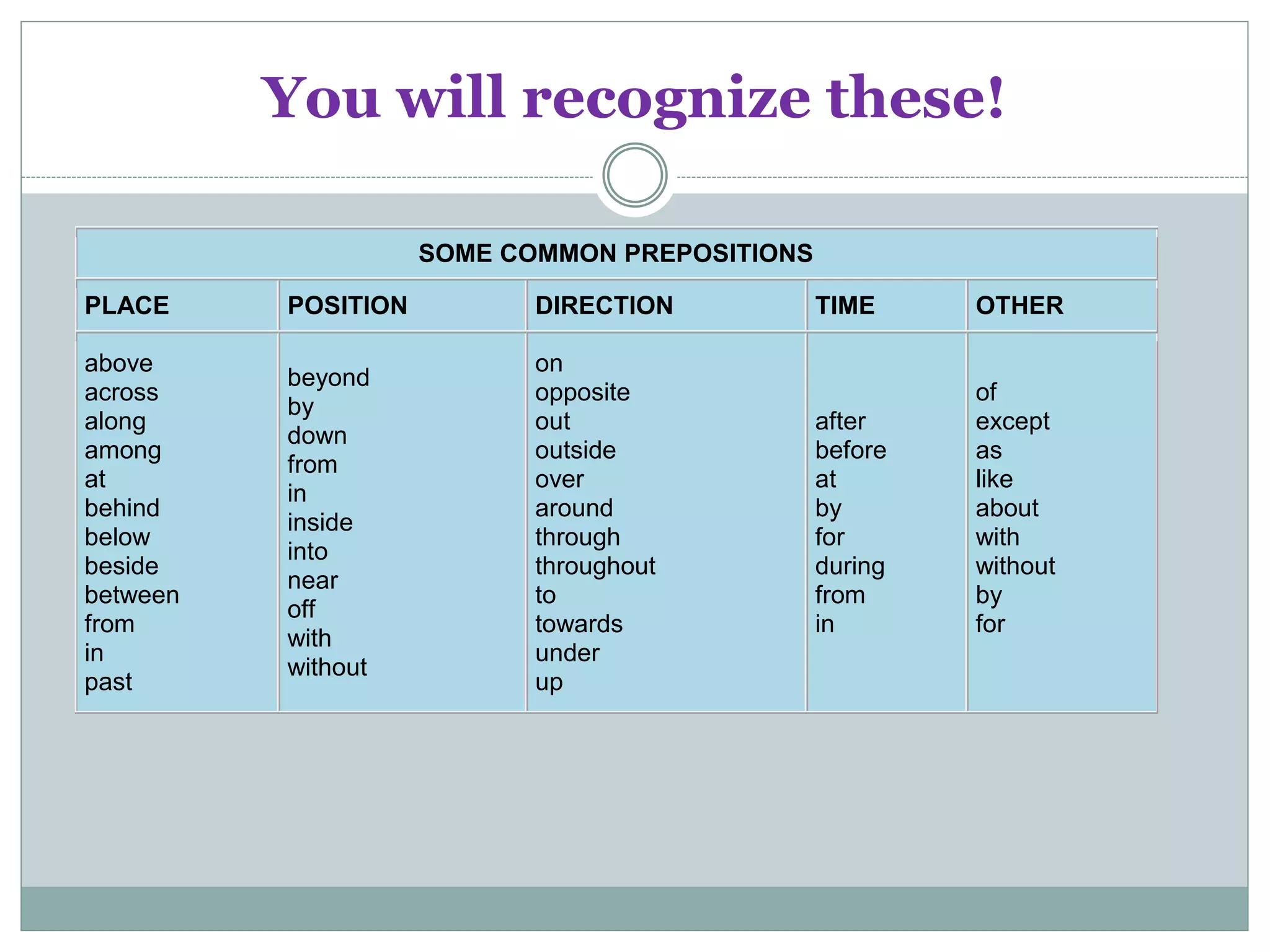
You will recognize these!
SOME COMMON PREPOSITIONS
PLACE POSITION DIRECTION TIME OTHER
above
across
along
among
at
behind
below
beside
between
from
in
past
beyond
by
down
from
in
inside
into
near
off
with
without
on
opposite
out
outside
over
around
through
throughout
to
towards
under
up
after
before
at
by
for
during
from
in
of
except
as
like
about
with
without
by
for
Prepositions Practice
 Underline or highlight the prepositions.
 Put round brackets around the prepositional phrase.
 Example: Joe paid five dollars (for his well-worn
jacket) that he found (at the thrift store).
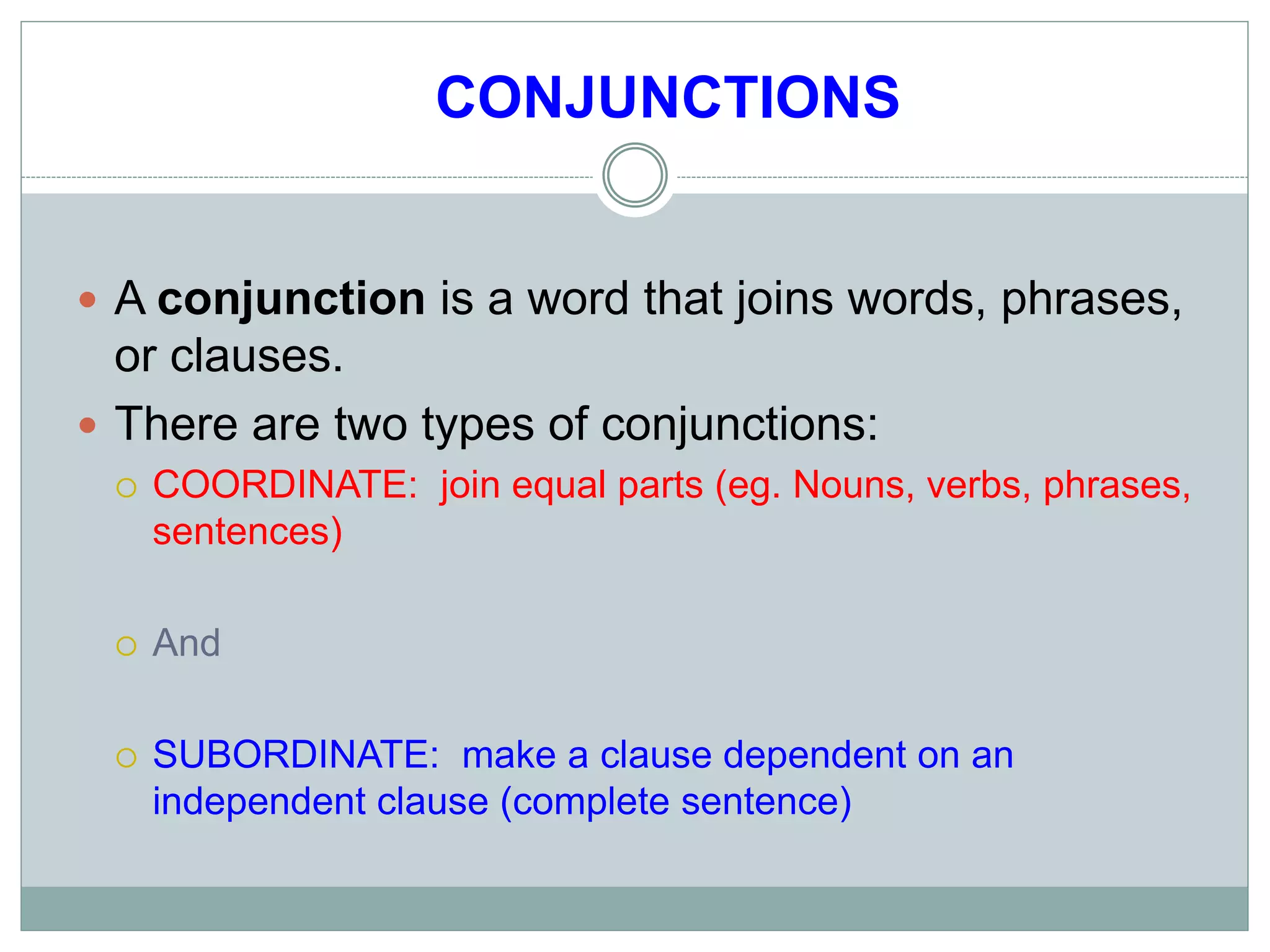
CONJUNCTIONS
 A conjunction is a word that joins words, phrases,
or clauses.
 There are two types of conjunctions:
 COORDINATE: join equal parts (eg. Nouns, verbs, phrases,
sentences)
 And
 SUBORDINATE: make a clause dependent on an
independent clause (complete sentence)
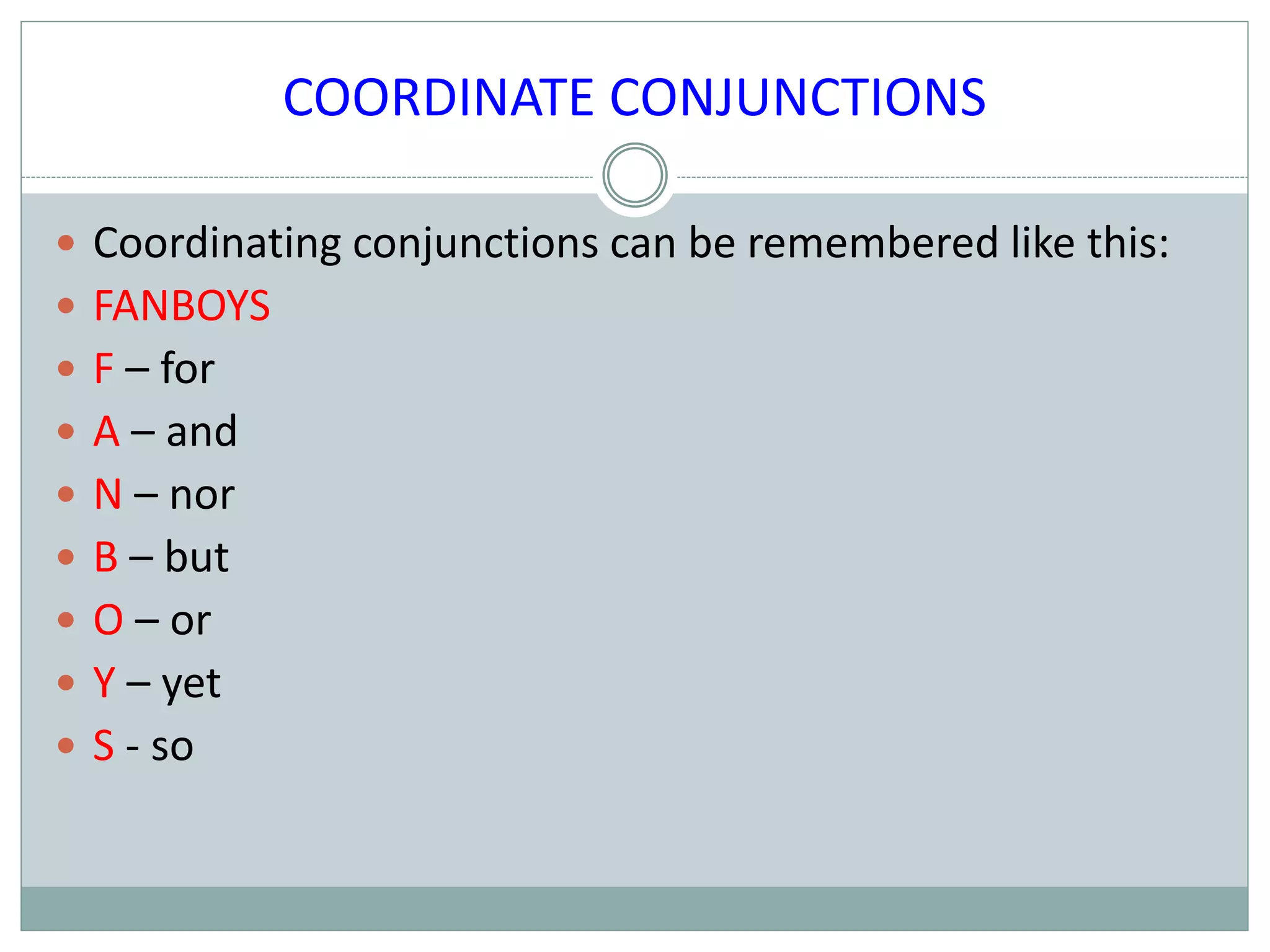
COORDINATE CONJUNCTIONS
 Coordinating conjunctions can be remembered like this:
 FANBOYS
 F – for
 A – and
 N – nor
 B – but
 O – or
 Y – yet
 S - so
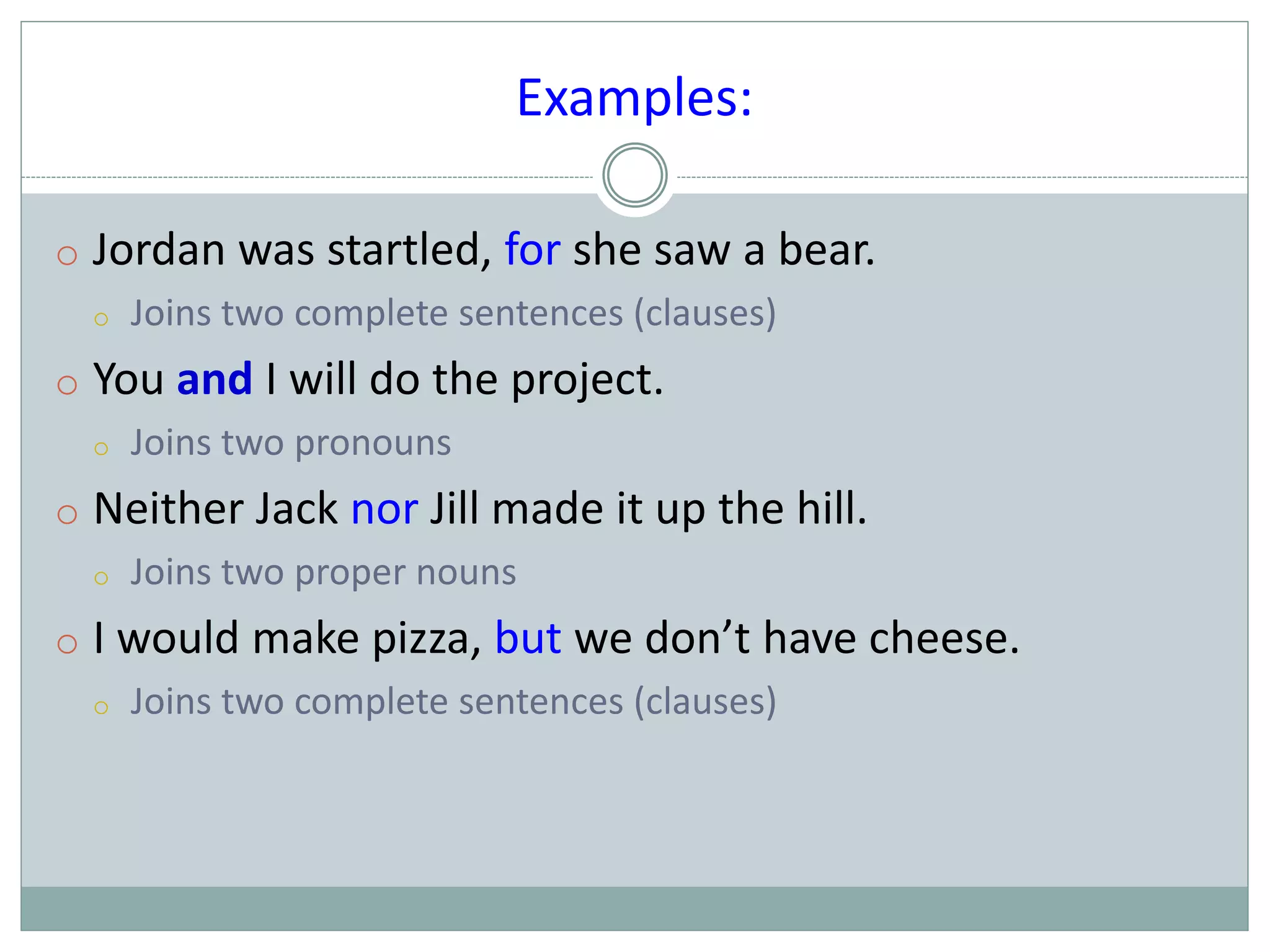
Examples:
o Jordan was startled, for she saw a bear.
o Joins two complete sentences (clauses)
o You and I will do the project.
o Joins two pronouns
o Neither Jack nor Jill made it up the hill.
o Joins two proper nouns
o I would make pizza, but we don’t have cheese.
o Joins two complete sentences (clauses)
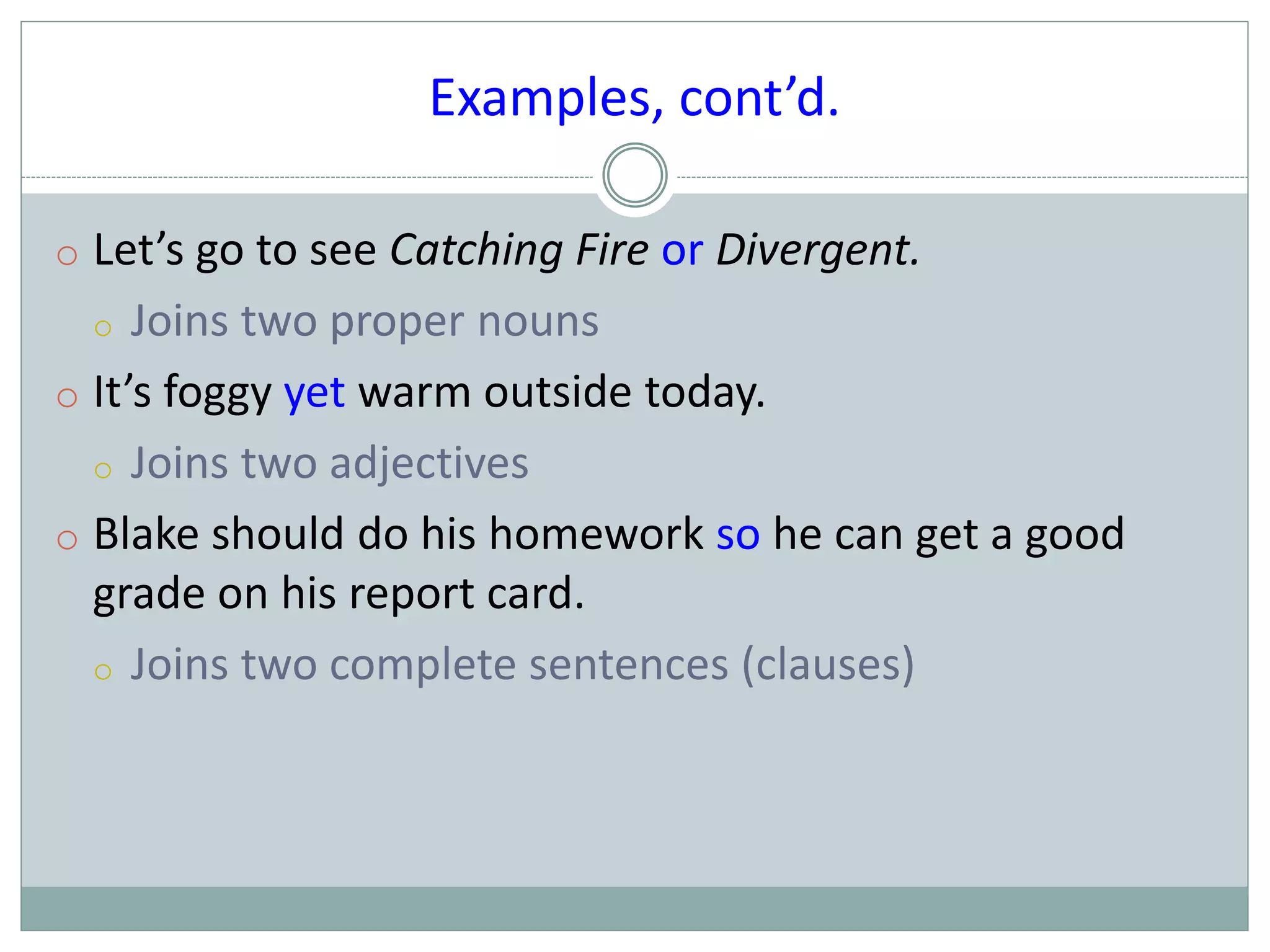
Examples, cont’d.
o Let’s go to see Catching Fire or Divergent.
o Joins two proper nouns
o It’s foggy yet warm outside today.
o Joins two adjectives
o Blake should do his homework so he can get a good
grade on his report card.
o Joins two complete sentences (clauses)
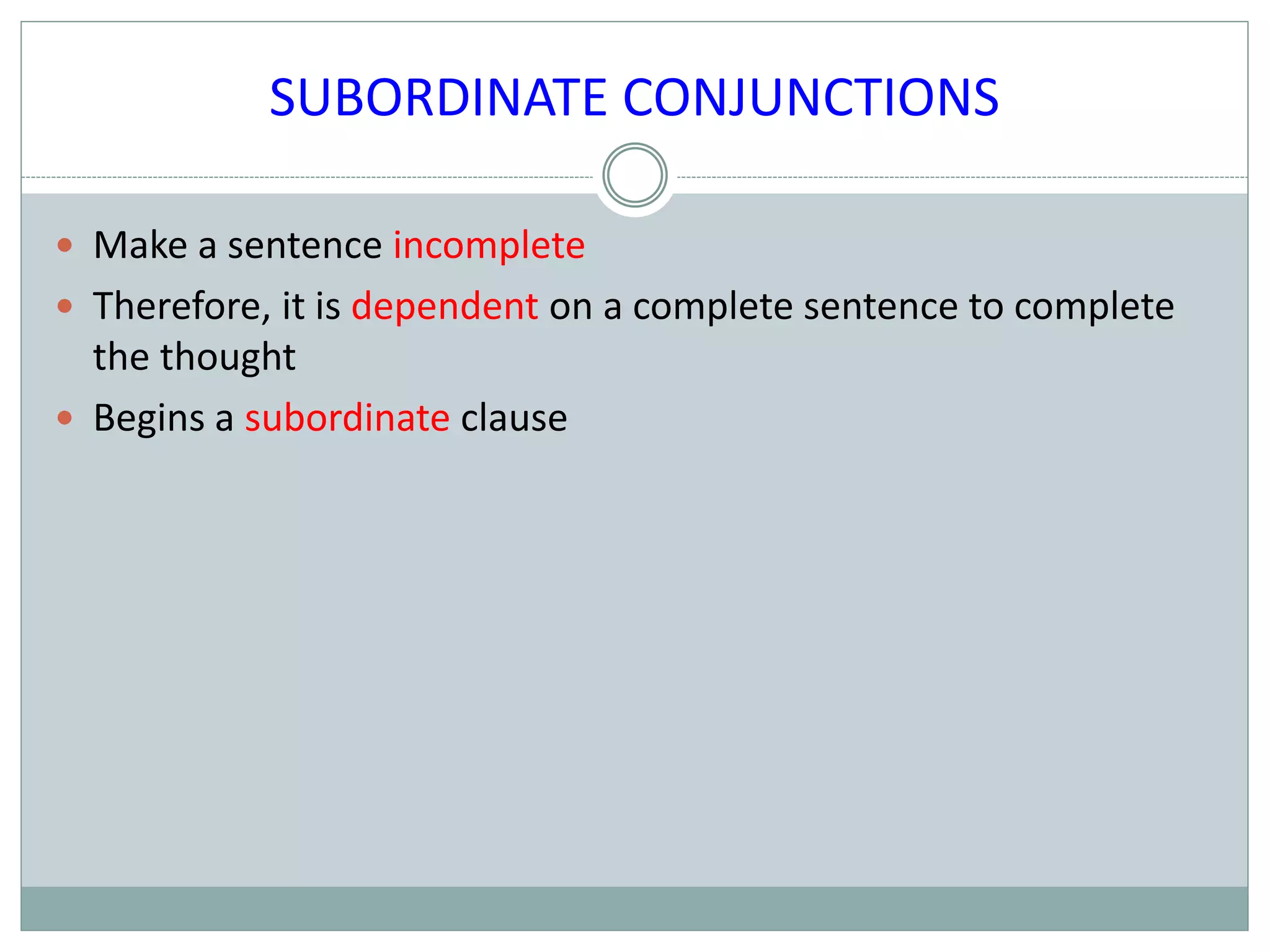
SUBORDINATE CONJUNCTIONS
 Make a sentence incomplete
 Therefore, it is dependent on a complete sentence to complete
the thought
 Begins a subordinate clause
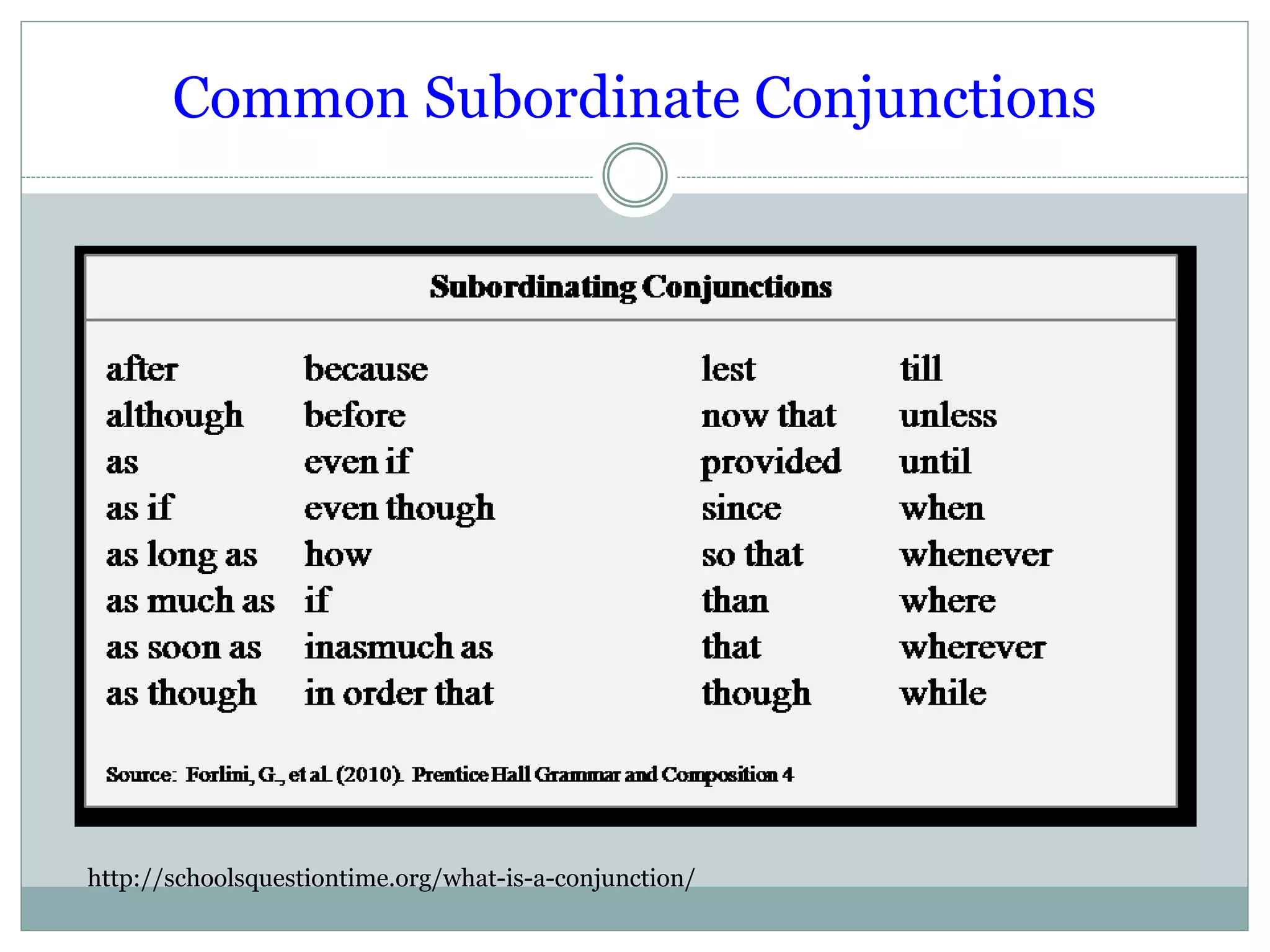
Common Subordinate Conjunctions
http://schoolsquestiontime.org/what-is-a-conjunction/
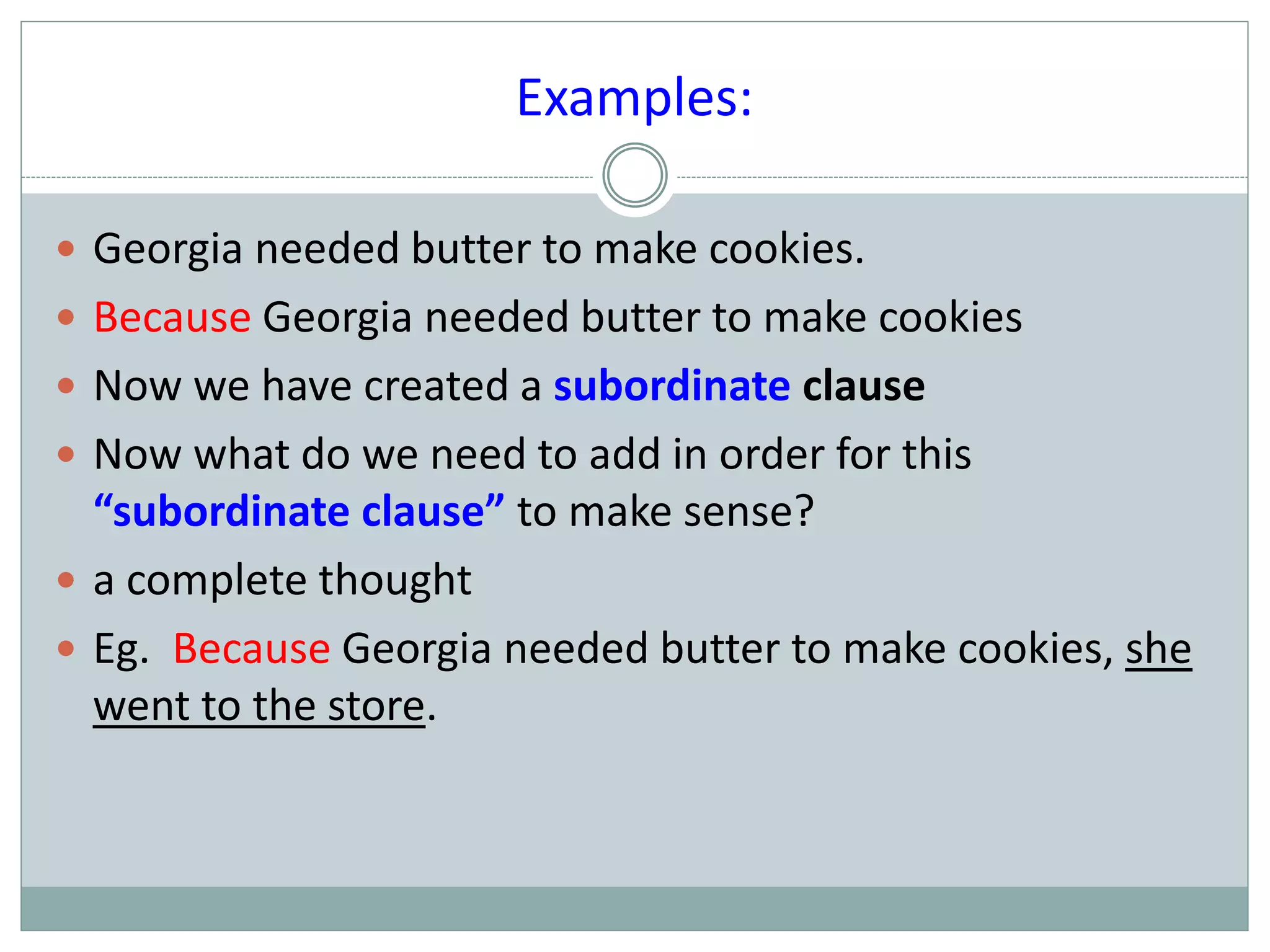
Examples:
 Georgia needed butter to make cookies.
 Because Georgia needed butter to make cookies
 Now we have created a subordinate clause
 Now what do we need to add in order for this
“subordinate clause” to make sense?
 a complete thought
 Eg. Because Georgia needed butter to make cookies, she
went to the store.
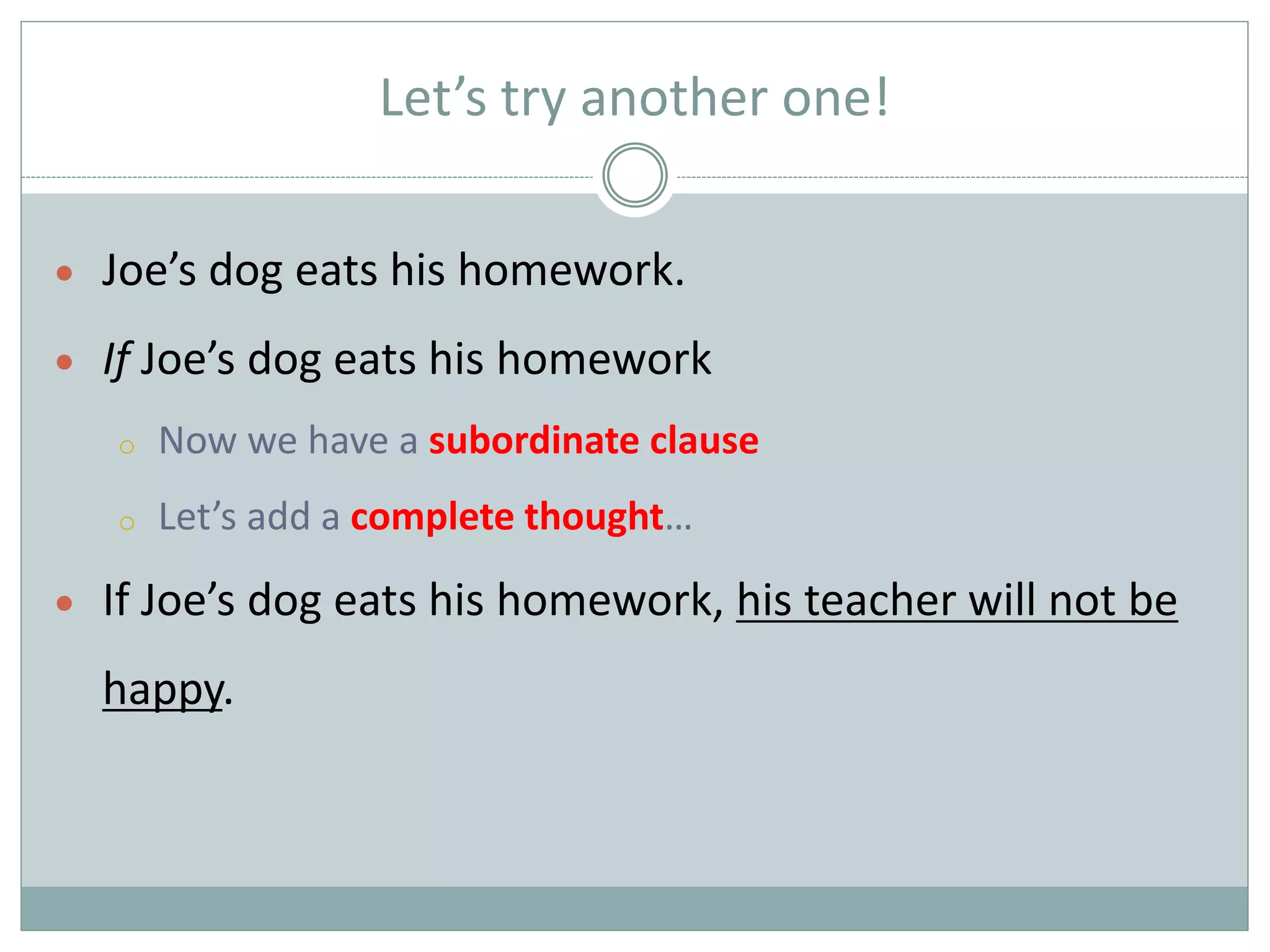
Let’s try another one!
 Joe’s dog eats his homework.
 If Joe’s dog eats his homework
o Now we have a subordinate clause
o Let’s add a complete thought…
 If Joe’s dog eats his homework, his teacher will not be
happy.
Interjections! Awesome!
 An interjection is a word that expresses strong feeling or
emotion
 Usually an interjection comes at the beginning or end of a sentence
 It is followed by an exclamation point (!) when the emotion is strong
 It is followed by a comma (,) when the emotion is mild
 Try not overuse interjections!
Source: Umstatter, Jack. Got Grammar.
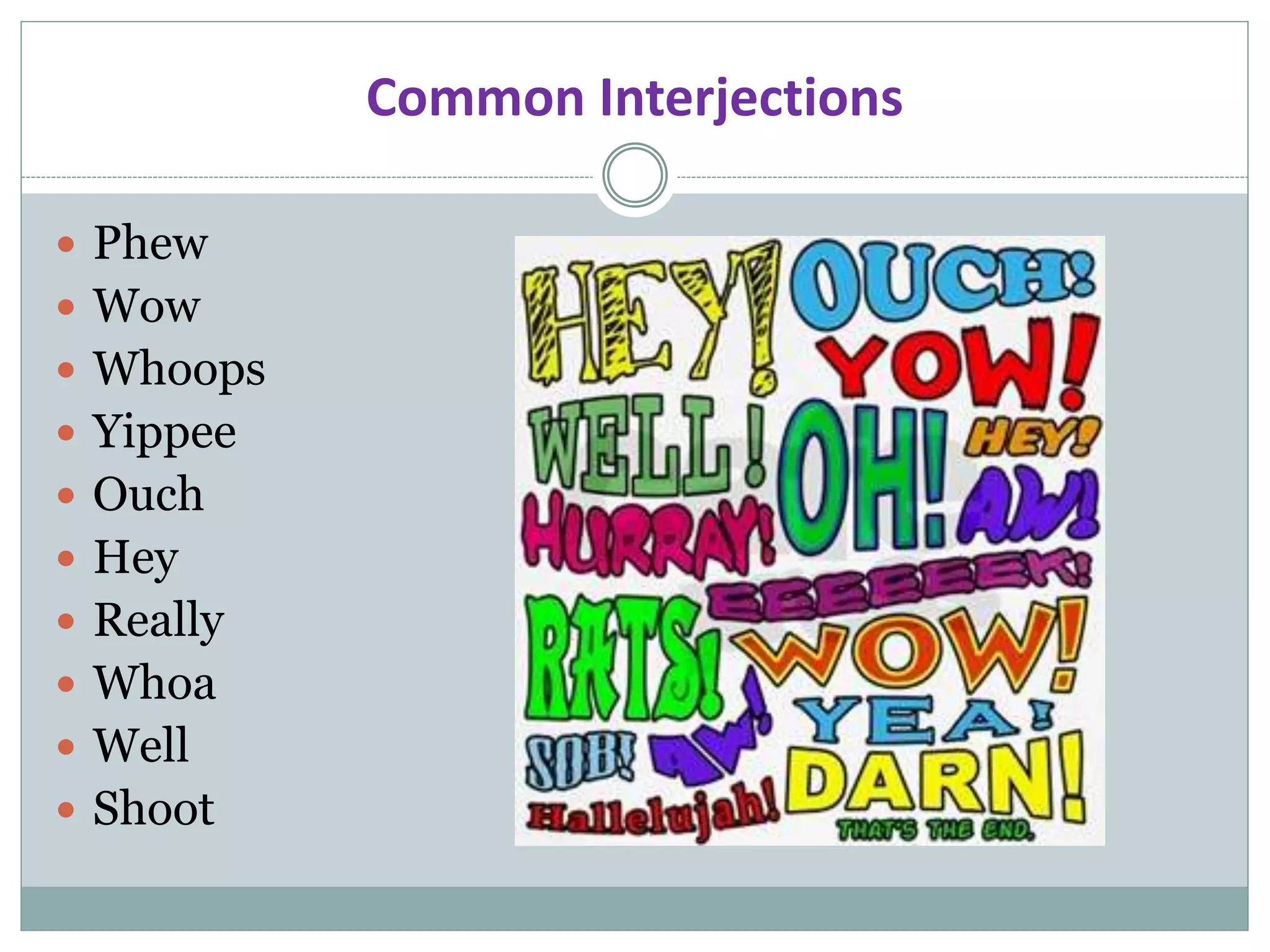
Common Interjections
 Phew
 Wow
 Whoops
 Yippee
 Ouch
 Hey
 Really
 Whoa
 Well
 Shoot
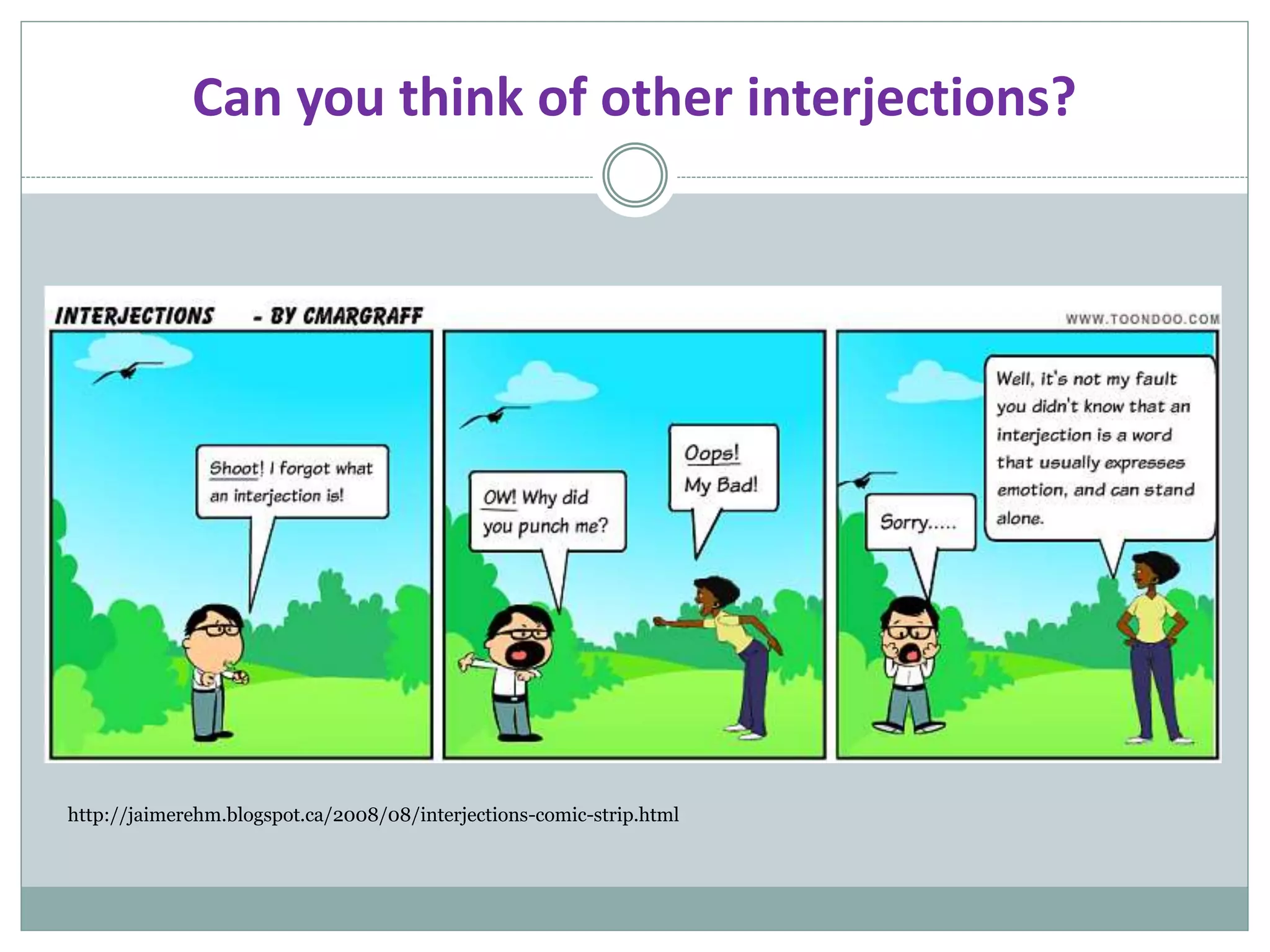
Can you think of other interjections?
http://jaimerehm.blogspot.ca/2008/08/interjections-comic-strip.html
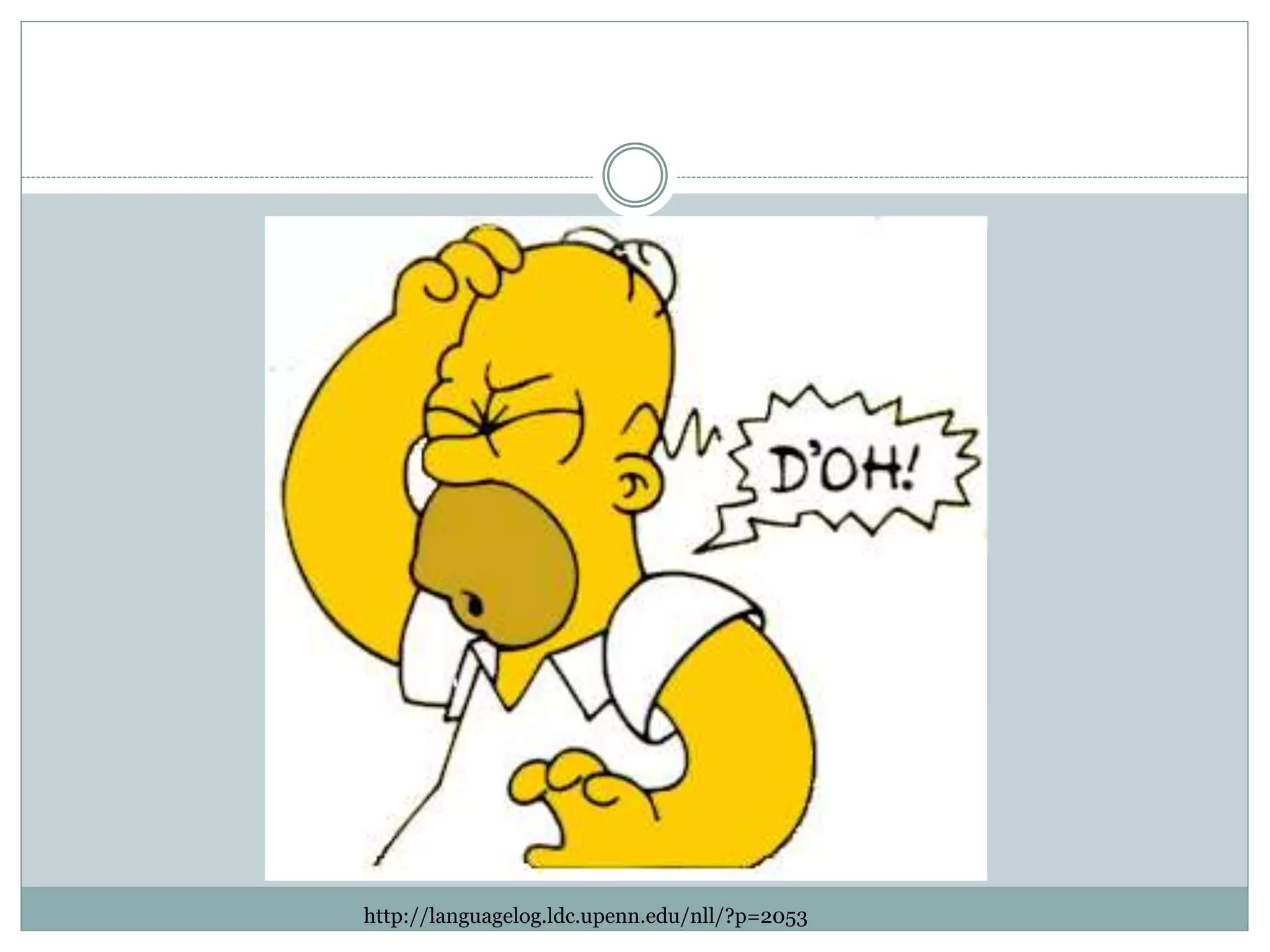
http://languagelog.ldc.upenn.edu/nll/?p=2053

Prepositions conjunctions interjections.Edtech

  • 1.
  • 2.
    Prepositions  A prepositionis a word, which introduces a phrase.  An object follows it.  The object is always a noun or a pronoun.  Sometimes there may be adjectives describing the noun.
  • 3.
    Examples  The book(on the desk) is mine.  Keep this book (in your desk).  Students should put their knapsacks (under their desks).  The pedestrian walked (around the shady corner).
  • 4.
    You will recognizethese! SOME COMMON PREPOSITIONS PLACE POSITION DIRECTION TIME OTHER above across along among at behind below beside between from in past beyond by down from in inside into near off with without on opposite out outside over around through throughout to towards under up after before at by for during from in of except as like about with without by for
  • 5.
    Prepositions Practice  Underlineor highlight the prepositions.  Put round brackets around the prepositional phrase.  Example: Joe paid five dollars (for his well-worn jacket) that he found (at the thrift store).
  • 6.
    CONJUNCTIONS  A conjunctionis a word that joins words, phrases, or clauses.  There are two types of conjunctions:  COORDINATE: join equal parts (eg. Nouns, verbs, phrases, sentences)  And  SUBORDINATE: make a clause dependent on an independent clause (complete sentence)
  • 7.
    COORDINATE CONJUNCTIONS  Coordinatingconjunctions can be remembered like this:  FANBOYS  F – for  A – and  N – nor  B – but  O – or  Y – yet  S - so
  • 8.
    Examples: o Jordan wasstartled, for she saw a bear. o Joins two complete sentences (clauses) o You and I will do the project. o Joins two pronouns o Neither Jack nor Jill made it up the hill. o Joins two proper nouns o I would make pizza, but we don’t have cheese. o Joins two complete sentences (clauses)
  • 9.
    Examples, cont’d. o Let’sgo to see Catching Fire or Divergent. o Joins two proper nouns o It’s foggy yet warm outside today. o Joins two adjectives o Blake should do his homework so he can get a good grade on his report card. o Joins two complete sentences (clauses)
  • 10.
    SUBORDINATE CONJUNCTIONS  Makea sentence incomplete  Therefore, it is dependent on a complete sentence to complete the thought  Begins a subordinate clause
  • 11.
  • 12.
    Examples:  Georgia neededbutter to make cookies.  Because Georgia needed butter to make cookies  Now we have created a subordinate clause  Now what do we need to add in order for this “subordinate clause” to make sense?  a complete thought  Eg. Because Georgia needed butter to make cookies, she went to the store.
  • 13.
    Let’s try anotherone!  Joe’s dog eats his homework.  If Joe’s dog eats his homework o Now we have a subordinate clause o Let’s add a complete thought…  If Joe’s dog eats his homework, his teacher will not be happy.
  • 14.
    Interjections! Awesome!  Aninterjection is a word that expresses strong feeling or emotion  Usually an interjection comes at the beginning or end of a sentence  It is followed by an exclamation point (!) when the emotion is strong  It is followed by a comma (,) when the emotion is mild  Try not overuse interjections! Source: Umstatter, Jack. Got Grammar.
  • 15.
    Common Interjections  Phew Wow  Whoops  Yippee  Ouch  Hey  Really  Whoa  Well  Shoot
  • 16.
    Can you thinkof other interjections? http://jaimerehm.blogspot.ca/2008/08/interjections-comic-strip.html
  • 17.