

Adding
the“TEM” into
our Science
Teaching
Dr. Darci J. Harland
NSTA Press Author
STEM Student Research
Handbook
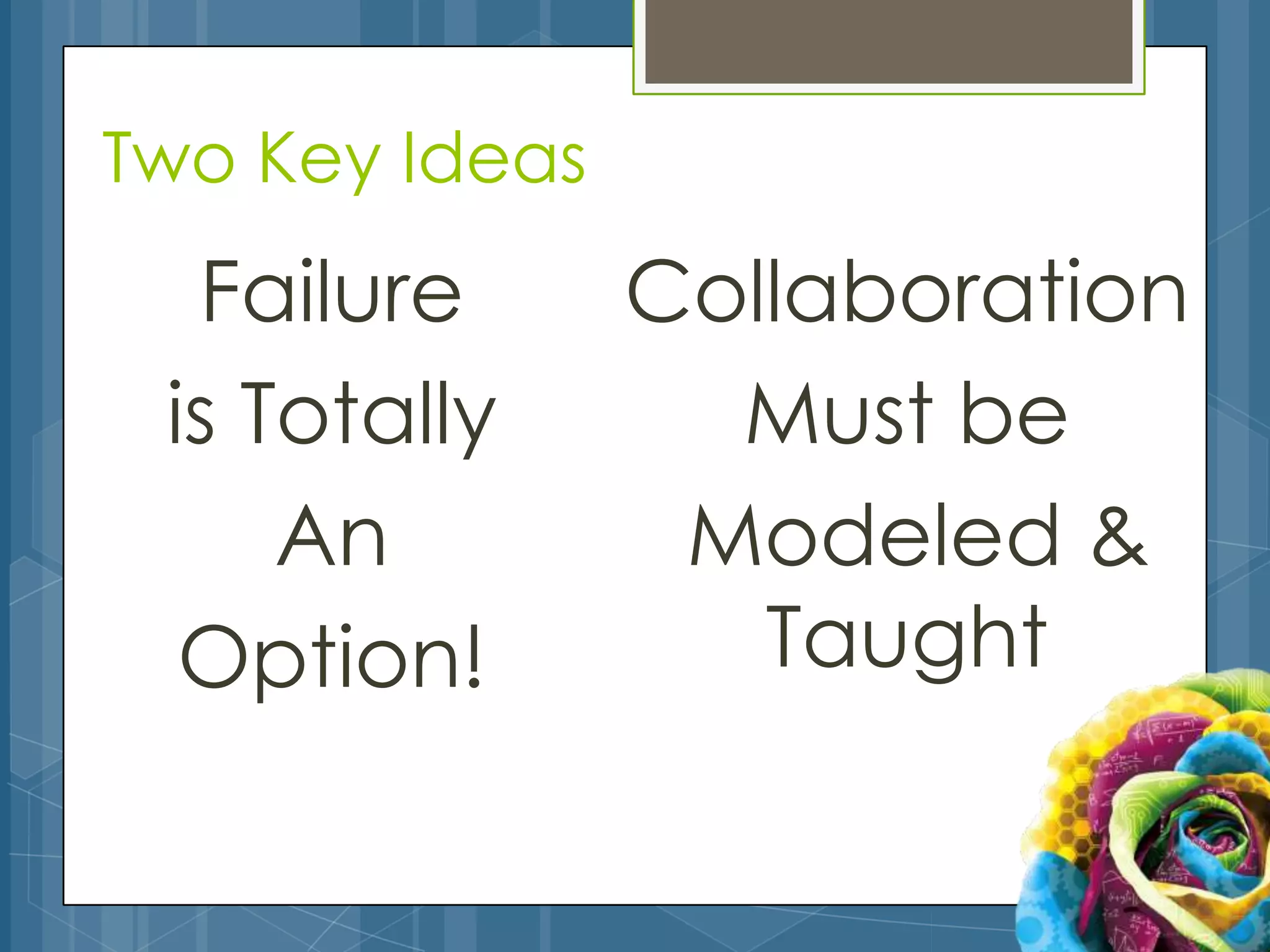
Two Key Ideas
  Failure       Collaboration
 is Totally       Must be
     An          Modeled &
  Option!          Taught
What we get to do…
   Model for Integrating TEM into Science
 Gumdrop        Structure Challenge
       Leveling Inquiry
 Domino       Wall Challenge
       Tips for Lab Notebook-ing
 Elbow      Model Challenge
       Planning an Inquiry Environment
 Paper      Table Challenge
       Collaboration Board
 Mixing Mortar Challenge
 Living-Nonliving Inquiry Lab
Welcome


Anatomy, astronomy, biology,
botany, chemistry, earth science,
geology, physics, and zoology.
Welcome


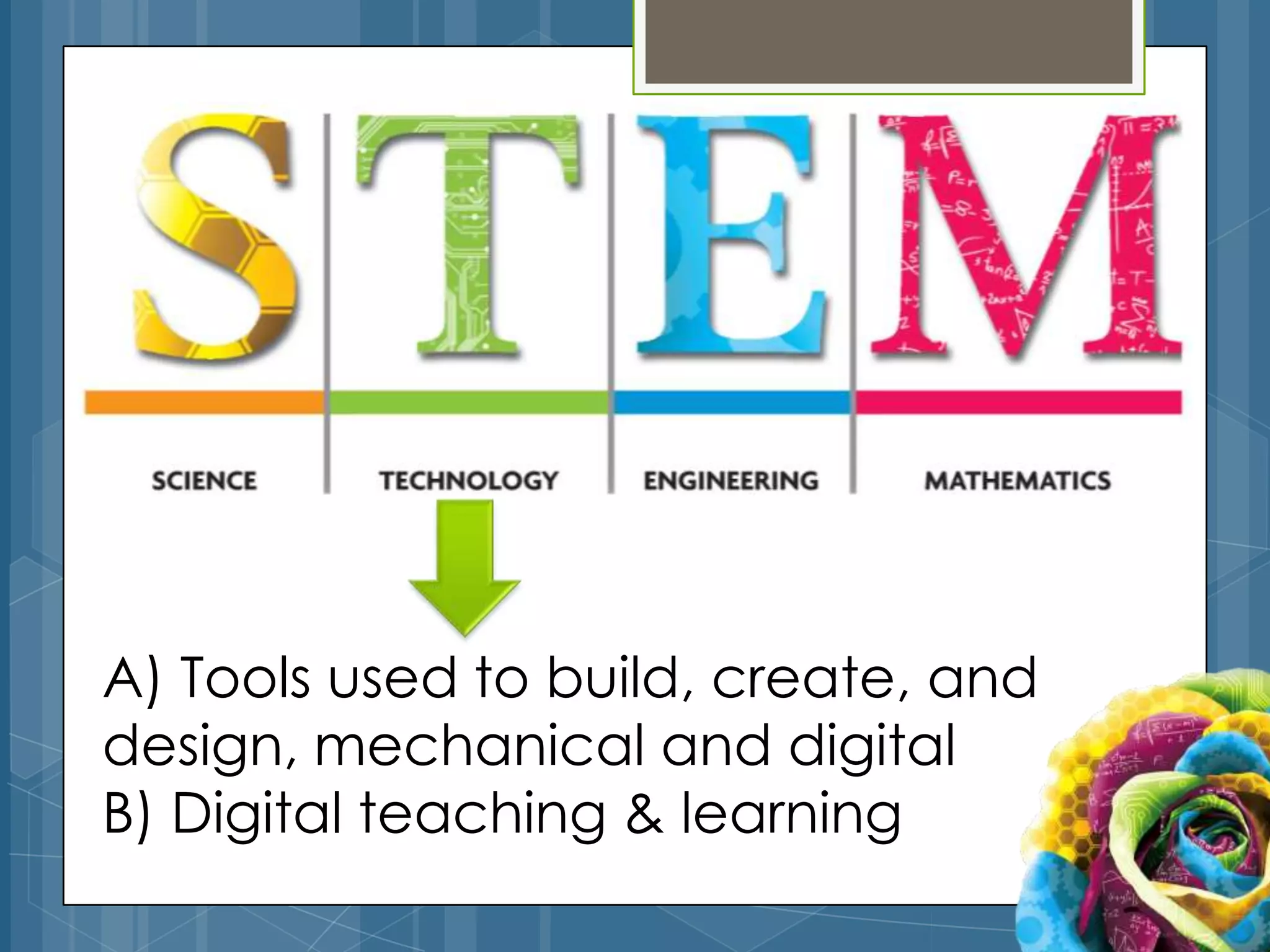
A) Tools used to build, create, and
design, mechanical and digital
B) Digital teaching & learning
Welcome


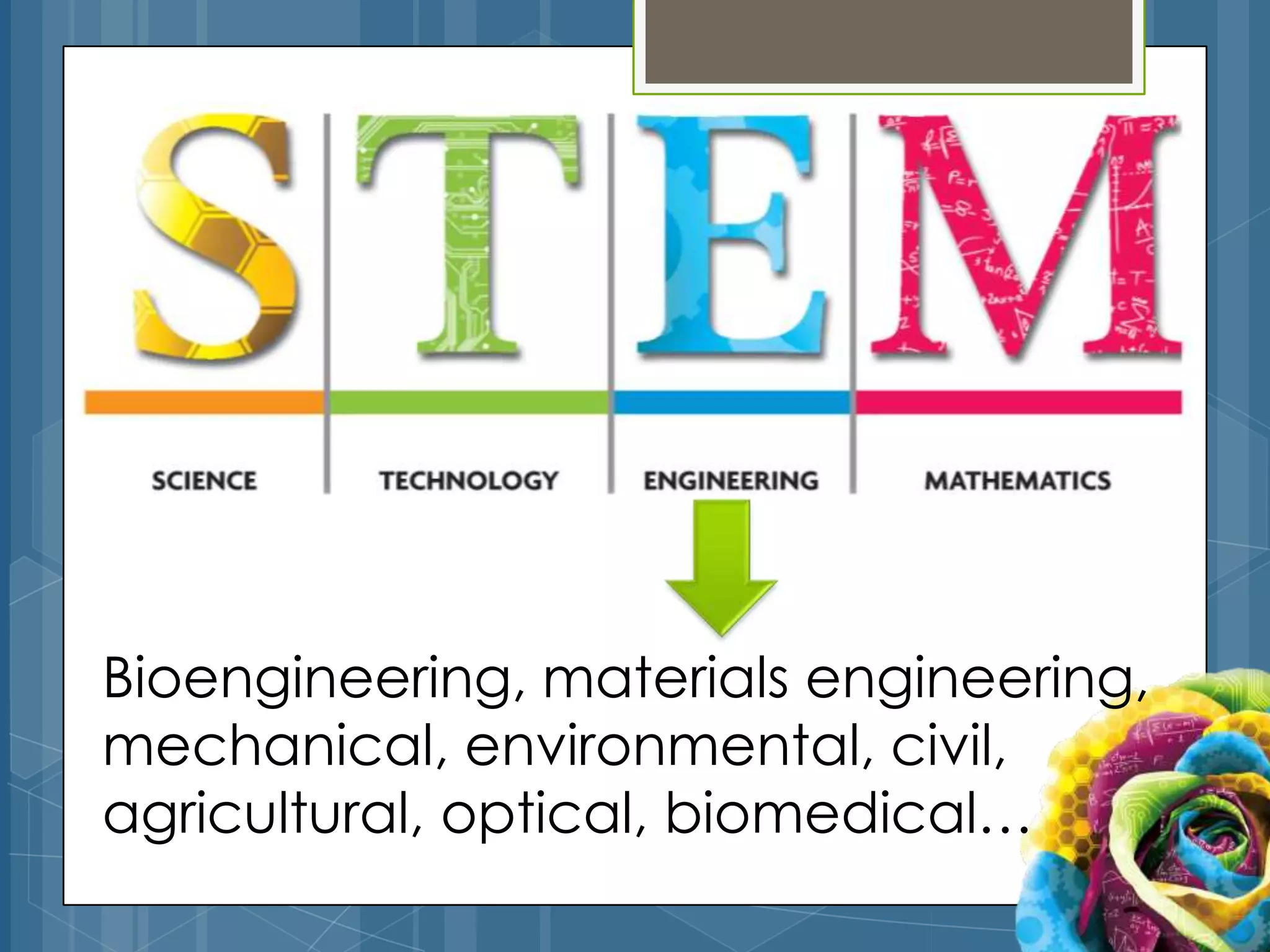
Bioengineering, materials engineering,
mechanical, environmental, civil,
agricultural, optical, biomedical…
Welcome


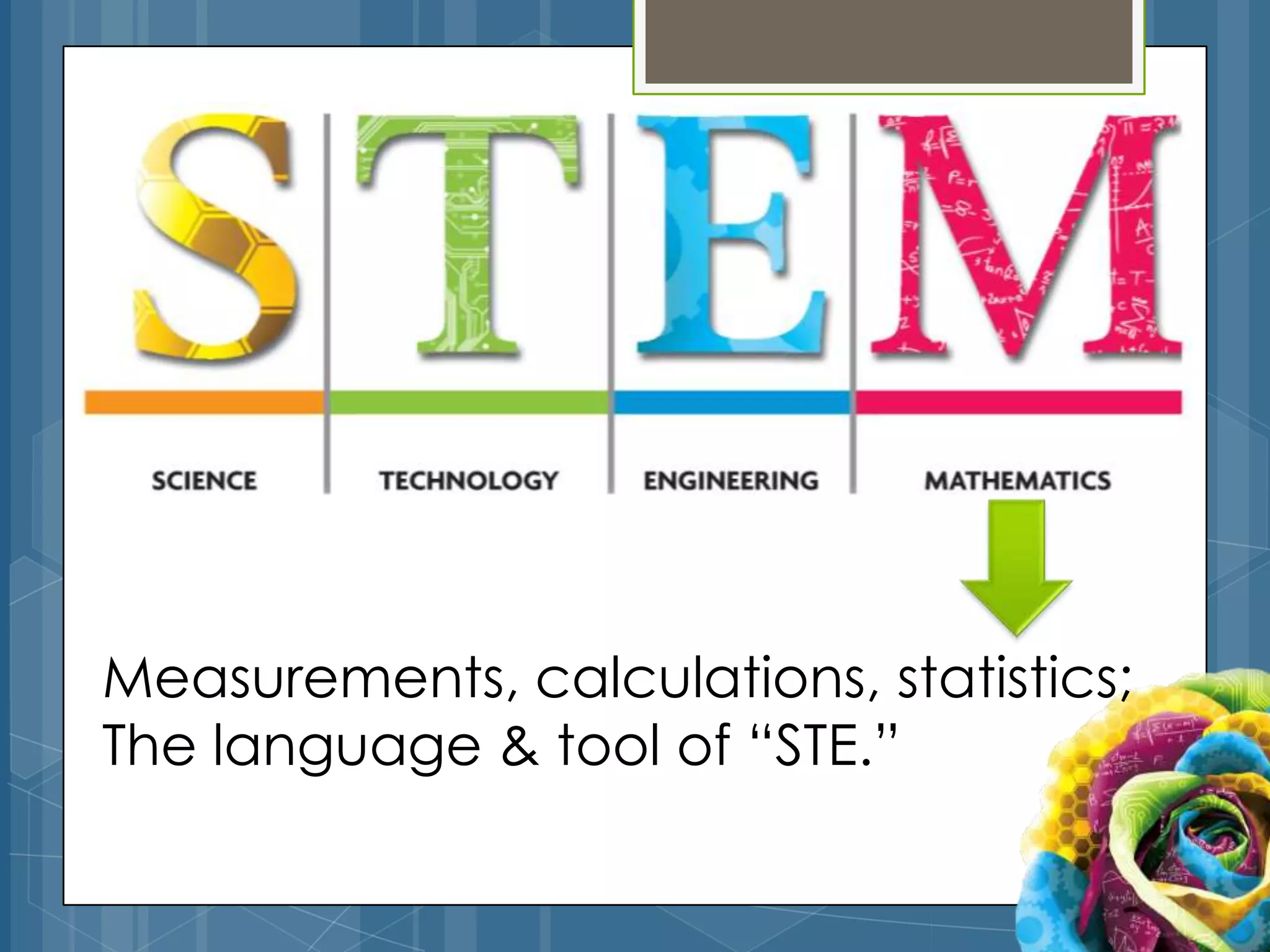
Measurements, calculations, statistics;
The language & tool of “STE.”
Welcome
Welcome
Science teaching is…
Supporting students as they ask good
questions, and use STEM tools to find
answers to STEM related issues.
Focusing students on solving
problems in context of something
with which they can relate; students
learn facts along the way.
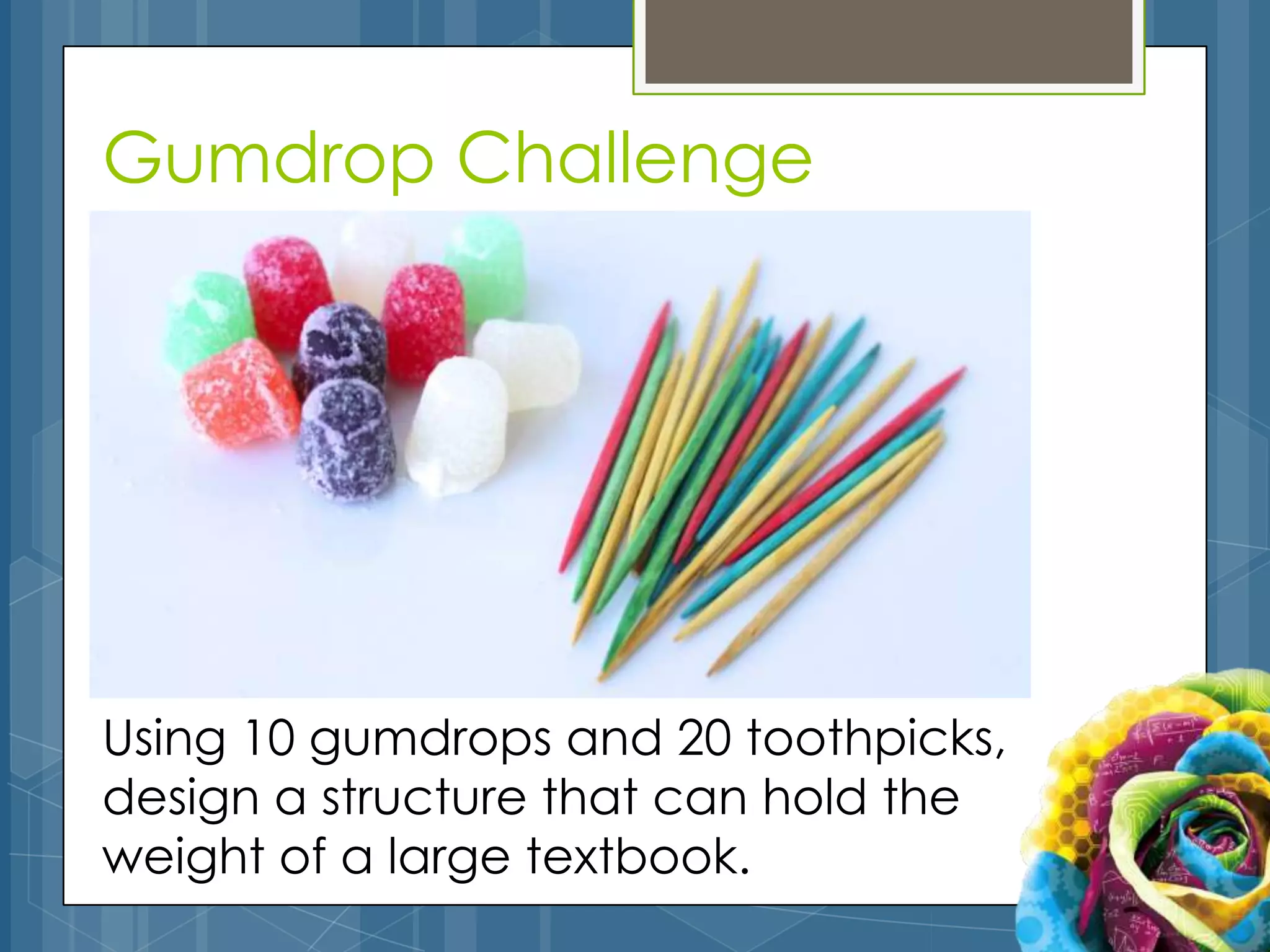
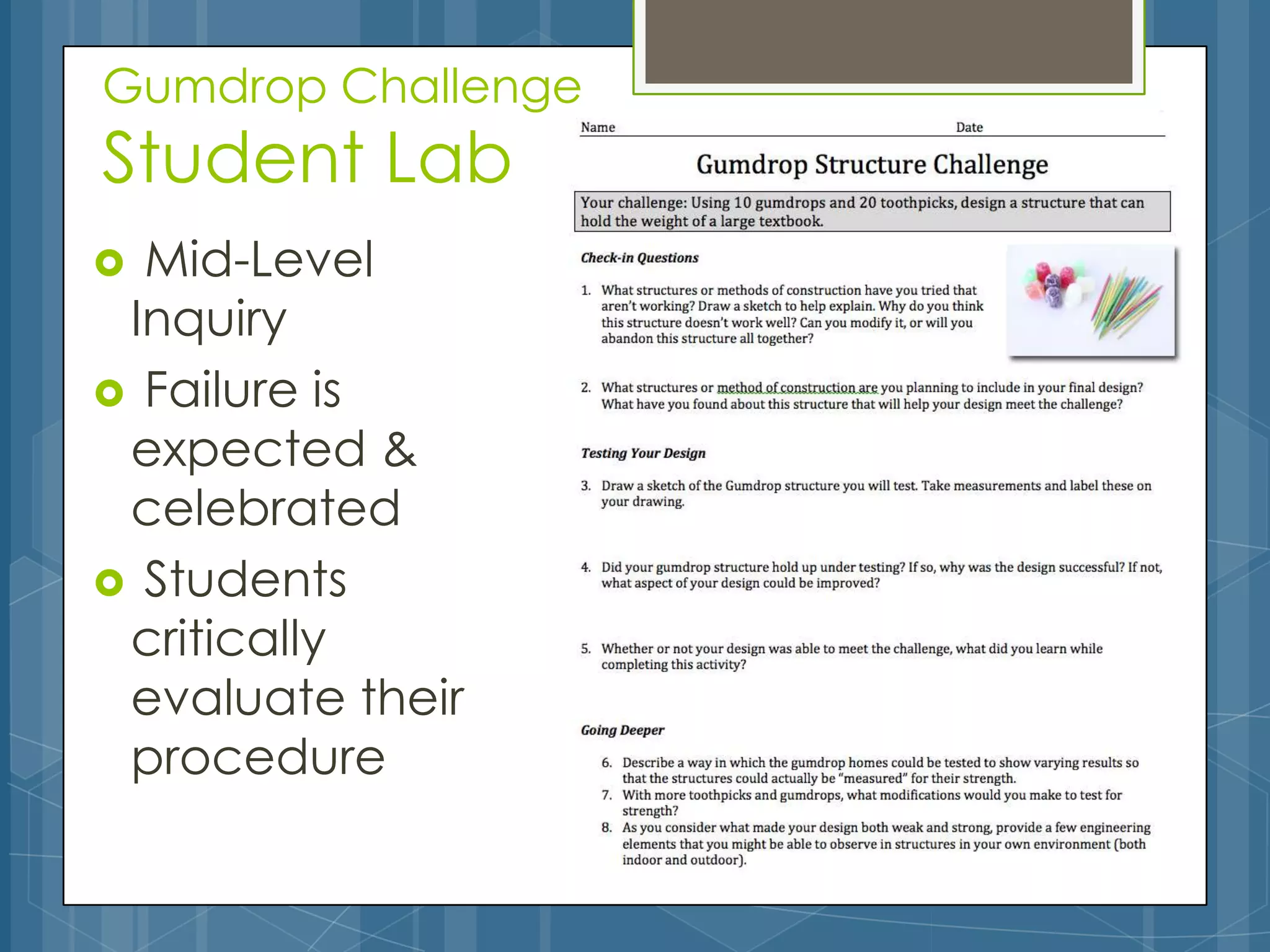
Gumdrop Challenge


Using 10 gumdrops and 20 toothpicks,
design a structure that can hold the
weight of a large textbook.
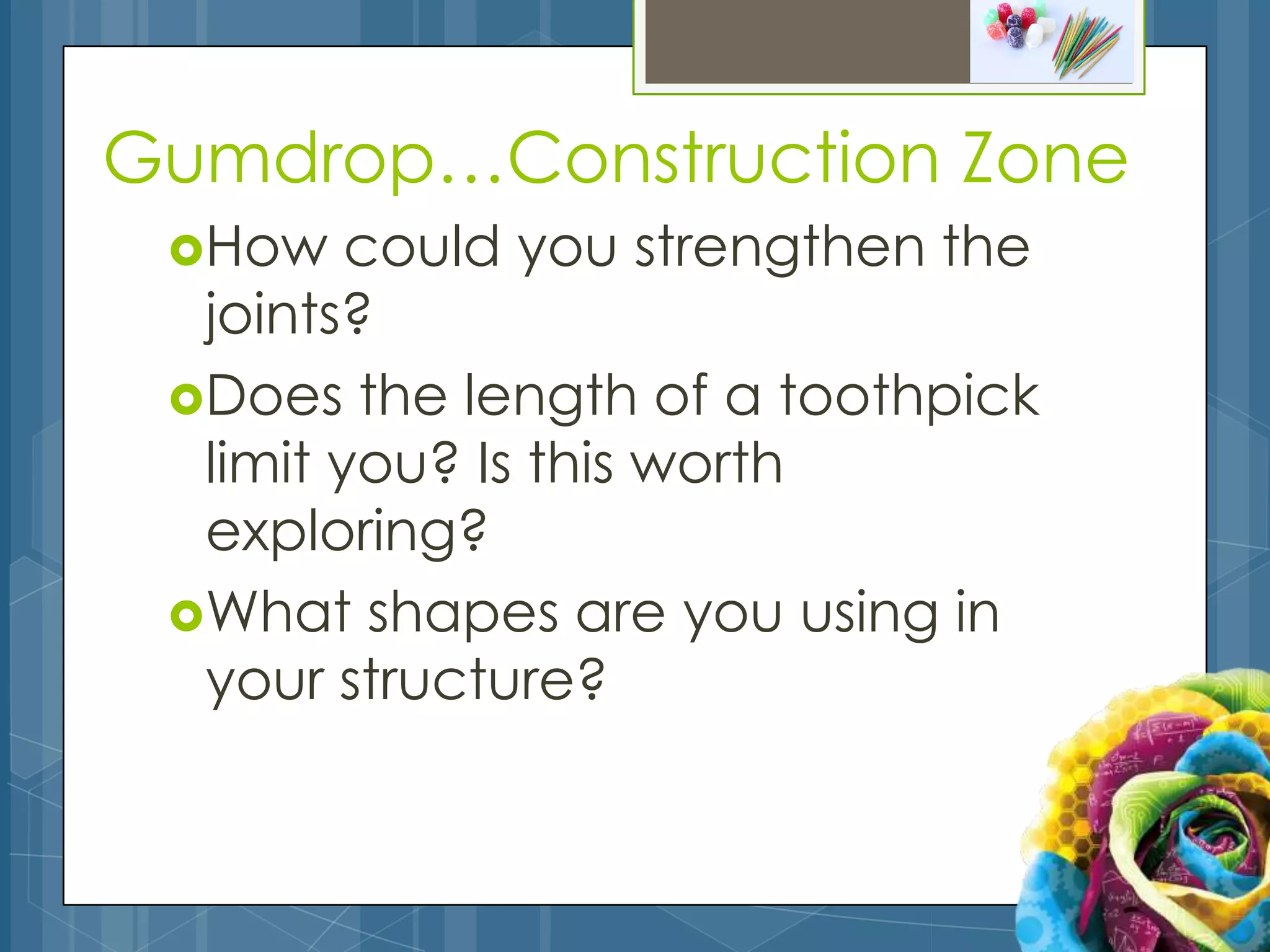
Gumdrop…Construction Zone
 How    could you strengthen the
  joints?
 Does the length of a toothpick
  limit you? Is this worth
  exploring?
 What shapes are you using in
  your structure?
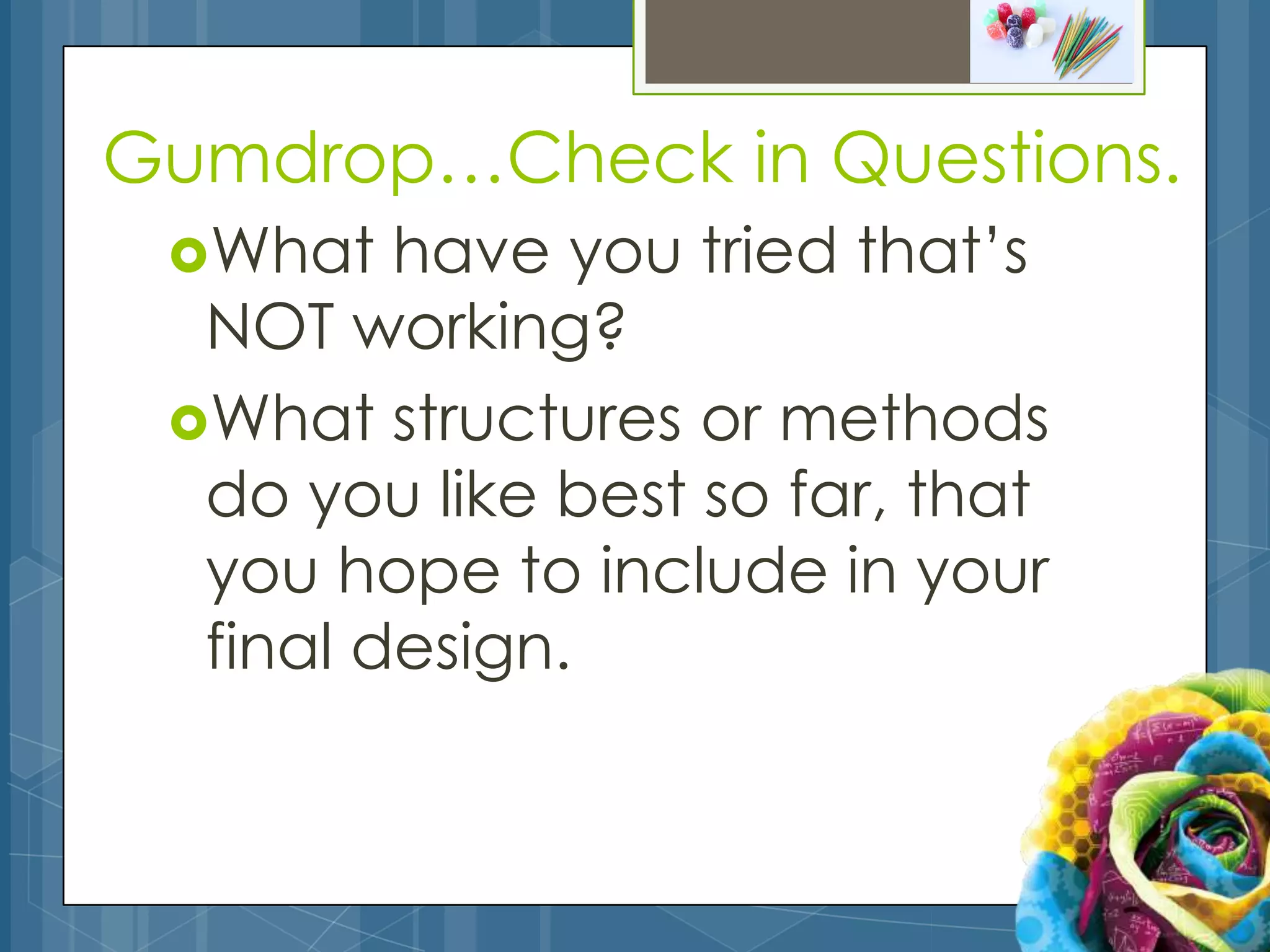
Gumdrop…Check in Questions.
 What   have you tried that’s
  NOT working?
 What structures or methods
  do you like best so far, that
  you hope to include in your
  final design.
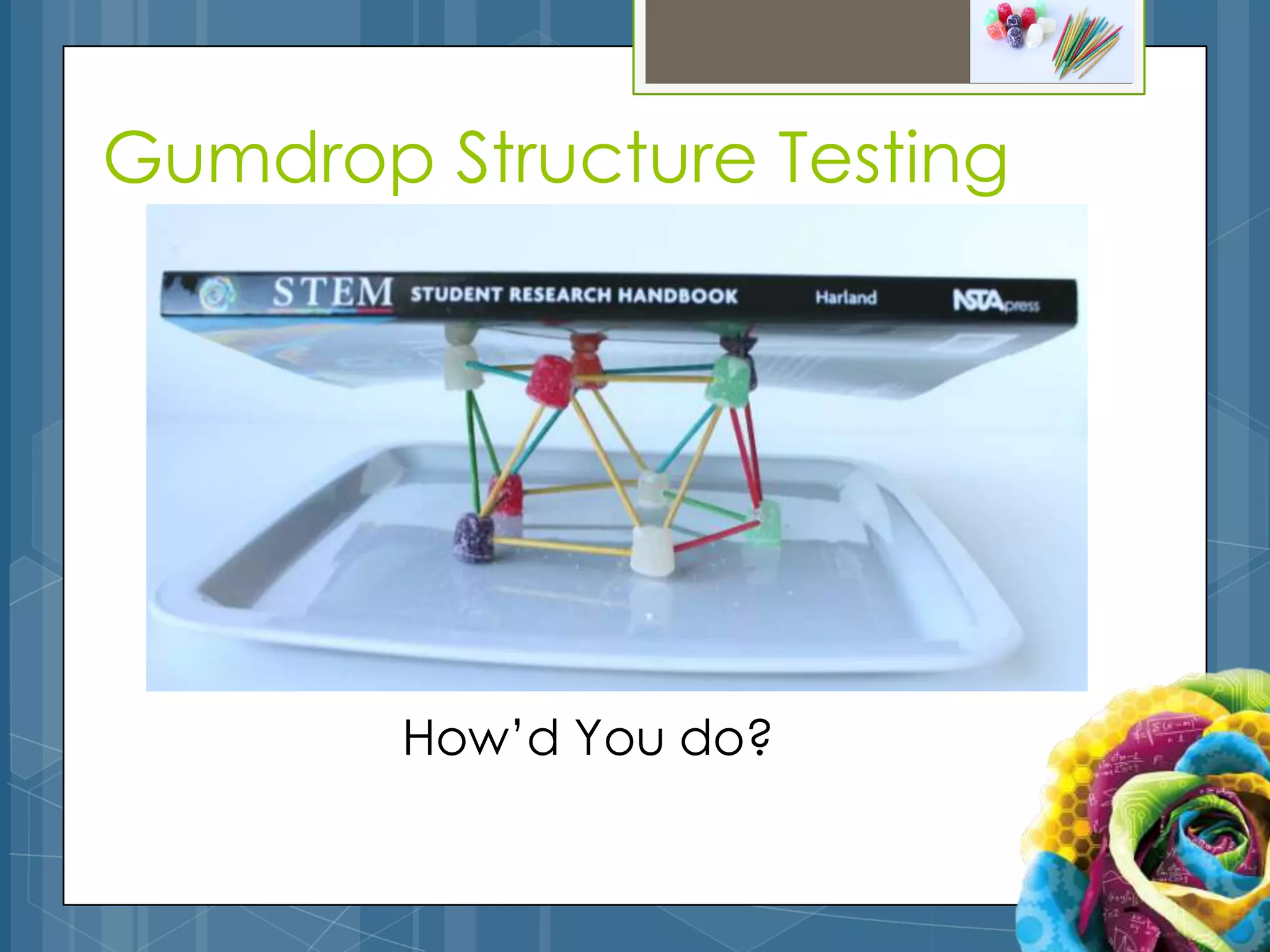
Gumdrop Structure Testing


        How’d You do?
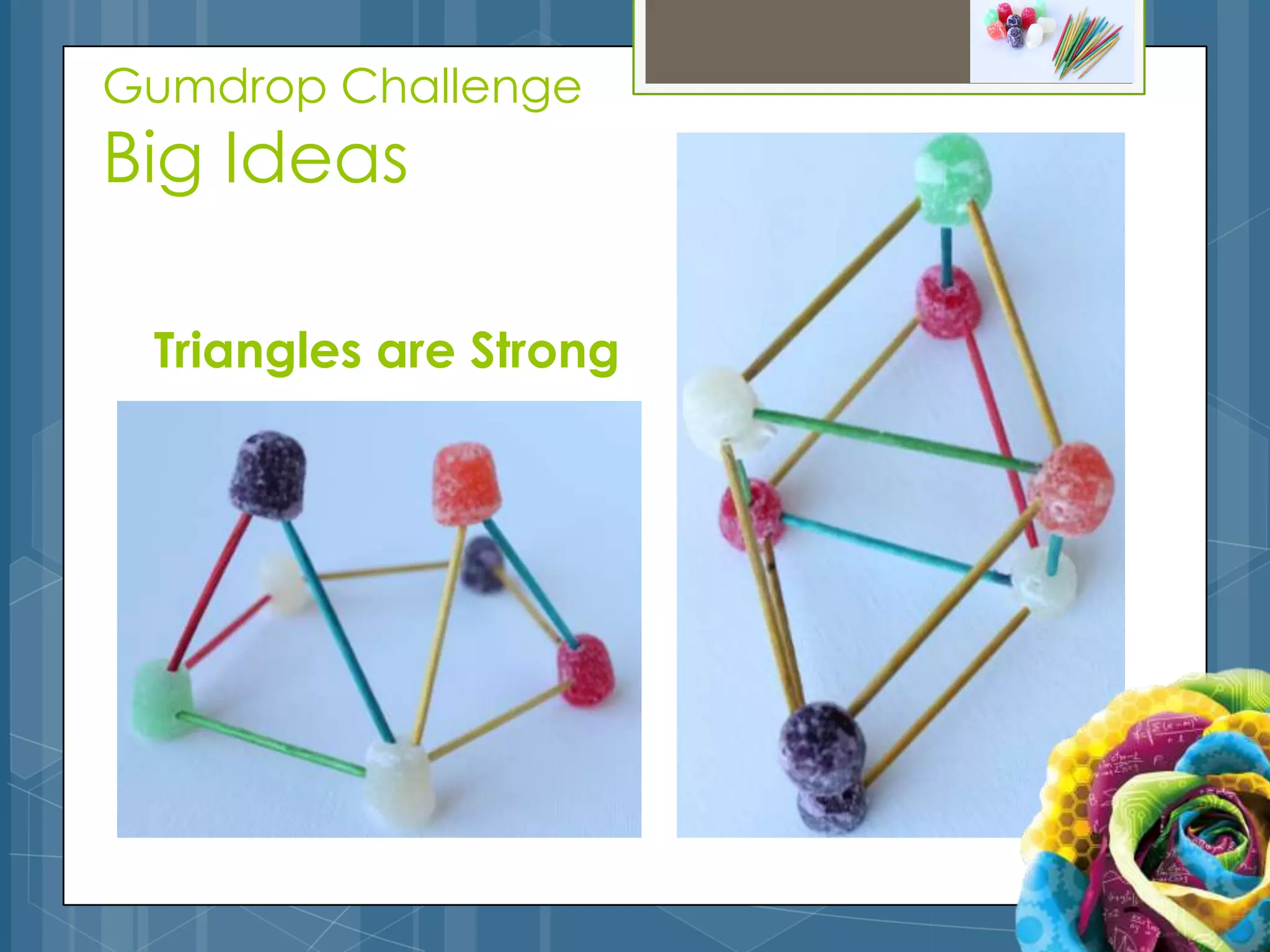
Gumdrop Challenge
Big Ideas

 Triangles are Strong
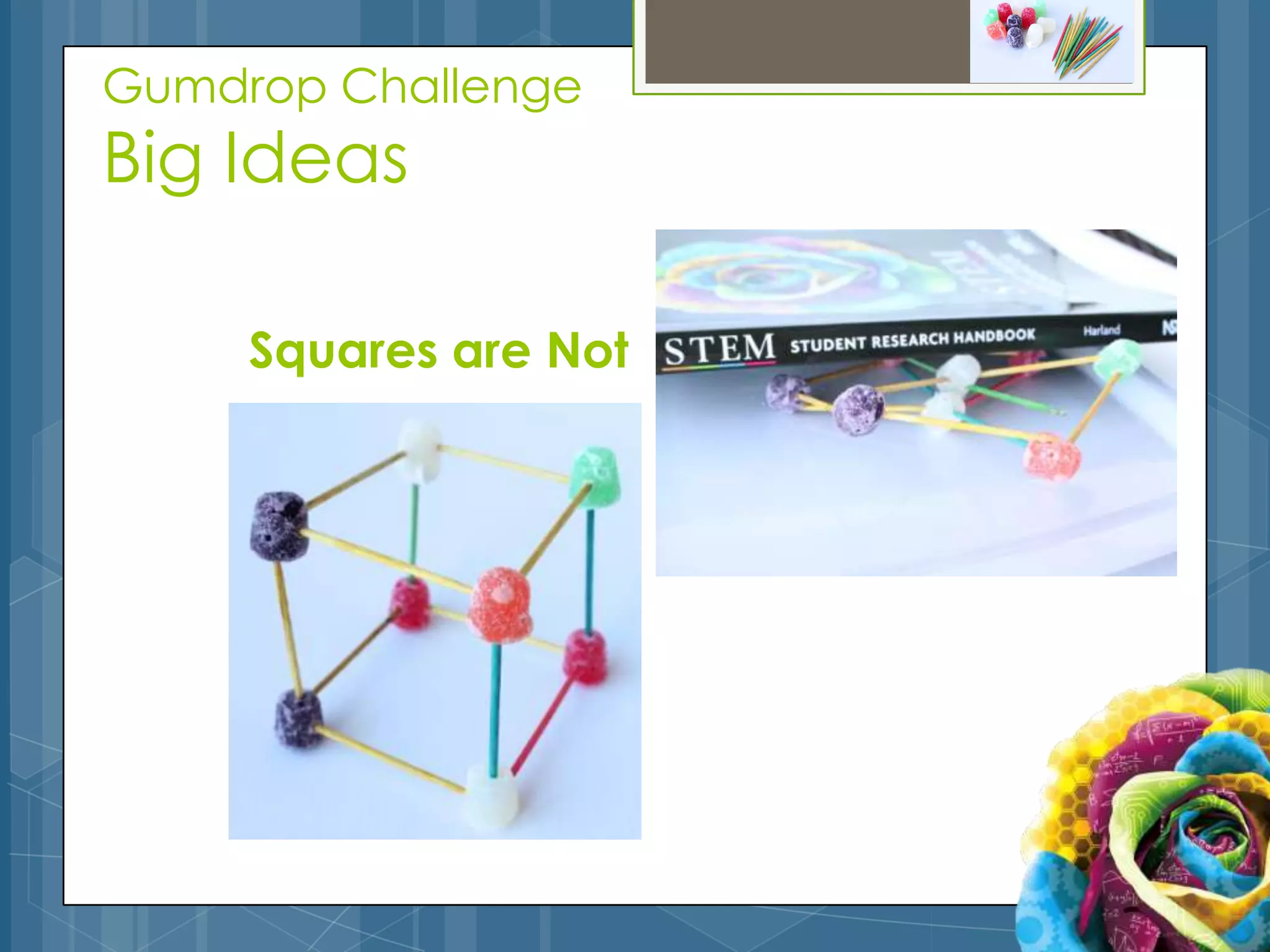
Gumdrop Challenge
Big Ideas

     Squares are Not
Gumdrop Challenge
Discussion
 Shouldwe replace gumdrops and
 toothpicks?
  Pros   + cons?
 What   issues do you anticipate having with
  your own students?
 How might the activity change if the
  number of gumdrops and toothpicks were
  different?
 In what units might this activity be
  beneficial?
Leveling
Inquiry
Cool hands-on activities are
not necessarily inquiry
Misconceptions about Inquiry
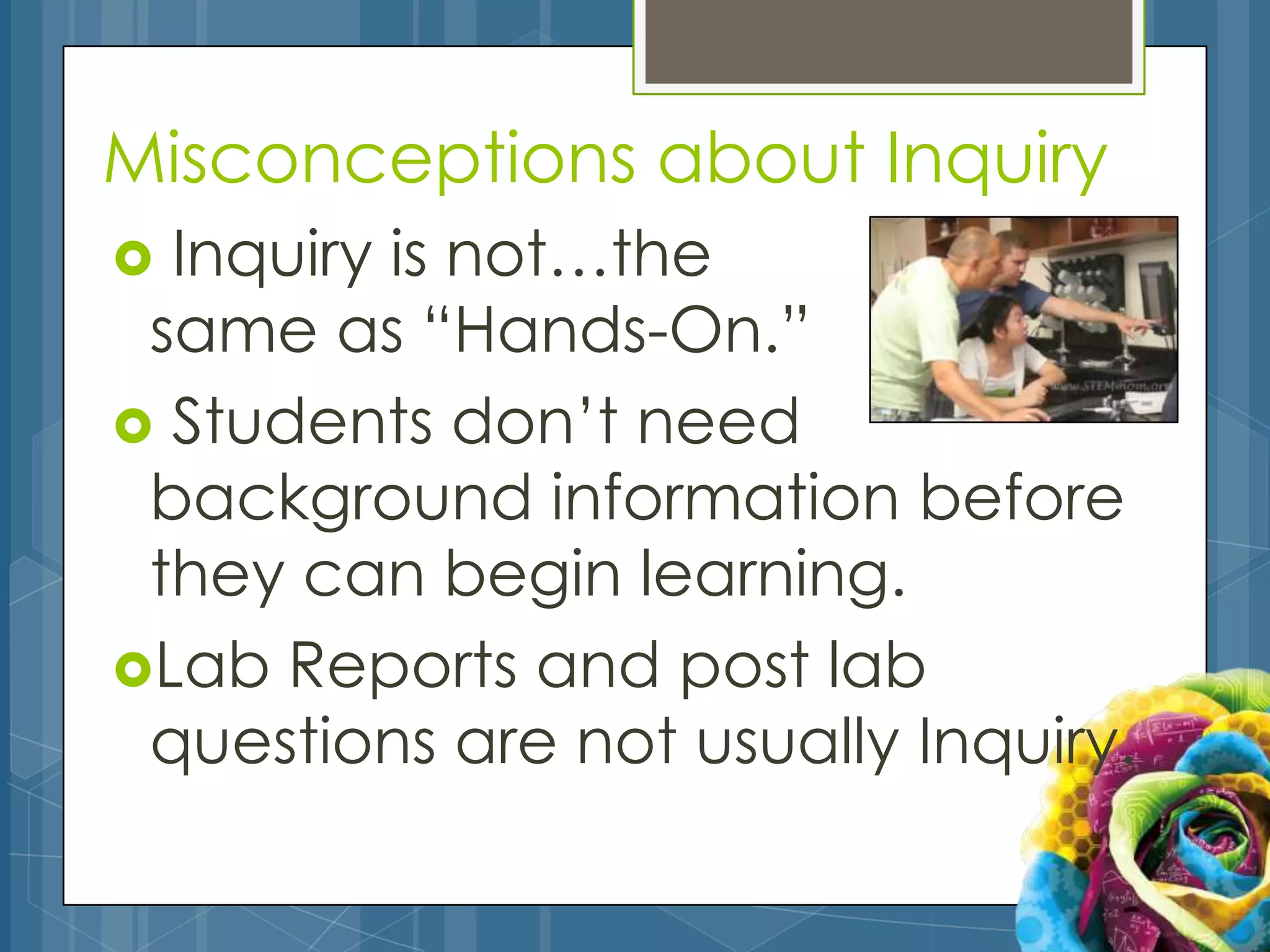
 Inquiry is not…the
 same as “Hands-On.”
 Students don’t need
 background information before
 they can begin learning.
Lab Reports and post lab
 questions are not usually Inquiry.
Its NOT Inquiry if…
  students know what results
  they are supposed to get.
  the question and steps are
  predetermined for students.
  the teacher is working
  harder than the students.
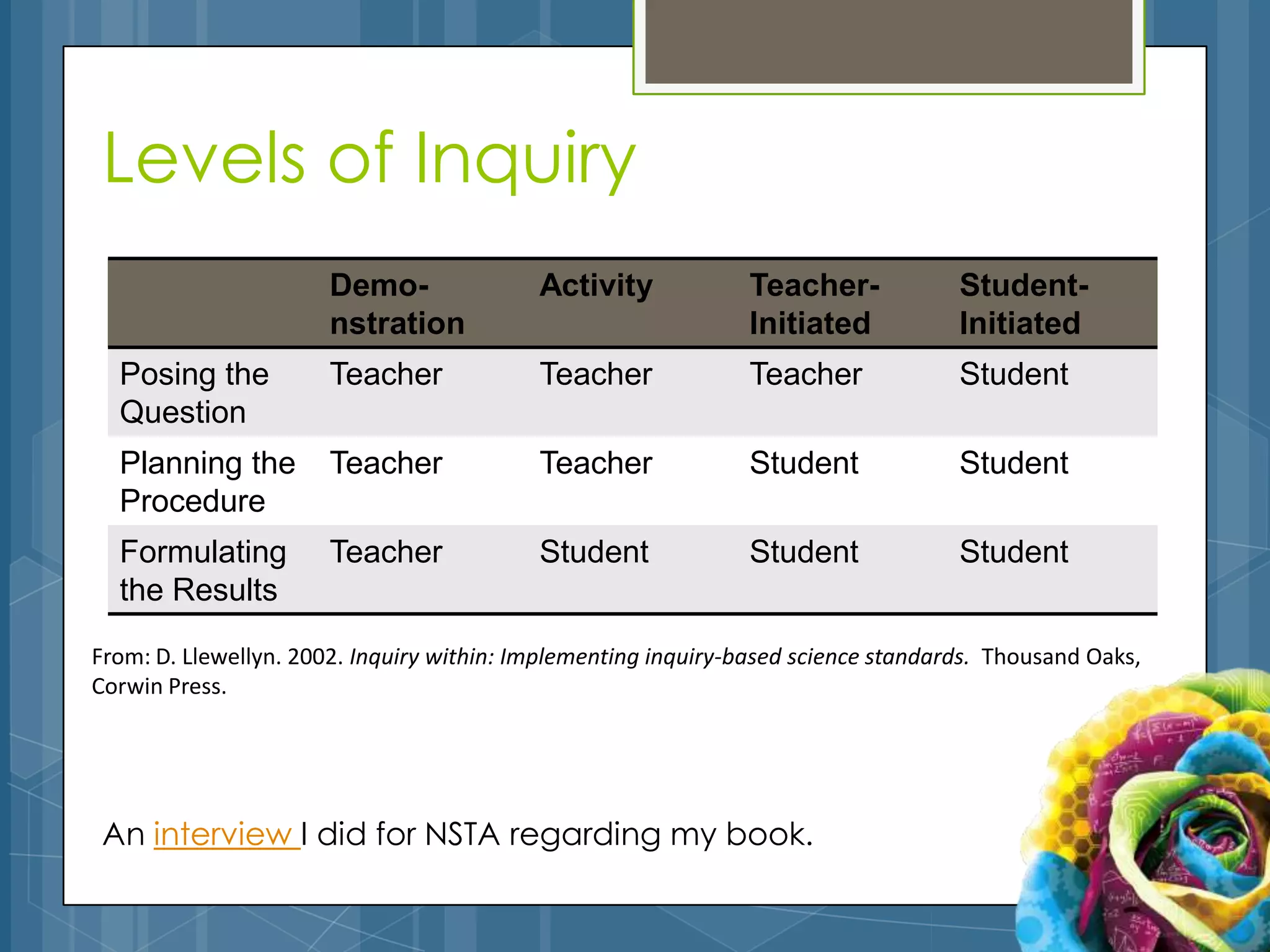
Levels of Inquiry
                       Demo-               Activity            Teacher-             Student-
                       nstration                               Initiated            Initiated
  Posing the           Teacher             Teacher             Teacher              Student
  Question
  Planning the         Teacher             Teacher             Student              Student
  Procedure
  Formulating          Teacher             Student             Student              Student
  the Results

From: D. Llewellyn. 2002. Inquiry within: Implementing inquiry-based science standards. Thousand Oaks,
Corwin Press.


 An interview I did for NSTA regarding my book.
Levels of Inquiry
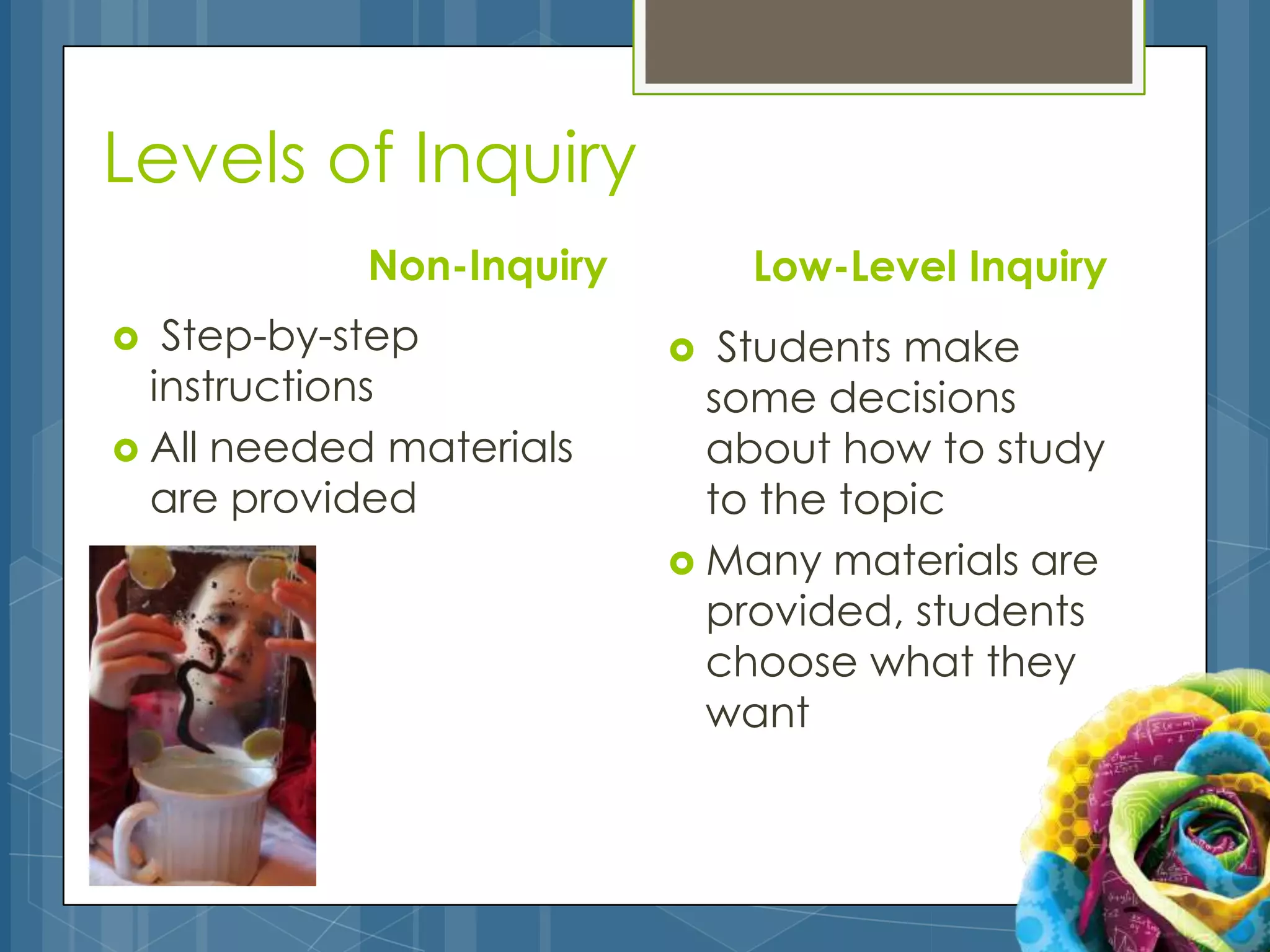
            Non-Inquiry       Low-Level Inquiry
  Step-by-step             Students make
  instructions              some decisions
 All needed materials      about how to study
  are provided              to the topic
                           Many materials are
                            provided, students
                            choose what they
                            want
Levels of Inquiry
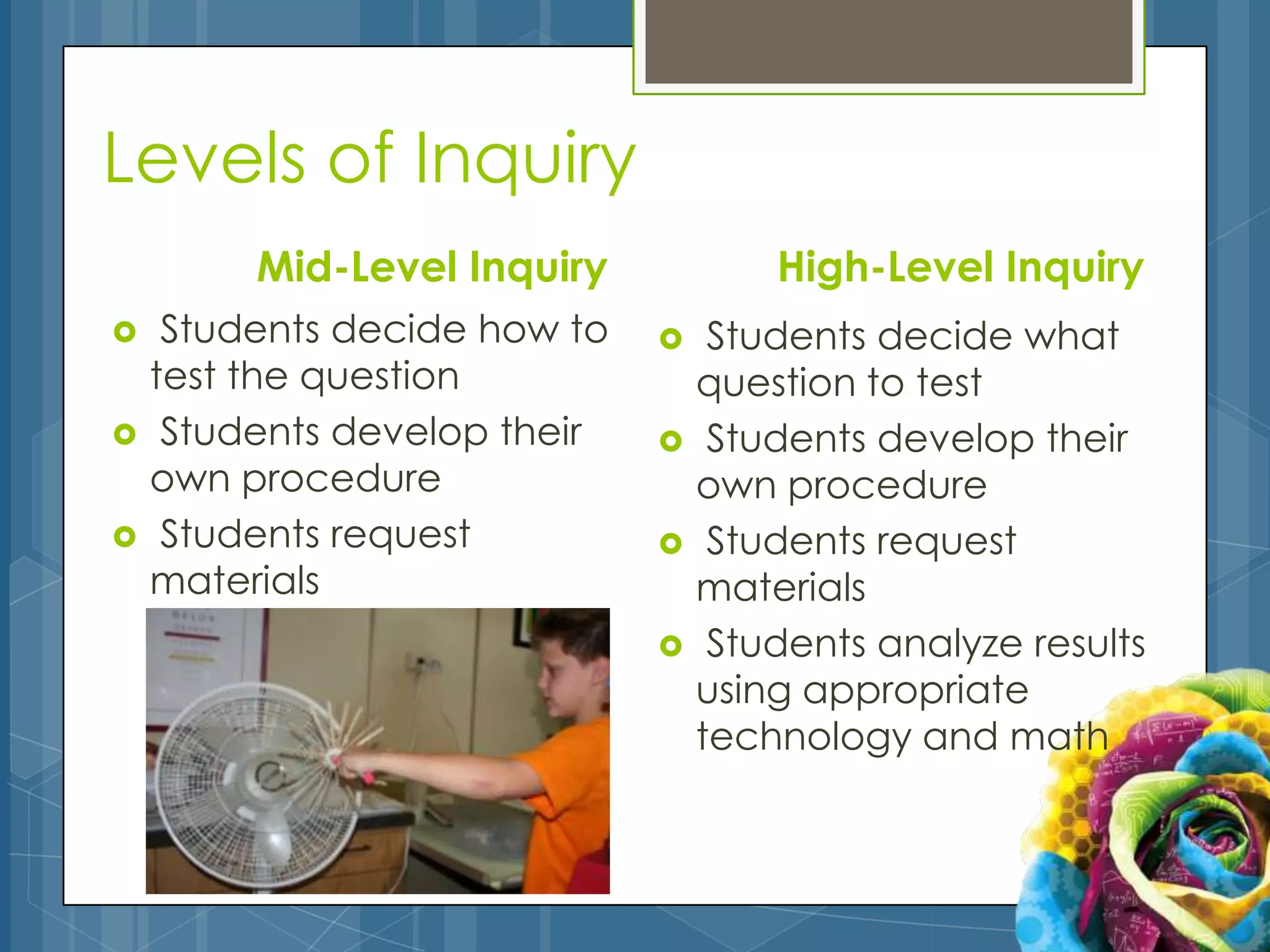
         Mid-Level Inquiry            High-Level Inquiry
    Students decide how to       Students decide what
    test the question             question to test
    Students develop their       Students develop their
    own procedure                 own procedure
    Students request             Students request
    materials                     materials
                                  Students analyze results
                                  using appropriate
                                  technology and math
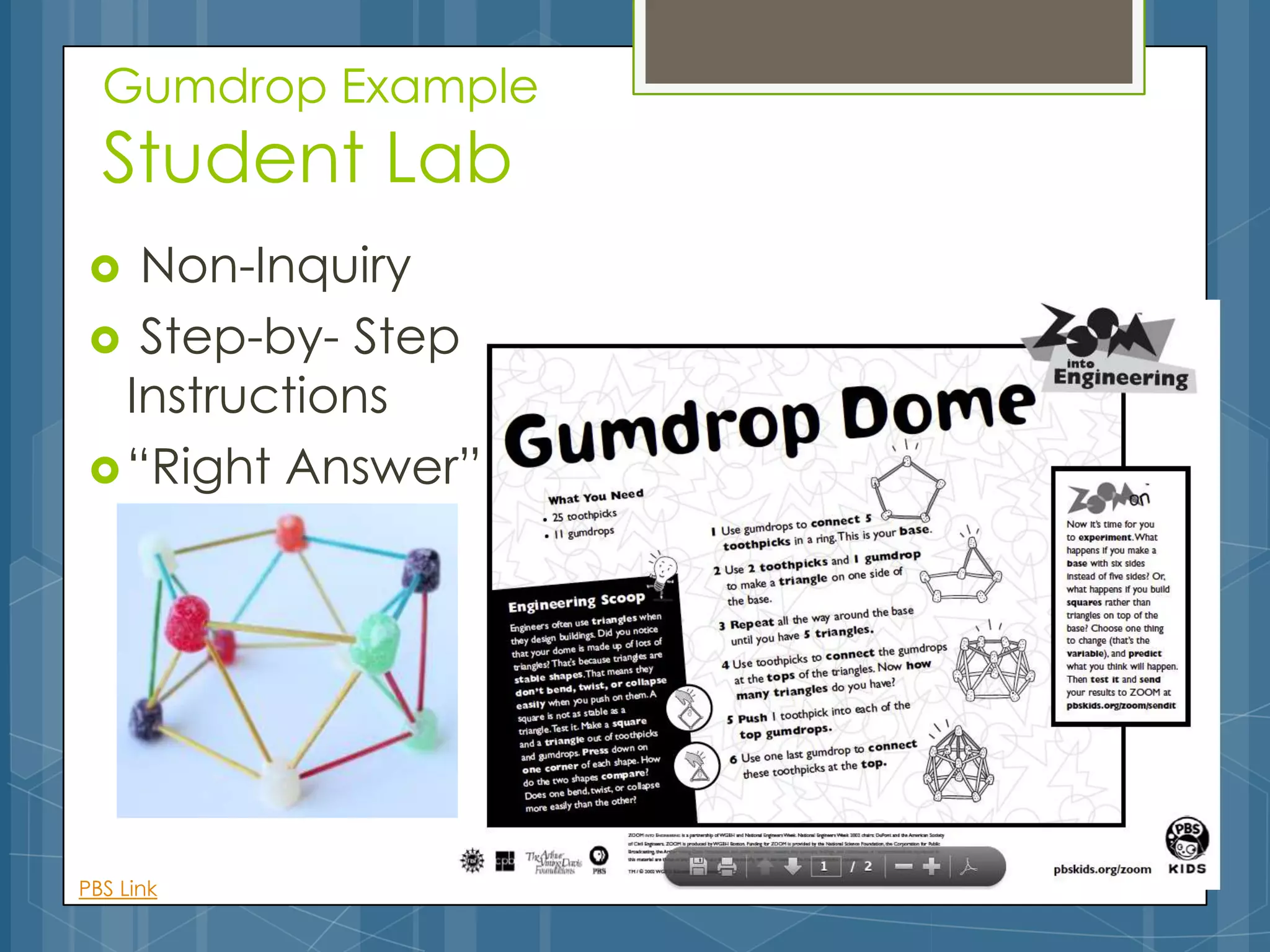
Gumdrop Example
  Student Lab
  Non-Inquiry
 Step-by- Step
  Instructions
 “Right Answer”


PBS Link
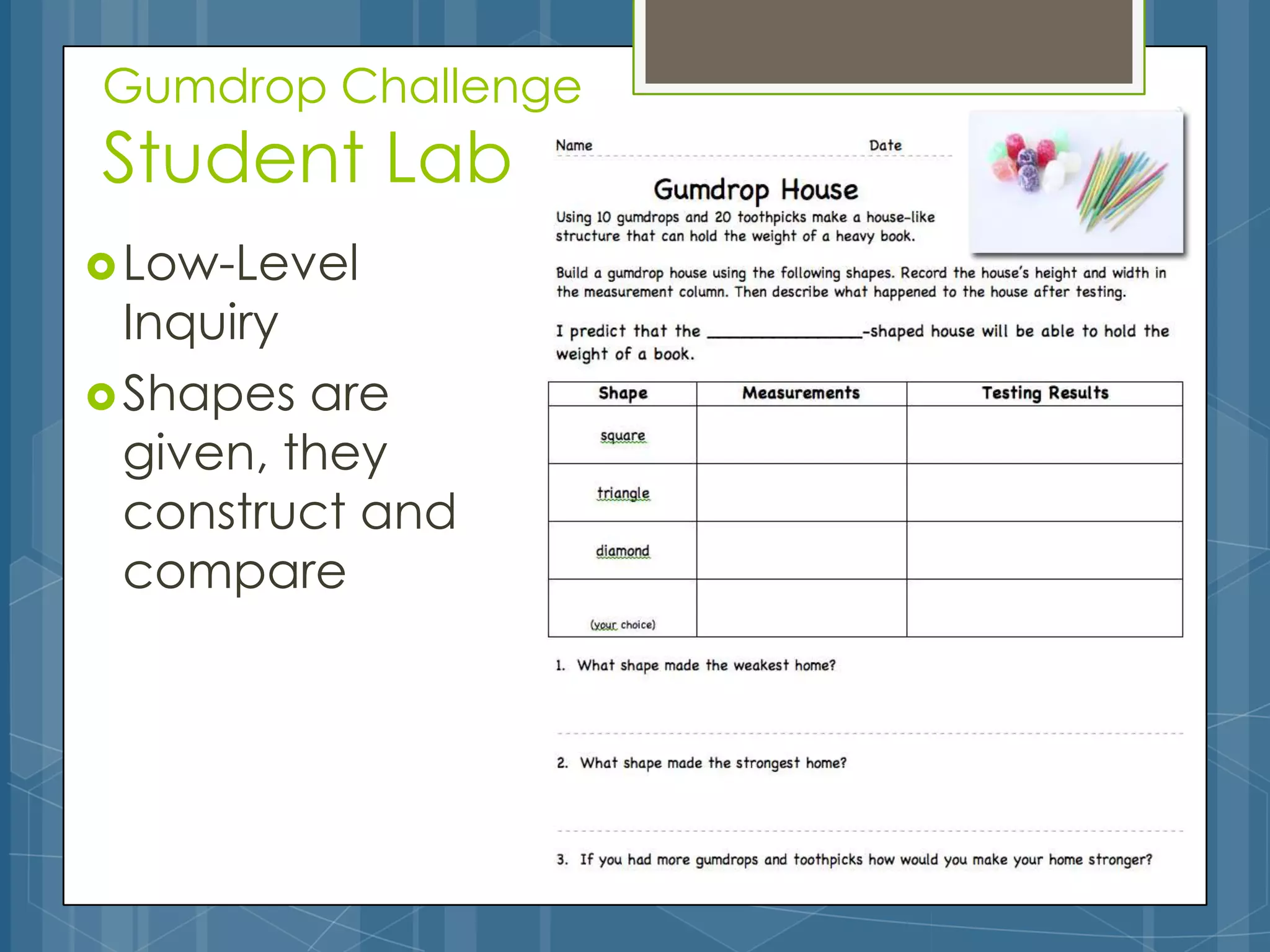
Gumdrop Challenge
Student Lab
 Low-Level
  Inquiry
 Shapes are
  given, they
  construct and
  compare
Gumdrop Challenge
Student Lab
 Mid-Level
 Inquiry
 Failure is
 expected &
 celebrated
 Students
 critically
 evaluate their
 procedure
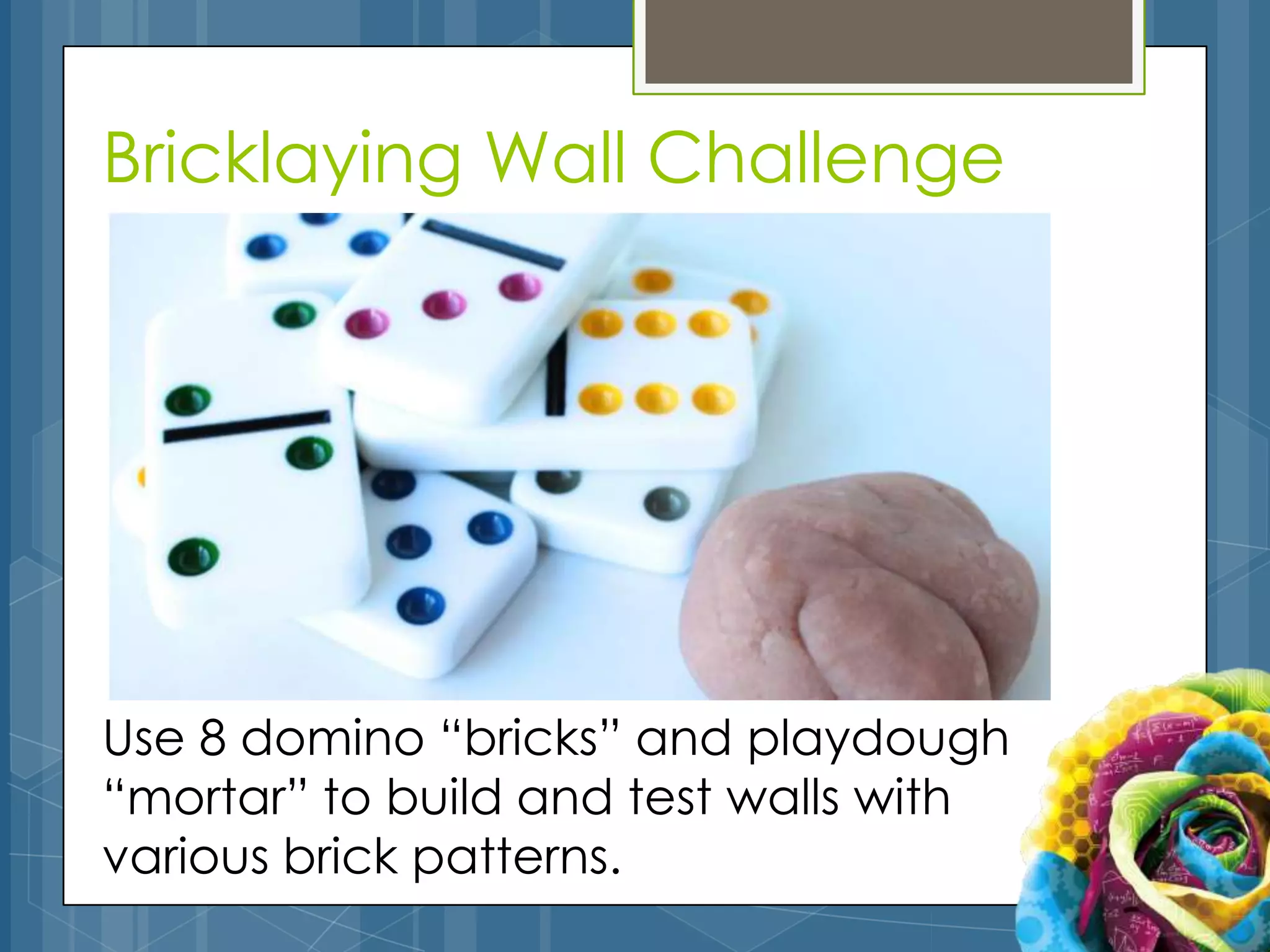
Bricklaying Wall Challenge


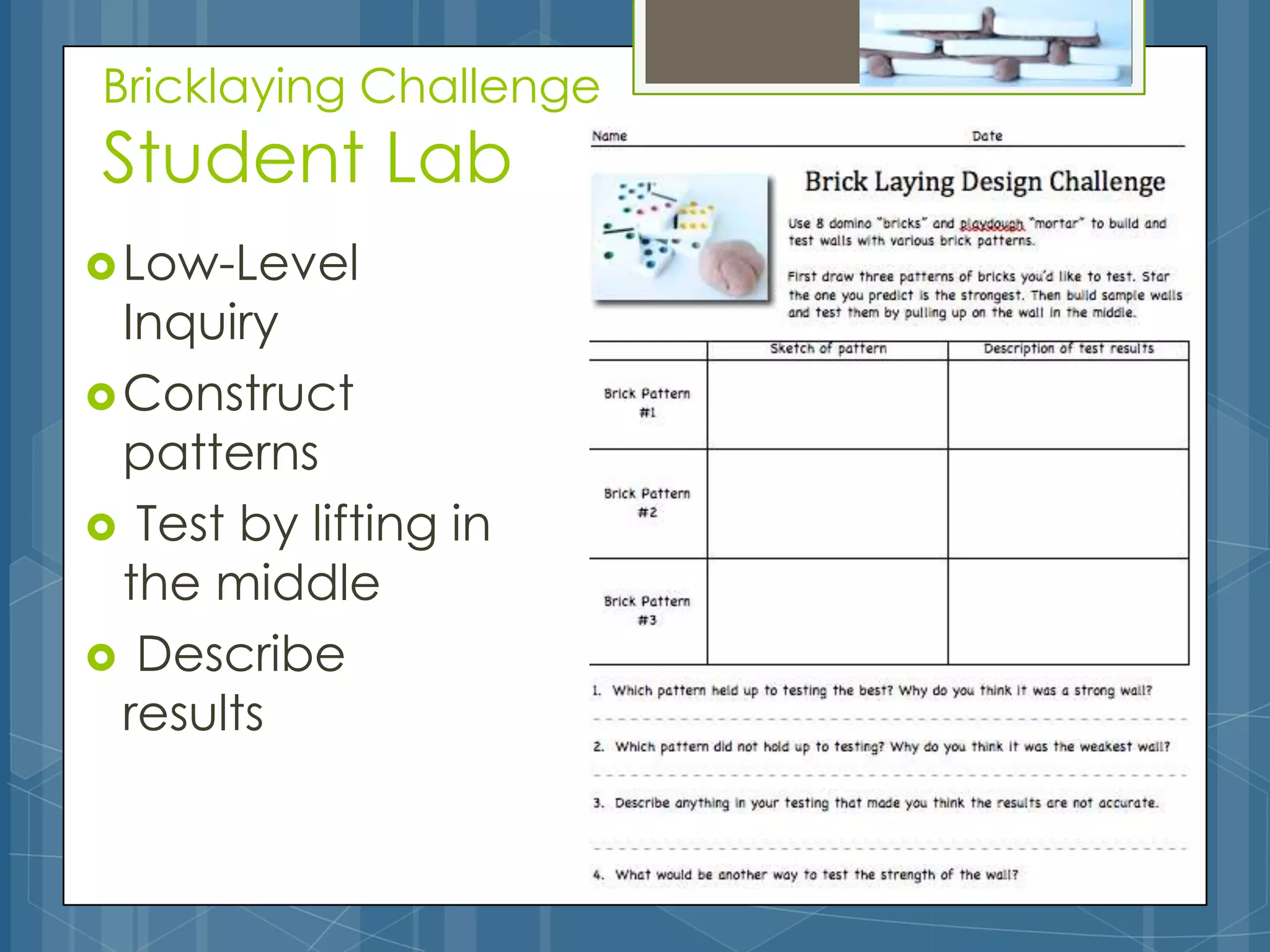
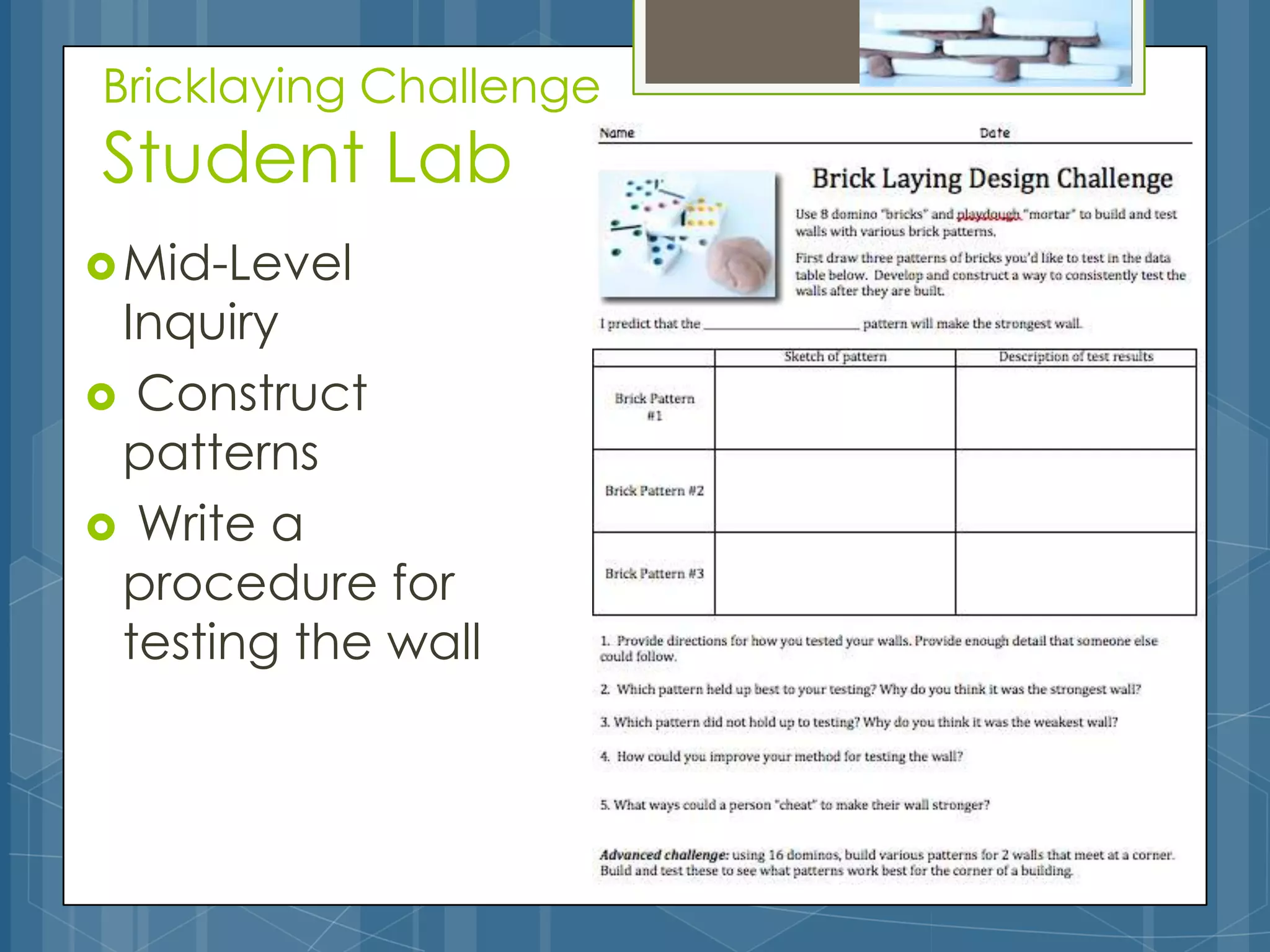
Use 8 domino “bricks” and playdough
“mortar” to build and test walls with
various brick patterns.
Bricklaying…Construction Zone
  Why did you stack your bricks
  this way?
  What do you think will happen
  when you test it?
  Does it matter how you form
  the playdough?
  Would you pattern the bricks
  differently if you were going
  around a corner?
Bricklaying Structure Testing
 How would you suggest we
 test our walls?
 What procedure would best
 allow us to compare our
 results?

         How’d You do?
Bricklaying Challenge
Student Lab
 Low-Level
  Inquiry
 Construct
  patterns
 Test by lifting in
  the middle
 Describe
  results
Bricklaying Challenge
Student Lab
 Mid-Level
 Inquiry
 Construct
 patterns
 Write a
 procedure for
 testing the wall
Bricklaying Challenge
Discussion
  Are there better supplies to use?
 What issues do you anticipate having with
  your own students?
 How might the activity be changed for
  and advanced challenge?
 When might you be able to use this
  activity?
Lab Note
book
Teaching accurate record
keeping
Lab Notebook
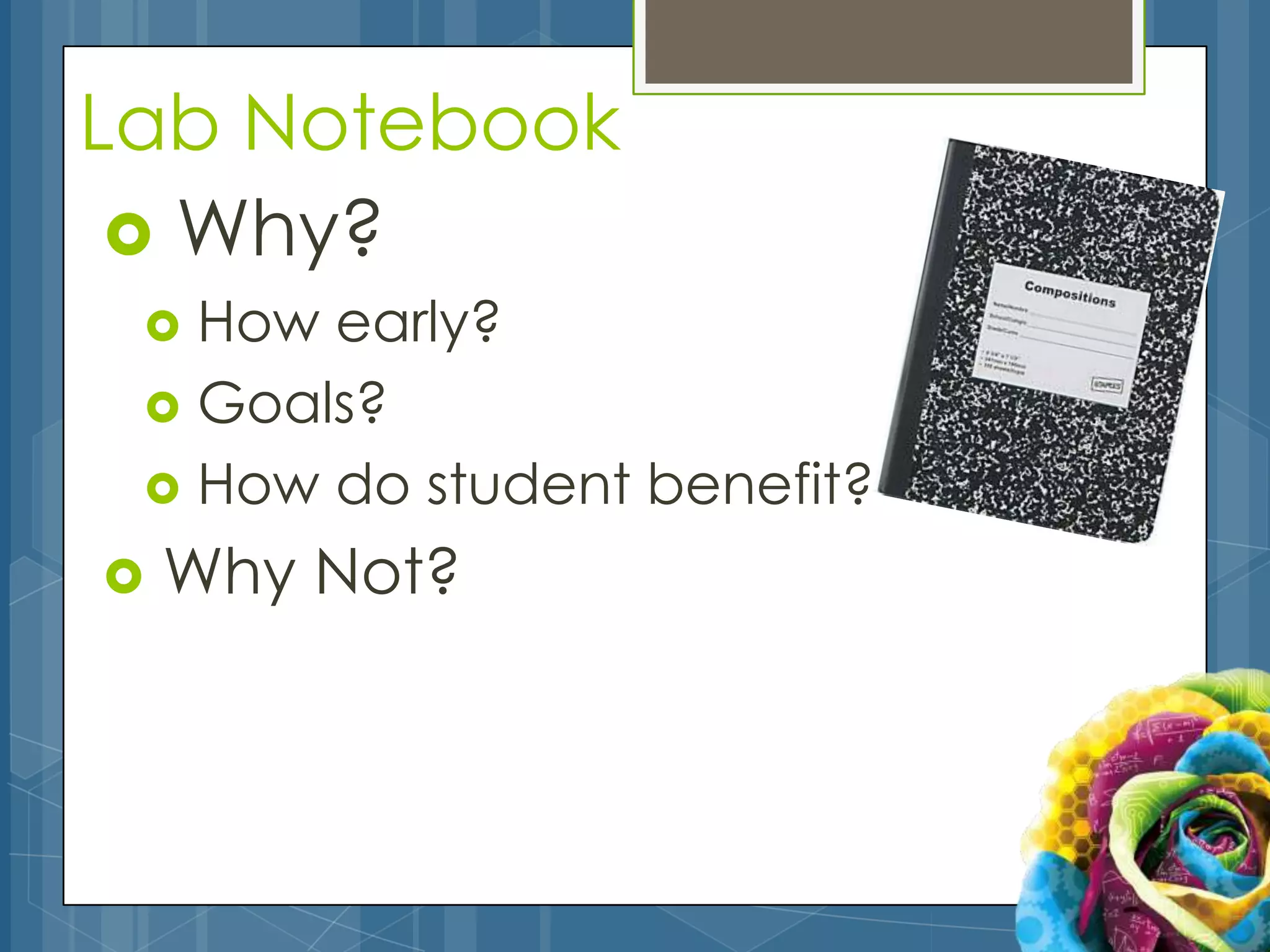
  Why?
  How early?
  Goals?
  How do student benefit?

   Why Not?
Lab Notebook
  Elementary
   Observe changes
   Record measurements
   Graph Data
   Label sketches/photos
Lab Notebook
  Middle Level
  Observe   changes
    Record measurement
    Graph Data
    Label sketches/photos
  Write procedures
  Calculating
  Analyzing results
Lab Notebook
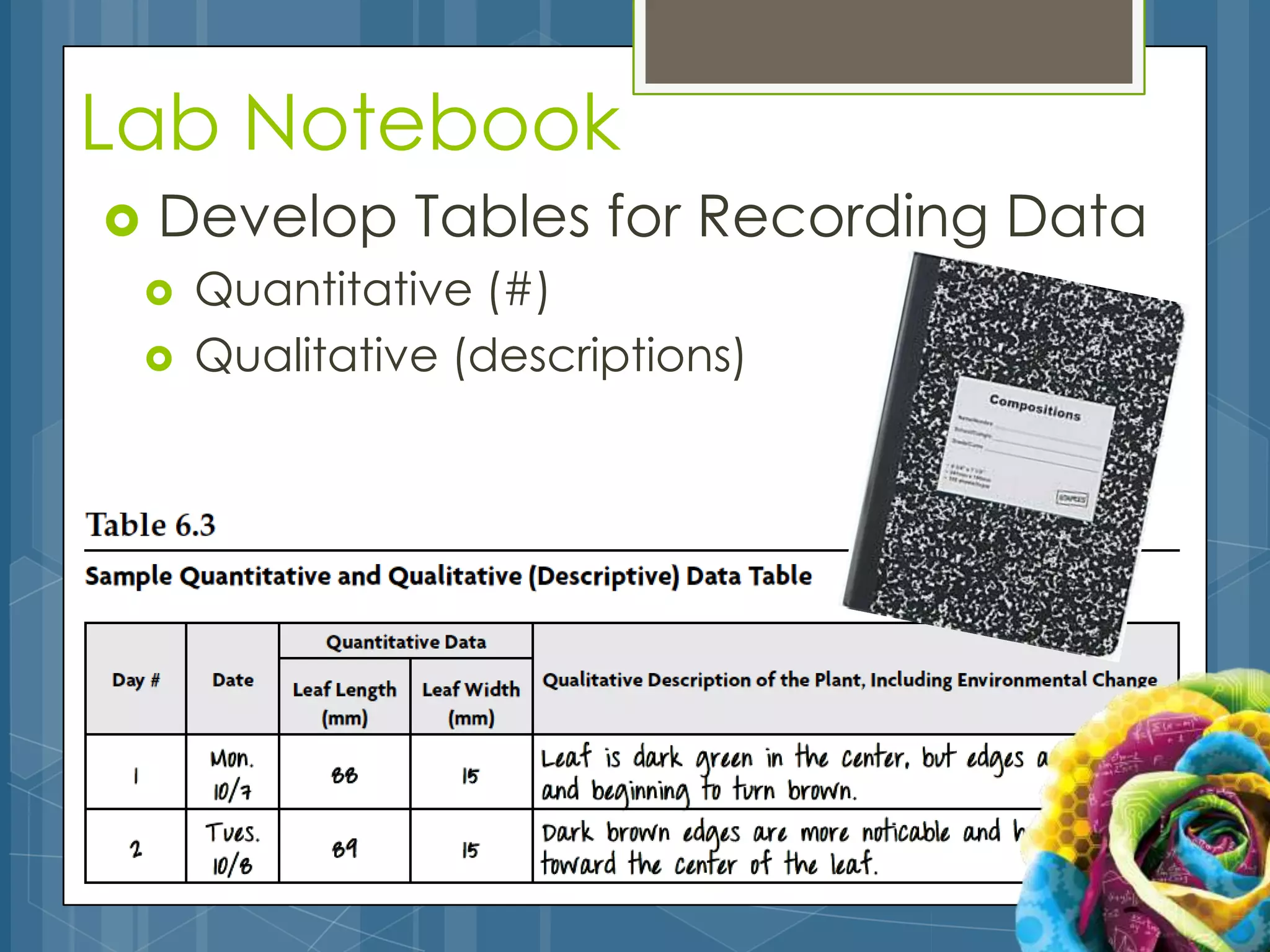
   Develop Tables for Recording Data
       Quantitative (#)
       Qualitative (descriptions)
Lab Notebook
  What does it look like?
  How do you organize it?
  How do you assess it?
  Is it Porfolio-ish? (with
  reflections)
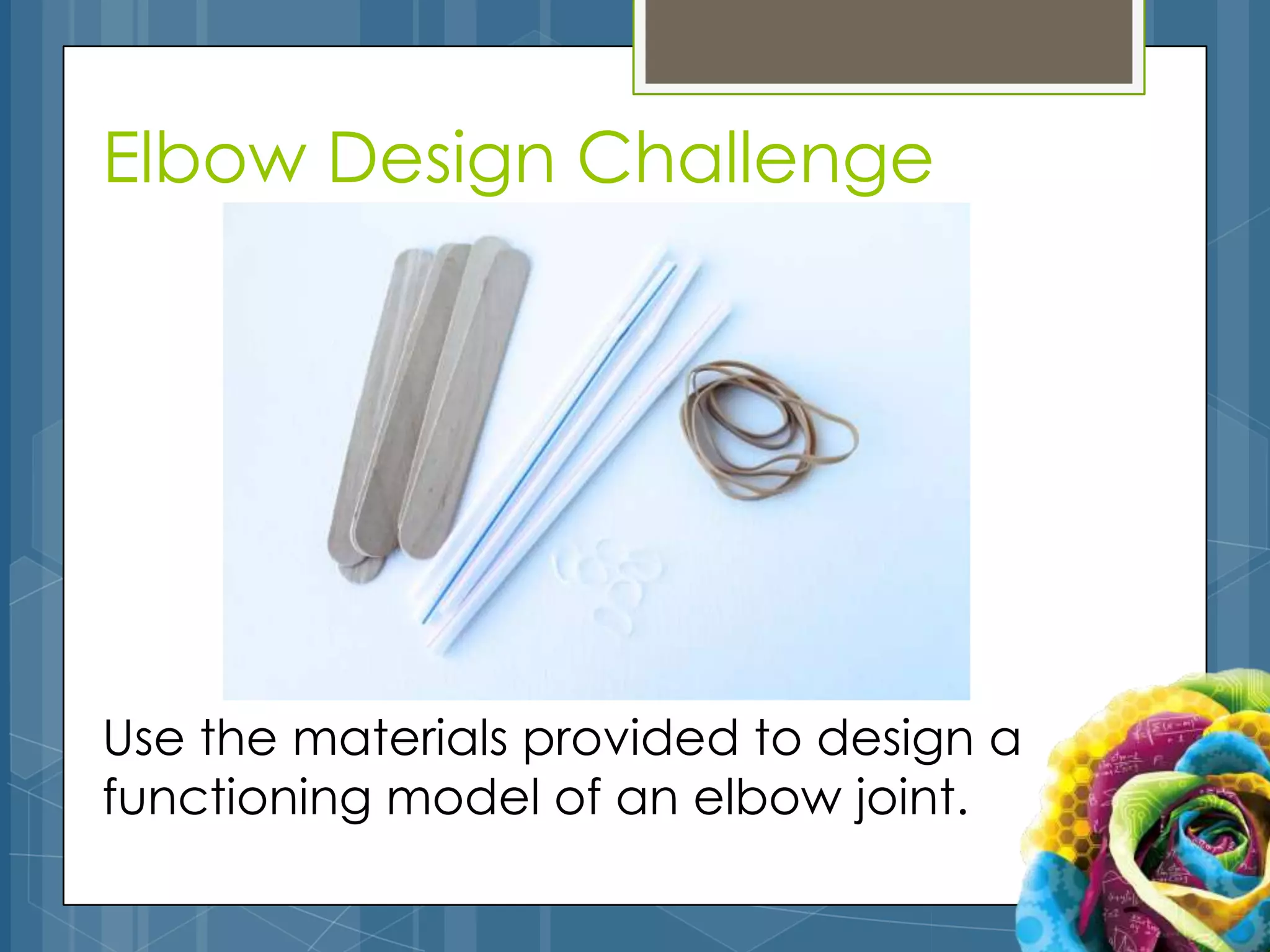
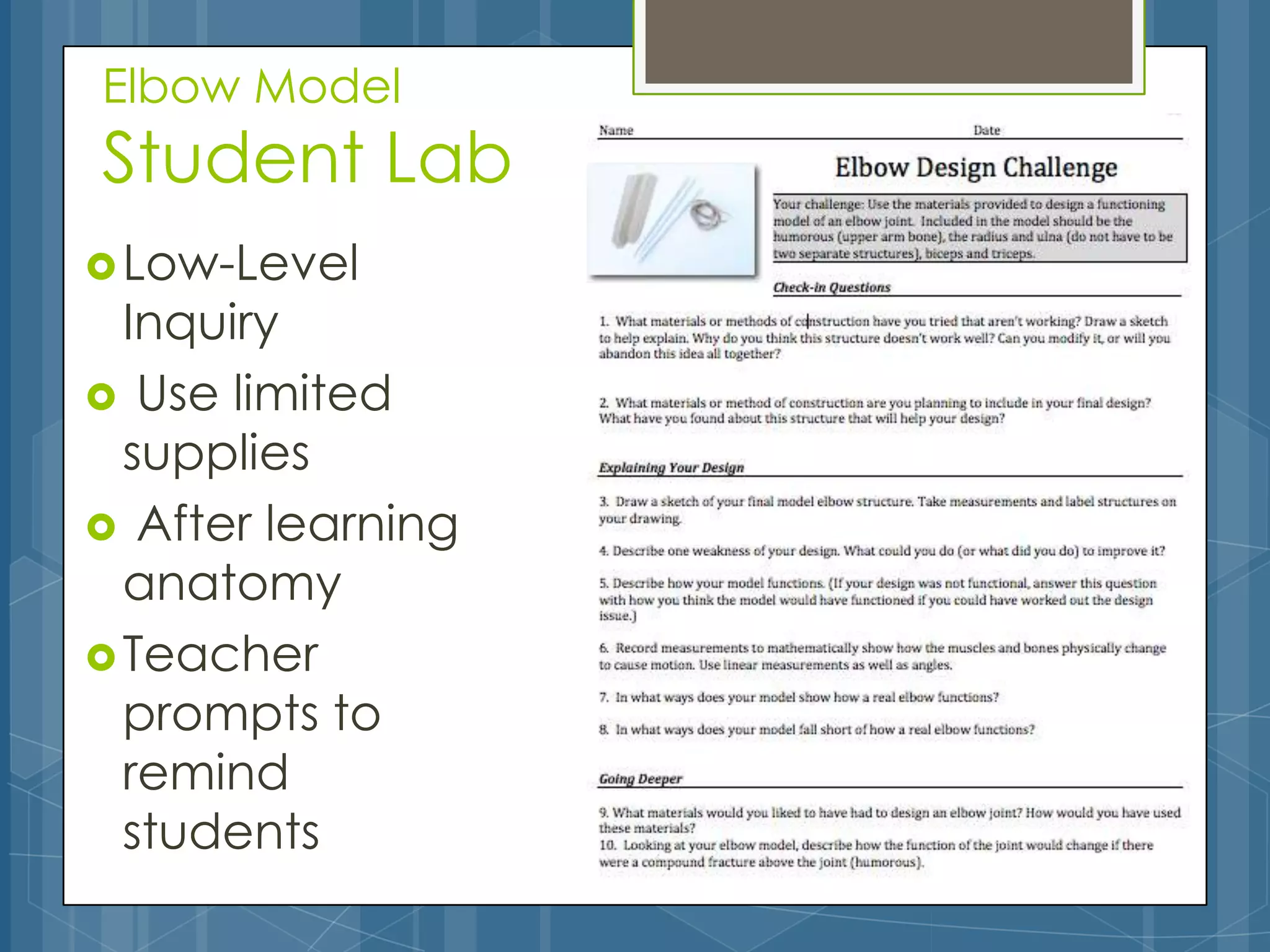
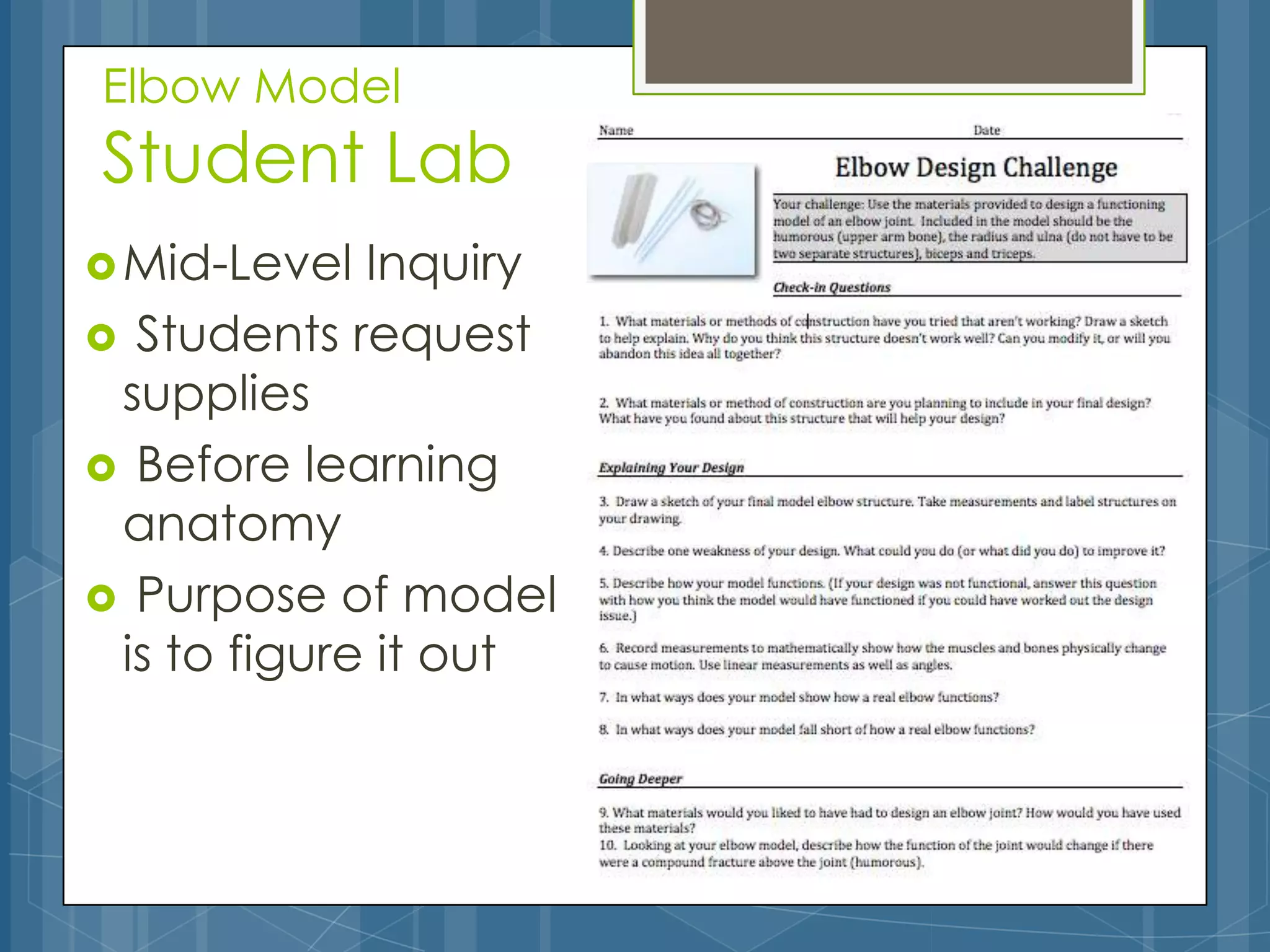
Elbow Design Challenge


Use the materials provided to design a
functioning model of an elbow joint.
Elbow…Construction Zone
  Is there another way to use
  these materials?
  How can you attach
  “muscles” to the bone?
  What’s the best place to
  attach a muscle to bend the
  arm? Extend the arm?
  Why do you need biceps and
  triceps?
Elbow…Check in Questions.
 What   have you tried that’s
  NOT working?
 What structures or methods
  do you like best so far, that
  you hope to include in your
  final design?
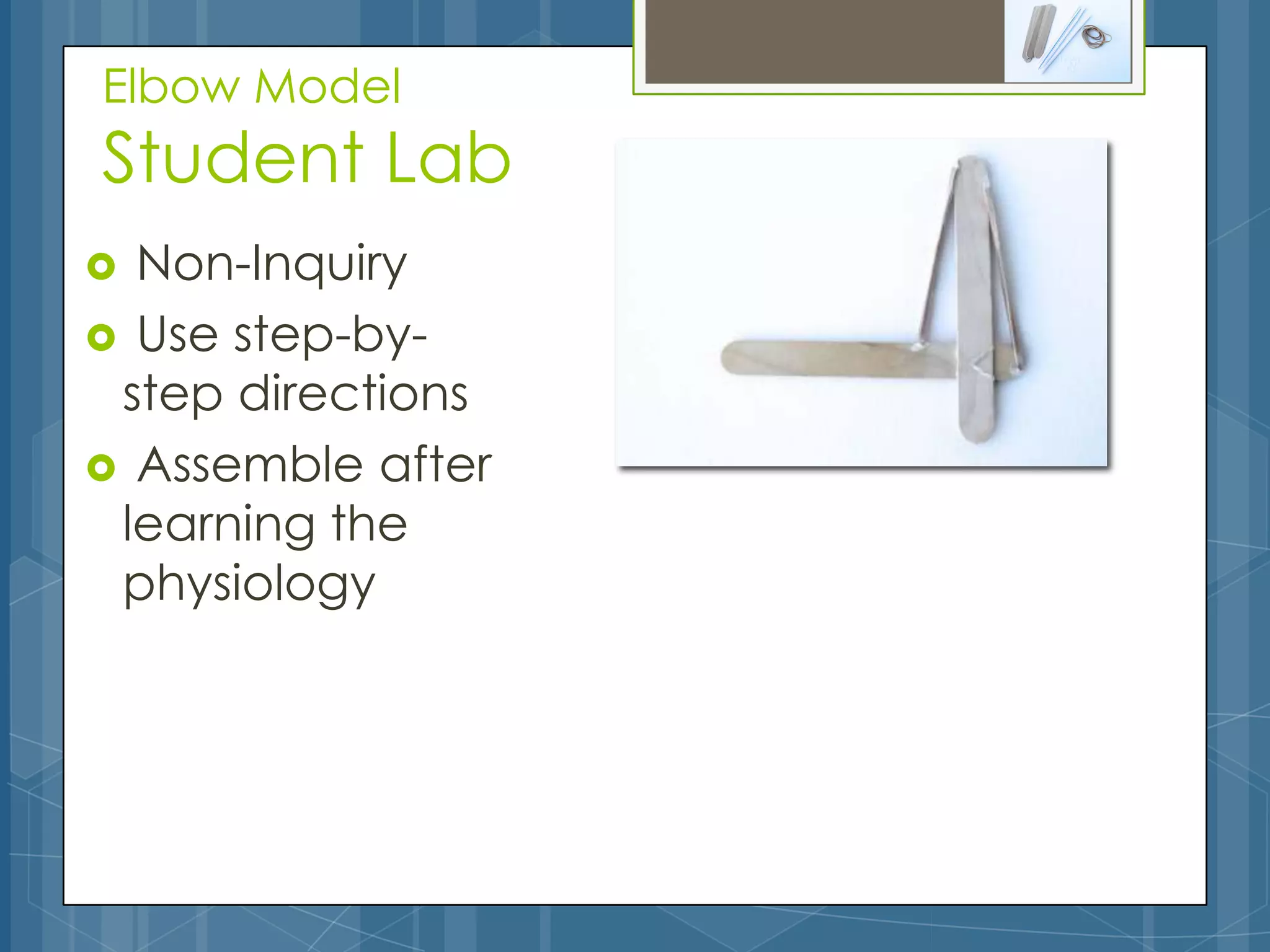
Elbow Model
Student Lab
 Non-Inquiry
 Use step-by-
 step directions
 Assemble after
 learning the
 physiology
Elbow Model
Student Lab
 Low-Level
  Inquiry
 Use limited
  supplies
 After learning
  anatomy
 Teacher
  prompts to
  remind
  students
Elbow Model
Student Lab
 Mid-Level  Inquiry
 Students request
 supplies
 Before learning
 anatomy
 Purpose of model
 is to figure it out
Elbow Model
Discussion
 Are there better supplies to
 use?
What issues do you anticipate
 having with your own students?
 What do students record in their
 lab notebook?
Planning
Inquiry
Students need to be trained
in the process of inquiry.
Two Key Ideas
  Failure       Collaboration
 is Totally       Must be
     An          Modeled &
  Option!          Taught
Attitudes you want to foster
 Things don’t always “work” out
 Failure helps us (re)think & learn
 Talking out ideas helps us think
 Trouble shooting is fun
 Tinkering is learning
 Playing first it helps us know what we
 need to read
Create Inquiry Spaces
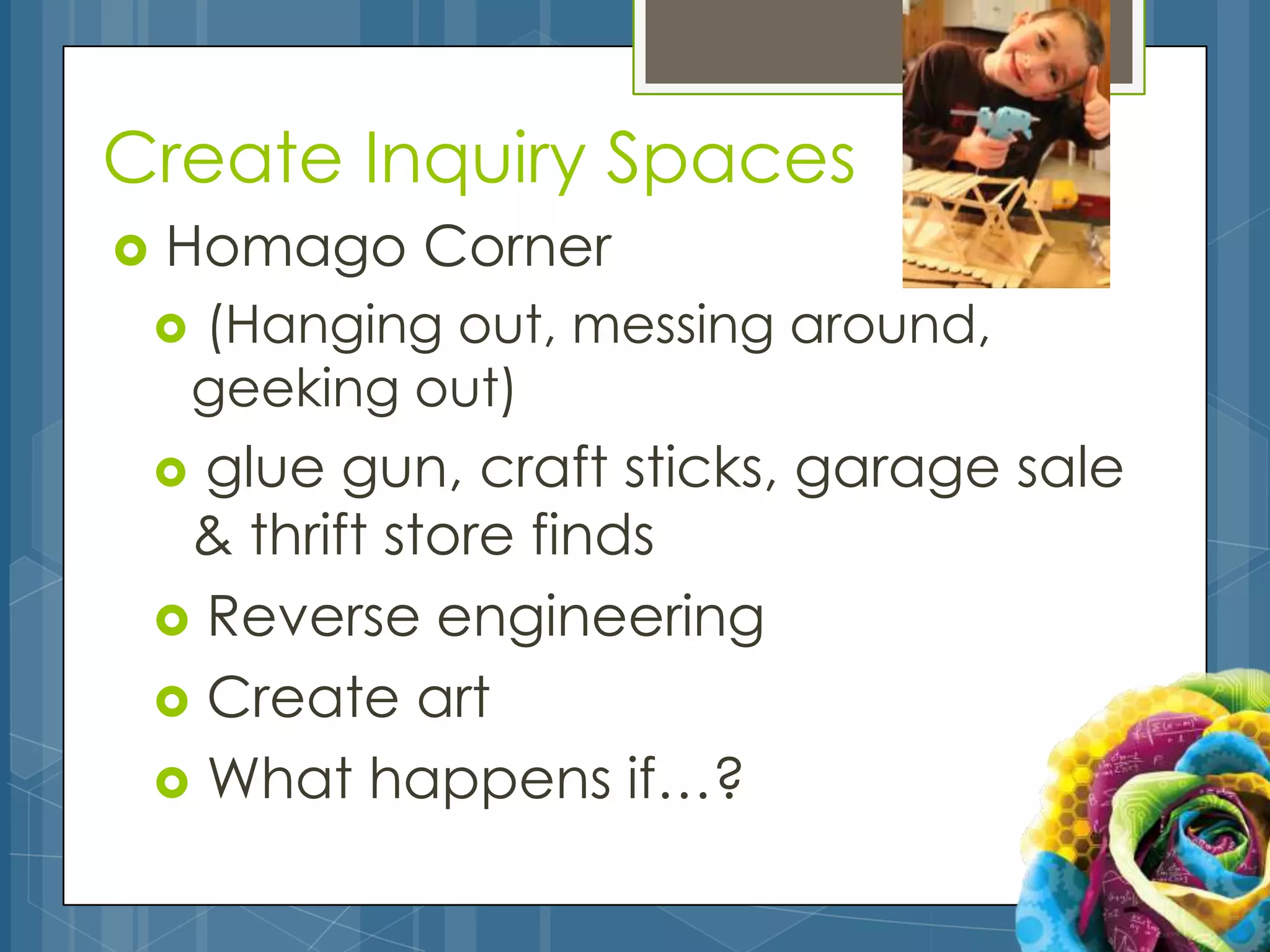
   Homago Corner
       (Hanging out, messing around,
        geeking out)
     glue gun, craft sticks, garage sale
     & thrift store finds
     Reverse engineering
     Create art
     What happens if…?
Celebrate Inquiry
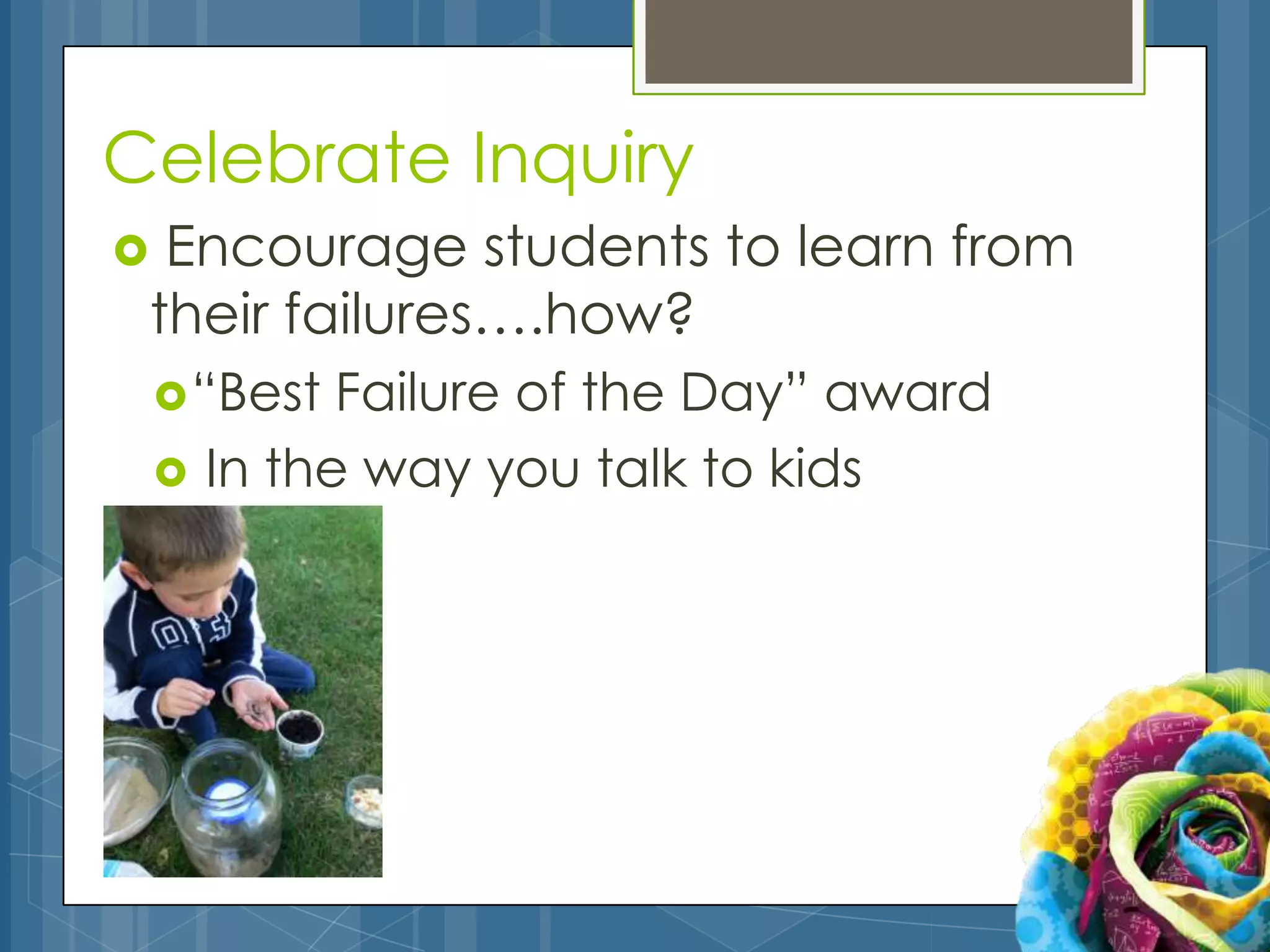
 Encourage students to learn from
 their failures….how?
     “Best   Failure of the Day” award
       In the way you talk to kids
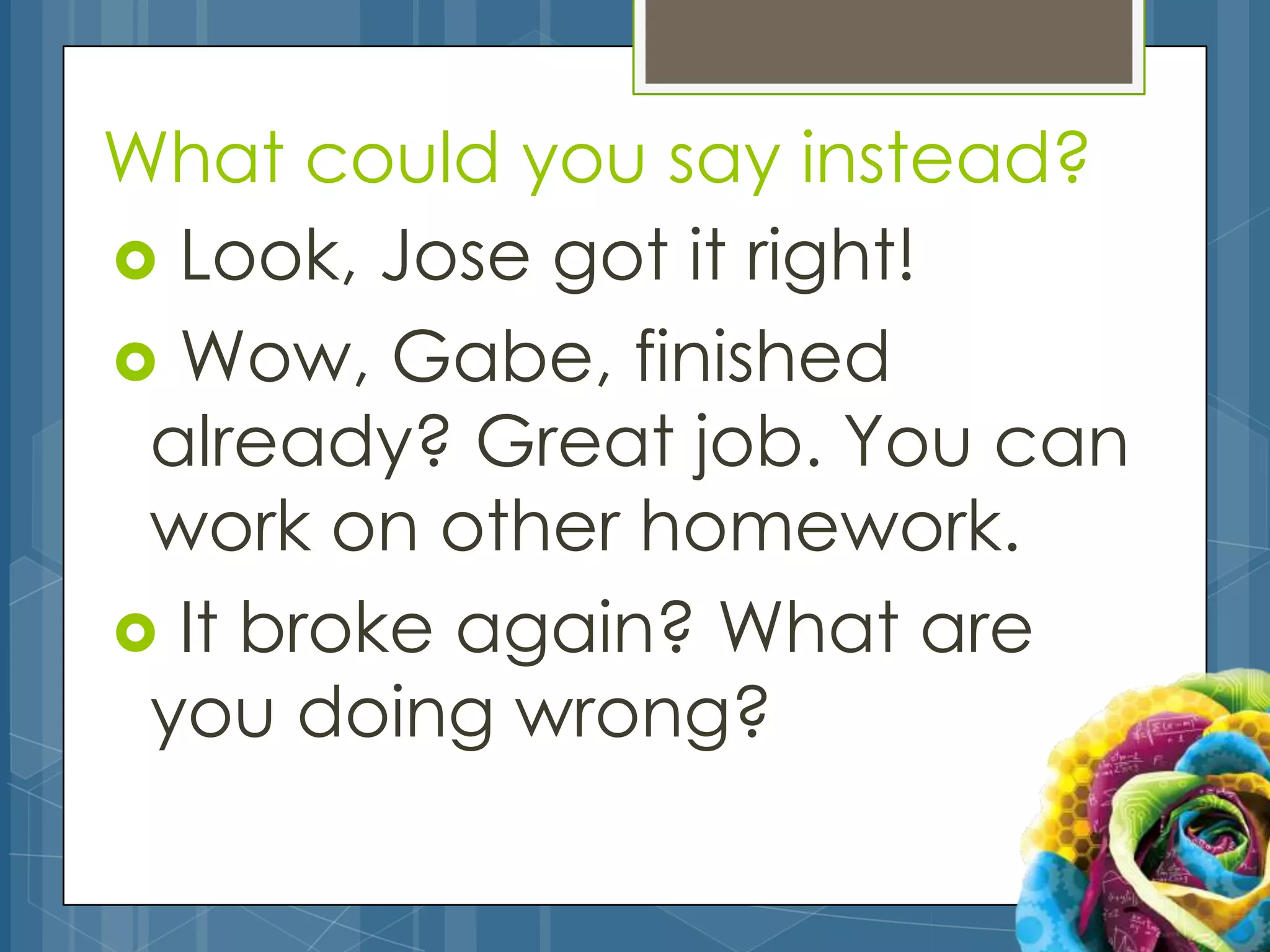
What could you say instead?
 Look, Jose got it right!
 Wow, Gabe, finished
 already? Great job. You can
 work on other homework.
 It broke again? What are
 you doing wrong?
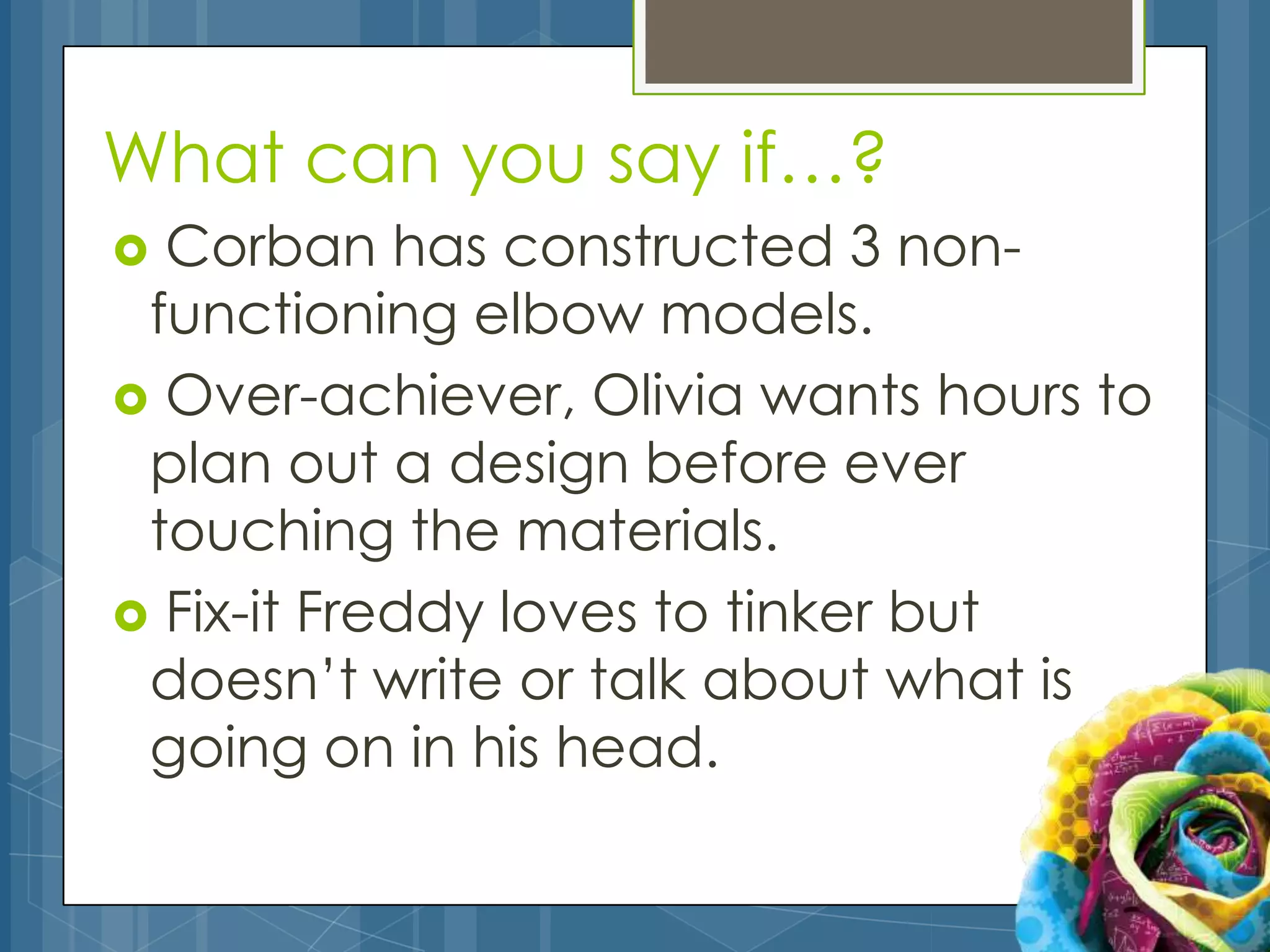
What can you say if…?
 Corban has constructed 3 non-
 functioning elbow models.
 Over-achiever, Olivia wants hours to
 plan out a design before ever
 touching the materials.
 Fix-it Freddy loves to tinker but
 doesn’t write or talk about what is
 going on in his head.
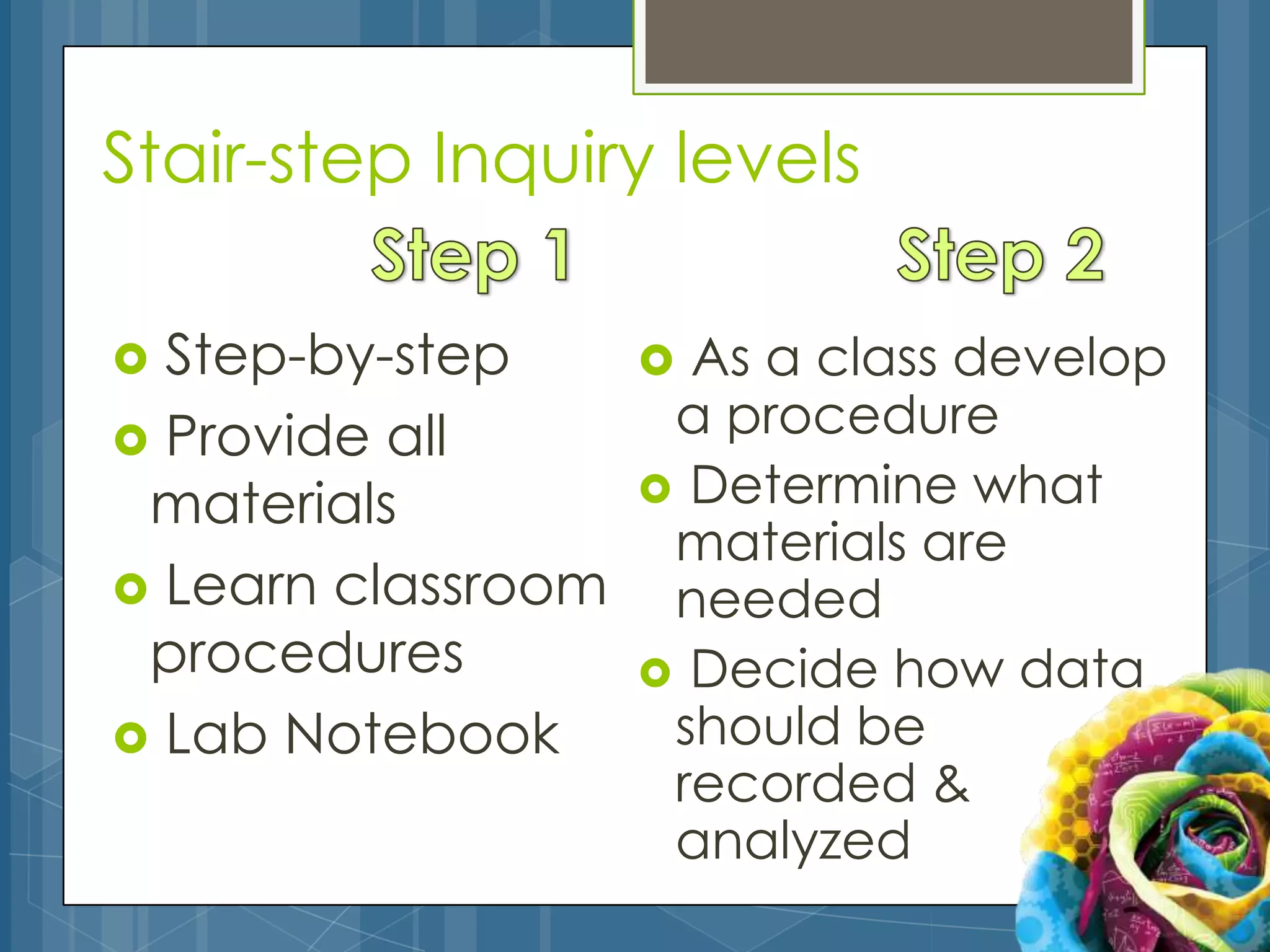
Stair-step Inquiry levels

 Step-by-step       As a class develop
 Provide all
                     a procedure
 materials           Determine what
                     materials are
 Learn classroom    needed
 procedures          Decide how data
 Lab Notebook       should be
                     recorded &
                     analyzed
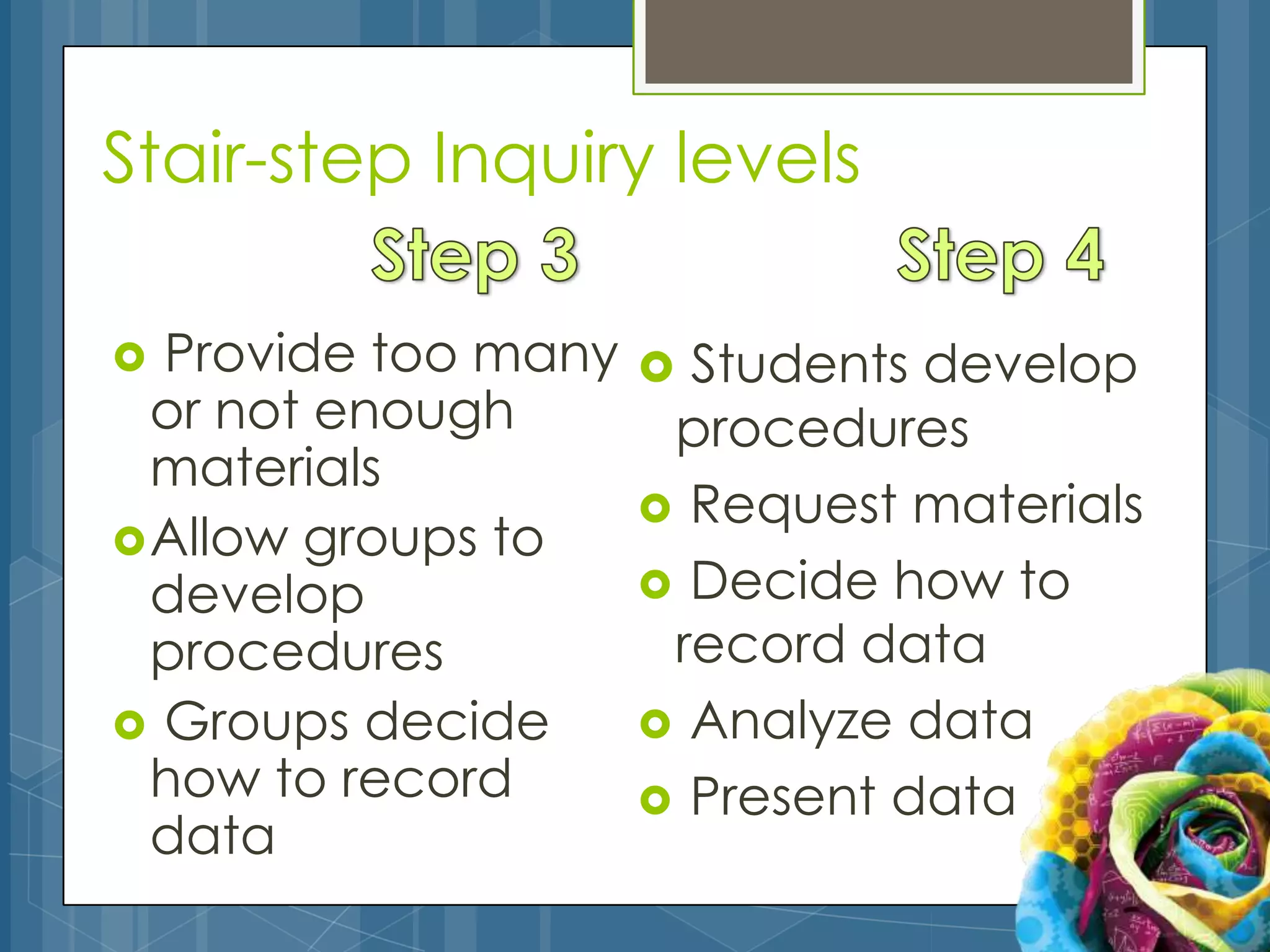
Stair-step Inquiry levels

 Provide too many  Students develop
  or not enough     procedures
  materials
                    Request materials
 Allow groups to
  develop           Decide how to
  procedures        record data
 Groups decide     Analyze data
  how to record     Present data
  data
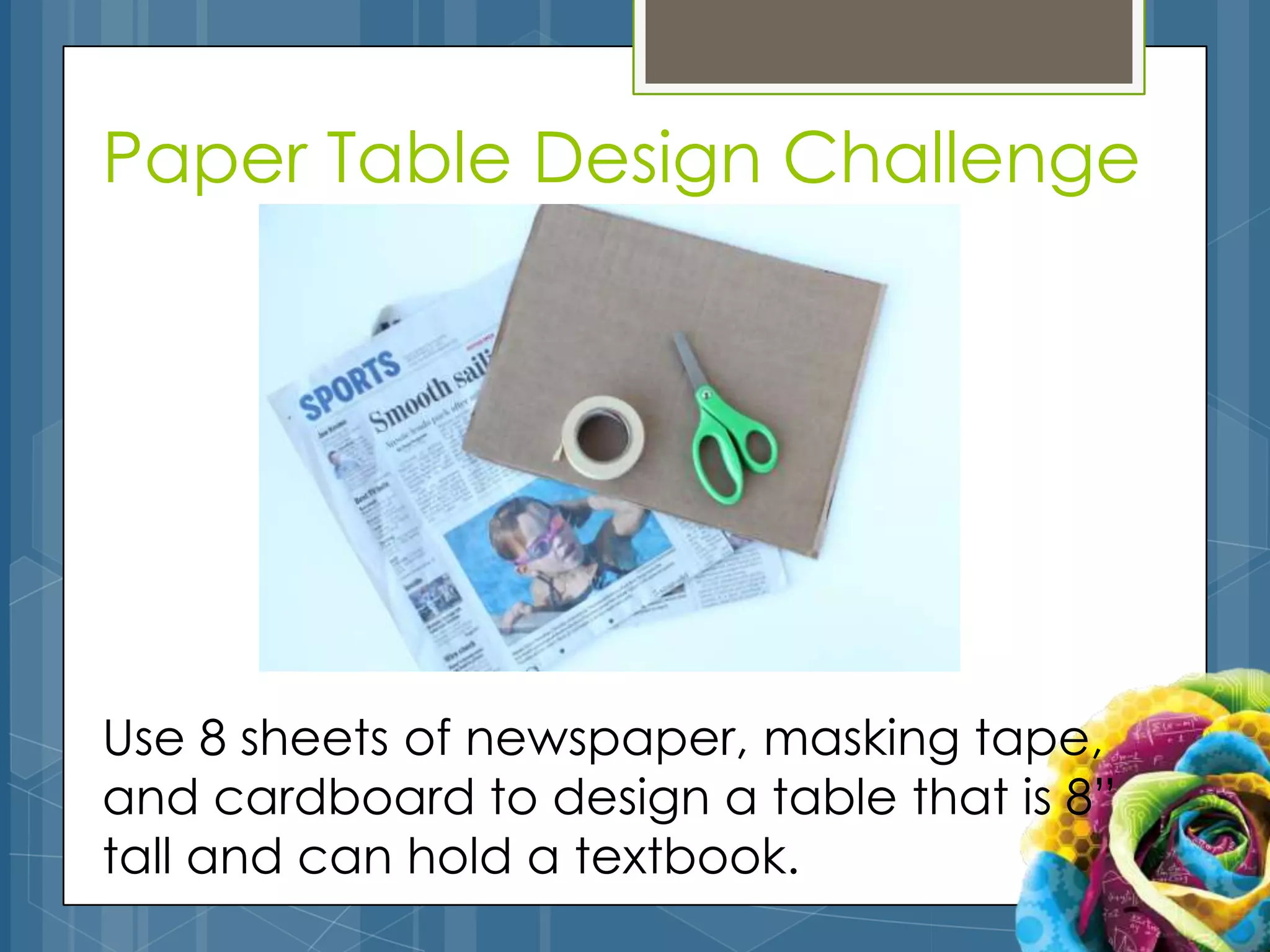
Paper Table Design Challenge


Use 8 sheets of newspaper, masking tape,
and cardboard to design a table that is 8”
tall and can hold a textbook.
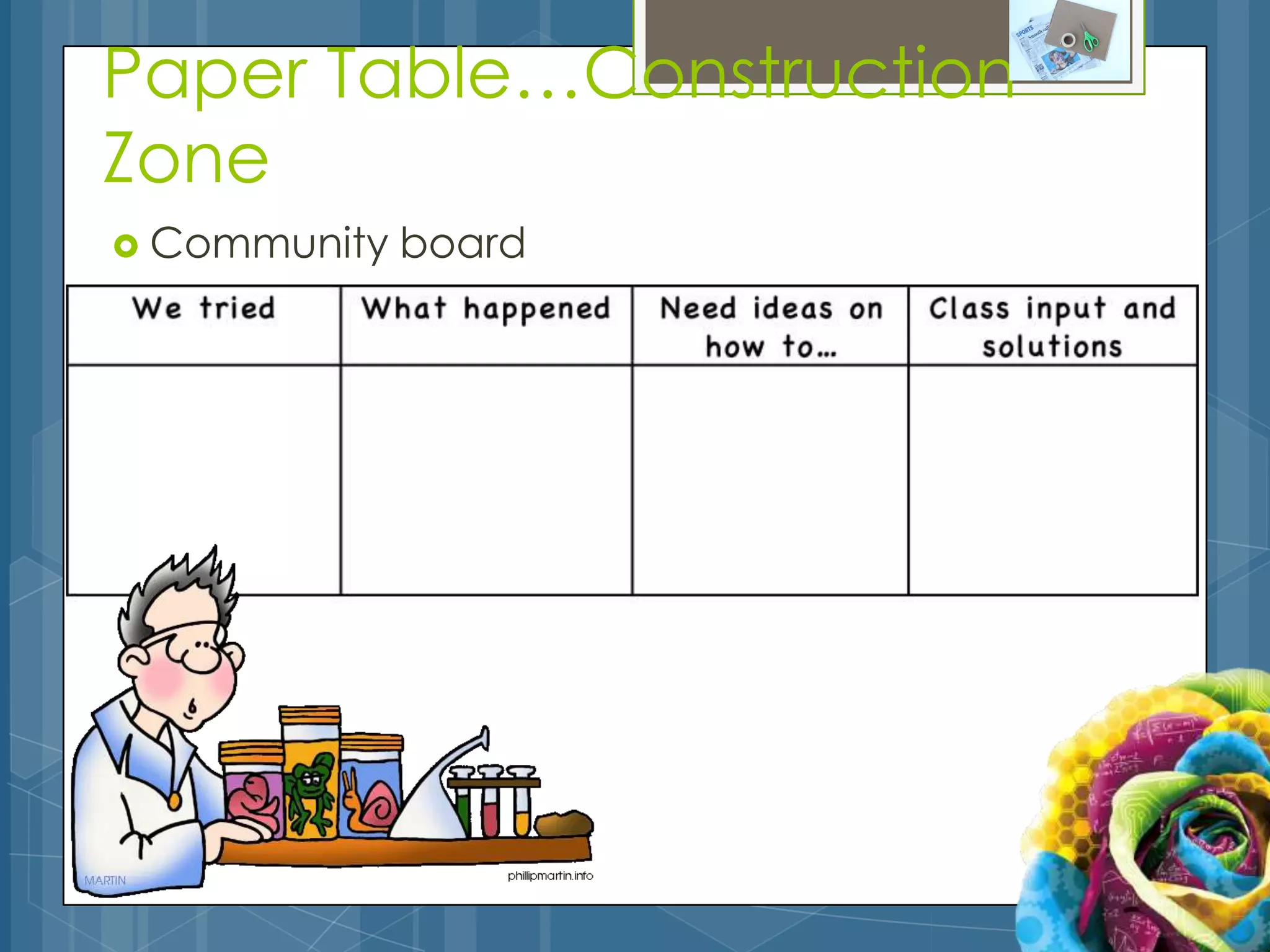
Paper Table…Construction
Zone
 Community   board
Paper Table Structure Testing


        How’d You do?
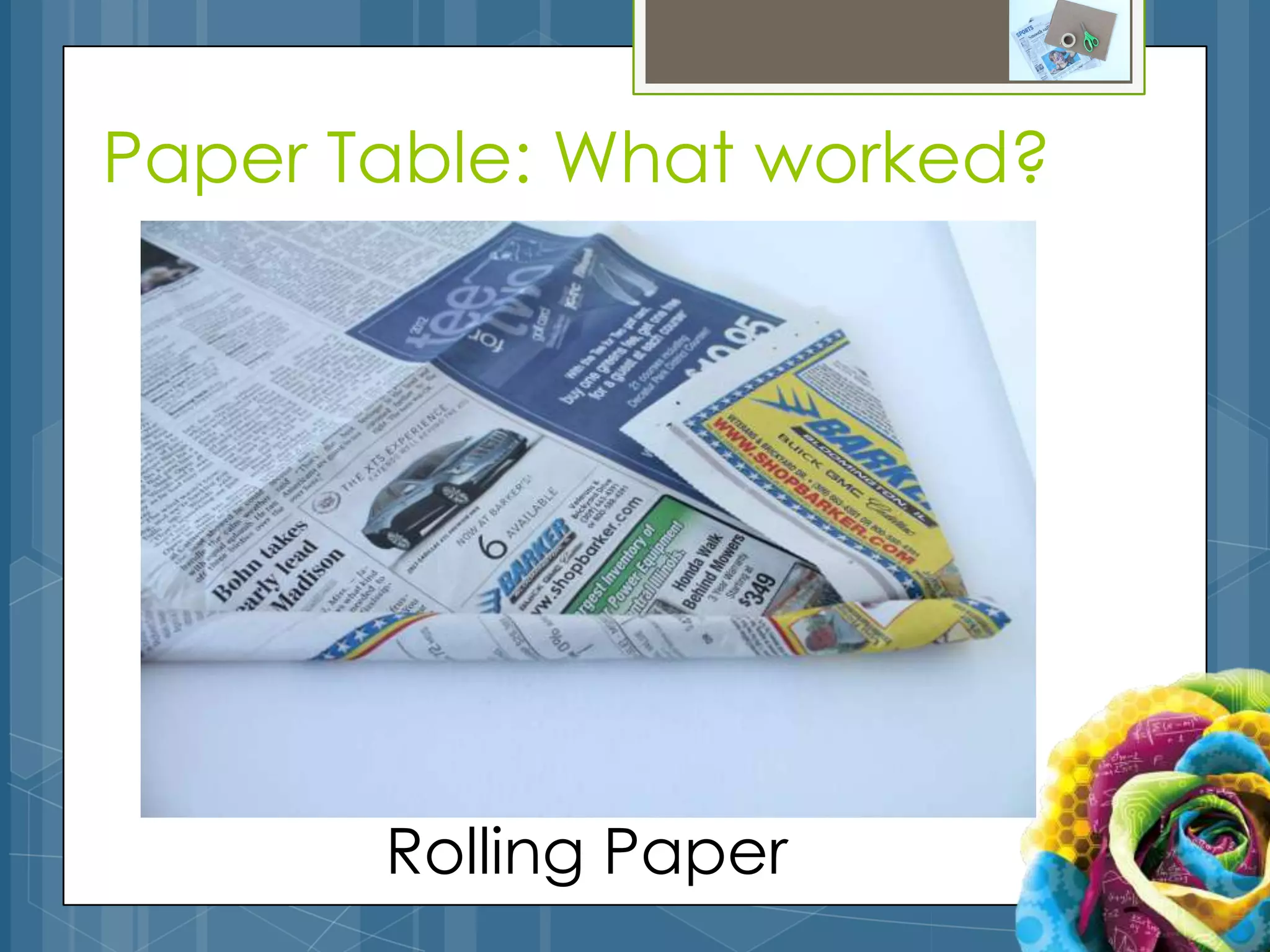
Paper Table: What worked?


       Rolling Paper
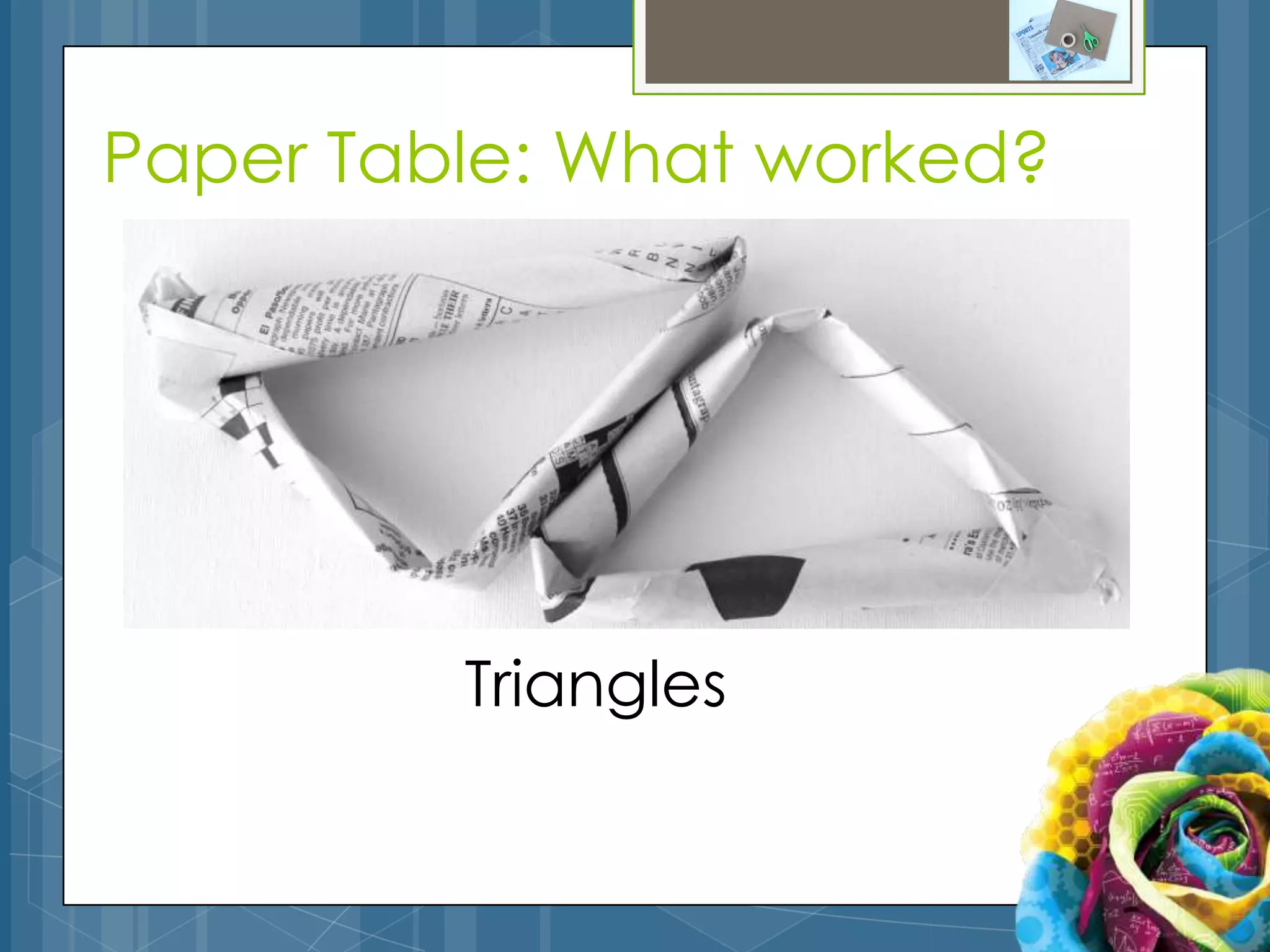
Paper Table: What worked?


         Triangles
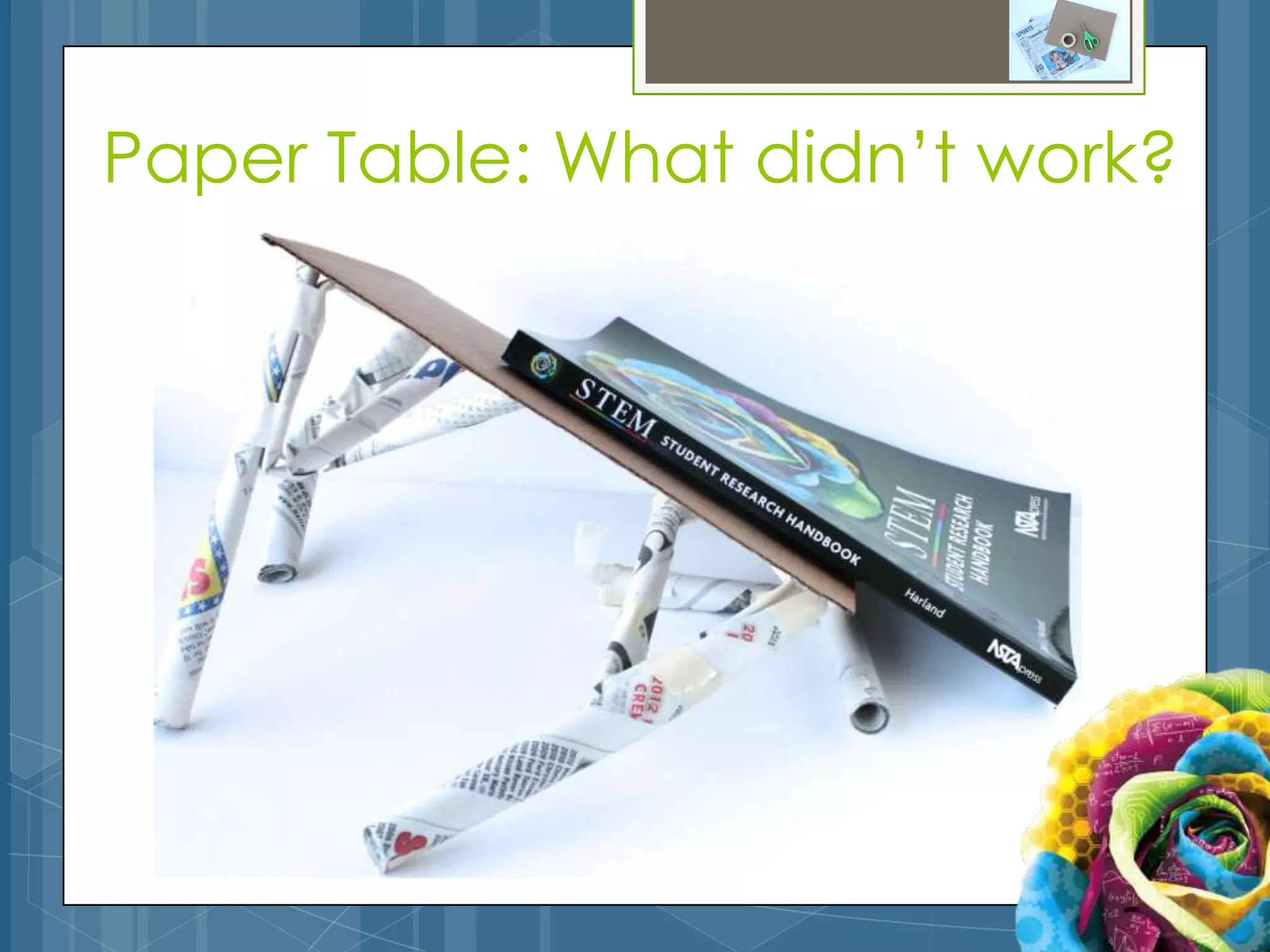
Paper Table: What didn’t work?
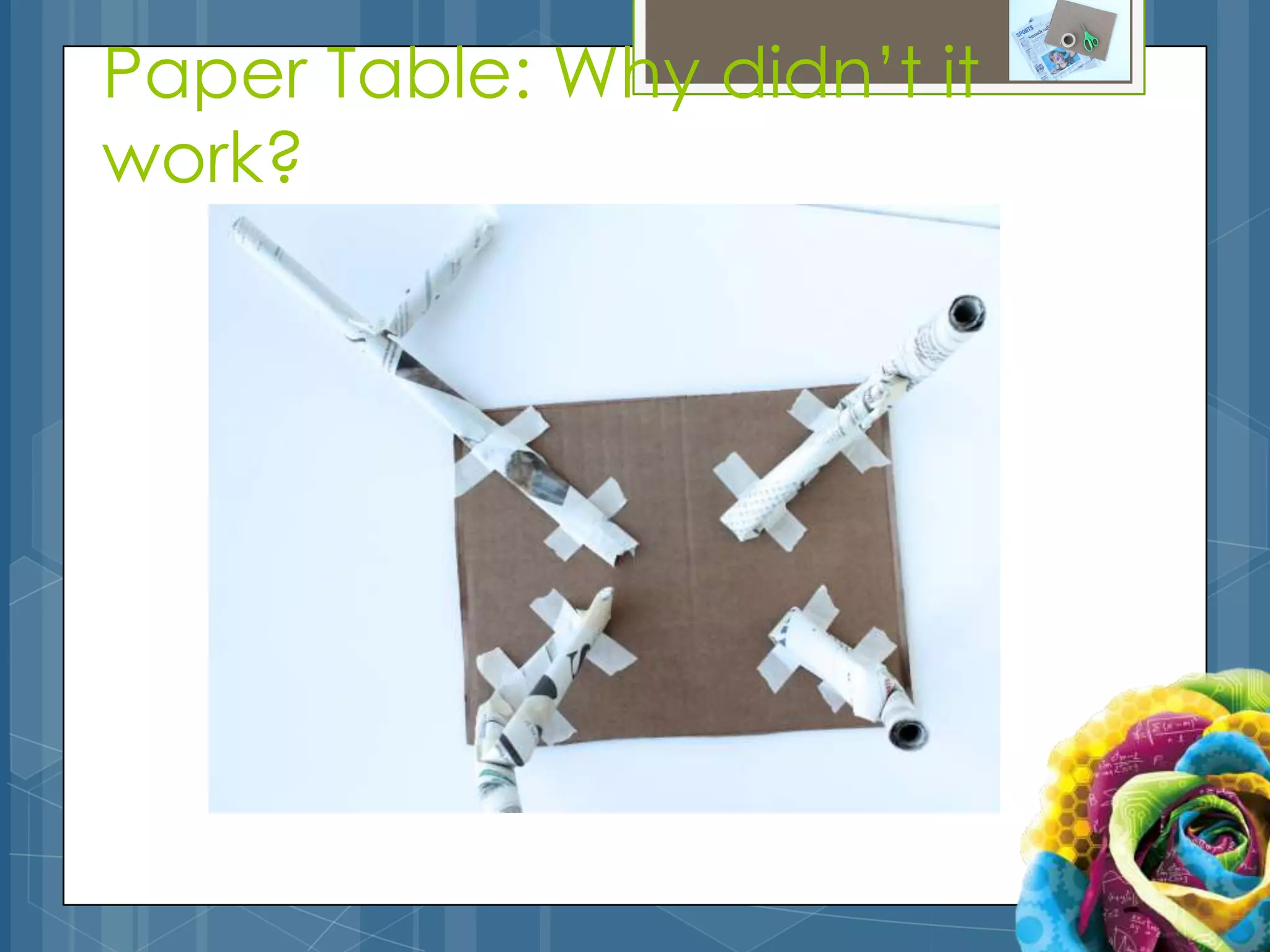
Paper Table: Why didn’t it
work?
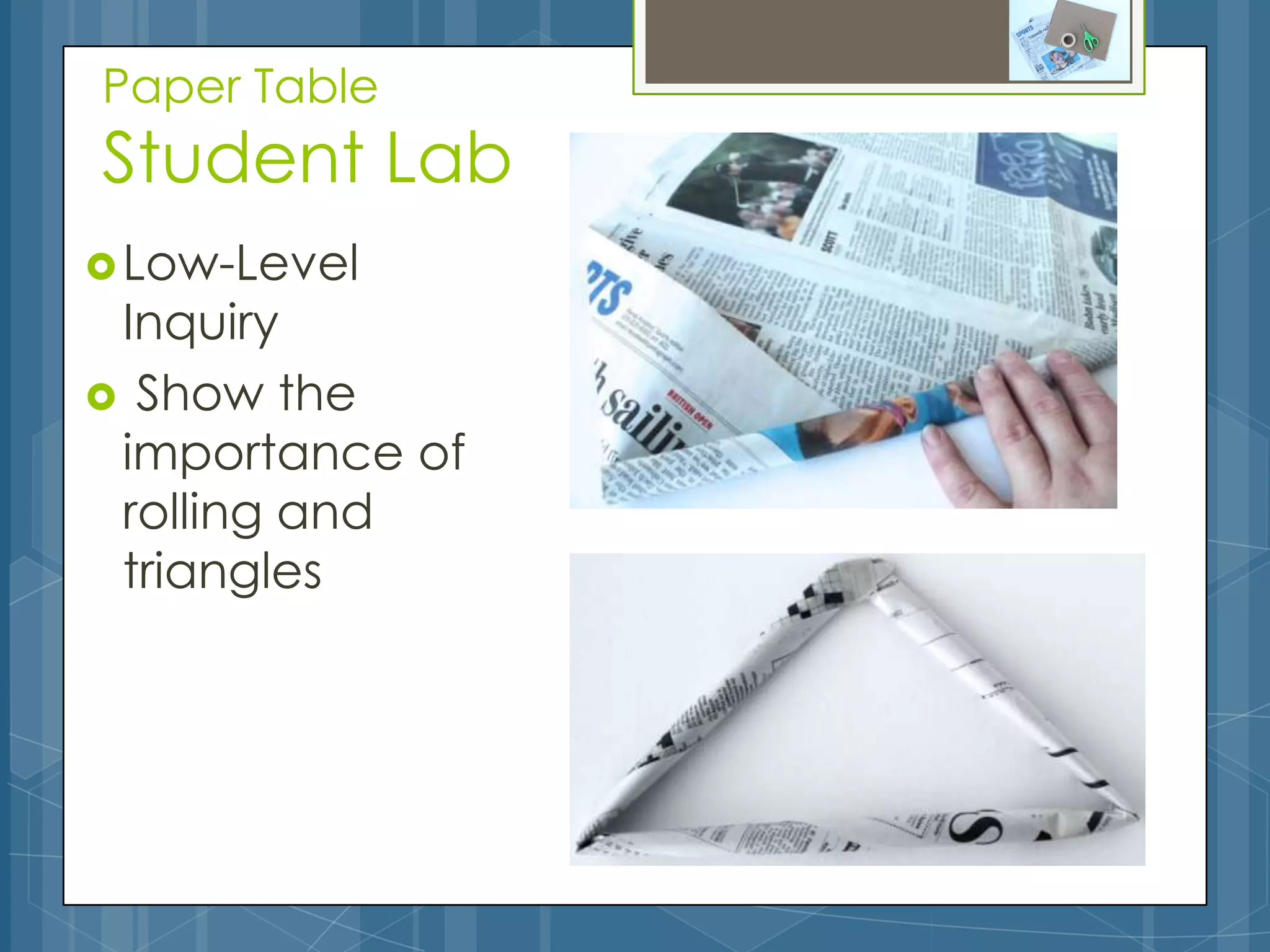
Paper Table
Student Lab
 Low-Level
 Inquiry
 Show the
 importance of
 rolling and
 triangles
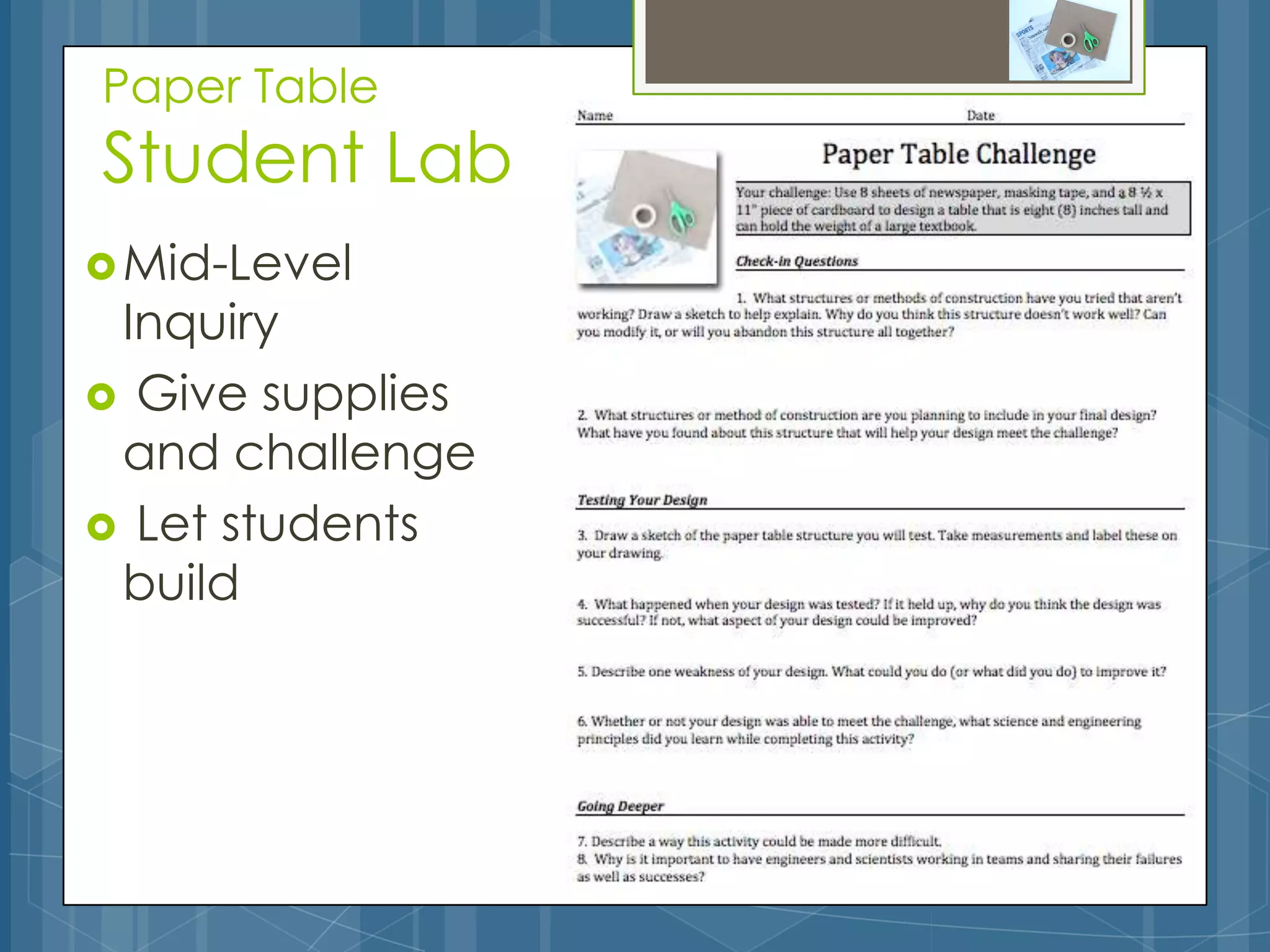
Paper Table
Student Lab
 Mid-Level
 Inquiry
 Give supplies
 and challenge
 Let students
 build
Paper Table
Discussion
 Amount of paper & tape ok?
What issues do you anticipate
 having with your own students?
 What do students record in their
 notebook?
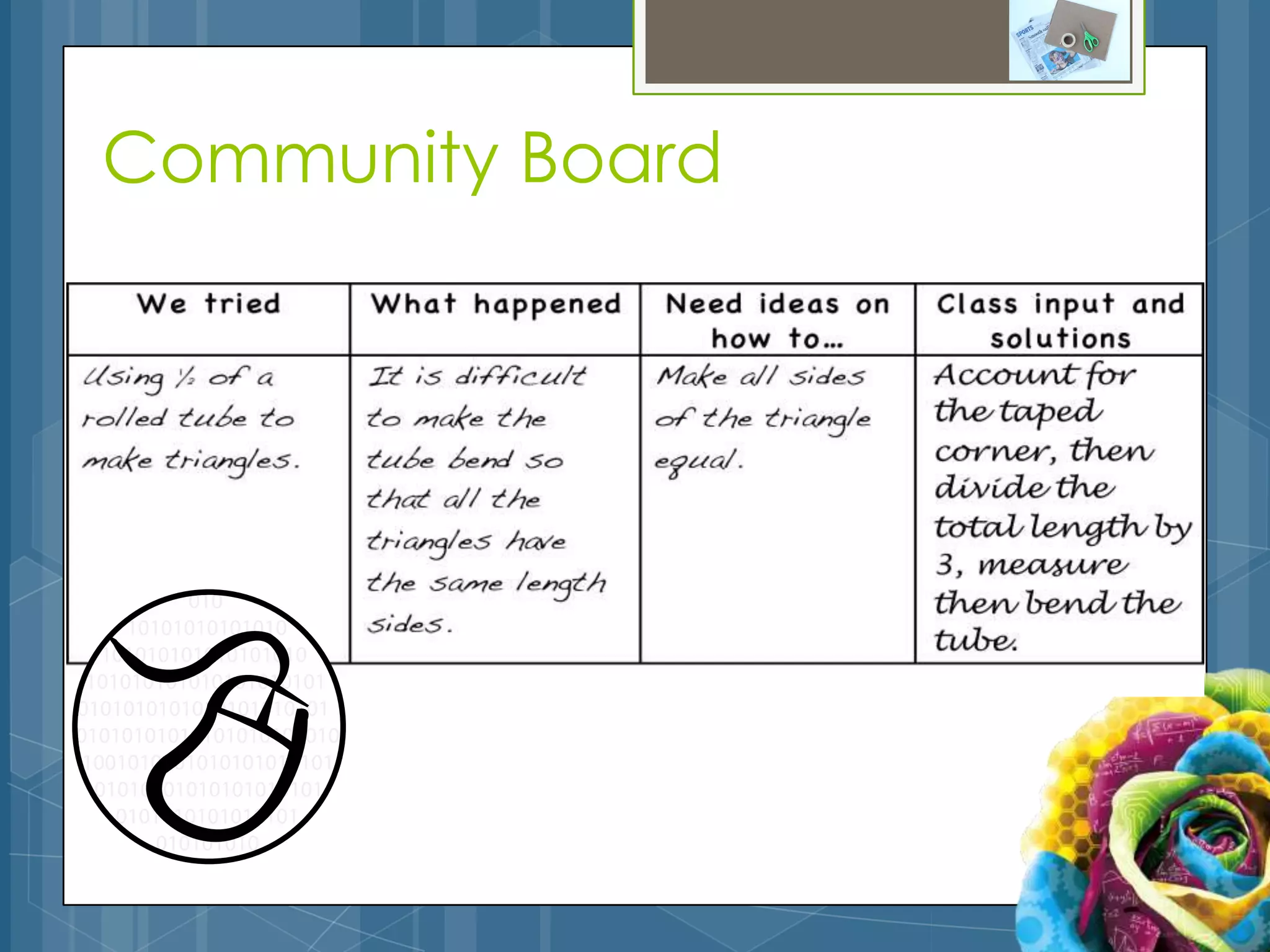
Community Board
Community Board
 Emphasizes the process
 Celebrates finding ways it
 doesn’t work
 Communication between
       students
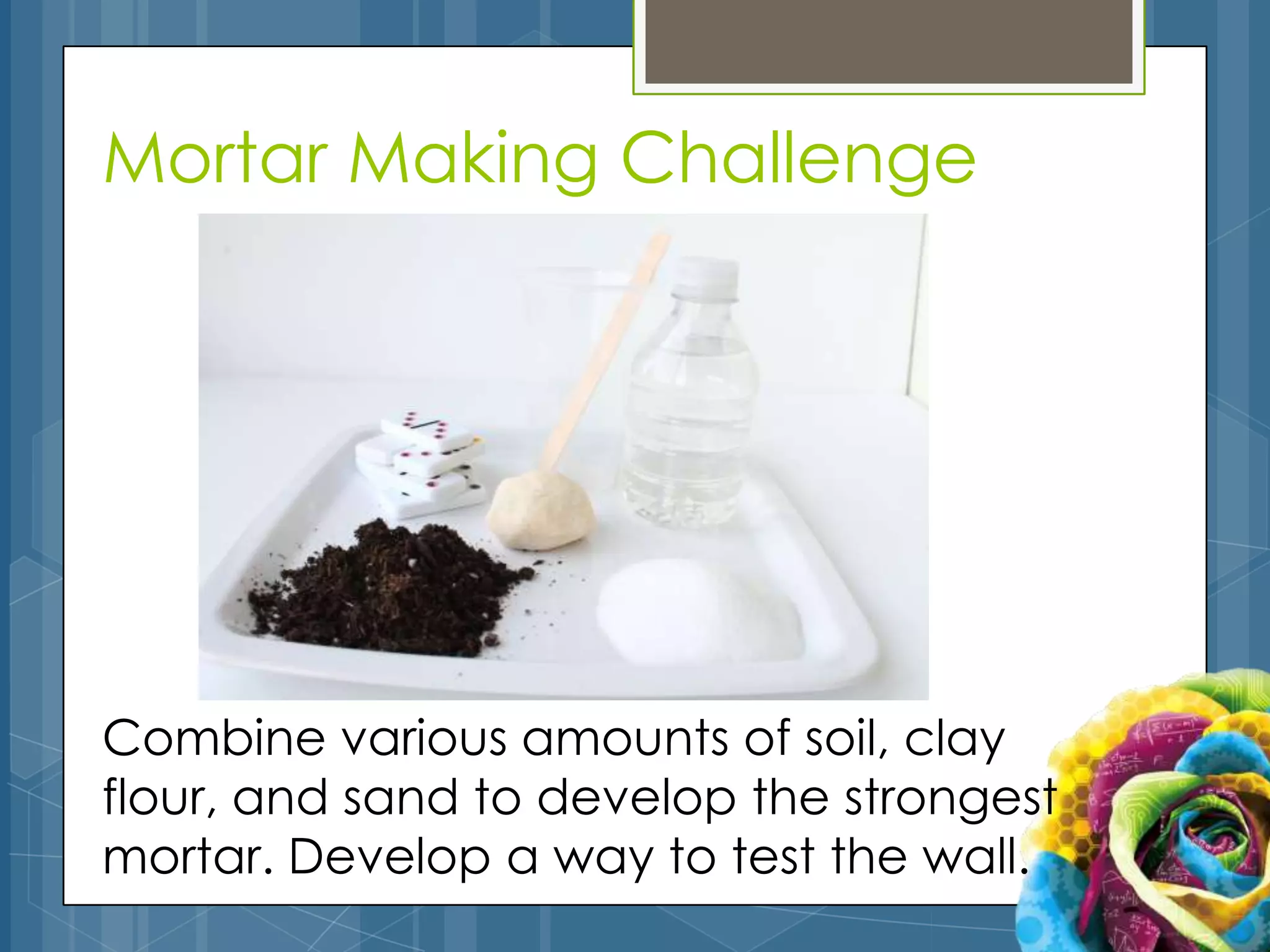
Mortar Making Challenge


Combine various amounts of soil, clay
flour, and sand to develop the strongest
mortar. Develop a way to test the wall.
Mortar Making…Construction Zone
  Can you predict what will happen
  once that mortar dries?
 Are there another materials you would
  have liked to add?
 How would you tweak this current
  recipe? What result would you be
  hoping for?
 What problems have you encountered
  and how have you solved them?
 Why have you chosen the materials
  you are using?
Mortar Making Test
  How could we fairly test
  our mortar and walls?
  What supplies do you
  need?
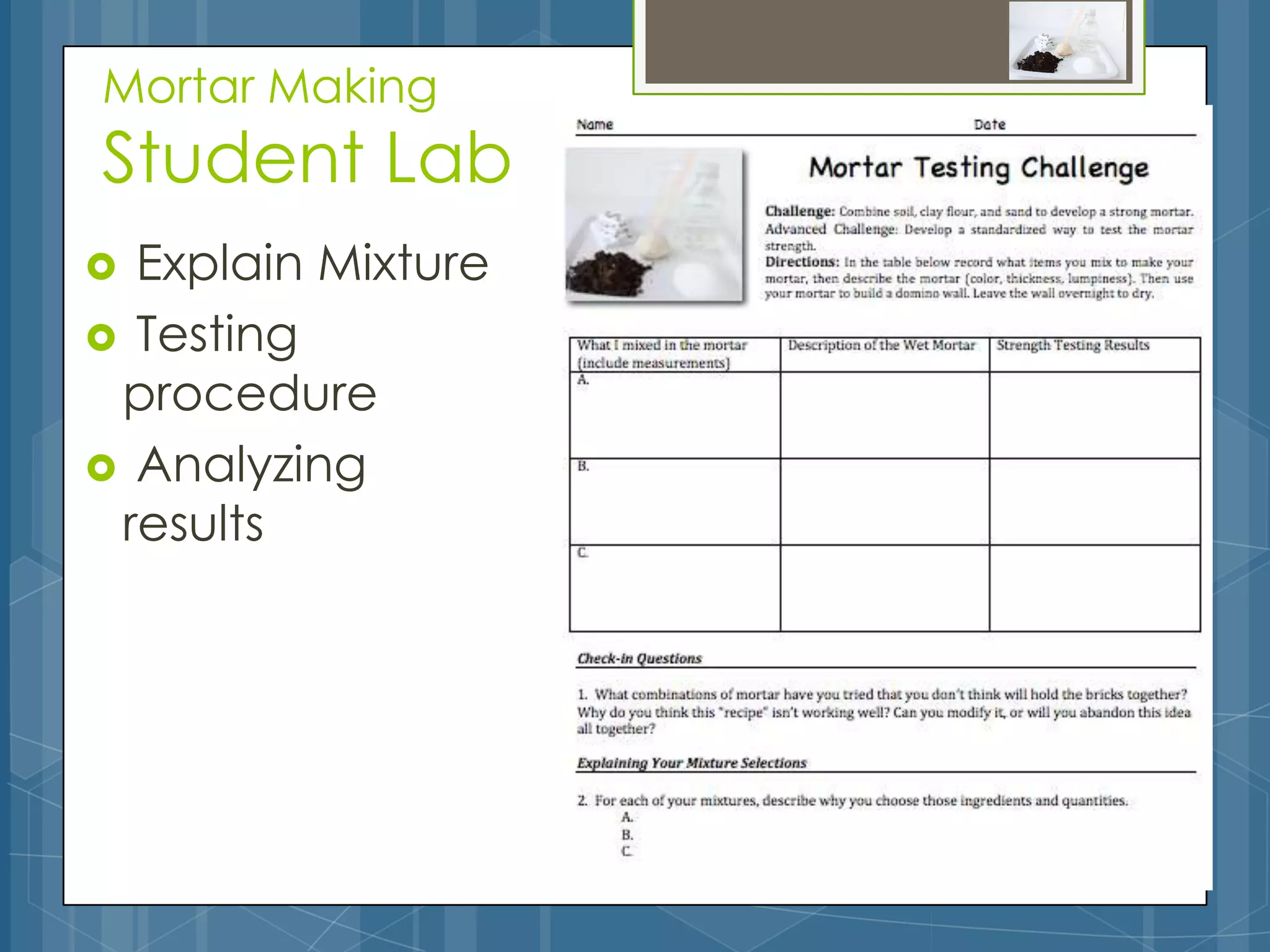
Mortar Making
Student Lab
 Explain Mixture
 Testing
 procedure
 Analyzing
 results
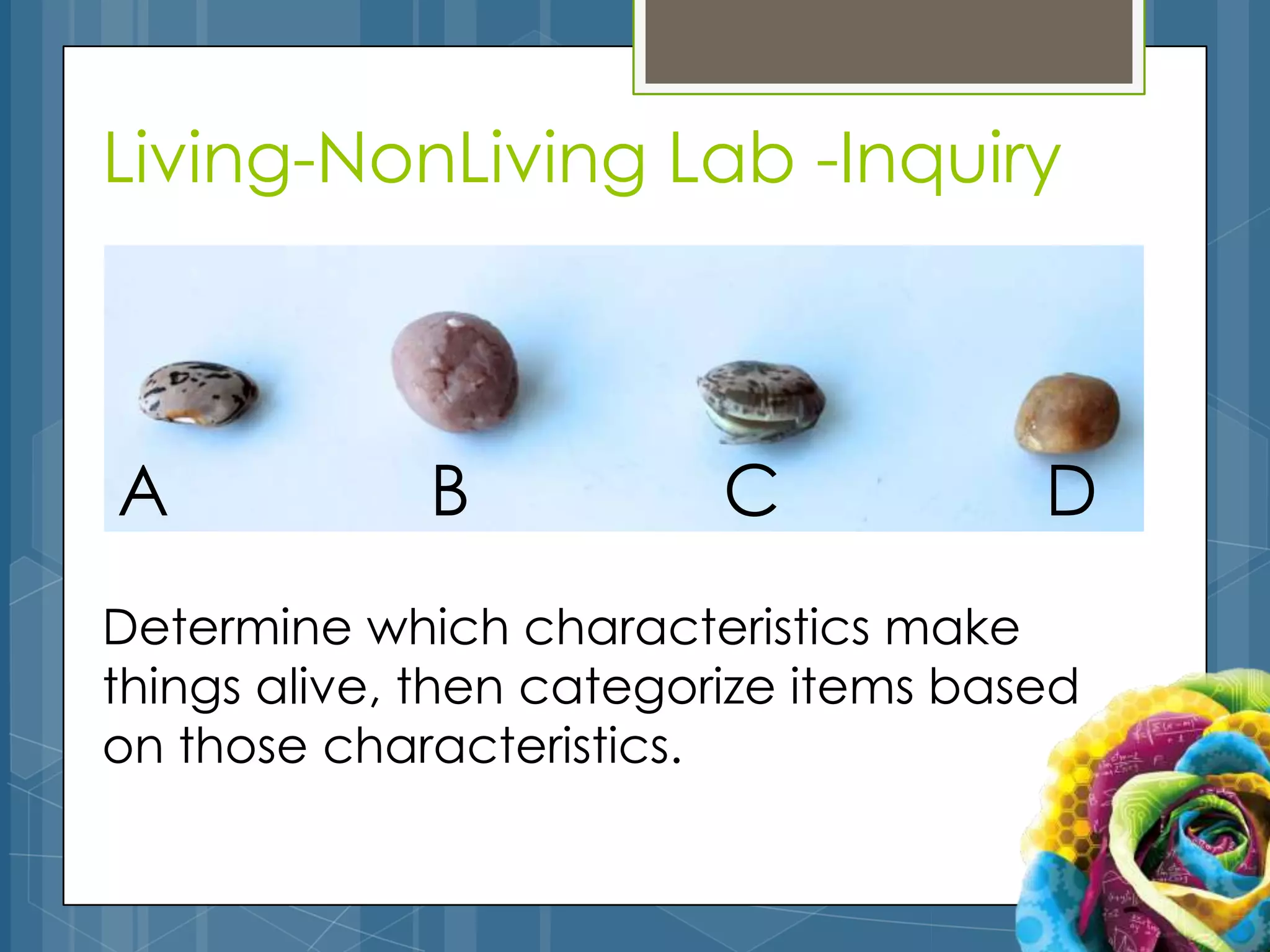
Living-NonLiving Lab -Inquiry


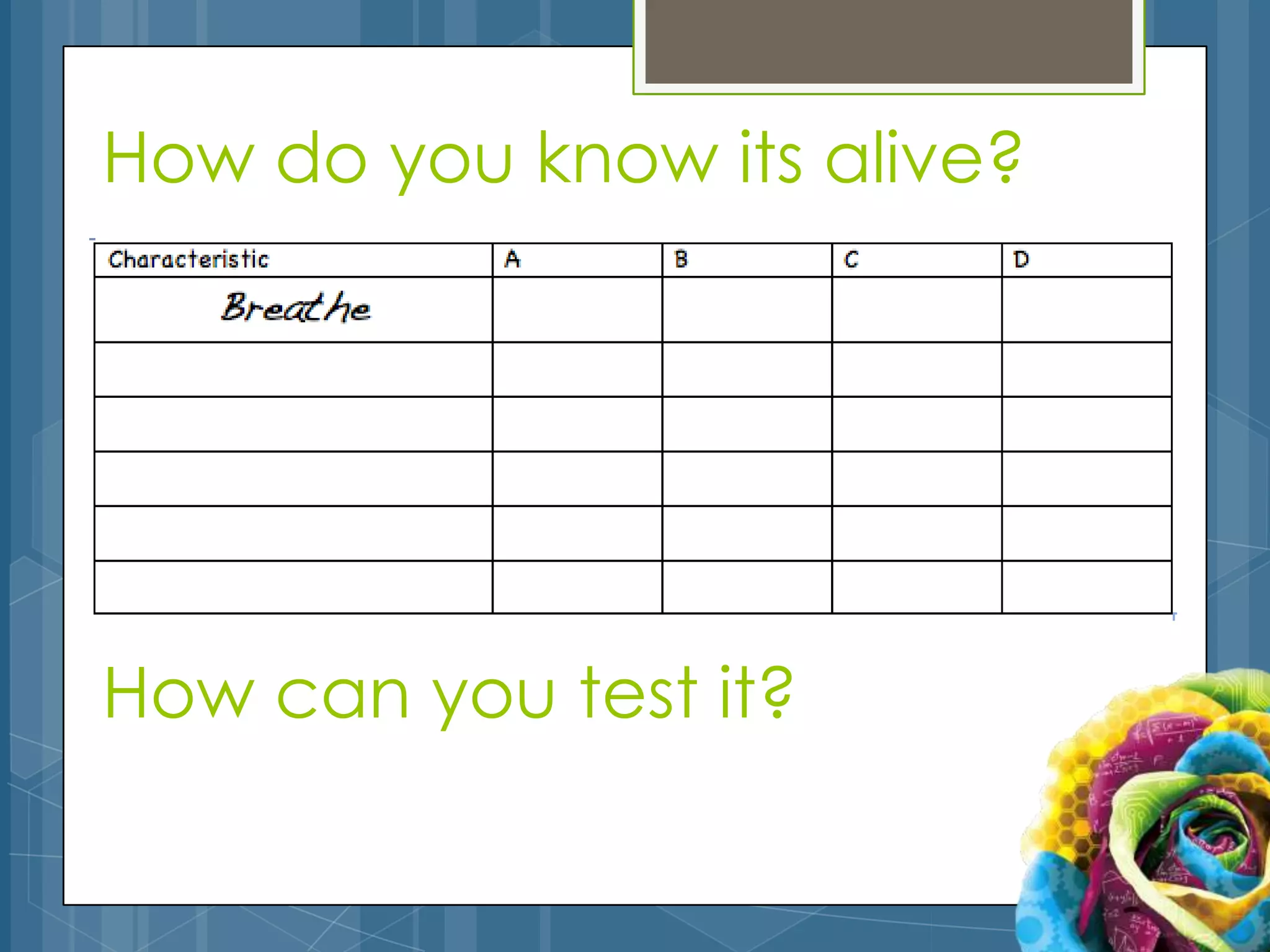
A            B            C            D
Determine which characteristics make
things alive, then categorize items based
on those characteristics.
How do you know its alive?


How can you test it?
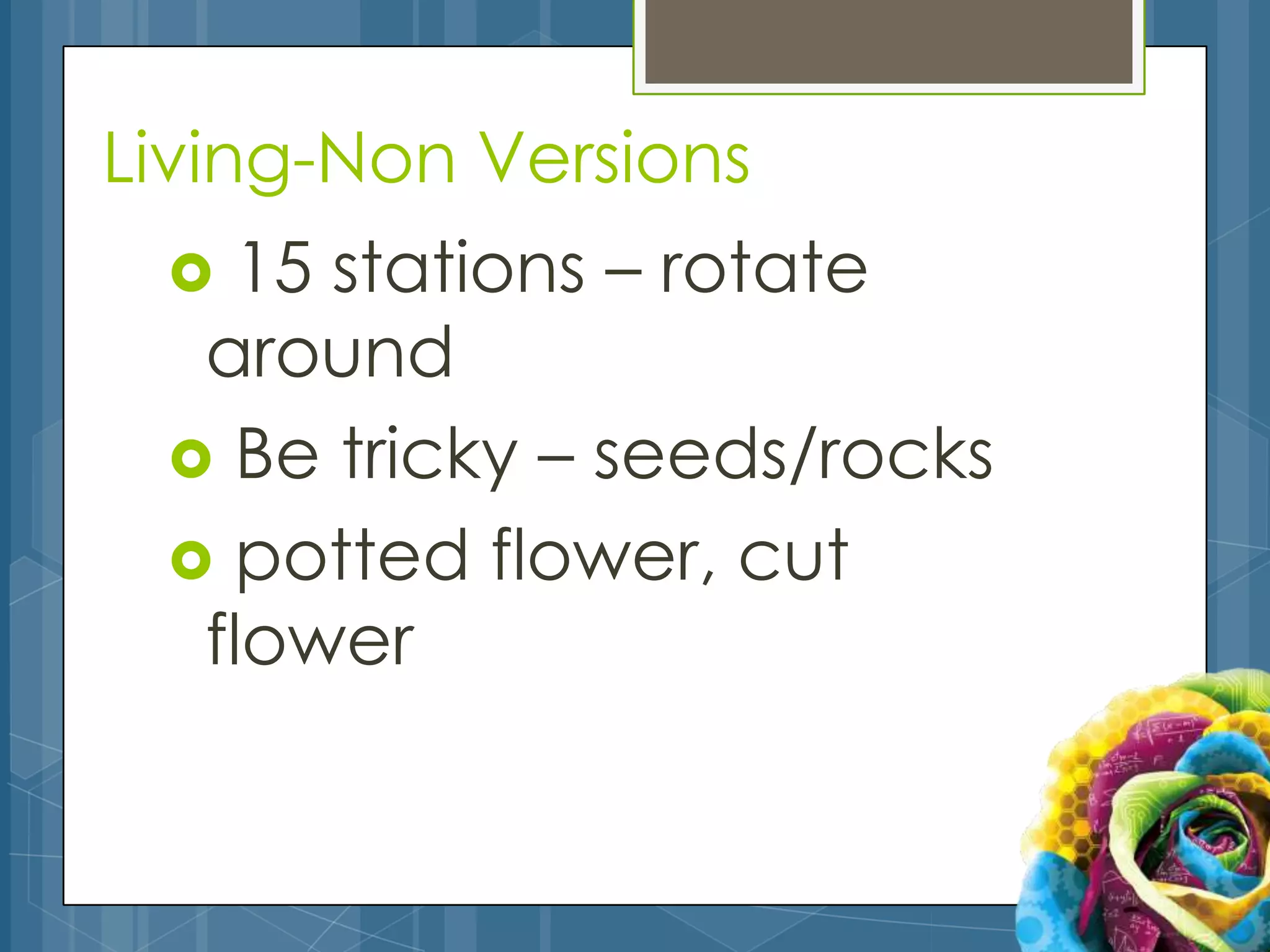
Living-Non Versions
   15 stations – rotate
  around
  Be tricky – seeds/rocks
  potted flower, cut
  flower
Two Key Ideas
  Failure       Collaboration
 is Totally       Must be
     An          Modeled &
  Option!          Taught
Welcome                    Connect with Me!


www.STEMmom.org
drdjharland@gmail.com
Twitter: #djSTEMmom
http://www.facebook.com/
  StemMom#

Adding the "TEM" to our Science Teaching: STEM mom gives tips for inquiry and integrated learning

  • 1.
    Adding the“TEM” into our Science Teaching Dr.Darci J. Harland NSTA Press Author STEM Student Research Handbook
  • 2.
    Two Key Ideas Failure Collaboration is Totally Must be An Modeled & Option! Taught
  • 3.
    What we getto do…  Model for Integrating TEM into Science  Gumdrop Structure Challenge  Leveling Inquiry  Domino Wall Challenge  Tips for Lab Notebook-ing  Elbow Model Challenge  Planning an Inquiry Environment  Paper Table Challenge  Collaboration Board  Mixing Mortar Challenge  Living-Nonliving Inquiry Lab
  • 4.
    Welcome Anatomy, astronomy, biology, botany,chemistry, earth science, geology, physics, and zoology.
  • 5.
    Welcome A) Tools usedto build, create, and design, mechanical and digital B) Digital teaching & learning
  • 6.
    Welcome Bioengineering, materials engineering, mechanical,environmental, civil, agricultural, optical, biomedical…
  • 7.
  • 8.
  • 9.
  • 10.
    Science teaching is… Supportingstudents as they ask good questions, and use STEM tools to find answers to STEM related issues. Focusing students on solving problems in context of something with which they can relate; students learn facts along the way.
  • 11.
    Gumdrop Challenge Using 10gumdrops and 20 toothpicks, design a structure that can hold the weight of a large textbook.
  • 12.
    Gumdrop…Construction Zone How could you strengthen the joints? Does the length of a toothpick limit you? Is this worth exploring? What shapes are you using in your structure?
  • 13.
    Gumdrop…Check in Questions. What have you tried that’s NOT working? What structures or methods do you like best so far, that you hope to include in your final design.
  • 14.
  • 15.
    Gumdrop Challenge Big Ideas Triangles are Strong
  • 16.
  • 17.
    Gumdrop Challenge Discussion  Shouldwereplace gumdrops and toothpicks?  Pros + cons?  What issues do you anticipate having with your own students?  How might the activity change if the number of gumdrops and toothpicks were different?  In what units might this activity be beneficial?
  • 18.
    Leveling Inquiry Cool hands-on activitiesare not necessarily inquiry
  • 19.
    Misconceptions about Inquiry Inquiry is not…the same as “Hands-On.”  Students don’t need background information before they can begin learning. Lab Reports and post lab questions are not usually Inquiry.
  • 20.
    Its NOT Inquiryif…  students know what results they are supposed to get.  the question and steps are predetermined for students.  the teacher is working harder than the students.
  • 21.
    Levels of Inquiry Demo- Activity Teacher- Student- nstration Initiated Initiated Posing the Teacher Teacher Teacher Student Question Planning the Teacher Teacher Student Student Procedure Formulating Teacher Student Student Student the Results From: D. Llewellyn. 2002. Inquiry within: Implementing inquiry-based science standards. Thousand Oaks, Corwin Press. An interview I did for NSTA regarding my book.
  • 22.
    Levels of Inquiry Non-Inquiry Low-Level Inquiry  Step-by-step  Students make instructions some decisions  All needed materials about how to study are provided to the topic  Many materials are provided, students choose what they want
  • 23.
    Levels of Inquiry Mid-Level Inquiry High-Level Inquiry  Students decide how to  Students decide what test the question question to test  Students develop their  Students develop their own procedure own procedure  Students request  Students request materials materials  Students analyze results using appropriate technology and math
  • 24.
    Gumdrop Example Student Lab  Non-Inquiry  Step-by- Step Instructions  “Right Answer” PBS Link
  • 25.
    Gumdrop Challenge Student Lab Low-Level Inquiry  Shapes are given, they construct and compare
  • 26.
    Gumdrop Challenge Student Lab Mid-Level Inquiry  Failure is expected & celebrated  Students critically evaluate their procedure
  • 27.
    Bricklaying Wall Challenge Use8 domino “bricks” and playdough “mortar” to build and test walls with various brick patterns.
  • 28.
    Bricklaying…Construction Zone Why did you stack your bricks this way?  What do you think will happen when you test it?  Does it matter how you form the playdough?  Would you pattern the bricks differently if you were going around a corner?
  • 29.
    Bricklaying Structure Testing How would you suggest we test our walls?  What procedure would best allow us to compare our results? How’d You do?
  • 30.
    Bricklaying Challenge Student Lab Low-Level Inquiry  Construct patterns  Test by lifting in the middle  Describe results
  • 31.
    Bricklaying Challenge Student Lab Mid-Level Inquiry  Construct patterns  Write a procedure for testing the wall
  • 32.
    Bricklaying Challenge Discussion  Are there better supplies to use?  What issues do you anticipate having with your own students?  How might the activity be changed for and advanced challenge?  When might you be able to use this activity?
  • 33.
  • 34.
    Lab Notebook Why?  How early?  Goals?  How do student benefit?  Why Not?
  • 35.
    Lab Notebook Elementary  Observe changes  Record measurements  Graph Data  Label sketches/photos
  • 36.
    Lab Notebook Middle Level  Observe changes  Record measurement  Graph Data  Label sketches/photos  Write procedures  Calculating  Analyzing results
  • 37.
    Lab Notebook  Develop Tables for Recording Data  Quantitative (#)  Qualitative (descriptions)
  • 38.
    Lab Notebook What does it look like?  How do you organize it?  How do you assess it?  Is it Porfolio-ish? (with reflections)
  • 39.
    Elbow Design Challenge Usethe materials provided to design a functioning model of an elbow joint.
  • 40.
    Elbow…Construction Zone Is there another way to use these materials?  How can you attach “muscles” to the bone?  What’s the best place to attach a muscle to bend the arm? Extend the arm?  Why do you need biceps and triceps?
  • 41.
    Elbow…Check in Questions. What have you tried that’s NOT working? What structures or methods do you like best so far, that you hope to include in your final design?
  • 42.
    Elbow Model Student Lab Non-Inquiry  Use step-by- step directions  Assemble after learning the physiology
  • 43.
    Elbow Model Student Lab Low-Level Inquiry  Use limited supplies  After learning anatomy  Teacher prompts to remind students
  • 44.
    Elbow Model Student Lab Mid-Level Inquiry  Students request supplies  Before learning anatomy  Purpose of model is to figure it out
  • 45.
    Elbow Model Discussion  Arethere better supplies to use? What issues do you anticipate having with your own students?  What do students record in their lab notebook?
  • 46.
    Planning Inquiry Students need tobe trained in the process of inquiry.
  • 47.
    Two Key Ideas Failure Collaboration is Totally Must be An Modeled & Option! Taught
  • 48.
    Attitudes you wantto foster  Things don’t always “work” out  Failure helps us (re)think & learn  Talking out ideas helps us think  Trouble shooting is fun  Tinkering is learning  Playing first it helps us know what we need to read
  • 49.
    Create Inquiry Spaces  Homago Corner  (Hanging out, messing around, geeking out)  glue gun, craft sticks, garage sale & thrift store finds  Reverse engineering  Create art  What happens if…?
  • 50.
    Celebrate Inquiry  Encouragestudents to learn from their failures….how?  “Best Failure of the Day” award  In the way you talk to kids
  • 51.
    What could yousay instead?  Look, Jose got it right!  Wow, Gabe, finished already? Great job. You can work on other homework.  It broke again? What are you doing wrong?
  • 52.
    What can yousay if…?  Corban has constructed 3 non- functioning elbow models.  Over-achiever, Olivia wants hours to plan out a design before ever touching the materials.  Fix-it Freddy loves to tinker but doesn’t write or talk about what is going on in his head.
  • 53.
    Stair-step Inquiry levels Step-by-step  As a class develop  Provide all a procedure materials  Determine what materials are  Learn classroom needed procedures  Decide how data  Lab Notebook should be recorded & analyzed
  • 54.
    Stair-step Inquiry levels Provide too many  Students develop or not enough procedures materials  Request materials  Allow groups to develop  Decide how to procedures record data  Groups decide  Analyze data how to record  Present data data
  • 55.
    Paper Table DesignChallenge Use 8 sheets of newspaper, masking tape, and cardboard to design a table that is 8” tall and can hold a textbook.
  • 56.
  • 57.
    Paper Table StructureTesting How’d You do?
  • 58.
    Paper Table: Whatworked? Rolling Paper
  • 59.
    Paper Table: Whatworked? Triangles
  • 60.
    Paper Table: Whatdidn’t work?
  • 61.
    Paper Table: Whydidn’t it work?
  • 62.
    Paper Table Student Lab Low-Level Inquiry  Show the importance of rolling and triangles
  • 63.
    Paper Table Student Lab Mid-Level Inquiry  Give supplies and challenge  Let students build
  • 64.
    Paper Table Discussion  Amountof paper & tape ok? What issues do you anticipate having with your own students?  What do students record in their notebook?
  • 65.
  • 66.
    Community Board  Emphasizesthe process  Celebrates finding ways it doesn’t work  Communication between students
  • 67.
    Mortar Making Challenge Combinevarious amounts of soil, clay flour, and sand to develop the strongest mortar. Develop a way to test the wall.
  • 68.
    Mortar Making…Construction Zone  Can you predict what will happen once that mortar dries?  Are there another materials you would have liked to add?  How would you tweak this current recipe? What result would you be hoping for?  What problems have you encountered and how have you solved them?  Why have you chosen the materials you are using?
  • 69.
    Mortar Making Test  How could we fairly test our mortar and walls?  What supplies do you need?
  • 70.
    Mortar Making Student Lab Explain Mixture  Testing procedure  Analyzing results
  • 71.
    Living-NonLiving Lab -Inquiry A B C D Determine which characteristics make things alive, then categorize items based on those characteristics.
  • 72.
    How do youknow its alive? How can you test it?
  • 73.
    Living-Non Versions  15 stations – rotate around  Be tricky – seeds/rocks  potted flower, cut flower
  • 74.
    Two Key Ideas Failure Collaboration is Totally Must be An Modeled & Option! Taught
  • 75.
    Welcome Connect with Me! www.STEMmom.org drdjharland@gmail.com Twitter: #djSTEMmom http://www.facebook.com/ StemMom#

Editor's Notes

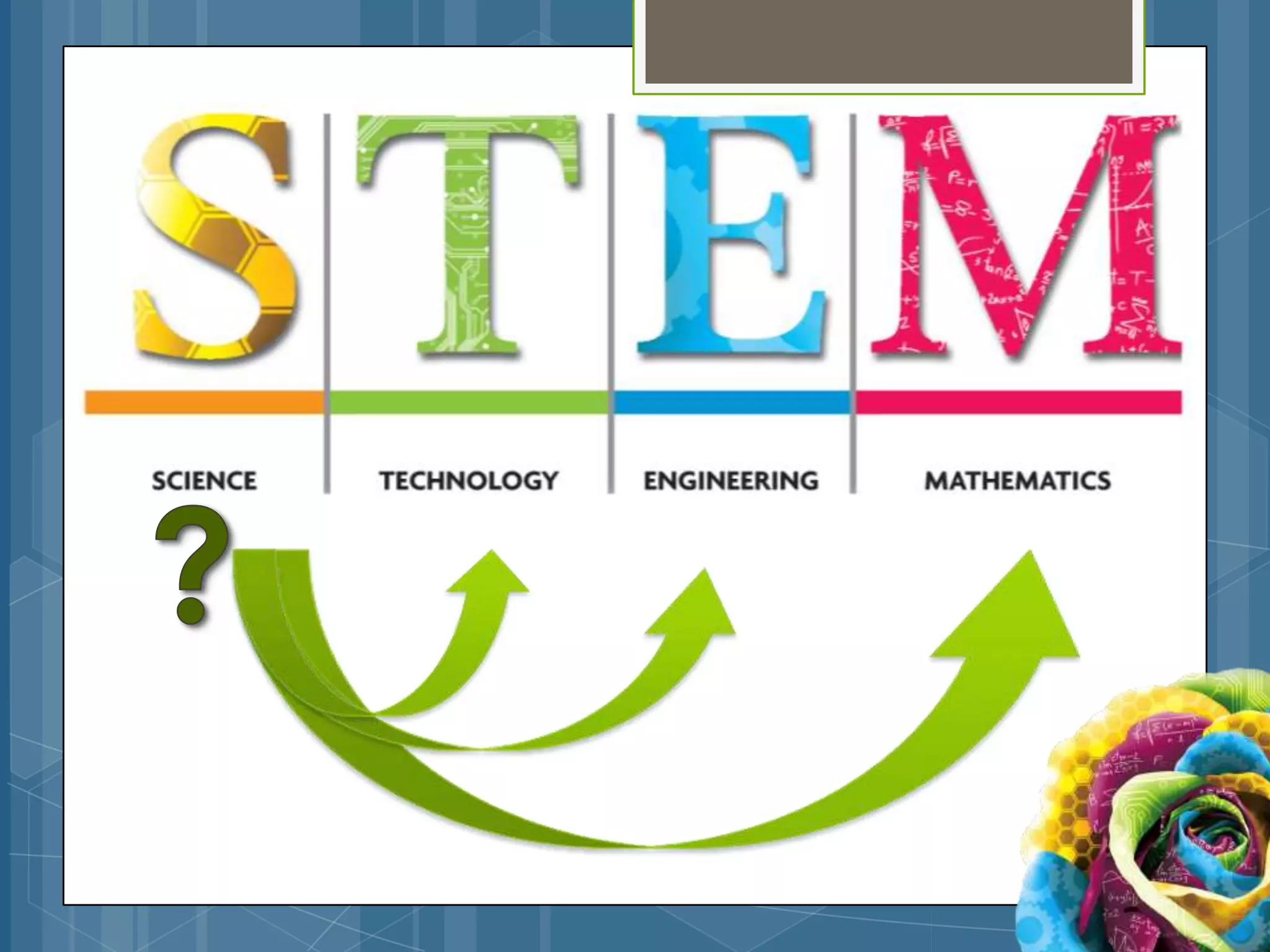
  • #9 Science: Content knowledge…what we’ve learned about ourselves, our planet, our universe. Knowledge is learned during the journey of finding an answer to a problem or question we have. And as the green arrows represent, we use use the tools of technology, engineering, and math to further the knowledge.
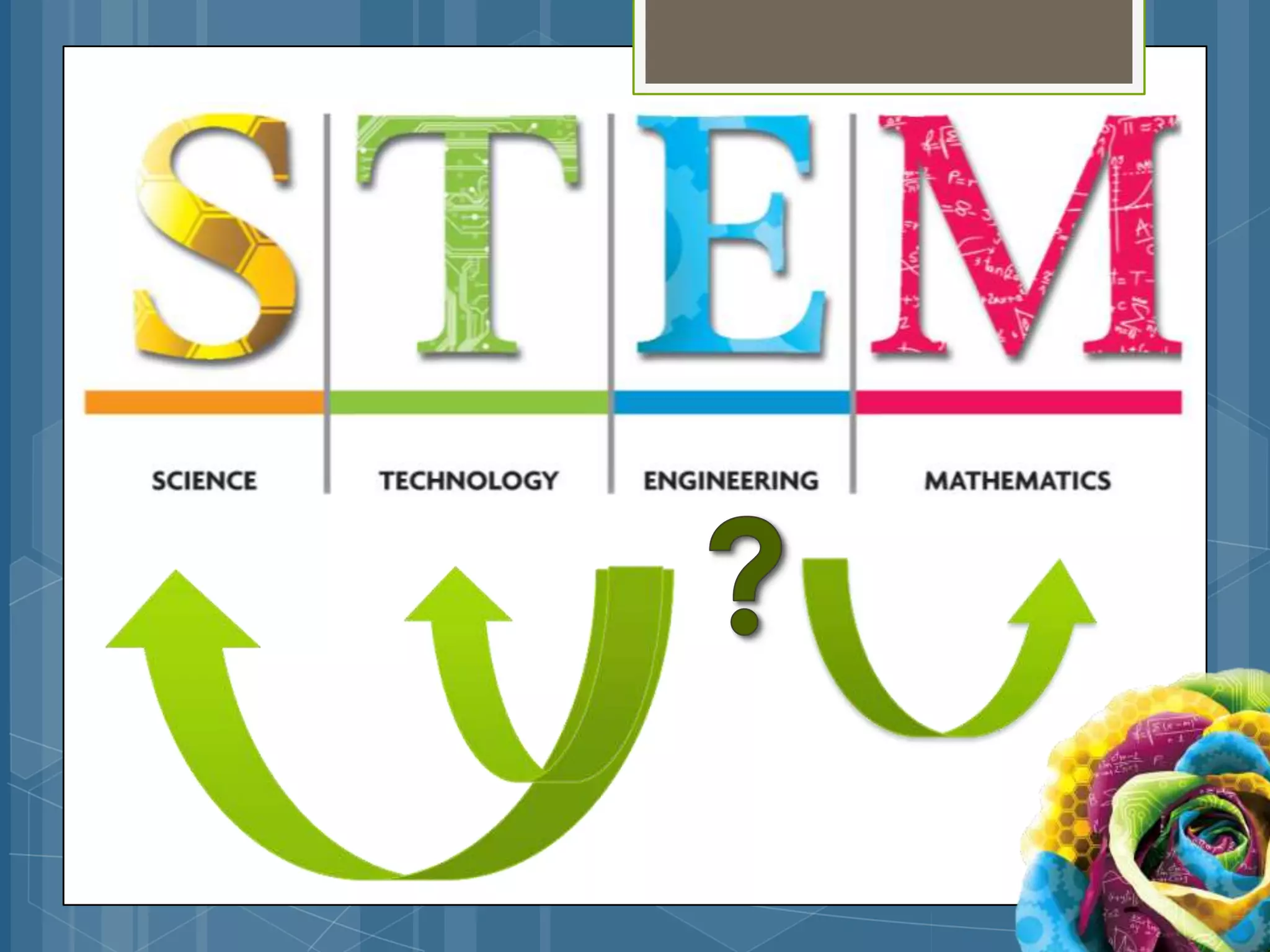
  • #10 An engineering problem is answered by utilizing content area knowledge in science, and the tools available in technology and mathematics.
  • #12 Show them the book that they will be testing with.
  • #13 Construction Zone: While students are working, these are questions you may choose to ask to help them problem-solve along the way.
  • #14 Check In Questions: Have students stop work, and have a class discussion regarding what is working and what is not.
  • #16 Once teachers have tested their gumdrop structures, hand out the teacher lesson plan.
  • #22 There are many ways to describe the spectrum of inquiry levels.According to this model, WHO poses the question, who plans the procedure, and who formulates the results determine the level of inquiry.
  • #29 Construction Zone: While students are working, these are questions you may choose to ask to help them problem-solve along the way.
  • #31 Simple lab; great time to model how to make accurate and specific observations. Note; even with young children, bring up the possibility that their materials or methods may have impacted the results. For example, if the playdough doesn’t stick well to the smooth side of the domino, how fair is the test? Students could brainstorm better materials to use in another lab.
  • #35 How early? Even before kids can write, they can draw or dictate what they observe. They can take photos, glue them in, and label major structures.Goals? Gain skills in observation, recording their observations using words, labeling structures, organizing dataWhy not? Assessment issues?
  • #37 Saves paper, Even if you give students ½ page with directions, students glue those in, and write data, and analysis in their notebook.
  • #39 What does it look like? Composition Notebook? Ok…but think outside the box. Google Docs? Three ring binder…What are your goals? Assessing…spot check? Portfolio-ish
  • #41 Construction Zone: While students are working, these are questions you may choose to ask to help them problem-solve along the way.
  • #42 Check In Questions: Have students stop work, and have a class discussion regarding what is working and what is not.
  • #45 Same lab can be mid-level inquiry.
  • #49 Student backgrounds influence their (and our)comfort with inquiry and collaboration; while you might consider printing out these great attitudes, its more important that you model them. Discipline during hands-on activities is always a challenge, but how you respond to kids during this time is critical.
  • #51 Students are often more comfortable being “right.” and they want to know that they “got the right answer.” If we are to celebrate inquiry across the STEM disciplines,
  • #54 Don’t start by doing higher-level inquiry before you and your students are ready! Stair step-it! Start out doing some step-by-step labs, so students learn procedures and how to enter data into their data notebook.
  • #55 Don’t start by doing higher-level inquiry before you and your students are ready! Stair step-it! Start out doing some step-by-step labs, so students learn procedures and how to enter data into their data notebook.
  • #57 Construction Zone: While students are working, these are questions you may choose to ask to help them problem-solve along the way.
  • #59 Pass Out Teacher Lesson Plan for Paper Table
  • #66 What did you think about using a community board?
  • #67 What did you think about using a community board?
  • #69 Construction Zone: While students are working, these are questions you may choose to ask to help them problem-solve along the way.
  • #70 Engineering.