Prenatal Development
Submitted to:
Prof. Agnes Montalbo
Rizal Technological University
Chromosomal abnormalities
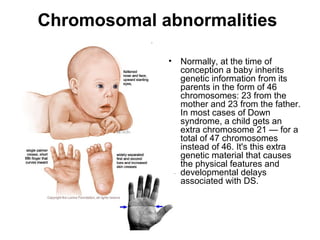
• Normally, at the time of
conception a baby inherits
genetic information from its
parents in the form of 46
chromosomes: 23 from the
mother and 23 from the father.
In most cases of Down
syndrome, a child gets an
extra chromosome 21 — for a
total of 47 chromosomes
instead of 46. It's this extra
genetic material that causes
the physical features and
developmental delays
associated with DS.
• Inherited disorders
• Birth defects that are inherited are caused
by abnormal genes. Inherited disorders
include sickle-cell anemia, cystic fibrosis,
Tay-Sachs disease, and hemophilia.
•
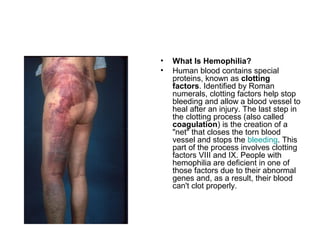
• What Is Hemophilia?
• Human blood contains special
proteins, known as clotting
factors. Identified by Roman
numerals, clotting factors help stop
bleeding and allow a blood vessel to
heal after an injury. The last step in
the clotting process (also called
coagulation) is the creation of a
"net" that closes the torn blood
vessel and stops the bleeding. This
part of the process involves clotting
factors VIII and IX. People with
hemophilia are deficient in one of
those factors due to their abnormal
genes and, as a result, their blood
can't clot properly.
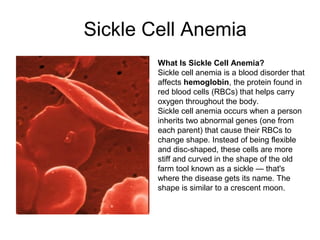
Sickle Cell Anemia
What Is Sickle Cell Anemia?
Sickle cell anemia is a blood disorder that
affects hemoglobin, the protein found in
red blood cells (RBCs) that helps carry
oxygen throughout the body.
Sickle cell anemia occurs when a person
inherits two abnormal genes (one from
each parent) that cause their RBCs to
change shape. Instead of being flexible
and disc-shaped, these cells are more
stiff and curved in the shape of the old
farm tool known as a sickle — that's
where the disease gets its name. The
shape is similar to a crescent moon.
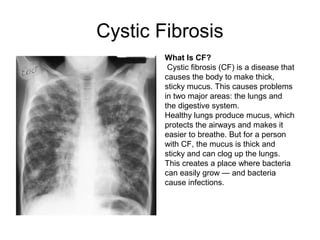
Cystic Fibrosis
What Is CF?
Cystic fibrosis (CF) is a disease that
causes the body to make thick,
sticky mucus. This causes problems
in two major areas: the lungs and
the digestive system.
Healthy lungs produce mucus, which
protects the airways and makes it
easier to breathe. But for a person
with CF, the mucus is thick and
sticky and can clog up the lungs.
This creates a place where bacteria
can easily grow — and bacteria
cause infections.
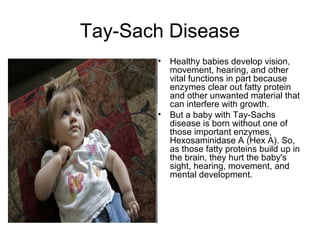
Tay-Sach Disease
• Healthy babies develop vision,
movement, hearing, and other
vital functions in part because
enzymes clear out fatty protein
and other unwanted material that
can interfere with growth.
• But a baby with Tay-Sachs
disease is born without one of
those important enzymes,
Hexosaminidase A (Hex A). So,
as those fatty proteins build up in
the brain, they hurt the baby's
sight, hearing, movement, and
mental development.
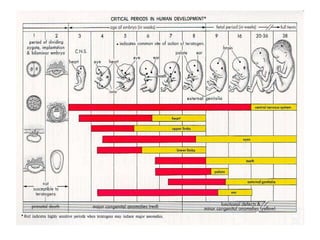
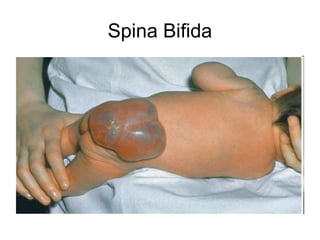
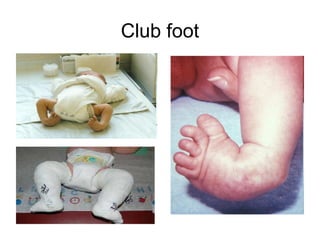
Physical Birth Defect
• Physical birth defects may result from a
combination of genetic and environmental
factors that affect the normal development of the
fetus. Common physical defects present at birth
include clubfoot, in which one or both feet are
deformed, and cleft lip and cleft palate, in which
a split is present in the lip and roof of the mouth.
Spina bifida is a malformation of the spine
caused by incomplete closure of the vertebral
column (backbone) during development.
Spina Bifida
Club foot
Cleft lip or Cleft Palate
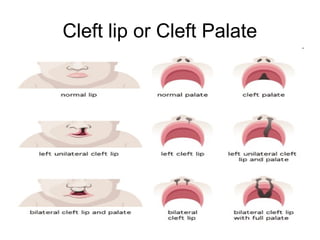
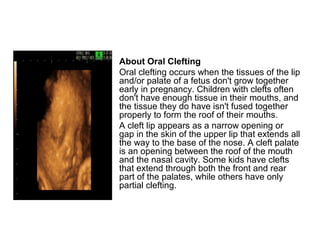
• About Oral Clefting
• Oral clefting occurs when the tissues of the lip
and/or palate of a fetus don't grow together
early in pregnancy. Children with clefts often
don't have enough tissue in their mouths, and
the tissue they do have isn't fused together
properly to form the roof of their mouths.
• A cleft lip appears as a narrow opening or
gap in the skin of the upper lip that extends all
the way to the base of the nose. A cleft palate
is an opening between the roof of the mouth
and the nasal cavity. Some kids have clefts
that extend through both the front and rear
part of the palates, while others have only
partial clefting.

Prenatal Development

  • 1.
    Prenatal Development Submitted to: Prof.Agnes Montalbo Rizal Technological University
  • 3.
    Chromosomal abnormalities • Normally,at the time of conception a baby inherits genetic information from its parents in the form of 46 chromosomes: 23 from the mother and 23 from the father. In most cases of Down syndrome, a child gets an extra chromosome 21 — for a total of 47 chromosomes instead of 46. It's this extra genetic material that causes the physical features and developmental delays associated with DS.
  • 4.
    • Inherited disorders •Birth defects that are inherited are caused by abnormal genes. Inherited disorders include sickle-cell anemia, cystic fibrosis, Tay-Sachs disease, and hemophilia. •
  • 5.
    • What IsHemophilia? • Human blood contains special proteins, known as clotting factors. Identified by Roman numerals, clotting factors help stop bleeding and allow a blood vessel to heal after an injury. The last step in the clotting process (also called coagulation) is the creation of a "net" that closes the torn blood vessel and stops the bleeding. This part of the process involves clotting factors VIII and IX. People with hemophilia are deficient in one of those factors due to their abnormal genes and, as a result, their blood can't clot properly.
  • 6.
    Sickle Cell Anemia WhatIs Sickle Cell Anemia? Sickle cell anemia is a blood disorder that affects hemoglobin, the protein found in red blood cells (RBCs) that helps carry oxygen throughout the body. Sickle cell anemia occurs when a person inherits two abnormal genes (one from each parent) that cause their RBCs to change shape. Instead of being flexible and disc-shaped, these cells are more stiff and curved in the shape of the old farm tool known as a sickle — that's where the disease gets its name. The shape is similar to a crescent moon.
  • 7.
    Cystic Fibrosis What IsCF? Cystic fibrosis (CF) is a disease that causes the body to make thick, sticky mucus. This causes problems in two major areas: the lungs and the digestive system. Healthy lungs produce mucus, which protects the airways and makes it easier to breathe. But for a person with CF, the mucus is thick and sticky and can clog up the lungs. This creates a place where bacteria can easily grow — and bacteria cause infections.
  • 8.
    Tay-Sach Disease • Healthybabies develop vision, movement, hearing, and other vital functions in part because enzymes clear out fatty protein and other unwanted material that can interfere with growth. • But a baby with Tay-Sachs disease is born without one of those important enzymes, Hexosaminidase A (Hex A). So, as those fatty proteins build up in the brain, they hurt the baby's sight, hearing, movement, and mental development.
  • 9.
    Physical Birth Defect •Physical birth defects may result from a combination of genetic and environmental factors that affect the normal development of the fetus. Common physical defects present at birth include clubfoot, in which one or both feet are deformed, and cleft lip and cleft palate, in which a split is present in the lip and roof of the mouth. Spina bifida is a malformation of the spine caused by incomplete closure of the vertebral column (backbone) during development.
  • 10.
  • 11.
  • 12.
    Cleft lip orCleft Palate
  • 13.
    • About OralClefting • Oral clefting occurs when the tissues of the lip and/or palate of a fetus don't grow together early in pregnancy. Children with clefts often don't have enough tissue in their mouths, and the tissue they do have isn't fused together properly to form the roof of their mouths. • A cleft lip appears as a narrow opening or gap in the skin of the upper lip that extends all the way to the base of the nose. A cleft palate is an opening between the roof of the mouth and the nasal cavity. Some kids have clefts that extend through both the front and rear part of the palates, while others have only partial clefting.