Congenitl malformations
A WHO document describes congenital anomaly being
used to include all biochemical, structural and functional
disorders present at birth and the congenital malformation
should be confined to structural defects only, present at birth.
Incidence
In India, 2.5 - 4%. Most common birth defects are CNS abnormalities
22%.
RISK FACTORS
 Advanced maternal age
 Consanguinity
 Maternal malnutrition
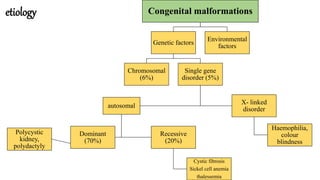
etiology Congenital malformations
Genetic factors
Chromosomal
(6%)
Single gene
disorder (5%)
autosomal
Dominant
(70%)
Polycystic
kidney,
polydactyly
Recessive
(20%)
Cystic fibrosis
Sickel cell anemia
thalessemia
X- linked
disorder
Haemophilia,
colour
blindness
Environmental
factors
diagnosis
Common congenital malformations
cns
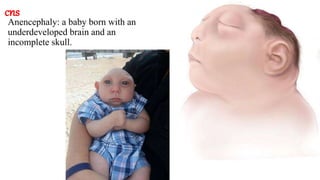
Anencephaly: a baby born with an
underdeveloped brain and an
incomplete skull.
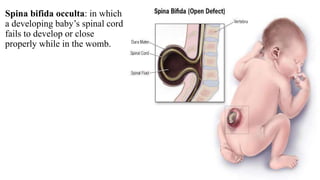
Spina bifida occulta: in which
a developing baby’s spinal cord
fails to develop or close
properly while in the womb.
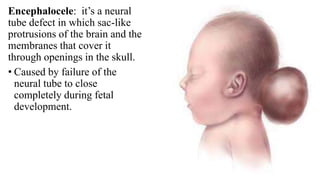
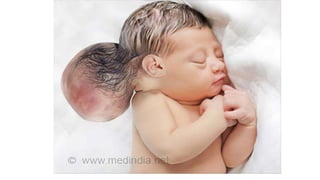
Encephalocele: it’s a neural
tube defect in which sac-like
protrusions of the brain and the
membranes that cover it
through openings in the skull.
• Caused by failure of the
neural tube to close
completely during fetal
development.
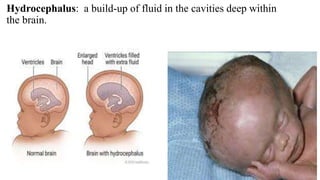
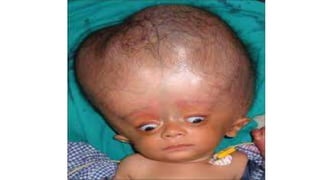
Hydrocephalus: a build-up of fluid in the cavities deep within
the brain.
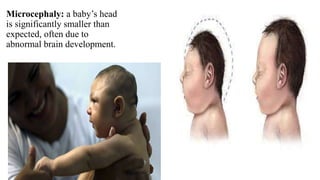
Microcephaly: a baby’s head
is significantly smaller than
expected, often due to
abnormal brain development.
Cardiovascular system
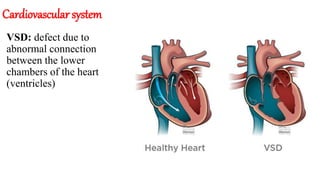
VSD: defect due to
abnormal connection
between the lower
chambers of the heart
(ventricles)
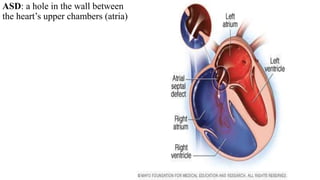
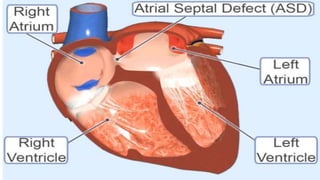
ASD: a hole in the wall between
the heart’s upper chambers (atria)
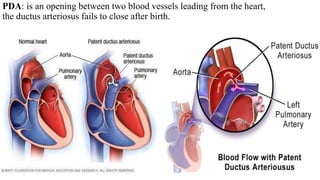
PDA: is an opening between two blood vessels leading from the heart,
the ductus arteriosus fails to close after birth.
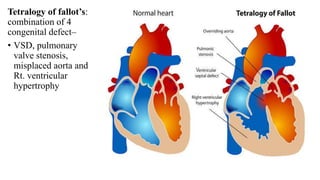
Tetralogy of fallot’s:
combination of 4
congenital defect–
• VSD, pulmonary
valve stenosis,
misplaced aorta and
Rt. ventricular
hypertrophy
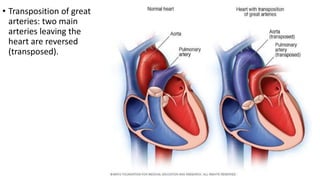
• Transposition of great
arteries: two main
arteries leaving the
heart are reversed
(transposed).
GI SYSTEM
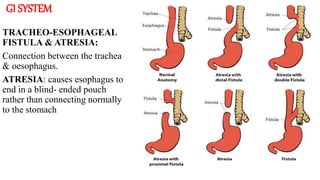
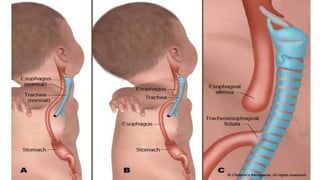
TRACHEO-ESOPHAGEAL
FISTULA & ATRESIA:
Connection between the trachea
& oesophagus.
ATRESIA: causes esophagus to
end in a blind- ended pouch
rather than connecting normally
to the stomach
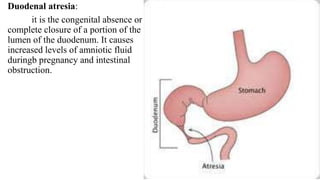
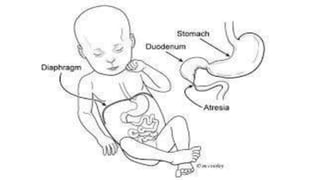
Duodenal atresia:
it is the congenital absence or
complete closure of a portion of the
lumen of the duodenum. It causes
increased levels of amniotic fluid
duringb pregnancy and intestinal
obstruction.
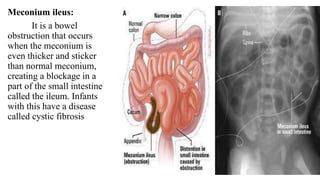
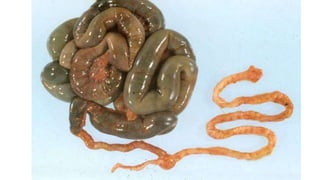
Meconium ileus:
It is a bowel
obstruction that occurs
when the meconium is
even thicker and sticker
than normal meconium,
creating a blockage in a
part of the small intestine
called the ileum. Infants
with this have a disease
called cystic fibrosis
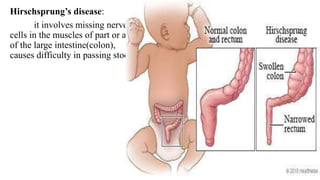
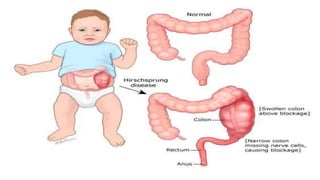
Hirschsprung’s disease:
it involves missing nerve
cells in the muscles of part or all
of the large intestine(colon),
causes difficulty in passing stool.
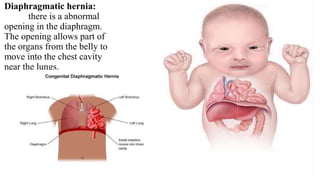
Diaphragmatic hernia:
there is a abnormal
opening in the diaphragm.
The opening allows part of
the organs from the belly to
move into the chest cavity
near the lungs.
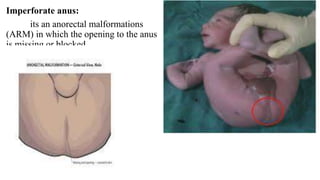
Imperforate anus:
its an anorectal malformations
(ARM) in which the opening to the anus
is missing or blocked.
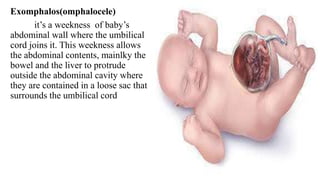
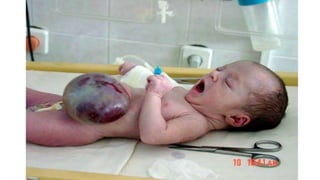
Exomphalos(omphalocele)
it’s a weekness of baby’s
abdominal wall where the umbilical
cord joins it. This weekness allows
the abdominal contents, mainlky the
bowel and the liver to protrude
outside the abdominal cavity where
they are contained in a loose sac that
surrounds the umbilical cord
Genitourinary system
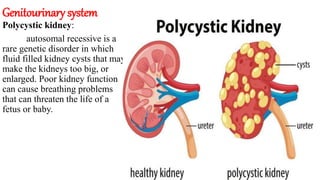
Polycystic kidney:
autosomal recessive is a
rare genetic disorder in which
fluid filled kidney cysts that may
make the kidneys too big, or
enlarged. Poor kidney function
can cause breathing problems
that can threaten the life of a
fetus or baby.
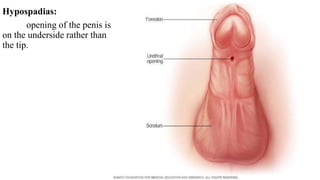
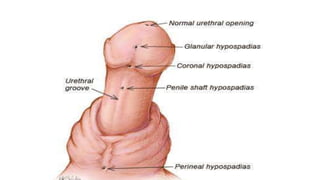
Hypospadias:
opening of the penis is
on the underside rather than
the tip.
Musculoskeletal system
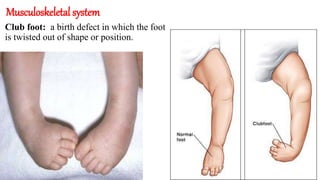
Club foot: a birth defect in which the foot
is twisted out of shape or position.
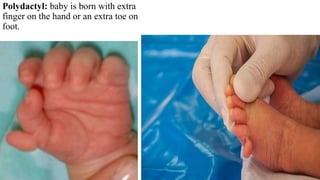
Polydactyl: baby is born with extra
finger on the hand or an extra toe on
foot.
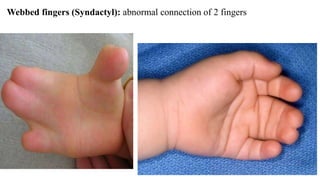
Webbed fingers (Syndactyl): abnormal connection of 2 fingers
Blood disorders
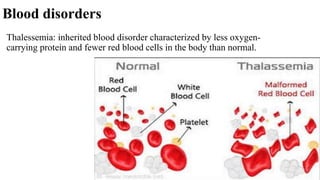
Thalessemia: inherited blood disorder characterized by less oxygen-
carrying protein and fewer red blood cells in the body than normal.
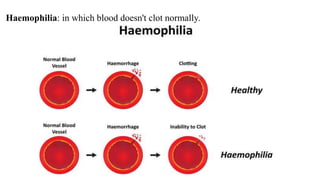
Haemophilia: in which blood doesn't clot normally.
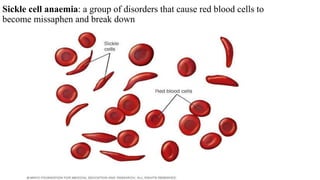
Sickle cell anaemia: a group of disorders that cause red blood cells to
become missaphen and break down
Metabolic disorders
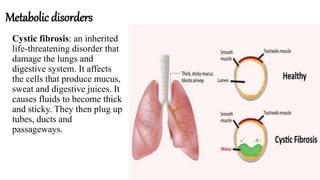
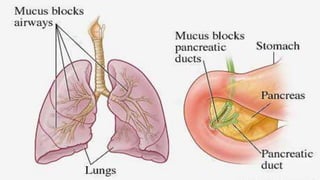
Cystic fibrosis: an inherited
life-threatening disorder that
damage the lungs and
digestive system. It affects
the cells that produce mucus,
sweat and digestive juices. It
causes fluids to become thick
and sticky. They then plug up
tubes, ducts and
passageways.
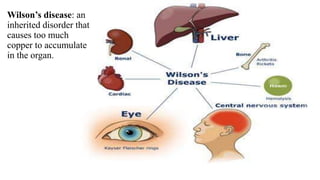
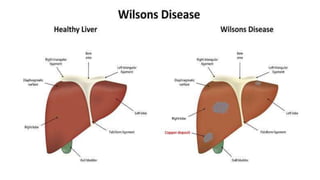
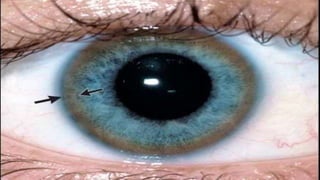
Wilson’s disease: an
inherited disorder that
causes too much
copper to accumulate
in the organ.
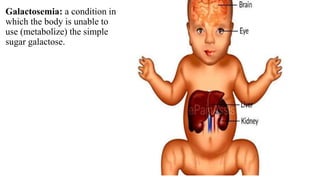
Galactosemia: a condition in
which the body is unable to
use (metabolize) the simple
sugar galactose.
Endocrinal abnormalities
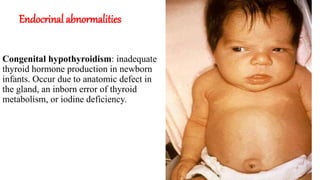
Congenital hypothyroidism: inadequate
thyroid hormone production in newborn
infants. Occur due to anatomic defect in
the gland, an inborn error of thyroid
metabolism, or iodine deficiency.
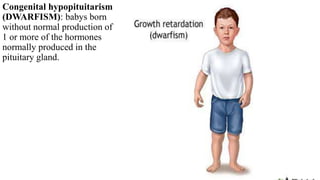
Congenital hypopituitarism
(DWARFISM): babys born
without normal production of
1 or more of the hormones
normally produced in the
pituitary gland.
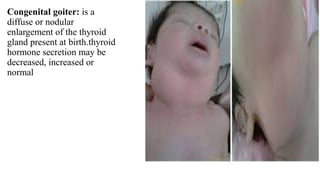
Congenital goiter: is a
diffuse or nodular
enlargement of the thyroid
gland present at birth.thyroid
hormone secretion may be
decreased, increased or
normal
Chromosomal anomalies
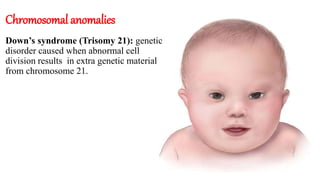
Down’s syndrome (Trisomy 21): genetic
disorder caused when abnormal cell
division results in extra genetic material
from chromosome 21.
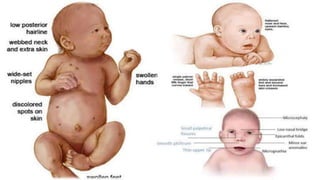
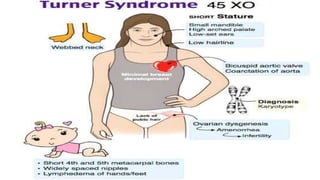
Turner syndrome: in which a female is born with only one X
chromosome.
Prevention of congenital anomalies
Genetic counselling
Reducing & discouraging the consanguinous marriages
Avoiding late marriages and avoidance of pregnancy beyond the age of 35 yrs.
Promotion of health of girl child and pre-pregnant health status of females by
prevention of malnutrition, anemia, folic acid deficiency, iodine deficiency etc.
Encouraging the immunization of all girl child by MMR
Elimination of active & passive smoking of tobacco by mothers
Avoidance of drug intake consulting physician
Prevention of intrauterine infection and promotion of sexual hygiene
Efficient antenatal care
Promotion of therapeutic abortion of abnormal fetus
Discouraging the reproduction after birth of a baby with congenital anomalies,
without genetic counselling
Role of nurse
Congenital malformations

Congenital malformations

  • 1.
  • 2.
    A WHO documentdescribes congenital anomaly being used to include all biochemical, structural and functional disorders present at birth and the congenital malformation should be confined to structural defects only, present at birth.
  • 3.
    Incidence In India, 2.5- 4%. Most common birth defects are CNS abnormalities 22%.
  • 4.
    RISK FACTORS  Advancedmaternal age  Consanguinity  Maternal malnutrition
  • 5.
    etiology Congenital malformations Geneticfactors Chromosomal (6%) Single gene disorder (5%) autosomal Dominant (70%) Polycystic kidney, polydactyly Recessive (20%) Cystic fibrosis Sickel cell anemia thalessemia X- linked disorder Haemophilia, colour blindness Environmental factors
  • 6.
  • 7.
  • 8.
    cns Anencephaly: a babyborn with an underdeveloped brain and an incomplete skull.
  • 9.
    Spina bifida occulta:in which a developing baby’s spinal cord fails to develop or close properly while in the womb.
  • 10.
    Encephalocele: it’s aneural tube defect in which sac-like protrusions of the brain and the membranes that cover it through openings in the skull. • Caused by failure of the neural tube to close completely during fetal development.
  • 12.
    Hydrocephalus: a build-upof fluid in the cavities deep within the brain.
  • 14.
    Microcephaly: a baby’shead is significantly smaller than expected, often due to abnormal brain development.
  • 15.
    Cardiovascular system VSD: defectdue to abnormal connection between the lower chambers of the heart (ventricles)
  • 16.
    ASD: a holein the wall between the heart’s upper chambers (atria)
  • 18.
    PDA: is anopening between two blood vessels leading from the heart, the ductus arteriosus fails to close after birth.
  • 19.
    Tetralogy of fallot’s: combinationof 4 congenital defect– • VSD, pulmonary valve stenosis, misplaced aorta and Rt. ventricular hypertrophy
  • 20.
    • Transposition ofgreat arteries: two main arteries leaving the heart are reversed (transposed).
  • 22.
    GI SYSTEM TRACHEO-ESOPHAGEAL FISTULA &ATRESIA: Connection between the trachea & oesophagus. ATRESIA: causes esophagus to end in a blind- ended pouch rather than connecting normally to the stomach
  • 24.
    Duodenal atresia: it isthe congenital absence or complete closure of a portion of the lumen of the duodenum. It causes increased levels of amniotic fluid duringb pregnancy and intestinal obstruction.
  • 26.
    Meconium ileus: It isa bowel obstruction that occurs when the meconium is even thicker and sticker than normal meconium, creating a blockage in a part of the small intestine called the ileum. Infants with this have a disease called cystic fibrosis
  • 28.
    Hirschsprung’s disease: it involvesmissing nerve cells in the muscles of part or all of the large intestine(colon), causes difficulty in passing stool.
  • 30.
    Diaphragmatic hernia: there isa abnormal opening in the diaphragm. The opening allows part of the organs from the belly to move into the chest cavity near the lungs.
  • 31.
    Imperforate anus: its ananorectal malformations (ARM) in which the opening to the anus is missing or blocked.
  • 32.
    Exomphalos(omphalocele) it’s a weeknessof baby’s abdominal wall where the umbilical cord joins it. This weekness allows the abdominal contents, mainlky the bowel and the liver to protrude outside the abdominal cavity where they are contained in a loose sac that surrounds the umbilical cord
  • 34.
    Genitourinary system Polycystic kidney: autosomalrecessive is a rare genetic disorder in which fluid filled kidney cysts that may make the kidneys too big, or enlarged. Poor kidney function can cause breathing problems that can threaten the life of a fetus or baby.
  • 35.
    Hypospadias: opening of thepenis is on the underside rather than the tip.
  • 37.
    Musculoskeletal system Club foot:a birth defect in which the foot is twisted out of shape or position.
  • 38.
    Polydactyl: baby isborn with extra finger on the hand or an extra toe on foot.
  • 39.
    Webbed fingers (Syndactyl):abnormal connection of 2 fingers
  • 40.
    Blood disorders Thalessemia: inheritedblood disorder characterized by less oxygen- carrying protein and fewer red blood cells in the body than normal.
  • 41.
    Haemophilia: in whichblood doesn't clot normally.
  • 42.
    Sickle cell anaemia:a group of disorders that cause red blood cells to become missaphen and break down
  • 43.
    Metabolic disorders Cystic fibrosis:an inherited life-threatening disorder that damage the lungs and digestive system. It affects the cells that produce mucus, sweat and digestive juices. It causes fluids to become thick and sticky. They then plug up tubes, ducts and passageways.
  • 45.
    Wilson’s disease: an inheriteddisorder that causes too much copper to accumulate in the organ.
  • 48.
    Galactosemia: a conditionin which the body is unable to use (metabolize) the simple sugar galactose.
  • 49.
    Endocrinal abnormalities Congenital hypothyroidism:inadequate thyroid hormone production in newborn infants. Occur due to anatomic defect in the gland, an inborn error of thyroid metabolism, or iodine deficiency.
  • 50.
    Congenital hypopituitarism (DWARFISM): babysborn without normal production of 1 or more of the hormones normally produced in the pituitary gland.
  • 51.
    Congenital goiter: isa diffuse or nodular enlargement of the thyroid gland present at birth.thyroid hormone secretion may be decreased, increased or normal
  • 52.
    Chromosomal anomalies Down’s syndrome(Trisomy 21): genetic disorder caused when abnormal cell division results in extra genetic material from chromosome 21.
  • 53.
    Turner syndrome: inwhich a female is born with only one X chromosome.
  • 56.
    Prevention of congenitalanomalies Genetic counselling Reducing & discouraging the consanguinous marriages Avoiding late marriages and avoidance of pregnancy beyond the age of 35 yrs. Promotion of health of girl child and pre-pregnant health status of females by prevention of malnutrition, anemia, folic acid deficiency, iodine deficiency etc. Encouraging the immunization of all girl child by MMR Elimination of active & passive smoking of tobacco by mothers Avoidance of drug intake consulting physician Prevention of intrauterine infection and promotion of sexual hygiene Efficient antenatal care Promotion of therapeutic abortion of abnormal fetus Discouraging the reproduction after birth of a baby with congenital anomalies, without genetic counselling
  • 57.