Predictive Analytics Help
Achieve the Triple Aim
Holli White | BMHI MPS Student
INLS 770 | University of North Carolina at Chapel Hill
Agenda
 What is the Triple Aim?
 Financial/utilization trends
 Types of predictive analytics
Disease progression
Hospitalization and/or death prediction
Expenditure
 Tying it all together
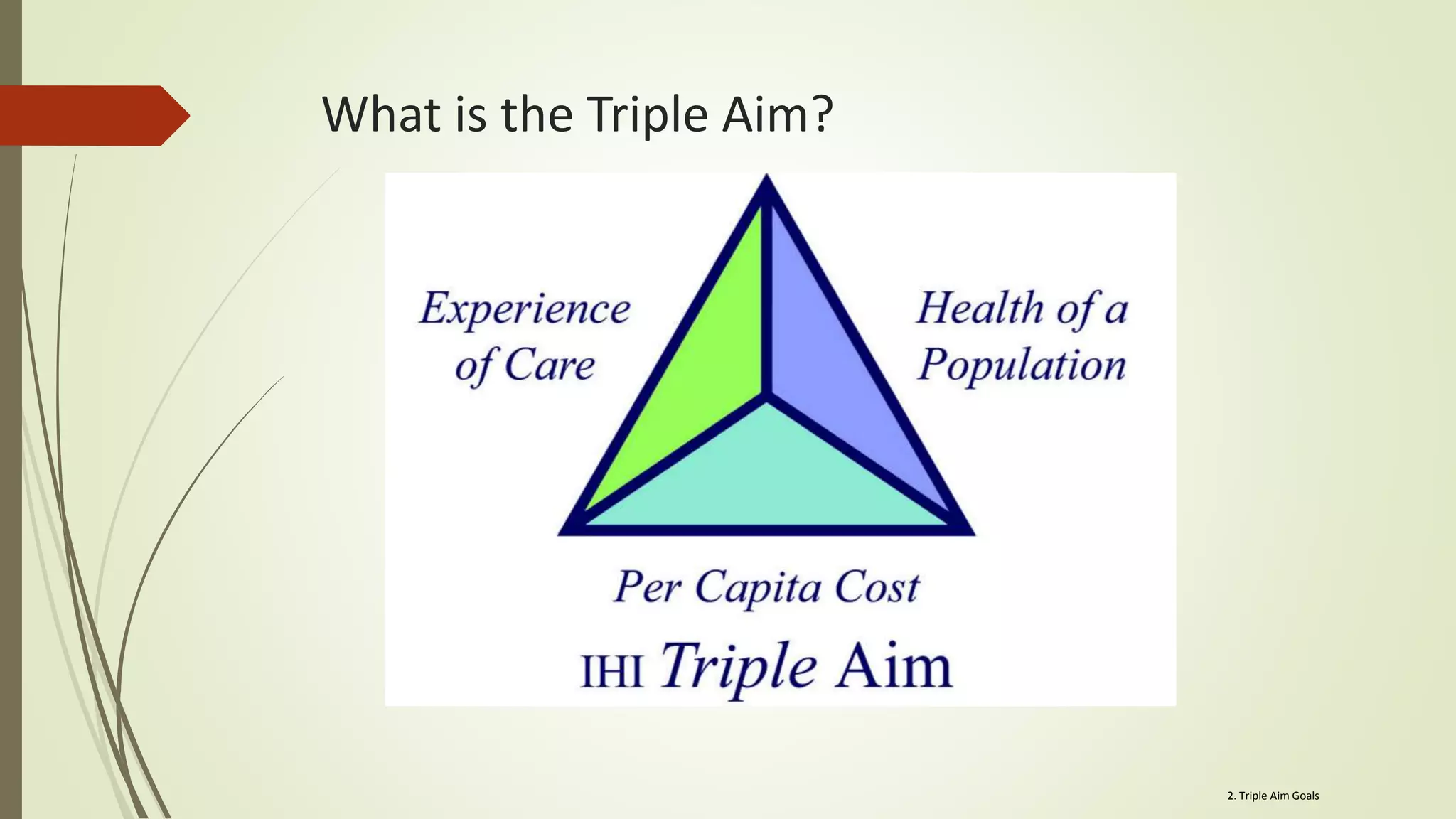
What is the Triple Aim?
2. Triple Aim Goals
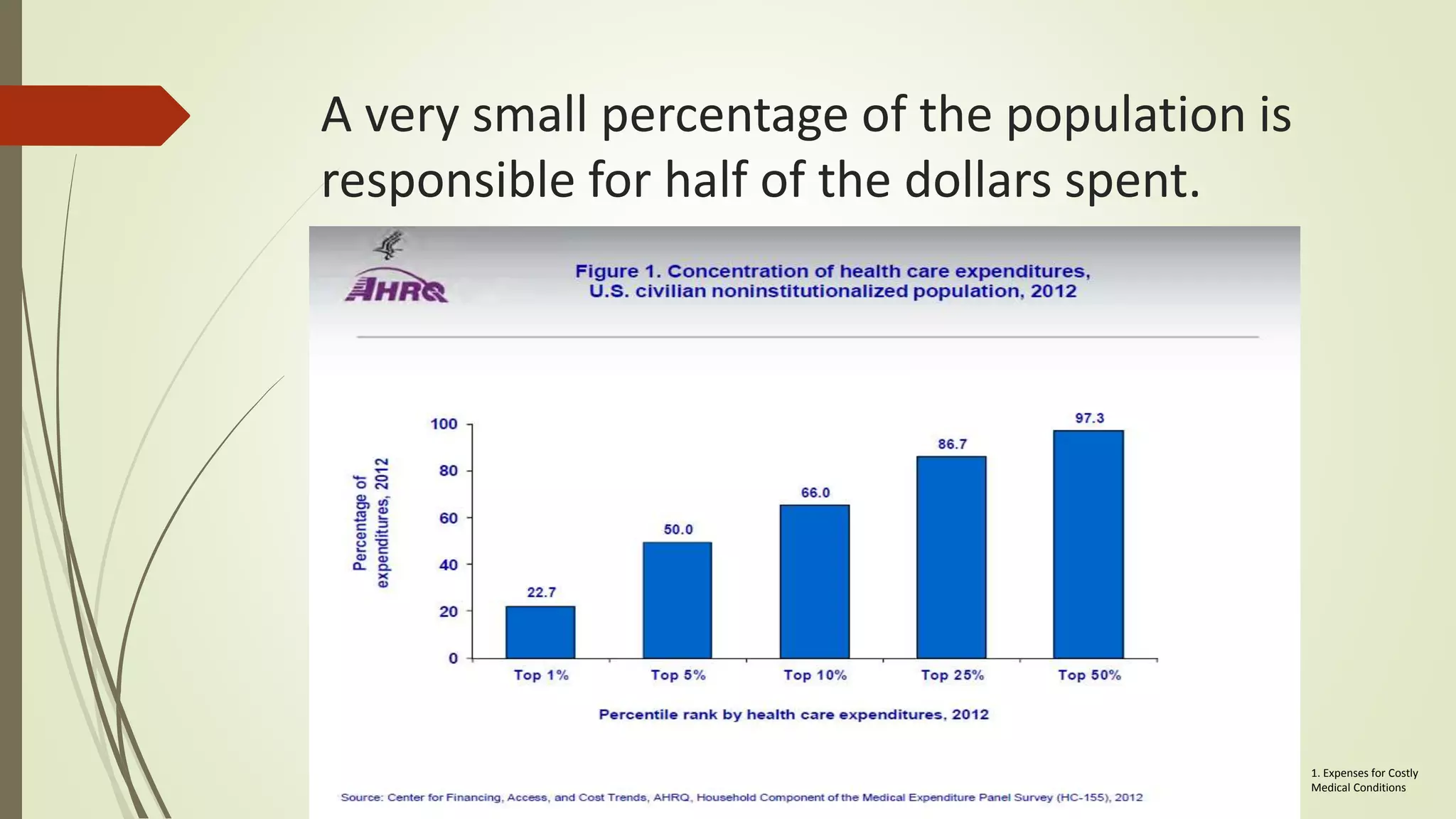
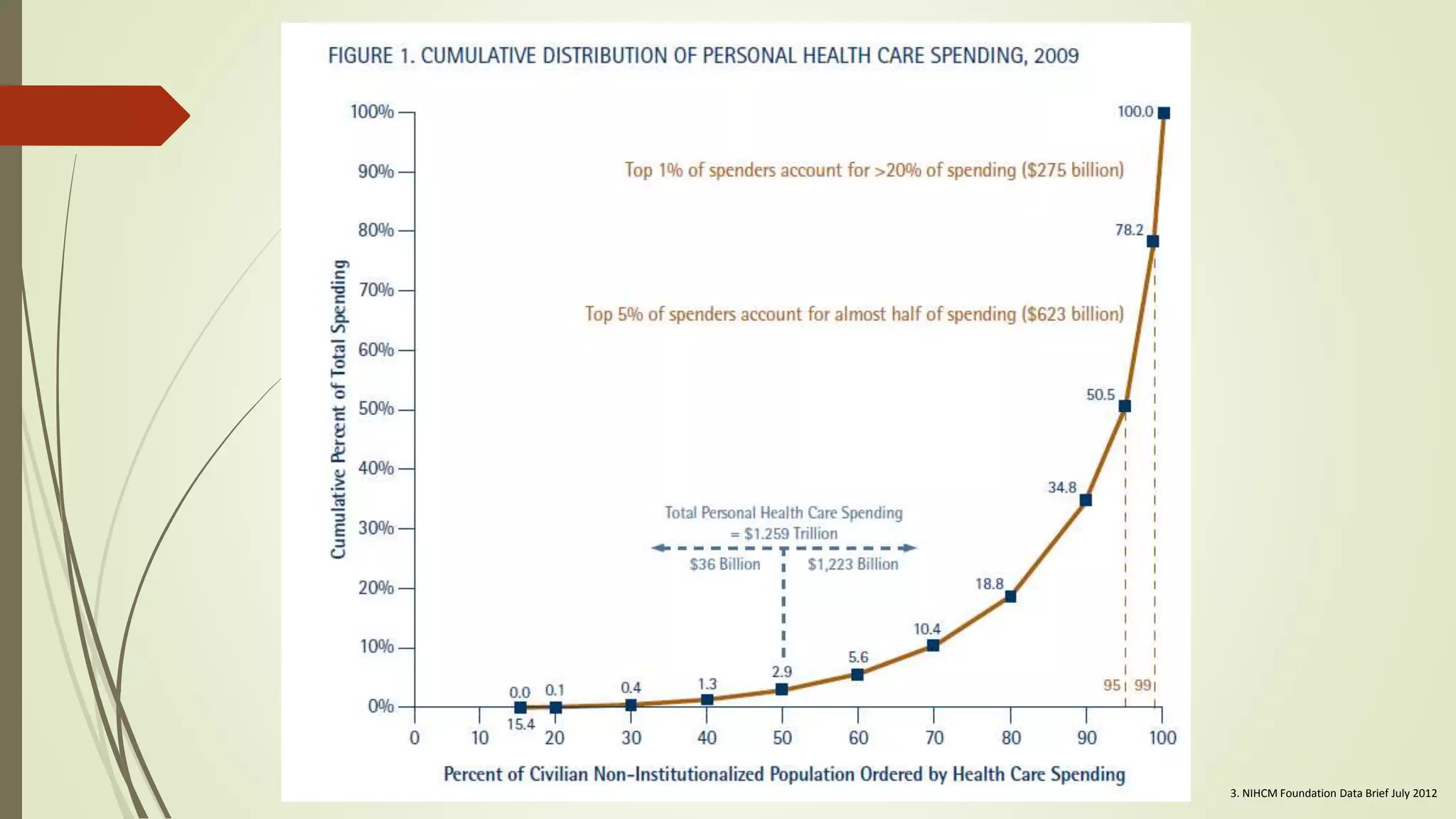
A very small percentage of the population is
responsible for half of the dollars spent.
1. Expenses for Costly
Medical Conditions
3. NIHCM Foundation Data Brief July 2012
Predictive models can identify patients with
whom to take a proactive approach.
 Types of predictive analytics
Disease progression
Hospitalization and/or death prediction
Expenditure
 Progression of CKD to Kidney Failure
 Many biometric/laboratory variables
 High accuracy rate
8. Predictive for Progression of CKD
Predictive models can identify patients with
whom to take a proactive approach.
 Types of predictive analytics
Disease progression
Hospitalization and/or death prediction
Expenditure
 HF predictive models - uses risk markers and CHA2DS2-VASc scores,
current treatment therapies and response, EF values
 Models incorporating clinical data are more accurate than claims
4. Factors influencing HF predictive models
Predictive models can identify patients with
whom to take a proactive approach.
 Types of predictive analytics
Disease progression
Hospitalization and/or death prediction
Expenditure
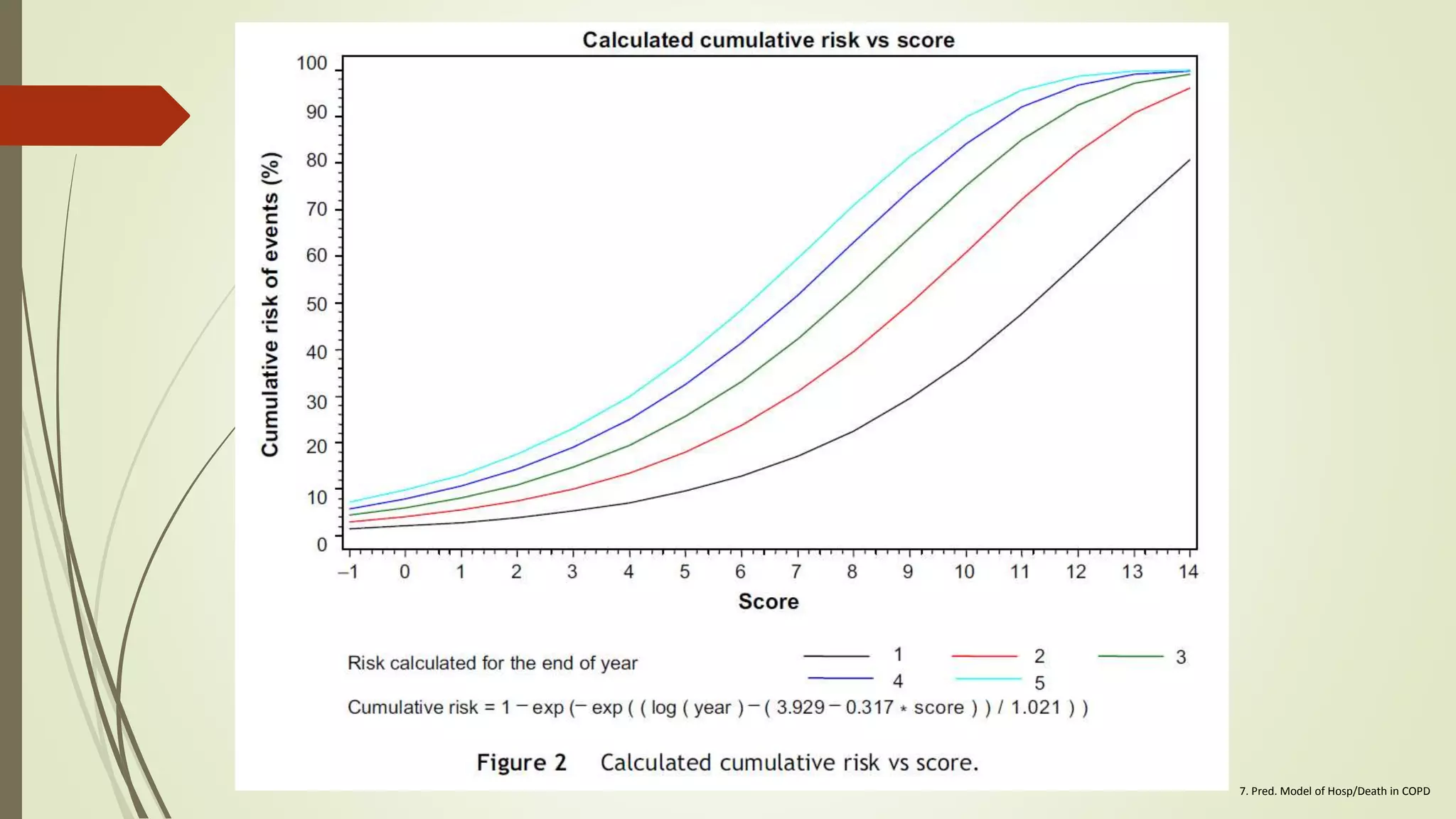
 COPD study
 Successful risk model put together based on scoring of various
measurements
7. Pred. Model of Hosp/Death in COPD
 Types of predictive analytics
Disease progression
Hospitalization and/or death prediction
Expenditure
 H
7. Pred. Model of Hosp/Death in COPD
Predictive models can identify patients with
whom to take a proactive approach.
 Types of predictive analytics
Disease progression
Hospitalization and/or death prediction
Expenditure
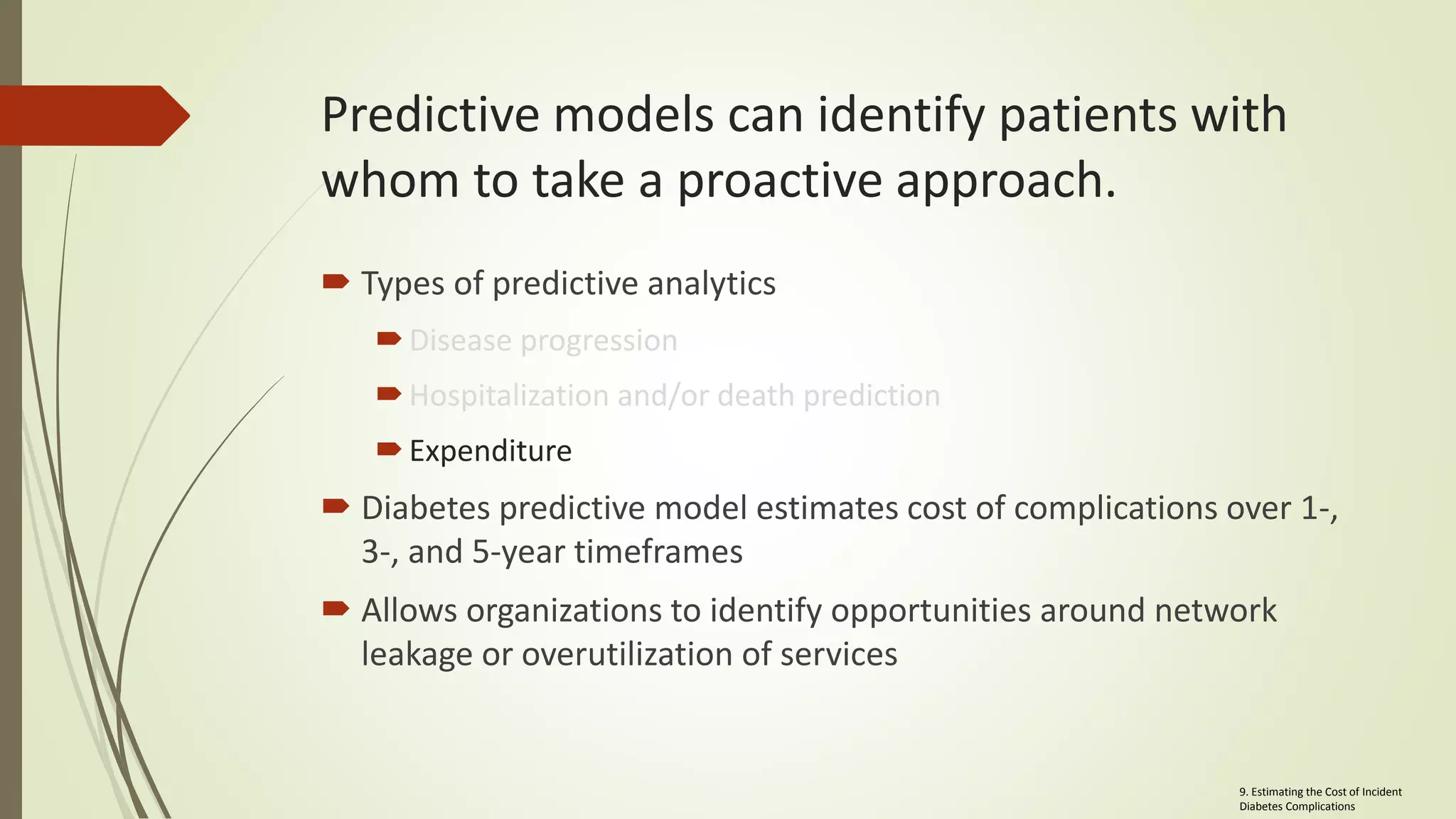
 Diabetes predictive model estimates cost of complications over 1-,
3-, and 5-year timeframes
 Allows organizations to identify opportunities around network
leakage or overutilization of services
9. Estimating the Cost of Incident
Diabetes Complications
Predictive models can identify patients with
whom to take a proactive approach.
 Types of predictive analytics
Disease progression
Hospitalization and/or death prediction
Expenditure
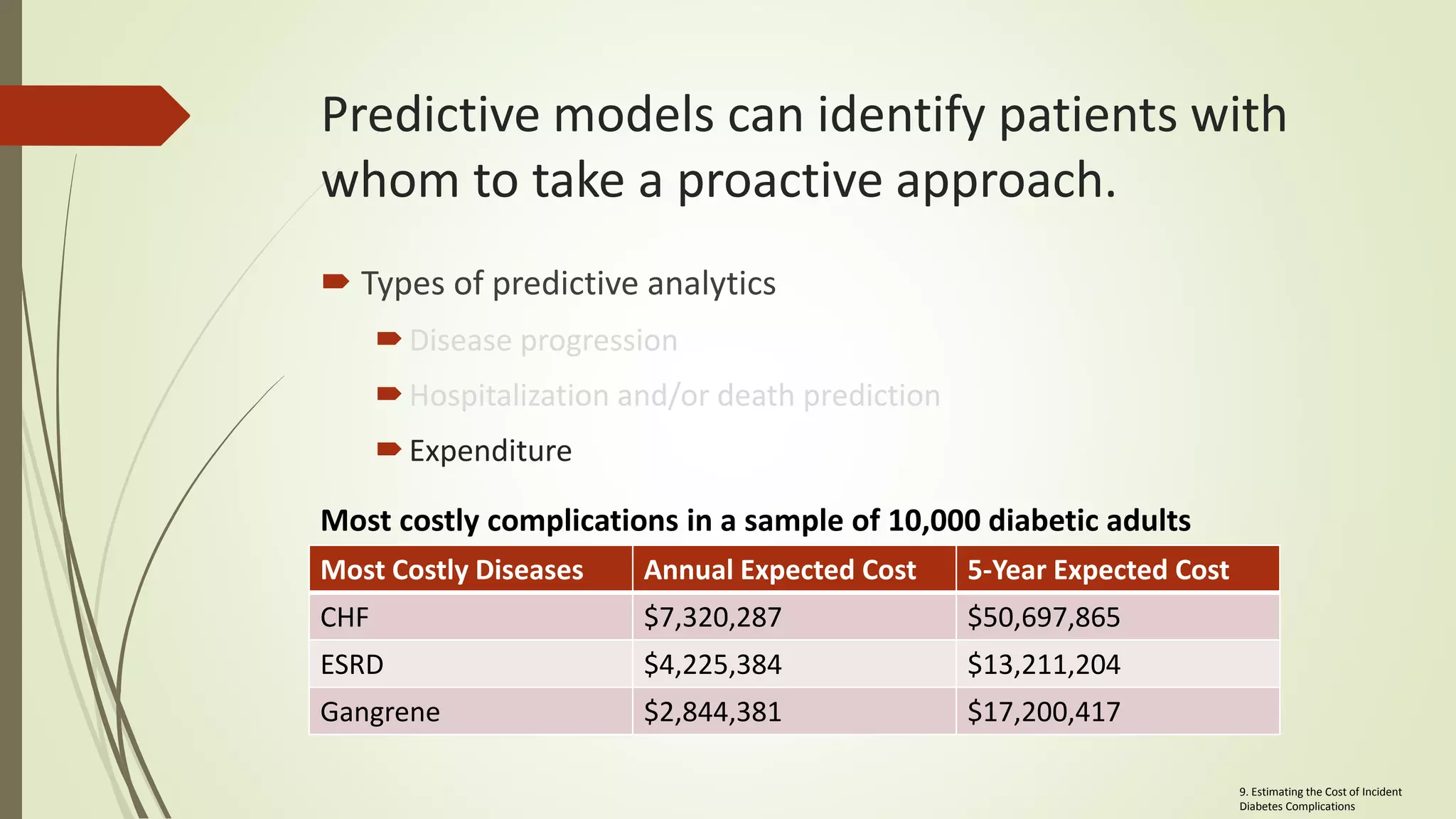
Most Costly Diseases Annual Expected Cost 5-Year Expected Cost
CHF $7,320,287 $50,697,865
ESRD $4,225,384 $13,211,204
Gangrene $2,844,381 $17,200,417
Most costly complications in a sample of 10,000 diabetic adults
9. Estimating the Cost of Incident
Diabetes Complications
How do we tie this together with patient care?
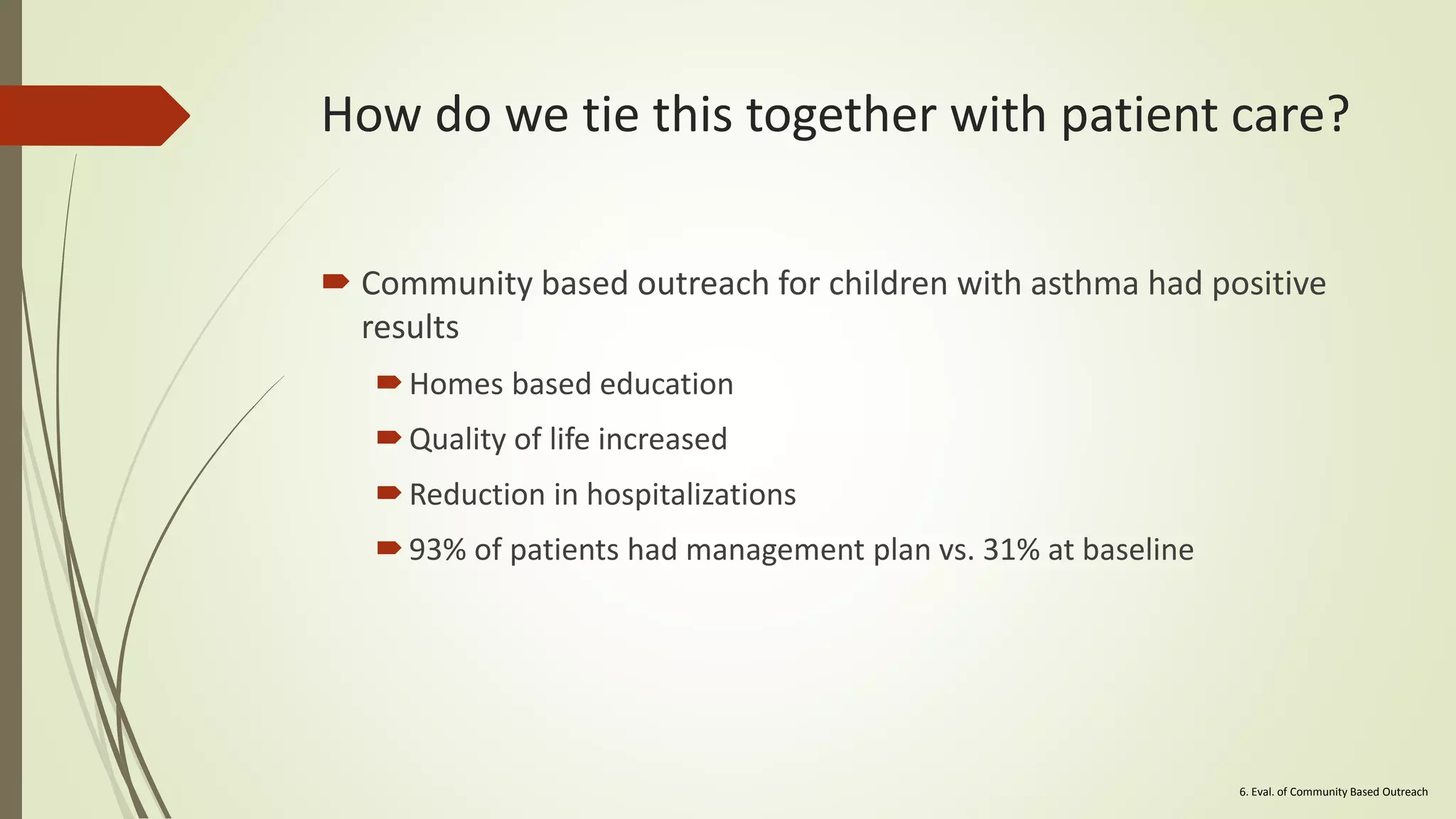
 Community based outreach for children with asthma had positive
results
Homes based education
Quality of life increased
Reduction in hospitalizations
93% of patients had management plan vs. 31% at baseline
6. Eval. of Community Based Outreach
How do we tie this together with patient care?
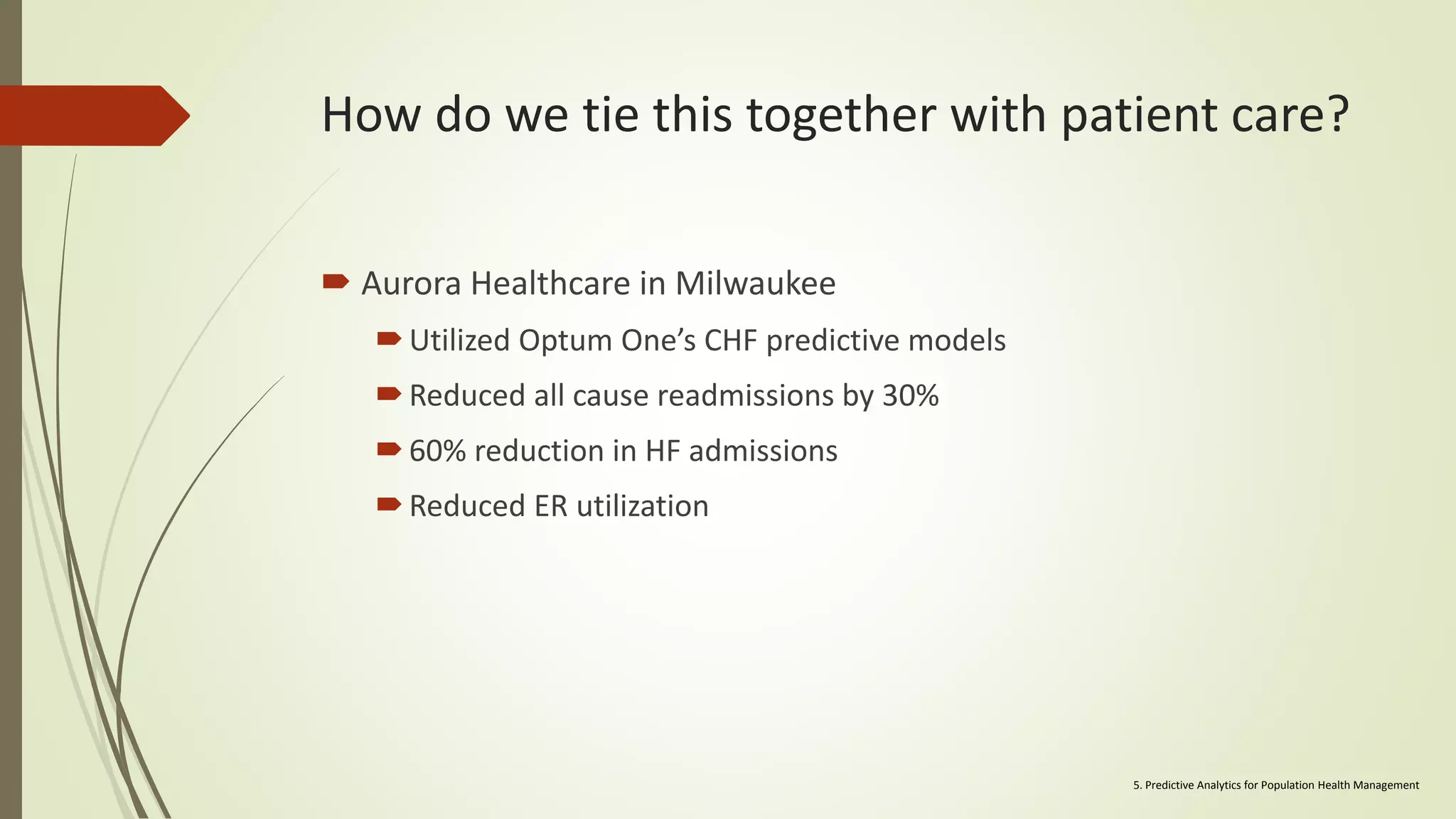
 Aurora Healthcare in Milwaukee
Utilized Optum One’s CHF predictive models
Reduced all cause readmissions by 30%
60% reduction in HF admissions
Reduced ER utilization
5. Predictive Analytics for Population Health Management
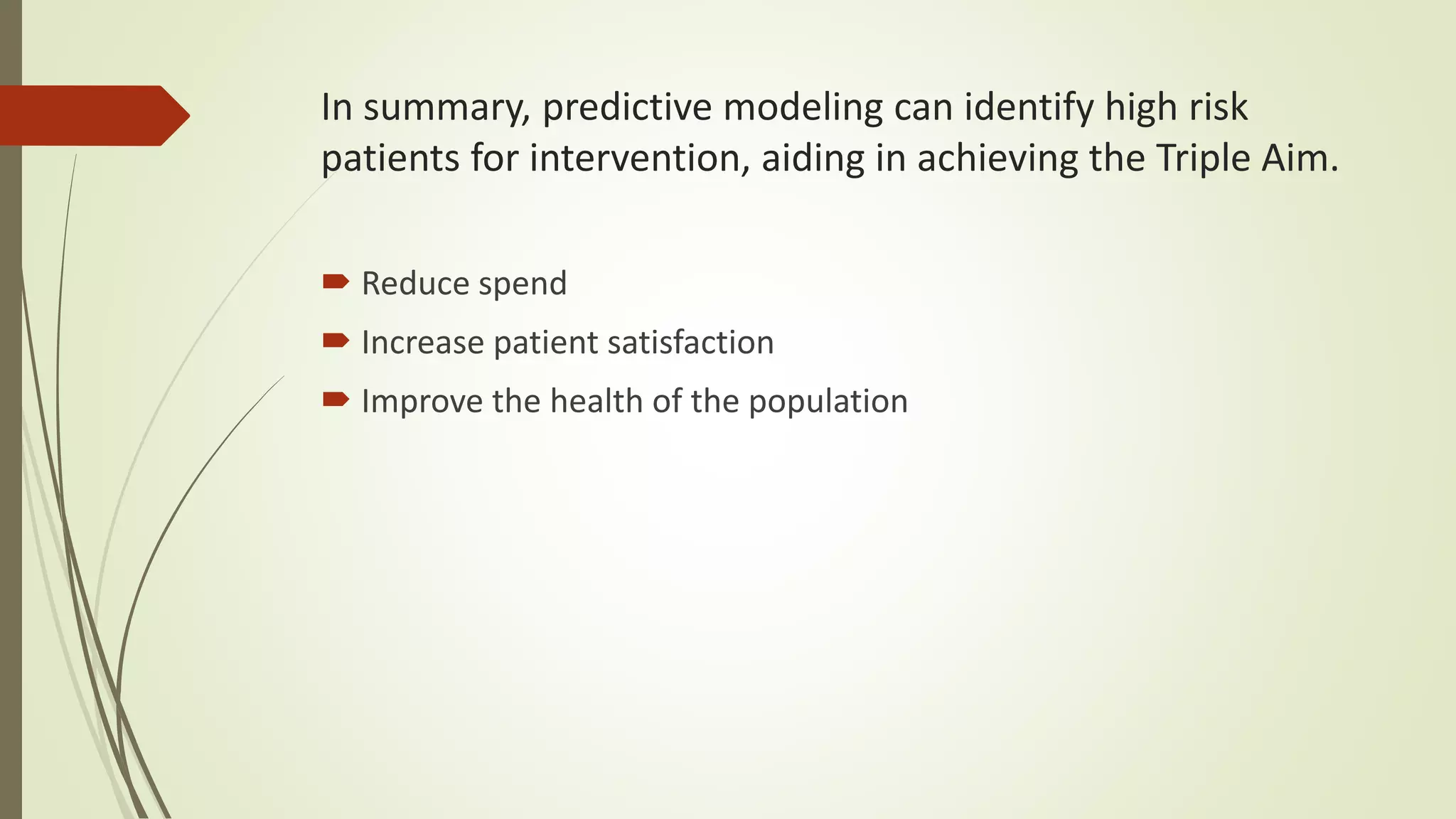
In summary, predictive modeling can identify high risk
patients for intervention, aiding in achieving the Triple Aim.
 Reduce spend
 Increase patient satisfaction
 Improve the health of the population
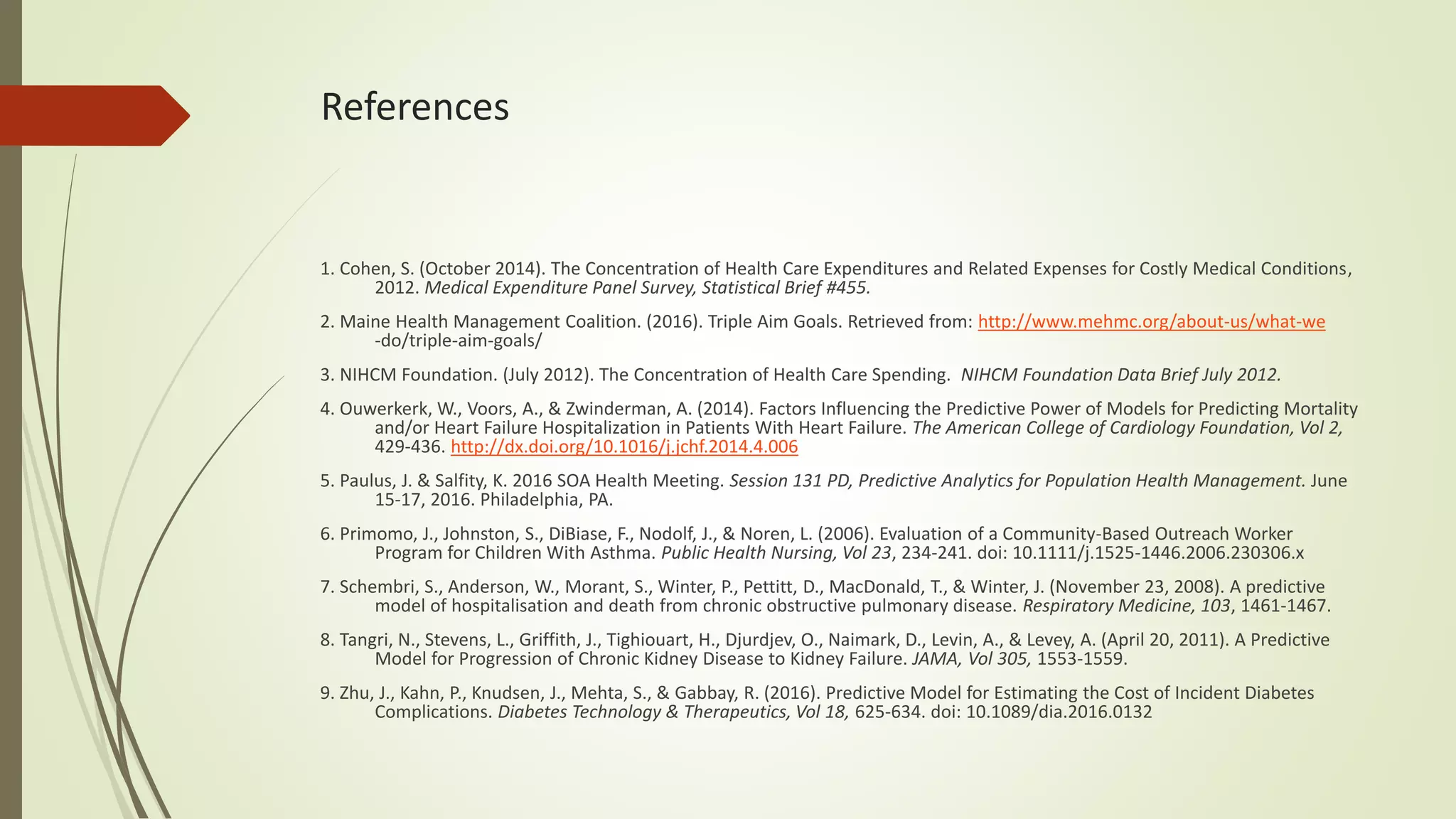
References
1. Cohen, S. (October 2014). The Concentration of Health Care Expenditures and Related Expenses for Costly Medical Conditions,
2012. Medical Expenditure Panel Survey, Statistical Brief #455.
2. Maine Health Management Coalition. (2016). Triple Aim Goals. Retrieved from: http://www.mehmc.org/about-us/what-we
-do/triple-aim-goals/
3. NIHCM Foundation. (July 2012). The Concentration of Health Care Spending. NIHCM Foundation Data Brief July 2012.
4. Ouwerkerk, W., Voors, A., & Zwinderman, A. (2014). Factors Influencing the Predictive Power of Models for Predicting Mortality
and/or Heart Failure Hospitalization in Patients With Heart Failure. The American College of Cardiology Foundation, Vol 2,
429-436. http://dx.doi.org/10.1016/j.jchf.2014.4.006
5. Paulus, J. & Salfity, K. 2016 SOA Health Meeting. Session 131 PD, Predictive Analytics for Population Health Management. June
15-17, 2016. Philadelphia, PA.
6. Primomo, J., Johnston, S., DiBiase, F., Nodolf, J., & Noren, L. (2006). Evaluation of a Community-Based Outreach Worker
Program for Children With Asthma. Public Health Nursing, Vol 23, 234-241. doi: 10.1111/j.1525-1446.2006.230306.x
7. Schembri, S., Anderson, W., Morant, S., Winter, P., Pettitt, D., MacDonald, T., & Winter, J. (November 23, 2008). A predictive
model of hospitalisation and death from chronic obstructive pulmonary disease. Respiratory Medicine, 103, 1461-1467.
8. Tangri, N., Stevens, L., Griffith, J., Tighiouart, H., Djurdjev, O., Naimark, D., Levin, A., & Levey, A. (April 20, 2011). A Predictive
Model for Progression of Chronic Kidney Disease to Kidney Failure. JAMA, Vol 305, 1553-1559.
9. Zhu, J., Kahn, P., Knudsen, J., Mehta, S., & Gabbay, R. (2016). Predictive Model for Estimating the Cost of Incident Diabetes
Complications. Diabetes Technology & Therapeutics, Vol 18, 625-634. doi: 10.1089/dia.2016.0132

Predictive Analytics Help Achieve the Triple Aim

  • 1.
    Predictive Analytics Help Achievethe Triple Aim Holli White | BMHI MPS Student INLS 770 | University of North Carolina at Chapel Hill
  • 2.
    Agenda  What isthe Triple Aim?  Financial/utilization trends  Types of predictive analytics Disease progression Hospitalization and/or death prediction Expenditure  Tying it all together
  • 3.
    What is theTriple Aim? 2. Triple Aim Goals
  • 4.
    A very smallpercentage of the population is responsible for half of the dollars spent. 1. Expenses for Costly Medical Conditions
  • 5.
    3. NIHCM FoundationData Brief July 2012
  • 6.
    Predictive models canidentify patients with whom to take a proactive approach.  Types of predictive analytics Disease progression Hospitalization and/or death prediction Expenditure  Progression of CKD to Kidney Failure  Many biometric/laboratory variables  High accuracy rate 8. Predictive for Progression of CKD
  • 7.
    Predictive models canidentify patients with whom to take a proactive approach.  Types of predictive analytics Disease progression Hospitalization and/or death prediction Expenditure  HF predictive models - uses risk markers and CHA2DS2-VASc scores, current treatment therapies and response, EF values  Models incorporating clinical data are more accurate than claims 4. Factors influencing HF predictive models
  • 8.
    Predictive models canidentify patients with whom to take a proactive approach.  Types of predictive analytics Disease progression Hospitalization and/or death prediction Expenditure  COPD study  Successful risk model put together based on scoring of various measurements 7. Pred. Model of Hosp/Death in COPD
  • 9.
     Types ofpredictive analytics Disease progression Hospitalization and/or death prediction Expenditure  H 7. Pred. Model of Hosp/Death in COPD
  • 10.
    Predictive models canidentify patients with whom to take a proactive approach.  Types of predictive analytics Disease progression Hospitalization and/or death prediction Expenditure  Diabetes predictive model estimates cost of complications over 1-, 3-, and 5-year timeframes  Allows organizations to identify opportunities around network leakage or overutilization of services 9. Estimating the Cost of Incident Diabetes Complications
  • 11.
    Predictive models canidentify patients with whom to take a proactive approach.  Types of predictive analytics Disease progression Hospitalization and/or death prediction Expenditure Most Costly Diseases Annual Expected Cost 5-Year Expected Cost CHF $7,320,287 $50,697,865 ESRD $4,225,384 $13,211,204 Gangrene $2,844,381 $17,200,417 Most costly complications in a sample of 10,000 diabetic adults 9. Estimating the Cost of Incident Diabetes Complications
  • 12.
    How do wetie this together with patient care?  Community based outreach for children with asthma had positive results Homes based education Quality of life increased Reduction in hospitalizations 93% of patients had management plan vs. 31% at baseline 6. Eval. of Community Based Outreach
  • 13.
    How do wetie this together with patient care?  Aurora Healthcare in Milwaukee Utilized Optum One’s CHF predictive models Reduced all cause readmissions by 30% 60% reduction in HF admissions Reduced ER utilization 5. Predictive Analytics for Population Health Management
  • 14.
    In summary, predictivemodeling can identify high risk patients for intervention, aiding in achieving the Triple Aim.  Reduce spend  Increase patient satisfaction  Improve the health of the population
  • 15.
    References 1. Cohen, S.(October 2014). The Concentration of Health Care Expenditures and Related Expenses for Costly Medical Conditions, 2012. Medical Expenditure Panel Survey, Statistical Brief #455. 2. Maine Health Management Coalition. (2016). Triple Aim Goals. Retrieved from: http://www.mehmc.org/about-us/what-we -do/triple-aim-goals/ 3. NIHCM Foundation. (July 2012). The Concentration of Health Care Spending. NIHCM Foundation Data Brief July 2012. 4. Ouwerkerk, W., Voors, A., & Zwinderman, A. (2014). Factors Influencing the Predictive Power of Models for Predicting Mortality and/or Heart Failure Hospitalization in Patients With Heart Failure. The American College of Cardiology Foundation, Vol 2, 429-436. http://dx.doi.org/10.1016/j.jchf.2014.4.006 5. Paulus, J. & Salfity, K. 2016 SOA Health Meeting. Session 131 PD, Predictive Analytics for Population Health Management. June 15-17, 2016. Philadelphia, PA. 6. Primomo, J., Johnston, S., DiBiase, F., Nodolf, J., & Noren, L. (2006). Evaluation of a Community-Based Outreach Worker Program for Children With Asthma. Public Health Nursing, Vol 23, 234-241. doi: 10.1111/j.1525-1446.2006.230306.x 7. Schembri, S., Anderson, W., Morant, S., Winter, P., Pettitt, D., MacDonald, T., & Winter, J. (November 23, 2008). A predictive model of hospitalisation and death from chronic obstructive pulmonary disease. Respiratory Medicine, 103, 1461-1467. 8. Tangri, N., Stevens, L., Griffith, J., Tighiouart, H., Djurdjev, O., Naimark, D., Levin, A., & Levey, A. (April 20, 2011). A Predictive Model for Progression of Chronic Kidney Disease to Kidney Failure. JAMA, Vol 305, 1553-1559. 9. Zhu, J., Kahn, P., Knudsen, J., Mehta, S., & Gabbay, R. (2016). Predictive Model for Estimating the Cost of Incident Diabetes Complications. Diabetes Technology & Therapeutics, Vol 18, 625-634. doi: 10.1089/dia.2016.0132

Editor's Notes

  • #6 Top 5 most costly conditions: heart disease, trauma related disorders, cancers, mental health, COPD/asthma
  • #7 Variables related to kidney function, age, sex, eGFR, urine albumin C statistic – 0.917
  • #8 CHA2DS2VASc – age, sex, CHF, HTN, stroke, DM
  • #9 Key features of the model include age, FEV1, prior respiratory hospitalizations
  • #11 DM 9.3% of population, $245 billion cost of DM in 2012, 43% of cost to inpatient DM related complications