 Why we study Big Data in healthcare system?
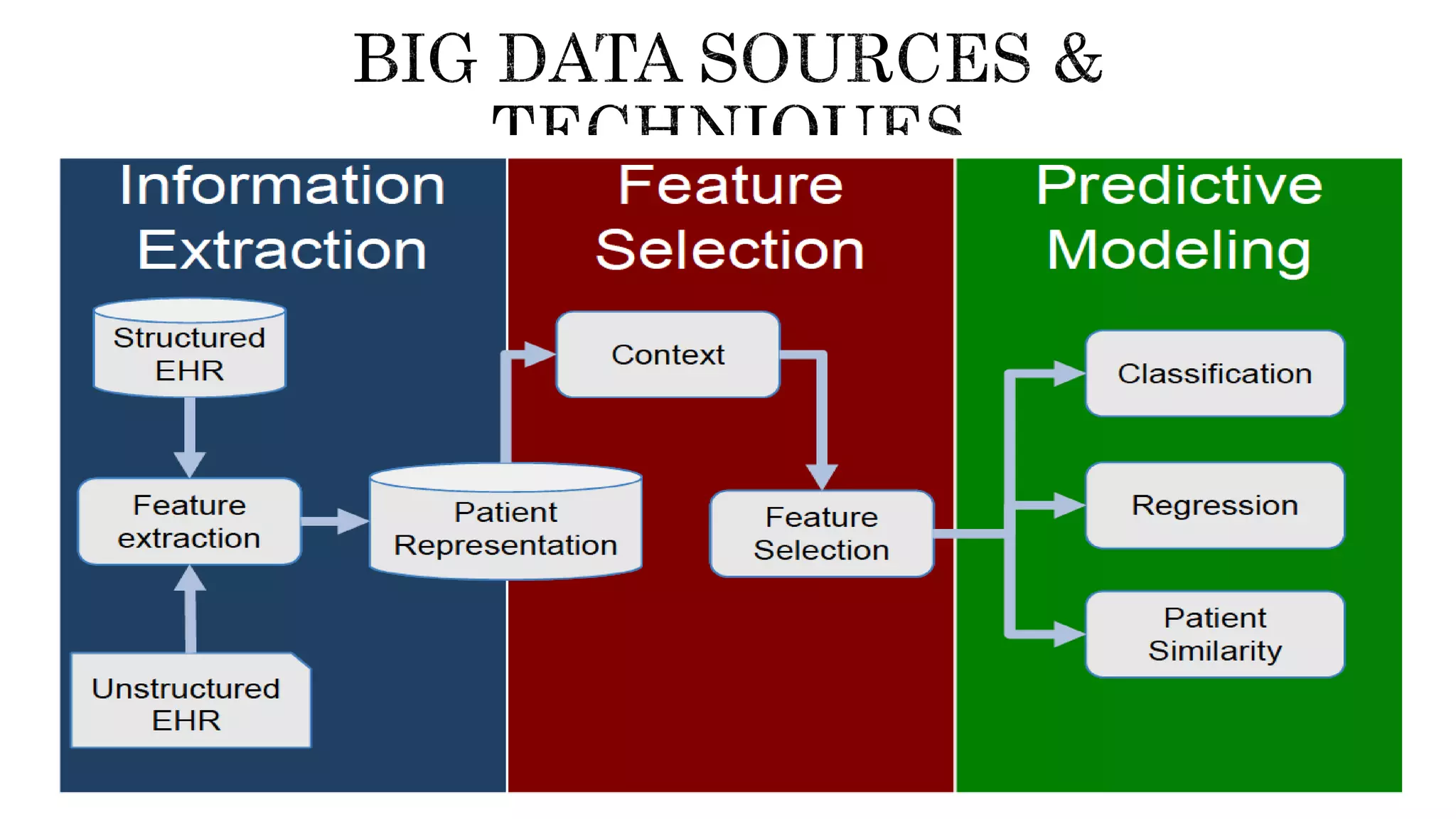
 Big Data Sources and technique
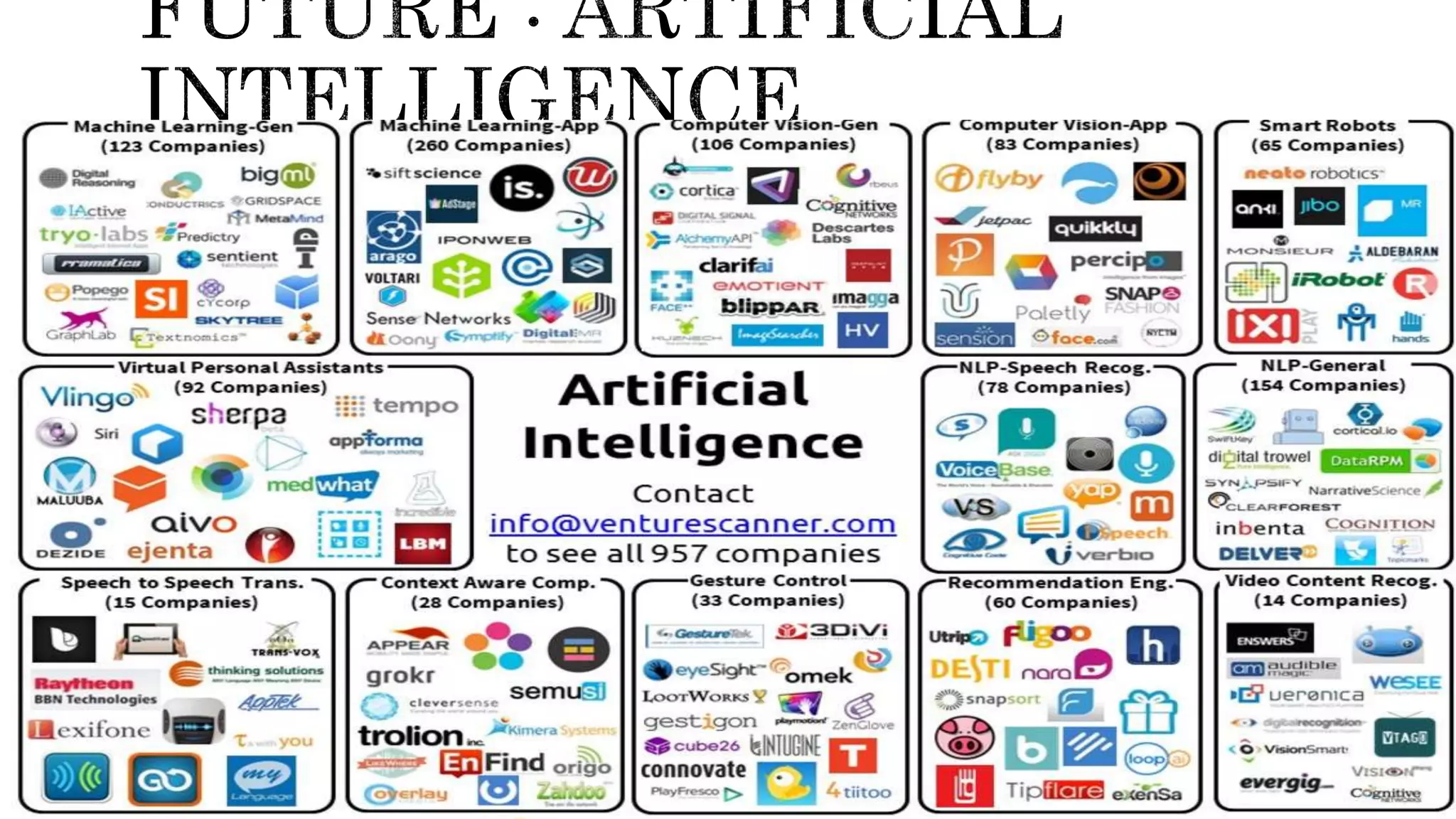
 Some Examples of Artificial Intelligence in Healthcare
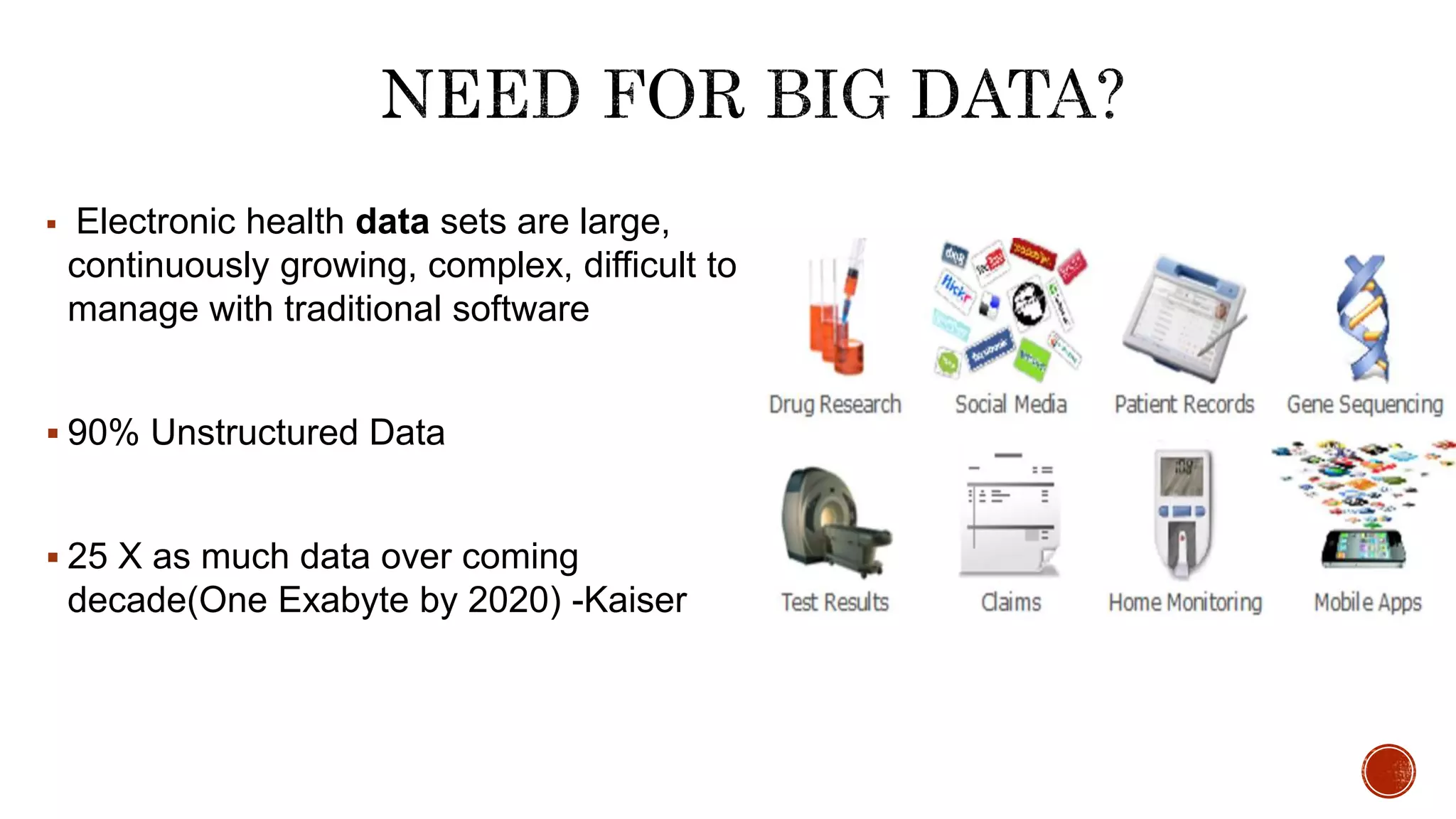
 Electronic health data sets are large,
continuously growing, complex, difficult to
manage with traditional software
 90% Unstructured Data
 25 X as much data over coming
decade(One Exabyte by 2020) -Kaiser
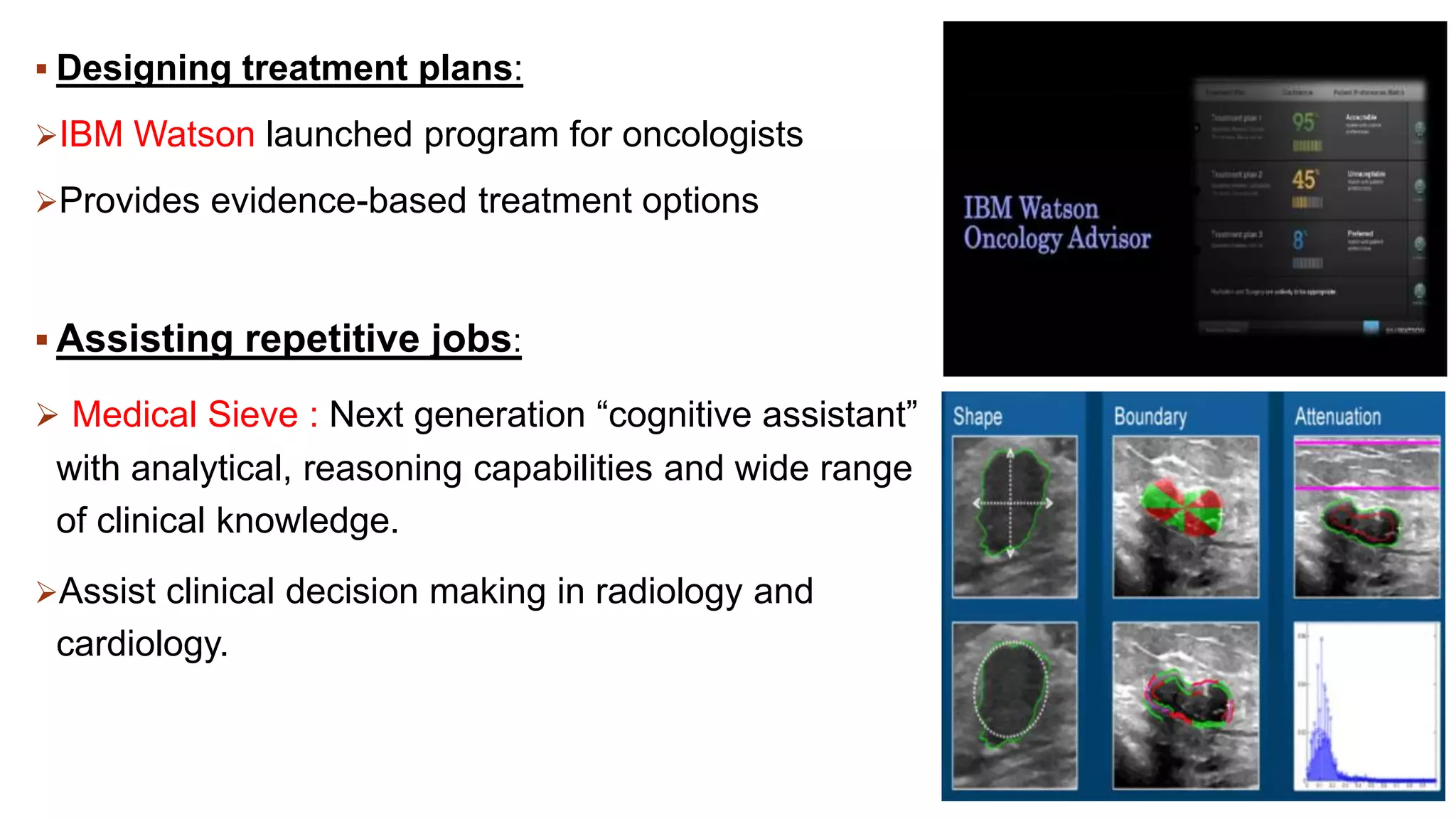
 Designing treatment plans:
IBM Watson launched program for oncologists
Provides evidence-based treatment options
 Assisting repetitive jobs:
 Medical Sieve : Next generation “cognitive assistant”
with analytical, reasoning capabilities and wide range
of clinical knowledge.
Assist clinical decision making in radiology and
cardiology.
 Health assistance and medication management:
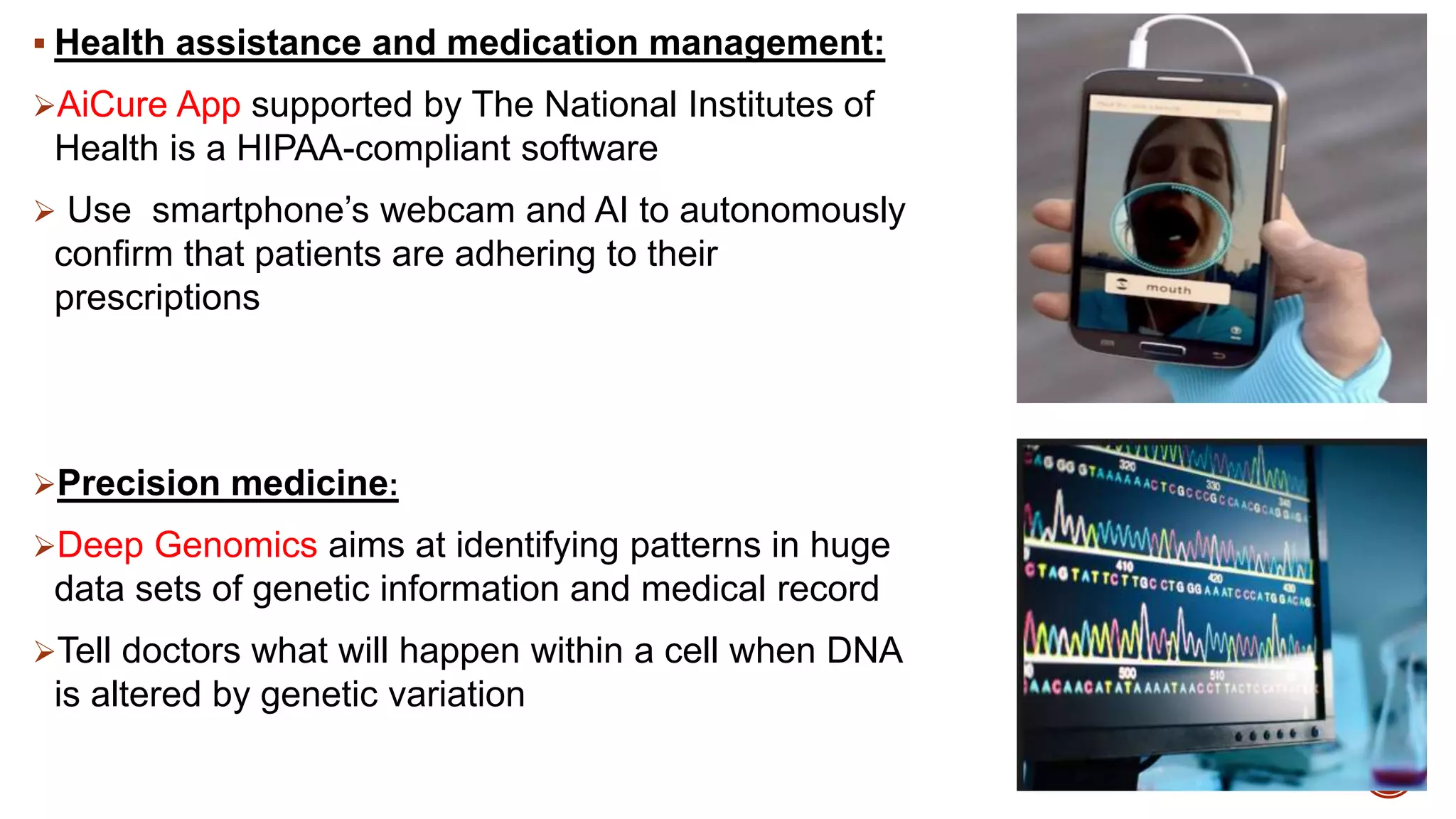
AiCure App supported by The National Institutes of
Health is a HIPAA-compliant software
 Use smartphone’s webcam and AI to autonomously
confirm that patients are adhering to their
prescriptions
Precision medicine:
Deep Genomics aims at identifying patterns in huge
data sets of genetic information and medical record
Tell doctors what will happen within a cell when DNA
is altered by genetic variation
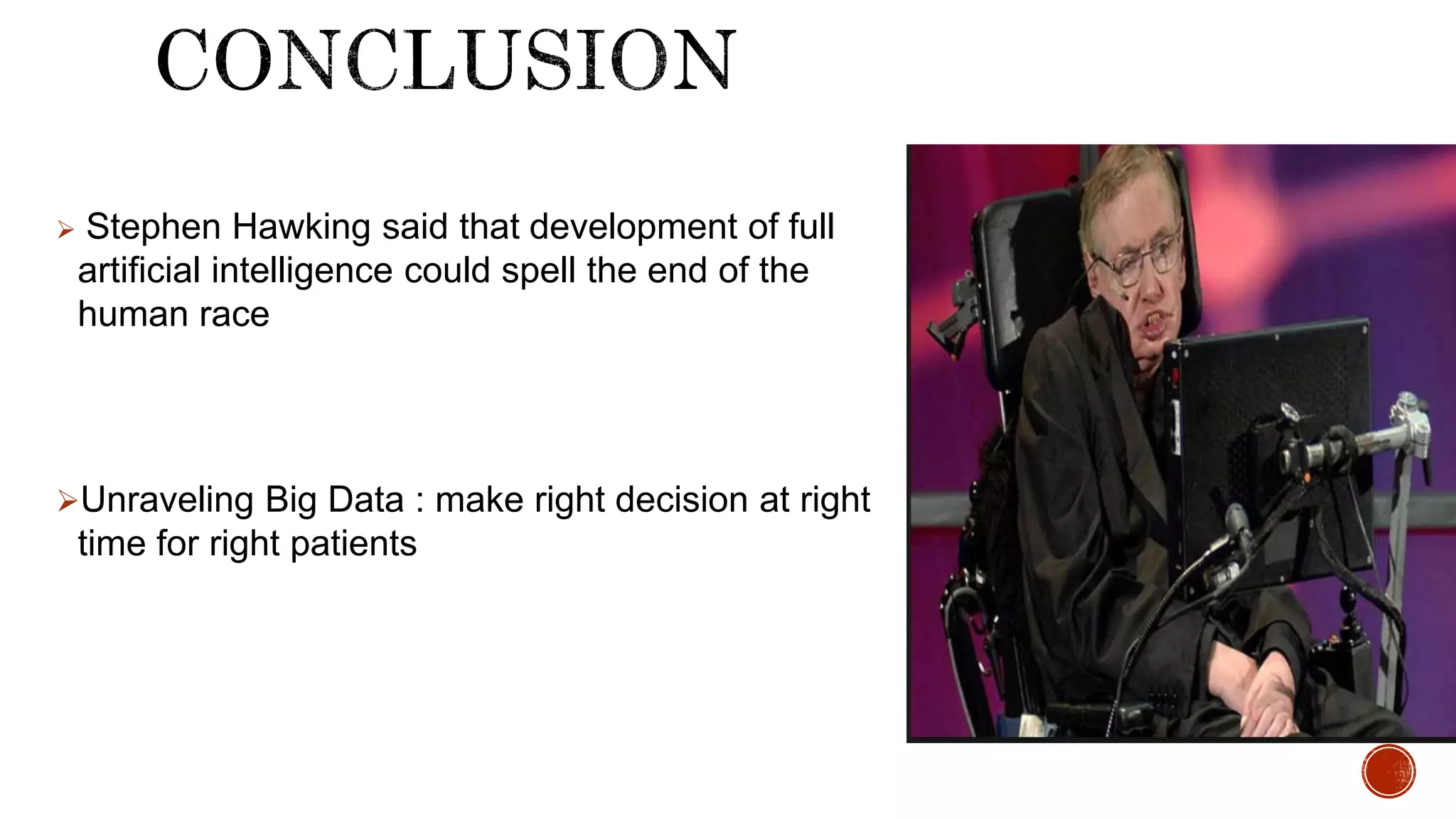
 Stephen Hawking said that development of full
artificial intelligence could spell the end of the
human race
Unraveling Big Data : make right decision at right
time for right patients
Big Data to Artificial Intelligence in Healthcare

Big Data to Artificial Intelligence in Healthcare

  • 2.
     Why westudy Big Data in healthcare system?  Big Data Sources and technique  Some Examples of Artificial Intelligence in Healthcare
  • 3.
     Electronic healthdata sets are large, continuously growing, complex, difficult to manage with traditional software  90% Unstructured Data  25 X as much data over coming decade(One Exabyte by 2020) -Kaiser
  • 8.
     Designing treatmentplans: IBM Watson launched program for oncologists Provides evidence-based treatment options  Assisting repetitive jobs:  Medical Sieve : Next generation “cognitive assistant” with analytical, reasoning capabilities and wide range of clinical knowledge. Assist clinical decision making in radiology and cardiology.
  • 9.
     Health assistanceand medication management: AiCure App supported by The National Institutes of Health is a HIPAA-compliant software  Use smartphone’s webcam and AI to autonomously confirm that patients are adhering to their prescriptions Precision medicine: Deep Genomics aims at identifying patterns in huge data sets of genetic information and medical record Tell doctors what will happen within a cell when DNA is altered by genetic variation
  • 10.
     Stephen Hawkingsaid that development of full artificial intelligence could spell the end of the human race Unraveling Big Data : make right decision at right time for right patients

Editor's Notes

  • #2 Highlights and summarize the basic concepts of the work presented by Dr. James Tcheng and Dr. Jason Burke in previous seminar series.
  • #3  Big Data in healthcare is being used to predict epidemics, cure disease, improve quality of life and avoid preventable deaths.
  • #4 Boundless data in healthcare about patient condition, procedures and drugs across multiple providers, that are stored by organizations at different locations under different formats. Subjective Decision to Evidence Based Medicine More incentives to professionals to use EHR To answer the questions preciously unanswered
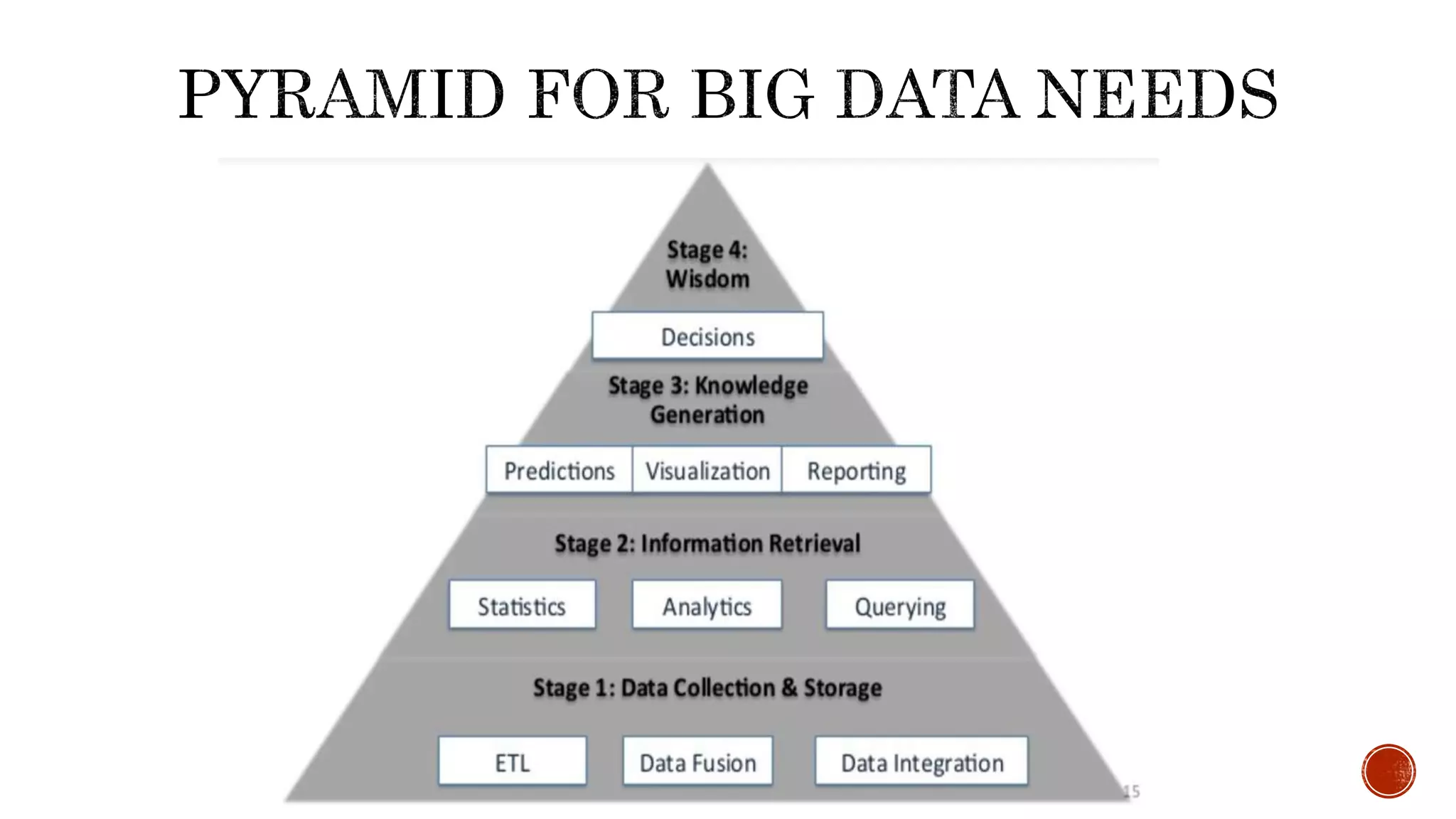
  • #6 Why we need to study big data? The answer is to achieve stage 4
  • #7 Feature Selection is a process that chooses an optimal subset of features according to a certain criterion
  • #8 The theory and development of computer systems able to perform tasks that normally require human intelligence, such as visual perception, speech recognition, decision-making, and translation between languages.
  • #9 Analyze meaning and context of structured and unstructured data in clinical notes Combines the attributes from the patient’s file with clinical expertise, external research data It is able to analyze radiology images to spot and detect problems faster and more reliably.
  • #10  captures evidence of medication ingestion. Real-time data are centralized for immediate intervention and longitudinal tracking of adherence patterns. Look for mutations and linkages to disease.
  • #11 Healthcare is a data-rich domain. As more data is collected, there is increasing demand for big data analytics and AI Efficient utilization of healthcare can yield immediate returns in terms of patient outcomes and lowering cost.