HEALTH INFORMATICS SEMINAR SUMMARY
Fei Yu
November 30, 2016
THREE THEMES
• Data collection and analytics
• Patient-technology interaction
• Clinical and translational science
DATA COLLECTION & ANALYTICS 1
• Topic: Sensor-based data collection
• Presenter: Dr. Robert Furberg
• Affiliation: RTI International – Digital Health & Clinical Informatics
• Time: Sept. 7th, 2016
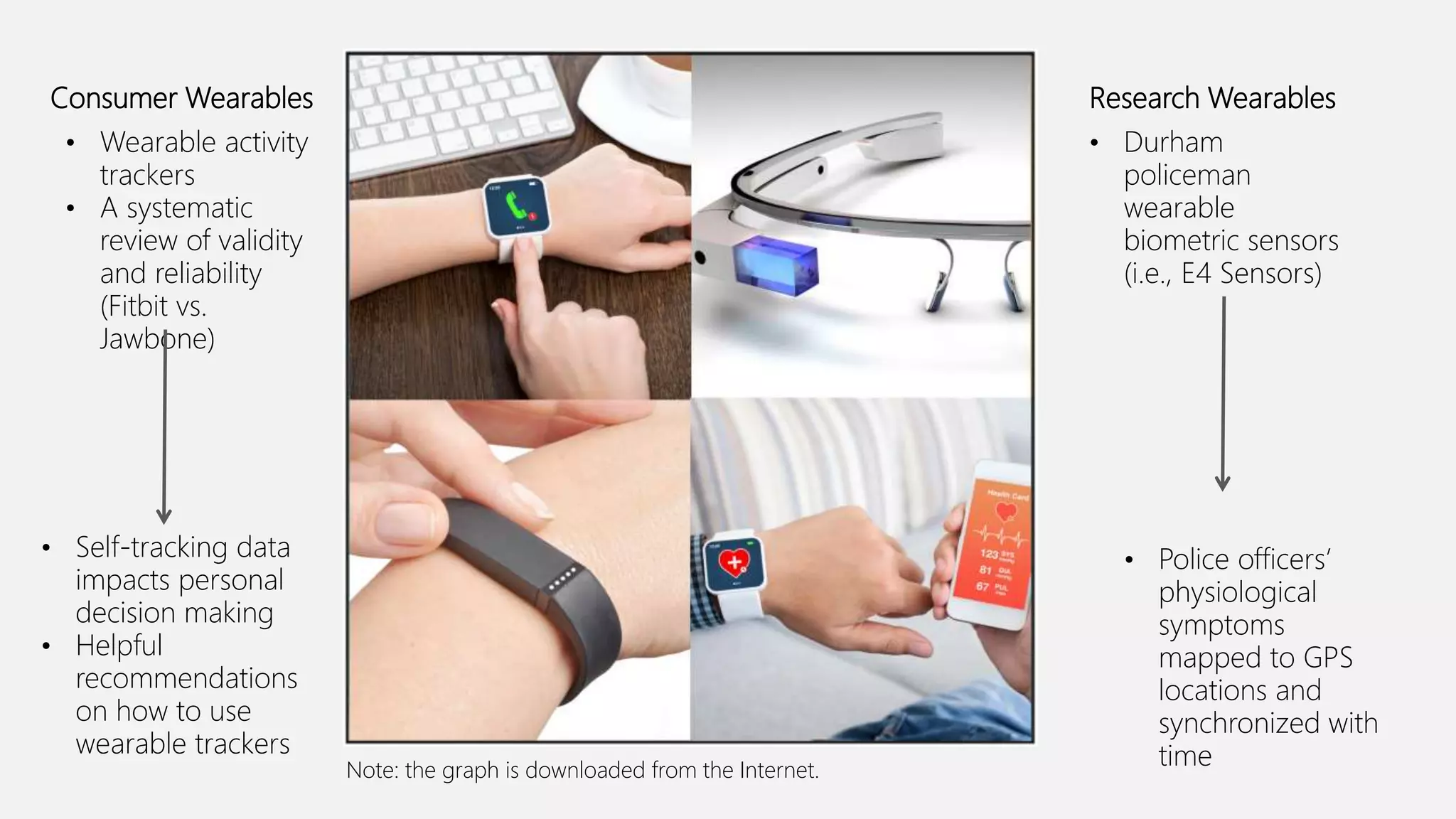
Consumer Wearables Research Wearables
• Wearable activity
trackers
• A systematic
review of validity
and reliability
(Fitbit vs.
Jawbone)
• Durham
policeman
wearable
biometric sensors
(i.e., E4 Sensors)
• Self-tracking data
impacts personal
decision making
• Helpful
recommendations
on how to use
wearable trackers
• Police officers’
physiological
symptoms
mapped to GPS
locations and
synchronized with
timeNote: the graph is downloaded from the Internet.
DATA COLLECTION & ANALYTICS 2
• Topic: Making medicine smarter through analytics and data sciences
• Presenter: Jason Burke
• Affiliation: UNC Health Care System
• Time: Sept. 28th, 2016
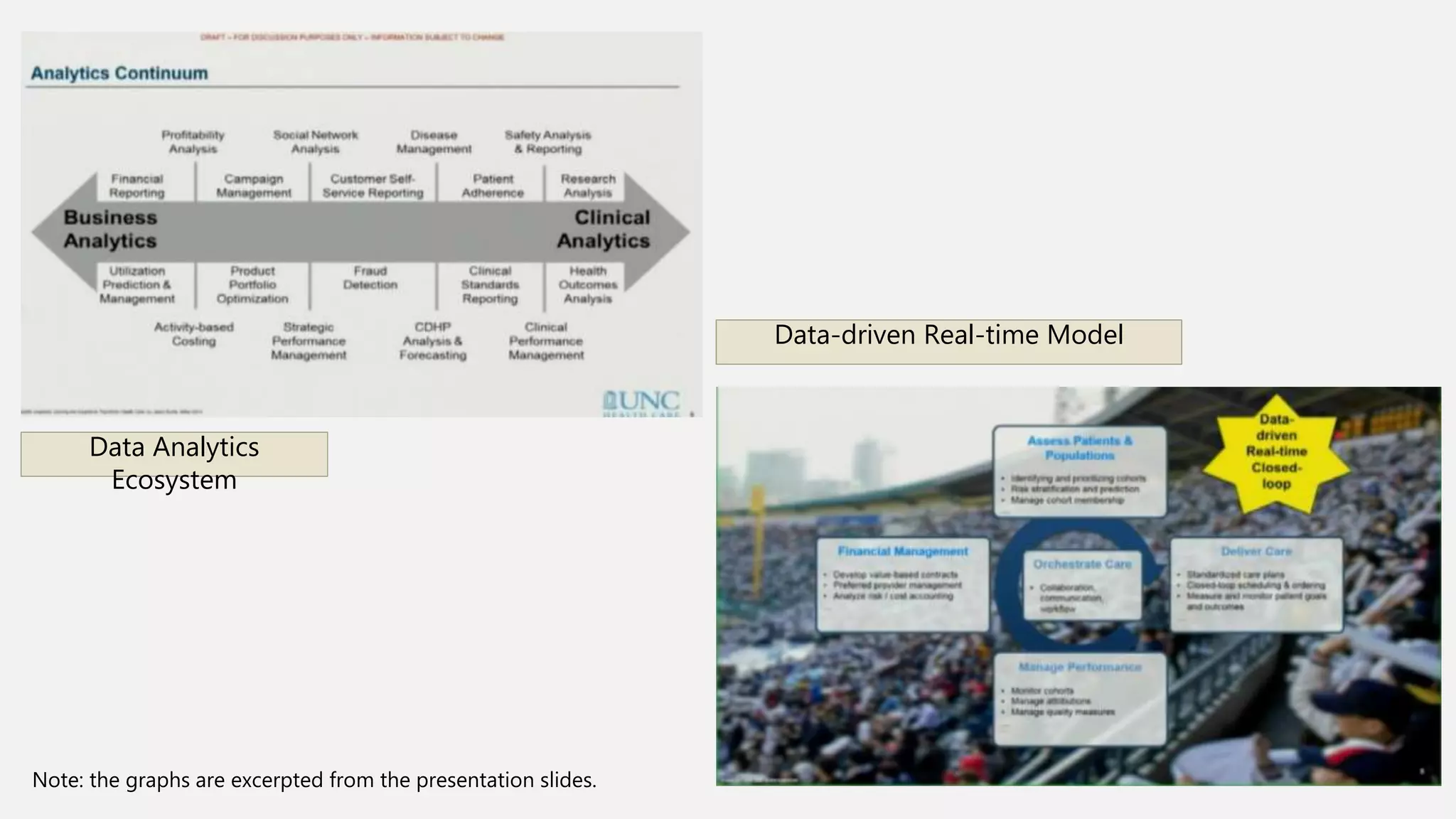
Data Analytics
Ecosystem
Data-driven Real-time Model
Note: the graphs are excerpted from the presentation slides.
DATA COLLECTION & ANALYTICS 3
• Topic: Fixing the “Garbage in” dilemma through transformation of clinical workflows
• Presenter: James E. Tcheng
• Affiliation: Duke University Hospital
• Time: Oct. 5th, 2016
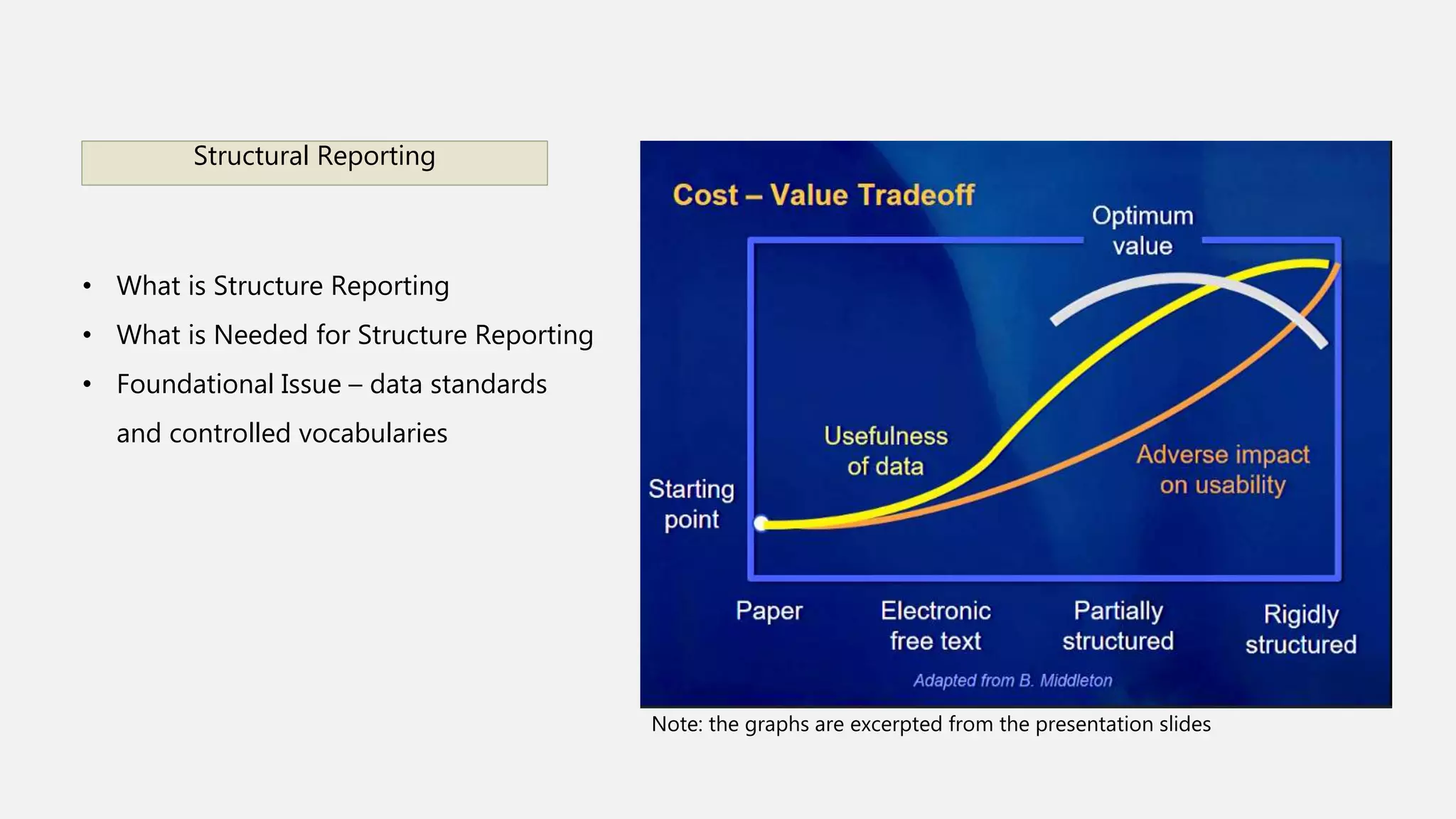
Structural Reporting
Note: the graphs are excerpted from the presentation slides
• What is Structure Reporting
• What is Needed for Structure Reporting
• Foundational Issue – data standards
and controlled vocabularies
PATIENT PORTAL USABILITY STUDY
• Topic: Looking beyond patient portals: Patient engagement via an online breast cancer
survivorship Tool
• Presenter: Akshat Kapoor
• Affiliation: East Carolina University
• Time: November 19th, 2016
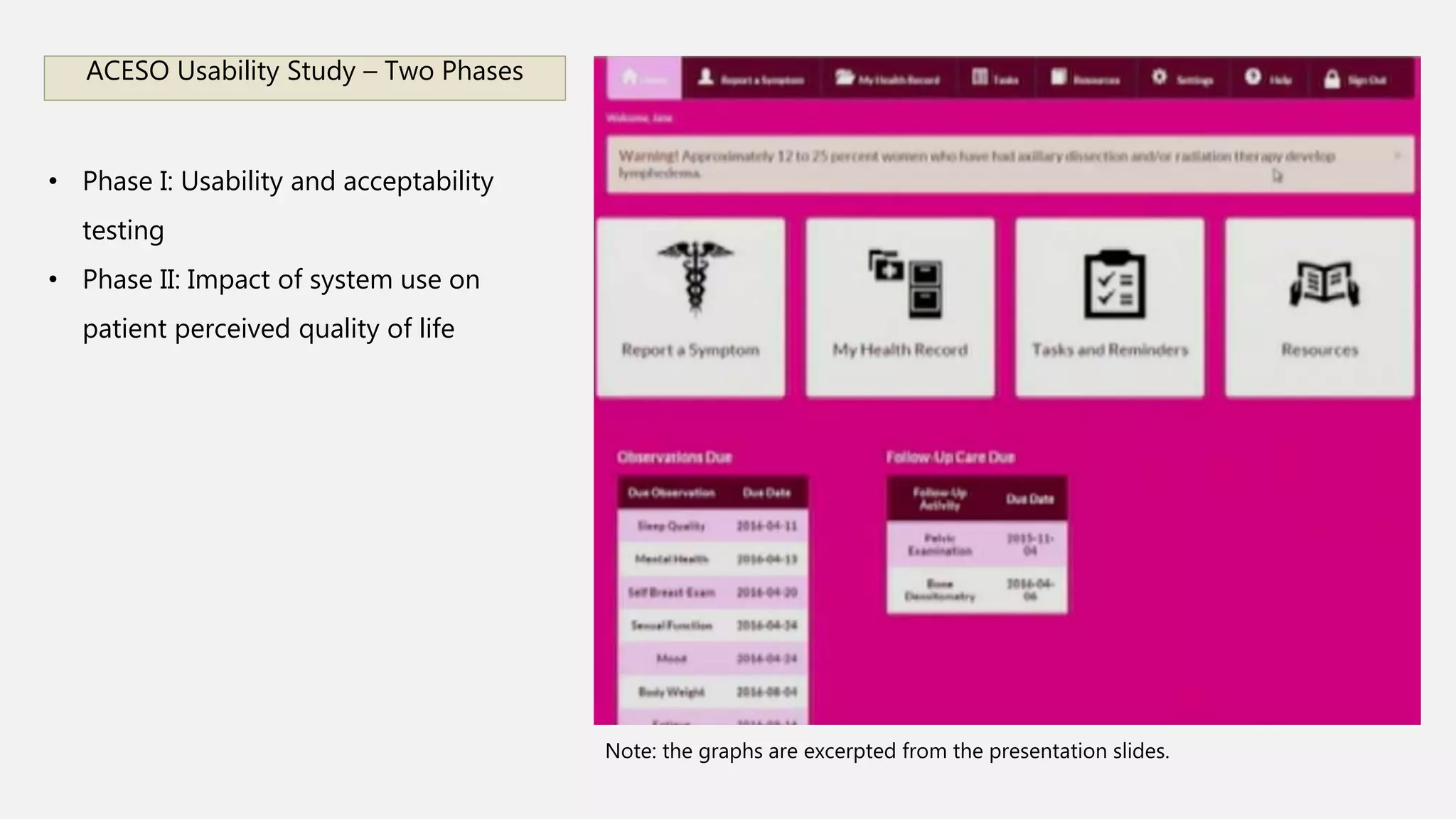
ACESO Usability Study – Two Phases
Note: the graphs are excerpted from the presentation slides.
• Phase I: Usability and acceptability
testing
• Phase II: Impact of system use on
patient perceived quality of life
TELEREHABILITATION STUDY
• Topic: Telerehabilitation in occupational therapy
• Presenter: Jennifer Radloff & Yong Kim
• Affiliation: East Carolina University
• Time: Sept. 14, 2016
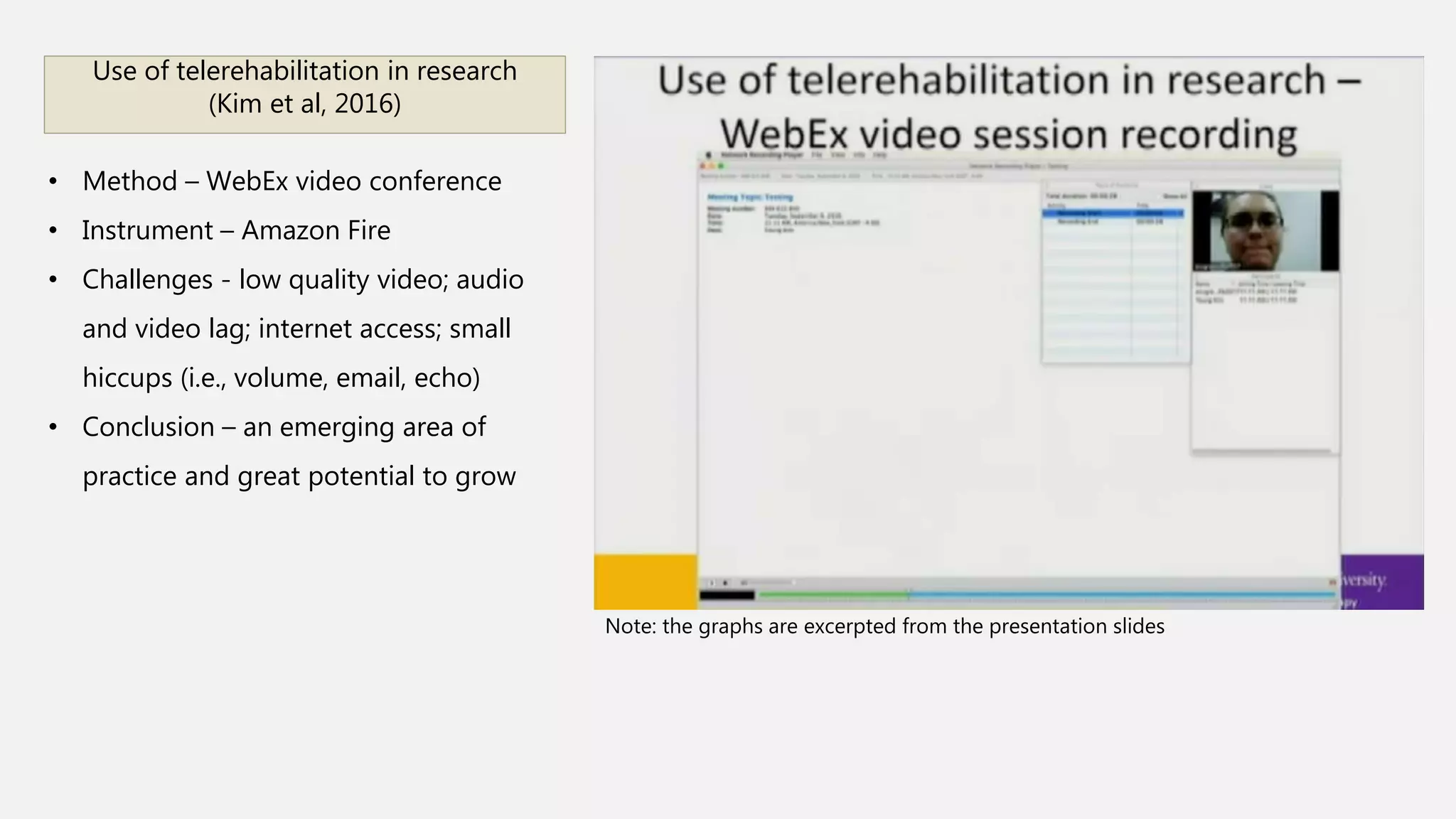
Use of telerehabilitation in research
(Kim et al, 2016)
• Method – WebEx video conference
• Instrument – Amazon Fire
• Challenges - low quality video; audio
and video lag; internet access; small
hiccups (i.e., volume, email, echo)
• Conclusion – an emerging area of
practice and great potential to grow
Note: the graphs are excerpted from the presentation slides
TRANSLATIONAL SCIENCE
• Topic: Development of an HIE for transitional housing residents in Charlotte, NC
• Presenter: Williams Saunders
• Affiliation: UNC Charlotte
• Time: November 9th, 2016
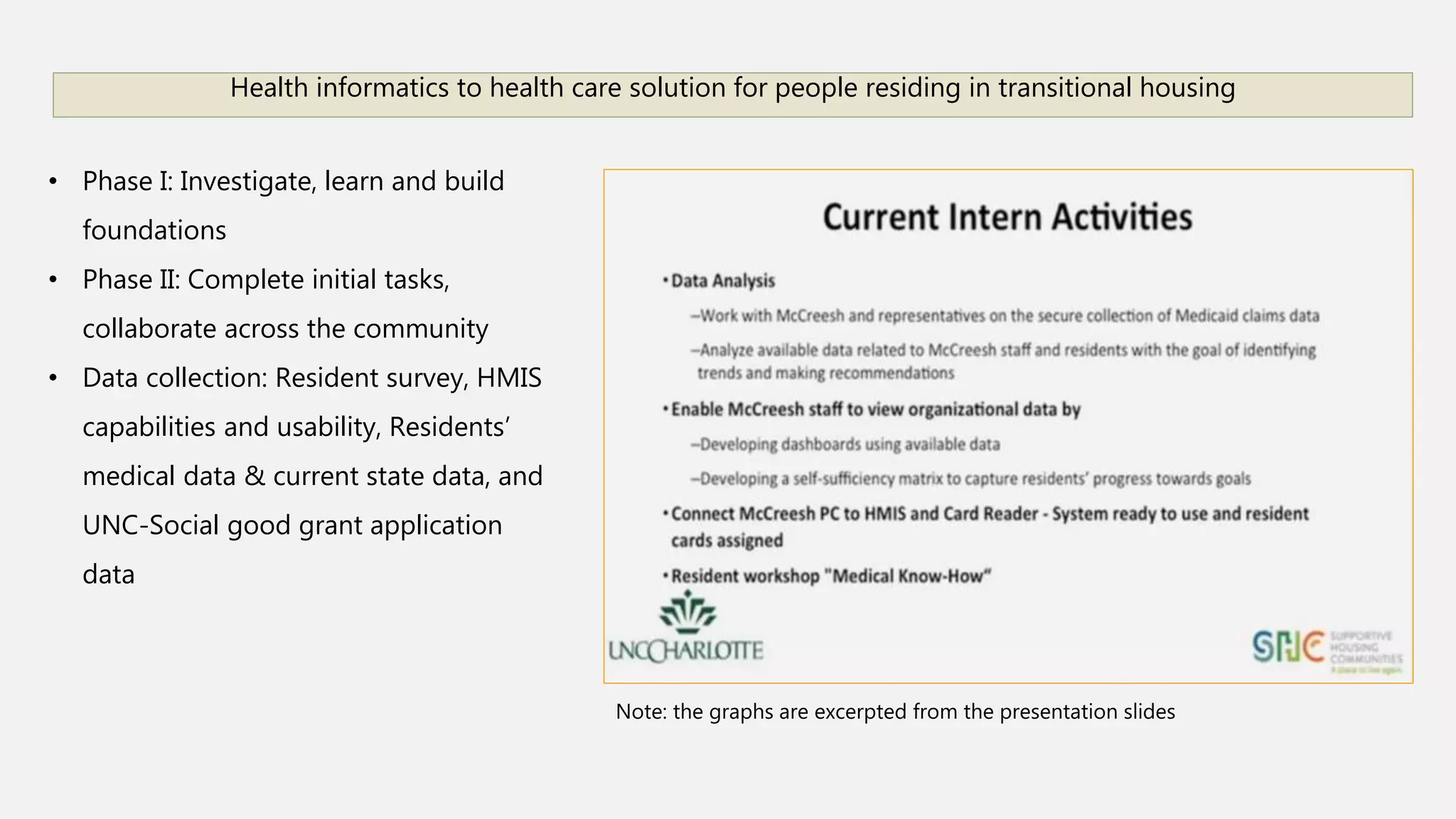
Health informatics to health care solution for people residing in transitional housing
Note: the graphs are excerpted from the presentation slides
• Phase I: Investigate, learn and build
foundations
• Phase II: Complete initial tasks,
collaborate across the community
• Data collection: Resident survey, HMIS
capabilities and usability, Residents’
medical data & current state data, and
UNC-Social good grant application
data
CONCLUSION
• Health informatics is a fast growing field.
• Health IT is the core of health informatics.
• The goal of health informatics is to improve the healthcare
quality and reduce the cost.

Health Informatics Seminar Summary

  • 1.
    HEALTH INFORMATICS SEMINARSUMMARY Fei Yu November 30, 2016
  • 2.
    THREE THEMES • Datacollection and analytics • Patient-technology interaction • Clinical and translational science
  • 3.
    DATA COLLECTION &ANALYTICS 1 • Topic: Sensor-based data collection • Presenter: Dr. Robert Furberg • Affiliation: RTI International – Digital Health & Clinical Informatics • Time: Sept. 7th, 2016
  • 4.
    Consumer Wearables ResearchWearables • Wearable activity trackers • A systematic review of validity and reliability (Fitbit vs. Jawbone) • Durham policeman wearable biometric sensors (i.e., E4 Sensors) • Self-tracking data impacts personal decision making • Helpful recommendations on how to use wearable trackers • Police officers’ physiological symptoms mapped to GPS locations and synchronized with timeNote: the graph is downloaded from the Internet.
  • 5.
    DATA COLLECTION &ANALYTICS 2 • Topic: Making medicine smarter through analytics and data sciences • Presenter: Jason Burke • Affiliation: UNC Health Care System • Time: Sept. 28th, 2016
  • 6.
    Data Analytics Ecosystem Data-driven Real-timeModel Note: the graphs are excerpted from the presentation slides.
  • 7.
    DATA COLLECTION &ANALYTICS 3 • Topic: Fixing the “Garbage in” dilemma through transformation of clinical workflows • Presenter: James E. Tcheng • Affiliation: Duke University Hospital • Time: Oct. 5th, 2016
  • 8.
    Structural Reporting Note: thegraphs are excerpted from the presentation slides • What is Structure Reporting • What is Needed for Structure Reporting • Foundational Issue – data standards and controlled vocabularies
  • 9.
    PATIENT PORTAL USABILITYSTUDY • Topic: Looking beyond patient portals: Patient engagement via an online breast cancer survivorship Tool • Presenter: Akshat Kapoor • Affiliation: East Carolina University • Time: November 19th, 2016
  • 10.
    ACESO Usability Study– Two Phases Note: the graphs are excerpted from the presentation slides. • Phase I: Usability and acceptability testing • Phase II: Impact of system use on patient perceived quality of life
  • 11.
    TELEREHABILITATION STUDY • Topic:Telerehabilitation in occupational therapy • Presenter: Jennifer Radloff & Yong Kim • Affiliation: East Carolina University • Time: Sept. 14, 2016
  • 12.
    Use of telerehabilitationin research (Kim et al, 2016) • Method – WebEx video conference • Instrument – Amazon Fire • Challenges - low quality video; audio and video lag; internet access; small hiccups (i.e., volume, email, echo) • Conclusion – an emerging area of practice and great potential to grow Note: the graphs are excerpted from the presentation slides
  • 13.
    TRANSLATIONAL SCIENCE • Topic:Development of an HIE for transitional housing residents in Charlotte, NC • Presenter: Williams Saunders • Affiliation: UNC Charlotte • Time: November 9th, 2016
  • 14.
    Health informatics tohealth care solution for people residing in transitional housing Note: the graphs are excerpted from the presentation slides • Phase I: Investigate, learn and build foundations • Phase II: Complete initial tasks, collaborate across the community • Data collection: Resident survey, HMIS capabilities and usability, Residents’ medical data & current state data, and UNC-Social good grant application data
  • 15.
    CONCLUSION • Health informaticsis a fast growing field. • Health IT is the core of health informatics. • The goal of health informatics is to improve the healthcare quality and reduce the cost.

Editor's Notes

  • #16 Bioinformatics – within one’s body; health informatics- everyhting outside of one’s body