Predicting the Future of Predictive Analytics in Healthcare
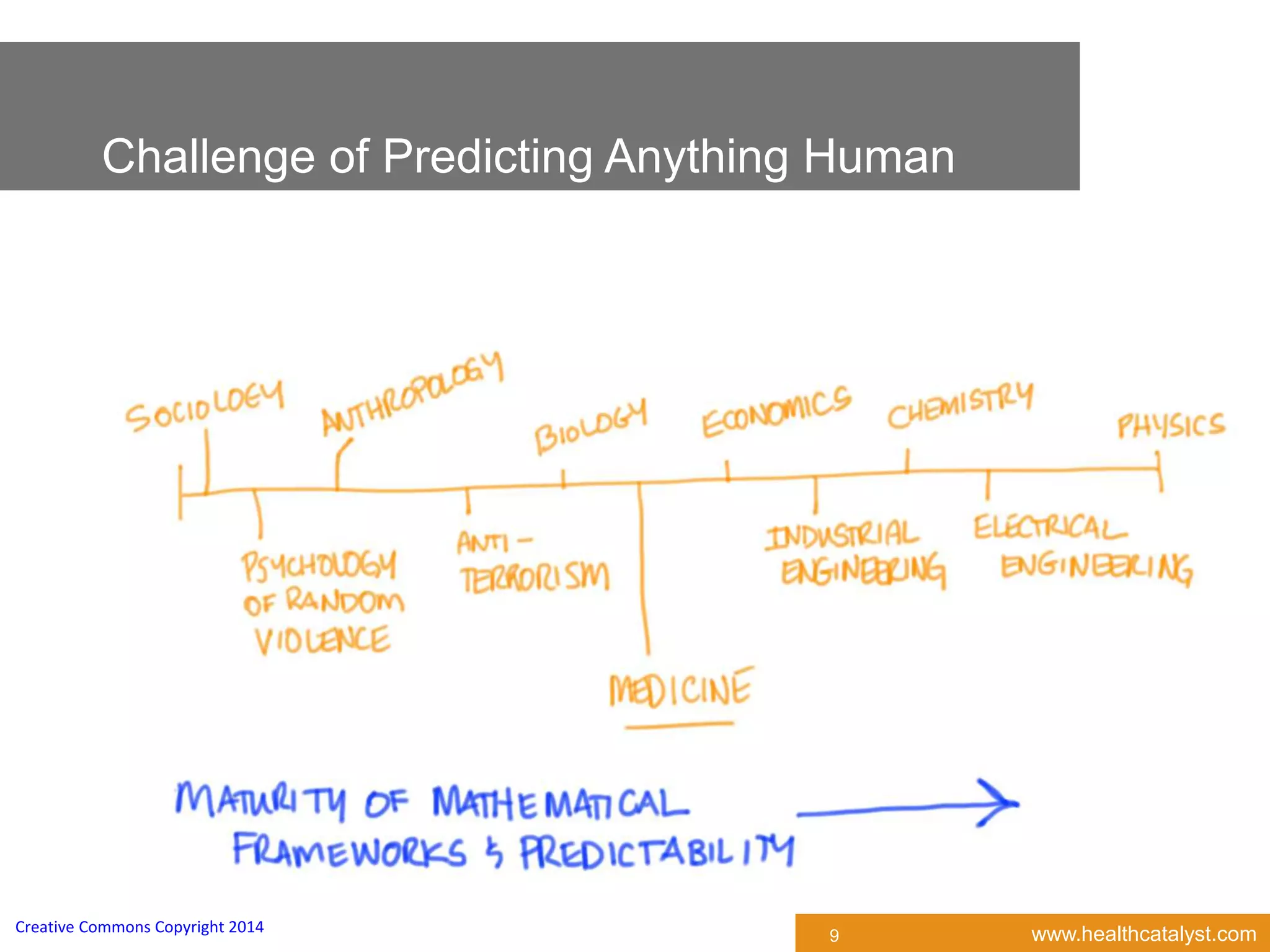
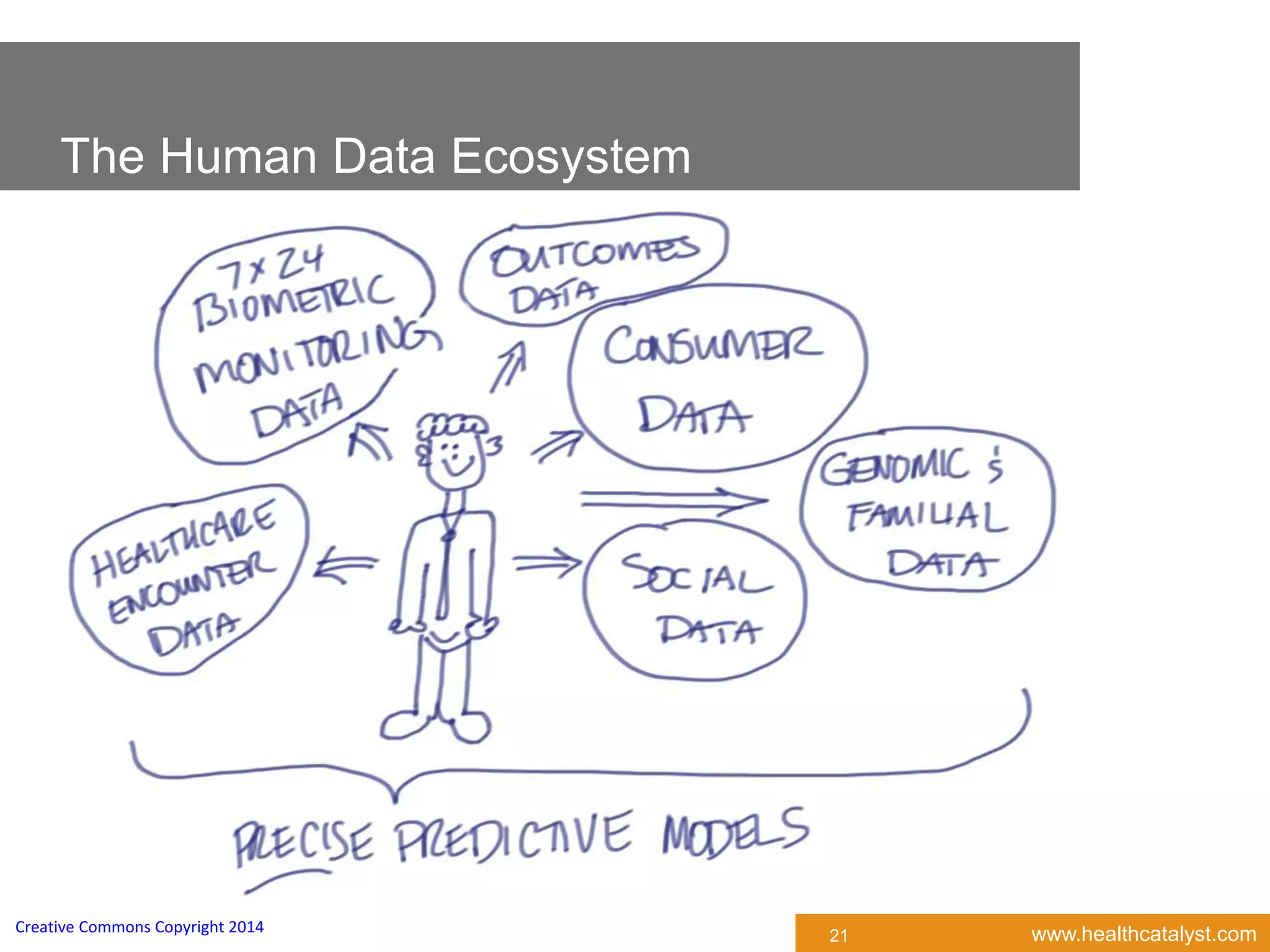
The document discusses predictive analytics in healthcare, aiming to inform attendees about realistic possibilities and essential questions regarding its development and application. It highlights the challenges of predicting human behavior and emphasizes the need for effective data utilization and model training in healthcare settings. Key areas of focus include patient engagement, socio-economic factors, and the limitations of current predictive models.
www.healthcatalyst.comCreative Commons Copyright2014
Presenter and Contact Information
2
Dale Sanders
Senior Vice President, Strategy, Health Catalyst
801-708-6800
dale.sanders@healthcatalyst.com
@drsanders
www.linkedin.com/in/dalersanders/
3.
www.healthcatalyst.comCreative Commons Copyright2014
Acknowledgements
David Crockett, PhD, Health Catalyst
Eric Siegel, PhD, Columbia University
Ron Gault, Aerospace Corporation, Northrup-Grumman, TRW
Wikipedia
3
4.
www.healthcatalyst.comCreative Commons Copyright2014
The Goal Today
I hope you leave this webinar with…
Informed Expectations and Opinions: Be generally aware of the
realistic possibilities for predictive analytics in healthcare, over the next
few years
The Right Questions: To be conversant in the concepts of predictive
analytics and be able to ask reasonably well-informed questions of
your analytics teams, especially vendors, during the strategic process
of developing your organization’s predictive analytics strategy
4
5.
www.healthcatalyst.comCreative Commons Copyright2014
5
Agenda
5
Basic Concepts, Fundamental Assertions
Predictive Analytics Outside Healthcare
Predictive Analytics Inside Healthcare
Key Questions To Ask Vendors And Your Analytics Teams
www.healthcatalyst.comCreative Commons Copyright2014
What Should We Expect In Healthcare?
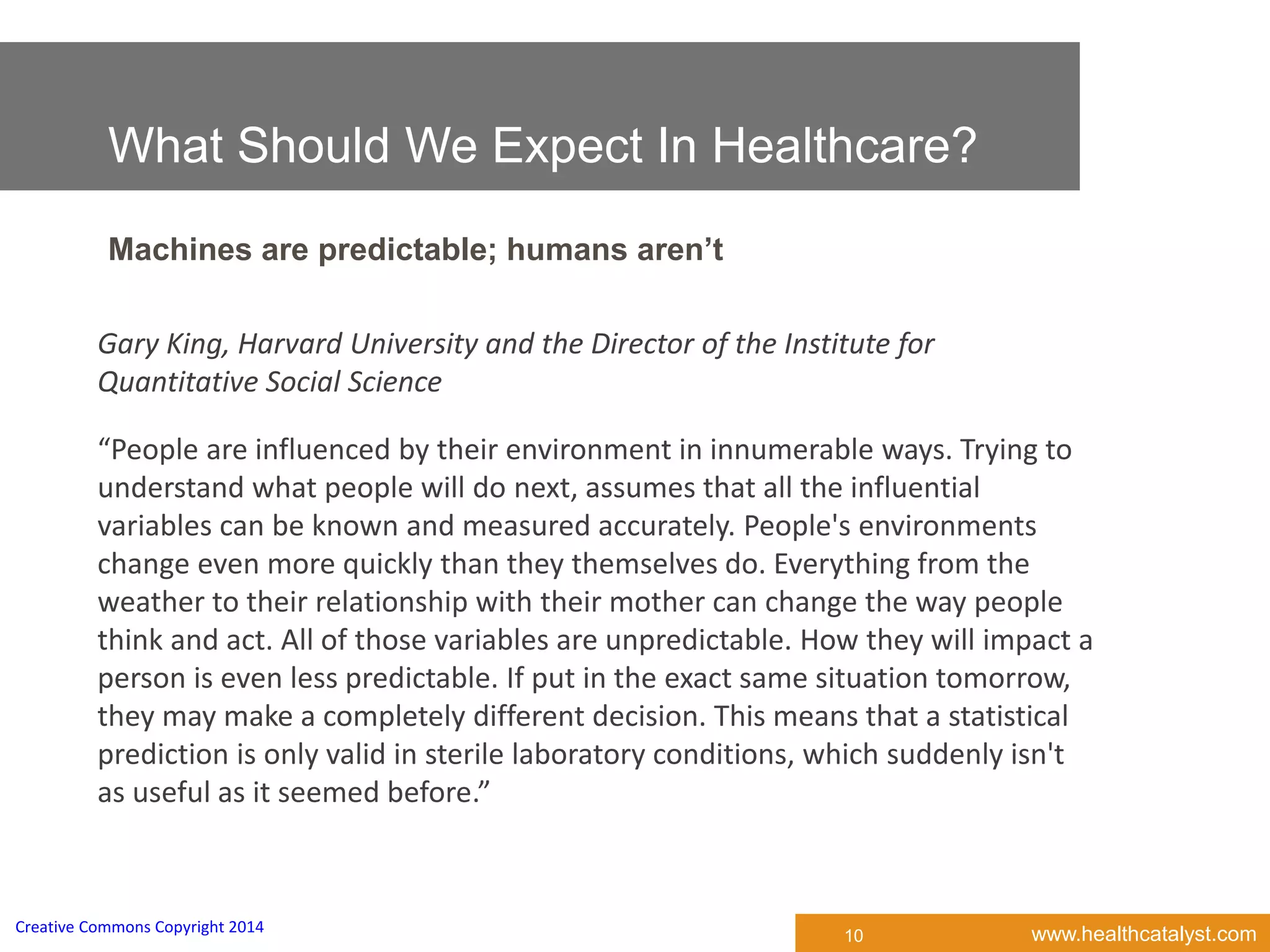
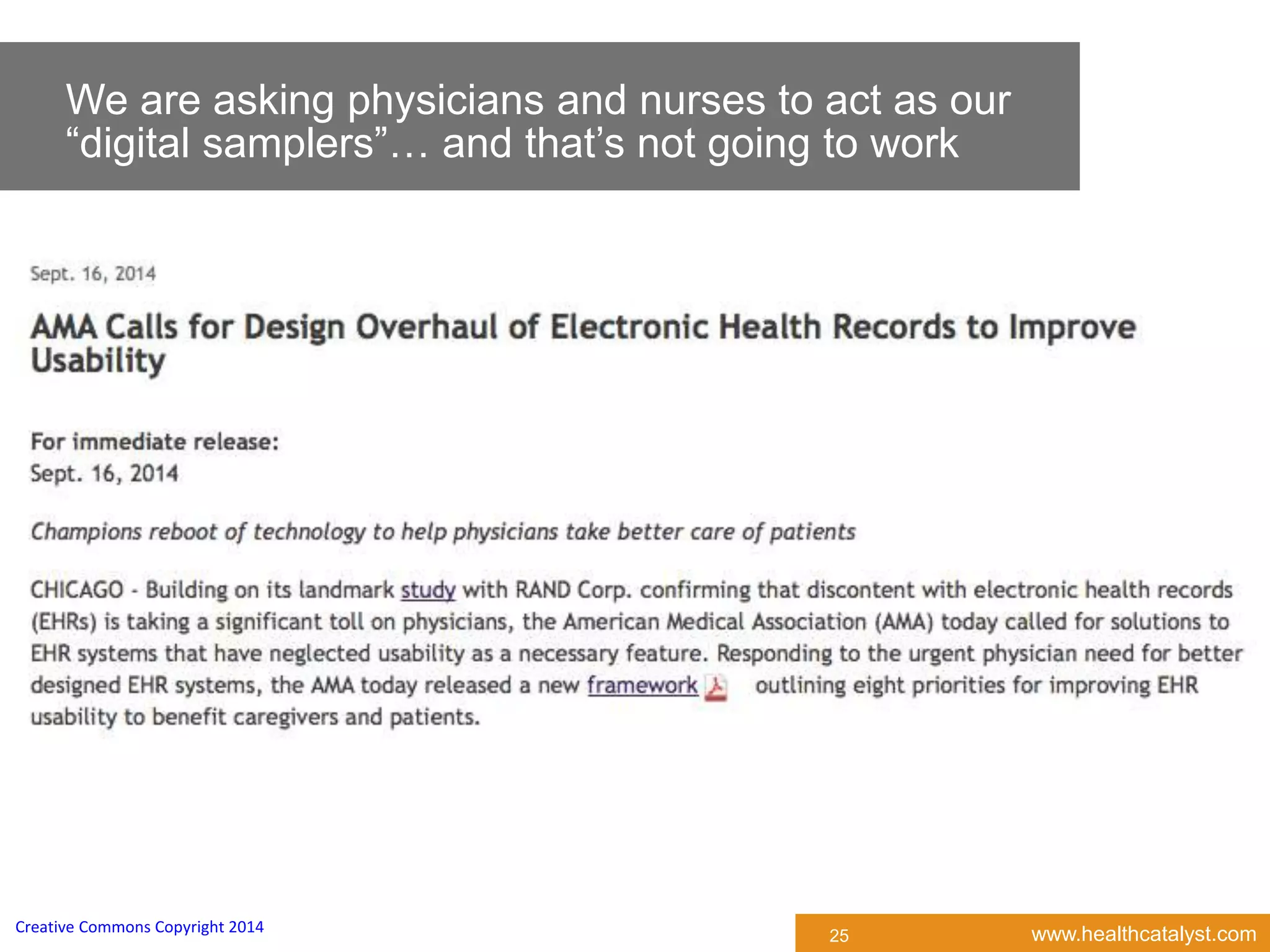
Machines are predictable; humans aren’t
10
“People are influenced by their environment in innumerable ways. Trying to
understand what people will do next, assumes that all the influential
variables can be known and measured accurately. People's environments
change even more quickly than they themselves do. Everything from the
weather to their relationship with their mother can change the way people
think and act. All of those variables are unpredictable. How they will impact a
person is even less predictable. If put in the exact same situation tomorrow,
they may make a completely different decision. This means that a statistical
prediction is only valid in sterile laboratory conditions, which suddenly isn't
as useful as it seemed before.”
Gary King, Harvard University and the Director of the Institute for
Quantitative Social Science
www.healthcatalyst.comCreative Commons Copyright2014
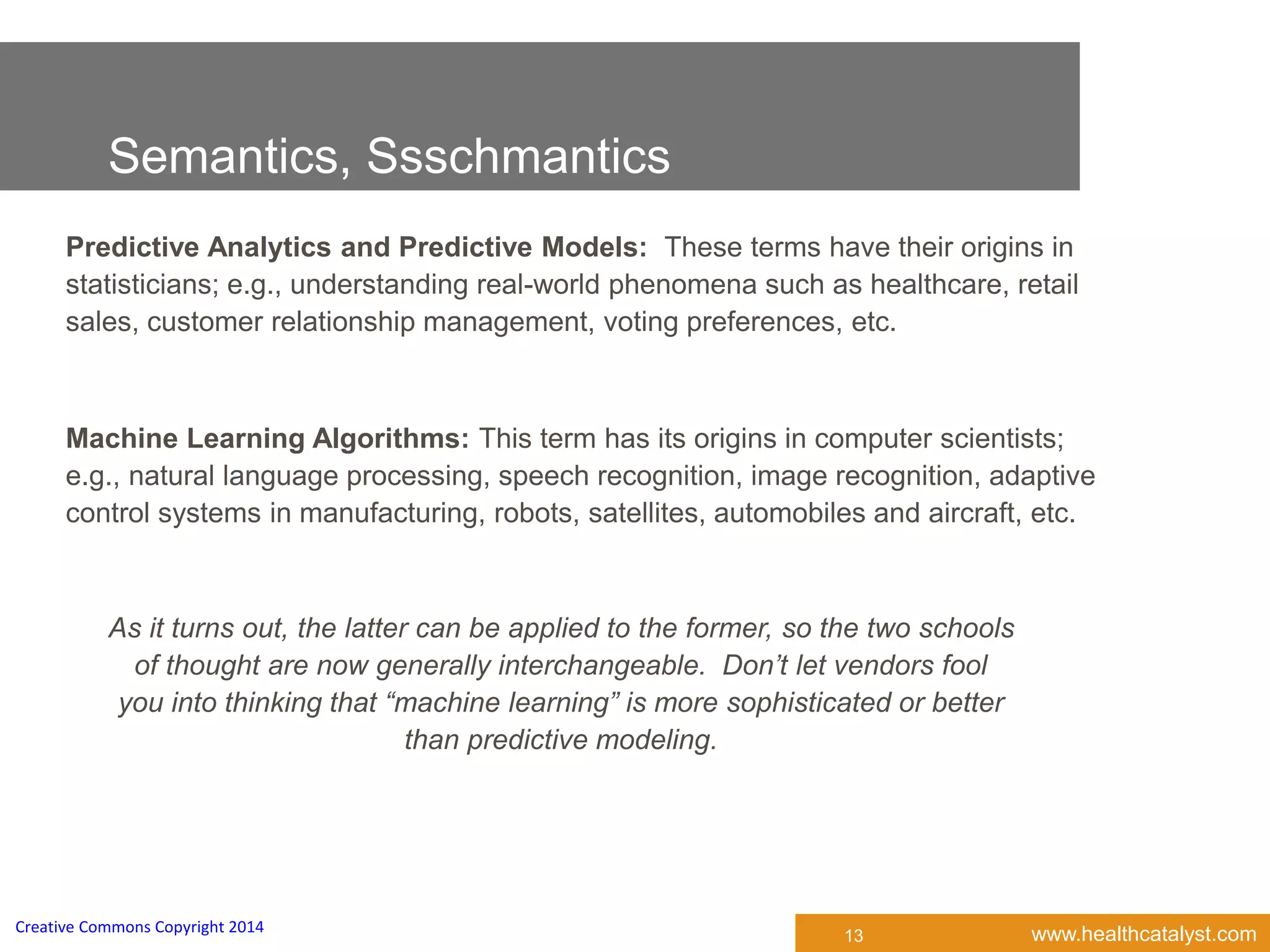
Semantics, Ssschmantics
Predictive Analytics and Predictive Models: These terms have their origins in
statisticians; e.g., understanding real-world phenomena such as healthcare, retail
sales, customer relationship management, voting preferences, etc.
Machine Learning Algorithms: This term has its origins in computer scientists;
e.g., natural language processing, speech recognition, image recognition, adaptive
control systems in manufacturing, robots, satellites, automobiles and aircraft, etc.
13
As it turns out, the latter can be applied to the former, so the two schools
of thought are now generally interchangeable. Don’t let vendors fool
you into thinking that “machine learning” is more sophisticated or better
than predictive modeling.
www.healthcatalyst.comCreative Commons Copyright2014
17
A Big & Common Mistake: Over Fitting
17
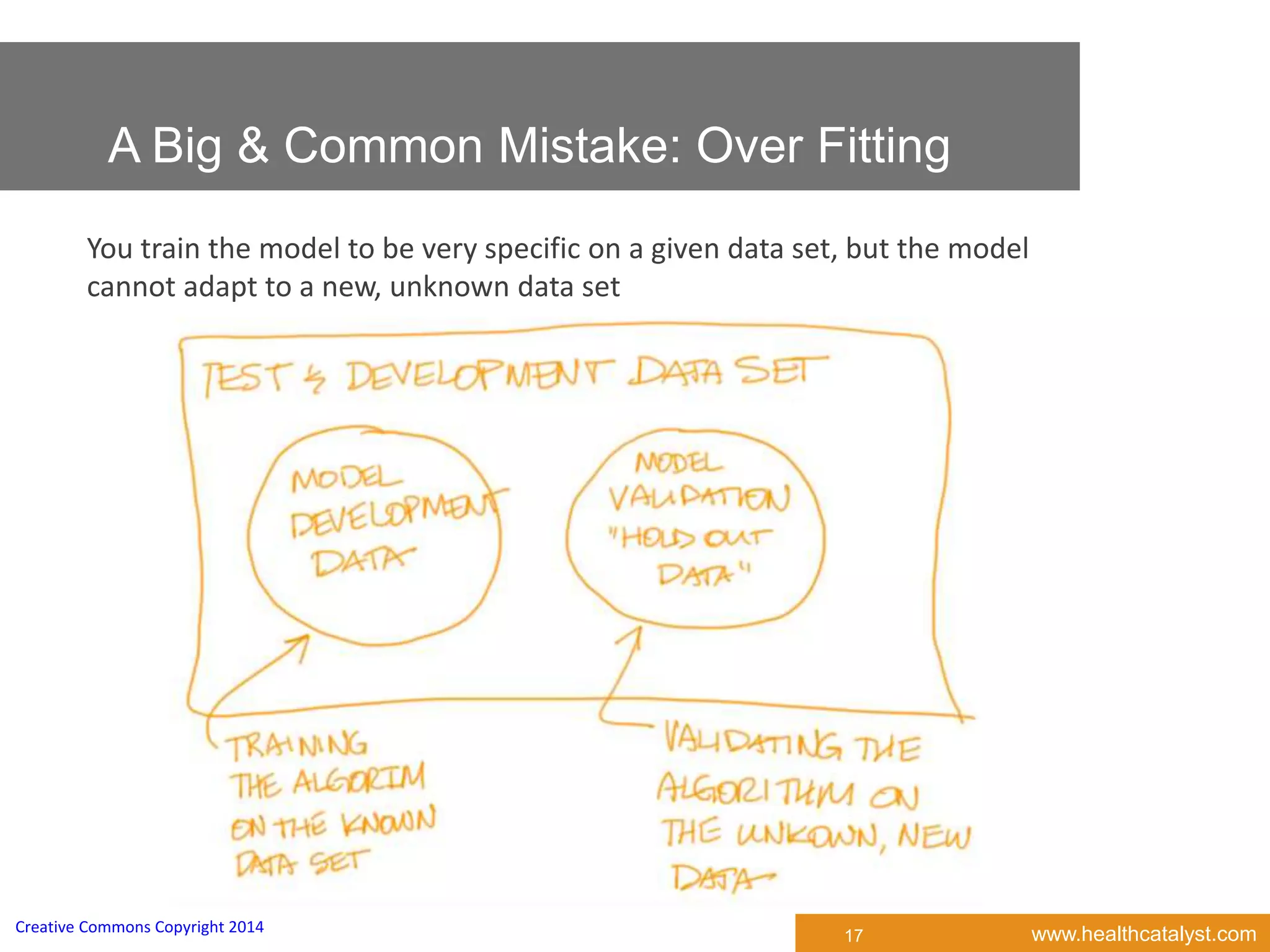
You train the model to be very specific on a given data set, but the model
cannot adapt to a new, unknown data set
18.
www.healthcatalyst.comCreative Commons Copyright2014
Specificity vs. Sensitivity:
Trading One For Another
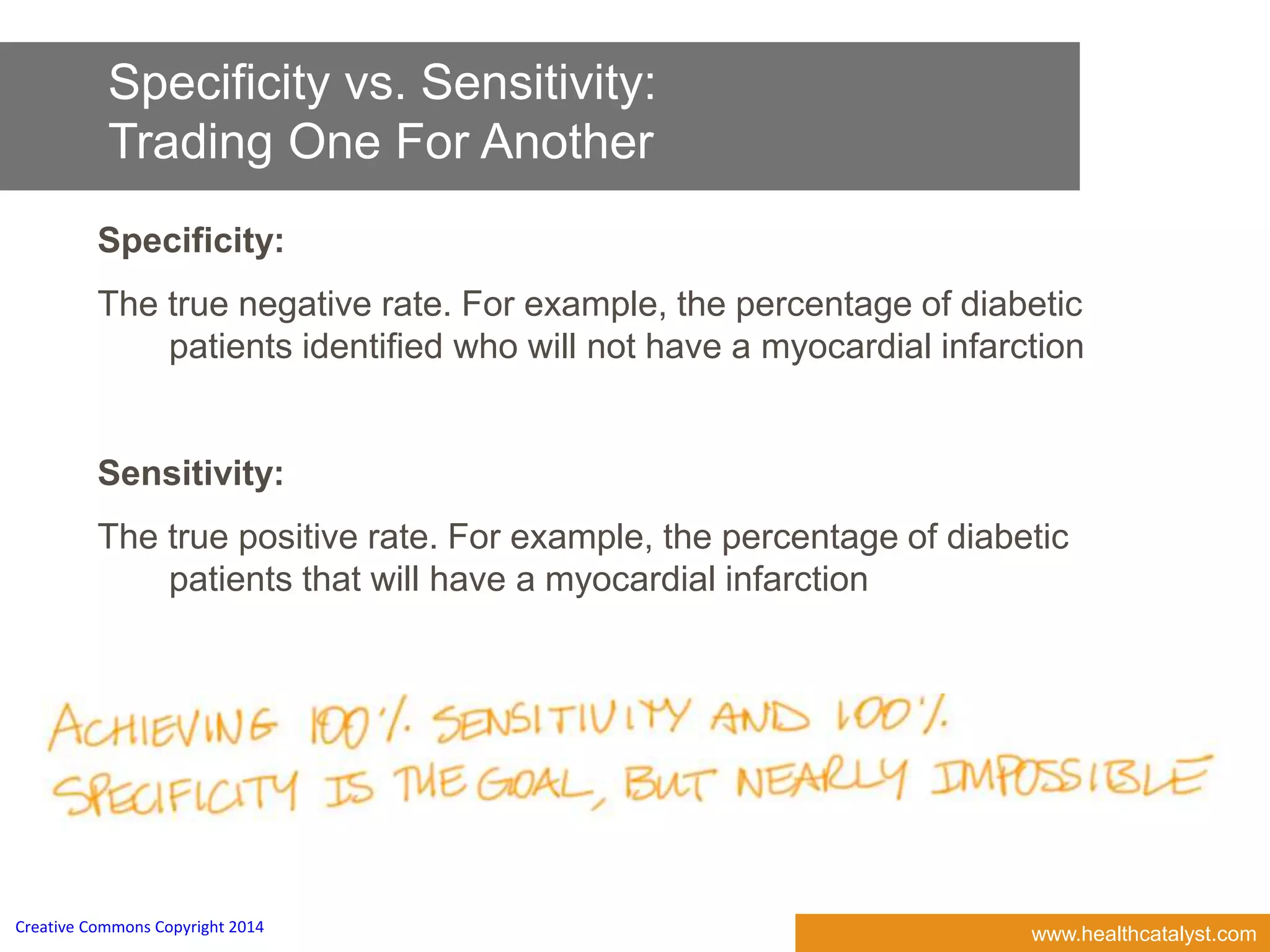
Specificity:
The true negative rate. For example, the percentage of diabetic
patients identified who will not have a myocardial infarction
Sensitivity:
The true positive rate. For example, the percentage of diabetic
patients that will have a myocardial infarction
19.
www.healthcatalyst.comCreative Commons Copyright2014
Receiver Operating
Characteristic (ROC) Plot
19
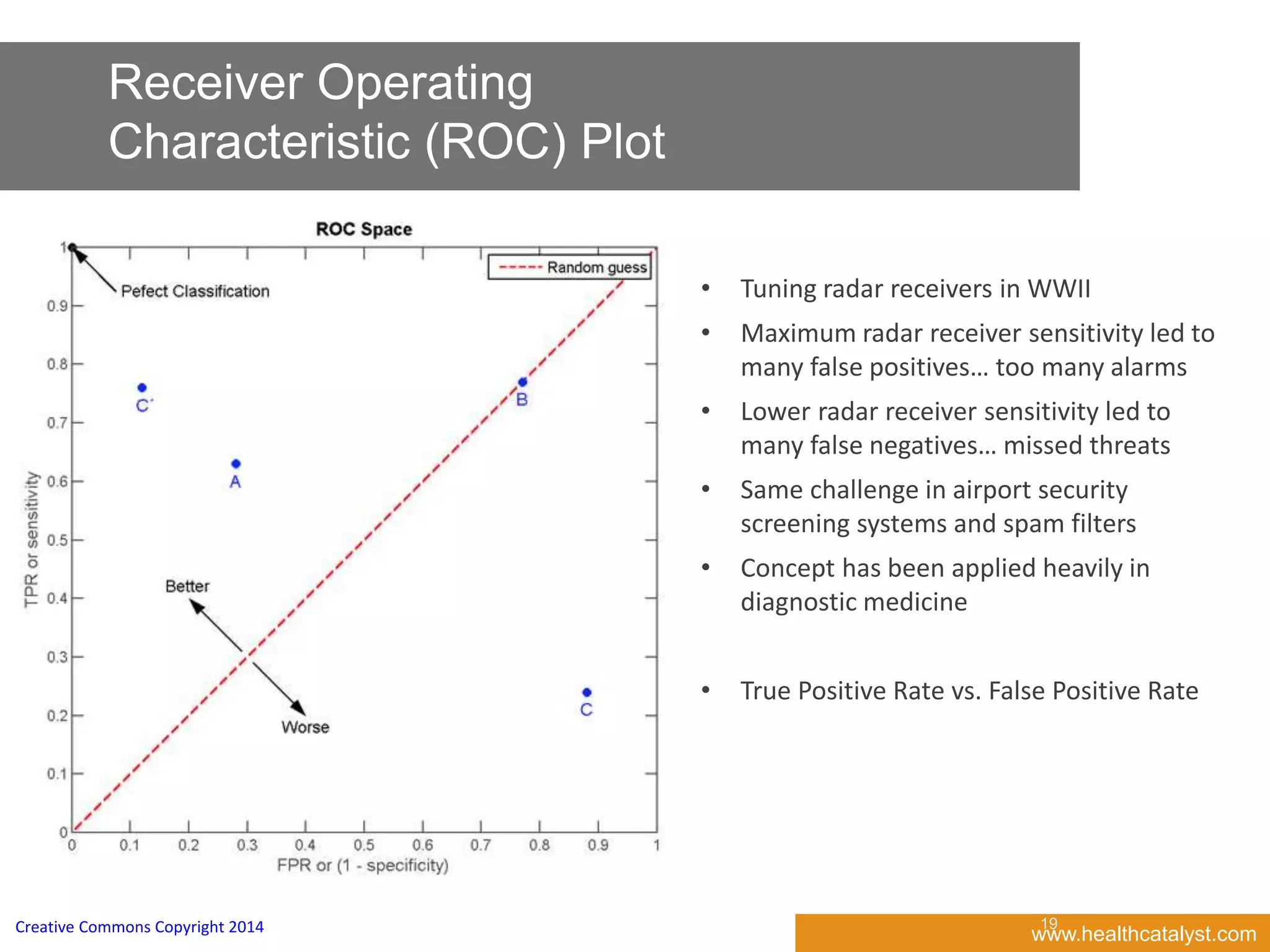
• Tuning radar receivers in WWII
• Maximum radar receiver sensitivity led to
many false positives… too many alarms
• Lower radar receiver sensitivity led to
many false negatives… missed threats
• Same challenge in airport security
screening systems and spam filters
• Concept has been applied heavily in
diagnostic medicine
• True Positive Rate vs. False Positive Rate
20.
www.healthcatalyst.comCreative Commons Copyright2014
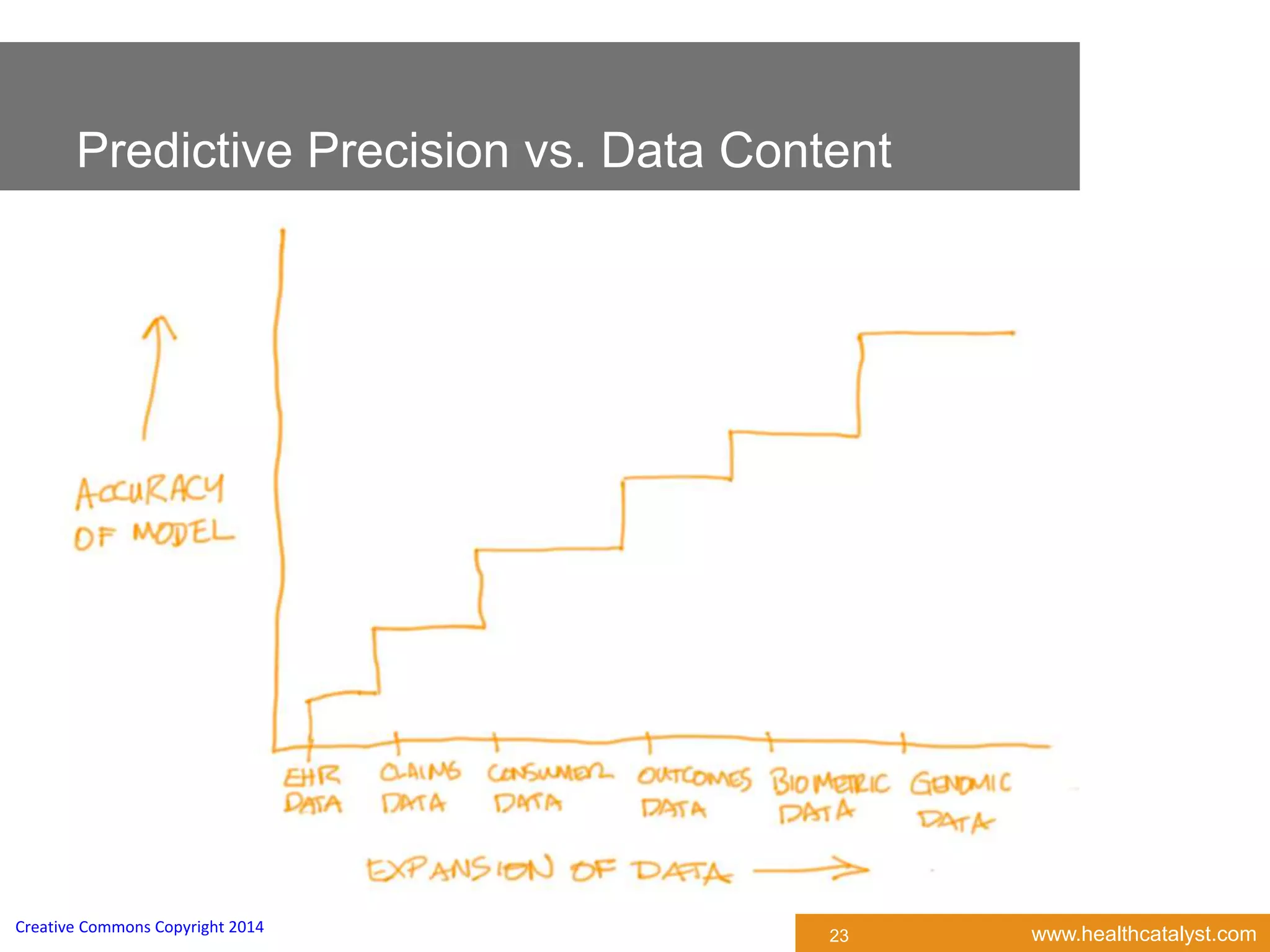
Data Volume vs. Predictive Model
“But invariably, simple models and a lot of data trump more
elaborate models based on less data.”
“The Unreasonable Effectiveness of Data”, March 2009, IEEE Computer Society;
Alon Halevy, Peter Norvig, and Fernando Pereira, Google
www.healthcatalyst.comCreative Commons Copyright2014Thank you for the graphs, PreSonus
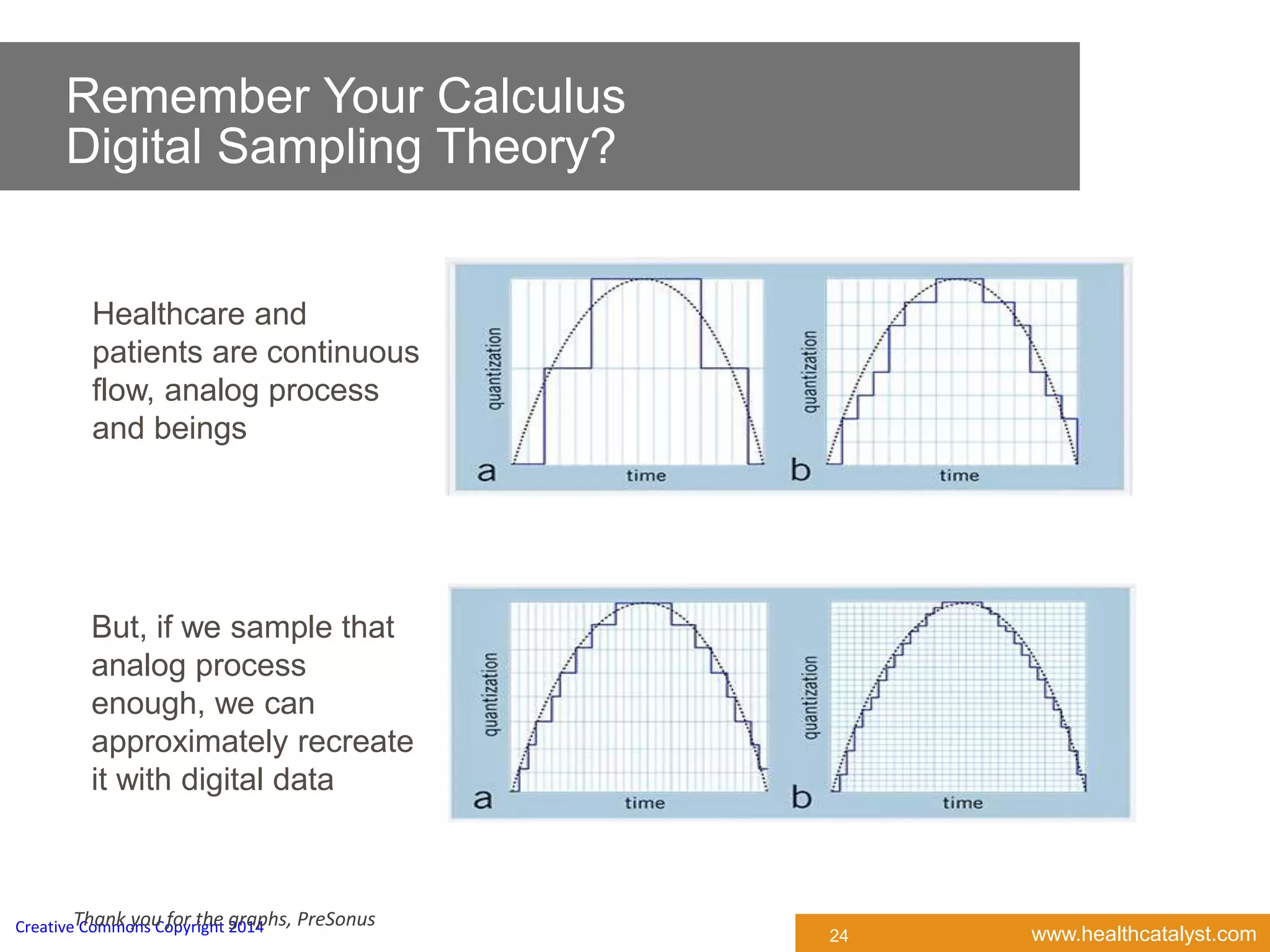
Healthcare and
patients are continuous
flow, analog process
and beings
But, if we sample that
analog process
enough, we can
approximately recreate
it with digital data
24
Remember Your Calculus
Digital Sampling Theory?
www.healthcatalyst.comCreative Commons Copyright2014
“Mr. Sanders, while your 9-year tenure as an inmate has been stellar,
our analytics models predict that you are 87% likely to become a repeat
offender if you are granted parole. Therefore, your parole is denied.”
- 2014, 80% of parole boards now use predictive analytics for case
management*
* The Economist, “Big data can help states decide whom to release from prison” April 19, 2014
27
28.
www.healthcatalyst.comCreative Commons Copyright2014
Thank you Sonja Star, New York Times
“Evidence Based” Sentencing
20 states use predictive analytics risk assessments
to inform criminal sentencing.
28
“Evidence Based” Sentencing
29.
www.healthcatalyst.comCreative Commons Copyright2014
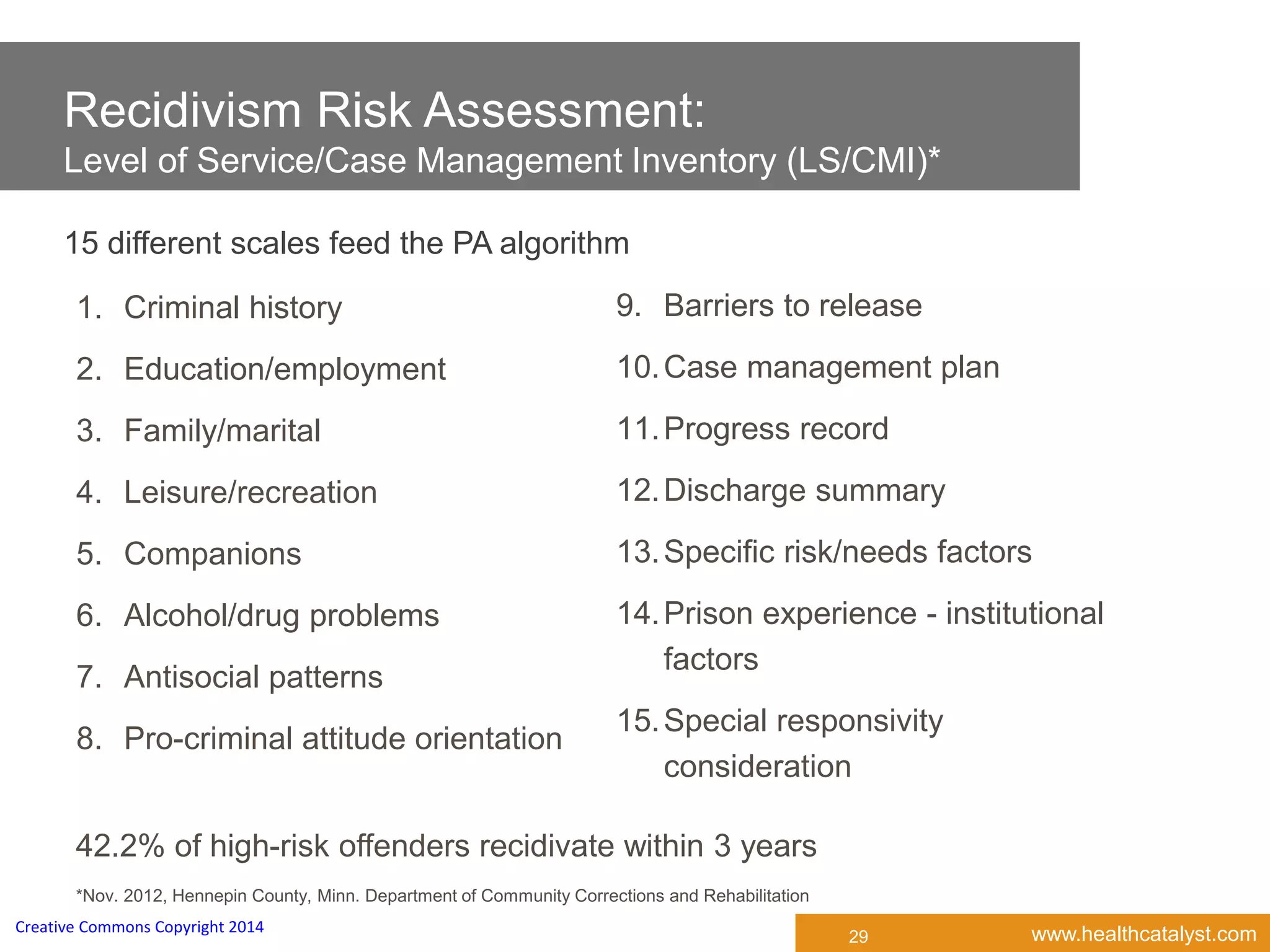
Recidivism Risk Assessment:
Level of Service/Case Management Inventory (LS/CMI)*
29
15 different scales feed the PA algorithm
1. Criminal history
2. Education/employment
3. Family/marital
4. Leisure/recreation
5. Companions
6. Alcohol/drug problems
7. Antisocial patterns
8. Pro-criminal attitude orientation
9. Barriers to release
10.Case management plan
11.Progress record
12.Discharge summary
13.Specific risk/needs factors
14.Prison experience - institutional
factors
15.Special responsivity
consideration
42.2% of high-risk offenders recidivate within 3 years
*Nov. 2012, Hennepin County, Minn. Department of Community Corrections and Rehabilitation
30.
www.healthcatalyst.comCreative Commons Copyright2014
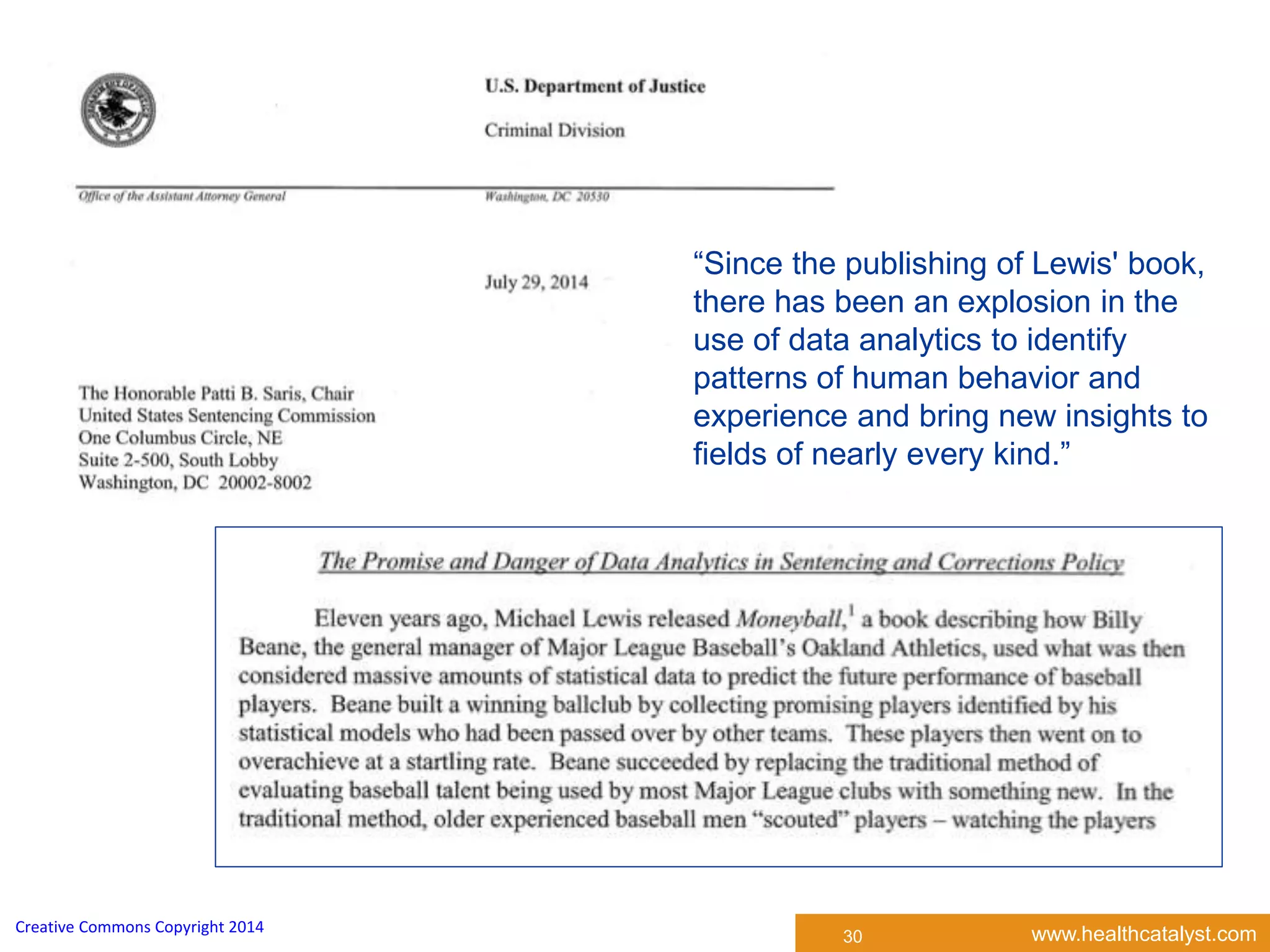
30
“Since the publishing of Lewis' book,
there has been an explosion in the
use of data analytics to identify
patterns of human behavior and
experience and bring new insights to
fields of nearly every kind.”
31.
www.healthcatalyst.comCreative Commons Copyright2014
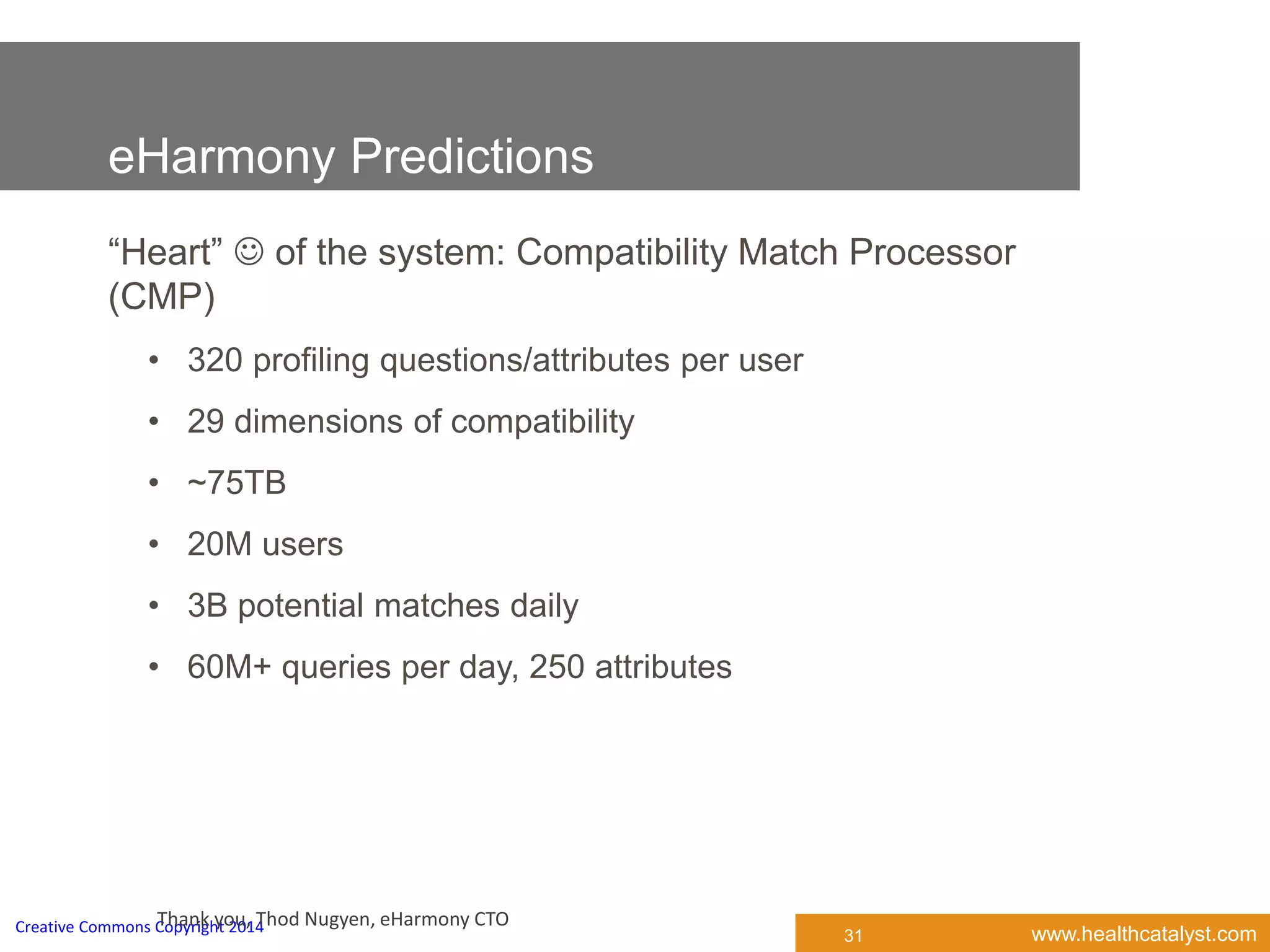
eHarmony Predictions
“Heart” of the system: Compatibility Match Processor
(CMP)
• 320 profiling questions/attributes per user
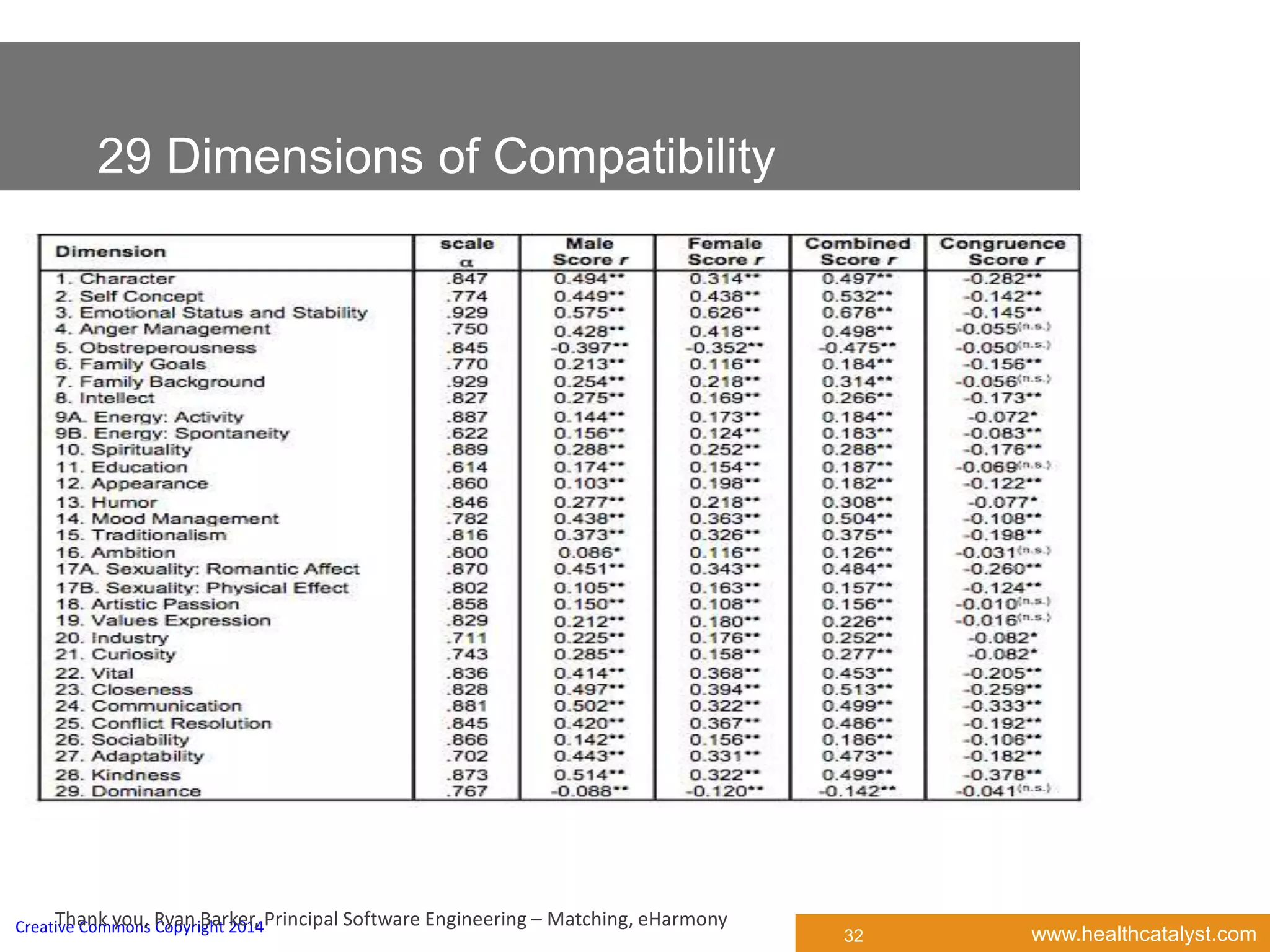
• 29 dimensions of compatibility
• ~75TB
• 20M users
• 3B potential matches daily
• 60M+ queries per day, 250 attributes
31
Thank you, Thod Nugyen, eHarmony CTO
www.healthcatalyst.comCreative Commons Copyright2014
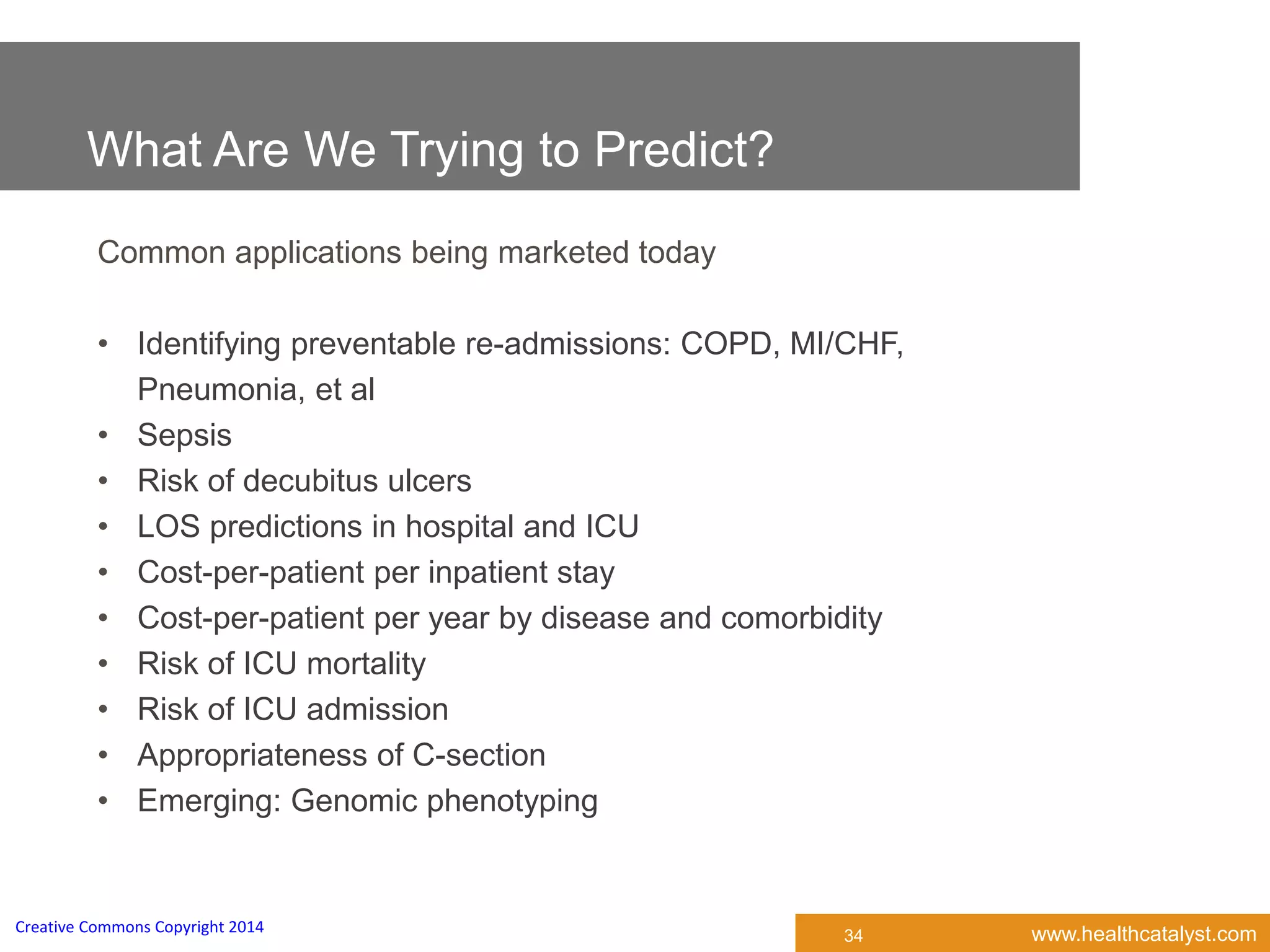
What Are We Trying to Predict?
Common applications being marketed today
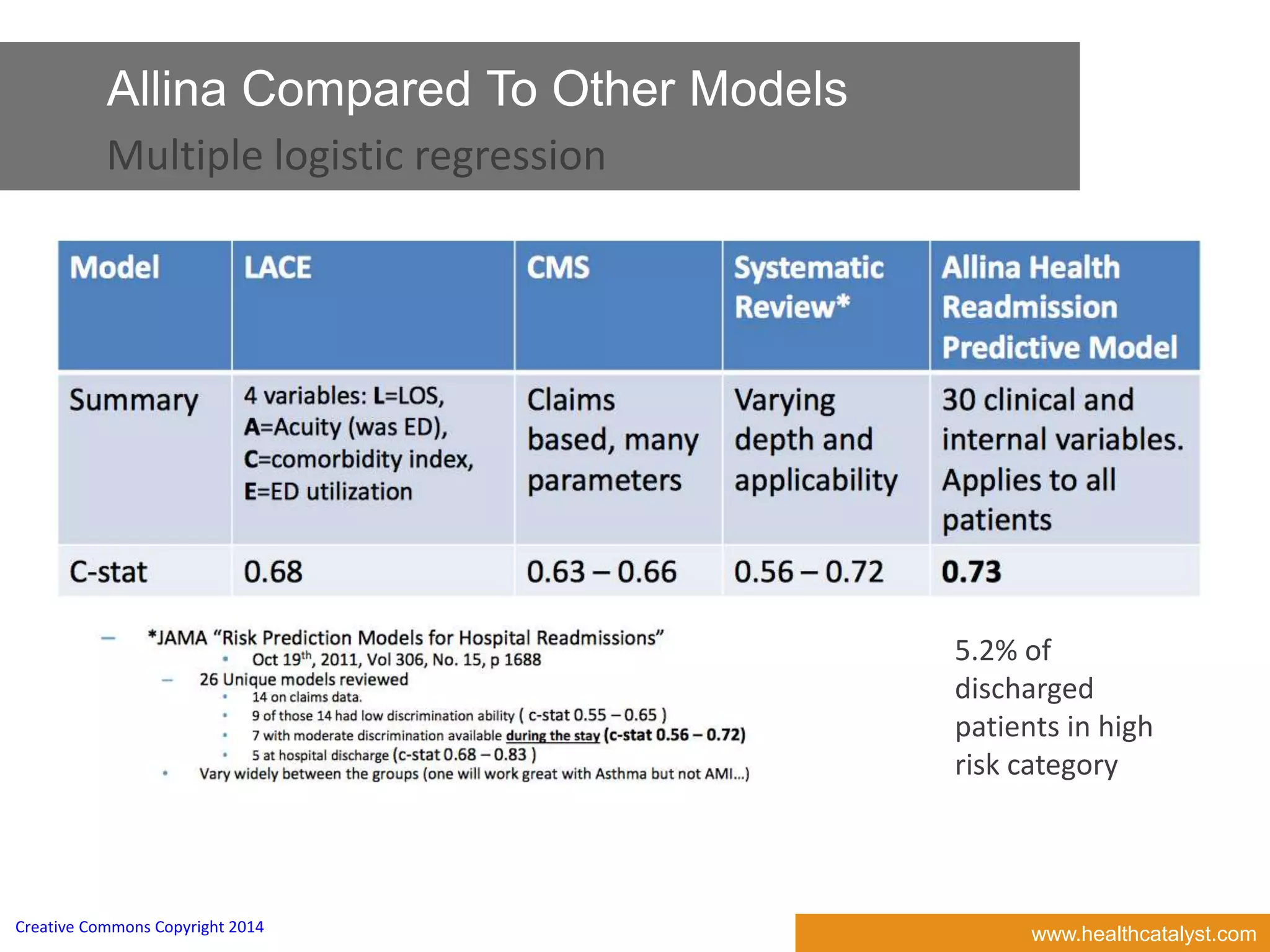
• Identifying preventable re-admissions: COPD, MI/CHF,
Pneumonia, et al
• Sepsis
• Risk of decubitus ulcers
• LOS predictions in hospital and ICU
• Cost-per-patient per inpatient stay
• Cost-per-patient per year by disease and comorbidity
• Risk of ICU mortality
• Risk of ICU admission
• Appropriateness of C-section
• Emerging: Genomic phenotyping
34
35.
www.healthcatalyst.comCreative Commons Copyright2014
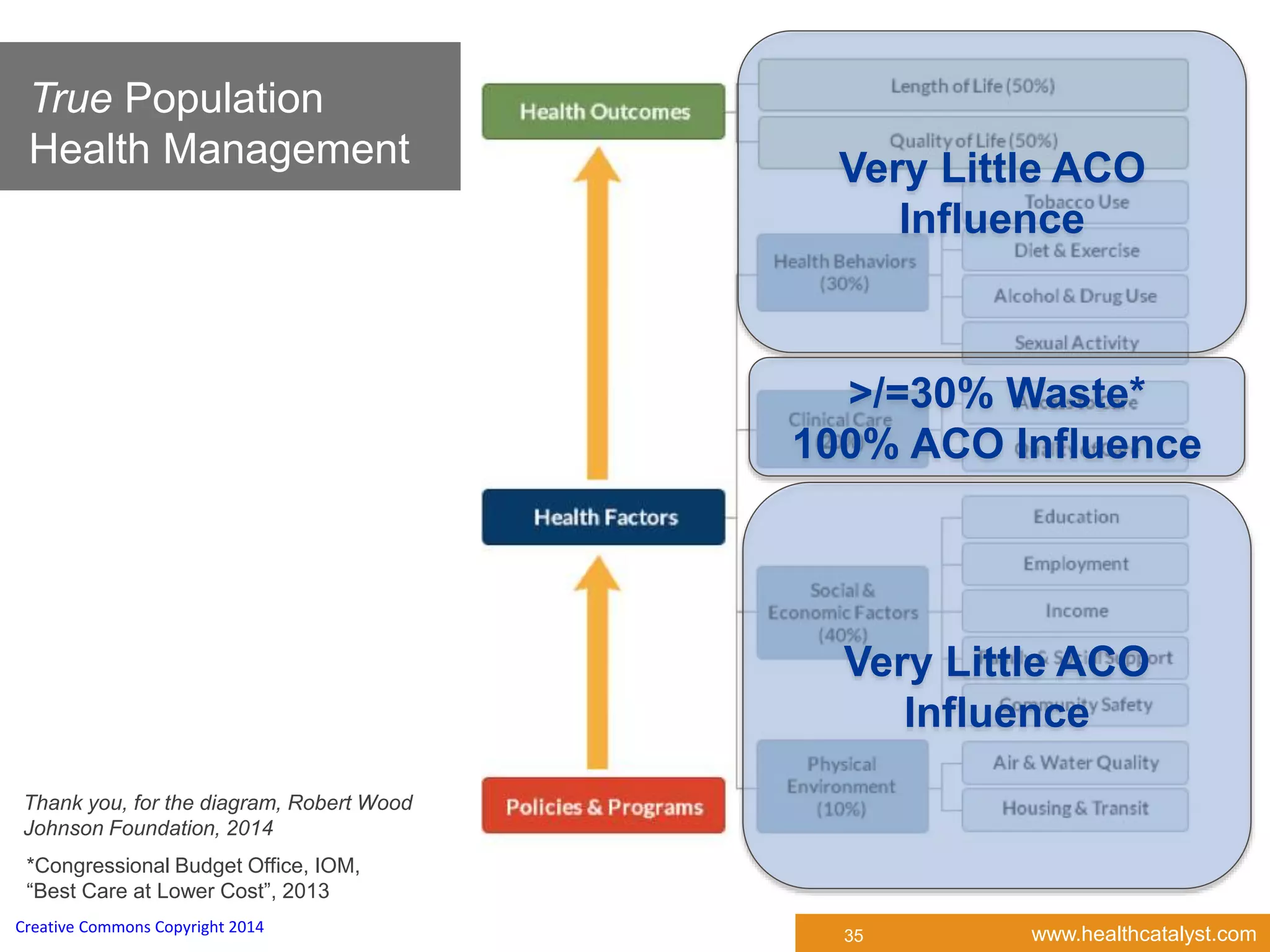
True Population Predictive
Risk Management
Thank you, for the diagram, Robert Wood
Johnson Foundation, 2014
Very Little ACO
Influence
Very Little ACO
Influence
>/=30% Waste*
100% ACO Influence
*Congressional Budget Office, IOM,
“Best Care at Lower Cost”, 2013
True Population
Health Management
35
36.
www.healthcatalyst.comCreative Commons Copyright2014
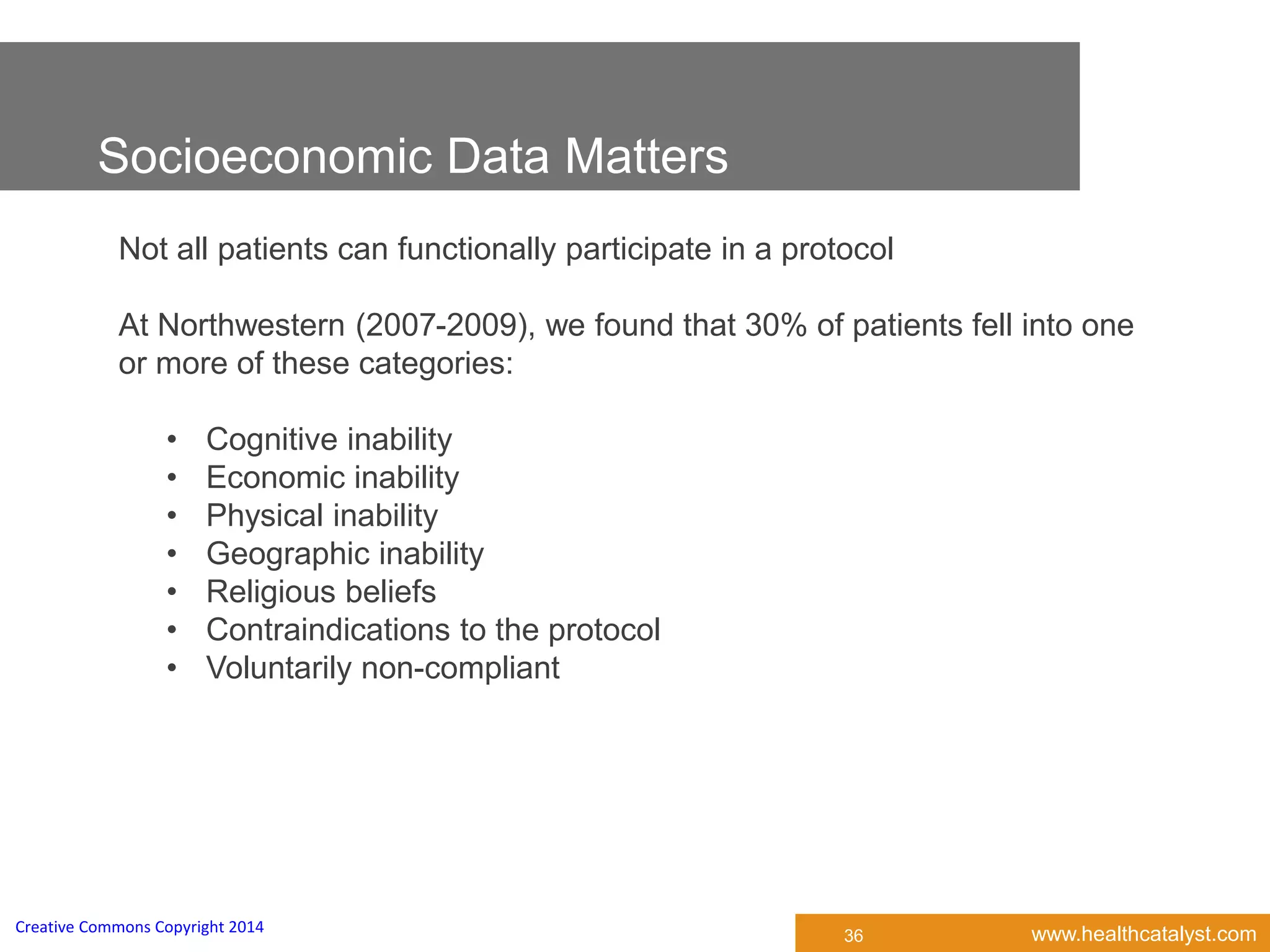
Not all patients can functionally participate in a protocol
At Northwestern (2007-2009), we found that 30% of patients fell into one
or more of these categories:
• Cognitive inability
• Economic inability
• Physical inability
• Geographic inability
• Religious beliefs
• Contraindications to the protocol
• Voluntarily non-compliant
Socioeconomic Data Matters
36
37.
www.healthcatalyst.comCreative Commons Copyright2014
37
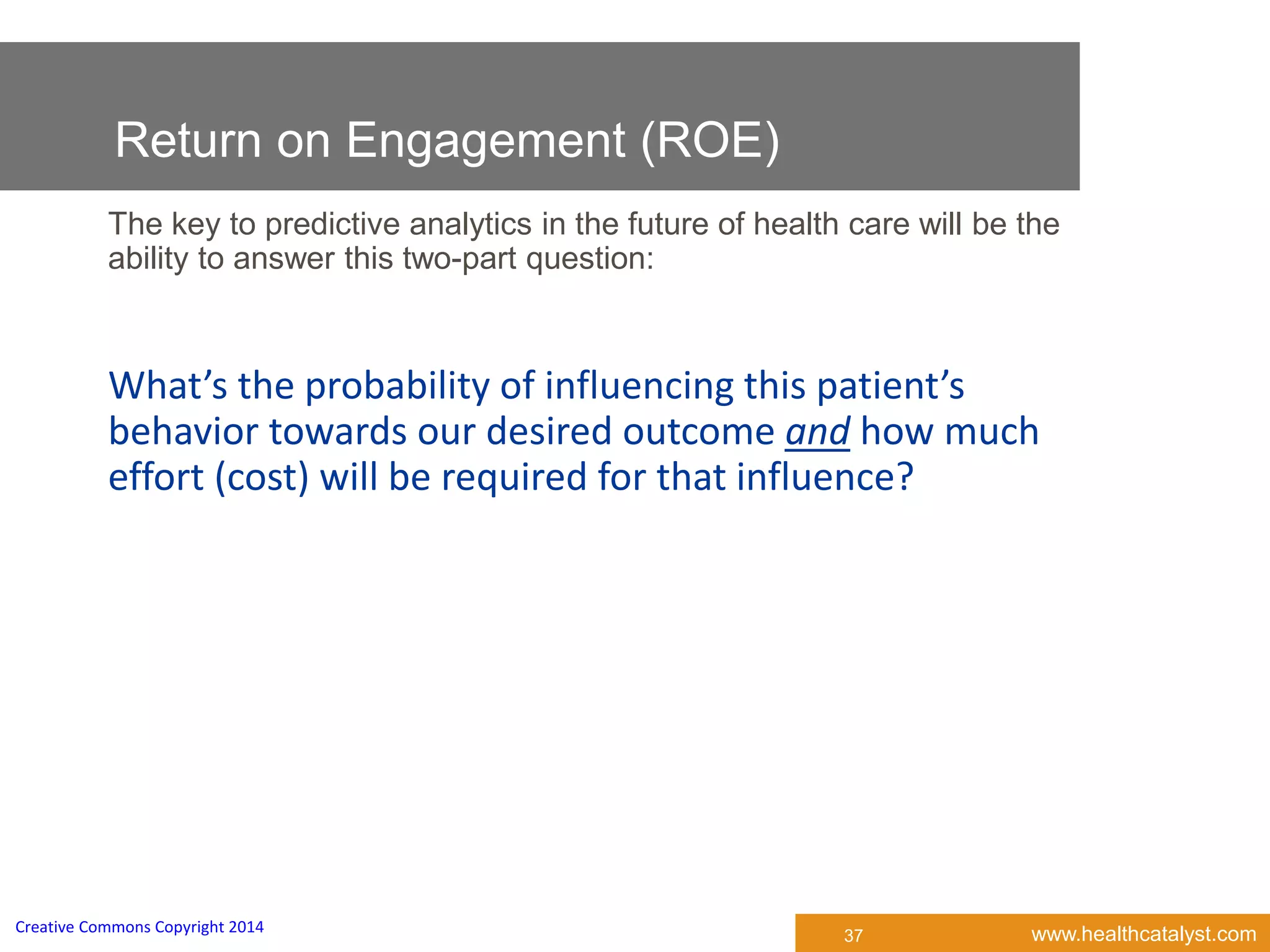
The key to predictive analytics in the future of health care will be the
ability to answer this two-part question:
What’s the probability of influencing this patient’s
behavior towards our desired outcome and how much
effort (cost) will be required for that influence?
Return on Engagement (ROE)
www.healthcatalyst.comCreative Commons Copyright2014
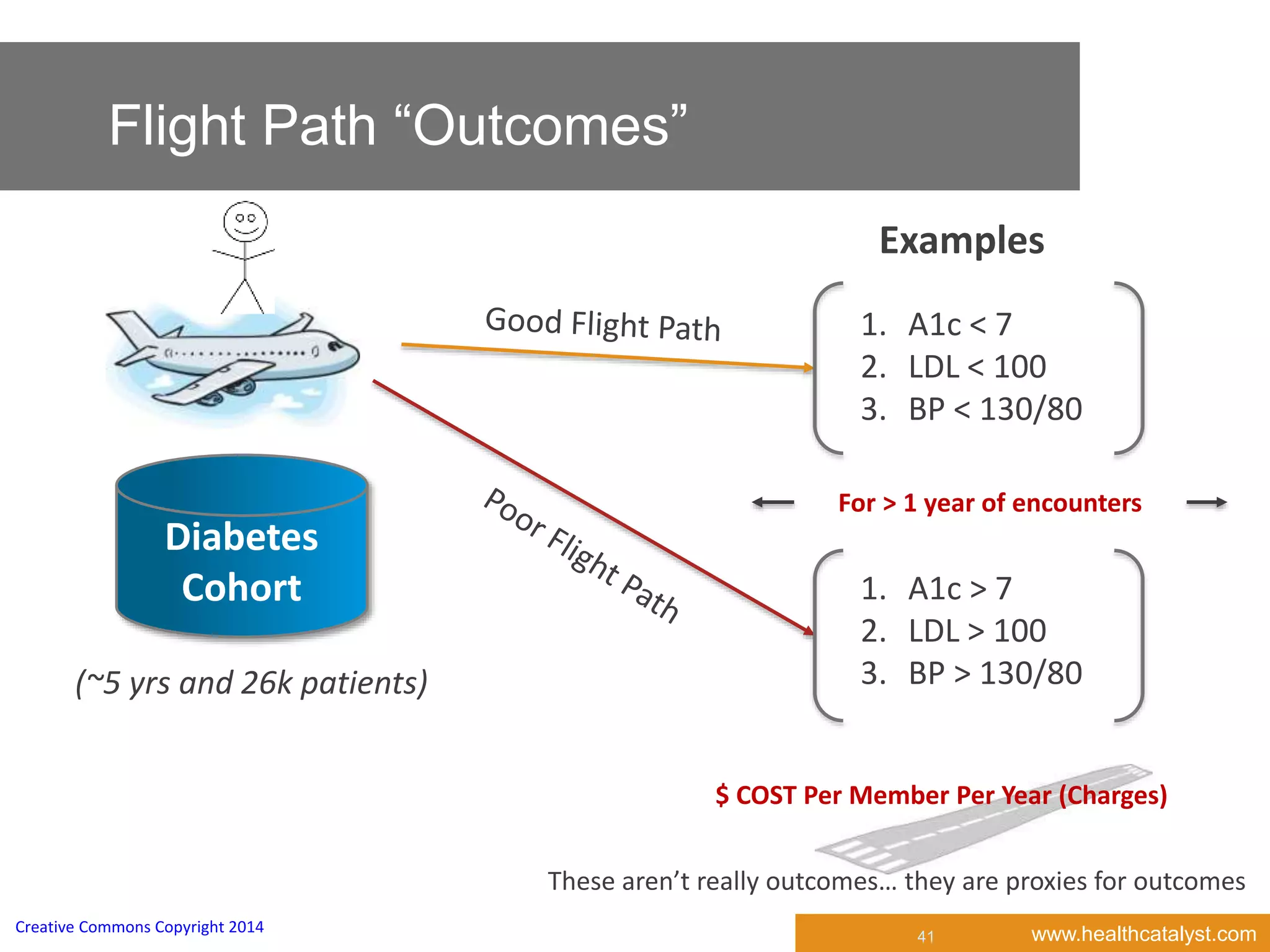
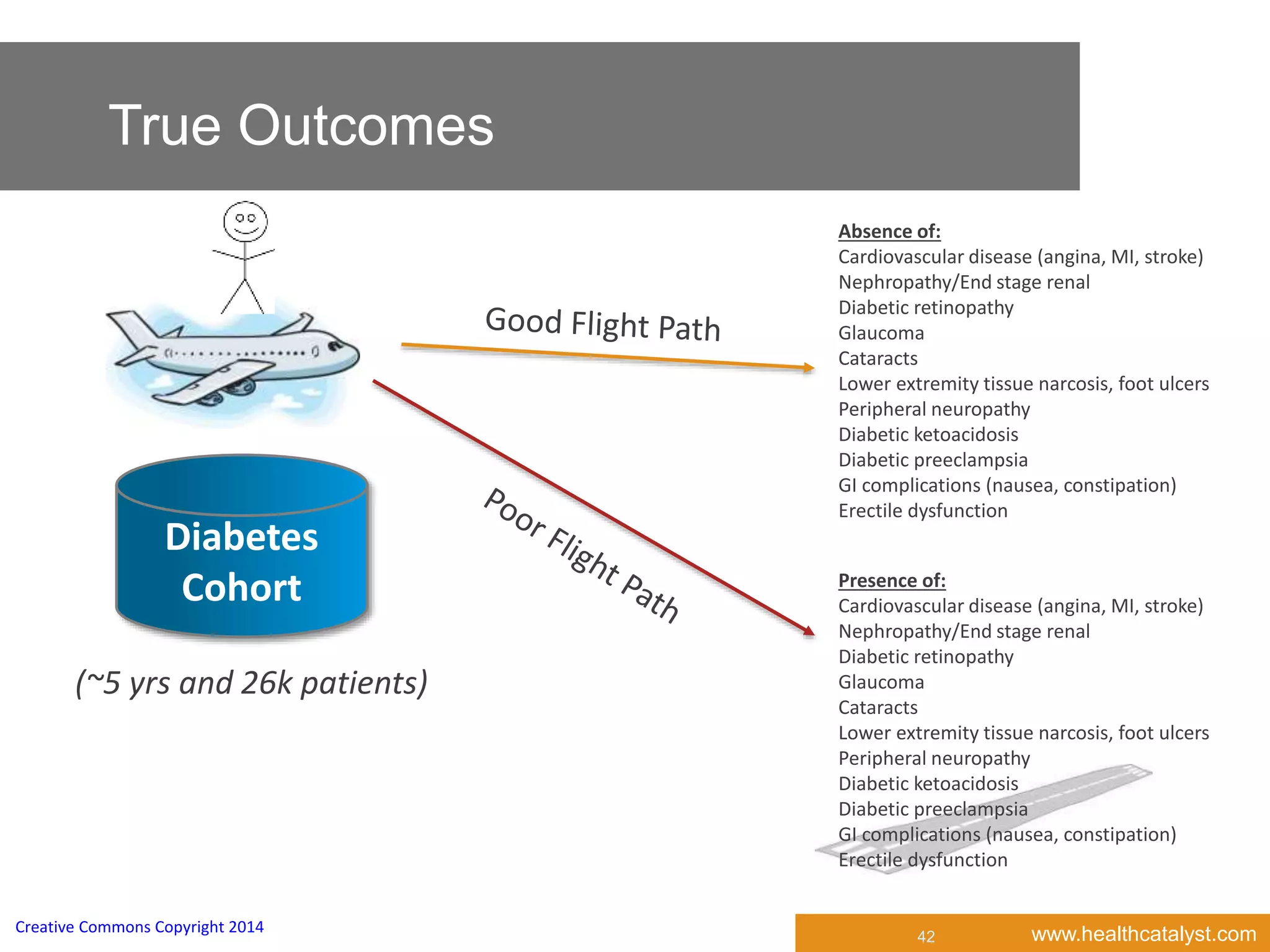
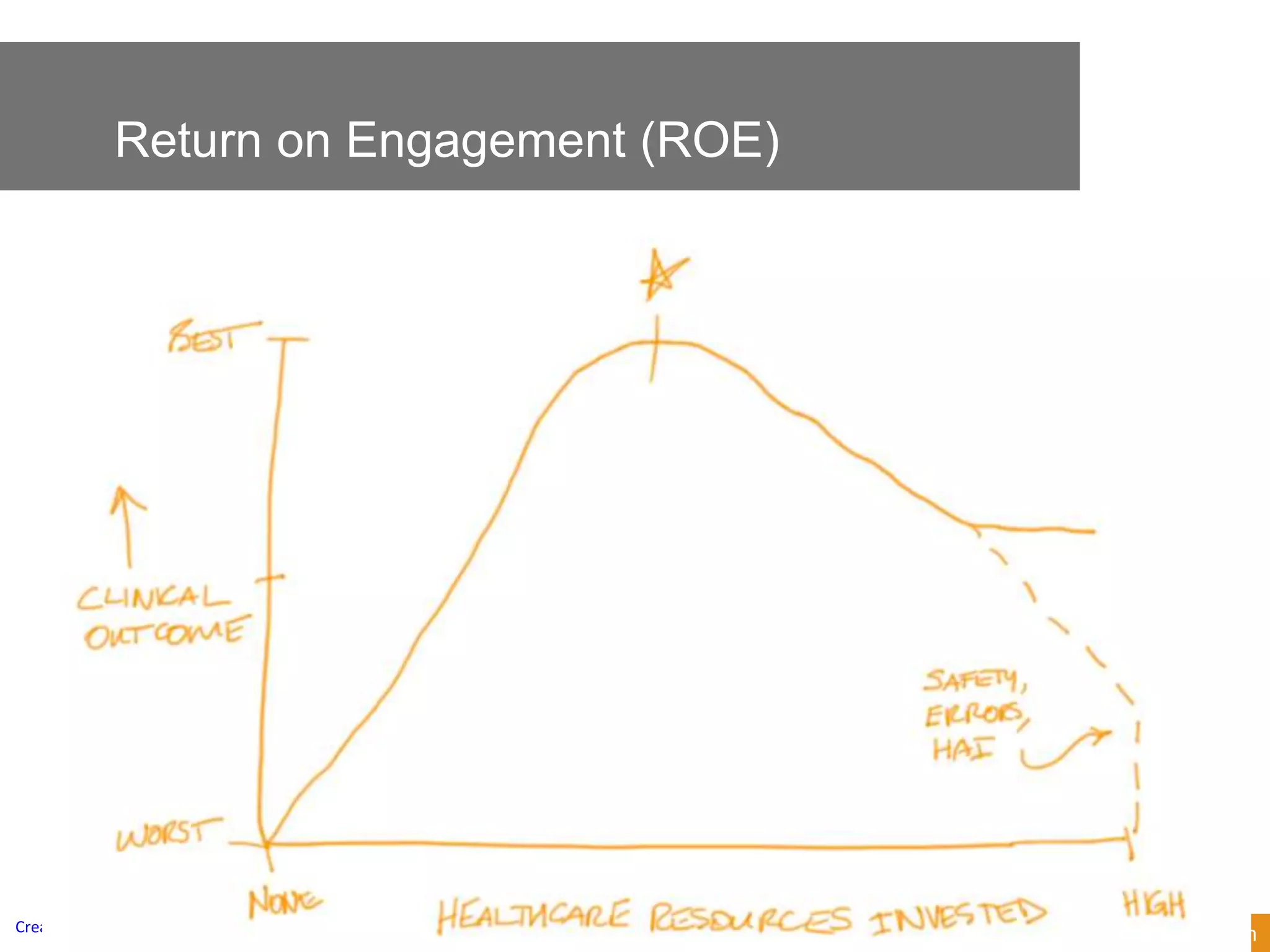
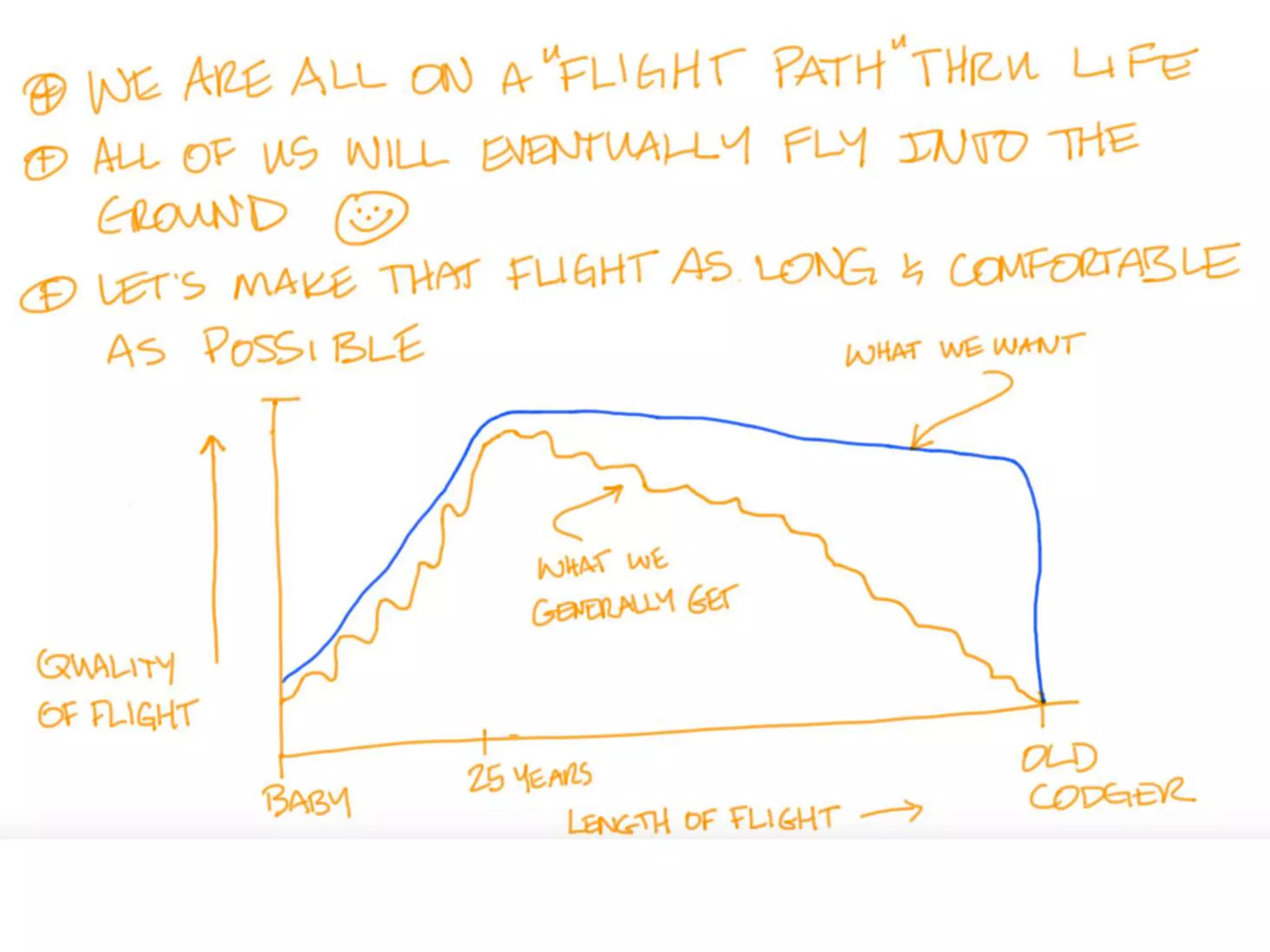
Flight Path “Outcomes”
41
Examples
Diabetes
Cohort
1. A1c < 7
2. LDL < 100
3. BP < 130/80
1. A1c > 7
2. LDL > 100
3. BP > 130/80
$ COST Per Member Per Year (Charges)
For > 1 year of encounters
(~5 yrs and 26k patients)
These aren’t really outcomes… they are proxies for outcomes
www.healthcatalyst.comCreative Commons Copyright2014
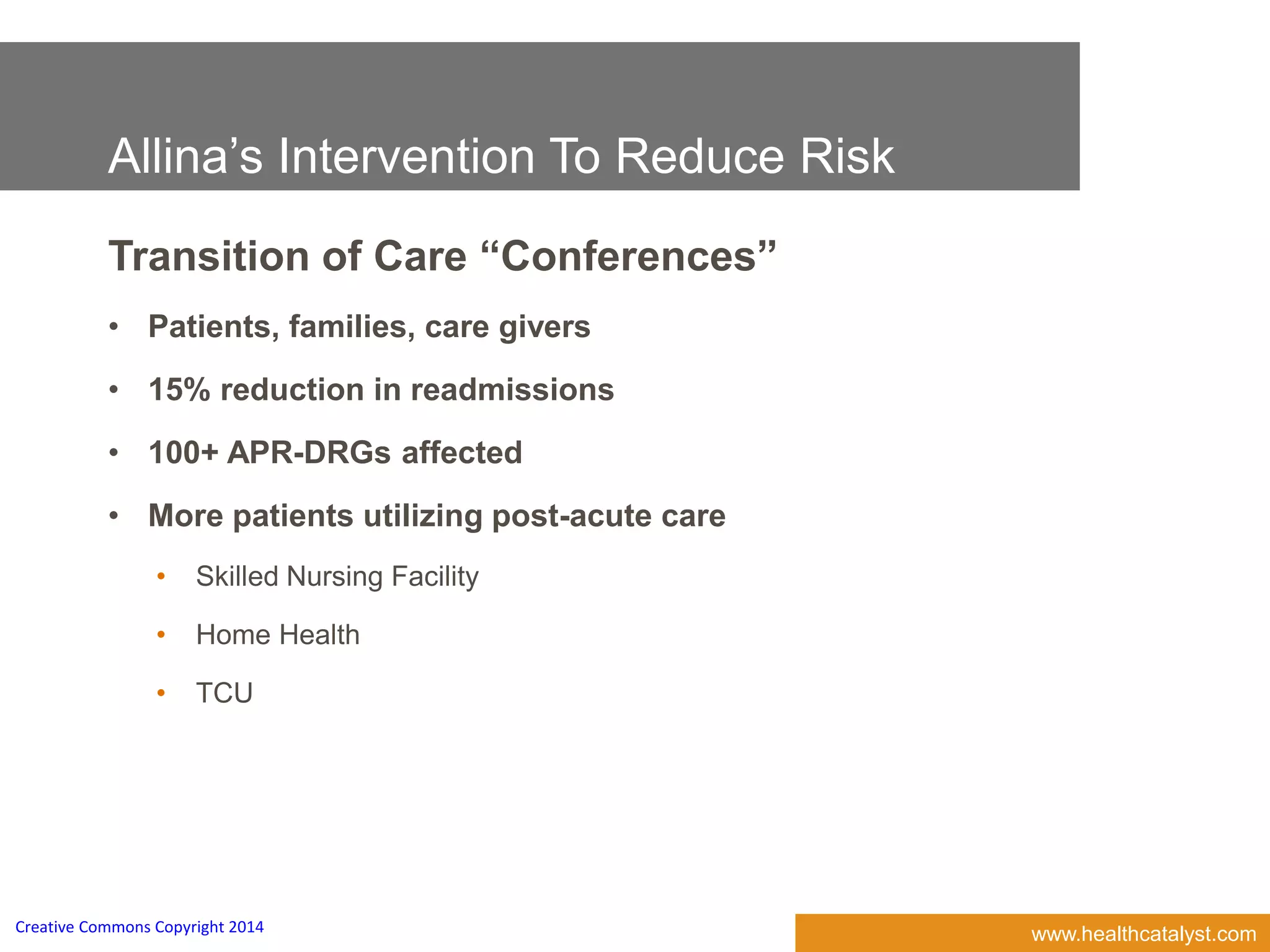
Allina’s Intervention To Reduce Risk
Transition of Care “Conferences”
• Patients, families, care givers
• 15% reduction in readmissions
• 100+ APR-DRGs affected
• More patients utilizing post-acute care
• Skilled Nursing Facility
• Home Health
• TCU
48.
www.healthcatalyst.comCreative Commons Copyright2014
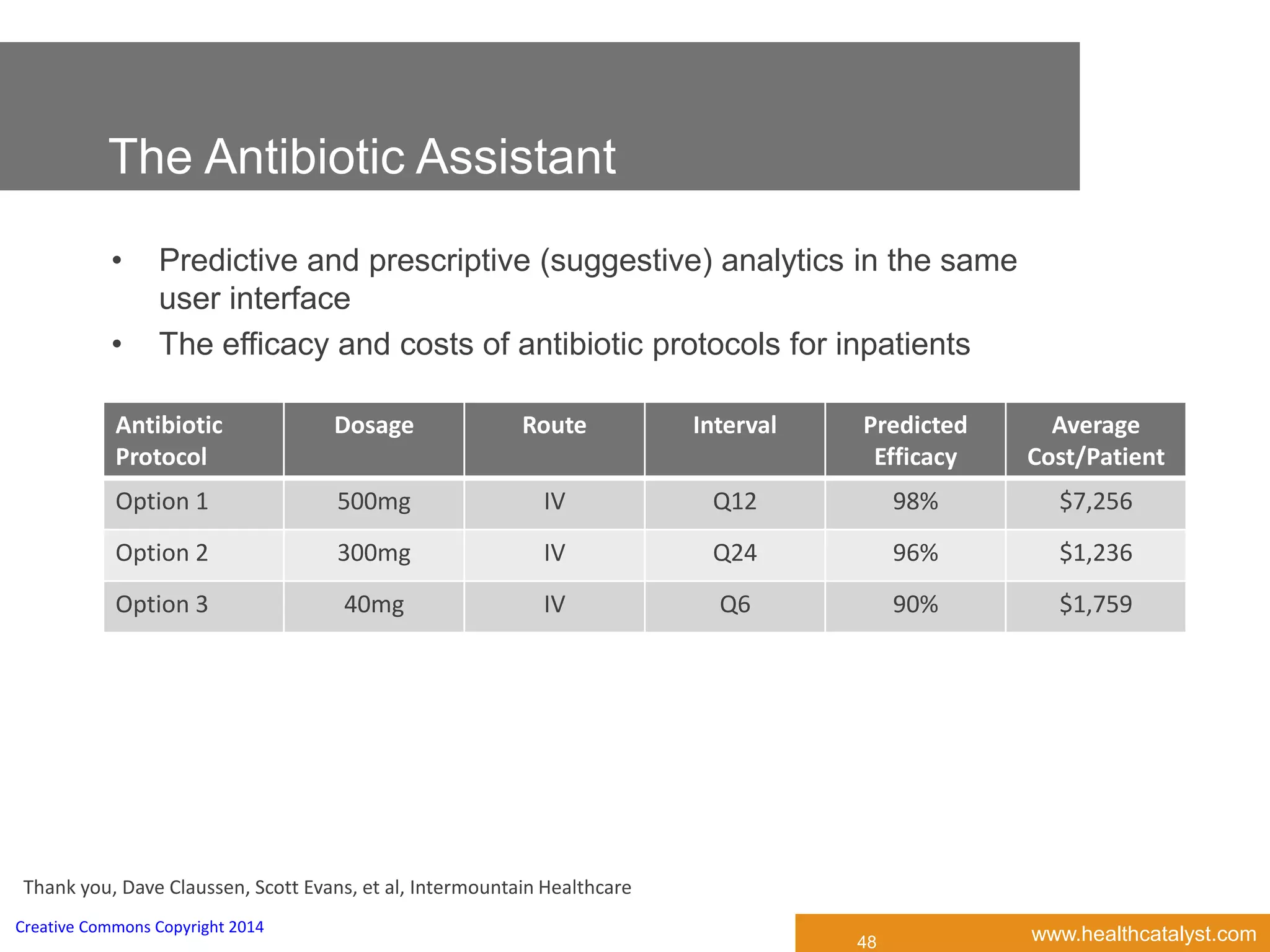
Antibiotic
Protocol
Dosage Route Interval Predicted
Efficacy
Average
Cost/Patient
Option 1 500mg IV Q12 98% $7,256
Option 2 300mg IV Q24 96% $1,236
Option 3 40mg IV Q6 90% $1,759
• Predictive and prescriptive (suggestive) analytics in the same
user interface
• The efficacy and costs of antibiotic protocols for inpatients
Thank you, Dave Claussen, Scott Evans, et al, Intermountain Healthcare
48
The Antibiotic Assistant
49.
www.healthcatalyst.comCreative Commons Copyright2014
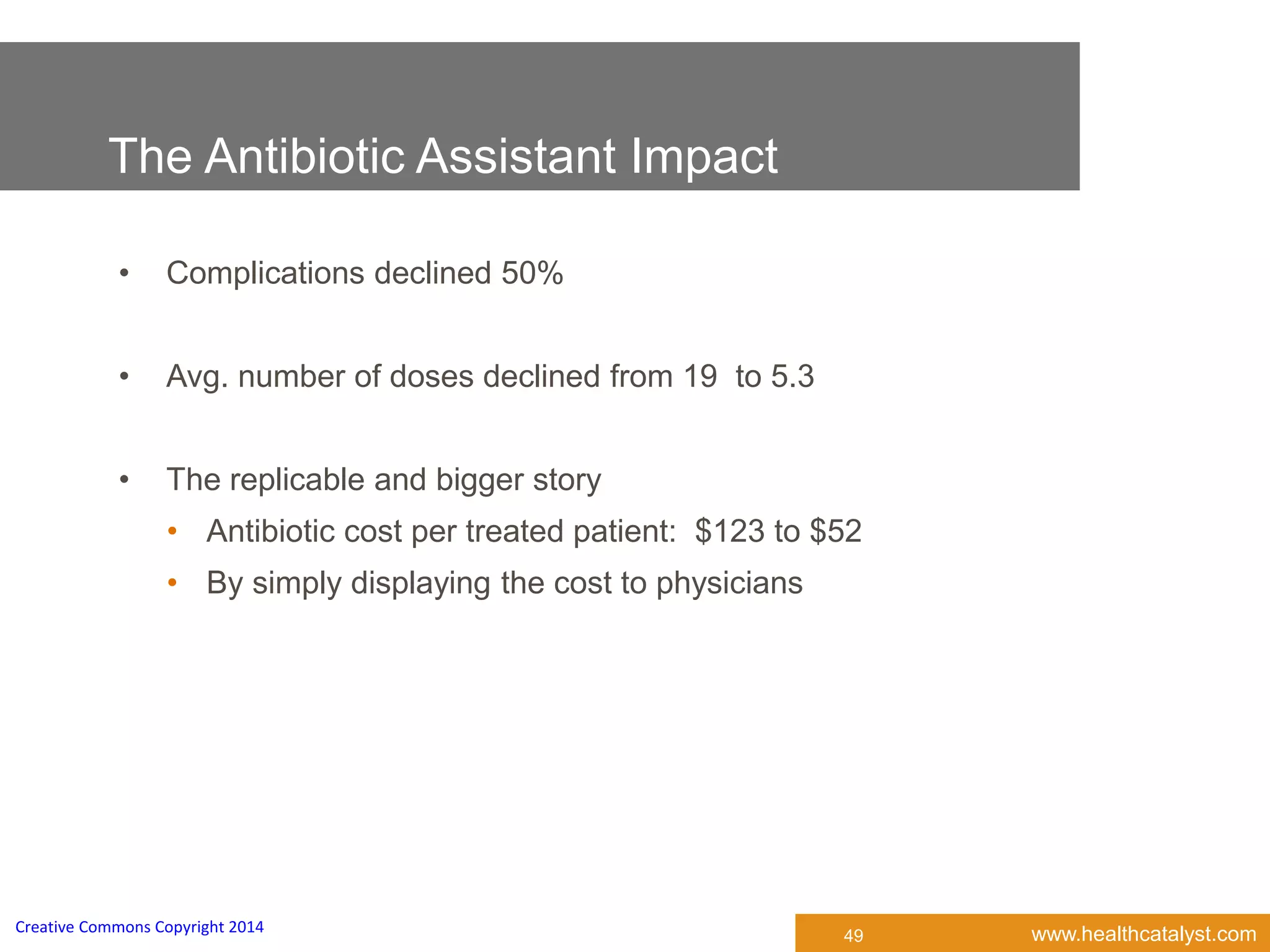
The Antibiotic Assistant Impact
• Complications declined 50%
• Avg. number of doses declined from 19 to 5.3
• The replicable and bigger story
• Antibiotic cost per treated patient: $123 to $52
• By simply displaying the cost to physicians
49
www.healthcatalyst.comCreative Commons Copyright2014
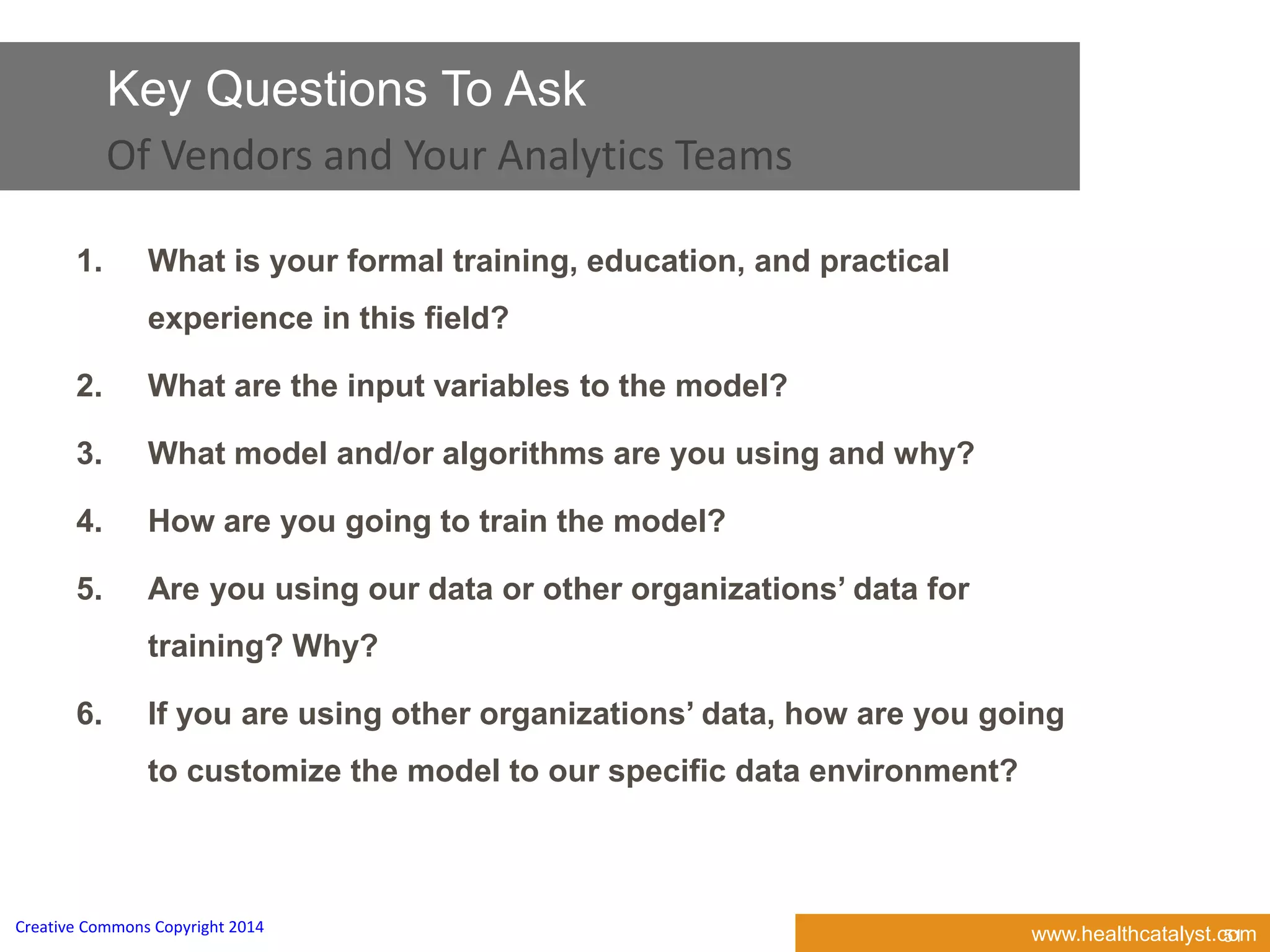
Key Questions To Ask
Of Vendors and Your Analytics Teams
51
1. What is your formal training, education, and practical
experience in this field?
2. What are the input variables to the model?
3. What model and/or algorithms are you using and why?
4. How are you going to train the model?
5. Are you using our data or other organizations’ data for
training? Why?
6. If you are using other organizations’ data, how are you going
to customize the model to our specific data environment?
52.
www.healthcatalyst.comCreative Commons Copyright2014
52
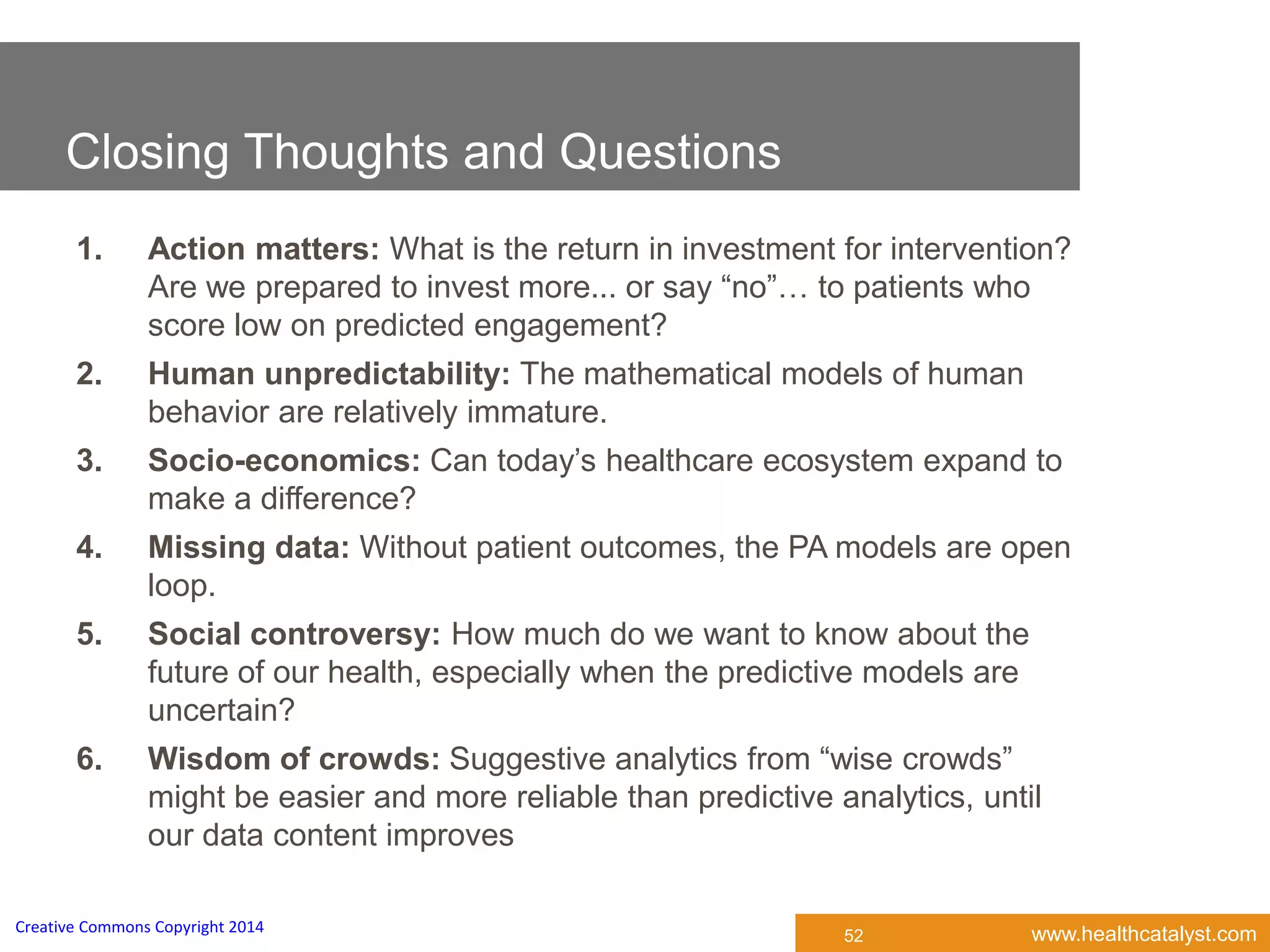
1. Action matters: What is the return in investment for intervention?
Are we prepared to invest more... or say “no”… to patients who
score low on predicted engagement?
2. Human unpredictability: The mathematical models of human
behavior are relatively immature.
3. Socio-economics: Can today’s healthcare ecosystem expand to
make a difference?
4. Missing data: Without patient outcomes, the PA models are open
loop.
5. Social controversy: How much do we want to know about the
future of our health, especially when the predictive models are
uncertain?
6. Wisdom of crowds: Suggestive analytics from “wise crowds”
might be easier and more reliable than predictive analytics, until
our data content improves
Closing Thoughts and Questions
Thank You
For questionsand follow-up, please contact me
• dale.sanders@healthcatalyst.com
• @drsanders
Upcoming Educational Opportunities
An Overview of the Healthcare Analytics Market
Date: January 21, 2015, 1-2pm, EST
Host: Jim Adams, Executive Director, The Advisory Board
A Pioneer ACO Case Study: Quality Improvement in Healthcare
Date: January 28, 2015, 1-2pm, EST
Hosts:
Robert Sawicki, MD, Senior Vice President of Supportive Care, OSF HealthCare
Roopa Foulger, Executive Director Data Delivery, OSF HealthCare
Linda Fehr, RN, Division Director of Supportive Care, OSF HealthCare
Editor's Notes
#36 Intermountain’s ability to extend the boundaries and achieve success is in part due to the communal nature of Utah and the lifestyle choices that Utah citizens choose