Lecture 12 Pre-Mendelian ideas
about heredity – Vapour and
fluid theory, Magnetic power
theory, Preformation theory,
Lamarck’s theory, Darwin’s
theory, Germplasm theory and
Mutation theory
EARLIER CONCEPTS OF HEREDITY
• Reproductive organs in plants were reported for the first
time by Grew in 1682.
• Camerarius first time described sexual reproduction in
plants.
• In 1717 Thomas Fairchild produced a hybrid having
characters of both the parents. The hybrid was called
'Fairchild's mule' - first artificial hybrid
PRE- MENDELIAN CONCEPTS OF
HEREDITY
1. Vapour and fluid theory
2. Theory of spontaneous generation
3. Magnetic power theory
4. Preformation theory
5. Theory of epigenesis
6. Inheritance of acquired characters
(Lamark’s theory)
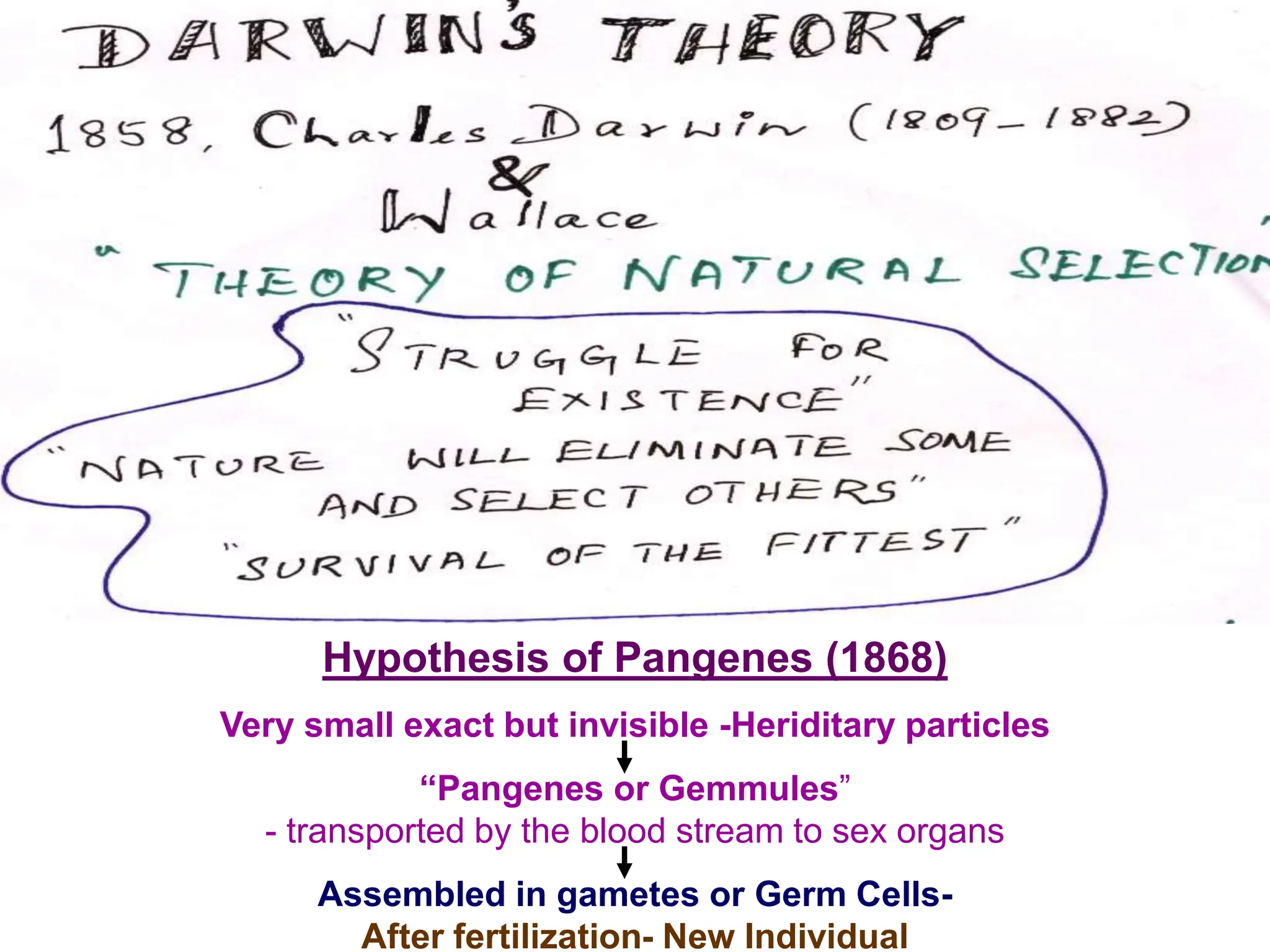
7. Theory of natural selection (Darwin’s theory)
8. Theory of pangenesis
9. Germplasm theory
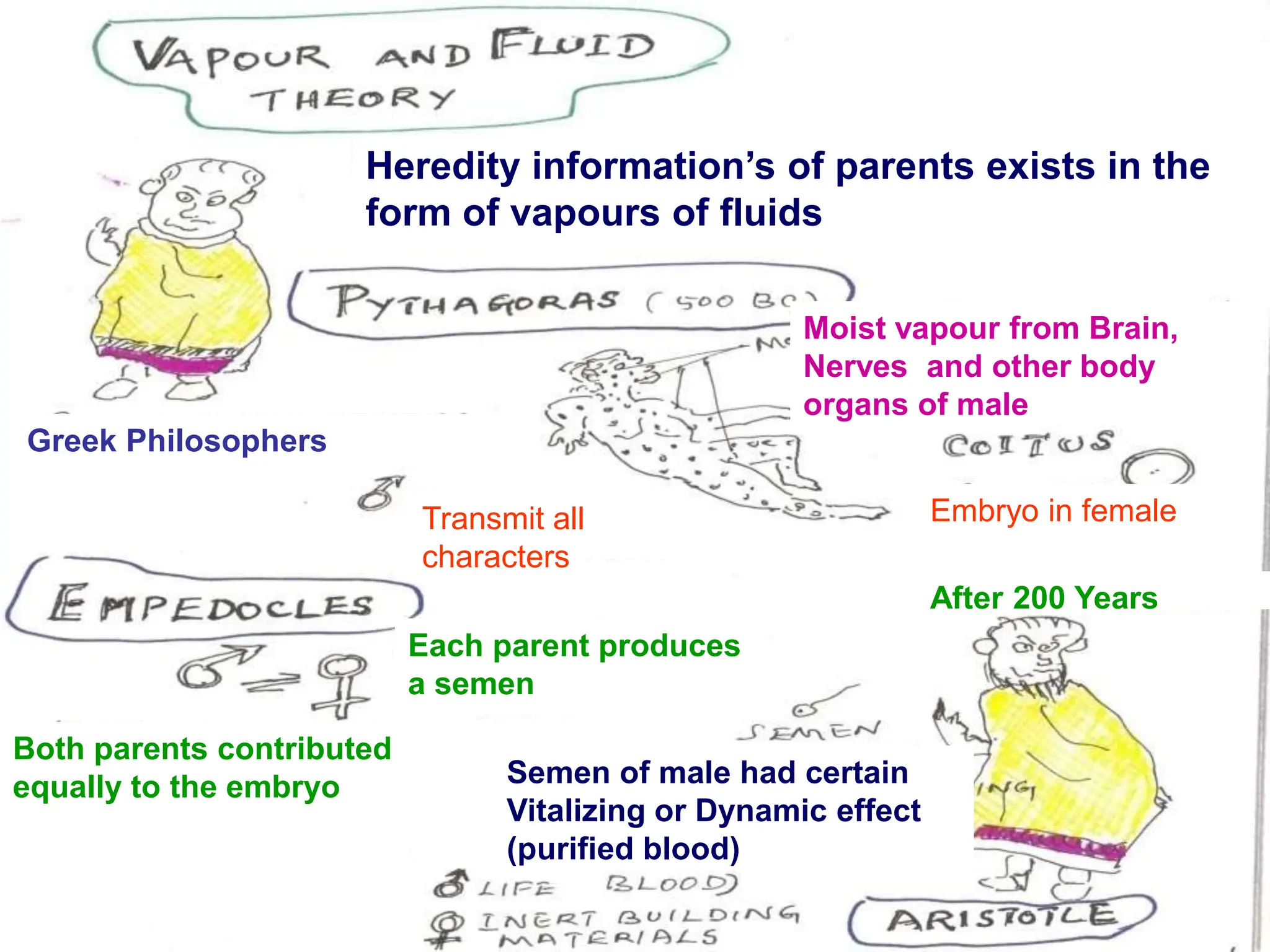
Heredity information’s of parents exists in the
form of vapours of fluids
Both parents contributed
equally to the embryo
Greek Philosophers
After 200 Years
Transmit all
characters
Each parent produces
a semen
Moist vapour from Brain,
Nerves and other body
organs of male
Embryo in female
Semen of male had certain
Vitalizing or Dynamic effect
(purified blood)
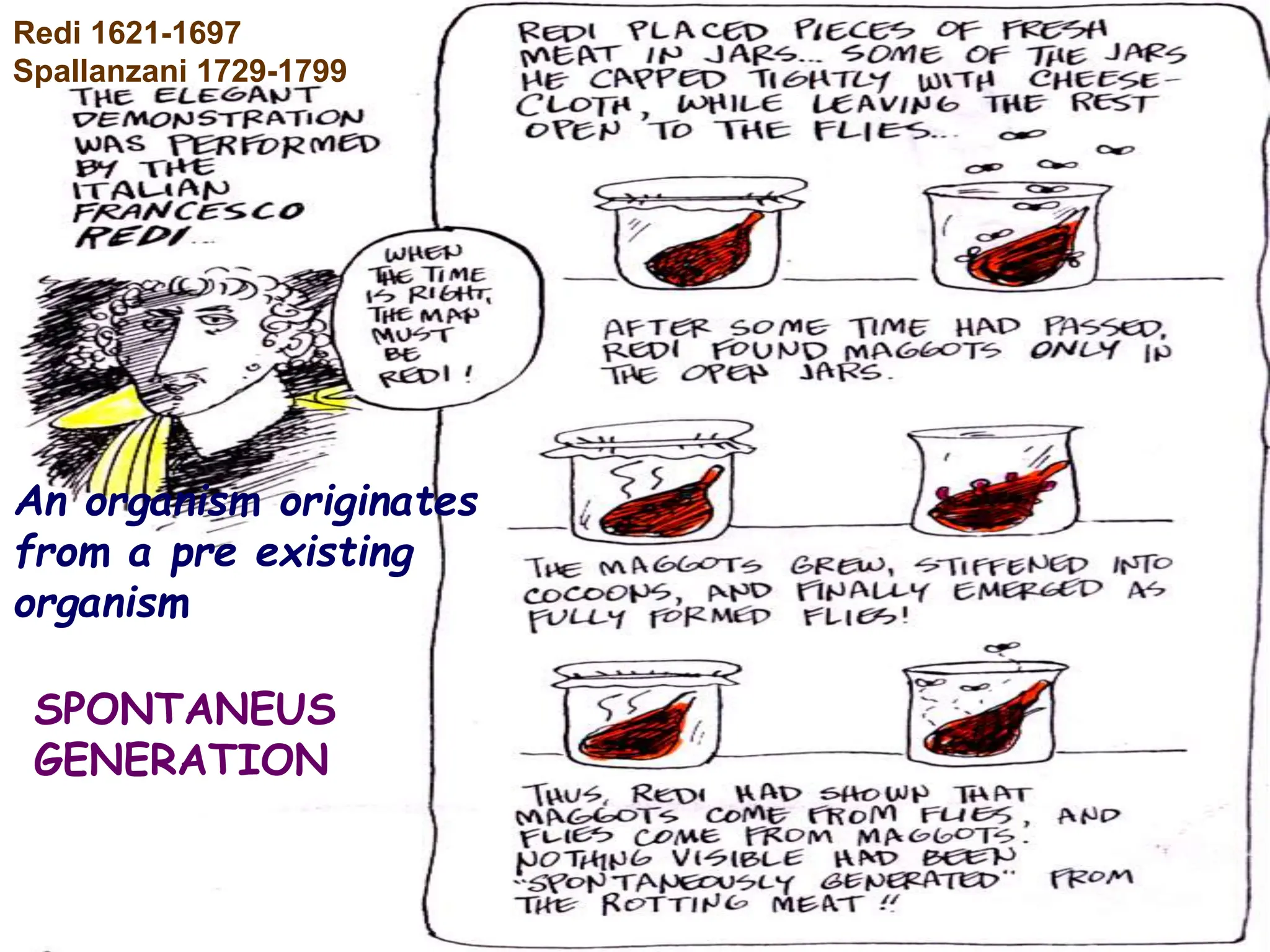
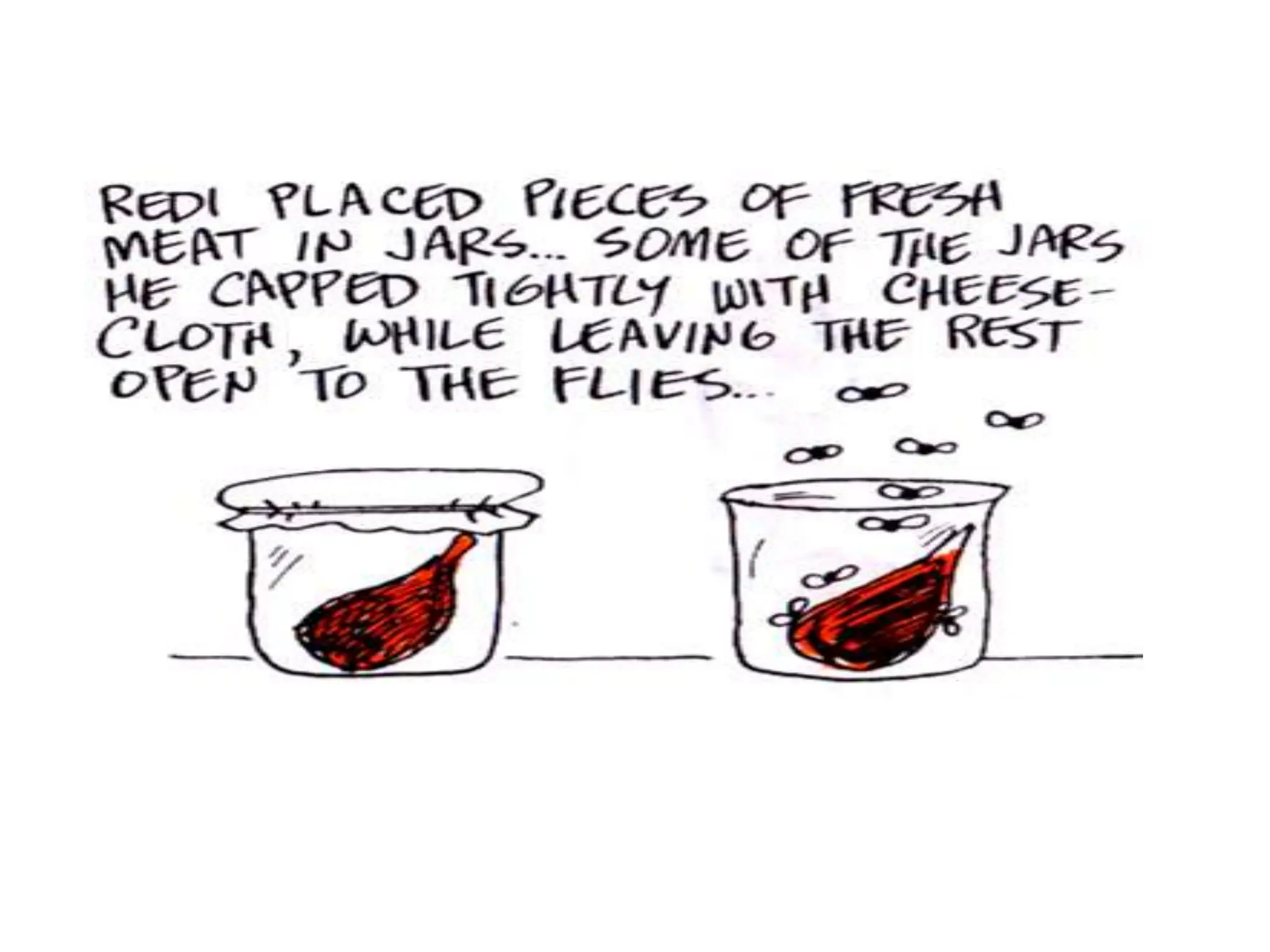
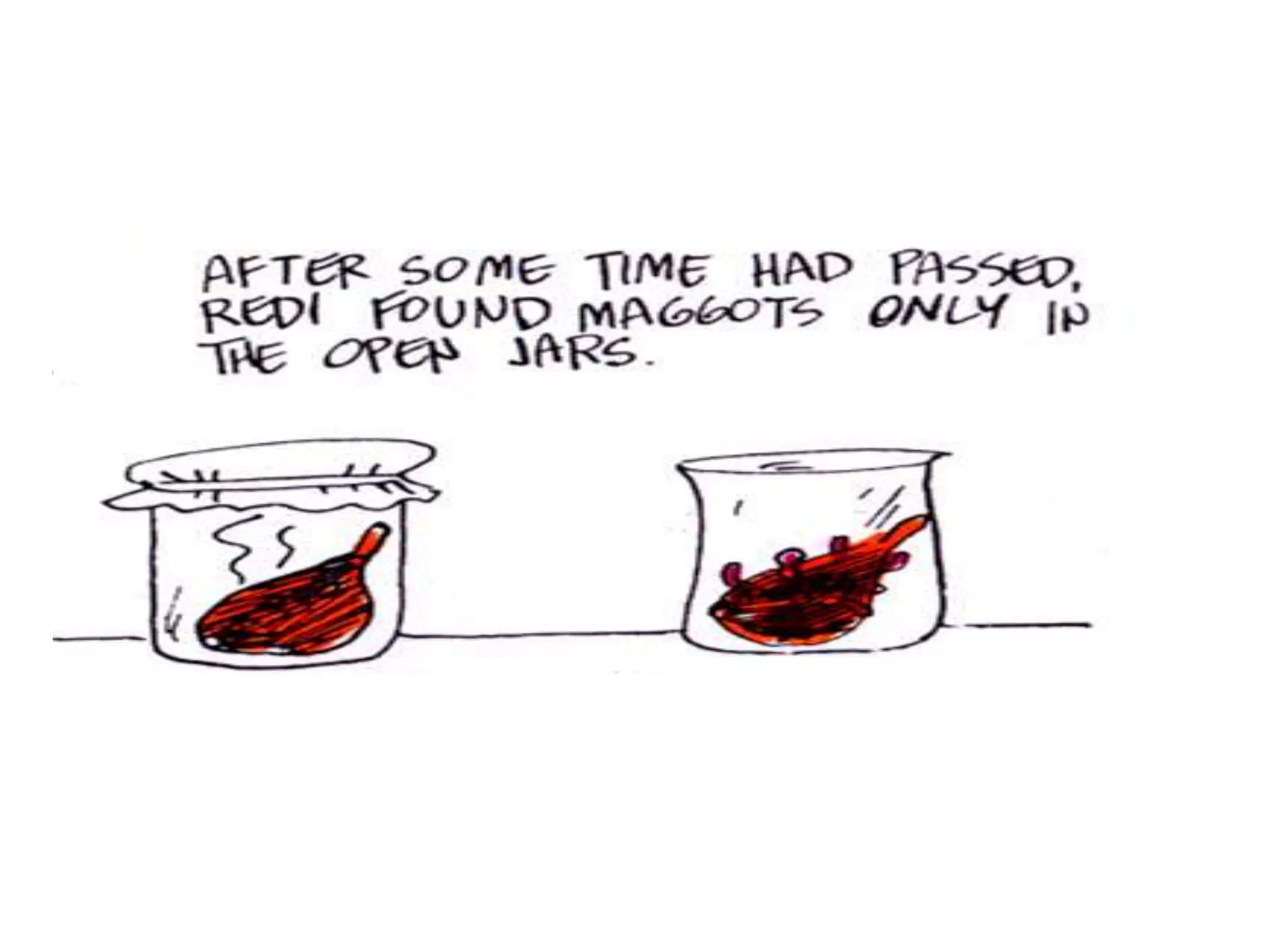
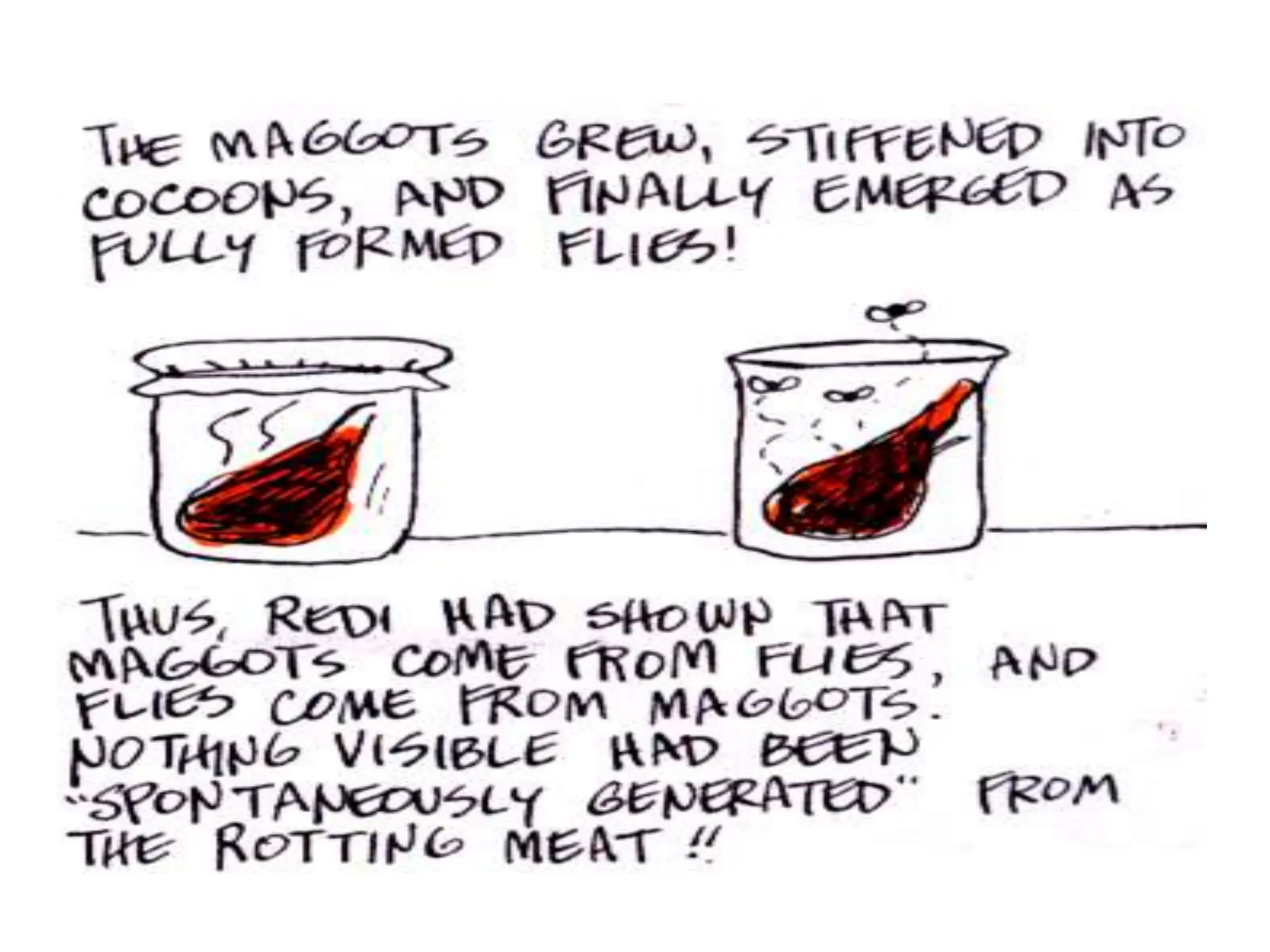
An organism originates
from a pre existing
organism
SPONTANEUS
GENERATION
Redi 1621-1697
Spallanzani 1729-1799
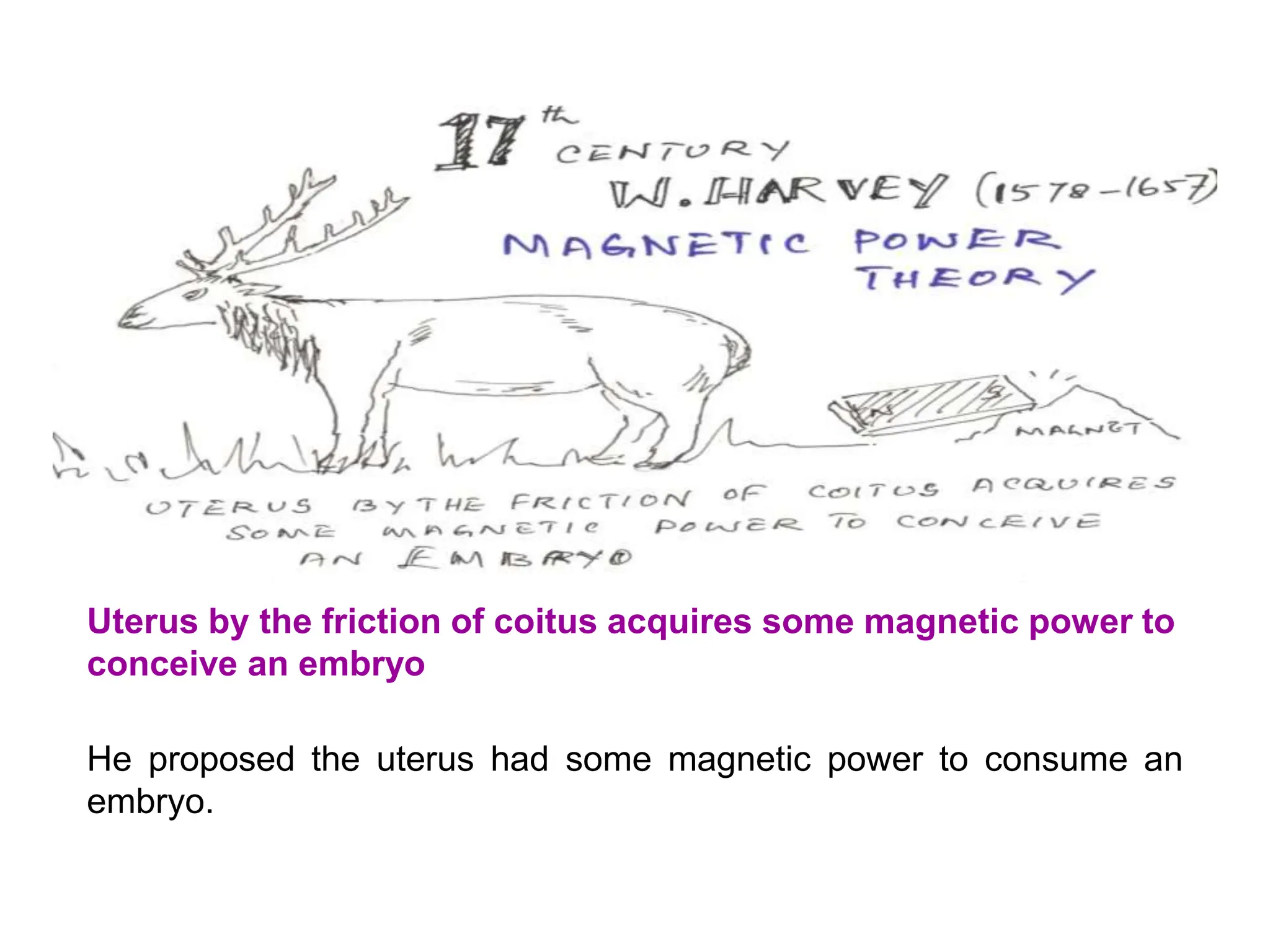
Uterus by the friction of coitus acquires some magnetic power to
conceive an embryo
He proposed the uterus had some magnetic power to consume an
embryo.
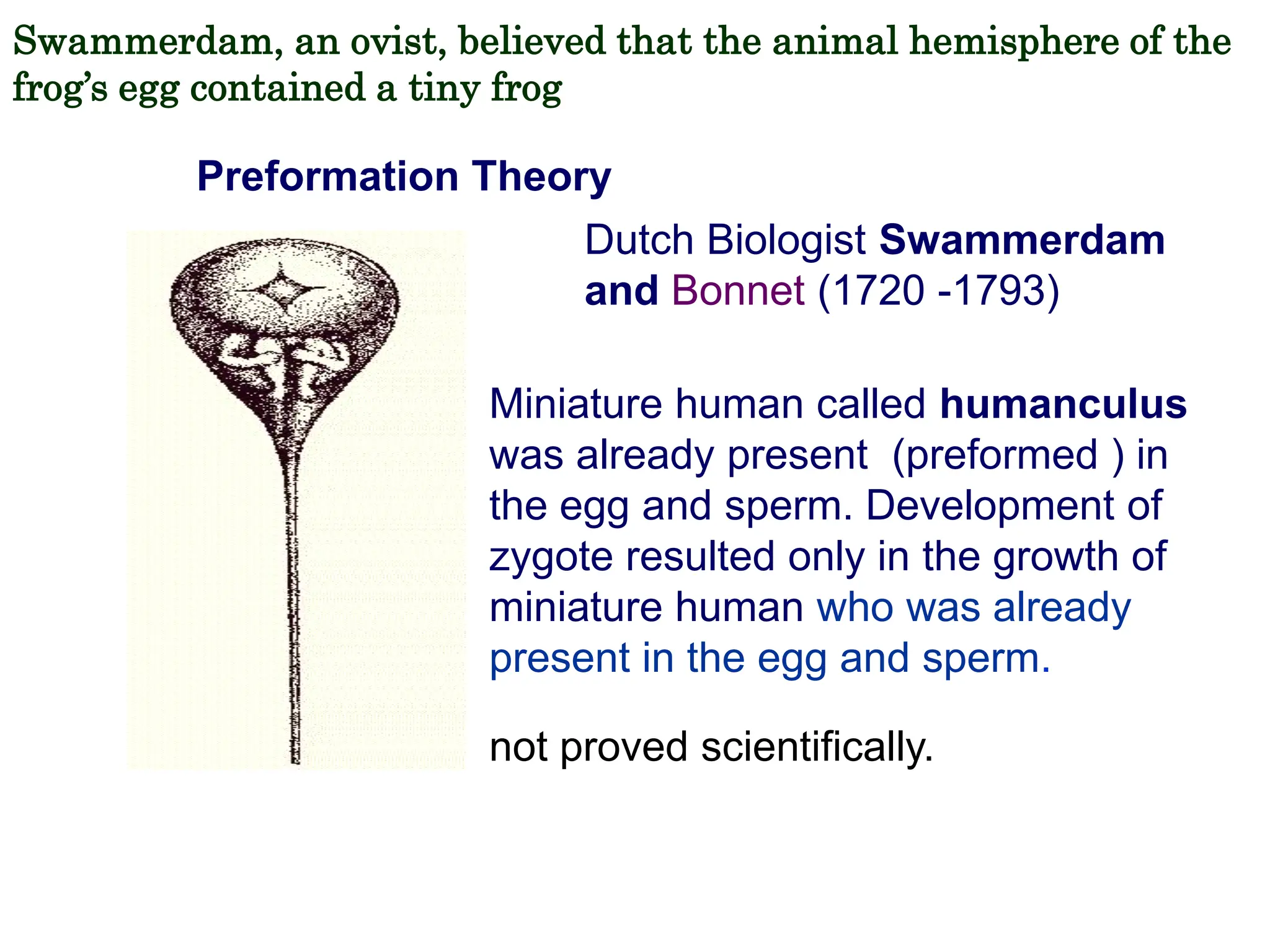
Preformation Theory
Dutch Biologist Swammerdam
and Bonnet (1720 -1793)
Miniature human called humanculus
was already present (preformed ) in
the egg and sperm. Development of
zygote resulted only in the growth of
miniature human who was already
present in the egg and sperm.
not proved scientifically.
Swammerdam, an ovist, believed that the animal hemisphere of the
frog’s egg contained a tiny frog
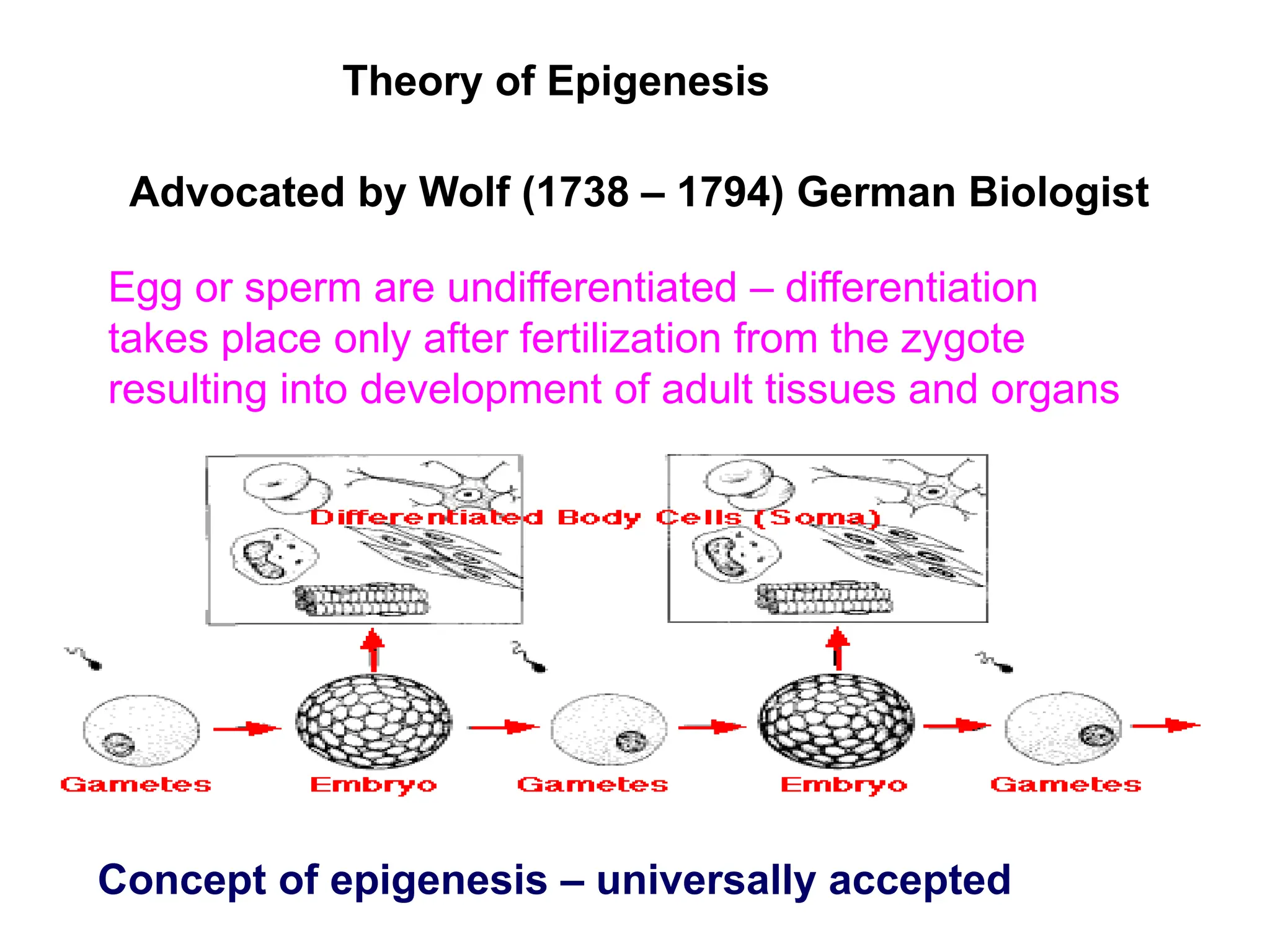
Theory of Epigenesis
Advocated by Wolf (1738 – 1794) German Biologist
Egg or sperm are undifferentiated – differentiation
takes place only after fertilization from the zygote
resulting into development of adult tissues and organs
Concept of epigenesis – universally accepted
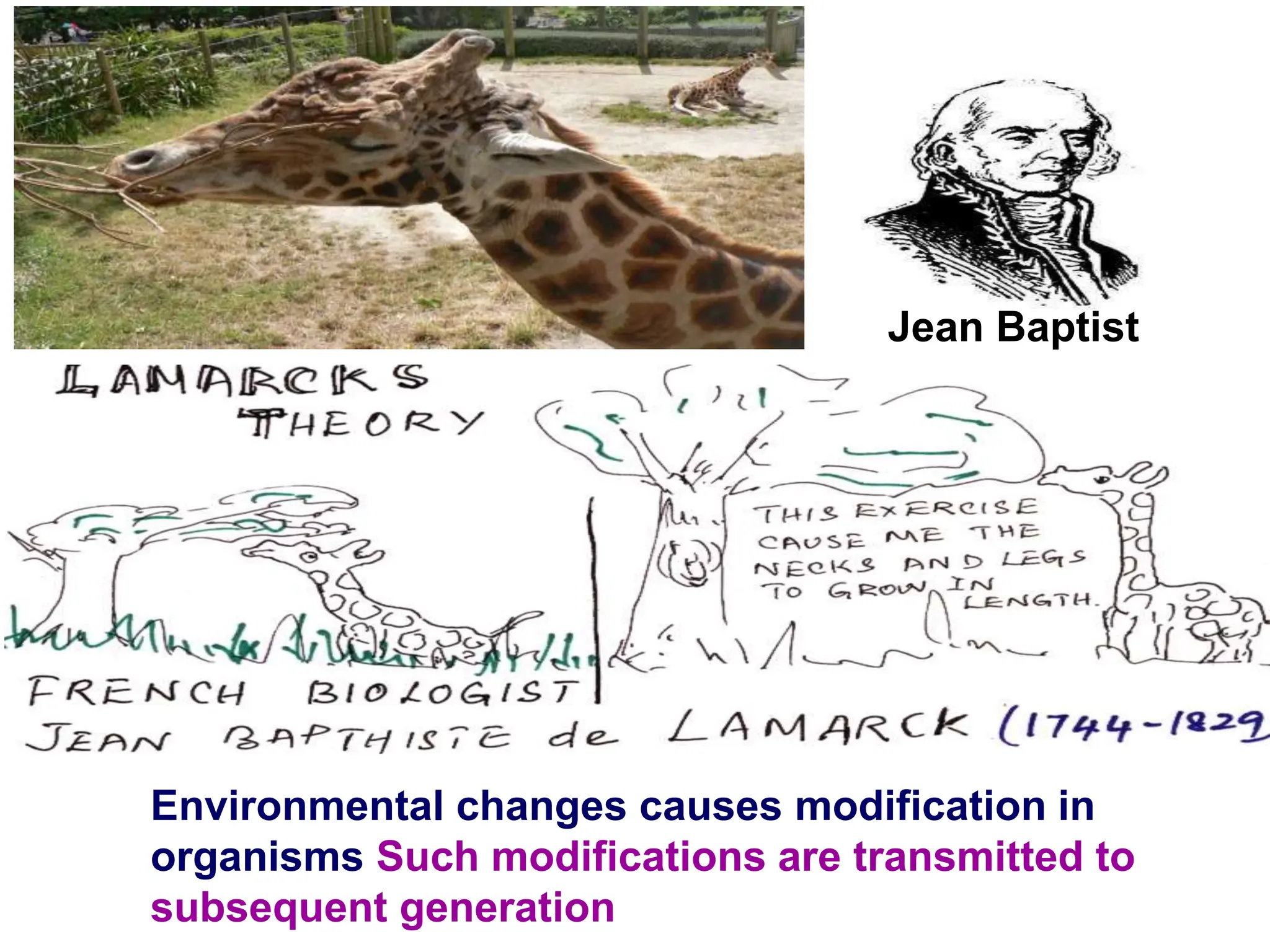
Environmental changes causes modification in
organisms Such modifications are transmitted to
subsequent generation
Jean Baptist
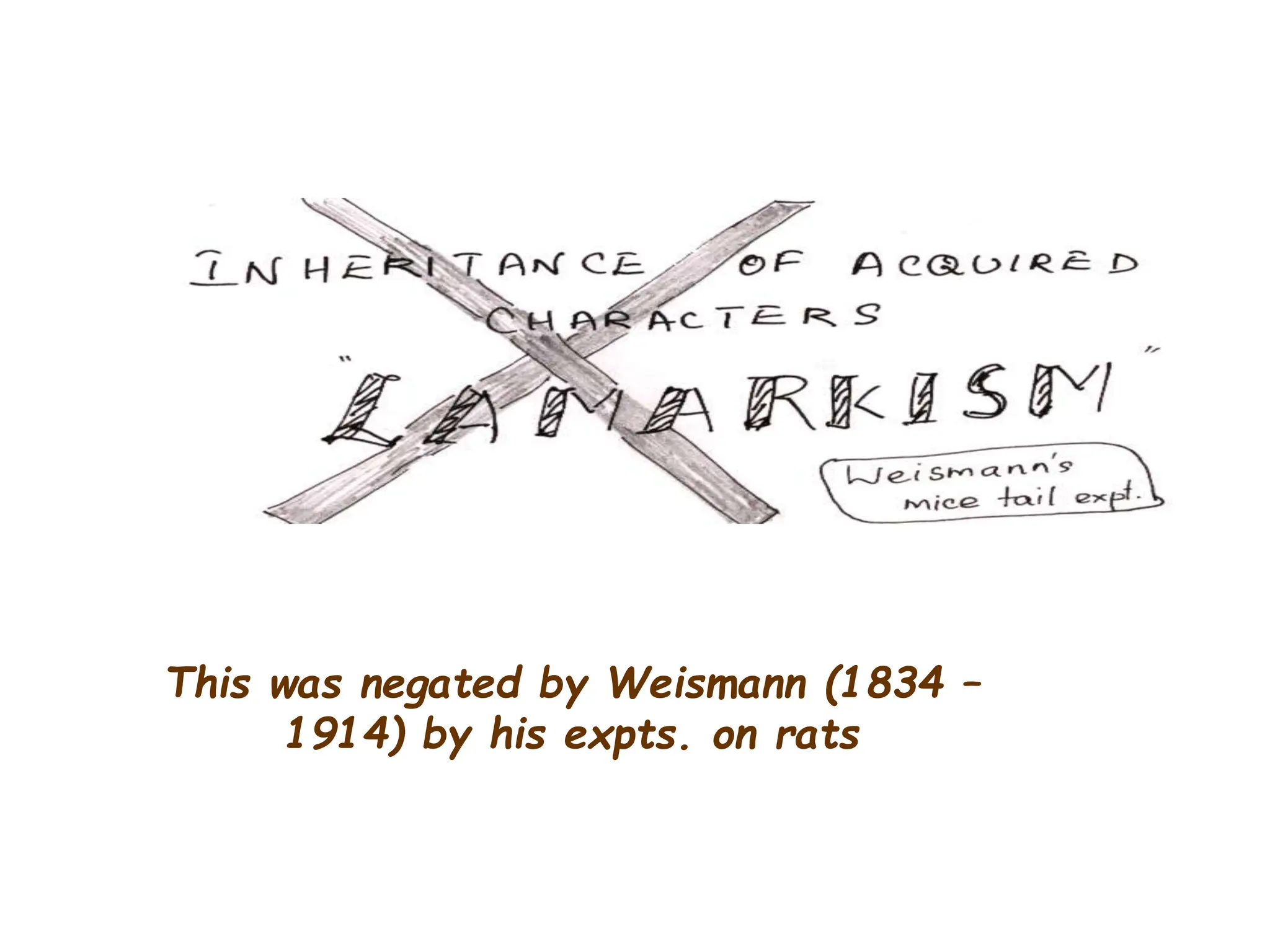
This was negated by Weismann (1834 –
1914) by his expts. on rats
Hypothesis of Pangenes (1868)
Very small exact but invisible -Heriditary particles
“Pangenes or Gemmules”
- transported by the blood stream to sex organs
Assembled in gametes or Germ Cells-
After fertilization- New Individual
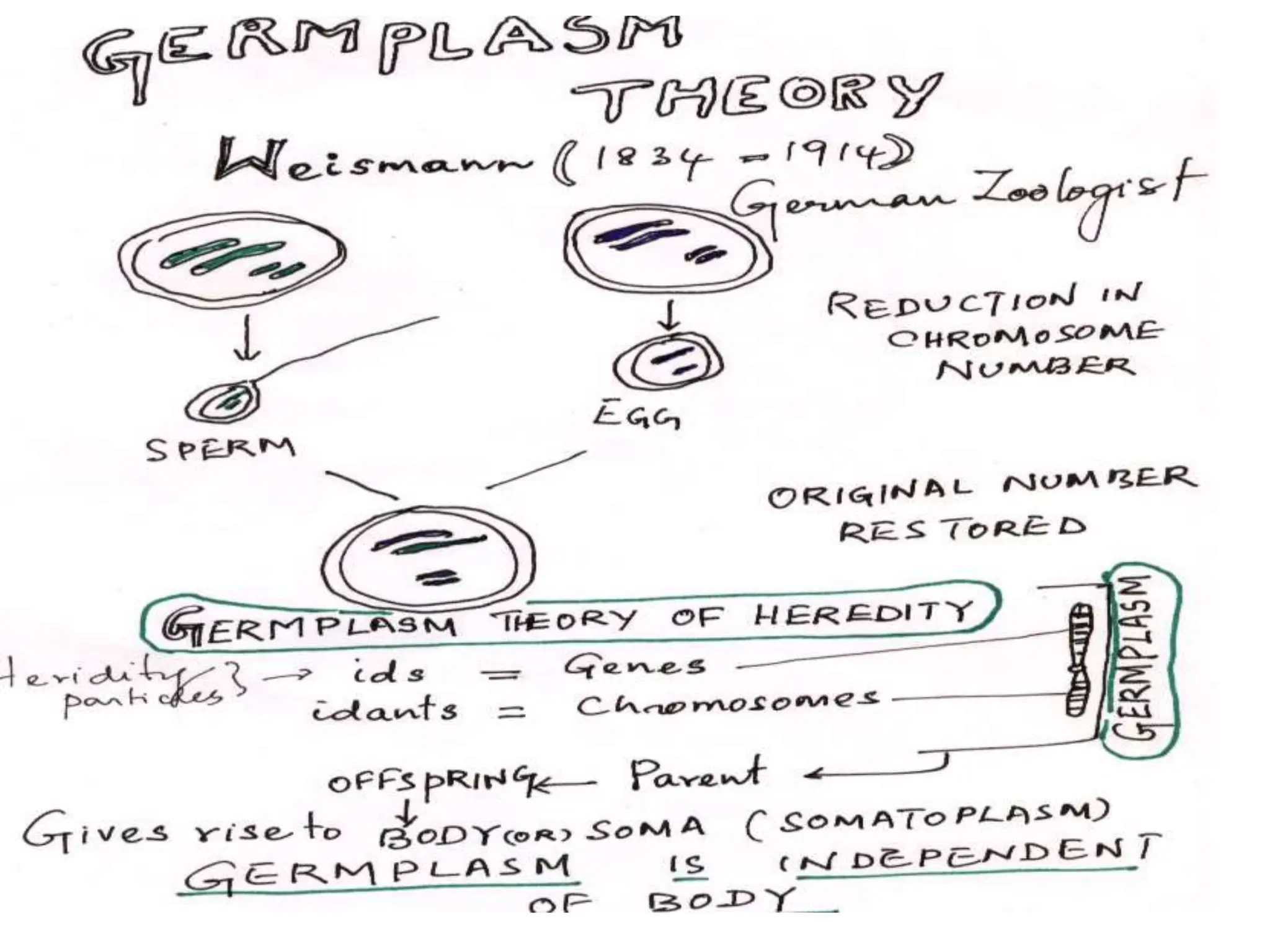
8. Germplasm Theory
• Weismann (1834-1914), a German zoologist, suggested in 1889
• According to 'Germplasm Theory of Heredity', the body tissues are
of two types viz., germplasm and somatoplasm.
• The germplasm refers to the reproductive tissues or cells that
produces the gametes.
• The somatoplasm includes all other body tissues which are not
related to sexual reproduction.
• Thus transmission of characters from one generation to other takes
place through germplasm.
• Any change in the germplasm will lead to change in the next
generation.
• This theory was accepted in broad sense.
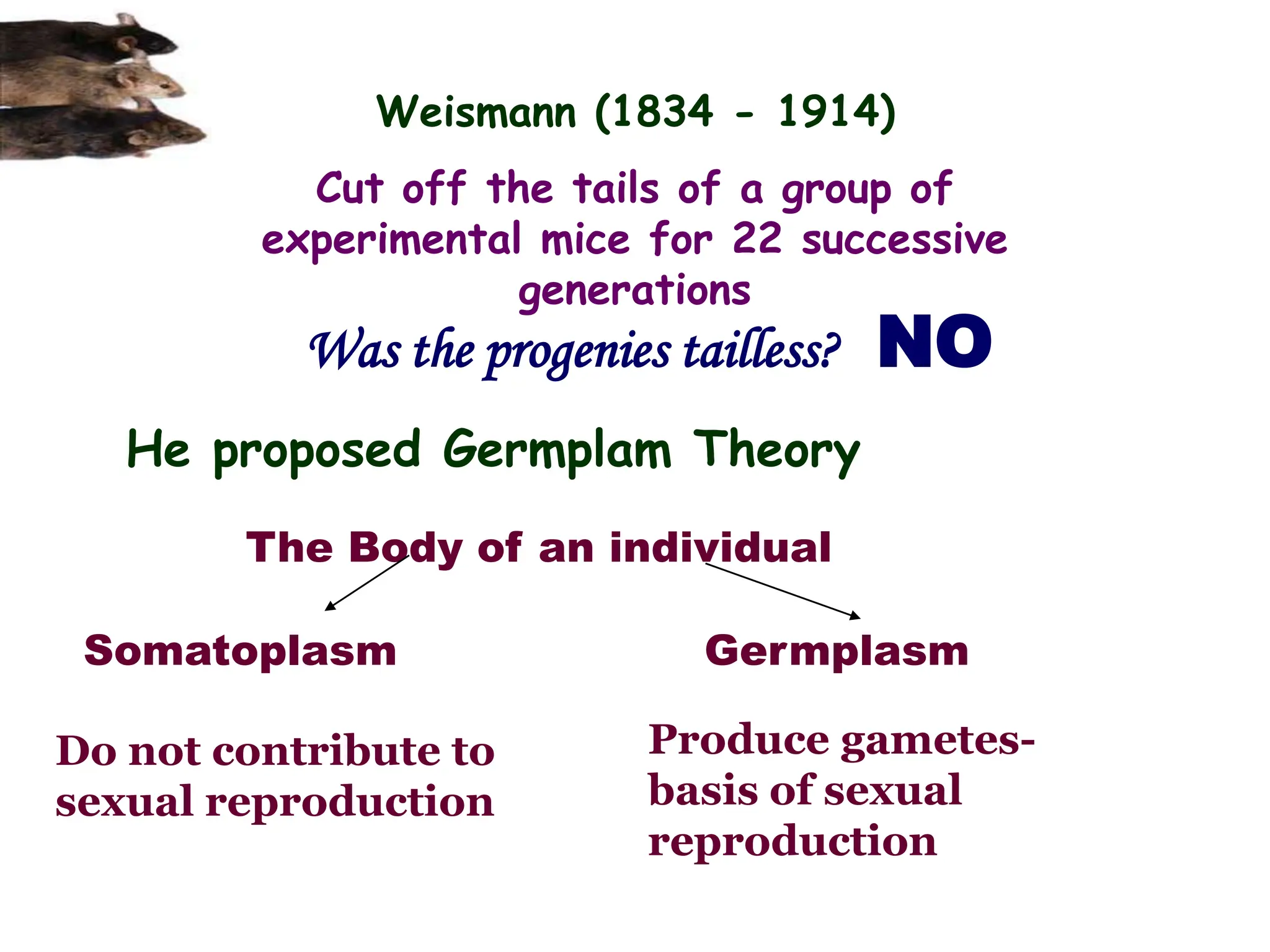
Weismann (1834 - 1914)
Cut off the tails of a group of
experimental mice for 22 successive
generations
Was the progenies tailless? NO
He proposed Germplam Theory
The Body of an individual
Somatoplasm Germplasm
Do not contribute to
sexual reproduction
Produce gametes-
basis of sexual
reproduction
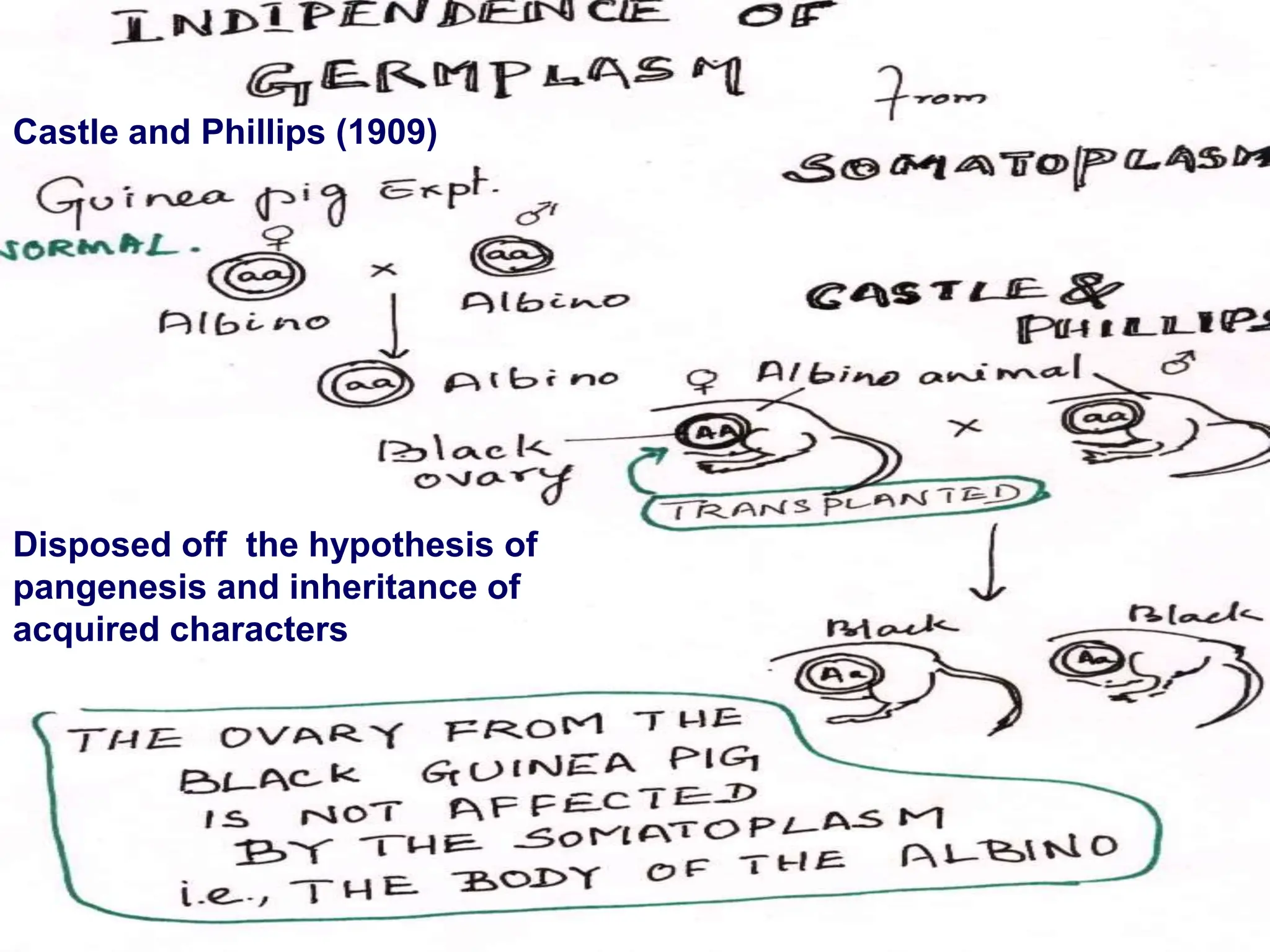
Castle and Phillips (1909)
Disposed off the hypothesis of
pangenesis and inheritance of
acquired characters
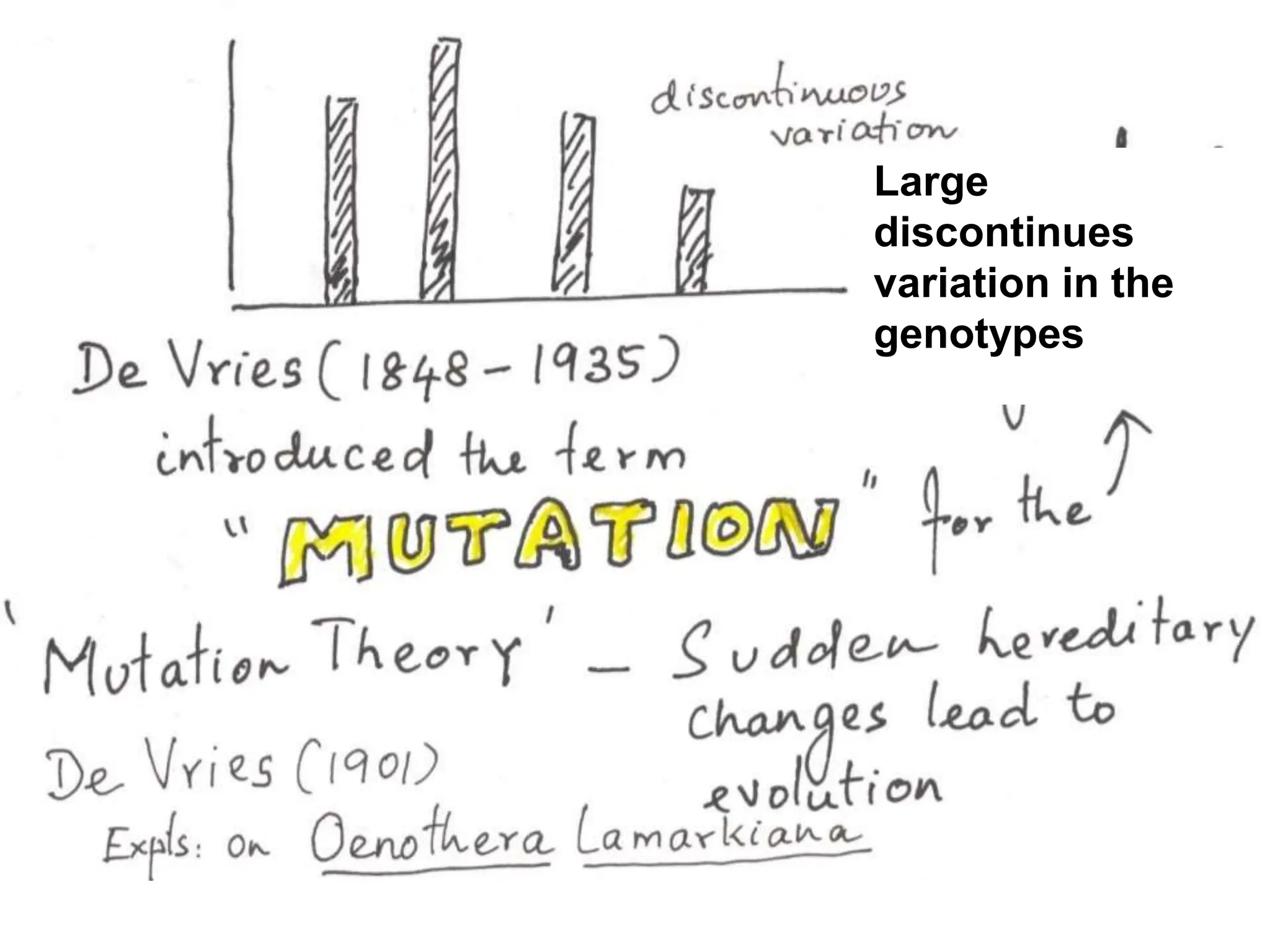
Large
discontinues
variation in the
genotypes

PRE MENDELIAN IDEAS ABOUT HEREDITY- VAPOUR THEORY

  • 1.
    Lecture 12 Pre-Mendelianideas about heredity – Vapour and fluid theory, Magnetic power theory, Preformation theory, Lamarck’s theory, Darwin’s theory, Germplasm theory and Mutation theory
  • 2.
    EARLIER CONCEPTS OFHEREDITY • Reproductive organs in plants were reported for the first time by Grew in 1682. • Camerarius first time described sexual reproduction in plants. • In 1717 Thomas Fairchild produced a hybrid having characters of both the parents. The hybrid was called 'Fairchild's mule' - first artificial hybrid
  • 3.
    PRE- MENDELIAN CONCEPTSOF HEREDITY 1. Vapour and fluid theory 2. Theory of spontaneous generation 3. Magnetic power theory 4. Preformation theory 5. Theory of epigenesis 6. Inheritance of acquired characters (Lamark’s theory) 7. Theory of natural selection (Darwin’s theory) 8. Theory of pangenesis 9. Germplasm theory
  • 4.
    Heredity information’s ofparents exists in the form of vapours of fluids Both parents contributed equally to the embryo Greek Philosophers After 200 Years Transmit all characters Each parent produces a semen Moist vapour from Brain, Nerves and other body organs of male Embryo in female Semen of male had certain Vitalizing or Dynamic effect (purified blood)
  • 5.
    An organism originates froma pre existing organism SPONTANEUS GENERATION Redi 1621-1697 Spallanzani 1729-1799
  • 9.
    Uterus by thefriction of coitus acquires some magnetic power to conceive an embryo He proposed the uterus had some magnetic power to consume an embryo.
  • 10.
    Preformation Theory Dutch BiologistSwammerdam and Bonnet (1720 -1793) Miniature human called humanculus was already present (preformed ) in the egg and sperm. Development of zygote resulted only in the growth of miniature human who was already present in the egg and sperm. not proved scientifically. Swammerdam, an ovist, believed that the animal hemisphere of the frog’s egg contained a tiny frog
  • 11.
    Theory of Epigenesis Advocatedby Wolf (1738 – 1794) German Biologist Egg or sperm are undifferentiated – differentiation takes place only after fertilization from the zygote resulting into development of adult tissues and organs Concept of epigenesis – universally accepted
  • 12.
    Environmental changes causesmodification in organisms Such modifications are transmitted to subsequent generation Jean Baptist
  • 13.
    This was negatedby Weismann (1834 – 1914) by his expts. on rats
  • 14.
    Hypothesis of Pangenes(1868) Very small exact but invisible -Heriditary particles “Pangenes or Gemmules” - transported by the blood stream to sex organs Assembled in gametes or Germ Cells- After fertilization- New Individual
  • 16.
    8. Germplasm Theory •Weismann (1834-1914), a German zoologist, suggested in 1889 • According to 'Germplasm Theory of Heredity', the body tissues are of two types viz., germplasm and somatoplasm. • The germplasm refers to the reproductive tissues or cells that produces the gametes. • The somatoplasm includes all other body tissues which are not related to sexual reproduction. • Thus transmission of characters from one generation to other takes place through germplasm. • Any change in the germplasm will lead to change in the next generation. • This theory was accepted in broad sense.
  • 17.
    Weismann (1834 -1914) Cut off the tails of a group of experimental mice for 22 successive generations Was the progenies tailless? NO He proposed Germplam Theory The Body of an individual Somatoplasm Germplasm Do not contribute to sexual reproduction Produce gametes- basis of sexual reproduction
  • 19.
    Castle and Phillips(1909) Disposed off the hypothesis of pangenesis and inheritance of acquired characters
  • 20.