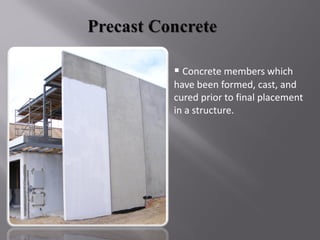
 Concrete members which
have been formed, cast, and
cured prior to final placement
in a structure.
 Complete thermal protection.
 Effective rain screens .
 Superior lifespan.
 Numerous finish options and colours .
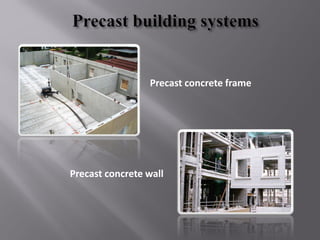
Precast concrete wall
Precast concrete frame
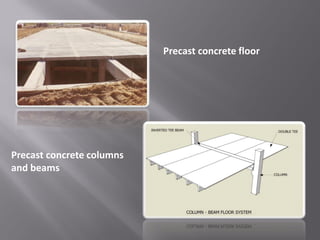
Precast concrete floor
Precast concrete columns
and beams
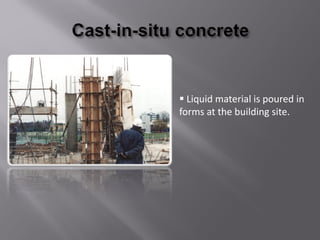
 Liquid material is poured in
forms at the building site.
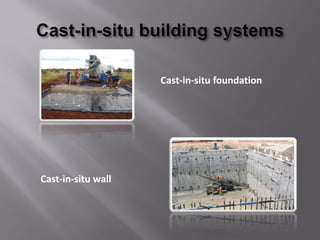
Cast-in-situ foundation
Cast-in-situ wall
 Cast-in-situ concrete has less strength as compared to
precast concrete.
The concept of precast construction includes those
buildings where the majority of structural
components are standardized and produced in
plants in a location away from the building, and then
transported to the site for assembly. These
components are manufactured by industrial methods
based on mass production in order to build large
number of buildings in a short time at low cost
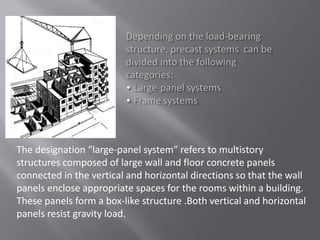
The desig atio large-pa el syste refers to ultistory
structures composed of large wall and floor concrete panels
connected in the vertical and horizontal directions so that the wall
panels enclose appropriate spaces for the rooms within a building.
These panels form a box-like structure .Both vertical and horizontal
panels resist gravity load.
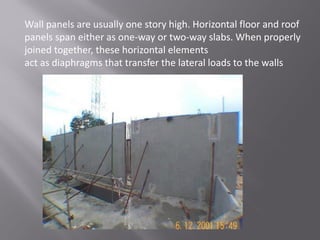
Wall panels are usually one story high. Horizontal floor and roof
panels span either as one-way or two-way slabs. When properly
joined together, these horizontal elements
act as diaphragms that transfer the lateral loads to the walls
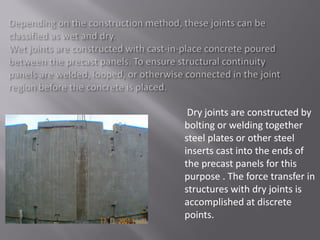
Dry joints are constructed by
bolting or welding together
steel plates or other steel
inserts cast into the ends of
the precast panels for this
purpose . The force transfer in
structures with dry joints is
accomplished at discrete
points.
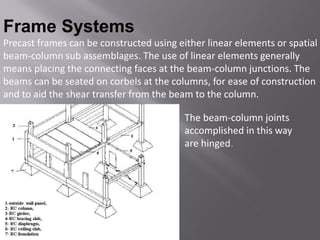
Frame Systems
Precast frames can be constructed using either linear elements or spatial
beam-column sub assemblages. The use of linear elements generally
means placing the connecting faces at the beam-column junctions. The
beams can be seated on corbels at the columns, for ease of construction
and to aid the shear transfer from the beam to the column.
The beam-column joints
accomplished in this way
are hinged.
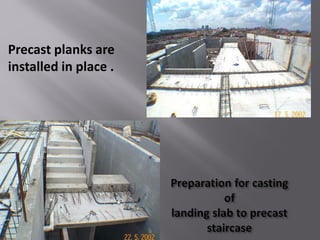
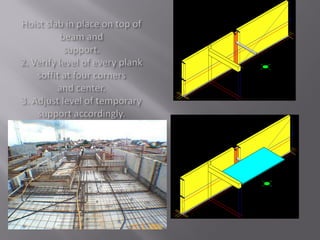
Precast planks are
installed in place .
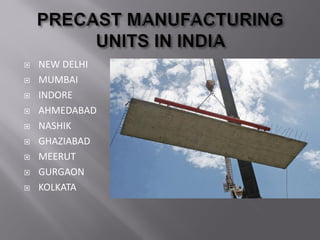
 NEW DELHI
 MUMBAI
 INDORE
 AHMEDABAD
 NASHIK
 GHAZIABAD
 MEERUT
 GURGAON
 KOLKATA
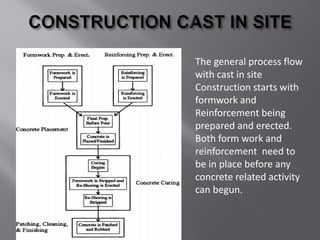
The general process flow
with cast in site
Construction starts with
formwork and
Reinforcement being
prepared and erected.
Both form work and
reinforcement need to
be in place before any
concrete related activity
can begun.
Usually within a few days , the concrete is strong enough to
support its design load and the formwork can be removed to
be used elsewhere on the site.
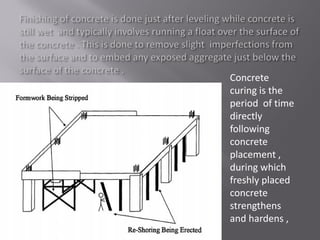
Re-shoring is used to replace the formwork and continue to
support the concrete while construction loads are applied
to it .
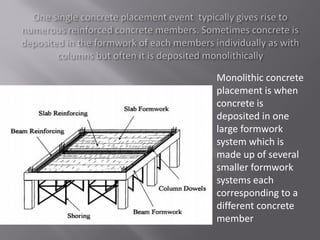
Monolithic concrete
placement is when
concrete is
deposited in one
large formwork
system which is
made up of several
smaller formwork
systems each
corresponding to a
different concrete
member
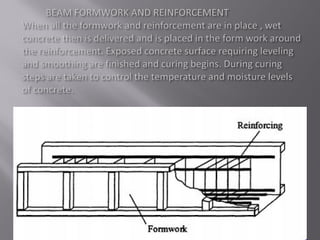
Concrete
curing is the
period of time
directly
following
concrete
placement ,
during which
freshly placed
concrete
strengthens
and hardens ,
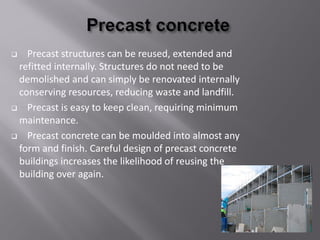
 Precast structures can be reused, extended and
refitted internally. Structures do not need to be
demolished and can simply be renovated internally
conserving resources, reducing waste and landfill.
 Precast is easy to keep clean, requiring minimum
maintenance.
 Precast concrete can be moulded into almost any
form and finish. Careful design of precast concrete
buildings increases the likelihood of reusing the
building over again.
 Precast co crete does ’t shri k, distort or o e a d does
not deteriorate with exposure to climatic change.
 Being flood resistant, precast concrete does not erode or rot
therefore is suitable for river and coastal barriers to protect
against high tides and storms.
 As a hardy waterproof construction method, precast
concrete underground pipes transport sewerage and clean
water across the country.
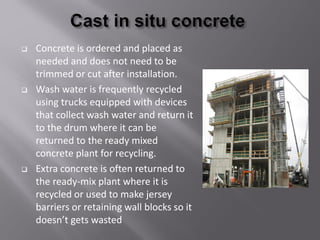
 Concrete is ordered and placed as
needed and does not need to be
trimmed or cut after installation.
 Wash water is frequently recycled
using trucks equipped with devices
that collect wash water and return it
to the drum where it can be
returned to the ready mixed
concrete plant for recycling.
 Extra concrete is often returned to
the ready-mix plant where it is
recycled or used to make jersey
barriers or retaining wall blocks so it
does ’t gets asted
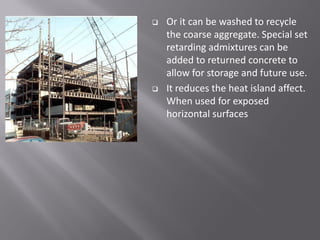
 Or it can be washed to recycle
the coarse aggregate. Special set
retarding admixtures can be
added to returned concrete to
allow for storage and future use.
 It reduces the heat island affect.
When used for exposed
horizontal surfaces
ADVANTAGES DISADVANTAGES
 Entire building can be
precast-walls,floors,beams
etc.
 High quality.
 Flexibility in use.
 More durable than real
masonry.
 Optimum use of materials.
 Protection of
environment.
 Very heavy members.
 Camber in beams and
columns.
 Connections may be difficult.
 Somewhat limited building
design.
 Joints between panels are
often expensive and
complicated.
 Cranes are required to lift
panels.
ADVANTAGES DISADVANTAGES
 Limitless flexibility of
shape and size.
 Wide variety of surface
and textures can be
achieved.
 Homogeneous
connections.
 Needs high labour and
plant on site.
 Formwork is time
consuming.
 Quality control is difficult.
Precast Construction
THANK YOU

Pre cast vs cast-in-situ concrete

  • 2.
     Concrete memberswhich have been formed, cast, and cured prior to final placement in a structure.
  • 3.
     Complete thermalprotection.  Effective rain screens .  Superior lifespan.  Numerous finish options and colours .
  • 4.
  • 5.
    Precast concrete floor Precastconcrete columns and beams
  • 6.
     Liquid materialis poured in forms at the building site.
  • 7.
  • 8.
     Cast-in-situ concretehas less strength as compared to precast concrete.
  • 9.
    The concept ofprecast construction includes those buildings where the majority of structural components are standardized and produced in plants in a location away from the building, and then transported to the site for assembly. These components are manufactured by industrial methods based on mass production in order to build large number of buildings in a short time at low cost
  • 10.
    The desig atiolarge-pa el syste refers to ultistory structures composed of large wall and floor concrete panels connected in the vertical and horizontal directions so that the wall panels enclose appropriate spaces for the rooms within a building. These panels form a box-like structure .Both vertical and horizontal panels resist gravity load.
  • 11.
    Wall panels areusually one story high. Horizontal floor and roof panels span either as one-way or two-way slabs. When properly joined together, these horizontal elements act as diaphragms that transfer the lateral loads to the walls
  • 12.
    Dry joints areconstructed by bolting or welding together steel plates or other steel inserts cast into the ends of the precast panels for this purpose . The force transfer in structures with dry joints is accomplished at discrete points.
  • 13.
    Frame Systems Precast framescan be constructed using either linear elements or spatial beam-column sub assemblages. The use of linear elements generally means placing the connecting faces at the beam-column junctions. The beams can be seated on corbels at the columns, for ease of construction and to aid the shear transfer from the beam to the column. The beam-column joints accomplished in this way are hinged.
  • 14.
  • 16.
     NEW DELHI MUMBAI  INDORE  AHMEDABAD  NASHIK  GHAZIABAD  MEERUT  GURGAON  KOLKATA
  • 17.
    The general processflow with cast in site Construction starts with formwork and Reinforcement being prepared and erected. Both form work and reinforcement need to be in place before any concrete related activity can begun.
  • 18.
    Usually within afew days , the concrete is strong enough to support its design load and the formwork can be removed to be used elsewhere on the site. Re-shoring is used to replace the formwork and continue to support the concrete while construction loads are applied to it .
  • 20.
    Monolithic concrete placement iswhen concrete is deposited in one large formwork system which is made up of several smaller formwork systems each corresponding to a different concrete member
  • 22.
    Concrete curing is the periodof time directly following concrete placement , during which freshly placed concrete strengthens and hardens ,
  • 24.
     Precast structurescan be reused, extended and refitted internally. Structures do not need to be demolished and can simply be renovated internally conserving resources, reducing waste and landfill.  Precast is easy to keep clean, requiring minimum maintenance.  Precast concrete can be moulded into almost any form and finish. Careful design of precast concrete buildings increases the likelihood of reusing the building over again.
  • 25.
     Precast cocrete does ’t shri k, distort or o e a d does not deteriorate with exposure to climatic change.  Being flood resistant, precast concrete does not erode or rot therefore is suitable for river and coastal barriers to protect against high tides and storms.  As a hardy waterproof construction method, precast concrete underground pipes transport sewerage and clean water across the country.
  • 26.
     Concrete isordered and placed as needed and does not need to be trimmed or cut after installation.  Wash water is frequently recycled using trucks equipped with devices that collect wash water and return it to the drum where it can be returned to the ready mixed concrete plant for recycling.  Extra concrete is often returned to the ready-mix plant where it is recycled or used to make jersey barriers or retaining wall blocks so it does ’t gets asted
  • 27.
     Or itcan be washed to recycle the coarse aggregate. Special set retarding admixtures can be added to returned concrete to allow for storage and future use.  It reduces the heat island affect. When used for exposed horizontal surfaces
  • 28.
    ADVANTAGES DISADVANTAGES  Entirebuilding can be precast-walls,floors,beams etc.  High quality.  Flexibility in use.  More durable than real masonry.  Optimum use of materials.  Protection of environment.  Very heavy members.  Camber in beams and columns.  Connections may be difficult.  Somewhat limited building design.  Joints between panels are often expensive and complicated.  Cranes are required to lift panels.
  • 29.
    ADVANTAGES DISADVANTAGES  Limitlessflexibility of shape and size.  Wide variety of surface and textures can be achieved.  Homogeneous connections.  Needs high labour and plant on site.  Formwork is time consuming.  Quality control is difficult.
  • 30.
  • 31.