THE PHILIPPINE PROFESSIONAL
STANDARDS FOR TEACHERS
DepEd Order no. 42 s. 2017
SHIFT FROM NCBTS TO PPST:
NCBTS (National Competency-Based Teacher Standards)
Reasons for this shift:
1. K TO 12
2. ASEAN
3. GLOBALIZATION
4. CHANGING 21ST CENTURY LEARNERS
THE PPST AIMS TO:
• set out clear expectations of teachers along well- defined career
stages of professional development from beginning to
distinguished practice;
• b. engage teachers to actively embrace a continuing effort in
attaining proficiency; and
• c. apply a uniform measure to assess teacher performance,
identify needs, and provide support for professional
development.
THE PPST AIMS TO:
• TO PRODUCE RIGHT FILIPINO GRADUATES:
1. Holistically Developed
2. Steeped with values
3. Carrying 21st century skills (4C’s)
THE PPST AIMS TO:
4. The teacher who spends more than what is earned, thus
becoming vulnerable to loan sharks lacks
________
A. Financial literacy
B. Cyberliteracy
C. Eco-literacy
D. Media literacy
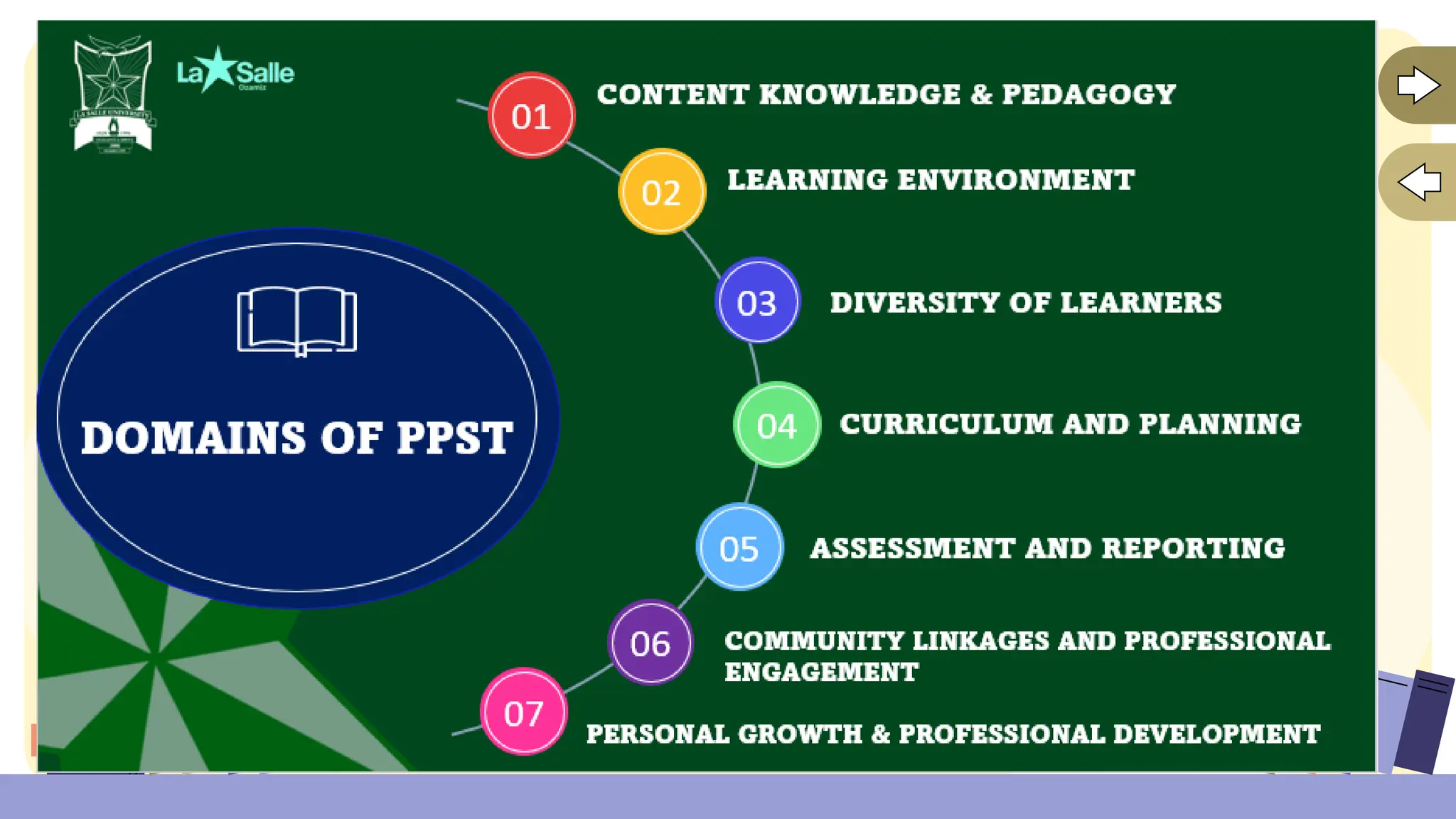
THE 7 DOMAINS
COLLECTIVELY
COMPRISE 37
STRANDS THAT REFER
TO MORE SPECIFIC
DIMENSIONS OF
TEACHER PRACTICES.
(R.A.) No. 10912, otherwise known as
the "Continuing Professional
Development (CPD) Act of 2016
DOMAIN 1: CONTENT KNOWLEDGE AND
PEDAGOGY, IS COMPOSED OF SEVEN
STRANDS:
DOMAIN 1:
1. Content knowledge and its application within and across
curriculum areas
2. Research-based knowledge and principles of teaching and
learning
3. Positive use of ICT
4. Strategies for promoting literacy and numeracy
5. Strategies for developing critical and creative thinking, as well as
other higher-order thinking skills
6. Mother Tongue, Filipino and English in teaching and learning
7. Classroom communication strategies
Domain 2,
Learning
Environment,
consists of six
strands:
DOMAIN 2:
1. Learner safety and security
2. Fair learning environment
3. Management of classroom structure and activities
4. Support for learner participation
5. Promotion of purposive learning
6. Management of learner behavior
Domain 3,
Diversity of
Learners, consists
of five strands:
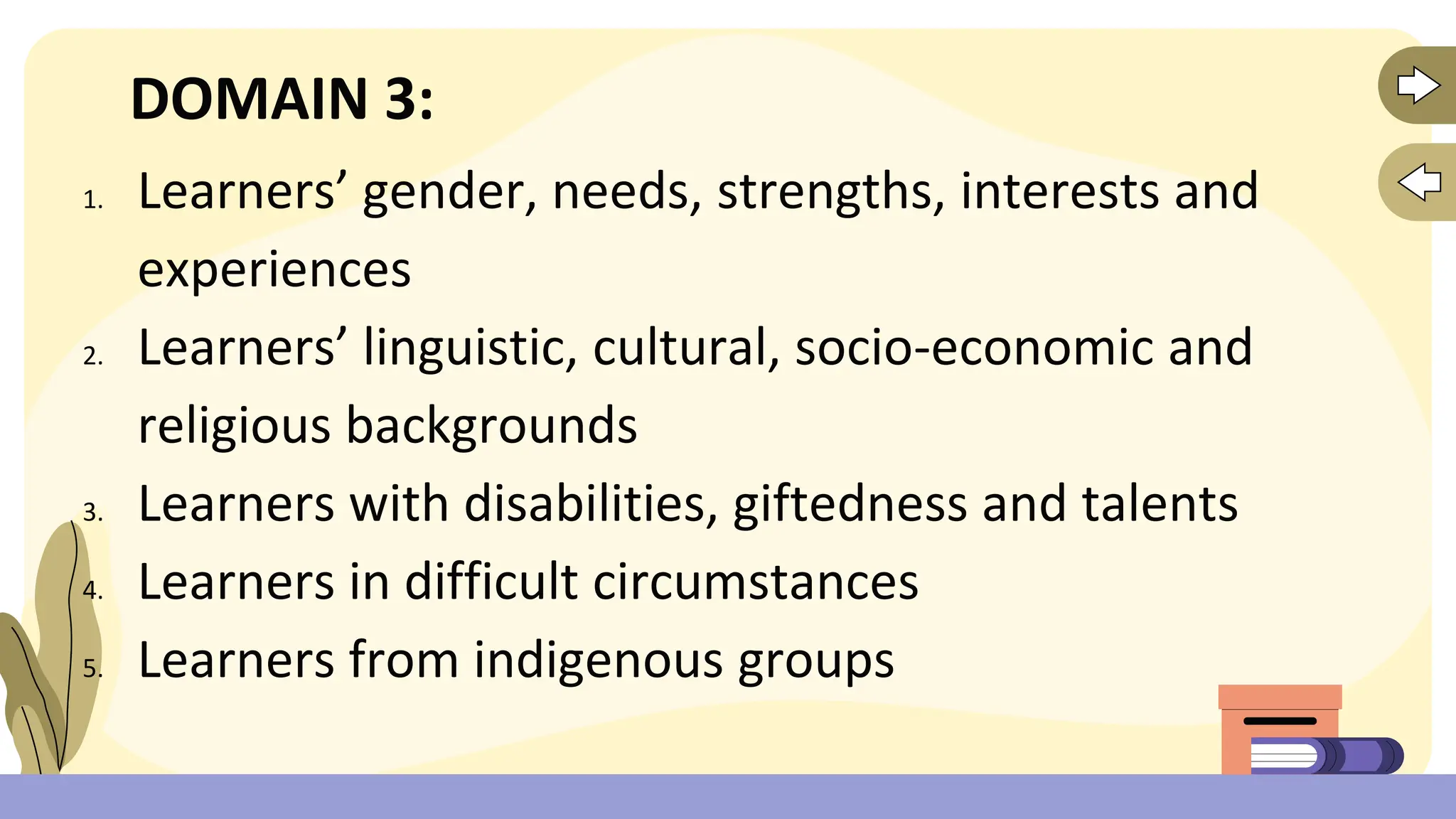
DOMAIN 3:
1. Learners’ gender, needs, strengths, interests and
experiences
2. Learners’ linguistic, cultural, socio-economic and
religious backgrounds
3. Learners with disabilities, giftedness and talents
4. Learners in difficult circumstances
5. Learners from indigenous groups
Domain 4,
Curriculum and
Planning,
includes five
strands:
PHILIPPINE
PPROFESSIONAL
STANDARDS FOR
TEACHERS
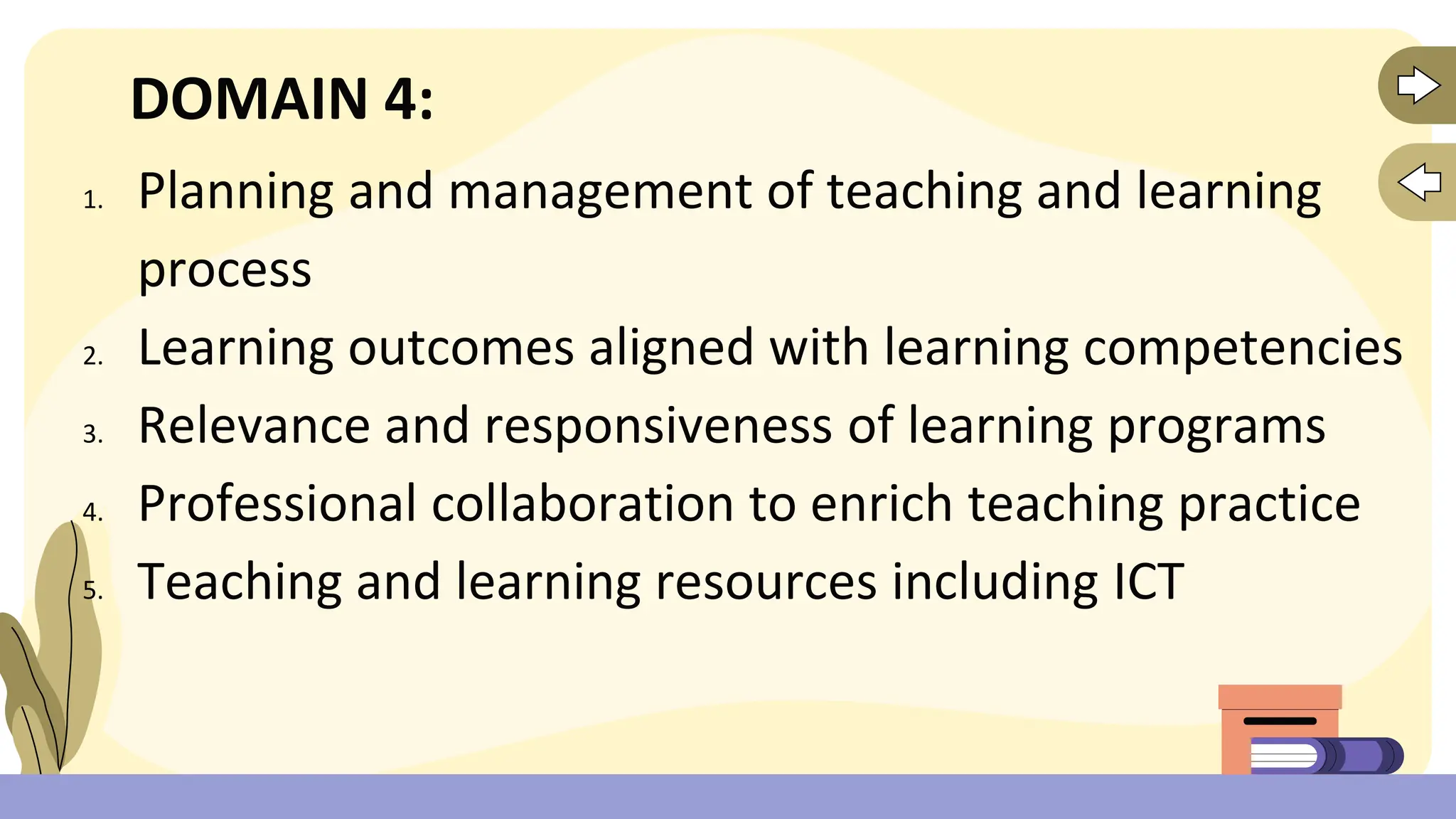
DOMAIN 4:
1. Planning and management of teaching and learning
process
2. Learning outcomes aligned with learning competencies
3. Relevance and responsiveness of learning programs
4. Professional collaboration to enrich teaching practice
5. Teaching and learning resources including ICT
Domain 5,
Assessment and
Reporting, is
composed of five
strands:
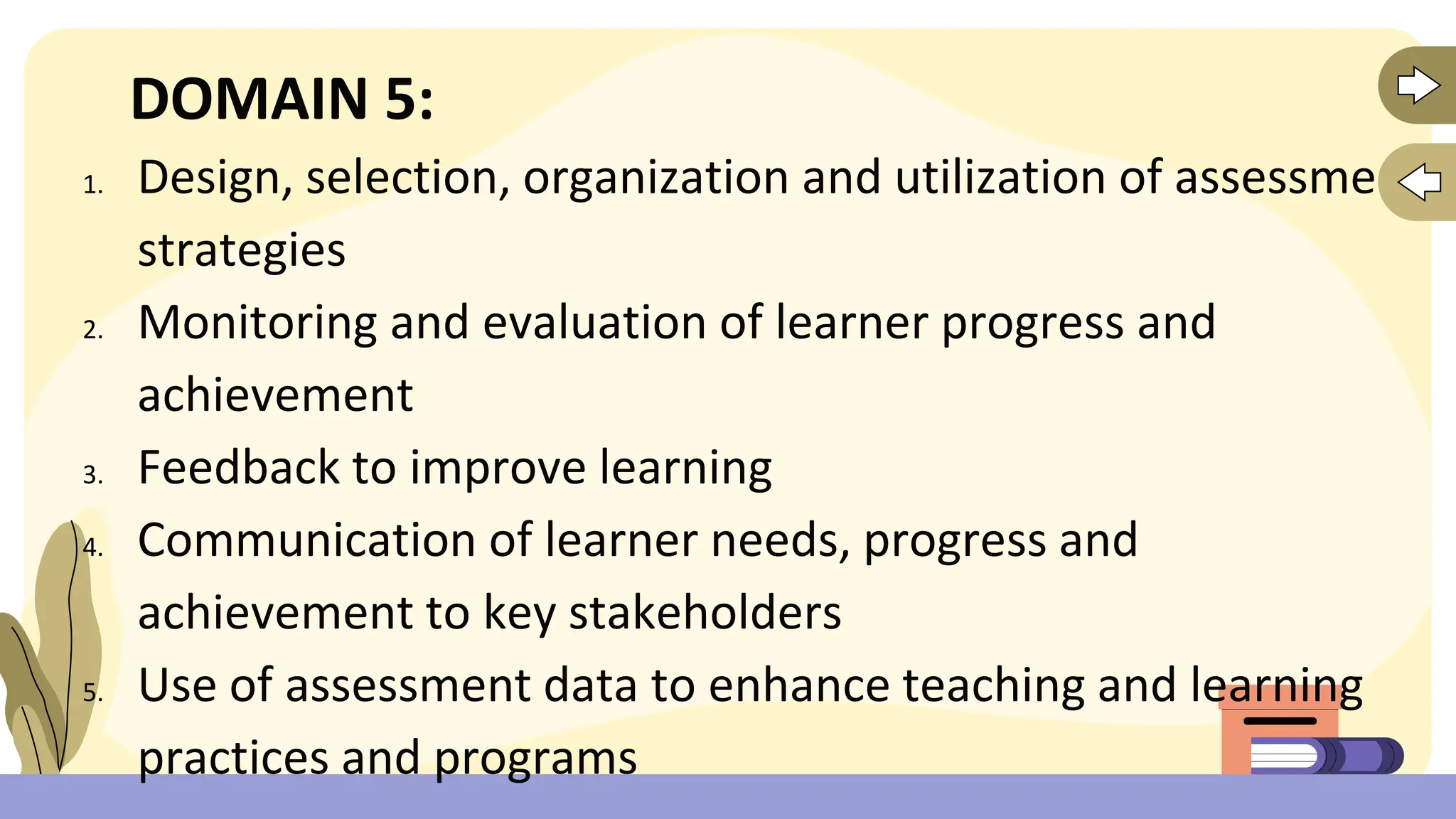
DOMAIN 5:
1. Design, selection, organization and utilization of assessment
strategies
2. Monitoring and evaluation of learner progress and
achievement
3. Feedback to improve learning
4. Communication of learner needs, progress and
achievement to key stakeholders
5. Use of assessment data to enhance teaching and learning
practices and programs
Domain 6, Community Linkages and
Professional Engagement, consists of four
strands:
DOMAIN 6:
1. Establishment of learning environments that are
responsive to community contexts
2. Engagement of parents and the wider school
community in the educative process
3. Professional ethics
4. School policies and procedures
Domain 7, Personal Growth and Professional
Development, contains five strands:
DOMAIN 7:
1. Philosophy of teaching
2. Dignity of teaching as a profession
3. Professional links with colleagues
4. Professional reflection and learning to improve
practice
5. Professional development goals
PPST LECTURE.pdf

PPST LECTURE.pdf

  • 1.
    THE PHILIPPINE PROFESSIONAL STANDARDSFOR TEACHERS DepEd Order no. 42 s. 2017
  • 2.
    SHIFT FROM NCBTSTO PPST: NCBTS (National Competency-Based Teacher Standards) Reasons for this shift: 1. K TO 12 2. ASEAN 3. GLOBALIZATION 4. CHANGING 21ST CENTURY LEARNERS
  • 3.
    THE PPST AIMSTO: • set out clear expectations of teachers along well- defined career stages of professional development from beginning to distinguished practice; • b. engage teachers to actively embrace a continuing effort in attaining proficiency; and • c. apply a uniform measure to assess teacher performance, identify needs, and provide support for professional development.
  • 4.
    THE PPST AIMSTO: • TO PRODUCE RIGHT FILIPINO GRADUATES: 1. Holistically Developed 2. Steeped with values 3. Carrying 21st century skills (4C’s)
  • 5.
    THE PPST AIMSTO: 4. The teacher who spends more than what is earned, thus becoming vulnerable to loan sharks lacks ________ A. Financial literacy B. Cyberliteracy C. Eco-literacy D. Media literacy
  • 6.
    THE 7 DOMAINS COLLECTIVELY COMPRISE37 STRANDS THAT REFER TO MORE SPECIFIC DIMENSIONS OF TEACHER PRACTICES.
  • 8.
    (R.A.) No. 10912,otherwise known as the "Continuing Professional Development (CPD) Act of 2016
  • 9.
    DOMAIN 1: CONTENTKNOWLEDGE AND PEDAGOGY, IS COMPOSED OF SEVEN STRANDS:
  • 10.
    DOMAIN 1: 1. Contentknowledge and its application within and across curriculum areas 2. Research-based knowledge and principles of teaching and learning 3. Positive use of ICT 4. Strategies for promoting literacy and numeracy 5. Strategies for developing critical and creative thinking, as well as other higher-order thinking skills 6. Mother Tongue, Filipino and English in teaching and learning 7. Classroom communication strategies
  • 11.
  • 12.
    DOMAIN 2: 1. Learnersafety and security 2. Fair learning environment 3. Management of classroom structure and activities 4. Support for learner participation 5. Promotion of purposive learning 6. Management of learner behavior
  • 13.
    Domain 3, Diversity of Learners,consists of five strands:
  • 14.
    DOMAIN 3: 1. Learners’gender, needs, strengths, interests and experiences 2. Learners’ linguistic, cultural, socio-economic and religious backgrounds 3. Learners with disabilities, giftedness and talents 4. Learners in difficult circumstances 5. Learners from indigenous groups
  • 15.
    Domain 4, Curriculum and Planning, includesfive strands: PHILIPPINE PPROFESSIONAL STANDARDS FOR TEACHERS
  • 16.
    DOMAIN 4: 1. Planningand management of teaching and learning process 2. Learning outcomes aligned with learning competencies 3. Relevance and responsiveness of learning programs 4. Professional collaboration to enrich teaching practice 5. Teaching and learning resources including ICT
  • 17.
    Domain 5, Assessment and Reporting,is composed of five strands:
  • 18.
    DOMAIN 5: 1. Design,selection, organization and utilization of assessment strategies 2. Monitoring and evaluation of learner progress and achievement 3. Feedback to improve learning 4. Communication of learner needs, progress and achievement to key stakeholders 5. Use of assessment data to enhance teaching and learning practices and programs
  • 19.
    Domain 6, CommunityLinkages and Professional Engagement, consists of four strands:
  • 20.
    DOMAIN 6: 1. Establishmentof learning environments that are responsive to community contexts 2. Engagement of parents and the wider school community in the educative process 3. Professional ethics 4. School policies and procedures
  • 21.
    Domain 7, PersonalGrowth and Professional Development, contains five strands:
  • 22.
    DOMAIN 7: 1. Philosophyof teaching 2. Dignity of teaching as a profession 3. Professional links with colleagues 4. Professional reflection and learning to improve practice 5. Professional development goals