What is INSET?
IN- SERVICE TRAINING FOR
TEACHERS
Teacher Professional Development Day
• to provide quality teaching and learning in the classroom
• provides variety of activities and practices that meet the needs of the
teachers based from the result of their Self-Assessment.
• It helps teachers in improving their teaching methods, classroom
management, professional growth and development and knowledge and
skills enhancement that leads to the upliftment of student-centered
learning.As they say always say, qualuity teachers produce quality
learners.
Importance of INSET
1. Improve the teaching-learning situation.
2. Develop new skills and abilities in teaching.
3. Familiarizing with the latest in education.
4. Create effective learning environment.
5. Professional development.
EQUIPPING 21ST CENTURY
TEACHERS WITH
STRATEGIES FOR THE NEW
NORMAL
OBJECTIVES:
• have a clear vision of our roles as 21st Century Teachers
• be equipped with teaching strategies for the new normal
• reflect on the challenges of the pandemic to educators
and how these can be solved
21st Century Teachers
Teachers play a key role in
training students to develop
the skills for the 21st
century.
The teacher is a guide who
supports student
development from early
childhood and throughout
the learning process for
children, youth and adults (
UNESCO 21).
Traits of a 21st Century Teacher
• Learner-centered
• Guide of learner-producers
• Techie and willing to be one
• Global
• Open to learning
• Connect
• Flexible
• Innovators
‘ A teacher needs to be able to formulate,
construct. arrange, modify and make sense of
information so that it can be understood as
knowledge.’
( Barbous, 2020)
21st Century Skills
What are 21st century skills?
• The 21st century skills are a set of abilities that students
need to develop in order to succeed in the information
age.
• 21st century skills include skills like critical thinking,
communication, technology literacy and more.
• Learners will need to develop their skills in the classroom
so they can have great careers in the future.
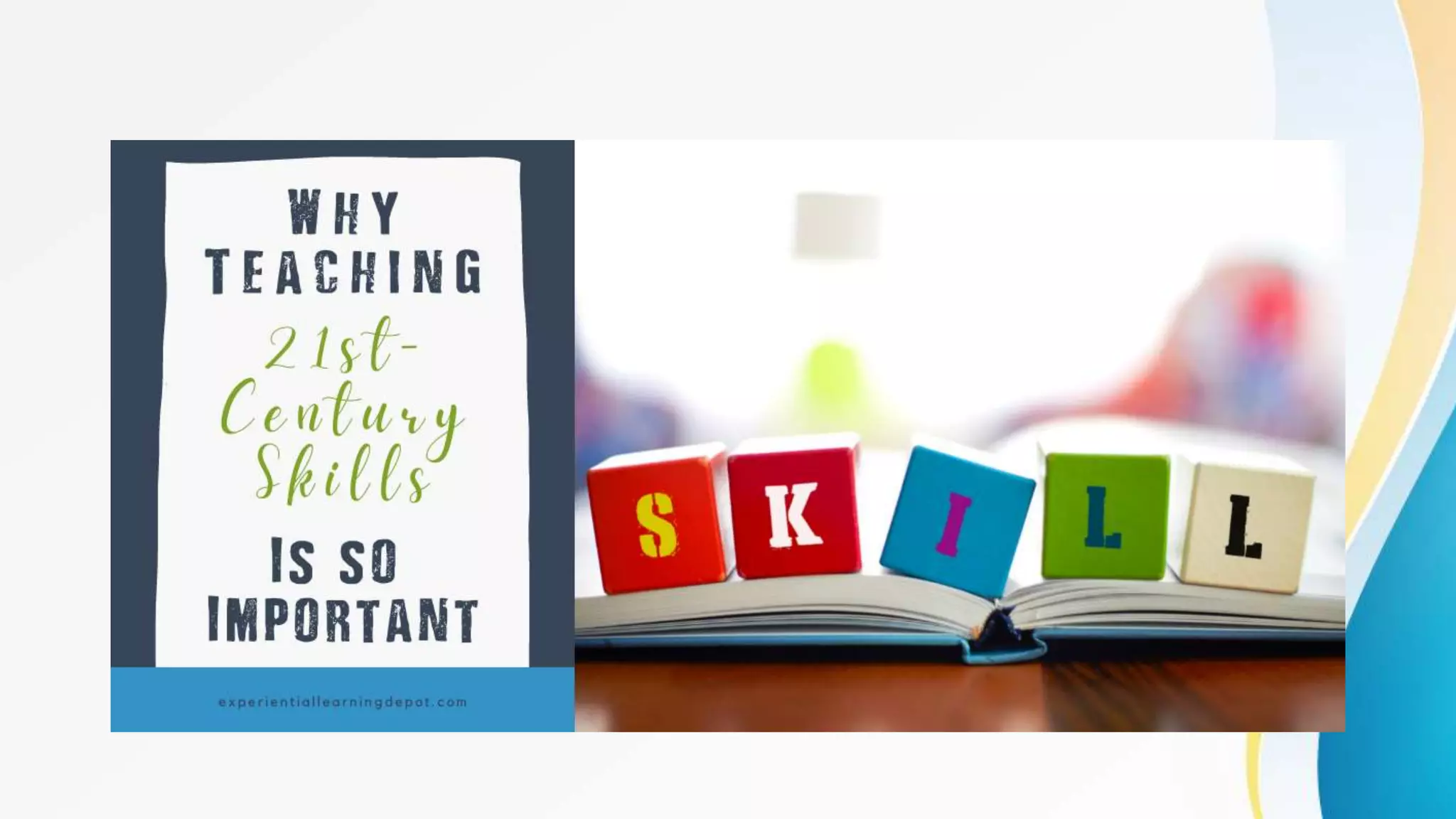
21st Century Skills are considered the
most important skills to succeed in
today’s workplace.
The Most Important 21st Century Skills to
Develop in the Classroom.
Learning Skills
Literacy Skills
Life Skills
Learning Skills
• Critical thinking
 the ability to find solutions to problems. It includes identifying,
understanding and raising questions about the basic concepts
that underlie the solutions to a problem.
• Creativity
the ability to think ”outside the box”. It is an important skill not to
be limited by boundaries and categories.
• Collaboration
 the ability to work together with others and coordinate to
achieve a goal.
• Communication
 the ability to talk/write effectively with and to others. It also
includes being a good listener and being prepared to speak in
both formal and informal situations.
LITERACY SKILLS
• Information Literacy
the ability to identify, find, evaluate and use information
effectively.
• Media Literacy
the ability to identify different types of media and evaluate and
understand the messages received through each.
• Technology Literacy
the ability to use, manage, evaluate and understand
technology.
LIFE SKILLS
• Flexibility
 the ability to adapt to new situations improvise and shift
strategies to achieve a goal/outcome.
• Leadership
 the ability to set goals, walk a team through the

INSET TRAINING.pptx

  • 1.
  • 2.
    IN- SERVICE TRAININGFOR TEACHERS Teacher Professional Development Day • to provide quality teaching and learning in the classroom • provides variety of activities and practices that meet the needs of the teachers based from the result of their Self-Assessment. • It helps teachers in improving their teaching methods, classroom management, professional growth and development and knowledge and skills enhancement that leads to the upliftment of student-centered learning.As they say always say, qualuity teachers produce quality learners.
  • 3.
    Importance of INSET 1.Improve the teaching-learning situation. 2. Develop new skills and abilities in teaching. 3. Familiarizing with the latest in education. 4. Create effective learning environment. 5. Professional development.
  • 4.
    EQUIPPING 21ST CENTURY TEACHERSWITH STRATEGIES FOR THE NEW NORMAL
  • 5.
    OBJECTIVES: • have aclear vision of our roles as 21st Century Teachers • be equipped with teaching strategies for the new normal • reflect on the challenges of the pandemic to educators and how these can be solved
  • 6.
    21st Century Teachers Teachersplay a key role in training students to develop the skills for the 21st century. The teacher is a guide who supports student development from early childhood and throughout the learning process for children, youth and adults ( UNESCO 21).
  • 7.
    Traits of a21st Century Teacher • Learner-centered • Guide of learner-producers • Techie and willing to be one • Global • Open to learning • Connect • Flexible • Innovators
  • 8.
    ‘ A teacherneeds to be able to formulate, construct. arrange, modify and make sense of information so that it can be understood as knowledge.’ ( Barbous, 2020)
  • 9.
  • 10.
    What are 21stcentury skills? • The 21st century skills are a set of abilities that students need to develop in order to succeed in the information age. • 21st century skills include skills like critical thinking, communication, technology literacy and more. • Learners will need to develop their skills in the classroom so they can have great careers in the future.
  • 12.
    21st Century Skillsare considered the most important skills to succeed in today’s workplace. The Most Important 21st Century Skills to Develop in the Classroom. Learning Skills Literacy Skills Life Skills
  • 13.
    Learning Skills • Criticalthinking  the ability to find solutions to problems. It includes identifying, understanding and raising questions about the basic concepts that underlie the solutions to a problem. • Creativity the ability to think ”outside the box”. It is an important skill not to be limited by boundaries and categories.
  • 14.
    • Collaboration  theability to work together with others and coordinate to achieve a goal. • Communication  the ability to talk/write effectively with and to others. It also includes being a good listener and being prepared to speak in both formal and informal situations.
  • 15.
    LITERACY SKILLS • InformationLiteracy the ability to identify, find, evaluate and use information effectively. • Media Literacy the ability to identify different types of media and evaluate and understand the messages received through each. • Technology Literacy the ability to use, manage, evaluate and understand technology.
  • 16.
    LIFE SKILLS • Flexibility the ability to adapt to new situations improvise and shift strategies to achieve a goal/outcome. • Leadership  the ability to set goals, walk a team through the