What type of PPE is available when welding?
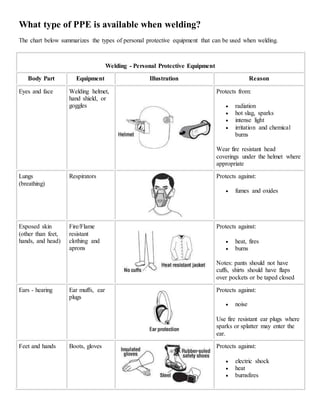
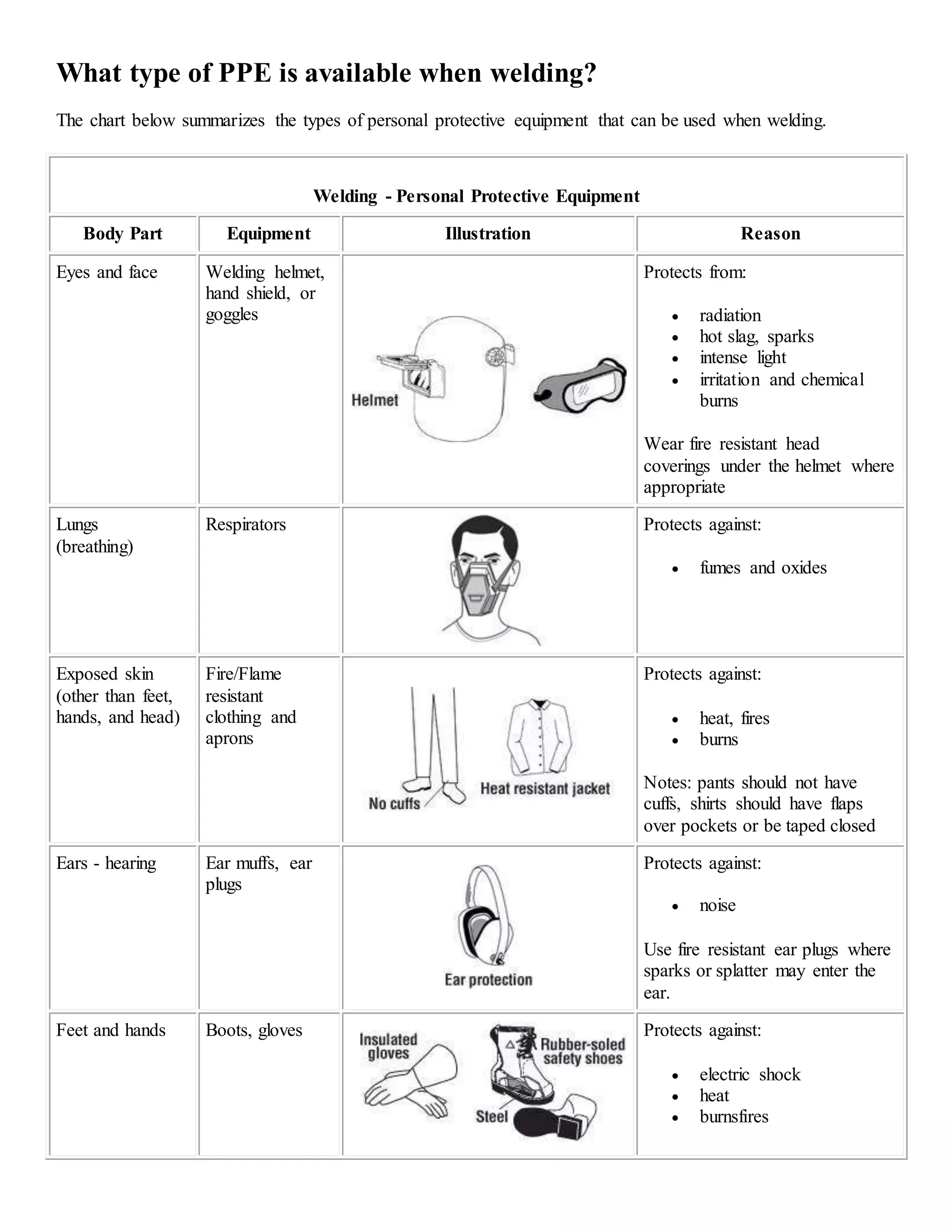
The chart below summarizes the types of personal protective equipment that can be used when welding.
Welding - Personal Protective Equipment
Body Part Equipment Illustration Reason
Eyes and face Welding helmet,
hand shield, or
goggles
Protects from:
 radiation
 hot slag, sparks
 intense light
 irritation and chemical
burns
Wear fire resistant head
coverings under the helmet where
appropriate
Lungs
(breathing)
Respirators Protects against:
 fumes and oxides
Exposed skin
(other than feet,
hands, and head)
Fire/Flame
resistant
clothing and
aprons
Protects against:
 heat, fires
 burns
Notes: pants should not have
cuffs, shirts should have flaps
over pockets or be taped closed
Ears - hearing Ear muffs, ear
plugs
Protects against:
 noise
Use fire resistant ear plugs where
sparks or splatter may enter the
ear.
Feet and hands Boots, gloves Protects against:
 electric shock
 heat
 burnsfires
Why is eye protection important?
Eye injury can occur from the intense light and radiation that a welding arc can produce. Eye injury can also
occur from hot slag that can fly off from the weld during cooling, chipping or grinding.
 Protect your eyes from welding light by wearing a welder's helmet fitted with a filter shade that is
suitable for the type of welding you are doing.
 ALWAYS wear safety glasses with side shields or goggles when chipping or grinding a work piece if
you are not wearing a welding helmet.
What are the various components of welding hand shields and
helmets?
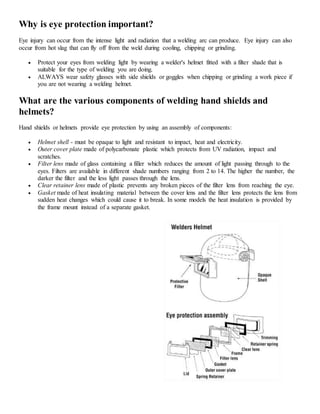
Hand shields or helmets provide eye protection by using an assembly of components:
 Helmet shell - must be opaque to light and resistant to impact, heat and electricity.
 Outer cover plate made of polycarbonate plastic which protects from UV radiation, impact and
scratches.
 Filter lens made of glass containing a filler which reduces the amount of light passing through to the
eyes. Filters are available in different shade numbers ranging from 2 to 14. The higher the number, the
darker the filter and the less light passes through the lens.
 Clear retainer lens made of plastic prevents any broken pieces of the filter lens from reaching the eye.
 Gasket made of heat insulating material between the cover lens and the filter lens protects the lens from
sudden heat changes which could cause it to break. In some models the heat insulation is provided by
the frame mount instead of a separate gasket.
What else should you know
about eye protection?
 Choose a tight fitting helmet to help reduce
light reflection into the helmet through the
space between the shell and the head.
 Wear the helmet correctly. Do not use it as
a hand shield.
 Protect the shade lens from impact and
sudden temperature changes that could
cause it to crack.
 Use a cover lens to protect the filter shade
lens. Replace the cover lens if it gets
scratched or hazy.
 Make sure to replace the gasket
periodically if your helmet uses one.
 Replace the clear retaining lens to protect
your eyes from broken pieces.
 Clean lenses periodically.
 Discard pitted or damaged lenses.
What should you know about
filter shade selection?
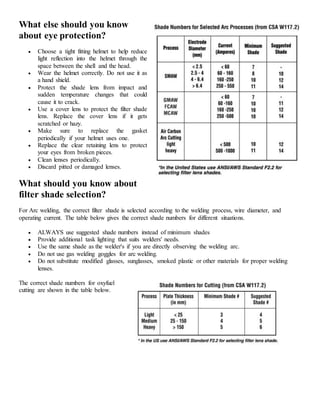
For Arc welding, the correct filter shade is selected according to the welding process, wire diameter, and
operating current. The table below gives the correct shade numbers for different situations.
 ALWAYS use suggested shade numbers instead of minimum shades
 Provide additional task lighting that suits welders' needs.
 Use the same shade as the welder's if you are directly observing the welding arc.
 Do not use gas welding goggles for arc welding.
 Do not substitute modified glasses, sunglasses, smoked plastic or other materials for proper welding
lenses.
The correct shade numbers for oxyfuel
cutting are shown in the table below.

Personal Protective Equipment: Shielded Metal Arc Welding

  • 1.
    What type ofPPE is available when welding? The chart below summarizes the types of personal protective equipment that can be used when welding. Welding - Personal Protective Equipment Body Part Equipment Illustration Reason Eyes and face Welding helmet, hand shield, or goggles Protects from:  radiation  hot slag, sparks  intense light  irritation and chemical burns Wear fire resistant head coverings under the helmet where appropriate Lungs (breathing) Respirators Protects against:  fumes and oxides Exposed skin (other than feet, hands, and head) Fire/Flame resistant clothing and aprons Protects against:  heat, fires  burns Notes: pants should not have cuffs, shirts should have flaps over pockets or be taped closed Ears - hearing Ear muffs, ear plugs Protects against:  noise Use fire resistant ear plugs where sparks or splatter may enter the ear. Feet and hands Boots, gloves Protects against:  electric shock  heat  burnsfires
  • 2.
    Why is eyeprotection important? Eye injury can occur from the intense light and radiation that a welding arc can produce. Eye injury can also occur from hot slag that can fly off from the weld during cooling, chipping or grinding.  Protect your eyes from welding light by wearing a welder's helmet fitted with a filter shade that is suitable for the type of welding you are doing.  ALWAYS wear safety glasses with side shields or goggles when chipping or grinding a work piece if you are not wearing a welding helmet. What are the various components of welding hand shields and helmets? Hand shields or helmets provide eye protection by using an assembly of components:  Helmet shell - must be opaque to light and resistant to impact, heat and electricity.  Outer cover plate made of polycarbonate plastic which protects from UV radiation, impact and scratches.  Filter lens made of glass containing a filler which reduces the amount of light passing through to the eyes. Filters are available in different shade numbers ranging from 2 to 14. The higher the number, the darker the filter and the less light passes through the lens.  Clear retainer lens made of plastic prevents any broken pieces of the filter lens from reaching the eye.  Gasket made of heat insulating material between the cover lens and the filter lens protects the lens from sudden heat changes which could cause it to break. In some models the heat insulation is provided by the frame mount instead of a separate gasket.
  • 3.
    What else shouldyou know about eye protection?  Choose a tight fitting helmet to help reduce light reflection into the helmet through the space between the shell and the head.  Wear the helmet correctly. Do not use it as a hand shield.  Protect the shade lens from impact and sudden temperature changes that could cause it to crack.  Use a cover lens to protect the filter shade lens. Replace the cover lens if it gets scratched or hazy.  Make sure to replace the gasket periodically if your helmet uses one.  Replace the clear retaining lens to protect your eyes from broken pieces.  Clean lenses periodically.  Discard pitted or damaged lenses. What should you know about filter shade selection? For Arc welding, the correct filter shade is selected according to the welding process, wire diameter, and operating current. The table below gives the correct shade numbers for different situations.  ALWAYS use suggested shade numbers instead of minimum shades  Provide additional task lighting that suits welders' needs.  Use the same shade as the welder's if you are directly observing the welding arc.  Do not use gas welding goggles for arc welding.  Do not substitute modified glasses, sunglasses, smoked plastic or other materials for proper welding lenses. The correct shade numbers for oxyfuel cutting are shown in the table below.