INTELLECTUAL DISABILITY
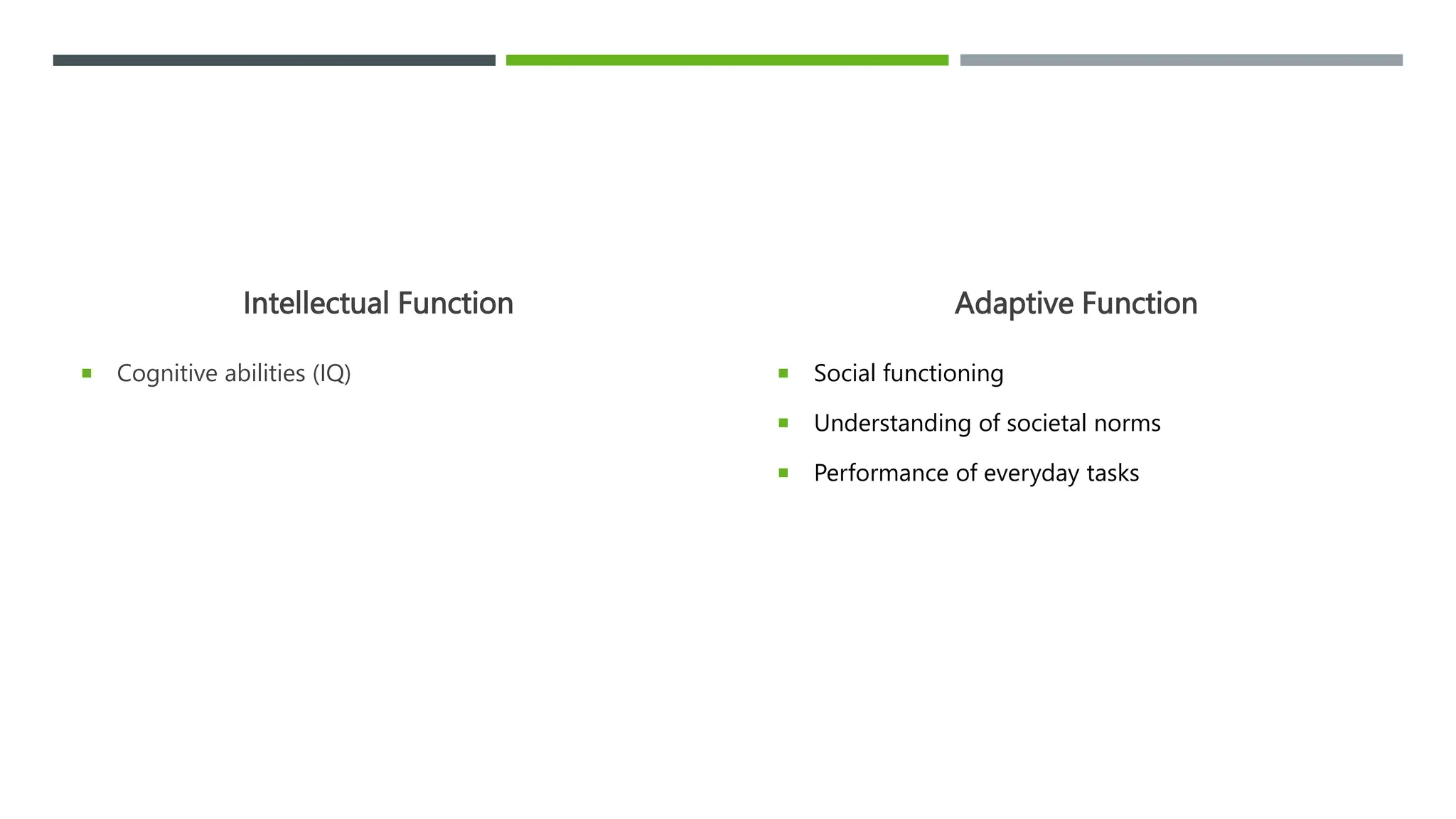
Intellectual Function
 Cognitive abilities (IQ)
Adaptive Function
 Social functioning
 Understanding of societal norms
 Performance of everyday tasks
 Levels of severity of ID are determined on the basis of
adaptive functioning, not on IQ scores
 This change in emphasis from prior diagnostic manuals
has been adopted by DSM-5 because adaptive
functioning determines the level of support that is
required
MEASUREMENT
 If the clinician chooses to use a standardized test of intelligence which is still common practice-the term
signicantly
subaverage is defined as an IQ of approximately 70 or below or two standard deviations below the mean
for the particular
test
 Adaptive functioning can be measured by using a standardized scale,
Vineland Adaptive Behavior Scale
 Scores communications, daily living skills, socialization, and motor skills (up to 4 years, 1 1 months) and generates
an
adaptive behavior composite that is correlated with the expected skills at a given age
MILD INTELLECTUAL DISABILITY
 IQ for this level of adaptive function may typically range from 50 to 70
 Mild intellectual disability represents approximately 85 percent of persons with intellectual disability
 Children with mild intellectual disability often are not identified until the first or second grade, when academic
demands increase
 By late adolescence, they often acquire academic skills at approximately a sixth-grade level
 Many adults with mild intellectual disability can live independently with appropriate support and raise their own
families
MODERATE INTELLECTUAL DISABILITY
 IQ for this level of adaptive function may typically range from 35 to 50
 About 10 percent of persons with intellectual disability
 Most children with moderate intellectual disability acquire language and can communicate adequately
during early childhood
MODERATE INTELLECTUAL DISABILITY
 They are challenged academically ad often ae not able to achieve above a second to third grade level
 During adolescence, socialization difficulties often set these persons apart, and a great deal of social and
vocational support is beneficial
 As adults, individuals with moderate intellectual disability may be able to perform semiskilled work
under appropriate supervision
SEVERE INTELLECTUAL DISABILITY
 IQ in individuals with this level of adaptive function may typically range from 20 to 35
 Represents about 4 percent of individuals with intellectual disability
 May be able to develop communication skills in childhood and often can learn to count as well as
recognize words that are critical to functioning
SEVERE INTELLECTUAL DISABILITY
 In this group, the cause for the intellectual disability is more likely to be identified than in milder forms
of intellectual disability
 In adulthood, persons with severe intellectual disability may adapt well to supervised living situations,
such as group homes, and may be able to perform work-related tasks under supervision
PROFOUND INTELLECTUAL DISABILITY
 IQ in individuals with this level of adaptive function may typically be less than 20.
 constitutes approximately 1 to 2 percent of individuals with intellectual disability
 Most individuals with profound intellectual disability have identifiable causes for their condition
 Children with profound intellectual disability may be taught some self-care skills and lear to communicate their needs
given the appropriate training
COMORBIDITY
 The severity of intellectual disability influenced the risk for particular comorbid psychiatric disorders
 Disruptive and conduct-disorder behaviors occurred more frequently in those diagnosed with mild intellectual
disability,
 severe intellectual disability were more likely to meet criteria for autism spectrum disorder and exhibited symptoms
such as self-stimulation and self-mutilation
 Children diagnosed with severe intellectual disability have a particularly high rate of comorbid autism spectrum
disorder
COMORBIDITY
 2-3% meet the criteria for schizophrenia
 Up to 50% meet the criteria for mood disorder
 negative self-image, low self-esteem, poor frustration tolerance, interpersonal dependence, and a rigid problem-
solving style are frequent
 Seizure disorders occur more frequently in individuals with intellectual disability
PSYCHOSOCIAL FEATURES
 A negative self-image and poor self-esteem are common features of mildly and moderately intellectually disabled
persons
 Communication difficulties further increase their vulnerability to feelings of ineptness and frustration
 The perpetual sense of isolation and inadequacy has been linked to feelings of anxiety, anger, dysphoria, and
depression
ETIOLOGY
 Genetic - chromosomal and inherited conditions
 Developmental or environmental factors - prenatal exposure to infections and toxins, prenatal trauma (e.g.,
prematurity)
 Sociocultural factors - deprivation of nutrition, nurturance, and social stimulation can potentially contribute to the
development of at least mild forms of intellectual disability
GENETIC INTELLECTUAL DISABILITY AND BEHAVIORAL PHENOTYPE
 Syndrome of observable behaviors that occur with a significantly greater probability than expected among those
individuals with a specific genetic abnormality
 Examples of behavioral phenotypes occur in genetically determined syndromes such as:
 fragile X syndrome – high rates of ADHD
 Prader-Willi syndrome - compulsive eating disturbances, hyperphagia, and obesity
 Down syndrome
FRAGILE X SYNDROME
 Mutation in the FMR1 gene
 One of the most well-known single gene causes of intellectual disability
 It is the most common and first X-linked gene to be identified as a direct cause of intellectual disability
 Deficits in language function include rapid perseverative speech with abnormalities in combining words into phrases
and sentences
 Intellectual functions seem to decline in the pubertal period
DOWN SYNDROME
 Prototype of a cytogenetically visible abnormality
 Accounts for about two-thirds of the 15% of intellectual disability attributable to visible
abnormal cytogenetics
 Other microscopically visible chromosomal abnormalities associated with intellectual
disability include deletions, translocations, and supernumerary marker chromosomes
DOWN SYNDROME
 Most children with Down syndrome are mildly to moderately intellectually disabled, with a minority having an IQ
above 50
 Cognitive development appears to progress normally from birth to 6 months of age
 IQ scores gradually decrease from near normal at 1 year of age to about 30 to 50 as development proceeds
 According to anecdotal clinical reports, children with Down syndrome are typically placid, cheerful, and cooperative
and adapt easily at home
 With adolescence, the picture changes: youth with Down syndrome may experience more social and emotional
difficulties and behavior disorders, and there is an increased risk for psychotic disorders.
DOWN SYNDROME
 Language function is a relative weakness
 Sociability and social skills, such as interpersonal cooperation and conformity with social conventions, are relative
strengths
 Typically manifest deficits in scanning the environment; they are more likely to focus on a single stimulus  difficulty
noticing environmental change
 Characterized by deterioration in language, memory, self-care skills, and problem-solving by the third decade of life
PHENYLKETONURIA
 Deficiency of phenylalanine hydroxylase
 Most patients with PKU are severely intellectually disabled
 Children with PKU are reported to be hyperactive and irritable
 Frequently exhibit temper tantrums and often display bizarre movements of their bodies and upper extremities,
including
twisting hand mannerisms
 Verbal and nonverbal communication is commonly severely impaired or nonexistent
 Coordination is poor, and they have many perceptual difficulties
RETT SYNDROME
 Diagnosed in the DSM-5 as a form of ASD
 Deterioration in communications skills, motor behavior, and social functioning starts at about 1 year of age
 Symptoms include ataxia, facial grimacing, teeth-grinding, and loss of speech
 Intermittent hyperventilation and a disorganized breathing patter are characteristic while the child is awake
 Stereotypical hand movements, including hand-wringing, are typical
 Cerebral atrophy occurs with decreased pigmentation of the substantia nigra, which suggests abnormalities of the
dopaminergic nigrostiatal system.
LESCH-NYHAN SYNDROME
 rare disorder caused by a deficiency of an gene involved in purine metabolism
 Patients have intellectual disability, microcephaly, seizures, choreoathetosis, and spasticity
 The syndrome is also associated with severe compulsive self-mutilation by biting the mouth and fingers
ACQUIRED AND DEVELOPMENTAL FACTORS
Prenatal period
 Maternal chronic illnesses and conditions affecting the normal development of the fetus's CNS
 Uncontrolled diabetes, anemia, emphysema, hypertension, and long-term use of alcohol and narcotic substances
 Maternal infections during pregnancy, especially viral infections, have been known to cause fetal damage and
intellectual disability
 The extent of fetal damage depends on such variables as the type of viral infection, the gestational age of the fetus,
and the severity of the illness
ACQUIRED AND DEVELOPMENTAL FACTORS
Prenatal period
 Although numerous infectious diseases have been reported to affect the fetus's CNS, the following maternal illnesses have
been identified to increase risk of intellectual disability in the newborn:
1. Rubella (German measles) - major cause of congenital malformations and intellectual disability caused by maternal infection
2. Syphilis
3. Toxoplasmosis
4. CMV
5. Herpes simplex
6. HIV
ACQUIRED AND DEVELOPMENTAL FACTORS
Prenatal period
 Fetal alcohol syndrome
 one of the leading preventable causes of intellectual disability and physical disabilities
 Often, the affected children have learning disorders and ADHD, and in some cases
intellectual disability
ACQUIRED AND DEVELOPMENTAL FACTORS
Prenatal period
 Drug exposure
 The long-term sequelae of prenatal opioid exposure are not fully known
 Developmental milestones and intellectual functions may be within the normal range, but they have an increased risk for
impulsivity and behavioral problems
ACQUIRED AND DEVELOPMENTAL FACTORS
Prenatal period
 Complications of Pregnancy
 Toxemia of pregnancy ad uncontrolled maternal diabetes present hazards to the fetus
 Can potentially result in intellectual disability
 The use of lithium during pregnancy was recently implicated in some congenital malformations, especially of the
cardiovascular system
ACQUIRED AND DEVELOPMENTAL FACTORS
Perinatal period
 Infants who sustain intracranial hemorrhages or show evidence of cerebral ischemia are especially vulnerable
to cognitive abnormalities
 Very premature children and those who had intrauterine growth retardation were found to be at high risk for
developing both social problems and academic difficulties
 Socioeconomic deprivation can also affect the adaptive function of these vulnerable infants
ACQUIRED CHILDHOOD DISORDERS
 Infection
 Head trauma
 Asphyxia
 Long-term exposures - Intracranial tumors of various types and origins, surgery, and chemotherapy can also adversely
affect brain function
ENVIRONMENTAL AND SOCIOCULTURAL FACTORS
 Malnutrition
 Teenage pregnancies are at risk for mild intellectual disability in the baby due to the increased risk of obstetrical
complications, prematurity, and low birth weight
 Child neglect and inadequate caretaking may deprive an infant of both physical and emotional nurturances, leading
to failure to thrive syndromes
DIAGNOSIS
 History
 Standardized intellectual assessment
 Standardized measure of adaptive function
 Examination of physical signs, neurological abnormalities, and in some cases, laboratory tests can be used to
ascertain the cause and prognosis.
PSYCHIATRIC INTERVIEW
 Requires a high level of sensitivity in order to elicit information at the appropriate intellectual level while remaining
respectful of the patient's age and emotional development
 Patients with milder forms of intellectual disability are often well aware of their differences from others and their
failures, and may be anxious and ashamed during the interview
 Should reveal how the patient has coped with stages of development
 Frustration tolerance, impulse control, and over-aggressive motor and sexual behavior are important areas of attention in the
interview
 It is equally important to elicit the patient's self-image, areas of self-confidence, and an assessment of tenacity, persistence,
curiosity, and willingness to explore the environment
STRUCTURED INSTRUMENTS, RATING SCALES, AND PSYCHOLOGICAL
ASSESSMENT
 Wechsler Intelligence Test for Children (6-16 years old)
 Wechsler Preschool and Primary Scale of Intelligence-Revised (3-6 years old)
 Stanford-Binet Intelligence Scale, 4th ed (starting 2 years old)
 Kaufman Assessment Battery for Children (2-12 years old)
 Kaufman Adolescent and Adult Intelligence Test (11-85 years old)
STRUCTURED INSTRUMENTS, RATING SCALES, AND PSYCHOLOGICAL
ASSESSMENT
 Vineland Adaptive Behavior Scales
PHYSICAL EXAMINATION
 May demonstrate identifying characteristics of specific perinatal and prenatal events or conditions associated with
intellectual disabilities
 Dermatoglyphics may offer another diagnostic tool, because uncommon ridge patters and flexion creases on the
hand are often found in persons who are intellectually disabled
NEUROLOGIC EXAMINATION
 Sensory impairments occur frequently among persons with intellectual disabilities
 Hearing impairment occurs in 10% of persons with intellectual disability
 Visual disturbances can range from blindness to disturbances of spatial concepts, design recognition, and concepts of
body image
 Seizure disorders occur in about 10% of intellectually disabled populations and in one third of those with severe
intellectual disability
 Neurological abnormalities increase in incidence and severity in direct proportion to the degree of intellectual
disability.
LABORATORY EXAMINATION
 Laboratory tests that may elucidate the causes of intellectual disability
 Chromosomal analysis
 Urine and blood testing for metabolic disorders
 EEG
 Neuroimaging
 Hearing and speech evaluations
COURSE AND PROGNOSIS
 Although the underlying intellectual impairment does not improve, in most cases of intellectual disability, level of
adaptation increases with age and can be influenced positively by an enriched and supportive environment
 In general, persons with mild and moderate mental intellectual disabilities have the most flexibility in adapting to
various environmental conditions
 Comorbid psychiatric disorders negatively impact overall prognosis
DIFFERENTIAL DIAGNOSIS
 In some cases, severe child maltreatment in the form of neglect or abuse may contribute to delays in development,
which can appear to be intellectual disability
 Sensory disabilities, especially deafness and blindness, can be mistaken for intellectual disability when a lack of
awareness of the sensory deficit leads to inappropriate testing
 Chronic, debilitating medical diseases may depress and delay a child’s functioning and achievement, despite normal
intelligence
DIFFERENTIAL DIAGNOSIS
 Specific organic syndromes leading to isolated handicaps such as:
 failure to read (alexia)
 failure to write (agraphia)
 failure to communicate (aphasia)
DIFFERENTIAL DIAGNOSIS
 Intellectual disability and ASD often coexist
 70-75% of those with ASD have an IQ below 70
 Children with ASD have relatively more severe impairment in social relatedness and language than other children with the same
level of intellectual disability.
TREATMENT
 Newborn screening
 Abstinence from substance use
during pregnancy
 Public health strategies
 Family and genetic counseling
 Educational interventions
 Behavioral and cognitive
interventions
 Family education
 Social interventions – support
groups, etc
 Psychopharmacolgic
interventions
PRIMARY PREVENTION SECONDARY PREVENTION
PSYCHOPHARMACOLOGIC INTERVENTIONS
 Aggression, Irritability and Self-injurious Behavior
 Risperidone has been well documented as an efficacious treatment for irritability in children with ASD
 Children and adolescents with intellectual disability appear to be at higher risk for the development
of tardive dyskinesia after use of antipsychotic medications
PSYCHOPHARMACOLOGIC INTERVENTIONS
 ADHD
 Studies of methylphenidate (Ritalin) treatment in those mildly intellectually disabled with ADHD have shown significant
improvement in the ability to maintain attention and to stay focused on tasks
 Methylphenidate treatment studies have not shown evidence of long-term improvement in social skills or learning
 Risperidone also has been found to be beneficial in reducing symptoms of ADHD in this population
 It is prudent to begin with a trial of a stimulant medication before the use of antipsychotic agents for the treatment of ADHD
symptoms in intellectual disorder
PSYCHOPHARMACOLOGIC INTERVENTIONS
 ADHD
 Amphetamine-based preparations have been shown to be efficacious in treating ADHD in typically developing
children
 It does not appear that these stimulant preparations have been specifically studied in children with intellectual disability.
 Clonidine has been used clinically in this population, especially to ameliorate hyperactivity and impulsivity
 Atomoxetine has been shown to be efficacious in children diagnosed with ASD and prominent ADHD features, and it is used
clinically in the intellectually disabled population
PSYCHOPHARMACOLOGIC INTERVENTIONS
 Depressive disorders
 The identification of depressive disorders among individuals with intellectual disability requires careful evaluation
 There have been anecdotal reports of disinhibition in response to SSRis (e.g., fluoxetine and sertaline) in intellectually disabled
individuals with ASD
 Given the relative safety of SSRI antidepressants, a trial is indicated when a depressive disorder is diagnosed in a child or
adolescent with intellectual disability
PSYCHOPHARMACOLOGIC INTERVENTIONS
 Stereotypical Motor Movements
 Antipsychotic medications-historically, haloperidol (Haldol) and chlorpromazine, and currently, the
atypical antipsychotics-are used in the treatment of repetitive self-stimulatory behaviors in children
with intellectual disability when these behaviors are either harmful to the child or disruptive.
 Obsessive-compulsive symptoms often overlap with the repetitive stereotypical behaviors seen in
children and adolescents
with intellectual disability, particularly in those with comorbid ASD
 SSRis such as fluoxetine, fluvoxamine (Luvox), paroxetine, and sertraline have been shown to have efficacy in
treating obsessive-compulsive symptoms in children and adolescents and may have some efficacy for
stereotyped motor movements
PSYCHOPHARMACOLOGIC INTERVENTIONS
 Explosive Rage Behavior
 Antipsychotic medications, particularly risperidone, have been shown to be efficacious for the treatment of explosive rage
 B-Adenergic receptor antagonists (betablockers), such as propranolol (Inderal), have been reportedly anecdotally to result in
fewer explosive rages in some children with intellectual disability and ASD

Powerpoint on topic Intellectual disability

  • 1.
  • 3.
    Intellectual Function  Cognitiveabilities (IQ) Adaptive Function  Social functioning  Understanding of societal norms  Performance of everyday tasks
  • 4.
     Levels ofseverity of ID are determined on the basis of adaptive functioning, not on IQ scores  This change in emphasis from prior diagnostic manuals has been adopted by DSM-5 because adaptive functioning determines the level of support that is required
  • 8.
    MEASUREMENT  If theclinician chooses to use a standardized test of intelligence which is still common practice-the term signicantly subaverage is defined as an IQ of approximately 70 or below or two standard deviations below the mean for the particular test  Adaptive functioning can be measured by using a standardized scale, Vineland Adaptive Behavior Scale  Scores communications, daily living skills, socialization, and motor skills (up to 4 years, 1 1 months) and generates an adaptive behavior composite that is correlated with the expected skills at a given age
  • 10.
    MILD INTELLECTUAL DISABILITY IQ for this level of adaptive function may typically range from 50 to 70  Mild intellectual disability represents approximately 85 percent of persons with intellectual disability  Children with mild intellectual disability often are not identified until the first or second grade, when academic demands increase  By late adolescence, they often acquire academic skills at approximately a sixth-grade level  Many adults with mild intellectual disability can live independently with appropriate support and raise their own families
  • 11.
    MODERATE INTELLECTUAL DISABILITY IQ for this level of adaptive function may typically range from 35 to 50  About 10 percent of persons with intellectual disability  Most children with moderate intellectual disability acquire language and can communicate adequately during early childhood
  • 12.
    MODERATE INTELLECTUAL DISABILITY They are challenged academically ad often ae not able to achieve above a second to third grade level  During adolescence, socialization difficulties often set these persons apart, and a great deal of social and vocational support is beneficial  As adults, individuals with moderate intellectual disability may be able to perform semiskilled work under appropriate supervision
  • 13.
    SEVERE INTELLECTUAL DISABILITY IQ in individuals with this level of adaptive function may typically range from 20 to 35  Represents about 4 percent of individuals with intellectual disability  May be able to develop communication skills in childhood and often can learn to count as well as recognize words that are critical to functioning
  • 14.
    SEVERE INTELLECTUAL DISABILITY In this group, the cause for the intellectual disability is more likely to be identified than in milder forms of intellectual disability  In adulthood, persons with severe intellectual disability may adapt well to supervised living situations, such as group homes, and may be able to perform work-related tasks under supervision
  • 15.
    PROFOUND INTELLECTUAL DISABILITY IQ in individuals with this level of adaptive function may typically be less than 20.  constitutes approximately 1 to 2 percent of individuals with intellectual disability  Most individuals with profound intellectual disability have identifiable causes for their condition  Children with profound intellectual disability may be taught some self-care skills and lear to communicate their needs given the appropriate training
  • 16.
    COMORBIDITY  The severityof intellectual disability influenced the risk for particular comorbid psychiatric disorders  Disruptive and conduct-disorder behaviors occurred more frequently in those diagnosed with mild intellectual disability,  severe intellectual disability were more likely to meet criteria for autism spectrum disorder and exhibited symptoms such as self-stimulation and self-mutilation  Children diagnosed with severe intellectual disability have a particularly high rate of comorbid autism spectrum disorder
  • 17.
    COMORBIDITY  2-3% meetthe criteria for schizophrenia  Up to 50% meet the criteria for mood disorder  negative self-image, low self-esteem, poor frustration tolerance, interpersonal dependence, and a rigid problem- solving style are frequent  Seizure disorders occur more frequently in individuals with intellectual disability
  • 18.
    PSYCHOSOCIAL FEATURES  Anegative self-image and poor self-esteem are common features of mildly and moderately intellectually disabled persons  Communication difficulties further increase their vulnerability to feelings of ineptness and frustration  The perpetual sense of isolation and inadequacy has been linked to feelings of anxiety, anger, dysphoria, and depression
  • 19.
    ETIOLOGY  Genetic -chromosomal and inherited conditions  Developmental or environmental factors - prenatal exposure to infections and toxins, prenatal trauma (e.g., prematurity)  Sociocultural factors - deprivation of nutrition, nurturance, and social stimulation can potentially contribute to the development of at least mild forms of intellectual disability
  • 20.
    GENETIC INTELLECTUAL DISABILITYAND BEHAVIORAL PHENOTYPE  Syndrome of observable behaviors that occur with a significantly greater probability than expected among those individuals with a specific genetic abnormality  Examples of behavioral phenotypes occur in genetically determined syndromes such as:  fragile X syndrome – high rates of ADHD  Prader-Willi syndrome - compulsive eating disturbances, hyperphagia, and obesity  Down syndrome
  • 21.
    FRAGILE X SYNDROME Mutation in the FMR1 gene  One of the most well-known single gene causes of intellectual disability  It is the most common and first X-linked gene to be identified as a direct cause of intellectual disability  Deficits in language function include rapid perseverative speech with abnormalities in combining words into phrases and sentences  Intellectual functions seem to decline in the pubertal period
  • 22.
    DOWN SYNDROME  Prototypeof a cytogenetically visible abnormality  Accounts for about two-thirds of the 15% of intellectual disability attributable to visible abnormal cytogenetics  Other microscopically visible chromosomal abnormalities associated with intellectual disability include deletions, translocations, and supernumerary marker chromosomes
  • 23.
    DOWN SYNDROME  Mostchildren with Down syndrome are mildly to moderately intellectually disabled, with a minority having an IQ above 50  Cognitive development appears to progress normally from birth to 6 months of age  IQ scores gradually decrease from near normal at 1 year of age to about 30 to 50 as development proceeds  According to anecdotal clinical reports, children with Down syndrome are typically placid, cheerful, and cooperative and adapt easily at home  With adolescence, the picture changes: youth with Down syndrome may experience more social and emotional difficulties and behavior disorders, and there is an increased risk for psychotic disorders.
  • 24.
    DOWN SYNDROME  Languagefunction is a relative weakness  Sociability and social skills, such as interpersonal cooperation and conformity with social conventions, are relative strengths  Typically manifest deficits in scanning the environment; they are more likely to focus on a single stimulus  difficulty noticing environmental change  Characterized by deterioration in language, memory, self-care skills, and problem-solving by the third decade of life
  • 25.
    PHENYLKETONURIA  Deficiency ofphenylalanine hydroxylase  Most patients with PKU are severely intellectually disabled  Children with PKU are reported to be hyperactive and irritable  Frequently exhibit temper tantrums and often display bizarre movements of their bodies and upper extremities, including twisting hand mannerisms  Verbal and nonverbal communication is commonly severely impaired or nonexistent  Coordination is poor, and they have many perceptual difficulties
  • 26.
    RETT SYNDROME  Diagnosedin the DSM-5 as a form of ASD  Deterioration in communications skills, motor behavior, and social functioning starts at about 1 year of age  Symptoms include ataxia, facial grimacing, teeth-grinding, and loss of speech  Intermittent hyperventilation and a disorganized breathing patter are characteristic while the child is awake  Stereotypical hand movements, including hand-wringing, are typical  Cerebral atrophy occurs with decreased pigmentation of the substantia nigra, which suggests abnormalities of the dopaminergic nigrostiatal system.
  • 27.
    LESCH-NYHAN SYNDROME  raredisorder caused by a deficiency of an gene involved in purine metabolism  Patients have intellectual disability, microcephaly, seizures, choreoathetosis, and spasticity  The syndrome is also associated with severe compulsive self-mutilation by biting the mouth and fingers
  • 28.
    ACQUIRED AND DEVELOPMENTALFACTORS Prenatal period  Maternal chronic illnesses and conditions affecting the normal development of the fetus's CNS  Uncontrolled diabetes, anemia, emphysema, hypertension, and long-term use of alcohol and narcotic substances  Maternal infections during pregnancy, especially viral infections, have been known to cause fetal damage and intellectual disability  The extent of fetal damage depends on such variables as the type of viral infection, the gestational age of the fetus, and the severity of the illness
  • 29.
    ACQUIRED AND DEVELOPMENTALFACTORS Prenatal period  Although numerous infectious diseases have been reported to affect the fetus's CNS, the following maternal illnesses have been identified to increase risk of intellectual disability in the newborn: 1. Rubella (German measles) - major cause of congenital malformations and intellectual disability caused by maternal infection 2. Syphilis 3. Toxoplasmosis 4. CMV 5. Herpes simplex 6. HIV
  • 30.
    ACQUIRED AND DEVELOPMENTALFACTORS Prenatal period  Fetal alcohol syndrome  one of the leading preventable causes of intellectual disability and physical disabilities  Often, the affected children have learning disorders and ADHD, and in some cases intellectual disability
  • 31.
    ACQUIRED AND DEVELOPMENTALFACTORS Prenatal period  Drug exposure  The long-term sequelae of prenatal opioid exposure are not fully known  Developmental milestones and intellectual functions may be within the normal range, but they have an increased risk for impulsivity and behavioral problems
  • 32.
    ACQUIRED AND DEVELOPMENTALFACTORS Prenatal period  Complications of Pregnancy  Toxemia of pregnancy ad uncontrolled maternal diabetes present hazards to the fetus  Can potentially result in intellectual disability  The use of lithium during pregnancy was recently implicated in some congenital malformations, especially of the cardiovascular system
  • 33.
    ACQUIRED AND DEVELOPMENTALFACTORS Perinatal period  Infants who sustain intracranial hemorrhages or show evidence of cerebral ischemia are especially vulnerable to cognitive abnormalities  Very premature children and those who had intrauterine growth retardation were found to be at high risk for developing both social problems and academic difficulties  Socioeconomic deprivation can also affect the adaptive function of these vulnerable infants
  • 34.
    ACQUIRED CHILDHOOD DISORDERS Infection  Head trauma  Asphyxia  Long-term exposures - Intracranial tumors of various types and origins, surgery, and chemotherapy can also adversely affect brain function
  • 35.
    ENVIRONMENTAL AND SOCIOCULTURALFACTORS  Malnutrition  Teenage pregnancies are at risk for mild intellectual disability in the baby due to the increased risk of obstetrical complications, prematurity, and low birth weight  Child neglect and inadequate caretaking may deprive an infant of both physical and emotional nurturances, leading to failure to thrive syndromes
  • 36.
    DIAGNOSIS  History  Standardizedintellectual assessment  Standardized measure of adaptive function  Examination of physical signs, neurological abnormalities, and in some cases, laboratory tests can be used to ascertain the cause and prognosis.
  • 37.
    PSYCHIATRIC INTERVIEW  Requiresa high level of sensitivity in order to elicit information at the appropriate intellectual level while remaining respectful of the patient's age and emotional development  Patients with milder forms of intellectual disability are often well aware of their differences from others and their failures, and may be anxious and ashamed during the interview  Should reveal how the patient has coped with stages of development  Frustration tolerance, impulse control, and over-aggressive motor and sexual behavior are important areas of attention in the interview  It is equally important to elicit the patient's self-image, areas of self-confidence, and an assessment of tenacity, persistence, curiosity, and willingness to explore the environment
  • 38.
    STRUCTURED INSTRUMENTS, RATINGSCALES, AND PSYCHOLOGICAL ASSESSMENT  Wechsler Intelligence Test for Children (6-16 years old)  Wechsler Preschool and Primary Scale of Intelligence-Revised (3-6 years old)  Stanford-Binet Intelligence Scale, 4th ed (starting 2 years old)  Kaufman Assessment Battery for Children (2-12 years old)  Kaufman Adolescent and Adult Intelligence Test (11-85 years old)
  • 39.
    STRUCTURED INSTRUMENTS, RATINGSCALES, AND PSYCHOLOGICAL ASSESSMENT  Vineland Adaptive Behavior Scales
  • 40.
    PHYSICAL EXAMINATION  Maydemonstrate identifying characteristics of specific perinatal and prenatal events or conditions associated with intellectual disabilities  Dermatoglyphics may offer another diagnostic tool, because uncommon ridge patters and flexion creases on the hand are often found in persons who are intellectually disabled
  • 41.
    NEUROLOGIC EXAMINATION  Sensoryimpairments occur frequently among persons with intellectual disabilities  Hearing impairment occurs in 10% of persons with intellectual disability  Visual disturbances can range from blindness to disturbances of spatial concepts, design recognition, and concepts of body image  Seizure disorders occur in about 10% of intellectually disabled populations and in one third of those with severe intellectual disability  Neurological abnormalities increase in incidence and severity in direct proportion to the degree of intellectual disability.
  • 42.
    LABORATORY EXAMINATION  Laboratorytests that may elucidate the causes of intellectual disability  Chromosomal analysis  Urine and blood testing for metabolic disorders  EEG  Neuroimaging  Hearing and speech evaluations
  • 43.
    COURSE AND PROGNOSIS Although the underlying intellectual impairment does not improve, in most cases of intellectual disability, level of adaptation increases with age and can be influenced positively by an enriched and supportive environment  In general, persons with mild and moderate mental intellectual disabilities have the most flexibility in adapting to various environmental conditions  Comorbid psychiatric disorders negatively impact overall prognosis
  • 44.
    DIFFERENTIAL DIAGNOSIS  Insome cases, severe child maltreatment in the form of neglect or abuse may contribute to delays in development, which can appear to be intellectual disability  Sensory disabilities, especially deafness and blindness, can be mistaken for intellectual disability when a lack of awareness of the sensory deficit leads to inappropriate testing  Chronic, debilitating medical diseases may depress and delay a child’s functioning and achievement, despite normal intelligence
  • 45.
    DIFFERENTIAL DIAGNOSIS  Specificorganic syndromes leading to isolated handicaps such as:  failure to read (alexia)  failure to write (agraphia)  failure to communicate (aphasia)
  • 46.
    DIFFERENTIAL DIAGNOSIS  Intellectualdisability and ASD often coexist  70-75% of those with ASD have an IQ below 70  Children with ASD have relatively more severe impairment in social relatedness and language than other children with the same level of intellectual disability.
  • 47.
    TREATMENT  Newborn screening Abstinence from substance use during pregnancy  Public health strategies  Family and genetic counseling  Educational interventions  Behavioral and cognitive interventions  Family education  Social interventions – support groups, etc  Psychopharmacolgic interventions PRIMARY PREVENTION SECONDARY PREVENTION
  • 48.
    PSYCHOPHARMACOLOGIC INTERVENTIONS  Aggression,Irritability and Self-injurious Behavior  Risperidone has been well documented as an efficacious treatment for irritability in children with ASD  Children and adolescents with intellectual disability appear to be at higher risk for the development of tardive dyskinesia after use of antipsychotic medications
  • 49.
    PSYCHOPHARMACOLOGIC INTERVENTIONS  ADHD Studies of methylphenidate (Ritalin) treatment in those mildly intellectually disabled with ADHD have shown significant improvement in the ability to maintain attention and to stay focused on tasks  Methylphenidate treatment studies have not shown evidence of long-term improvement in social skills or learning  Risperidone also has been found to be beneficial in reducing symptoms of ADHD in this population  It is prudent to begin with a trial of a stimulant medication before the use of antipsychotic agents for the treatment of ADHD symptoms in intellectual disorder
  • 50.
    PSYCHOPHARMACOLOGIC INTERVENTIONS  ADHD Amphetamine-based preparations have been shown to be efficacious in treating ADHD in typically developing children  It does not appear that these stimulant preparations have been specifically studied in children with intellectual disability.  Clonidine has been used clinically in this population, especially to ameliorate hyperactivity and impulsivity  Atomoxetine has been shown to be efficacious in children diagnosed with ASD and prominent ADHD features, and it is used clinically in the intellectually disabled population
  • 51.
    PSYCHOPHARMACOLOGIC INTERVENTIONS  Depressivedisorders  The identification of depressive disorders among individuals with intellectual disability requires careful evaluation  There have been anecdotal reports of disinhibition in response to SSRis (e.g., fluoxetine and sertaline) in intellectually disabled individuals with ASD  Given the relative safety of SSRI antidepressants, a trial is indicated when a depressive disorder is diagnosed in a child or adolescent with intellectual disability
  • 52.
    PSYCHOPHARMACOLOGIC INTERVENTIONS  StereotypicalMotor Movements  Antipsychotic medications-historically, haloperidol (Haldol) and chlorpromazine, and currently, the atypical antipsychotics-are used in the treatment of repetitive self-stimulatory behaviors in children with intellectual disability when these behaviors are either harmful to the child or disruptive.  Obsessive-compulsive symptoms often overlap with the repetitive stereotypical behaviors seen in children and adolescents with intellectual disability, particularly in those with comorbid ASD  SSRis such as fluoxetine, fluvoxamine (Luvox), paroxetine, and sertraline have been shown to have efficacy in treating obsessive-compulsive symptoms in children and adolescents and may have some efficacy for stereotyped motor movements
  • 53.
    PSYCHOPHARMACOLOGIC INTERVENTIONS  ExplosiveRage Behavior  Antipsychotic medications, particularly risperidone, have been shown to be efficacious for the treatment of explosive rage  B-Adenergic receptor antagonists (betablockers), such as propranolol (Inderal), have been reportedly anecdotally to result in fewer explosive rages in some children with intellectual disability and ASD

Editor's Notes

  • #3 The American Association on Intellectual and Developmental Disability (AAIDD) defines intellectual disability as a disability characterized by significant limitations in both intellectual functioning (reasoning, learning, and problem solving) and in adaptive behavior (conceptual, social, and practical skills) that emerges before the age of 1 8 years. Wide acceptance of this definition has led to the international consensus that an assessment of both social adaptation and intelligence quotient (IQ) are necessary to determine the level of intellectual disability.
  • #4 Although individuals with a given intellectual level do not all have identical levels of adaptive function, epidemiologic data suggest that prevalence of intellectual disability is largely determined by intellectual level and a level of adaptive function, which typically corresponds closely with cognitive ability
  • #5 Furthermore, IQ scores are less valid in the lower portions of the IQ range.
  • #6 Making a determination of severity level of intellectual disability, according to DSM-5, includes assessment of functioning in a conceptual domain (e.g., academic skills), a social domain (e.g., relationships), and a practical domain (e.g., personal hygiene).
  • #7 The AAIDD promotes a view of intellectual disability as a functional interaction between an individual and the environment, rather than a static designation of a person's limitations. Within this conceptual framework, a child or adolescent with intellectual disability is determined to need intermittent, limited, extensive, or pervasive "environmental support" with respect to a specific set of adaptive function domains. These include communication, self-care, home living, social or interpersonal skills, use of community resources, self-direction, functional academic skills, work, leisure, health, and safety.
  • #8 DSM-5 criteria for intellectual disability include significantly subaverage general intellectual fnctioning associated with concurrent impairment in adaptive behavior, manifested before the age of 1 8. The diagnosis is made independent of coexisting physical or mental disorders
  • #10 The severity levels of intellectual disability are expressed in DSM-5 as mild, moderate, severe, and profound "Borderline intellectual functioning," a term previously used to describe individuals with a full scale IQ in the range of 70 to 80, is no longer described as a diagnosis in DSM-5. The term is used in DSM-5 as a condition that may be the focus of clinical attention; however, no criteria are given Table 3 1 .3-2 presents an overview of developmental levels in communication, academic fnctioning, and vocational skills expected of persons with various degrees of intellectual disability.
  • #11 Specific causes for the intellectual disability are often unidentified in this group.
  • #17 40.7% of intellectually disabled children between 4-18 years of age met criteria for at least one additional psychiatric disorder
  • #18 40.7% of intellectually disabled children between 4-18 years of age met criteria for at least one additional psychiatric disorder
  • #19 BULLET 1 : who are aware of their social and academic differences from others.
  • #26 The basic metabolic defect in PKU is an inability to convert phenylalanine, an essential amino acid, to paratyrosine because of the absence or inactivity of the liver enyme phenylalanine hydroxylase, which catalyzes the conversion.
  • #30 RUBELLA : Timing is crucial, because te extent and fequency of te complications ae inversely related to the duration often pregnancy at te time ofmateral infection. When mothers are infected in te fst tmester ofpregcy, 10 to 15 percent ofte children are afected, but te incidence rises to almost 50 percent when the infection occurs in the fst mont of pregnancy.
  • #31 picture ofa child with FAS includes facial dysmorphism comprising hypertelorism, microcephaly, short palpebral fssures, inner epicanthal folds, and a short, turned-up nose
  • #32 Prenatal exposure to opioids, such as heroin, often results in infants who are small for their gestational age, with a head circumference below the tenth percentile and withdrawal symptoms that appear within the first 2 days of life. Seizures are unusual, but the withdrawal syndrome can be life-threatening to infants if it is untreated. Diazepam (Valium), phenobarbital (Luminal), chlorpromazine (Thorazine), and paregoric have been used to treat neonatal opioid withdrawal.
  • #36 Malnutrition - Mild intellectual disability has been associated with significant deprivation of nutrition and nurturance. Children who have endured these conditions are at risk for a host of psychiatric disorders including mood disorders, posttraumatic stress disorder, and attentional and anxiety disorders.
  • #37 The severity of the intellectual disability will be determined on the basis of the level of adaptive function.
  • #38 Approaching patients with a clear, supportive, concrete explanation ofthe diagnostic process, particularly patients with sufciently receptive language ability, may allay anxiety and fears. Providing support and praise in language appropriate to the patient's age and understanding is benefcial. Subtle direction, structure, and reinforcement may be necessary to keep patients focused on the task or topic.
  • #45 By definition, intellectual disability must begin before the age of 18. BULLET 1 : However these damages are partially reversible when a corrective, enriched, and stimulating environment is provided in early childhood.
  • #48 PRIMARY PREVENTION - to eliminate or reduce the conditions that lead to development of intellectual disability, as well as associated disorders SECONDARY PREVENTION - Prompt attention to medical and psychiatric complications of intellectual disability can diminish their course (secondary prevention) and minimize the sequelae or consequent disabilities (tertiary prevention). Hereditary metabolic and endocrine disorders, such as PKU and hypothyroidism, can be teated effectively in an early stage by dietary control or hormone replacement therapy.
  • #49 Risperidone is helpfl in teating disruptive behaviors in children with below-average intelligence, and has a good overall safety ad tolerability profle.
  • #53 BULLET 1: Anecdotal reports indicate that these agents may diminish self-stimulatory behaviors; however, there is no improvement seen in adaptive behavior.
  • #54 BULLET 1: Systematic controlled studies arevindicated to confrm the efcacy ofthese drugs in the treatment of rage outbursts