K.HARIPRITHA
M.SC(IT)
NADAR SARASWATHI COLLEGE OF
ARTS AND SCIENCE
OPERATING SYSTEM
SYSTEM CALLS
 System call is the programmatic way in which
a computer program requests a service from
the kernel of the operating system it is
executed on.
 A system call is a way for programs
to interact with the operating system.
 A computer program makes a system call
when it makes a request to the operating
system’s kernel.
 System call provides the services of the
operating system to the user programs via
Application Program Interface(API).
 It provides an interface between a process and
operating system to allow user-level processes to
request services of the operating system.
 System calls are the only entry points into the
kernel system. All programs needing resources
must use system calls.
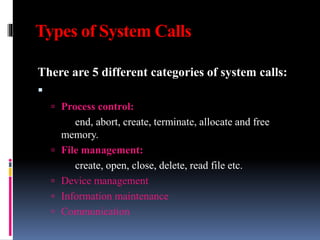
Types of System Calls
There are 5 different categories of system calls:

 Process control:
end, abort, create, terminate, allocate and free
memory.
 File management:
create, open, close, delete, read file etc.
 Device management
 Information maintenance
 Communication
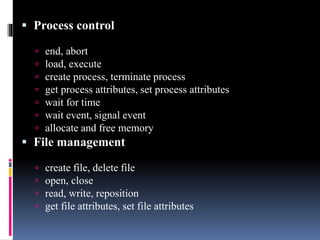
 Process control
 end, abort
 load, execute
 create process, terminate process
 get process attributes, set process attributes
 wait for time
 wait event, signal event
 allocate and free memory
 File management
 create file, delete file
 open, close
 read, write, reposition
 get file attributes, set file attributes
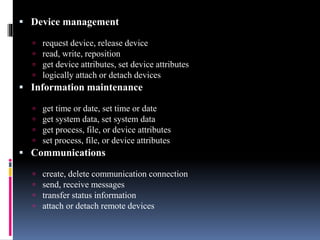
 Device management
 request device, release device
 read, write, reposition
 get device attributes, set device attributes
 logically attach or detach devices
 Information maintenance
 get time or date, set time or date
 get system data, set system data
 get process, file, or device attributes
 set process, file, or device attributes
 Communications
 create, delete communication connection
 send, receive messages
 transfer status information
 attach or detach remote devices
PROCESS CONTROL
 A running program needs to be able to stop
execution either normally or abnormally.
When execution is stopped abnormally, often a
dump of memory is taken and can be
examined with a debugger.
FILE MANAGEMENT
 Some common system calls
are create, delete, read, write, reposition,
or close. Also, there is a need to determine the
file attributes – get and set file attribute. Many
times the OS provides an API to make these
system calls.
DEVICE MANAGENT
 Process usually require several resources to
execute, if these resources are available, they will
be granted and control returned to the user
process. These resources are also thought of as
devices.
 Some are physical, such as a video card, and
others are abstract, such as a file.
 User programs request the device, and when
finished they release the device. Similar to files,
we can read, write, and reposition the device.
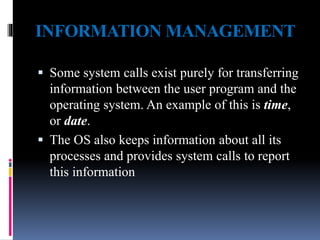
INFORMATION MANAGEMENT
 Some system calls exist purely for transferring
information between the user program and the
operating system. An example of this is time,
or date.
 The OS also keeps information about all its
processes and provides system calls to report
this information
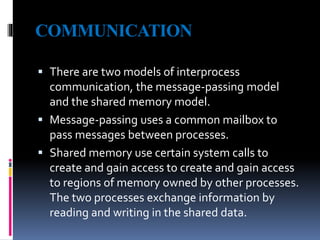
COMMUNICATION
 There are two models of interprocess
communication, the message-passing model
and the shared memory model.
 Message-passing uses a common mailbox to
pass messages between processes.
 Shared memory use certain system calls to
create and gain access to create and gain access
to regions of memory owned by other processes.
The two processes exchange information by
reading and writing in the shared data.

Operating system

  • 1.
    K.HARIPRITHA M.SC(IT) NADAR SARASWATHI COLLEGEOF ARTS AND SCIENCE OPERATING SYSTEM
  • 2.
    SYSTEM CALLS  Systemcall is the programmatic way in which a computer program requests a service from the kernel of the operating system it is executed on.  A system call is a way for programs to interact with the operating system.  A computer program makes a system call when it makes a request to the operating system’s kernel.
  • 3.
     System callprovides the services of the operating system to the user programs via Application Program Interface(API).  It provides an interface between a process and operating system to allow user-level processes to request services of the operating system.  System calls are the only entry points into the kernel system. All programs needing resources must use system calls.
  • 4.
    Types of SystemCalls There are 5 different categories of system calls:   Process control: end, abort, create, terminate, allocate and free memory.  File management: create, open, close, delete, read file etc.  Device management  Information maintenance  Communication
  • 5.
     Process control end, abort  load, execute  create process, terminate process  get process attributes, set process attributes  wait for time  wait event, signal event  allocate and free memory  File management  create file, delete file  open, close  read, write, reposition  get file attributes, set file attributes
  • 6.
     Device management request device, release device  read, write, reposition  get device attributes, set device attributes  logically attach or detach devices  Information maintenance  get time or date, set time or date  get system data, set system data  get process, file, or device attributes  set process, file, or device attributes  Communications  create, delete communication connection  send, receive messages  transfer status information  attach or detach remote devices
  • 7.
    PROCESS CONTROL  Arunning program needs to be able to stop execution either normally or abnormally. When execution is stopped abnormally, often a dump of memory is taken and can be examined with a debugger.
  • 8.
    FILE MANAGEMENT  Somecommon system calls are create, delete, read, write, reposition, or close. Also, there is a need to determine the file attributes – get and set file attribute. Many times the OS provides an API to make these system calls.
  • 9.
    DEVICE MANAGENT  Processusually require several resources to execute, if these resources are available, they will be granted and control returned to the user process. These resources are also thought of as devices.  Some are physical, such as a video card, and others are abstract, such as a file.  User programs request the device, and when finished they release the device. Similar to files, we can read, write, and reposition the device.
  • 10.
    INFORMATION MANAGEMENT  Somesystem calls exist purely for transferring information between the user program and the operating system. An example of this is time, or date.  The OS also keeps information about all its processes and provides system calls to report this information
  • 11.
    COMMUNICATION  There aretwo models of interprocess communication, the message-passing model and the shared memory model.  Message-passing uses a common mailbox to pass messages between processes.  Shared memory use certain system calls to create and gain access to create and gain access to regions of memory owned by other processes. The two processes exchange information by reading and writing in the shared data.