WHAT IS POWER SHARING ??? 
 Power sharing is a term used to describe a 
system of governance in which all major 
segments of society are provided a permanent 
share of power. 
 This system is often contrasted with government 
vs. opposition systems in which ruling coalitions 
rotate among various social groups over time.
POWER SHARING AS IN BELGIUM AND ITS CAPITAL 
BRUSSELS 
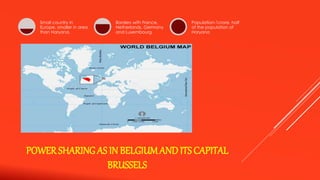
Small country in 
Europe, smaller in area 
than Haryana. 
Borders with France, 
Netherlands, Germany 
and Luxembourg. 
Population-1crore, half 
of the population of 
Haryana
ETHINIC COMPOSITION 
1% 
59% 
40% 
BELGIUM 
GERMAN FRENCH(Wallonia) DUTCH(Flemish) 
BRUSSELS 
80% 
20% 
FRENCH DUTCH
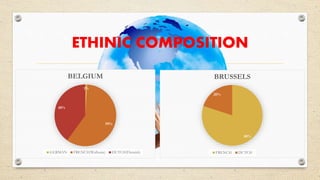
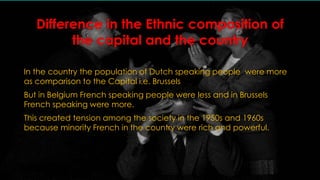
Difference in the Ethnic composition of 
the capital and the country 
In the country the population of Dutch speaking people were more 
as comparison to the Capital i.e. Brussels 
But in Belgium French speaking people were less and in Brussels 
French speaking were more. 
This created tension among the society in the 1950s and 1960s 
because minority French in the country were rich and powerful.
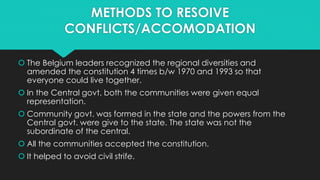
METHODS TO RESOIVE 
CONFLICTS/ACCOMODATION 
 The Belgium leaders recognized the regional diversities and 
amended the constitution 4 times b/w 1970 and 1993 so that 
everyone could live together. 
 In the Central govt. both the communities were given equal 
representation. 
 Community govt. was formed in the state and the powers from the 
Central govt. were give to the state. The state was not the 
subordinate of the central. 
 All the communities accepted the constitution. 
 It helped to avoid civil strife.
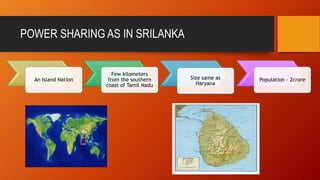
POWER SHARING AS IN SRILANKA 
An Island Nation 
Few kilometers 
from the southern 
coast of Tamil Nadu 
Size same as 
Haryana 
Population – 2crore
ETHNIC COMPOSITION OF SRILANKA 
SRILANKA ETHNIC 
COMPOSTION 
SINAHALESE[74%] OTHERS[8%] TAMILS[18%] 
HINDU MUSLIM CHRISTIAN 
INDIAN TAMIL[5%] 
(Migrated from 
India) 
SRILANKAN 
TAMIL[13%] 
(Natives of Srilanka)
MAJORITARIANISM IN SRILANKA 
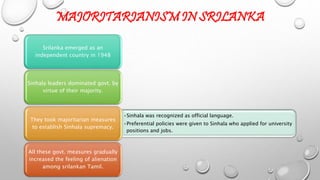
Srilanka emerged as an 
independent country in 1948 
Sinhala leaders dominated govt. by 
virtue of their majority. 
•Sinhala was recognized as official language. 
•Preferential policies were given to Sinhala who applied for university 
positions and jobs. 
They took majoritarian measures 
to establish Sinhala supremacy. 
All these govt. measures gradually 
increased the feeling of alienation 
among srilankan Tamil.
CIVIL WAR IN SRILANKA 
The Srilankan Tamils launched parties and struggles for equality. 
They demanded for the recognition of Tamil as an official 
language, opportunity in securing education and jobs. 
They also demanded for an independent Tamil Eelam. 
These demands were rejected and soon a CIVIL WAR broke 
out.
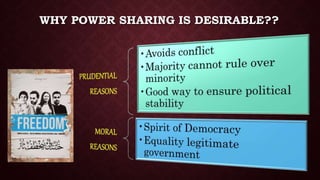
WHY POWER SHARING IS DESIRABLE??
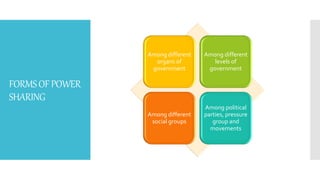
FORMS OF POWER 
SHARING 
Among different 
organs of 
government 
Among different 
levels of 
government 
Among different 
social groups 
Among political 
parties, pressure 
group and 
movements
THE END

Power sharing

  • 1.
    WHAT IS POWERSHARING ???  Power sharing is a term used to describe a system of governance in which all major segments of society are provided a permanent share of power.  This system is often contrasted with government vs. opposition systems in which ruling coalitions rotate among various social groups over time.
  • 2.
    POWER SHARING ASIN BELGIUM AND ITS CAPITAL BRUSSELS Small country in Europe, smaller in area than Haryana. Borders with France, Netherlands, Germany and Luxembourg. Population-1crore, half of the population of Haryana
  • 3.
    ETHINIC COMPOSITION 1% 59% 40% BELGIUM GERMAN FRENCH(Wallonia) DUTCH(Flemish) BRUSSELS 80% 20% FRENCH DUTCH
  • 4.
    Difference in theEthnic composition of the capital and the country In the country the population of Dutch speaking people were more as comparison to the Capital i.e. Brussels But in Belgium French speaking people were less and in Brussels French speaking were more. This created tension among the society in the 1950s and 1960s because minority French in the country were rich and powerful.
  • 5.
    METHODS TO RESOIVE CONFLICTS/ACCOMODATION  The Belgium leaders recognized the regional diversities and amended the constitution 4 times b/w 1970 and 1993 so that everyone could live together.  In the Central govt. both the communities were given equal representation.  Community govt. was formed in the state and the powers from the Central govt. were give to the state. The state was not the subordinate of the central.  All the communities accepted the constitution.  It helped to avoid civil strife.
  • 6.
    POWER SHARING ASIN SRILANKA An Island Nation Few kilometers from the southern coast of Tamil Nadu Size same as Haryana Population – 2crore
  • 7.
    ETHNIC COMPOSITION OFSRILANKA SRILANKA ETHNIC COMPOSTION SINAHALESE[74%] OTHERS[8%] TAMILS[18%] HINDU MUSLIM CHRISTIAN INDIAN TAMIL[5%] (Migrated from India) SRILANKAN TAMIL[13%] (Natives of Srilanka)
  • 8.
    MAJORITARIANISM IN SRILANKA Srilanka emerged as an independent country in 1948 Sinhala leaders dominated govt. by virtue of their majority. •Sinhala was recognized as official language. •Preferential policies were given to Sinhala who applied for university positions and jobs. They took majoritarian measures to establish Sinhala supremacy. All these govt. measures gradually increased the feeling of alienation among srilankan Tamil.
  • 9.
    CIVIL WAR INSRILANKA The Srilankan Tamils launched parties and struggles for equality. They demanded for the recognition of Tamil as an official language, opportunity in securing education and jobs. They also demanded for an independent Tamil Eelam. These demands were rejected and soon a CIVIL WAR broke out.
  • 10.
    WHY POWER SHARINGIS DESIRABLE??
  • 11.
    FORMS OF POWER SHARING Among different organs of government Among different levels of government Among different social groups Among political parties, pressure group and movements
  • 12.

Editor's Notes