POWER POINT PRESENTATION 
VASU 
X-D 
Roll no.9
POWER 
SHARING
MEANING 
Power sharing is a technique to share the 
power at different levels. It is an idea 
inculcated in democracy so that the power is 
not concentrated at one hand only and that 
different forms can keep a check on each 
other. India is an example of ‘holding 
together’ federations, where the power is 
shared between central government and 
different constituent states.
• 
PRUDENTIAL REASONS: 
1. It reduces the possibility of 
conflicts. 
2. It provides stability to the 
government. 
MORAL REASONS: 
1. Power sharing is the very 
spirit of democracy. 
2. people have a right to be consulted 
on how they are to be governed.
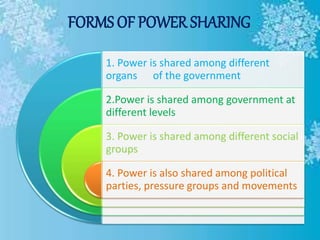
FORMS OF POWER SHARING 
1. Power is shared among different 
organs of the government 
2.Power is shared among government at 
different levels 
3. Power is shared among different social 
groups 
4. Power is also shared among political 
parties, pressure groups and movements
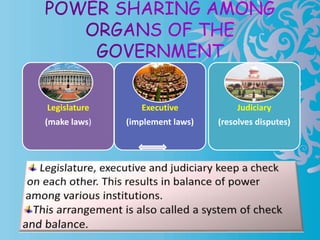
Legislature 
(make laws) 
Executive 
(implement laws) 
Judiciary 
(resolves disputes)
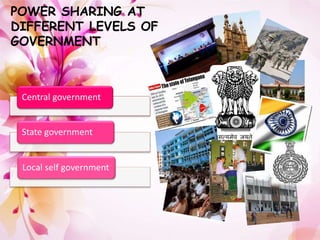
POWER SHARING AT 
DIFFERENT LEVELS OF 
GOVERNMENT 
Central government 
State government 
Local self government
Power sharing among different social groups 
• Under this arrangement government 
and administration gives space to the 
diverse social groups. 
1 
• In this way minority communities get a 
fare share in power. 
2
Power sharing among political parties, 
pressure groups and movements 
In case no party 
gets majority then 
two or more 
parties form an 
alliance to come to 
power and form 
coalition 
government. 
In democracy 
different parties 
compete to 
come to power.
TWO EXAMPLES OF 
POWER SHARING 
BELGIUM 
SRILANKA
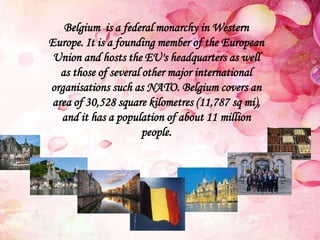
Belgium is a federal monarchy inWestern 
Europe. It is a founding member of the European 
Union and hosts the EU's headquarters as well 
as those of several other major international 
organisations such as NATO. Belgium covers an 
area of 30,528 square kilometres (11,787 sq mi), 
and it has a population of about 11 million 
people.
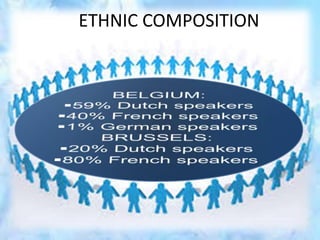
ETHNIC COMPOSITION
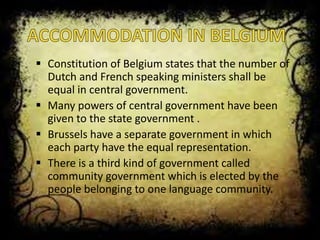
 Constitution of Belgium states that the number of 
Dutch and French speaking ministers shall be 
equal in central government. 
 Many powers of central government have been 
given to the state government . 
 Brussels have a separate government in which 
each party have the equal representation. 
 There is a third kind of government called 
community government which is elected by the 
people belonging to one language community.
Sri Lanka officially theDemocratic 
Socialist Republic of Sri Lanka, is 
an island country in the 
northern Indian Ocean off the 
southern coast of theIndian 
subcontinent in South Asia. Known 
until 1972 as Ceylon , Sri Lanka has 
maritime borders with India to the 
northwest and the Maldives to the 
Southwest.
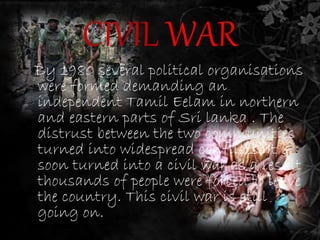
CIVIL WAR 
By 1980 several political organisations 
were formed demanding an 
independent Tamil Eelam in northern 
and eastern parts of Sri lanka . The 
distrust between the two communities 
turned into widespread conflicts. It 
soon turned into a civil war as a result 
thousands of people were forced to leave 
the country. This civil war is still 
going on.
POWER SHARING

POWER SHARING

  • 1.
    POWER POINT PRESENTATION VASU X-D Roll no.9
  • 2.
  • 3.
    MEANING Power sharingis a technique to share the power at different levels. It is an idea inculcated in democracy so that the power is not concentrated at one hand only and that different forms can keep a check on each other. India is an example of ‘holding together’ federations, where the power is shared between central government and different constituent states.
  • 4.
    • PRUDENTIAL REASONS: 1. It reduces the possibility of conflicts. 2. It provides stability to the government. MORAL REASONS: 1. Power sharing is the very spirit of democracy. 2. people have a right to be consulted on how they are to be governed.
  • 5.
    FORMS OF POWERSHARING 1. Power is shared among different organs of the government 2.Power is shared among government at different levels 3. Power is shared among different social groups 4. Power is also shared among political parties, pressure groups and movements
  • 6.
    Legislature (make laws) Executive (implement laws) Judiciary (resolves disputes)
  • 7.
    POWER SHARING AT DIFFERENT LEVELS OF GOVERNMENT Central government State government Local self government
  • 8.
    Power sharing amongdifferent social groups • Under this arrangement government and administration gives space to the diverse social groups. 1 • In this way minority communities get a fare share in power. 2
  • 9.
    Power sharing amongpolitical parties, pressure groups and movements In case no party gets majority then two or more parties form an alliance to come to power and form coalition government. In democracy different parties compete to come to power.
  • 10.
    TWO EXAMPLES OF POWER SHARING BELGIUM SRILANKA
  • 12.
    Belgium is afederal monarchy inWestern Europe. It is a founding member of the European Union and hosts the EU's headquarters as well as those of several other major international organisations such as NATO. Belgium covers an area of 30,528 square kilometres (11,787 sq mi), and it has a population of about 11 million people.
  • 13.
  • 14.
     Constitution ofBelgium states that the number of Dutch and French speaking ministers shall be equal in central government.  Many powers of central government have been given to the state government .  Brussels have a separate government in which each party have the equal representation.  There is a third kind of government called community government which is elected by the people belonging to one language community.
  • 16.
    Sri Lanka officiallytheDemocratic Socialist Republic of Sri Lanka, is an island country in the northern Indian Ocean off the southern coast of theIndian subcontinent in South Asia. Known until 1972 as Ceylon , Sri Lanka has maritime borders with India to the northwest and the Maldives to the Southwest.
  • 19.
    CIVIL WAR By1980 several political organisations were formed demanding an independent Tamil Eelam in northern and eastern parts of Sri lanka . The distrust between the two communities turned into widespread conflicts. It soon turned into a civil war as a result thousands of people were forced to leave the country. This civil war is still going on.