The
Present Progressive
Tense
To be + -ing
The Present Progressive
describes actions that
are happening now,
are in progress at the moment
of speaking,
are unfinished,
are not completed. They could
be temporary actions.
Spelling rules:
 Work working
 Write writing
 Tie tying
 Run running
 Listen listening
 Permit permitting
 Allow allowing
 Fix fixing
Give the –ing form of these
verbs
Come grow
look study
die ski
mix whisper
prefer
Temporary situations
happening at the moment of
speaking
 They are singing.
Temporary actions over a
longer period of time.
 They are enjoying
themselves these
days.
 They are relaxing
this summer.
 They are spending
a lot of time
together these
days.
What is he doing?
What is she doing?
What are they doing?
Time expressions
these days
now, right now
today, tonight
this week, this semester
this month, this year
I’m taking
you’re taking
he’s taking
we’re taking
they’re taking
I’m not talking
you’re not talking
you aren’t talking
Questions
Are you studying English this
semester?
Are they enjoying themselves
at the party?
Who is coming with me?
What are you doing?
What are you doing now?
What are you studying this
semester?
Are you taking a class with Mr.
Duffis?
Are you dieting this week?
Are you eating a lot these
days?
Where are you going on
vacation this summer?
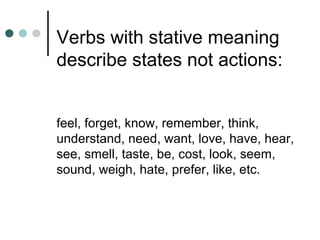
Verbs with stative meaning
describe states not actions:
feel, forget, know, remember, think,
understand, need, want, love, have, hear,
see, smell, taste, be, cost, look, seem,
sound, weigh, hate, prefer, like, etc.
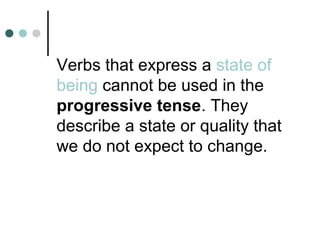
Verbs that express a state of
being cannot be used in the
progressive tense. They
describe a state or quality that
we do not expect to change.
Martha is being rude today.
Martha is a nice person.
The soup tastes delicious.
Mother is tasting the soup.
I think BCC is a wonderful
school. I am thinking seriously
about going there.
Many verbs can have both a
stative or an active use: smell,
think, have, taste, look, see.
He has a beautiful house. He
is having dinner
with his family.
Common expressions with
have describe an experience:
have fun
have problems
have a good time
have dinner
have trouble with
have difficulty with
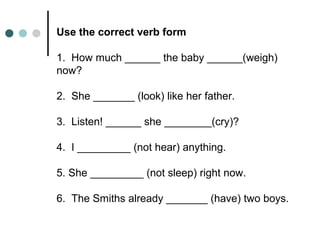
Use the correct verb form
1. How much ______ the baby ______(weigh)
now?
2. She _______ (look) like her father.
3. Listen! ______ she ________(cry)?
4. I _________ (not hear) anything.
5. She _________ (not sleep) right now.
6. The Smiths already _______ (have) two boys.
The end!

Power point the present progressive tense

  • 1.
  • 2.
    The Present Progressive describesactions that are happening now, are in progress at the moment of speaking, are unfinished, are not completed. They could be temporary actions.
  • 3.
    Spelling rules:  Workworking  Write writing  Tie tying  Run running  Listen listening  Permit permitting  Allow allowing  Fix fixing
  • 4.
    Give the –ingform of these verbs Come grow look study die ski mix whisper prefer
  • 5.
    Temporary situations happening atthe moment of speaking  They are singing.
  • 6.
    Temporary actions overa longer period of time.  They are enjoying themselves these days.  They are relaxing this summer.  They are spending a lot of time together these days.
  • 7.
    What is hedoing?
  • 8.
  • 9.
  • 10.
    Time expressions these days now,right now today, tonight this week, this semester this month, this year
  • 11.
    I’m taking you’re taking he’staking we’re taking they’re taking I’m not talking you’re not talking you aren’t talking
  • 12.
    Questions Are you studyingEnglish this semester? Are they enjoying themselves at the party? Who is coming with me? What are you doing?
  • 13.
    What are youdoing now? What are you studying this semester? Are you taking a class with Mr. Duffis? Are you dieting this week? Are you eating a lot these days? Where are you going on vacation this summer?
  • 14.
    Verbs with stativemeaning describe states not actions: feel, forget, know, remember, think, understand, need, want, love, have, hear, see, smell, taste, be, cost, look, seem, sound, weigh, hate, prefer, like, etc.
  • 15.
    Verbs that expressa state of being cannot be used in the progressive tense. They describe a state or quality that we do not expect to change.
  • 16.
    Martha is beingrude today. Martha is a nice person. The soup tastes delicious. Mother is tasting the soup. I think BCC is a wonderful school. I am thinking seriously about going there.
  • 17.
    Many verbs canhave both a stative or an active use: smell, think, have, taste, look, see. He has a beautiful house. He is having dinner with his family.
  • 18.
    Common expressions with havedescribe an experience: have fun have problems have a good time have dinner have trouble with have difficulty with
  • 19.
    Use the correctverb form 1. How much ______ the baby ______(weigh) now? 2. She _______ (look) like her father. 3. Listen! ______ she ________(cry)? 4. I _________ (not hear) anything. 5. She _________ (not sleep) right now. 6. The Smiths already _______ (have) two boys.
  • 20.