 37 yo female p/w knee

pain s/p front-end MVC
as a restrained passenger
with the left knee striking
the dashboard. Pt cannot
move knee secondary to
pain. No other injuries
noted.

 T 98.7 P 103 BP 117/62 O2








100%
Gen:
CV: Tachycardic, RR, no
m/r/g
Pulm: Lungs CTA bilat
GU: nml
Ext: Left knee grossly
unstable and unable to
extended. Decreased
sensation over lateral
foot.
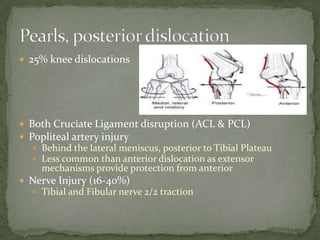
 25% knee dislocations

 Both Cruciate Ligament disruption (ACL & PCL)
 Popliteal artery injury
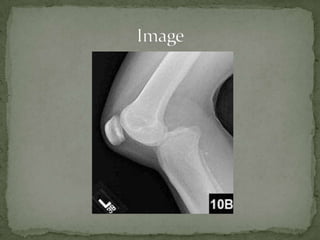
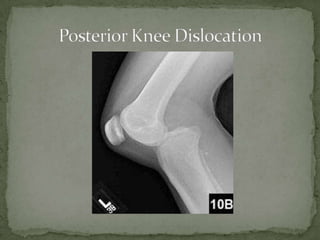
 Behind the lateral meniscus, posterior to Tibial Plateau
 Less common than anterior dislocation as extensor

mechanisms provide protection from anterior

 Nerve Injury (16-40%)
 Tibial and Fibular nerve 2/2 traction
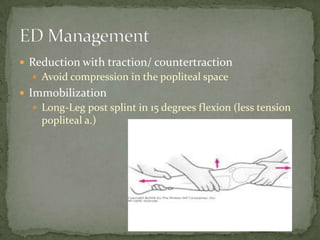
 Reduction with traction/ countertraction
 Avoid compression in the popliteal space

 Immobilization
 Long-Leg post splint in 15 degrees flexion (less tension

popliteal a.)
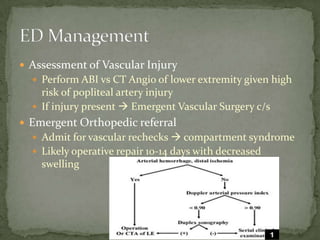
 Assessment of Vascular Injury
 Perform ABI vs CT Angio of lower extremity given high

risk of popliteal artery injury
 If injury present  Emergent Vascular Surgery c/s
 Emergent Orthopedic referral
 Admit for vascular rechecks  compartment syndrome
 Likely operative repair 10-14 days with decreased

swelling
 http://www.imageinterpretation.co.uk/pelvis.html
 http://www.wheelessonline.com/ortho/12846
 Redmond, Levy, Dajani, et al. Detecting Vascular Injury in

Lower-Extremity Orthopedic Trauma: The Role of CT
Angiography. ORTHOPEDICS. August 2008;31(8):761.
 http://www.wheelessonline.com/ortho/traumatic_dislocat
ions_of_the_knee
 http://reference.medscape.com/features/slideshow/lwrdisloc
 http://www.accessemergencymedicine.com/overflow.aspx?
searchStr=dislocations&hasExactMatch=True&hasDrugMa
tch=False&searchSource=Images&ftbool=False

Posterior Knee Dislocation

  • 2.
     37 yofemale p/w knee pain s/p front-end MVC as a restrained passenger with the left knee striking the dashboard. Pt cannot move knee secondary to pain. No other injuries noted.  T 98.7 P 103 BP 117/62 O2      100% Gen: CV: Tachycardic, RR, no m/r/g Pulm: Lungs CTA bilat GU: nml Ext: Left knee grossly unstable and unable to extended. Decreased sensation over lateral foot.
  • 5.
     25% kneedislocations  Both Cruciate Ligament disruption (ACL & PCL)  Popliteal artery injury  Behind the lateral meniscus, posterior to Tibial Plateau  Less common than anterior dislocation as extensor mechanisms provide protection from anterior  Nerve Injury (16-40%)  Tibial and Fibular nerve 2/2 traction
  • 6.
     Reduction withtraction/ countertraction  Avoid compression in the popliteal space  Immobilization  Long-Leg post splint in 15 degrees flexion (less tension popliteal a.)
  • 7.
     Assessment ofVascular Injury  Perform ABI vs CT Angio of lower extremity given high risk of popliteal artery injury  If injury present  Emergent Vascular Surgery c/s  Emergent Orthopedic referral  Admit for vascular rechecks  compartment syndrome  Likely operative repair 10-14 days with decreased swelling
  • 8.
     http://www.imageinterpretation.co.uk/pelvis.html  http://www.wheelessonline.com/ortho/12846 Redmond, Levy, Dajani, et al. Detecting Vascular Injury in Lower-Extremity Orthopedic Trauma: The Role of CT Angiography. ORTHOPEDICS. August 2008;31(8):761.  http://www.wheelessonline.com/ortho/traumatic_dislocat ions_of_the_knee  http://reference.medscape.com/features/slideshow/lwrdisloc  http://www.accessemergencymedicine.com/overflow.aspx? searchStr=dislocations&hasExactMatch=True&hasDrugMa tch=False&searchSource=Images&ftbool=False