 Patient is a 22 yo WM

 Vitals: T: 97.8, HR: 78, RR: 16,

that presents to ED with
left ankle pain after a

skiing accident. Pt was
snow skiing and landed 

on a rock after a jump
twisting his left ankle. 
He has not been able to
walk on it since. Pt
denies any other injuries. 

BP: 118/60
Gen: WD, WN, WM in NAD
CV: RRR
Pulm: CTA B
MSK: ttp over left ankle with
diffuse edema and abrasions.
2+ pulses. Good cap refill
Neuro: motor/sensory intact.
Pain with strength testing and
passive ROM.
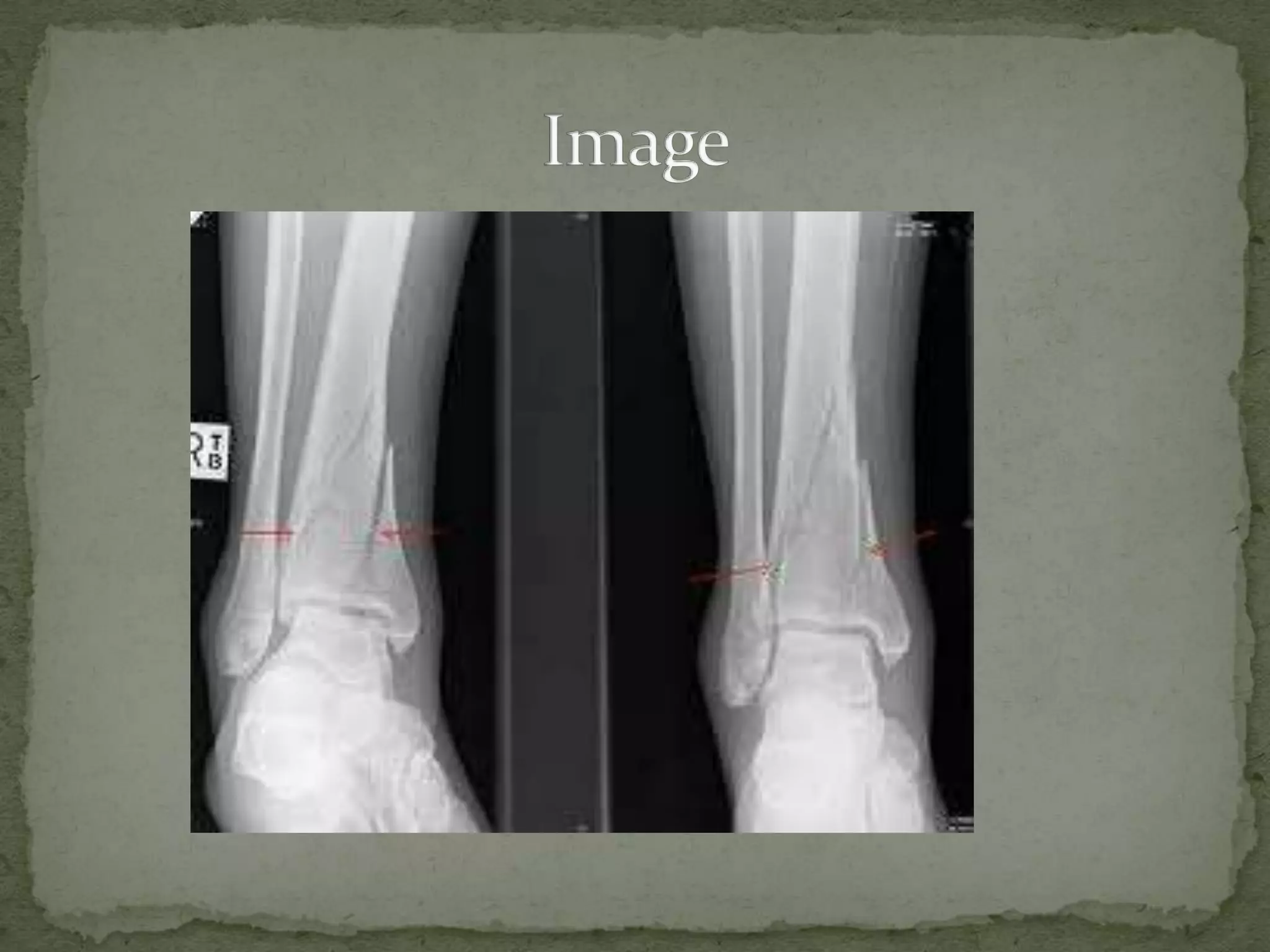
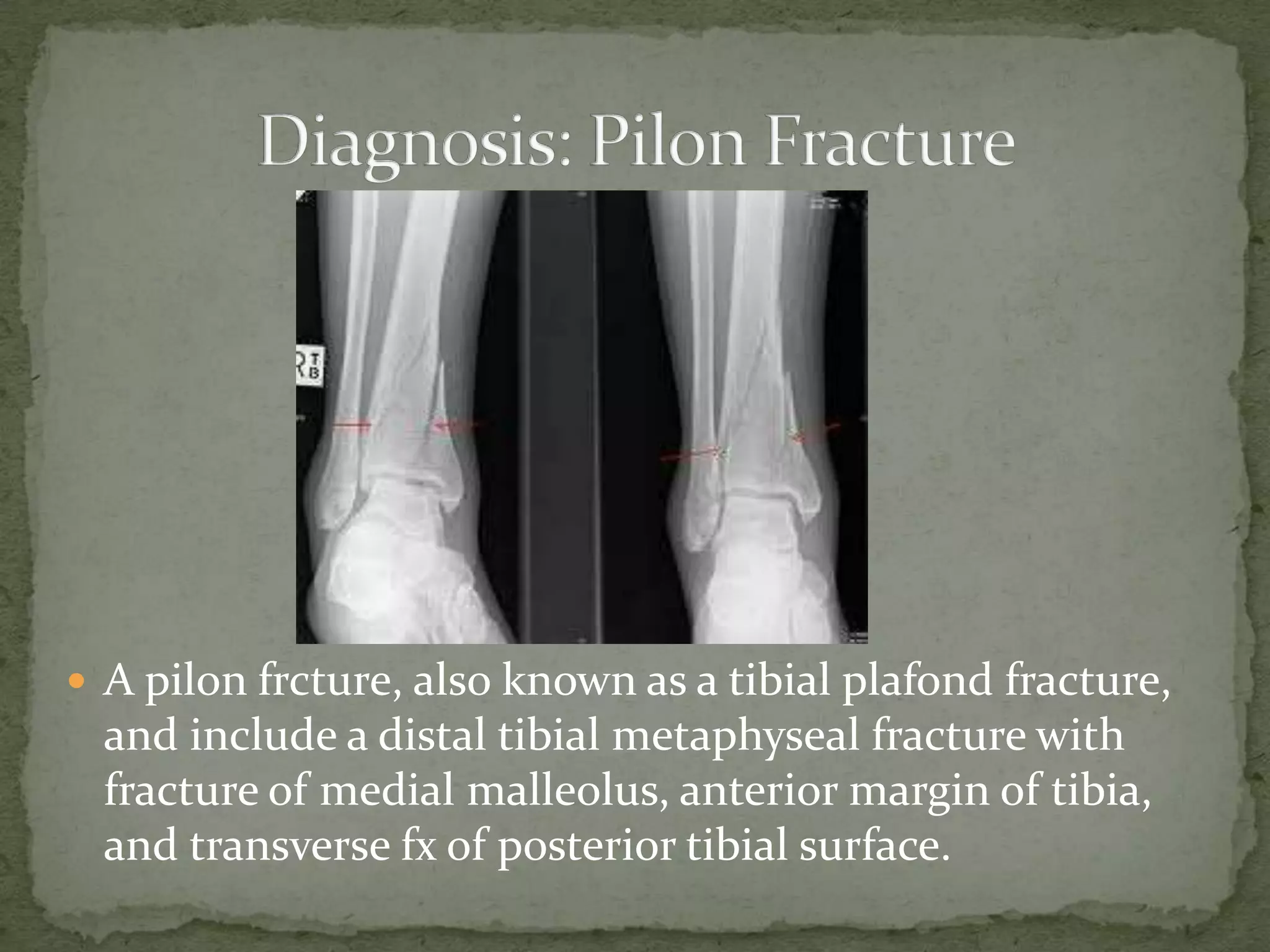
 A pilon frcture, also known as a tibial plafond fracture,

and include a distal tibial metaphyseal fracture with
fracture of medial malleolus, anterior margin of tibia,
and transverse fx of posterior tibial surface.
 Evaluate for neurovascular status
 Reduce if necessary

 Splint in posterior leg with stirrups
 Immediate orthopedic surgery consult
 Appropriate pain management
 Pilon fractures are high-energy ankle fractures
 Males 3x more likely than females
 25%-50% of patients have additional injuries
 Seen with falls from a height, MVC/MCC, skiing

 Type classificiation from I – III depend on the amount

of articular comminution
 CT scans are usually required to determine the plan for
surgical fixation
 Associated with fibular fractures in the majority of
cases
Type III Pilon fracture

After repair of Pilon Fracture with
associated fibular fracture
 http://www.fighttimes.com/magazine/magazine.asp?a

rticle=481
 Tintinalli, Judith E., Gabor D. Kelen, and J. Stephan.
Stapczynski. Emergency Medicine: A Comprehensive
Study Guide. New York: McGraw-Hill, Medical Pub.
Division, 2004.
 Wheeles, Clifford. "Wheelesonline.com."
Wheelesonline.com. Duke Orthopedics. Web. 04 June
2012. <http://www.wheelesonline.com/ortho>.

Pilon Fracture

  • 2.
     Patient isa 22 yo WM  Vitals: T: 97.8, HR: 78, RR: 16, that presents to ED with left ankle pain after a  skiing accident. Pt was snow skiing and landed   on a rock after a jump twisting his left ankle.  He has not been able to walk on it since. Pt denies any other injuries.  BP: 118/60 Gen: WD, WN, WM in NAD CV: RRR Pulm: CTA B MSK: ttp over left ankle with diffuse edema and abrasions. 2+ pulses. Good cap refill Neuro: motor/sensory intact. Pain with strength testing and passive ROM.
  • 4.
     A pilonfrcture, also known as a tibial plafond fracture, and include a distal tibial metaphyseal fracture with fracture of medial malleolus, anterior margin of tibia, and transverse fx of posterior tibial surface.
  • 5.
     Evaluate forneurovascular status  Reduce if necessary  Splint in posterior leg with stirrups  Immediate orthopedic surgery consult  Appropriate pain management
  • 6.
     Pilon fracturesare high-energy ankle fractures  Males 3x more likely than females  25%-50% of patients have additional injuries  Seen with falls from a height, MVC/MCC, skiing  Type classificiation from I – III depend on the amount of articular comminution  CT scans are usually required to determine the plan for surgical fixation  Associated with fibular fractures in the majority of cases
  • 7.
    Type III Pilonfracture After repair of Pilon Fracture with associated fibular fracture
  • 8.
     http://www.fighttimes.com/magazine/magazine.asp?a rticle=481  Tintinalli,Judith E., Gabor D. Kelen, and J. Stephan. Stapczynski. Emergency Medicine: A Comprehensive Study Guide. New York: McGraw-Hill, Medical Pub. Division, 2004.  Wheeles, Clifford. "Wheelesonline.com." Wheelesonline.com. Duke Orthopedics. Web. 04 June 2012. <http://www.wheelesonline.com/ortho>.