Effective Behavior Management and Supports for Students In CrisisStephanie MiklesBehavior Specialist for Harford County Public Schoolsstephanie.mikles@hcps.org
ObjectivesBy the end of this session, you will be able to…Describe the characteristics of proactive behavior management.
 Identify causes of disruptive behavior.
 Identify strategies to decrease disruptive behavior.
Identify strategies to prevent and respond to disruptive behaviors and prevent crisis.
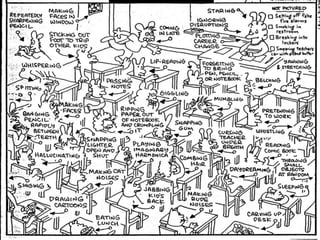
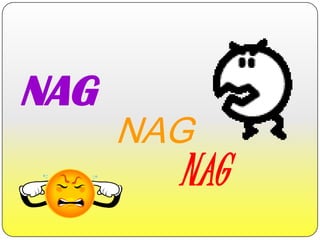
The most widespread management procedure used in classrooms is…
NAGNAGNAG
BrainstormWhat are some causes of  inappropriate behavior??
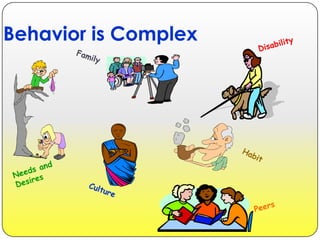
Behavior is ComplexDisabilityFamilyHabitNeeds and DesiresCulturePeers
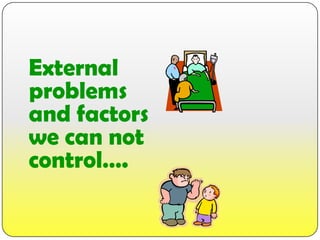
External problems and factors we can not control….
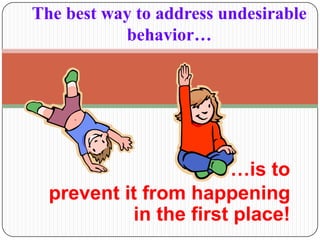
The best way to address undesirable behavior……is to prevent it from happening in the first place!
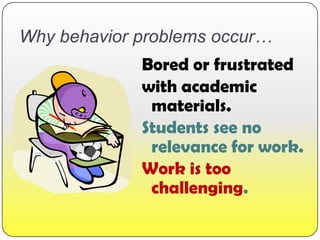
Why behavior problems occur…Bored or frustratedwith academic materials.Students see no relevance for work.Work is too challenging.
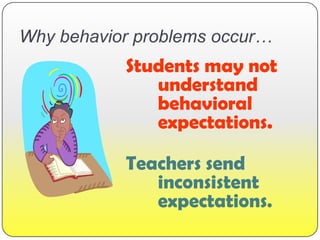
Why behavior problems occur…Students may not 	understand 	behavioral 	expectations.Teachers send 	inconsistent 	expectations.
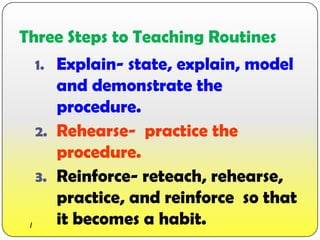
Three Steps to Teaching RoutinesExplain- state, explain, model and demonstrate the procedure.Rehearse-  practice the procedure.Reinforce- reteach, rehearse, practice, and reinforce  so that it becomes a habit.l
Basics of BehaviorBehavior is learned.
Every social interaction you have with a child teaches him/her something.
Children engage in behavior to "get" what they find reinforcing or to "avoid" what they find aversive.
Relationships matter! ReflectThink about an educator or other person that made a difference in your life... What qualities did he/she possess?Think, Pair, Share
Your  Relationship With the Student is Your Most Valuable ResourceIt is OK to dislike the behavior, but 	not the student.  Students need to know that you believe 	in their ability to be successful.  They need to feel that you are 	“on their side”.
You can be the reason some student gets up and comes to school when his/her life is tough.	You can be the reason some student ‘keeps on keeping on.	Even on your worst day on the job, you are still some student’s best hope.
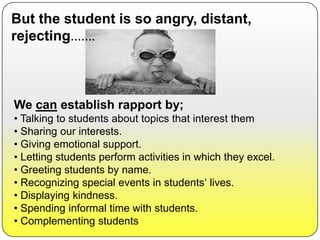
But the student is so angry, distant, rejecting…….We can establish rapport by;• Talking to students about topics that interest them• Sharing our interests.• Giving emotional support.• Letting students perform activities in which they excel.• Greeting students by name.• Recognizing special events in students‘ lives.• Displaying kindness.• Spending informal time with students.• Complementing students
Preventing Escalating BehaviorRecognize the behavioral signs for escalationAvoid escalating responsesMaintain calmness, respect, and detachmentUse suggested response strategies. 20
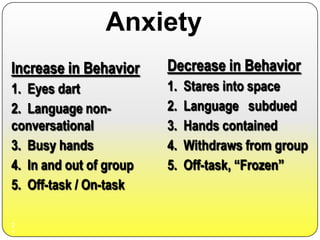
Anxiety21Decrease in Behavior1.  Stares into space2.  Language   subdued3.  Hands contained4.  Withdraws from group5.  Off-task, “Frozen”Increase in Behavior1.  Eyes dart2.  Language non- conversational3.  Busy hands4.  In and out of group5.  Off-task / On-task
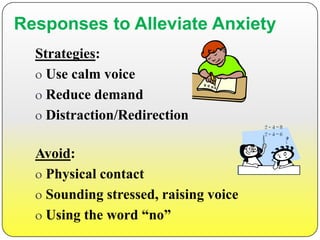
Responses to Alleviate AnxietyStrategies:  Use calm voice
 Reduce demand
 Distraction/RedirectionAvoid:  Physical contact
 Sounding stressed, raising voice
 Using the word “no” Provide Cues to Students23NonverbalEye contactPhysical gestures (raising your hand in silence)Tapping or snapping your fingersCoughing or clearing your throatFacial expressions (smile)Body postures (tilting your head)
Proximity Control24“Effective teachers know that  either you work the crowd or the crowd works you.”                                                                  Fred Jones, Tools for TeachingStanding near a student who is experiencing difficultyMoving around the room helps students stay on task because of your “proximity” to them.The students know you’re aware of what’s going on – and “with it.”
Tools That Take Away Stress!Fidgetsare objects we touch or “play with” when we experience good or bad stress. We all fidget when we are trying to concentrate, pass time or we have nervous energy.
Manipulating, these objects and moving helps us manage stress and regulate, or balance out, our sensory systems and energy.
 Try to replace inappropriate or socially unacceptable fidgeting. Examples of Fidgets Hands; stress ball, putty, clay, pencil grip, zipper, beanbag, gloves, bracelet, hand-held game, drawing/notepads. Mouth; gum, chewing tubes, and suckers, mints. Foot; foot rests/massagers and resistance bands
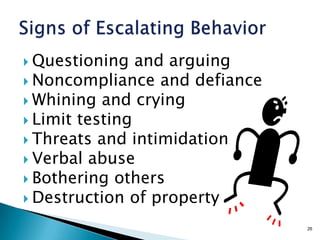
Questioning and arguing
Noncompliance and defiance
Whining and crying
Limit testing
Threats and intimidation
Verbal abuse
Bothering others

Positive behavior management for paras

  • 1.
    Effective Behavior Managementand Supports for Students In CrisisStephanie MiklesBehavior Specialist for Harford County Public Schoolsstephanie.mikles@hcps.org
  • 2.
    ObjectivesBy the endof this session, you will be able to…Describe the characteristics of proactive behavior management.
  • 3.
    Identify causesof disruptive behavior.
  • 4.
    Identify strategiesto decrease disruptive behavior.
  • 5.
    Identify strategies toprevent and respond to disruptive behaviors and prevent crisis.
  • 6.
    The most widespreadmanagement procedure used in classrooms is…
  • 7.
  • 8.
    BrainstormWhat are somecauses of inappropriate behavior??
  • 9.
  • 10.
    External problems andfactors we can not control….
  • 12.
    The best wayto address undesirable behavior……is to prevent it from happening in the first place!
  • 13.
    Why behavior problemsoccur…Bored or frustratedwith academic materials.Students see no relevance for work.Work is too challenging.
  • 14.
    Why behavior problemsoccur…Students may not understand behavioral expectations.Teachers send inconsistent expectations.
  • 15.
    Three Steps toTeaching RoutinesExplain- state, explain, model and demonstrate the procedure.Rehearse- practice the procedure.Reinforce- reteach, rehearse, practice, and reinforce so that it becomes a habit.l
  • 16.
  • 17.
    Every social interactionyou have with a child teaches him/her something.
  • 18.
    Children engage inbehavior to "get" what they find reinforcing or to "avoid" what they find aversive.
  • 19.
    Relationships matter! ReflectThinkabout an educator or other person that made a difference in your life... What qualities did he/she possess?Think, Pair, Share
  • 20.
    Your RelationshipWith the Student is Your Most Valuable ResourceIt is OK to dislike the behavior, but not the student.  Students need to know that you believe in their ability to be successful.  They need to feel that you are “on their side”.
  • 21.
    You can bethe reason some student gets up and comes to school when his/her life is tough. You can be the reason some student ‘keeps on keeping on. Even on your worst day on the job, you are still some student’s best hope.
  • 22.
    But the studentis so angry, distant, rejecting…….We can establish rapport by;• Talking to students about topics that interest them• Sharing our interests.• Giving emotional support.• Letting students perform activities in which they excel.• Greeting students by name.• Recognizing special events in students‘ lives.• Displaying kindness.• Spending informal time with students.• Complementing students
  • 24.
    Preventing Escalating BehaviorRecognizethe behavioral signs for escalationAvoid escalating responsesMaintain calmness, respect, and detachmentUse suggested response strategies. 20
  • 25.
    Anxiety21Decrease in Behavior1. Stares into space2. Language subdued3. Hands contained4. Withdraws from group5. Off-task, “Frozen”Increase in Behavior1. Eyes dart2. Language non- conversational3. Busy hands4. In and out of group5. Off-task / On-task
  • 26.
    Responses to AlleviateAnxietyStrategies: Use calm voice
  • 27.
  • 28.
  • 29.
    Sounding stressed,raising voice
  • 30.
    Using theword “no” Provide Cues to Students23NonverbalEye contactPhysical gestures (raising your hand in silence)Tapping or snapping your fingersCoughing or clearing your throatFacial expressions (smile)Body postures (tilting your head)
  • 31.
    Proximity Control24“Effective teachersknow that either you work the crowd or the crowd works you.” Fred Jones, Tools for TeachingStanding near a student who is experiencing difficultyMoving around the room helps students stay on task because of your “proximity” to them.The students know you’re aware of what’s going on – and “with it.”
  • 32.
    Tools That TakeAway Stress!Fidgetsare objects we touch or “play with” when we experience good or bad stress. We all fidget when we are trying to concentrate, pass time or we have nervous energy.
  • 33.
    Manipulating, these objectsand moving helps us manage stress and regulate, or balance out, our sensory systems and energy.
  • 34.
    Try toreplace inappropriate or socially unacceptable fidgeting. Examples of Fidgets Hands; stress ball, putty, clay, pencil grip, zipper, beanbag, gloves, bracelet, hand-held game, drawing/notepads. Mouth; gum, chewing tubes, and suckers, mints. Foot; foot rests/massagers and resistance bands
  • 35.
  • 36.
  • 37.
  • 38.
  • 39.
  • 40.
  • 41.