Presented by Keith Hatschek 
Digital Music Summit 
Mission College 
Saturday, Nov. 1, 2014 
PORTFOLIO MUSIC CAREERS
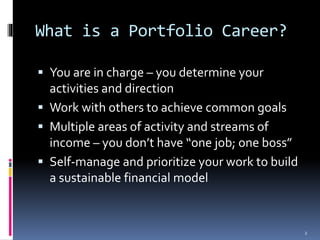
What is a Portfolio Career? 
 You are in charge – you determine your 
activities and direction 
 Work with others to achieve common goals 
 Multiple areas of activity and streams of 
income – you don’t have “one job; one boss” 
 Self-manage and prioritize your work to build 
a sustainable financial model 
2
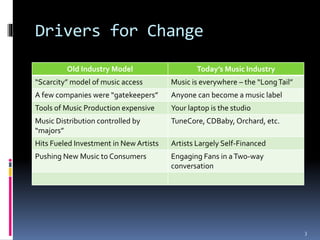
Drivers for Change 
Old Industry Model Today’s Music Industry 
“Scarcity” model of music access Music is everywhere – the “Long Tail” 
A few companies were “gatekeepers” Anyone can become a music label 
Tools of Music Production expensive Your laptop is the studio 
Music Distribution controlled by 
TuneCore, CDBaby, Orchard, etc. 
“majors” 
Hits Fueled Investment in New Artists Artists Largely Self-Financed 
Pushing New Music to Consumers Engaging Fans in a Two-way 
conversation 
3
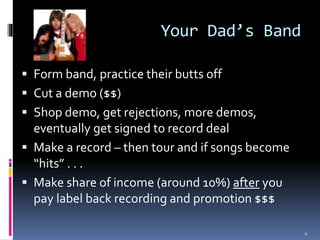
Your Dad’s Band 
 Form band, practice their butts off 
 Cut a demo ($$) 
 Shop demo, get rejections, more demos, 
eventually get signed to record deal 
 Make a record – then tour and if songs become 
“hits” . . . 
 Make share of income (around 10%) after you 
pay label back recording and promotion $$$ 
4
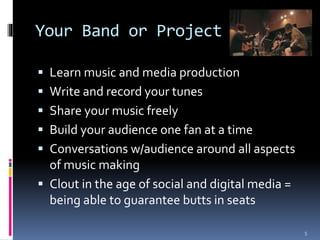
Your Band or Project 
 Learn music and media production 
 Write and record your tunes 
 Share your music freely 
 Build your audience one fan at a time 
 Conversations w/audience around all aspects 
of music making 
 Clout in the age of social and digital media = 
being able to guarantee butts in seats 
5
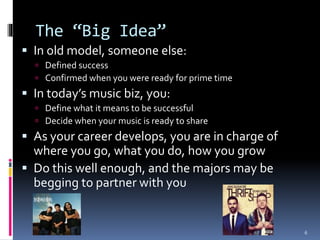
The “Big Idea” 
 In old model, someone else: 
 Defined success 
 Confirmed when you were ready for prime time 
 In today’s music biz, you: 
 Define what it means to be successful 
 Decide when your music is ready to share 
 As your career develops, you are in charge of 
where you go, what you do, how you grow 
 Do this well enough, and the majors may be 
begging to partner with you 
6
Creating a Life in Music 
 You have to become very skilled at one or 
more facets of music creation: 
 Recording 
 Mixing 
 Performing 
 Writing (song, lyrics, beats) 
7
Key Personal Traits 
 Successful portfolio musicians demonstrate: 
 Great time management skills 
 Excellent interpersonal skills 
 Outstanding organizational skills 
 These help define who you are and why 
others want to partner with you! 
8
Getting Started 
 Do a Skills Inventory – what do you know how 
to do? 
 Ask what really excites and interests you? 
 Think about how you can help connect others 
through your projects 
 Can you also enrich your local community? 
9
Develop 
a Network of Partners 
 Like minded music makers 
 Business and communication folks 
 Learn all you can about the new music 
industry and its creative pathways 
 Always respect and appreciate your fans 
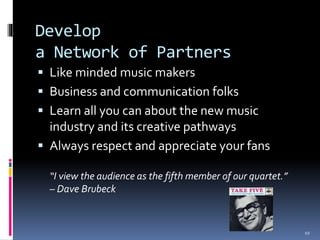
“I view the audience as the fifth member of our quartet.” 
– Dave Brubeck 
10
Food, Clothing, Shelter & 
Gear 
 Lottery probably not an option 
 Old concept – “day gig” was drudgery, dying 
to escape it 
 New concept – find meaningful work that can 
enhance your skills to create and promote 
your music 
 Example: work in social media for a non-profit 
or music products company 
11
One Man/Woman Company 
 Write, create your music 
 Perform your music 
 Produce your music 
 Distribute your music (label) 
 Market your music 
 Build your audience, earn their support ($) 
 Tour, promote, engage, & be thankful to fans 
12
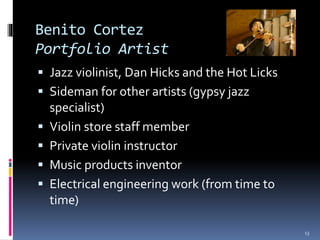
Benito Cortez 
Portfolio Artist 
 Jazz violinist, Dan Hicks and the Hot Licks 
 Sideman for other artists (gypsy jazz 
specialist) 
 Violin store staff member 
 Private violin instructor 
 Music products inventor 
 Electrical engineering work (from time to 
time) 
13
Questions & Discussion 
 Resources 
 Echoes: Insight for Independent Artists blog 
 DIY Musician blog at CD Baby.com 
 www.billboardbiz.com 
 Books 
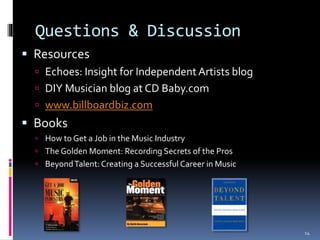
 How to Get a Job in the Music Industry 
 The Golden Moment: Recording Secrets of the Pros 
 Beyond Talent: Creating a Successful Career in Music 
14

Portfolio Music Careers

  • 1.
    Presented by KeithHatschek Digital Music Summit Mission College Saturday, Nov. 1, 2014 PORTFOLIO MUSIC CAREERS
  • 2.
    What is aPortfolio Career?  You are in charge – you determine your activities and direction  Work with others to achieve common goals  Multiple areas of activity and streams of income – you don’t have “one job; one boss”  Self-manage and prioritize your work to build a sustainable financial model 2
  • 3.
    Drivers for Change Old Industry Model Today’s Music Industry “Scarcity” model of music access Music is everywhere – the “Long Tail” A few companies were “gatekeepers” Anyone can become a music label Tools of Music Production expensive Your laptop is the studio Music Distribution controlled by TuneCore, CDBaby, Orchard, etc. “majors” Hits Fueled Investment in New Artists Artists Largely Self-Financed Pushing New Music to Consumers Engaging Fans in a Two-way conversation 3
  • 4.
    Your Dad’s Band  Form band, practice their butts off  Cut a demo ($$)  Shop demo, get rejections, more demos, eventually get signed to record deal  Make a record – then tour and if songs become “hits” . . .  Make share of income (around 10%) after you pay label back recording and promotion $$$ 4
  • 5.
    Your Band orProject  Learn music and media production  Write and record your tunes  Share your music freely  Build your audience one fan at a time  Conversations w/audience around all aspects of music making  Clout in the age of social and digital media = being able to guarantee butts in seats 5
  • 6.
    The “Big Idea”  In old model, someone else:  Defined success  Confirmed when you were ready for prime time  In today’s music biz, you:  Define what it means to be successful  Decide when your music is ready to share  As your career develops, you are in charge of where you go, what you do, how you grow  Do this well enough, and the majors may be begging to partner with you 6
  • 7.
    Creating a Lifein Music  You have to become very skilled at one or more facets of music creation:  Recording  Mixing  Performing  Writing (song, lyrics, beats) 7
  • 8.
    Key Personal Traits  Successful portfolio musicians demonstrate:  Great time management skills  Excellent interpersonal skills  Outstanding organizational skills  These help define who you are and why others want to partner with you! 8
  • 9.
    Getting Started Do a Skills Inventory – what do you know how to do?  Ask what really excites and interests you?  Think about how you can help connect others through your projects  Can you also enrich your local community? 9
  • 10.
    Develop a Networkof Partners  Like minded music makers  Business and communication folks  Learn all you can about the new music industry and its creative pathways  Always respect and appreciate your fans “I view the audience as the fifth member of our quartet.” – Dave Brubeck 10
  • 11.
    Food, Clothing, Shelter& Gear  Lottery probably not an option  Old concept – “day gig” was drudgery, dying to escape it  New concept – find meaningful work that can enhance your skills to create and promote your music  Example: work in social media for a non-profit or music products company 11
  • 12.
    One Man/Woman Company  Write, create your music  Perform your music  Produce your music  Distribute your music (label)  Market your music  Build your audience, earn their support ($)  Tour, promote, engage, & be thankful to fans 12
  • 13.
    Benito Cortez PortfolioArtist  Jazz violinist, Dan Hicks and the Hot Licks  Sideman for other artists (gypsy jazz specialist)  Violin store staff member  Private violin instructor  Music products inventor  Electrical engineering work (from time to time) 13
  • 14.
    Questions & Discussion  Resources  Echoes: Insight for Independent Artists blog  DIY Musician blog at CD Baby.com  www.billboardbiz.com  Books  How to Get a Job in the Music Industry  The Golden Moment: Recording Secrets of the Pros  Beyond Talent: Creating a Successful Career in Music 14