PORTER’S FIVE FORCES MODEL
FOR
MARUTI SUZUKI

By
R RAGHAVENDRA ……121568
CONTENT:
 INTRODUCTION

 PORTER’S 5 FORCES MODEL
 GLANCE ON MARUTI ‘S STRATEGIES
A BRIEF INTRODUCTION TO MARUTI SUZUKI
 In 1982, Government of India entered into a joint
venture with Suzuki motor corporation of Japan

 Plant was established at Gurgaon in Haryana
 It was the first company in india to mass produce
and sell more than a million cars
 Maruti Suzuki is the on of the india’s leading
automobile manufacturers and the market leader
in the car segment
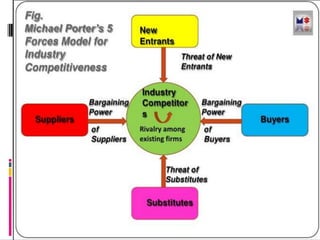
Threat from the new players: Increasing
-

-

Most of the major global players are present in the
Indian market; few more are expected to enter.
Financial Strength assumes importance as high are
required for building capacity and maintaining
adequacy of working capital.

Rivalry with in the industry: High
-

There is keen competition in select segments.
(compact and mid size segments).
New Multinational players may enter the market.
Market strength of suppliers: Low
- A large number of automotive components
suppliers
- Automotive players are rationalizing their vendor
base to achieve consistency in quality

Market strength of consumers: Increasing
- Increased awareness among consumers has
increased expectations. Thus the ability to
innovate is critical
- Product differentiation via new features, improved
performance and after sales support is critical
- Increased competitive intensity has limited the
pricing power of manufactures
Threat from substitutes: Low to Medium
- Consumer preference is changing (Mini cars are
being replaced by compact or mid size cars)

- Setting up integrated manufacturing facilities may
require higher capital investments than
establishing assembly facilities
- India also is likely to increasingly serve as the
sourcing base for global automotive companies,
and automotive experts are likely to gain
increasing importance over the medium term
- Competition is likely to intensify in the SUV
segment in India following the launch of new
models at competitive price
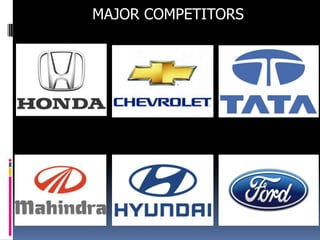
MAJOR COMPETITORS
MARUTI SRATEGIES
Major Restructuring Exercise:
- The company focused on improving its
OPERATIONAL EFFICIENCY by upgrading

manufacturing using new manufacturing
techniques

- INCREASING CAPACITY, using information

technology in manufacturing

- Focus on NEW PRODUCTS at regular intervals
- Venturing into OTHER RELATED BUSINESSES like
car finance, insurance, buying and selling of used
Maruti cars.
New Strategy:
-

UPGRADED its manufacturing facilities to meet the foreign

-

BROADENED its product portfolio (LUV- ERTIGA)

-

EXPANDED its sales and service network to reach all over

-

VENTURED into new associated businesses

-

PROMOTIONAL strategies including price cuts,

-

VALUE ADDED SERVICES offering to its customers

challenge. (CRDI, VVTI engines)

India

promotional offers, launching campaigns
PORTER’s five forces model for MARUTI SUZUKI

PORTER’s five forces model for MARUTI SUZUKI

  • 1.
    PORTER’S FIVE FORCESMODEL FOR MARUTI SUZUKI By R RAGHAVENDRA ……121568
  • 2.
    CONTENT:  INTRODUCTION  PORTER’S5 FORCES MODEL  GLANCE ON MARUTI ‘S STRATEGIES
  • 3.
    A BRIEF INTRODUCTIONTO MARUTI SUZUKI  In 1982, Government of India entered into a joint venture with Suzuki motor corporation of Japan  Plant was established at Gurgaon in Haryana  It was the first company in india to mass produce and sell more than a million cars  Maruti Suzuki is the on of the india’s leading automobile manufacturers and the market leader in the car segment
  • 5.
    Threat from thenew players: Increasing - - Most of the major global players are present in the Indian market; few more are expected to enter. Financial Strength assumes importance as high are required for building capacity and maintaining adequacy of working capital. Rivalry with in the industry: High - There is keen competition in select segments. (compact and mid size segments). New Multinational players may enter the market.
  • 6.
    Market strength ofsuppliers: Low - A large number of automotive components suppliers - Automotive players are rationalizing their vendor base to achieve consistency in quality Market strength of consumers: Increasing - Increased awareness among consumers has increased expectations. Thus the ability to innovate is critical - Product differentiation via new features, improved performance and after sales support is critical - Increased competitive intensity has limited the pricing power of manufactures
  • 7.
    Threat from substitutes:Low to Medium - Consumer preference is changing (Mini cars are being replaced by compact or mid size cars) - Setting up integrated manufacturing facilities may require higher capital investments than establishing assembly facilities - India also is likely to increasingly serve as the sourcing base for global automotive companies, and automotive experts are likely to gain increasing importance over the medium term - Competition is likely to intensify in the SUV segment in India following the launch of new models at competitive price
  • 8.
  • 9.
  • 10.
    Major Restructuring Exercise: -The company focused on improving its OPERATIONAL EFFICIENCY by upgrading manufacturing using new manufacturing techniques - INCREASING CAPACITY, using information technology in manufacturing - Focus on NEW PRODUCTS at regular intervals - Venturing into OTHER RELATED BUSINESSES like car finance, insurance, buying and selling of used Maruti cars.
  • 11.
    New Strategy: - UPGRADED itsmanufacturing facilities to meet the foreign - BROADENED its product portfolio (LUV- ERTIGA) - EXPANDED its sales and service network to reach all over - VENTURED into new associated businesses - PROMOTIONAL strategies including price cuts, - VALUE ADDED SERVICES offering to its customers challenge. (CRDI, VVTI engines) India promotional offers, launching campaigns