THREAT OF ENTRY
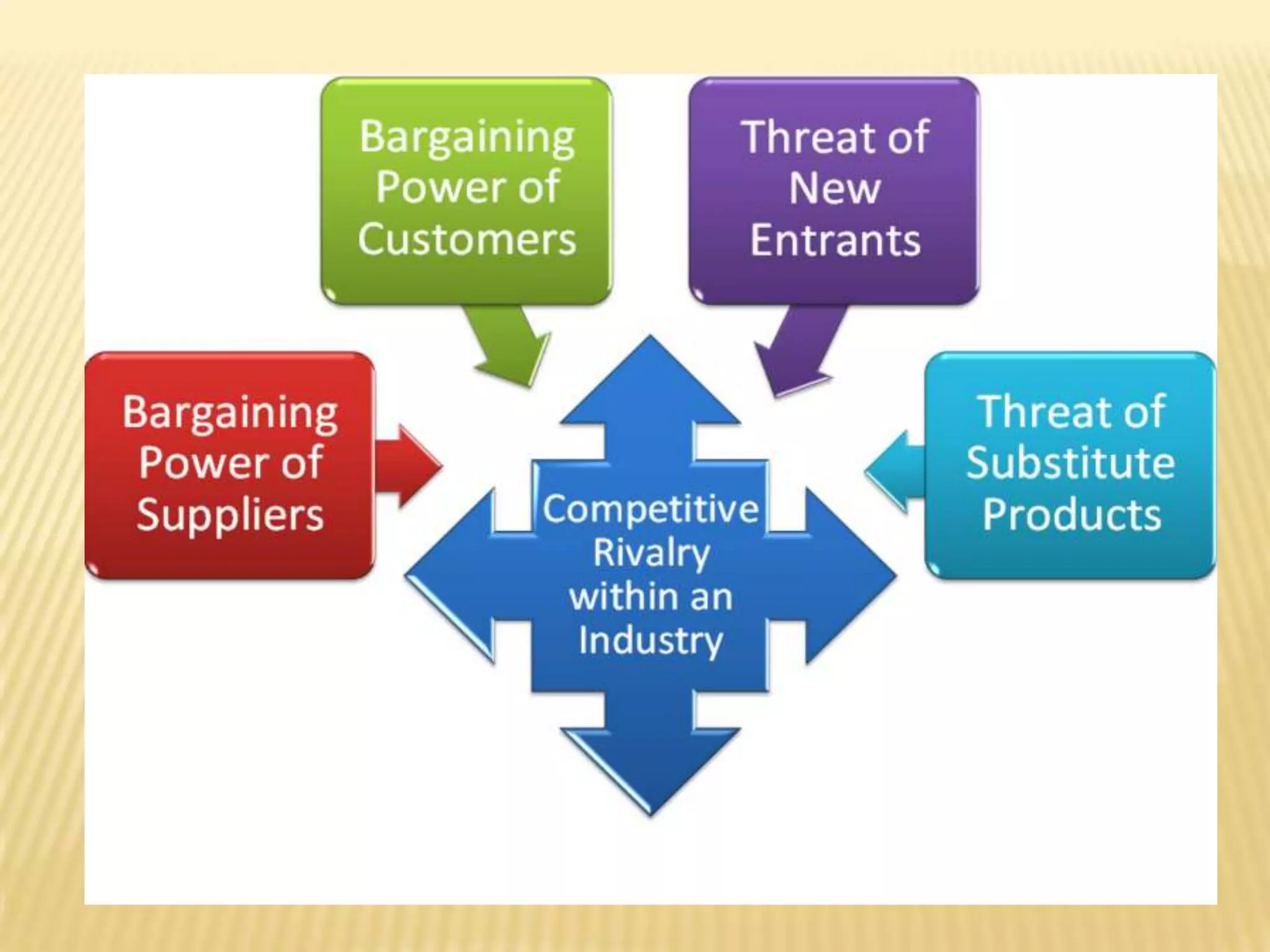
When the industry is profitable – to share the
growing market pie.
 Typical barriers to entry
-economics of scale
- capital requirement of entry
- access to supply & distribution channels
- customer or supplier loyalty
-product differentiation
-expected retaliation
- legislation or government regulation
BARRIERS TO ENTRY
 For a new company, the started capital required to establish
manufacturing capacity to achieve minimum efficient scale is
prohibitive.
 Switching costs is not so high encourages foreign and domestic
companies to bring in new models and enter the industry.
 product differentiation and promotion supports new entrants- Tata
Nano in a new segment.
 Access to distribution channels is not difficult – can be done by joint
ventures (ex. Mahindra- Renault).
 100% FDI is permissible under automatic route in the sector.
 Sudden rise in the competitive threats index of the maruti has more
to do with the slack in demand in the other parts of globe.
 Threat comes on account of the survival instincts of the global car
brands such as ford, gm, Toyota, handa and Volkswagen.
 They are placing their bets on the two fastest growing economics of
the world, chine and India.
BARGAINING POWER OF BUYERS
 Maruti has a decent customer base but customer don’t consider
maruti as a very high status brand and the modern customer are
very worried bout their social status. Hence, maruti has you consider
making a lots of change in the design and other feature.
 Large number of options available.
 Well informed customer.
 Availability of the finance scheme.
 Foreign players also coming into picture.
 Popularity of second hand car market.
 The bargaining power of buyer for maruti suzuki moderately high.
 The buyer from have a low switching cost if they are not satisfied.
 The buyer form a significant portion of the industry revenue.
 The reasons why bargaining power is not completely high is
because the number of buyer is not very large in a developing
country like India.
BARGAINING POWER OF SUPPLIER
 Some suppliers are smaller and as such do not have that much power
over the pricing and distribution of their products
 However, there are not that many small parts manufacturers in this
market and therefore, the majority of suppliers to major automotive
makers are medium to large businesses. As a result they have some flex
in determining product pricing, delivery, and distribution.
 Automakers are the key to the supply chain of the automotive industry.
Maruti Suzuki has manufacturing units where engines are manufactured
and parts supplied by first tier suppliers and second tier suppliers are
assembled.
 There are a large number of automobile component suppliers whose
switching costs are very high. Thus reducing the bargaining power of the
suppliers.
COMPETITIVE RIVALRY
 Extremely High
 Any competitor in this market is generally a global company with billions of
dollars in assets and can compete on any level that Maruti can. Furthermore, there
is intense competition on all fronts in the car market in general, not to mention the
luxury car market.
 Major manufacturers such as Toyota, Honda & BMW are pinching Maruti with
their luxury segments (Lexus, Acura, 7-Series)in terms of quality product and
reliability.
THREE GENERIC STRATEGIES
There are Three Generic Strategies Maruti Suzuki has
applied:
1. To achieve cost leadership – To realize economies of scale
upfront capital investment in state-of-the-art equipment plant is
required. Maruti Suzuki has set up two such state of art manufacturing
facilities in India.
 Gurgaon facility(300 acres) housing the K Engine Plant
 Manesar facility(600 acres)
2. Differentiation- creating something that is perceived industry
wide as unique. Differentiation can take many forms-
 Brand Name- Maruti Suzuki
 Technology- The highly fuel efficient, technologically advanced K
series engines have been very well appreciated by the customers
for their performance.
 Service- Best Service/highest no. of service centers
 Dealer network- Highest
3. Focus is the moderator of the other two strategies:-
 Cost Focus- Maruti also tried to offer a low price product to a small
and specialized group of buyers. This helped MUL to cut down
prices just hours before TATA introduced Indica.
 Differentiation Focus- Maruti also has a niche of premium products
available at a premium price. Maruti kizashi and Maruti Vitara provides
the possibility to charge a premium price for superior quality.
 Narrow product lines , buyer segment, or targeted geographic markets.

Maruti suzuki

  • 2.
    THREAT OF ENTRY Whenthe industry is profitable – to share the growing market pie.  Typical barriers to entry -economics of scale - capital requirement of entry - access to supply & distribution channels - customer or supplier loyalty -product differentiation -expected retaliation - legislation or government regulation
  • 3.
    BARRIERS TO ENTRY For a new company, the started capital required to establish manufacturing capacity to achieve minimum efficient scale is prohibitive.  Switching costs is not so high encourages foreign and domestic companies to bring in new models and enter the industry.  product differentiation and promotion supports new entrants- Tata Nano in a new segment.  Access to distribution channels is not difficult – can be done by joint ventures (ex. Mahindra- Renault).  100% FDI is permissible under automatic route in the sector.  Sudden rise in the competitive threats index of the maruti has more to do with the slack in demand in the other parts of globe.  Threat comes on account of the survival instincts of the global car brands such as ford, gm, Toyota, handa and Volkswagen.  They are placing their bets on the two fastest growing economics of the world, chine and India.
  • 4.
    BARGAINING POWER OFBUYERS  Maruti has a decent customer base but customer don’t consider maruti as a very high status brand and the modern customer are very worried bout their social status. Hence, maruti has you consider making a lots of change in the design and other feature.  Large number of options available.  Well informed customer.  Availability of the finance scheme.  Foreign players also coming into picture.  Popularity of second hand car market.  The bargaining power of buyer for maruti suzuki moderately high.  The buyer from have a low switching cost if they are not satisfied.  The buyer form a significant portion of the industry revenue.  The reasons why bargaining power is not completely high is because the number of buyer is not very large in a developing country like India.
  • 5.
    BARGAINING POWER OFSUPPLIER  Some suppliers are smaller and as such do not have that much power over the pricing and distribution of their products  However, there are not that many small parts manufacturers in this market and therefore, the majority of suppliers to major automotive makers are medium to large businesses. As a result they have some flex in determining product pricing, delivery, and distribution.  Automakers are the key to the supply chain of the automotive industry. Maruti Suzuki has manufacturing units where engines are manufactured and parts supplied by first tier suppliers and second tier suppliers are assembled.  There are a large number of automobile component suppliers whose switching costs are very high. Thus reducing the bargaining power of the suppliers.
  • 6.
    COMPETITIVE RIVALRY  ExtremelyHigh  Any competitor in this market is generally a global company with billions of dollars in assets and can compete on any level that Maruti can. Furthermore, there is intense competition on all fronts in the car market in general, not to mention the luxury car market.  Major manufacturers such as Toyota, Honda & BMW are pinching Maruti with their luxury segments (Lexus, Acura, 7-Series)in terms of quality product and reliability.
  • 7.
    THREE GENERIC STRATEGIES Thereare Three Generic Strategies Maruti Suzuki has applied: 1. To achieve cost leadership – To realize economies of scale upfront capital investment in state-of-the-art equipment plant is required. Maruti Suzuki has set up two such state of art manufacturing facilities in India.  Gurgaon facility(300 acres) housing the K Engine Plant  Manesar facility(600 acres) 2. Differentiation- creating something that is perceived industry wide as unique. Differentiation can take many forms-  Brand Name- Maruti Suzuki  Technology- The highly fuel efficient, technologically advanced K series engines have been very well appreciated by the customers for their performance.  Service- Best Service/highest no. of service centers  Dealer network- Highest
  • 8.
    3. Focus isthe moderator of the other two strategies:-  Cost Focus- Maruti also tried to offer a low price product to a small and specialized group of buyers. This helped MUL to cut down prices just hours before TATA introduced Indica.  Differentiation Focus- Maruti also has a niche of premium products available at a premium price. Maruti kizashi and Maruti Vitara provides the possibility to charge a premium price for superior quality.  Narrow product lines , buyer segment, or targeted geographic markets.