COURSE TITLE: Biodiversity and conservation of fruit
crops.
COURSE CREDIT: 2+1
COURSE NO. : FSC 502
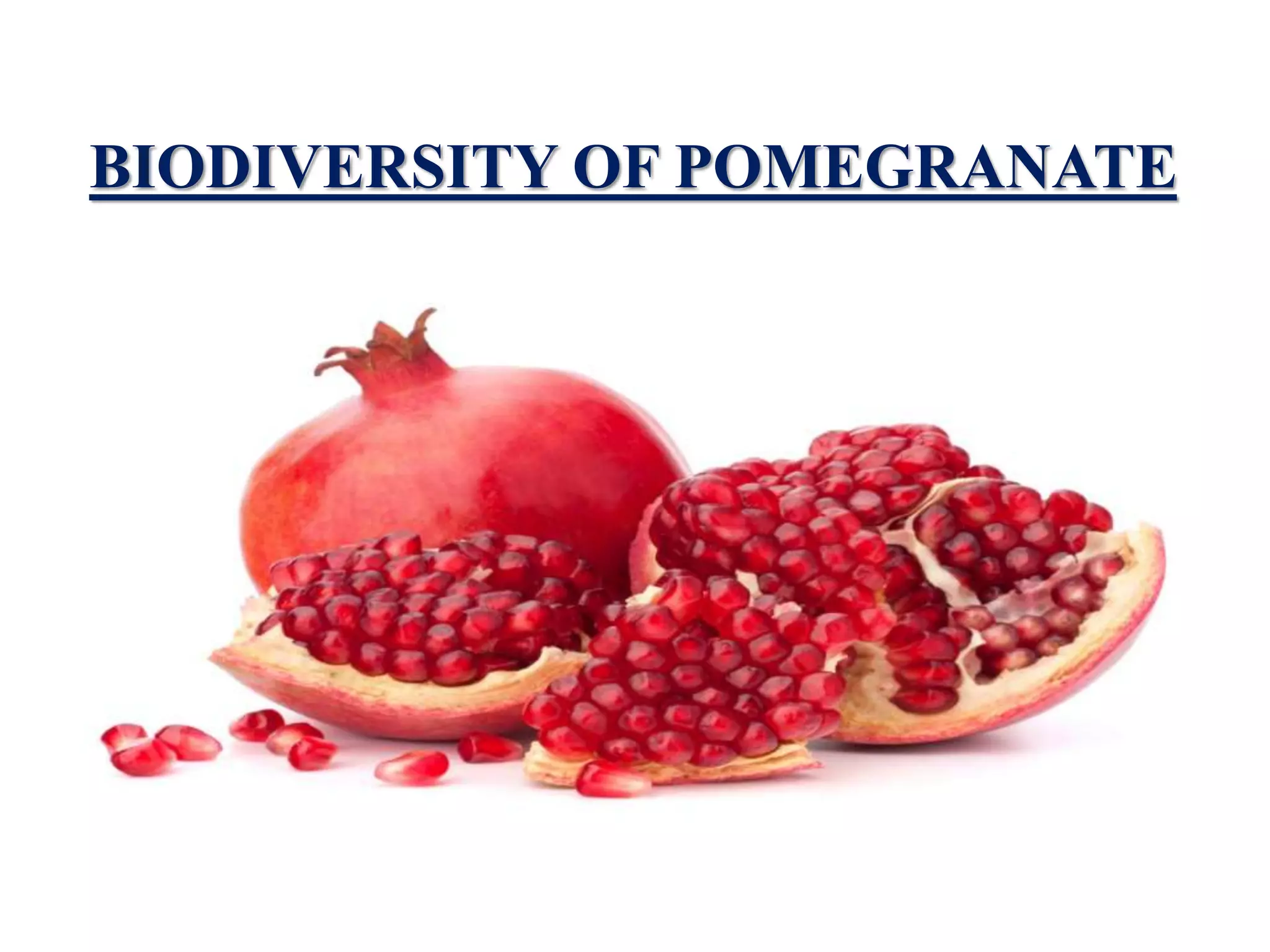
BIODIVERSITY OF POMEGRANATE
Dear sir, I am glad to say that you taught
me how much I am capable of and what I
could achieve if I was willing to put the
effort in.
Thank you for making me do my best and
for never giving up and again thank you
sir for all your help on this period of
Covid crises.
Dr. Parshant Bakshi
(Associate Professor)
SKUAST-Jammu.
SUBMITTED BY: REETIKA
SHARMA
(J-19-M-656)
SKUAST-JAMMU.
CONTENTS
Introduction
Issues and goals
Centres of origin.
Centres of genetic diversity
Conservation of genetic resources
Germplasm conservation
Geographical indication
Future prospects
INTRODUCTION
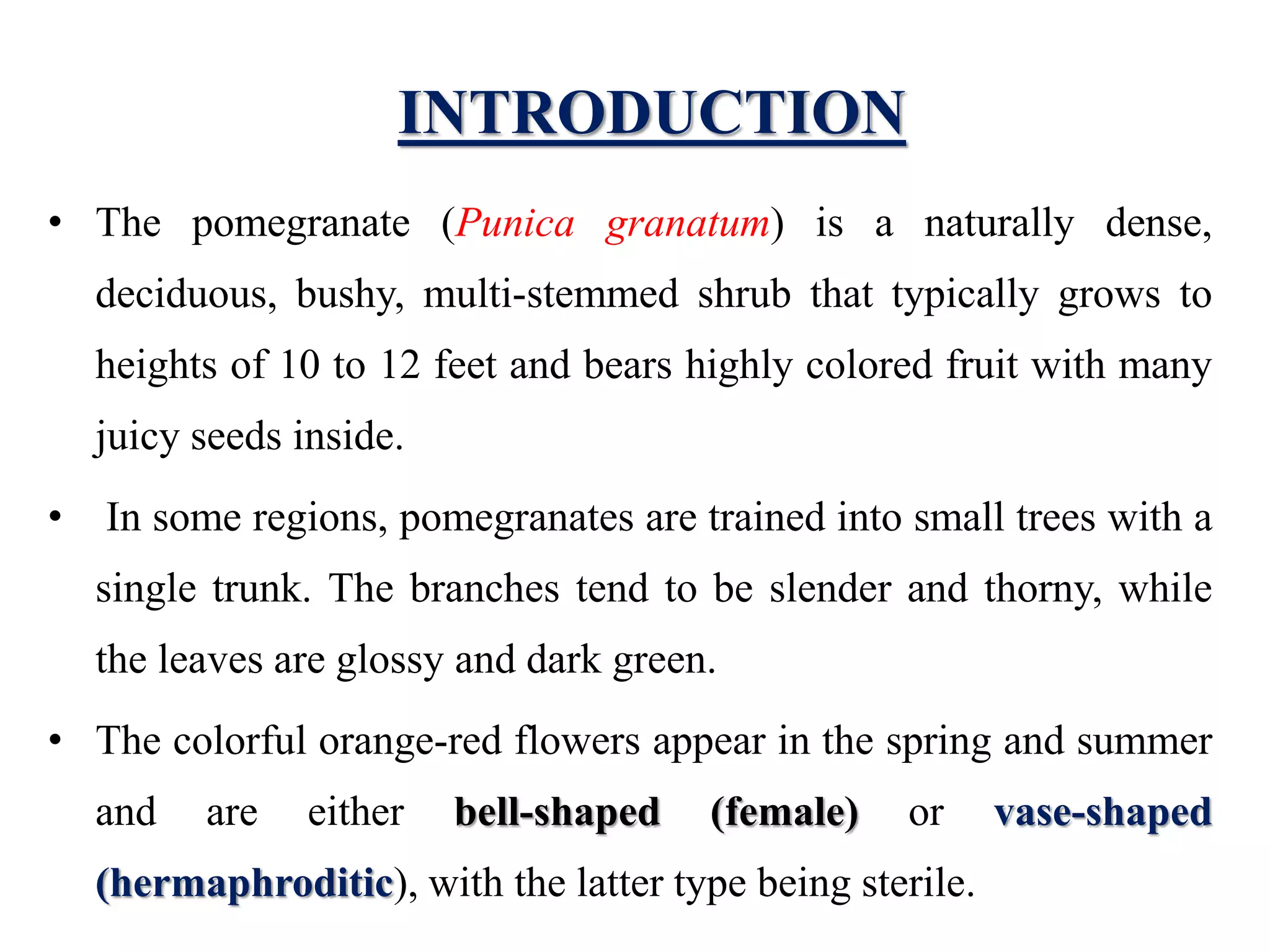
• The pomegranate (Punica granatum) is a naturally dense,
deciduous, bushy, multi-stemmed shrub that typically grows to
heights of 10 to 12 feet and bears highly colored fruit with many
juicy seeds inside.
• In some regions, pomegranates are trained into small trees with a
single trunk. The branches tend to be slender and thorny, while
the leaves are glossy and dark green.
• The colorful orange-red flowers appear in the spring and summer
and are either bell-shaped (female) or vase-shaped
(hermaphroditic), with the latter type being sterile.
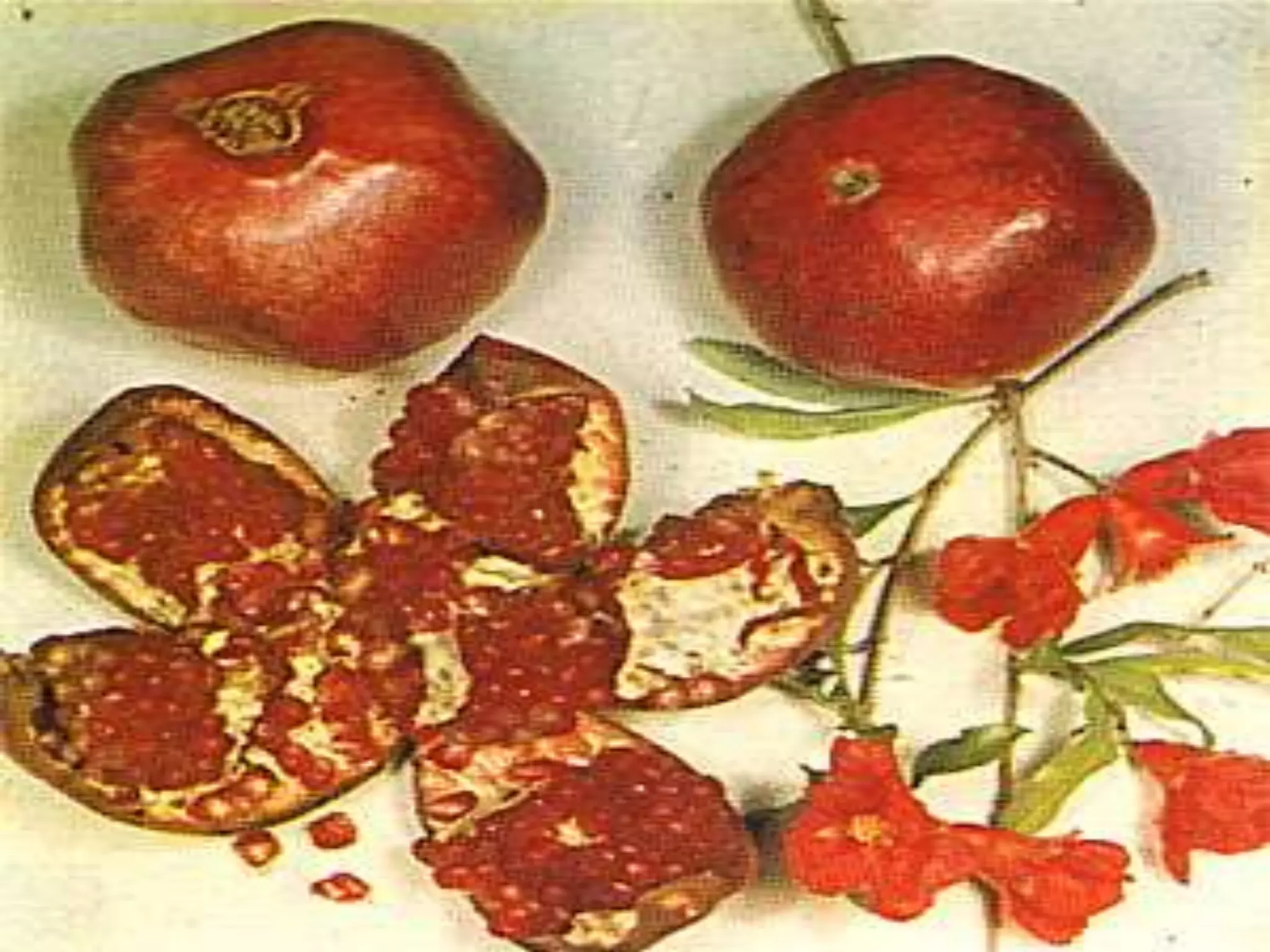
• The edible portion of the fruit, called an aril, is comprised
of hundreds of seeds surrounded by juicy pigments, each
contained within a seed coat.
• Seeds are either soft or hard, depending on the cultivar.
• The juice within the aril varies from light pink to dark red,
but can also appear yellow or clear in some varieties.
• The juice ranges from very acidic to very sweet in taste.
• The rind is generally smooth but leathery, and can be
yellow, orange or red in color.
ORIGIN AND DISTRIBUTION
• The pomegranate tree is native from Iran to the Himalayas in northern
India and has been cultivated since ancient times throughout the
Mediterranean region of Asia, Africa and Europe.
• The fruit was used in many ways as it is today and was featured in
Egyptian mythology and art, praised in the Old Testament of the Bible
and in the Babylonian Talmud, and it was carried by desert caravans for
the sake of its thirst-quenching juice.
• It traveled to central and southern India from Iran about the first century
A.D. and was reported growing in Indonesia in 1416.
• It has been widely cultivated throughout India and drier parts of
southeast Asia, Malaya, the East Indies and tropical Africa.
• The most important growing regions are Egypt, China,
Afghanistan, Pakistan, Bangladesh, Iran, Iraq, India, Burma
and Saudi Arabia. There are some commercial orchards in Israel
on the coastal plain and in the Jordan Valley.
• It is rather commonly planted and has become naturalized in
Bermuda where it was first recorded in 1621, but only
occasionally seen in the Bahamas, West Indies and warm areas of
South and Central America. Many people grow it at cool altitudes
in the interior of Honduras.
• In Mexico it is frequently planted, and it is sometimes found in
gardens in Hawaii. The tree was introduced in California by
Spanish settlers in 1769.
• It is grown for its fruit mostly in the dry zones of that state and
Arizona. In California, commercial pomegranate cultivation is
concentrated in Tulare, Fresno and Kern counties, with small
plantings in Imperial and Riverside counties. There were 2,000
acres (810 ha) of hearing trees in these areas in the 1920's.
Production declined from lack of demand in the 1930's but new
plantings were made when demand increased in the 1960's.
DISTRIBUTION IN INDIA
The major pomegranate producing belts are as follows:
Maharashtra (Solapur, Sangli, Nashik, Ahmedanagar, Pune,
Dhule, Aurangabad, Satara, Osmanabad and Latur
districts).
Karnataka (Bijapur and Bagalkot)
Gujarat
Rajasthan
Uttar Pradesh
Andhra Pradesh
Tamil Nadu, Punjab & Haryana.
SPECIES DIVERSITY
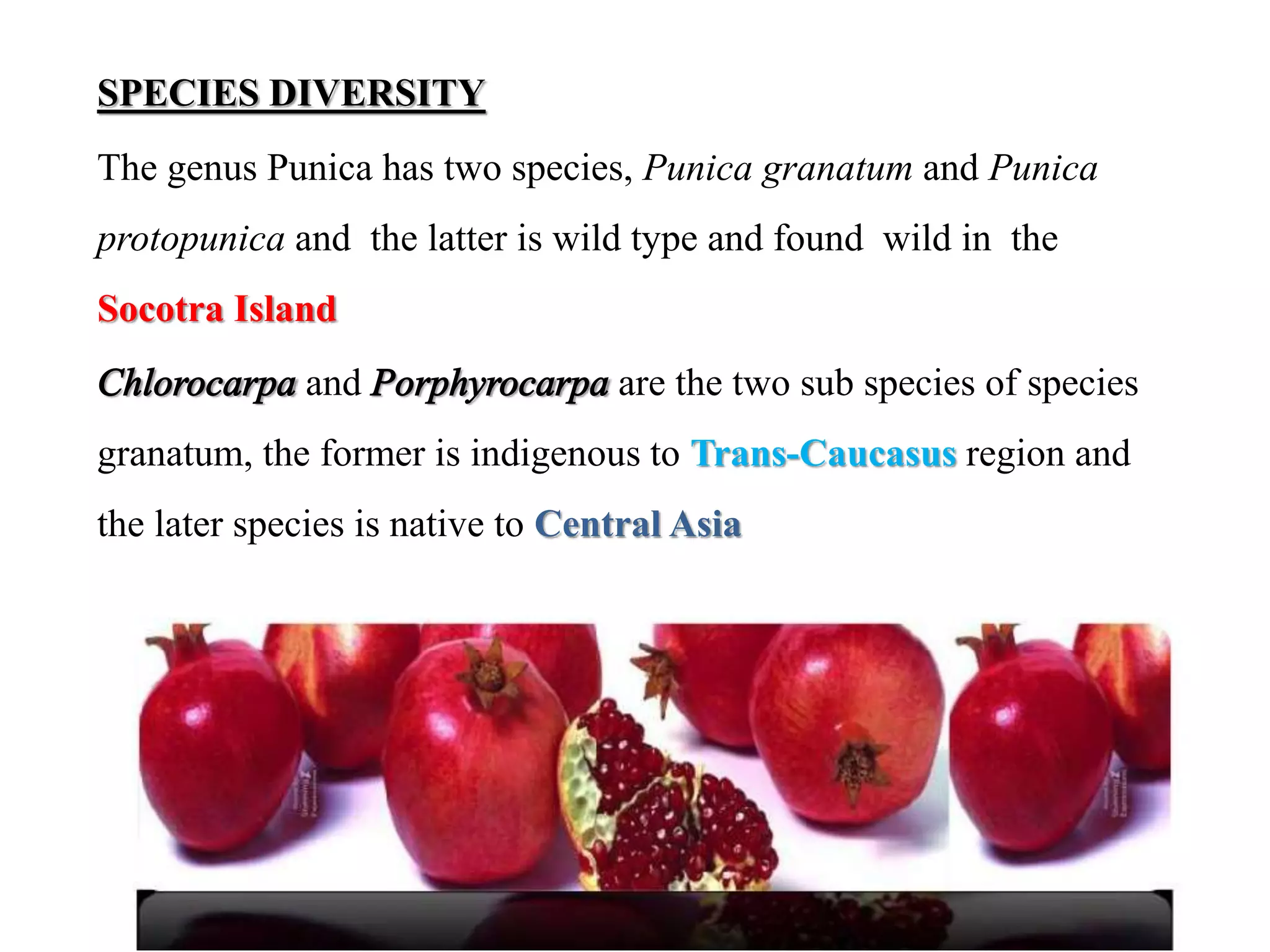
The genus Punica has two species, Punica granatum and Punica
protopunica and the latter is wild type and found wild in the
Socotra Island
Chlorocarpa and Porphyrocarpa are the two sub species of species
granatum, the former is indigenous to Trans-Caucasus region and
the later species is native to Central Asia
GENETIC RESOURCES
Some parts of the Mediterranean area are considered as native
lands of pomegranate..
The grown local material may be considered as the pomegranate
primary gene pool. Punica granatum grows wild in the near
east, Transcaucasia, Dagestan and also in Asia minor. In these
regions, hybridization between cultivated and wild forms is,
probably, still taking place.
Wild forms (populations) would be the secondary gene pool. The
tertiary pomegranate gene pool would consist of forms of the
pomegranate wild relative (Punica protopunica).
It was presumed that Prunica protopunica played a part in the origin of the
cultivated pomegranate.
ORNAMENTAL NON FRUITING TYPES
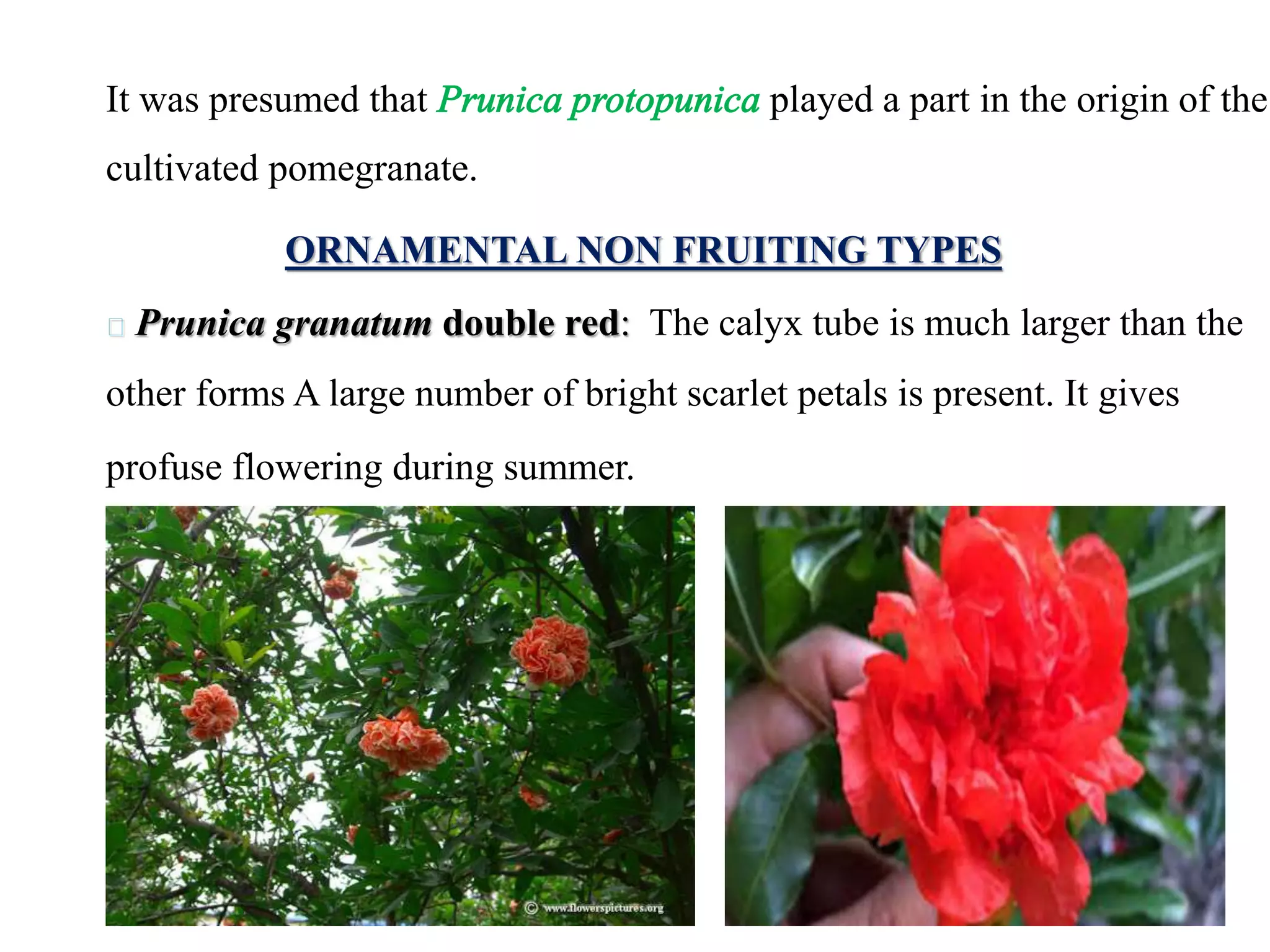
Prunica granatum double red: The calyx tube is much larger than the
other forms A large number of bright scarlet petals is present. It gives
profuse flowering during summer.
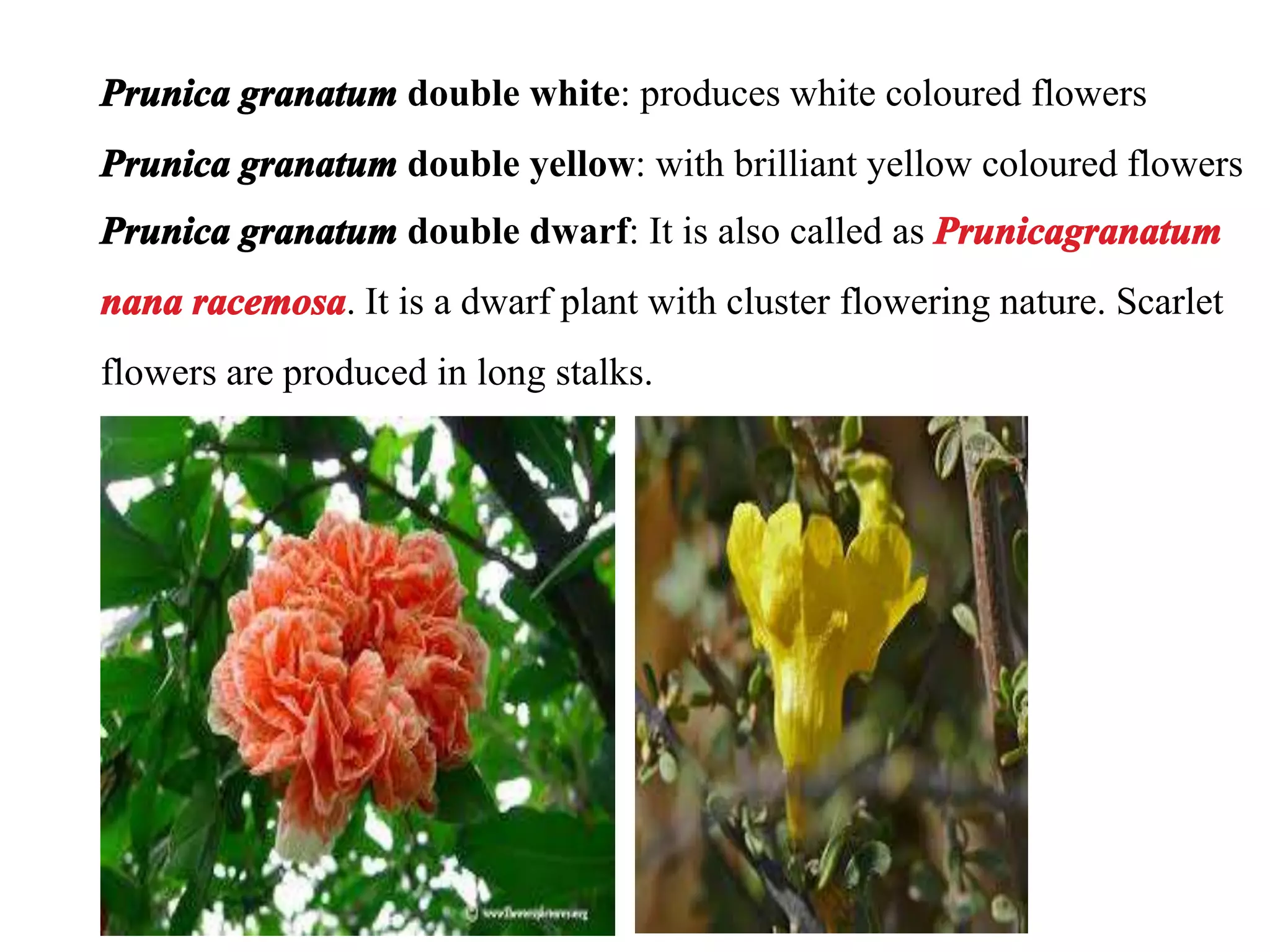
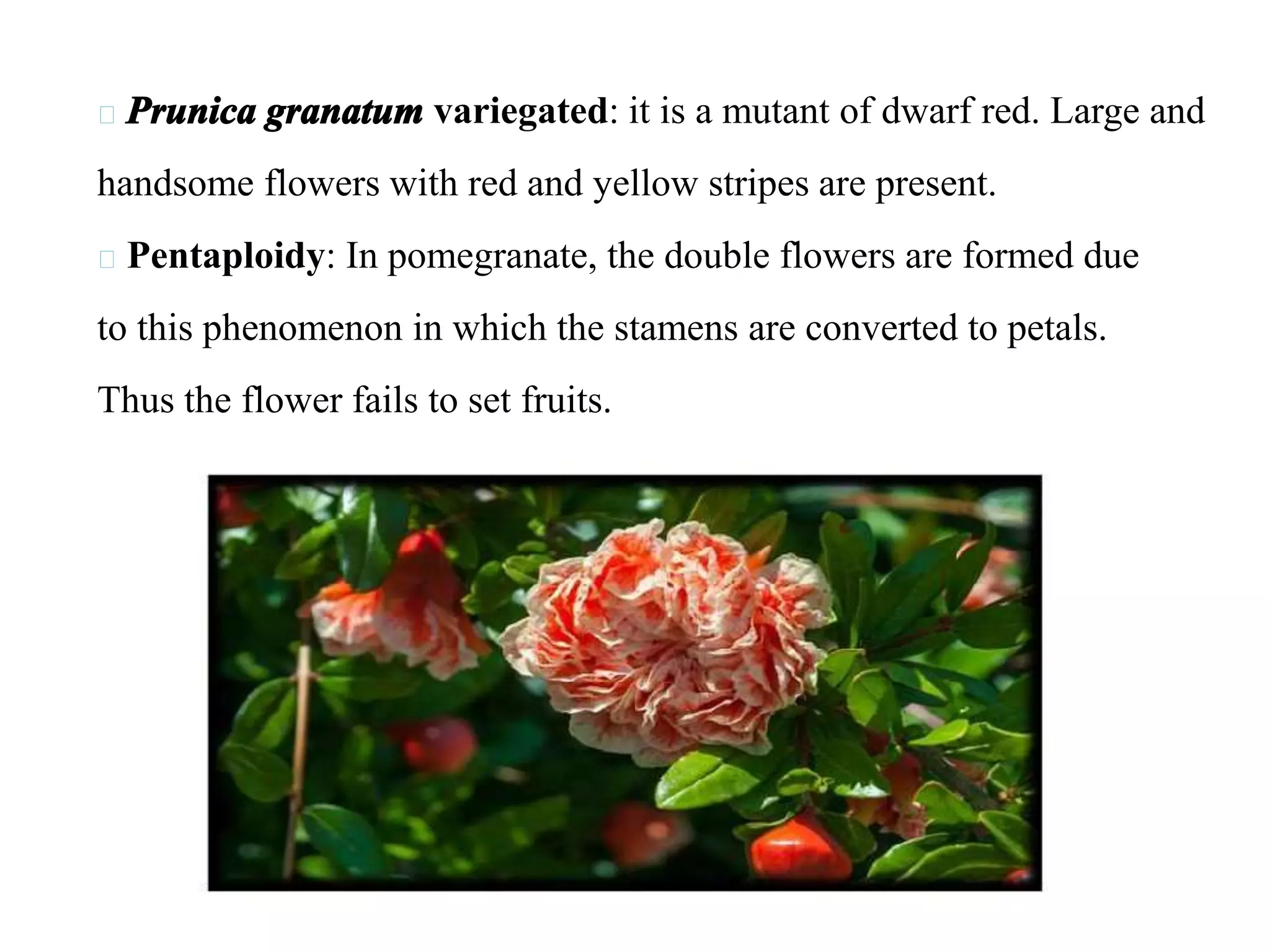
Prunica granatum double white: produces white coloured flowers
Prunica granatum double yellow: with brilliant yellow coloured flowers
Prunica granatum double dwarf: It is also called as Prunicagranatum
nana racemosa. It is a dwarf plant with cluster flowering nature. Scarlet
flowers are produced in long stalks.
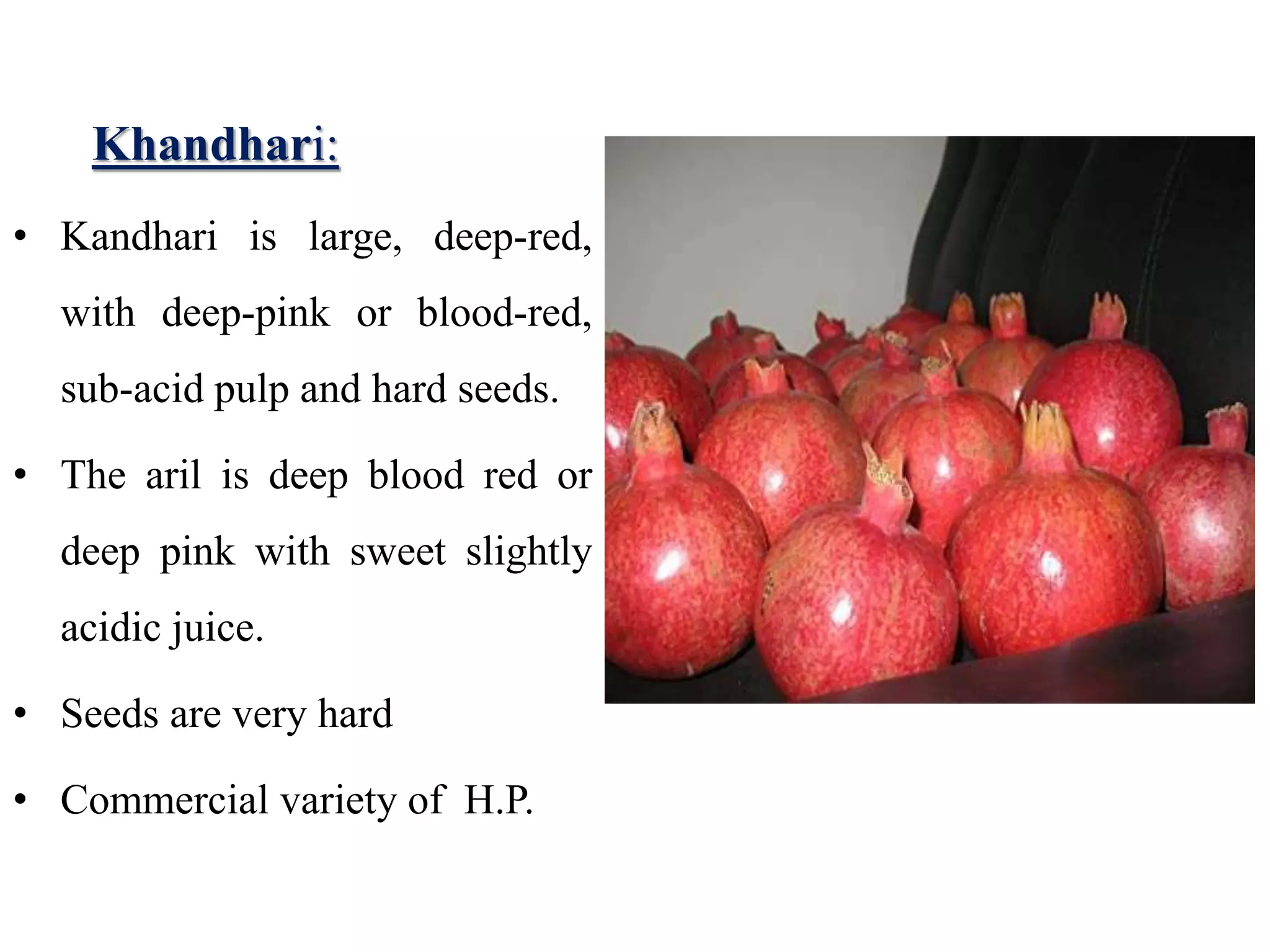
Prunica granatum variegated: it is a mutant of dwarf red. Large and
handsome flowers with red and yellow stripes are present.
Pentaploidy: In pomegranate, the double flowers are formed due
to this phenomenon in which the stamens are converted to petals.
Thus the flower fails to set fruits.
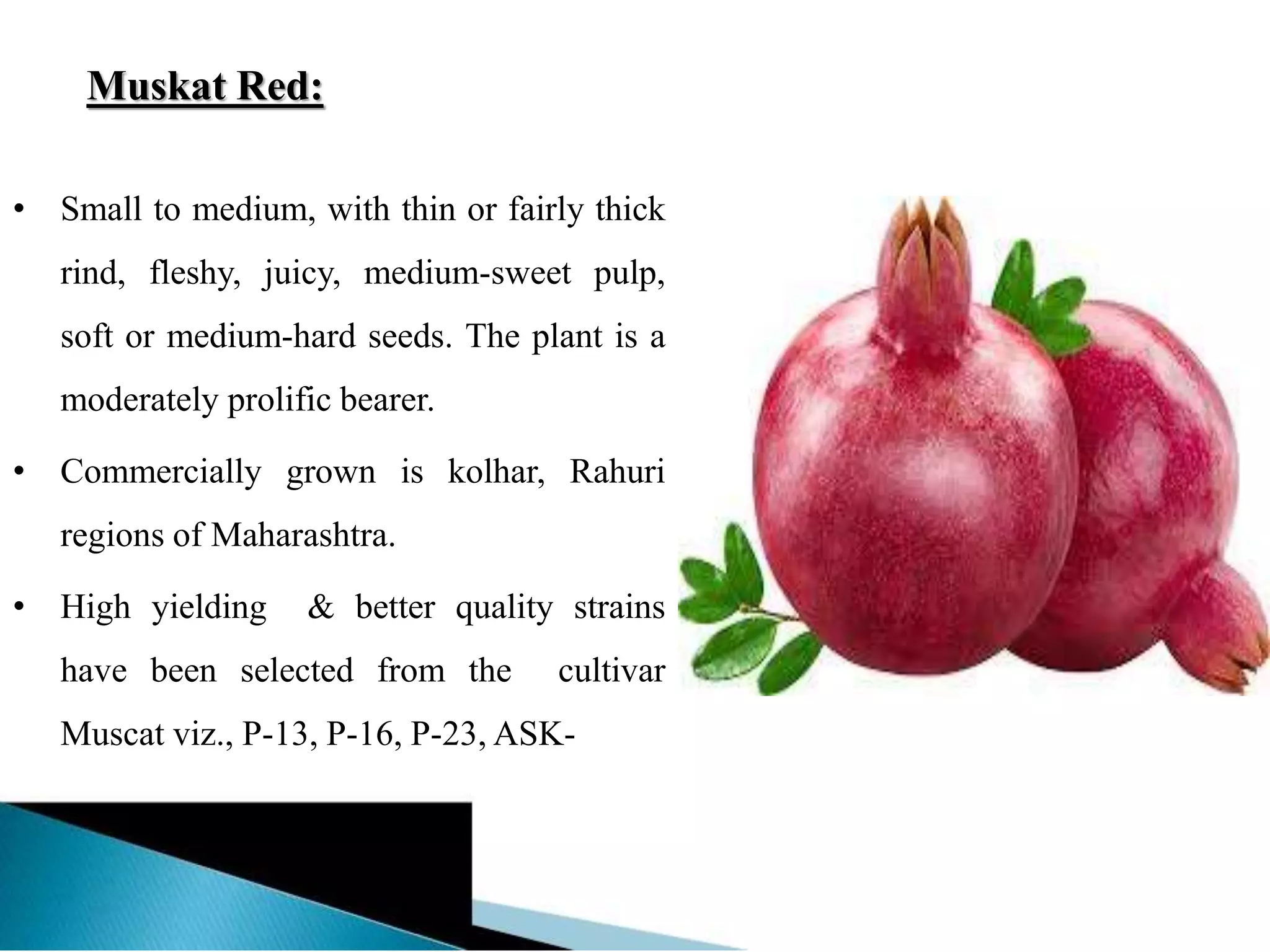
Khandhari:
• Kandhari is large, deep-red,
with deep-pink or blood-red,
sub-acid pulp and hard seeds.
• The aril is deep blood red or
deep pink with sweet slightly
acidic juice.
• Seeds are very hard
• Commercial variety of H.P.
Muskat Red:
• Small to medium, with thin or fairly thick
rind, fleshy, juicy, medium-sweet pulp,
soft or medium-hard seeds. The plant is a
moderately prolific bearer.
• Commercially grown is kolhar, Rahuri
regions of Maharashtra.
• High yielding & better quality strains
have been selected from the cultivar
Muscat viz., P-13, P-16, P-23, ASK-
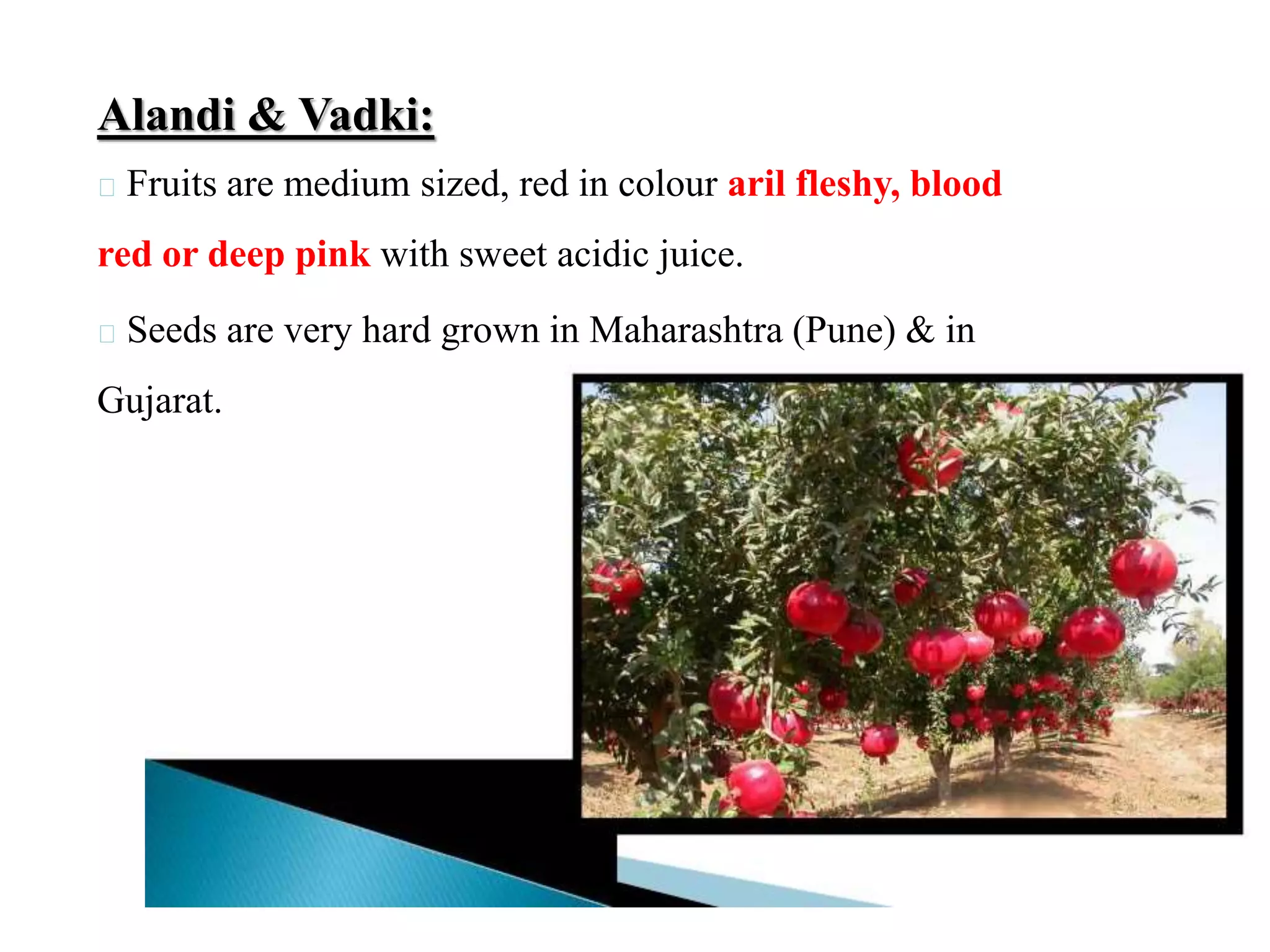
Alandi & Vadki:
Fruits are medium sized, red in colour aril fleshy, blood
red or deep pink with sweet acidic juice.
Seeds are very hard grown in Maharashtra (Pune) & in
Gujarat.
Kabul:
Produces large fruits, dark red with yellow patches.
aril dark red fleshy hard with slightly bitter juice.
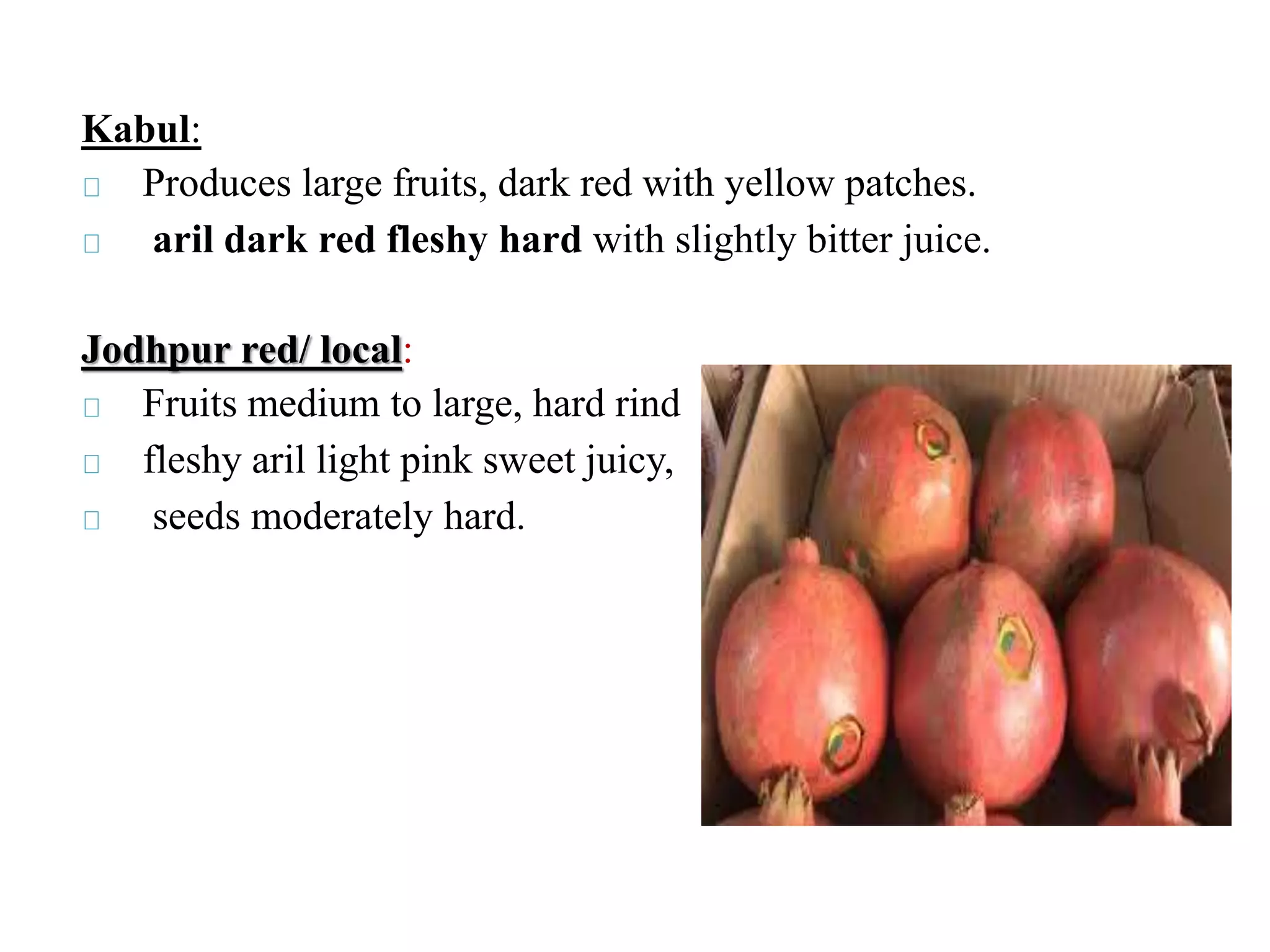
Jodhpur red/ local:
Fruits medium to large, hard rind
fleshy aril light pink sweet juicy,
seeds moderately hard.
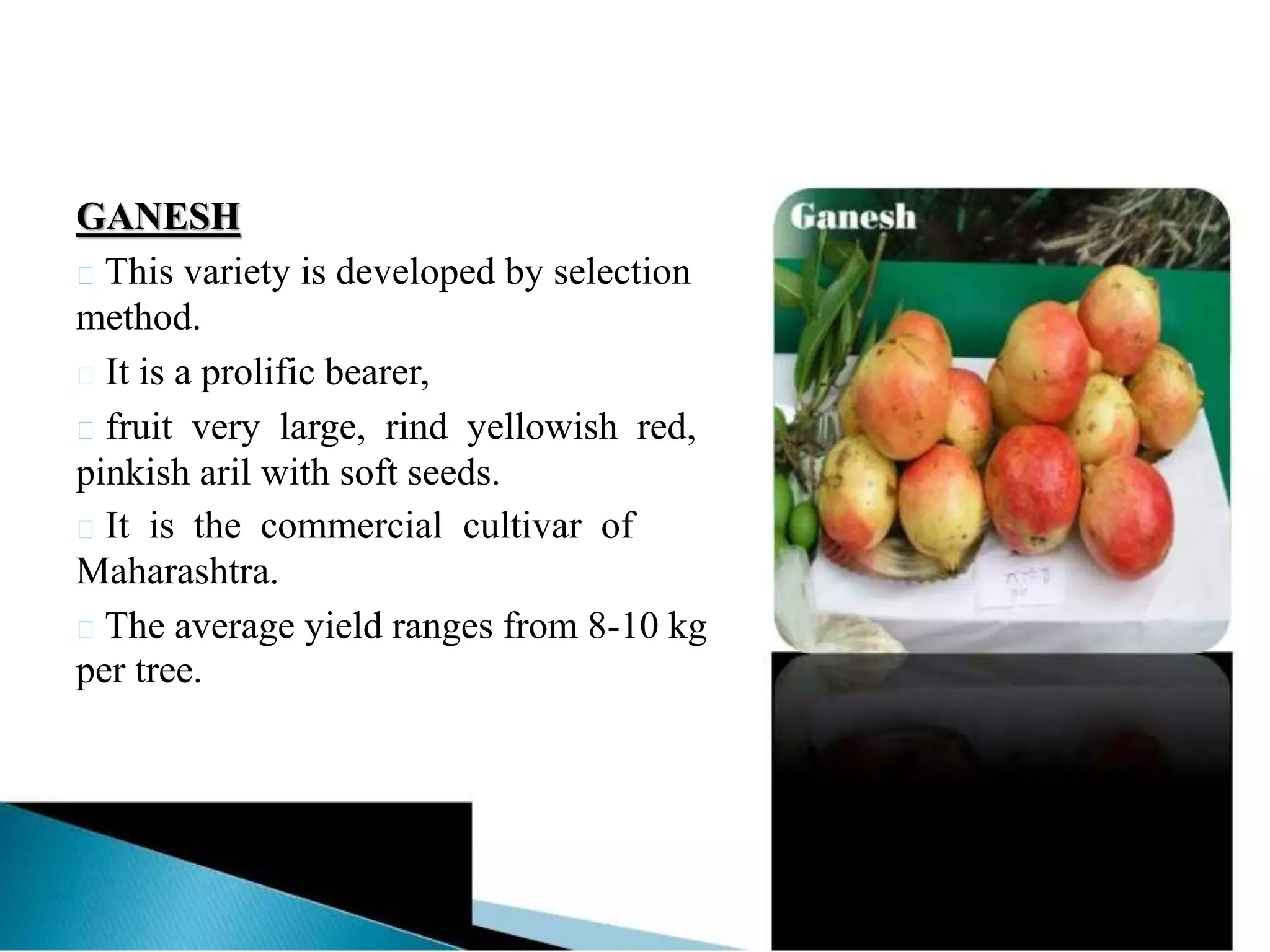
GANESH
This variety is developed by selection
method.
It is a prolific bearer,
fruit very large, rind yellowish red,
pinkish aril with soft seeds.
It is the commercial cultivar of
Maharashtra.
The average yield ranges from 8-10 kg
per tree.
ARAKTA
The fruits are smaller than Ganesh,
variety having dark red coloured arils with
soft seeds.
The variety is commercially is grown in
Maharastra.
heavy yielder and possesses desirable
fruit characters.
It also possess glossy, attractive, dark red
skin. It is less susceptible to fruit spots and
thrips.
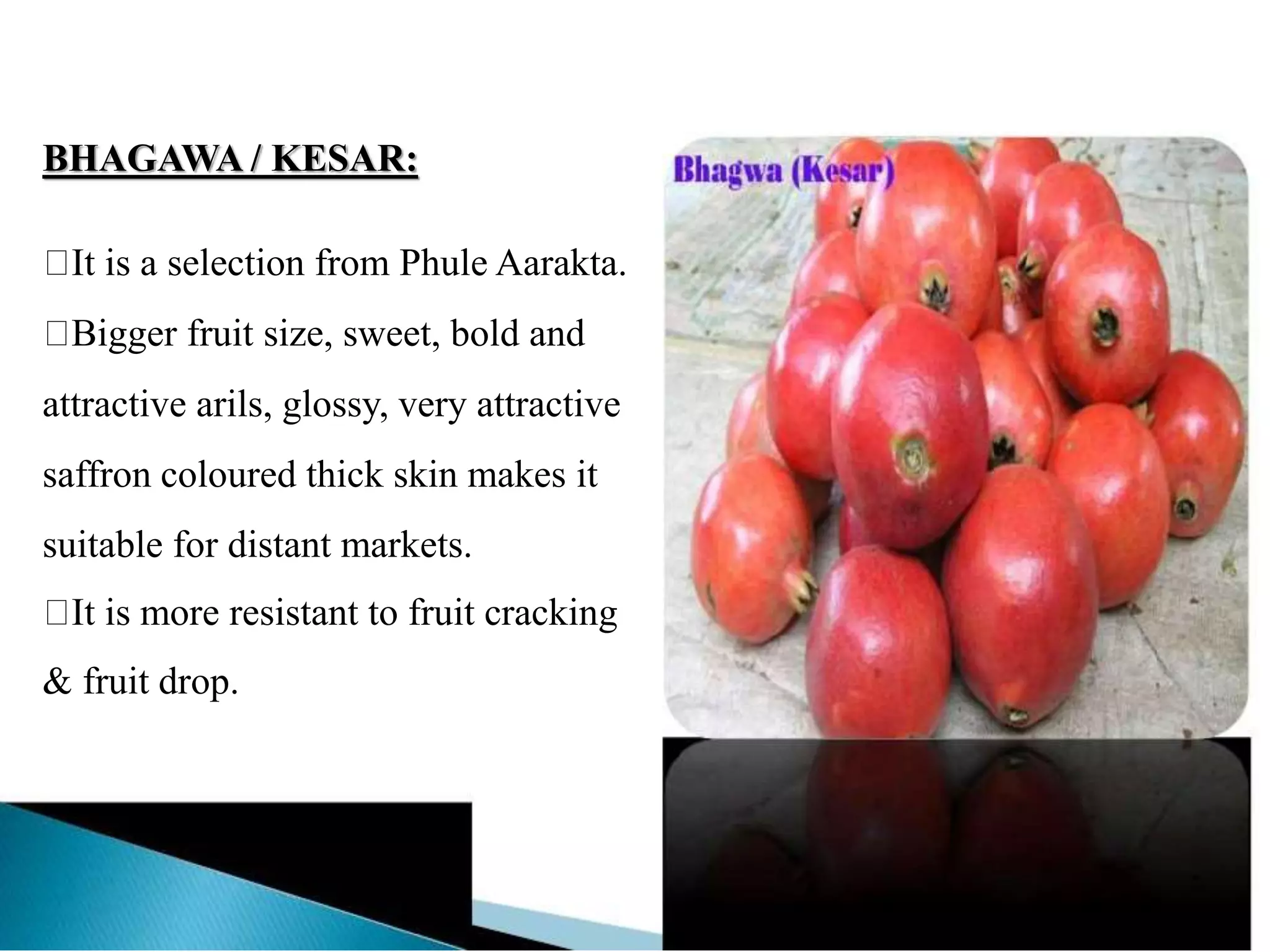
BHAGAWA / KESAR:
It is a selection from Phule Aarakta.
Bigger fruit size, sweet, bold and
attractive arils, glossy, very attractive
saffron coloured thick skin makes it
suitable for distant markets.
It is more resistant to fruit cracking
& fruit drop.
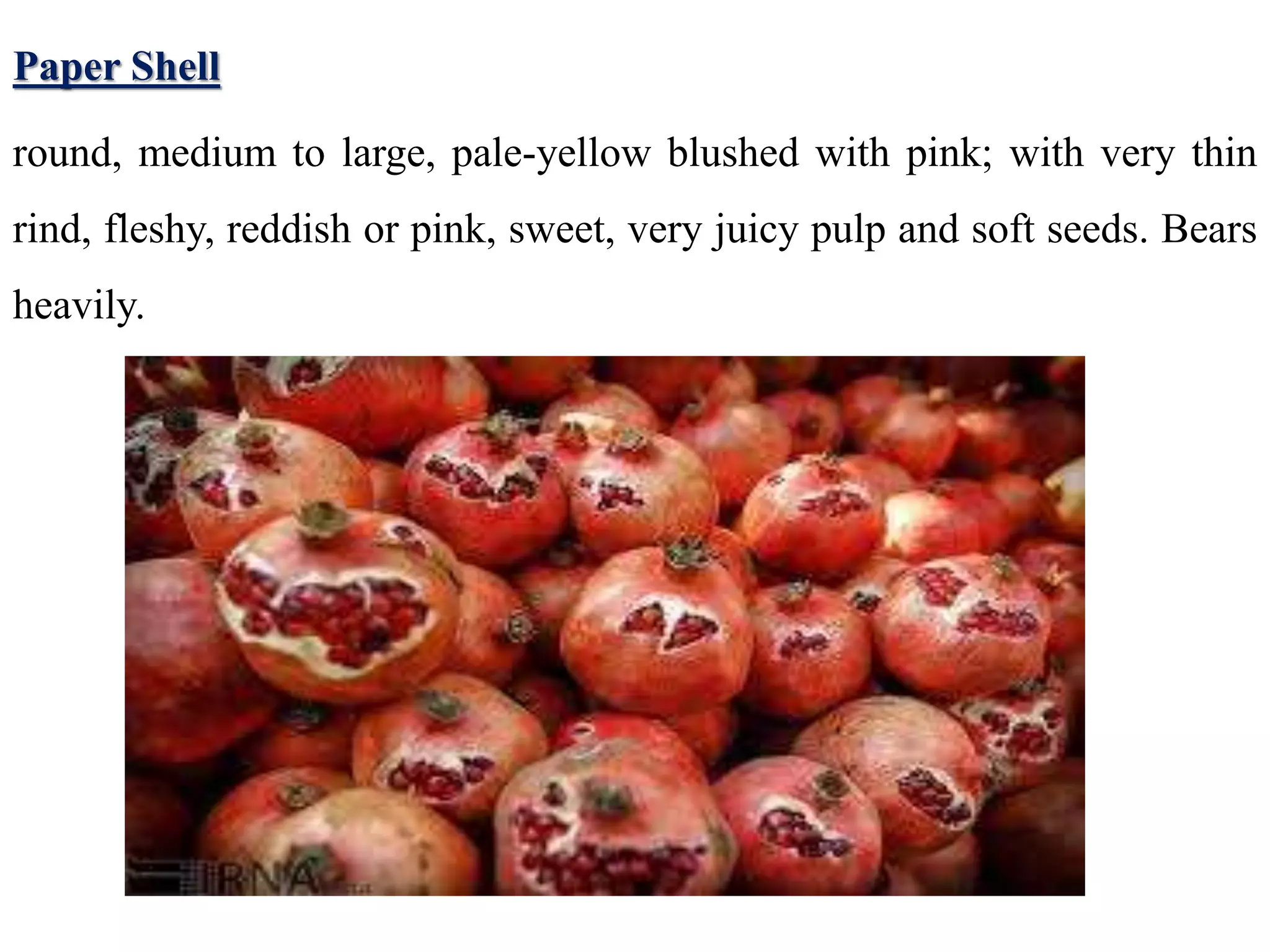
Paper Shell
round, medium to large, pale-yellow blushed with pink; with very thin
rind, fleshy, reddish or pink, sweet, very juicy pulp and soft seeds. Bears
heavily.
JYOTI
As a result of evaluation of a large number of seedling
populations of Bassein Seedless and Dholka, a highly promising
type GKVK-1 was selected and released under the name 'Jyothi'.
The fruits are large with attractive colour having dark red arils.
The seeds are very soft with high pulp and juice contents.
Fruits are borne on the inner side of the canopy and thus do not
get damaged due to sun scorching.
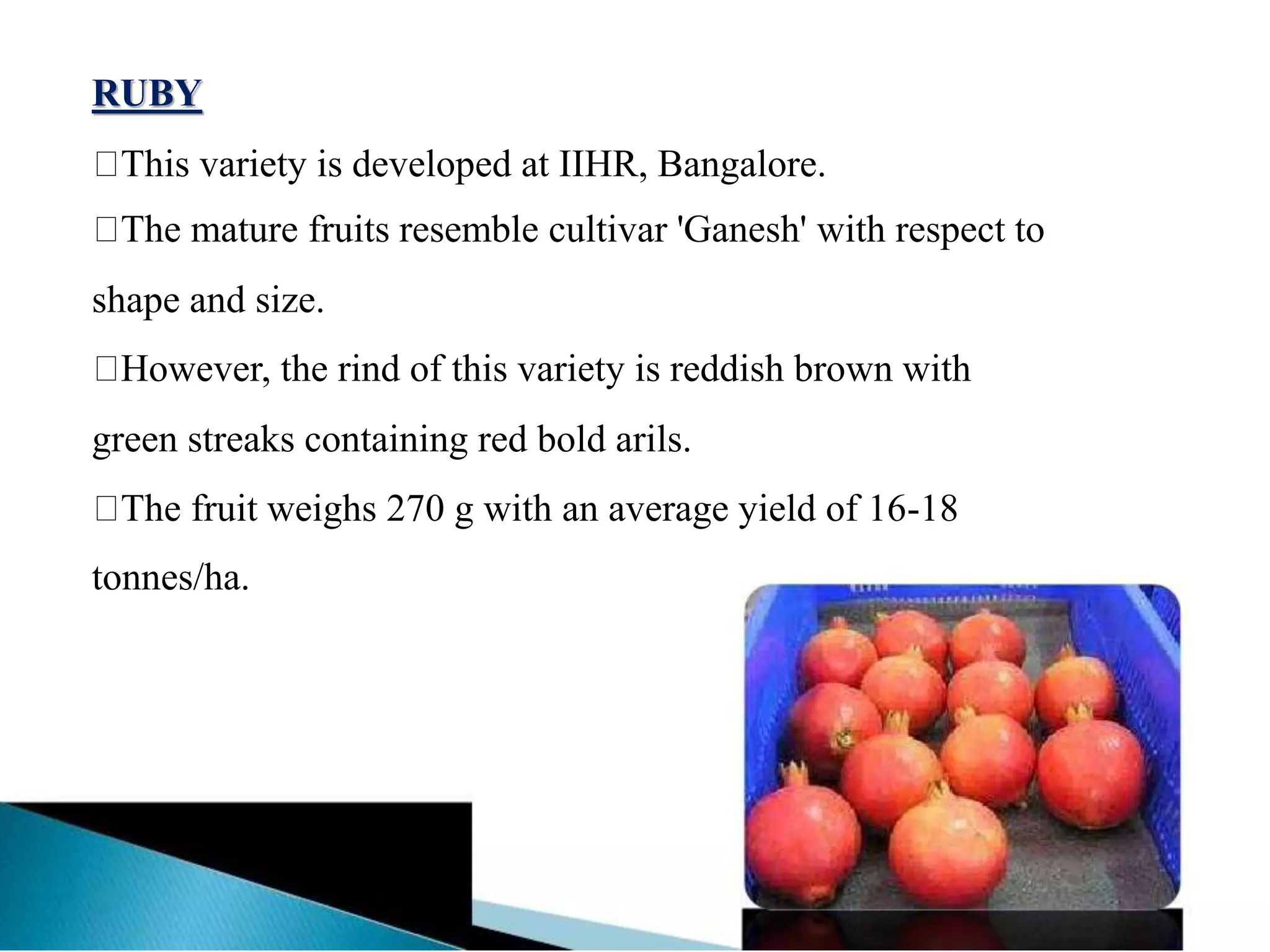
RUBY
This variety is developed at IIHR, Bangalore.
The mature fruits resemble cultivar 'Ganesh' with respect to
shape and size.
However, the rind of this variety is reddish brown with
green streaks containing red bold arils.
The fruit weighs 270 g with an average yield of 16-18
tonnes/ha.
SPANISH RUBY
Fruit small to medium in size, rind thin, fleshy testa,
rose coloured, seeds are soft.
G137: Clonal selection from Ganesh with better fruit qualities.
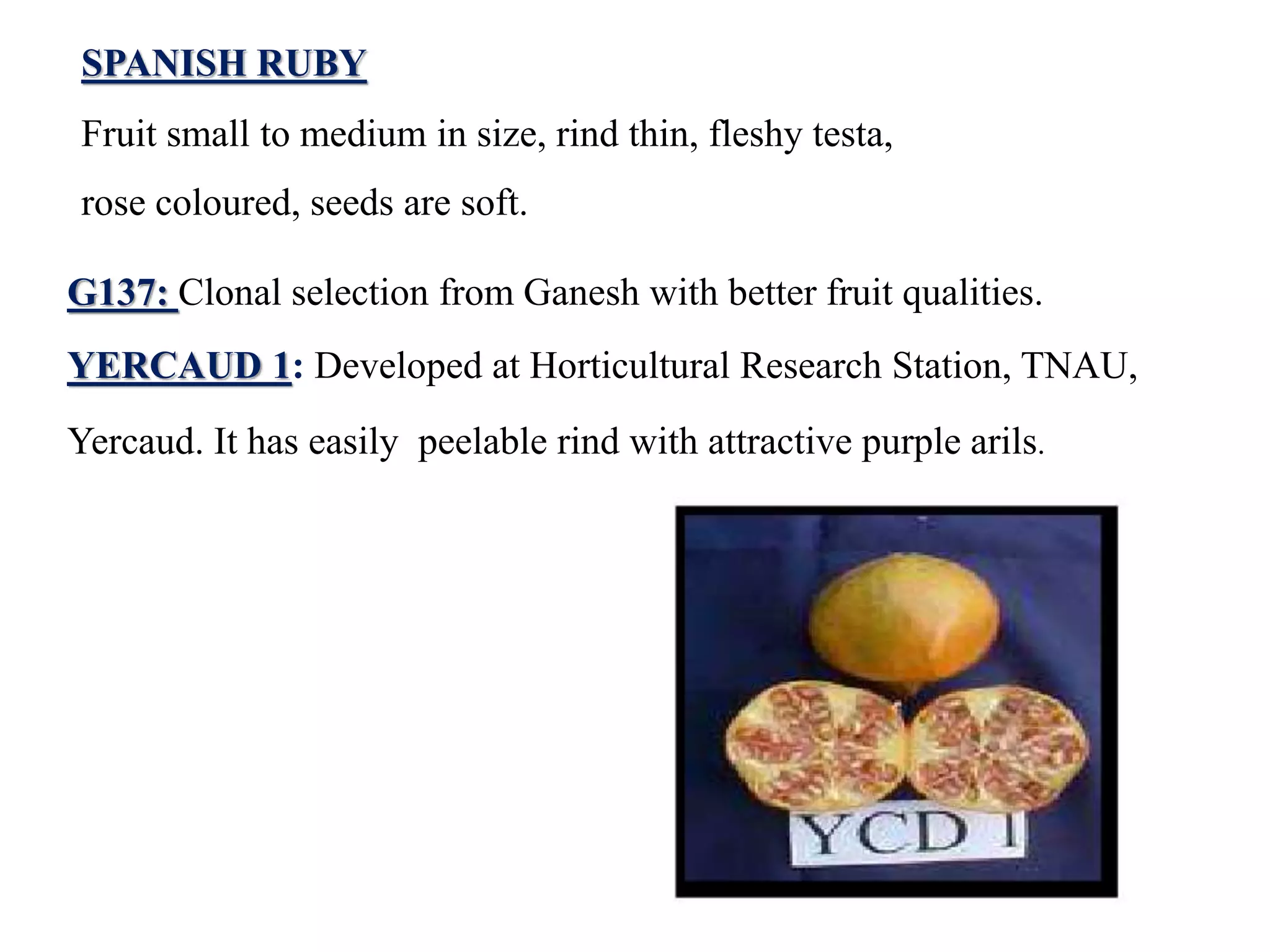
YERCAUD 1: Developed at Horticultural Research Station, TNAU,
Yercaud. It has easily peelable rind with attractive purple arils.
Jalore seedless:
Soft seeded variety and recommended by Central Arid zone
research Institute, Jodhpur for arid zones as the fruit maturity is
early and maximum fruit production is coincided with available
soil moisture.
Fruits are large in size weighing 200 g and fruits are attractive in
appearance.
Skin colour is pink to deep red.
The arils are pink to red having soft seeds.
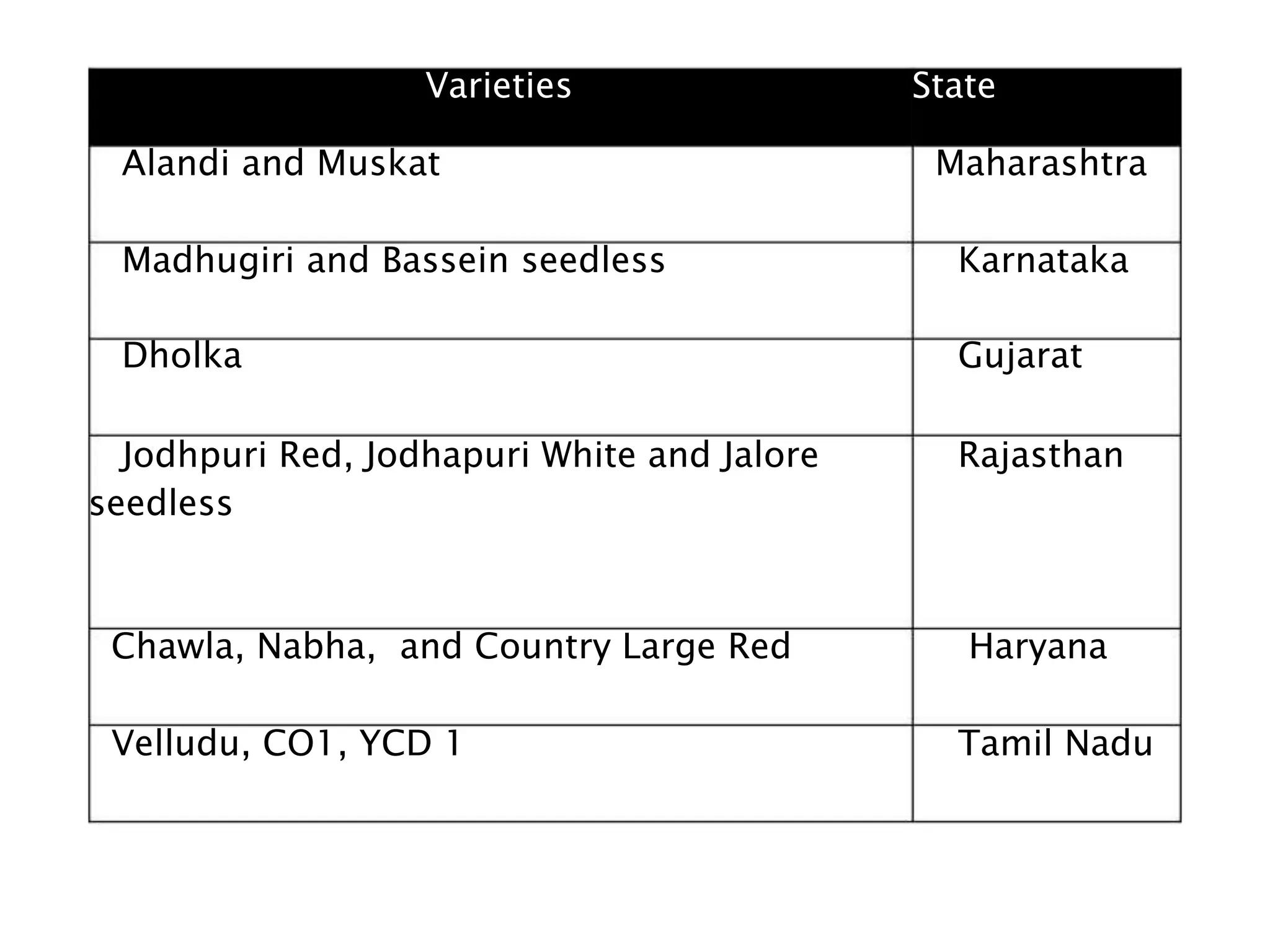
Varieties State
Alandi and Muskat Maharashtra
Madhugiri and Bassein seedless Karnataka
Dholka Gujarat
Jodhpuri Red, Jodhapuri White and Jalore Rajasthan
seedless
Chawla, Nabha, and Country Large Red Haryana
Velludu, CO1, YCD 1 Tamil Nadu
GERMPLASM COLLECTION
Eight countries of the former USSR have collections of pomegranate
germplasm. Azerbaijan, The Ukraine, Uzbekistan and Tajikistan have
relatively large collections of 200-300 accessions.
The collection of the Turkmenistan Experimental Station of Plant
Genetic Resources was established in 1934 and is the largest in the
world containing 1117 accessions.
A core collection was also established and is 10% of the size of the
main collection.
For the unique wild relative of the pomegranate (Punica protopunica),
an expedition was made and located the species at 5 sites in the Socotra
island (Yemen) and seeds were collected and successfully germinated.
Experiments have shown that the cryopreservation is suitable for
storage of seed and pollen of pomegranate cultivars.
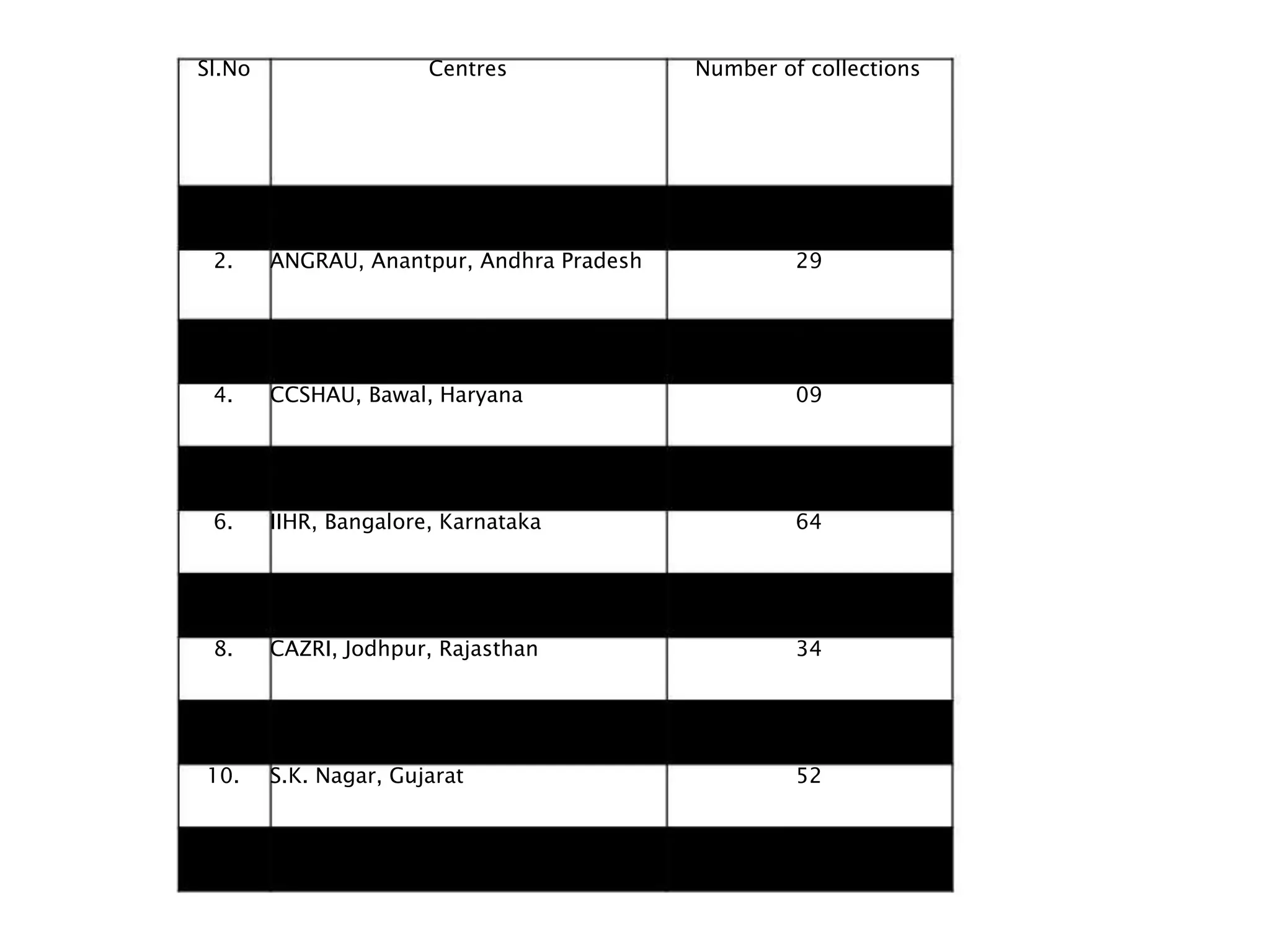
Sl.No Centres Number of collections
1. PAU, Abohar, Punjab 19
2. ANGRAU, Anantpur, Andhra Pradesh 29
3. TNAU, Arupukottai, Tamil Nadu 24
4. CCSHAU, Bawal, Haryana 09
5. CIAH, Bikaner, Rajasthan 152
6. IIHR, Bangalore, Karnataka 64
7. RAU, Jobner, Rajasthan 09
8. CAZRI, Jodhpur, Rajasthan 34
9. MPKV, Rahuri, Maharashtra 52
10. S.K. Nagar, Gujarat 52
11. NRCP, Solapur, Maharashtra 187
WORLDWIDE GERMPLASM COLLECTIONS
CHINA: The chinese cultivars are spur type. Mostly white flowered,
large fruits with sweet taste. They are early bearing evergreen
cultivars.
IRAN: It possesses more than 700 accessions.
ISRAEL: The Israeli varieties have more anti-oxidant properties. The
amount of Punicalin, Punicalagin, Gallagic acid, Ellagic acid etc are
more in these varieties.
TUNISIA: it is considered as the secondary centre of origin and
diversification. 60 accessions are protected here.
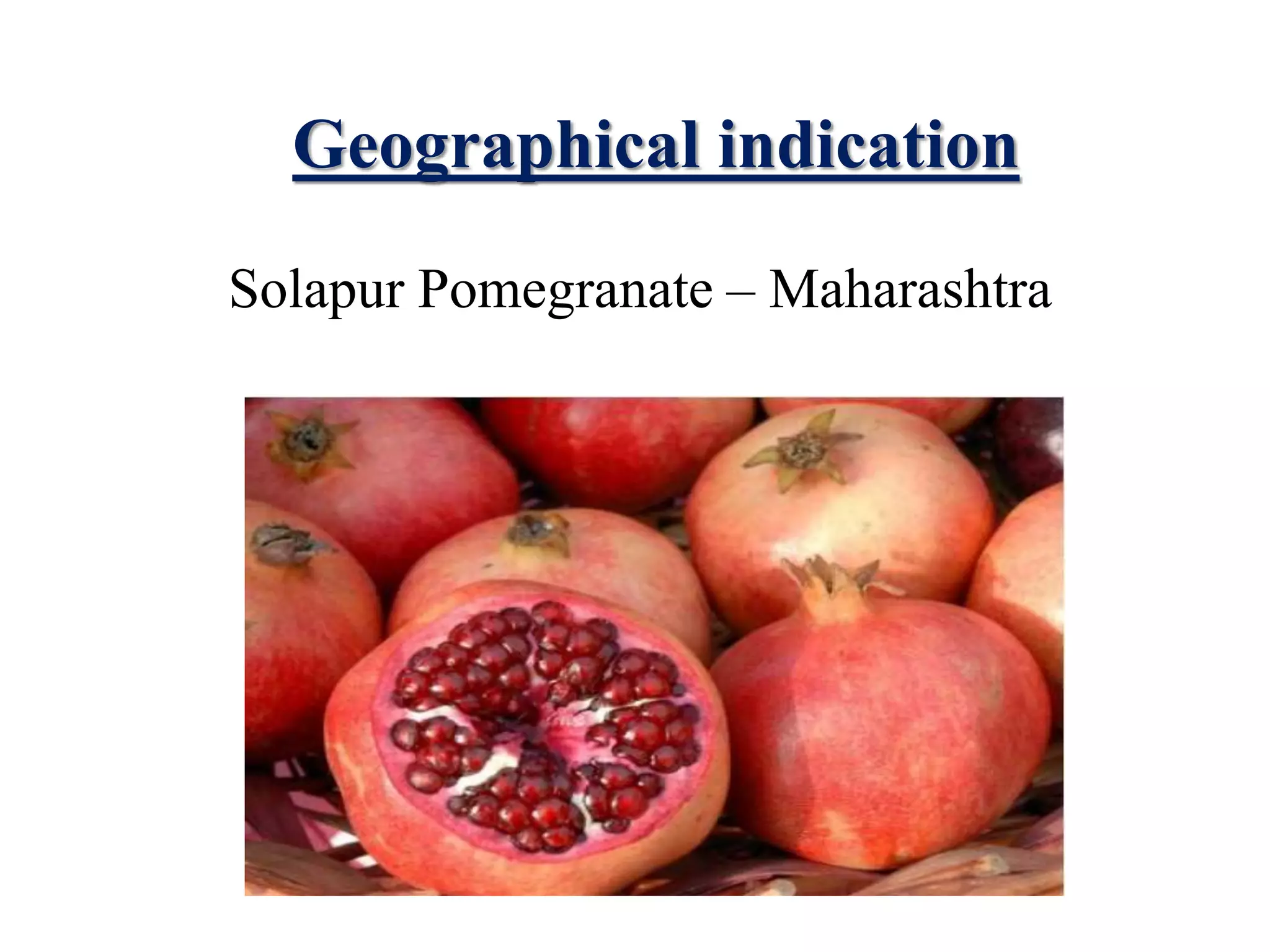
Geographical indication
Solapur Pomegranate – Maharashtra
Future prospects
• Pomegranate culture is still affronted to many problems that modern breeding
programs must resolve. The future of this fruit depends on the selection of high
quality cultivars with soft seeds and fruits resistant to cracking and fruit borers
• The direct use of existing cultivars and "wild types" may be more effective than
new hybridization. Most of genetic combinations that breeders may look for are
probably disseminated in variety-populations and wild ecotypes
• Since the ex situ collection can't exceed a limited number of accessions, it's
difficult to preserve the evolutionary potential of the species. Thus, in situ / on
farm conservation of genetic resources must be considered. The role of traditional
local growers in the preservation of this primary gene-pool is valuable.
• Nevertheless, further prospection, collection, evaluation and selection of local
material need to be carried out in many countries. A list of descriptors is needed
to be adopted on a large scale. New methods (biochemical and molecular
techniques ...) have to be developed for cultivar identification and genetic studies
Thank You.

Pomegranate reetika assign2

  • 1.
    COURSE TITLE: Biodiversityand conservation of fruit crops. COURSE CREDIT: 2+1 COURSE NO. : FSC 502
  • 2.
  • 3.
    Dear sir, Iam glad to say that you taught me how much I am capable of and what I could achieve if I was willing to put the effort in. Thank you for making me do my best and for never giving up and again thank you sir for all your help on this period of Covid crises. Dr. Parshant Bakshi (Associate Professor) SKUAST-Jammu.
  • 4.
  • 5.
    CONTENTS Introduction Issues and goals Centresof origin. Centres of genetic diversity Conservation of genetic resources Germplasm conservation Geographical indication Future prospects
  • 6.
    INTRODUCTION • The pomegranate(Punica granatum) is a naturally dense, deciduous, bushy, multi-stemmed shrub that typically grows to heights of 10 to 12 feet and bears highly colored fruit with many juicy seeds inside. • In some regions, pomegranates are trained into small trees with a single trunk. The branches tend to be slender and thorny, while the leaves are glossy and dark green. • The colorful orange-red flowers appear in the spring and summer and are either bell-shaped (female) or vase-shaped (hermaphroditic), with the latter type being sterile.
  • 7.
    • The edibleportion of the fruit, called an aril, is comprised of hundreds of seeds surrounded by juicy pigments, each contained within a seed coat. • Seeds are either soft or hard, depending on the cultivar. • The juice within the aril varies from light pink to dark red, but can also appear yellow or clear in some varieties. • The juice ranges from very acidic to very sweet in taste. • The rind is generally smooth but leathery, and can be yellow, orange or red in color.
  • 8.
    ORIGIN AND DISTRIBUTION •The pomegranate tree is native from Iran to the Himalayas in northern India and has been cultivated since ancient times throughout the Mediterranean region of Asia, Africa and Europe. • The fruit was used in many ways as it is today and was featured in Egyptian mythology and art, praised in the Old Testament of the Bible and in the Babylonian Talmud, and it was carried by desert caravans for the sake of its thirst-quenching juice. • It traveled to central and southern India from Iran about the first century A.D. and was reported growing in Indonesia in 1416.
  • 10.
    • It hasbeen widely cultivated throughout India and drier parts of southeast Asia, Malaya, the East Indies and tropical Africa. • The most important growing regions are Egypt, China, Afghanistan, Pakistan, Bangladesh, Iran, Iraq, India, Burma and Saudi Arabia. There are some commercial orchards in Israel on the coastal plain and in the Jordan Valley. • It is rather commonly planted and has become naturalized in Bermuda where it was first recorded in 1621, but only occasionally seen in the Bahamas, West Indies and warm areas of South and Central America. Many people grow it at cool altitudes in the interior of Honduras.
  • 11.
    • In Mexicoit is frequently planted, and it is sometimes found in gardens in Hawaii. The tree was introduced in California by Spanish settlers in 1769. • It is grown for its fruit mostly in the dry zones of that state and Arizona. In California, commercial pomegranate cultivation is concentrated in Tulare, Fresno and Kern counties, with small plantings in Imperial and Riverside counties. There were 2,000 acres (810 ha) of hearing trees in these areas in the 1920's. Production declined from lack of demand in the 1930's but new plantings were made when demand increased in the 1960's.
  • 14.
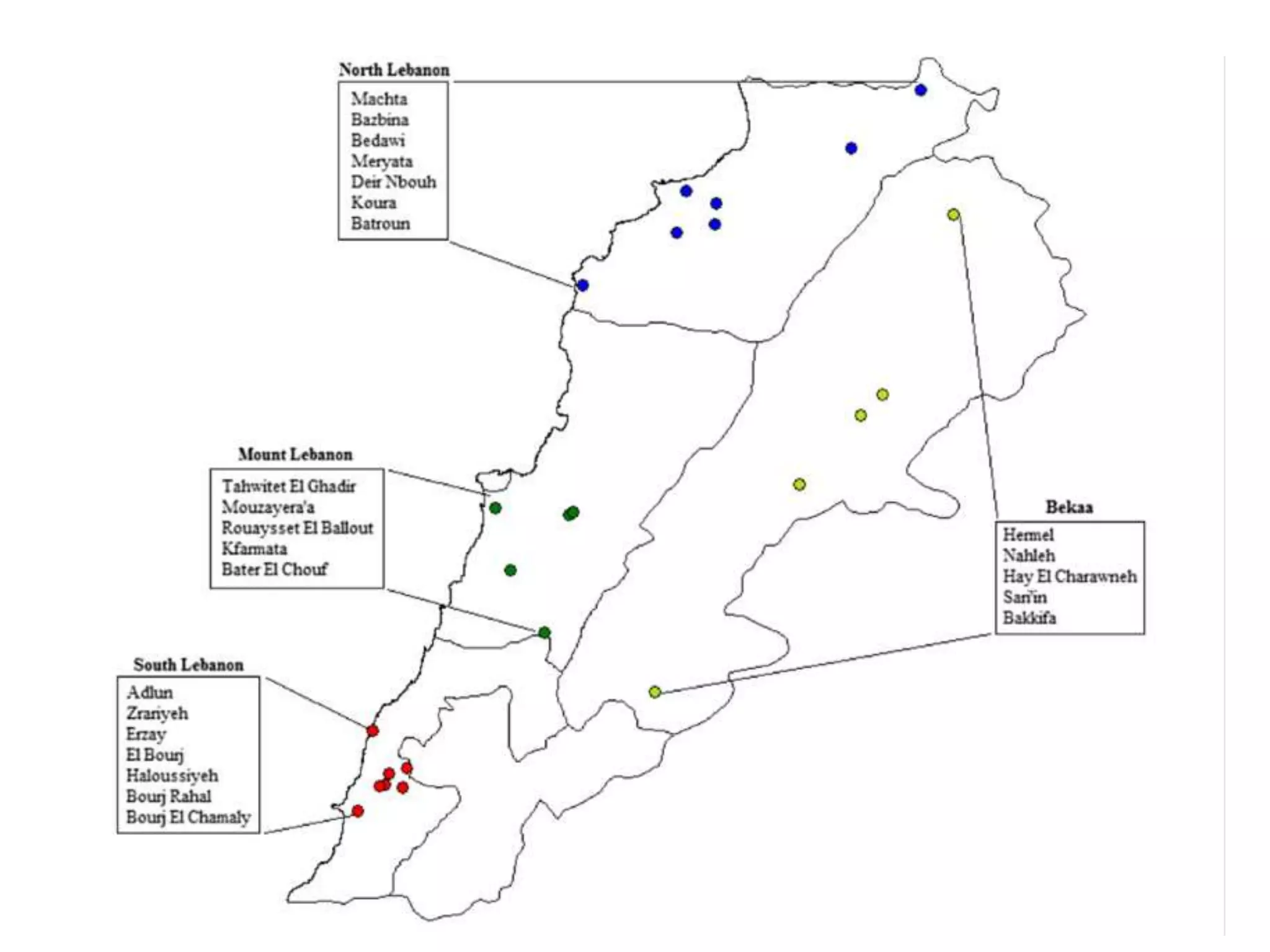
    DISTRIBUTION IN INDIA Themajor pomegranate producing belts are as follows: Maharashtra (Solapur, Sangli, Nashik, Ahmedanagar, Pune, Dhule, Aurangabad, Satara, Osmanabad and Latur districts). Karnataka (Bijapur and Bagalkot) Gujarat Rajasthan Uttar Pradesh Andhra Pradesh Tamil Nadu, Punjab & Haryana.
  • 16.
    SPECIES DIVERSITY The genusPunica has two species, Punica granatum and Punica protopunica and the latter is wild type and found wild in the Socotra Island Chlorocarpa and Porphyrocarpa are the two sub species of species granatum, the former is indigenous to Trans-Caucasus region and the later species is native to Central Asia
  • 17.
    GENETIC RESOURCES Some partsof the Mediterranean area are considered as native lands of pomegranate.. The grown local material may be considered as the pomegranate primary gene pool. Punica granatum grows wild in the near east, Transcaucasia, Dagestan and also in Asia minor. In these regions, hybridization between cultivated and wild forms is, probably, still taking place. Wild forms (populations) would be the secondary gene pool. The tertiary pomegranate gene pool would consist of forms of the pomegranate wild relative (Punica protopunica).
  • 18.
    It was presumedthat Prunica protopunica played a part in the origin of the cultivated pomegranate. ORNAMENTAL NON FRUITING TYPES Prunica granatum double red: The calyx tube is much larger than the other forms A large number of bright scarlet petals is present. It gives profuse flowering during summer.
  • 19.
    Prunica granatum doublewhite: produces white coloured flowers Prunica granatum double yellow: with brilliant yellow coloured flowers Prunica granatum double dwarf: It is also called as Prunicagranatum nana racemosa. It is a dwarf plant with cluster flowering nature. Scarlet flowers are produced in long stalks.
  • 20.
    Prunica granatum variegated:it is a mutant of dwarf red. Large and handsome flowers with red and yellow stripes are present. Pentaploidy: In pomegranate, the double flowers are formed due to this phenomenon in which the stamens are converted to petals. Thus the flower fails to set fruits.
  • 21.
    Khandhari: • Kandhari islarge, deep-red, with deep-pink or blood-red, sub-acid pulp and hard seeds. • The aril is deep blood red or deep pink with sweet slightly acidic juice. • Seeds are very hard • Commercial variety of H.P.
  • 22.
    Muskat Red: • Smallto medium, with thin or fairly thick rind, fleshy, juicy, medium-sweet pulp, soft or medium-hard seeds. The plant is a moderately prolific bearer. • Commercially grown is kolhar, Rahuri regions of Maharashtra. • High yielding & better quality strains have been selected from the cultivar Muscat viz., P-13, P-16, P-23, ASK-
  • 23.
    Alandi & Vadki: Fruitsare medium sized, red in colour aril fleshy, blood red or deep pink with sweet acidic juice. Seeds are very hard grown in Maharashtra (Pune) & in Gujarat.
  • 24.
    Kabul: Produces large fruits,dark red with yellow patches. aril dark red fleshy hard with slightly bitter juice. Jodhpur red/ local: Fruits medium to large, hard rind fleshy aril light pink sweet juicy, seeds moderately hard.
  • 25.
    GANESH This variety isdeveloped by selection method. It is a prolific bearer, fruit very large, rind yellowish red, pinkish aril with soft seeds. It is the commercial cultivar of Maharashtra. The average yield ranges from 8-10 kg per tree.
  • 26.
    ARAKTA The fruits aresmaller than Ganesh, variety having dark red coloured arils with soft seeds. The variety is commercially is grown in Maharastra. heavy yielder and possesses desirable fruit characters. It also possess glossy, attractive, dark red skin. It is less susceptible to fruit spots and thrips.
  • 27.
    BHAGAWA / KESAR: Itis a selection from Phule Aarakta. Bigger fruit size, sweet, bold and attractive arils, glossy, very attractive saffron coloured thick skin makes it suitable for distant markets. It is more resistant to fruit cracking & fruit drop.
  • 28.
    Paper Shell round, mediumto large, pale-yellow blushed with pink; with very thin rind, fleshy, reddish or pink, sweet, very juicy pulp and soft seeds. Bears heavily.
  • 29.
    JYOTI As a resultof evaluation of a large number of seedling populations of Bassein Seedless and Dholka, a highly promising type GKVK-1 was selected and released under the name 'Jyothi'. The fruits are large with attractive colour having dark red arils. The seeds are very soft with high pulp and juice contents. Fruits are borne on the inner side of the canopy and thus do not get damaged due to sun scorching.
  • 30.
    RUBY This variety isdeveloped at IIHR, Bangalore. The mature fruits resemble cultivar 'Ganesh' with respect to shape and size. However, the rind of this variety is reddish brown with green streaks containing red bold arils. The fruit weighs 270 g with an average yield of 16-18 tonnes/ha.
  • 31.
    SPANISH RUBY Fruit smallto medium in size, rind thin, fleshy testa, rose coloured, seeds are soft. G137: Clonal selection from Ganesh with better fruit qualities. YERCAUD 1: Developed at Horticultural Research Station, TNAU, Yercaud. It has easily peelable rind with attractive purple arils.
  • 32.
    Jalore seedless: Soft seededvariety and recommended by Central Arid zone research Institute, Jodhpur for arid zones as the fruit maturity is early and maximum fruit production is coincided with available soil moisture. Fruits are large in size weighing 200 g and fruits are attractive in appearance. Skin colour is pink to deep red. The arils are pink to red having soft seeds.
  • 33.
    Varieties State Alandi andMuskat Maharashtra Madhugiri and Bassein seedless Karnataka Dholka Gujarat Jodhpuri Red, Jodhapuri White and Jalore Rajasthan seedless Chawla, Nabha, and Country Large Red Haryana Velludu, CO1, YCD 1 Tamil Nadu
  • 34.
    GERMPLASM COLLECTION Eight countriesof the former USSR have collections of pomegranate germplasm. Azerbaijan, The Ukraine, Uzbekistan and Tajikistan have relatively large collections of 200-300 accessions. The collection of the Turkmenistan Experimental Station of Plant Genetic Resources was established in 1934 and is the largest in the world containing 1117 accessions.
  • 35.
    A core collectionwas also established and is 10% of the size of the main collection. For the unique wild relative of the pomegranate (Punica protopunica), an expedition was made and located the species at 5 sites in the Socotra island (Yemen) and seeds were collected and successfully germinated. Experiments have shown that the cryopreservation is suitable for storage of seed and pollen of pomegranate cultivars.
  • 36.
    Sl.No Centres Numberof collections 1. PAU, Abohar, Punjab 19 2. ANGRAU, Anantpur, Andhra Pradesh 29 3. TNAU, Arupukottai, Tamil Nadu 24 4. CCSHAU, Bawal, Haryana 09 5. CIAH, Bikaner, Rajasthan 152 6. IIHR, Bangalore, Karnataka 64 7. RAU, Jobner, Rajasthan 09 8. CAZRI, Jodhpur, Rajasthan 34 9. MPKV, Rahuri, Maharashtra 52 10. S.K. Nagar, Gujarat 52 11. NRCP, Solapur, Maharashtra 187
  • 37.
    WORLDWIDE GERMPLASM COLLECTIONS CHINA:The chinese cultivars are spur type. Mostly white flowered, large fruits with sweet taste. They are early bearing evergreen cultivars. IRAN: It possesses more than 700 accessions. ISRAEL: The Israeli varieties have more anti-oxidant properties. The amount of Punicalin, Punicalagin, Gallagic acid, Ellagic acid etc are more in these varieties. TUNISIA: it is considered as the secondary centre of origin and diversification. 60 accessions are protected here.
  • 38.
  • 39.
    Future prospects • Pomegranateculture is still affronted to many problems that modern breeding programs must resolve. The future of this fruit depends on the selection of high quality cultivars with soft seeds and fruits resistant to cracking and fruit borers • The direct use of existing cultivars and "wild types" may be more effective than new hybridization. Most of genetic combinations that breeders may look for are probably disseminated in variety-populations and wild ecotypes • Since the ex situ collection can't exceed a limited number of accessions, it's difficult to preserve the evolutionary potential of the species. Thus, in situ / on farm conservation of genetic resources must be considered. The role of traditional local growers in the preservation of this primary gene-pool is valuable. • Nevertheless, further prospection, collection, evaluation and selection of local material need to be carried out in many countries. A list of descriptors is needed to be adopted on a large scale. New methods (biochemical and molecular techniques ...) have to be developed for cultivar identification and genetic studies
  • 40.